

How Do I Get Started with GEO Today?
Learn how to get started with Generative Engine Optimization (GEO) today. Discover essential strategies to optimize your content for AI search engines like Chat...
9 min read
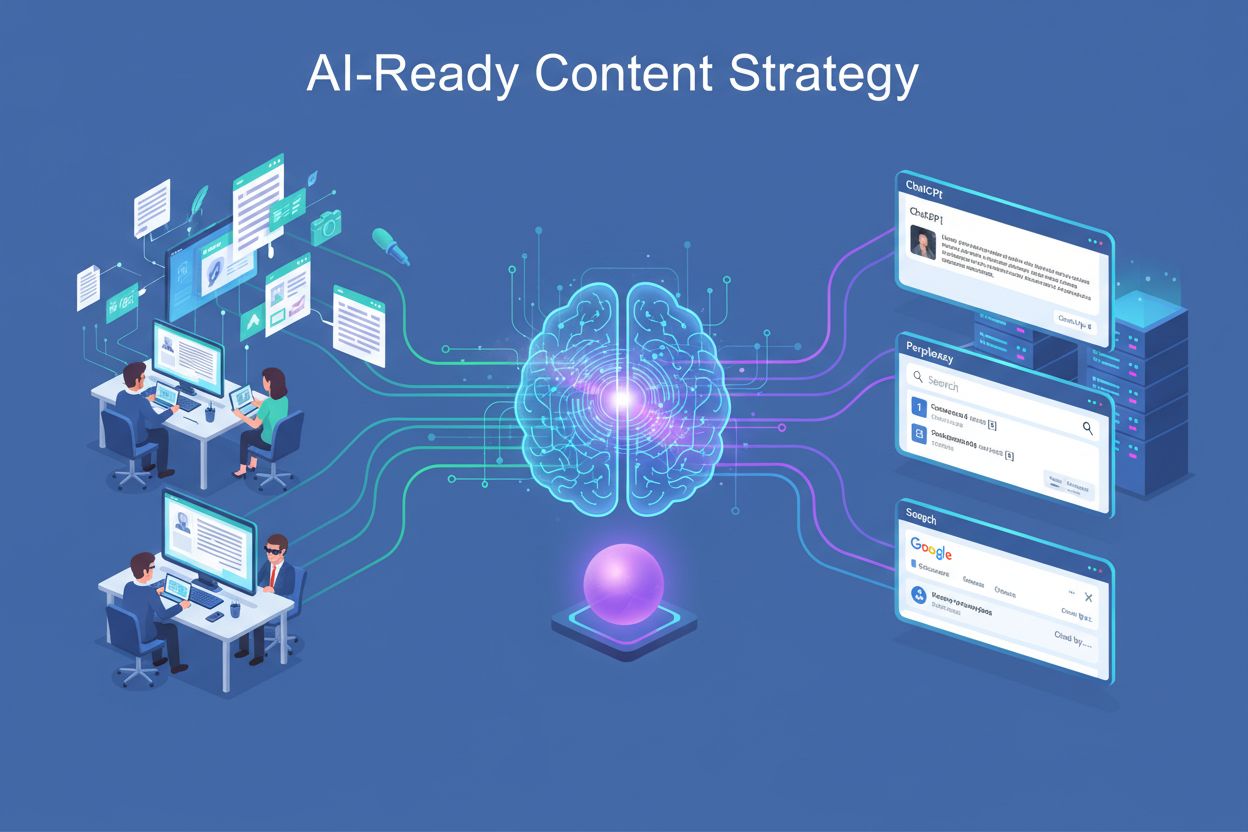
Learn how to build an AI-ready content strategy optimized for generative engines. Discover the three layers of AI infrastructure, implementation steps, and measurement strategies to increase your brand’s visibility in AI-generated responses.
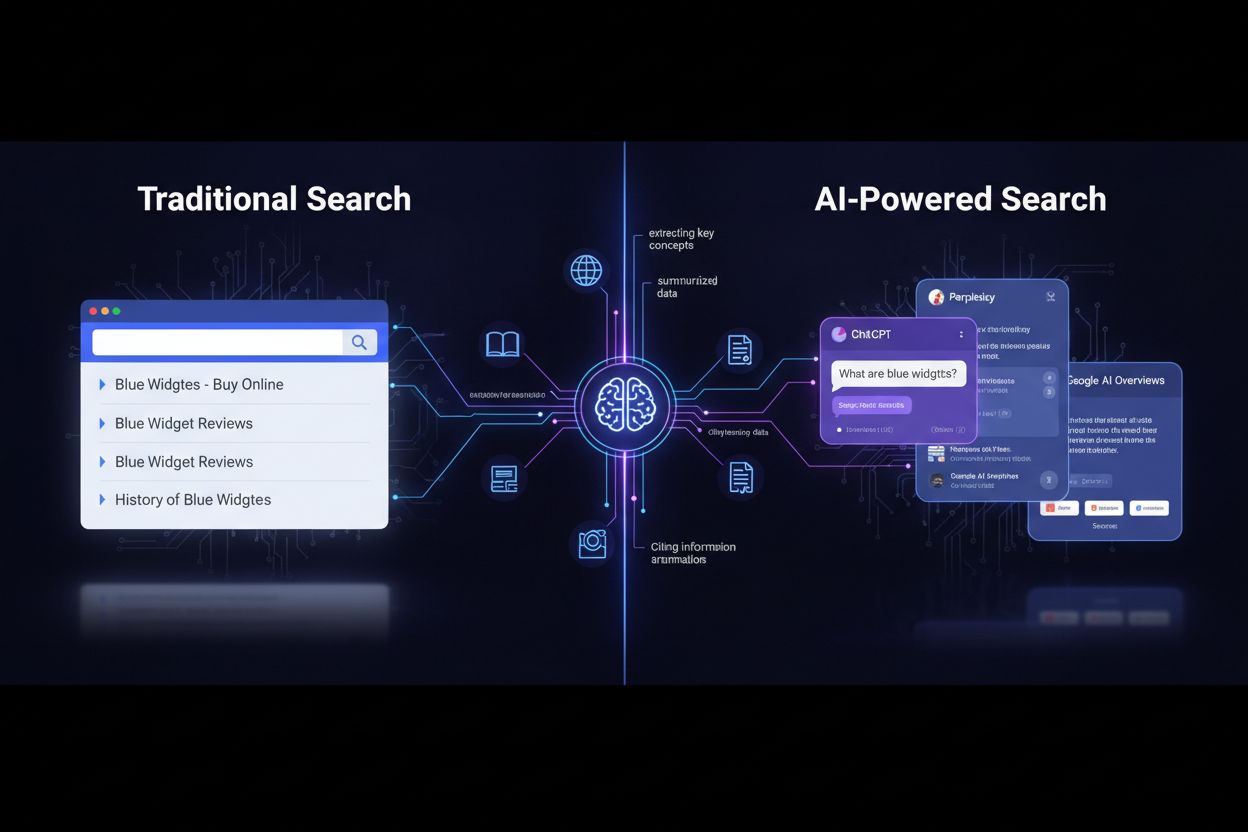
Generative Engine Optimization (GEO) represents a fundamental shift in how content gets discovered and consumed online. While traditional SEO focuses on ranking your content in search engine results pages, GEO optimizes your content to be cited, extracted, and featured within AI-generated responses across platforms like ChatGPT, Perplexity, and Google AI Overviews. This distinction matters because AI systems don’t just rank pages—they synthesize information from multiple sources to create original answers, meaning your content’s visibility depends on whether AI models choose to cite you as a credible source. According to Gartner research, 25% of all searches will be AI-driven by 2026, making this shift from ranking to citation a critical priority for any content strategy. The stakes are higher than ever: your content can rank perfectly for a keyword but still be invisible if AI systems don’t recognize it as authoritative enough to include in their responses.
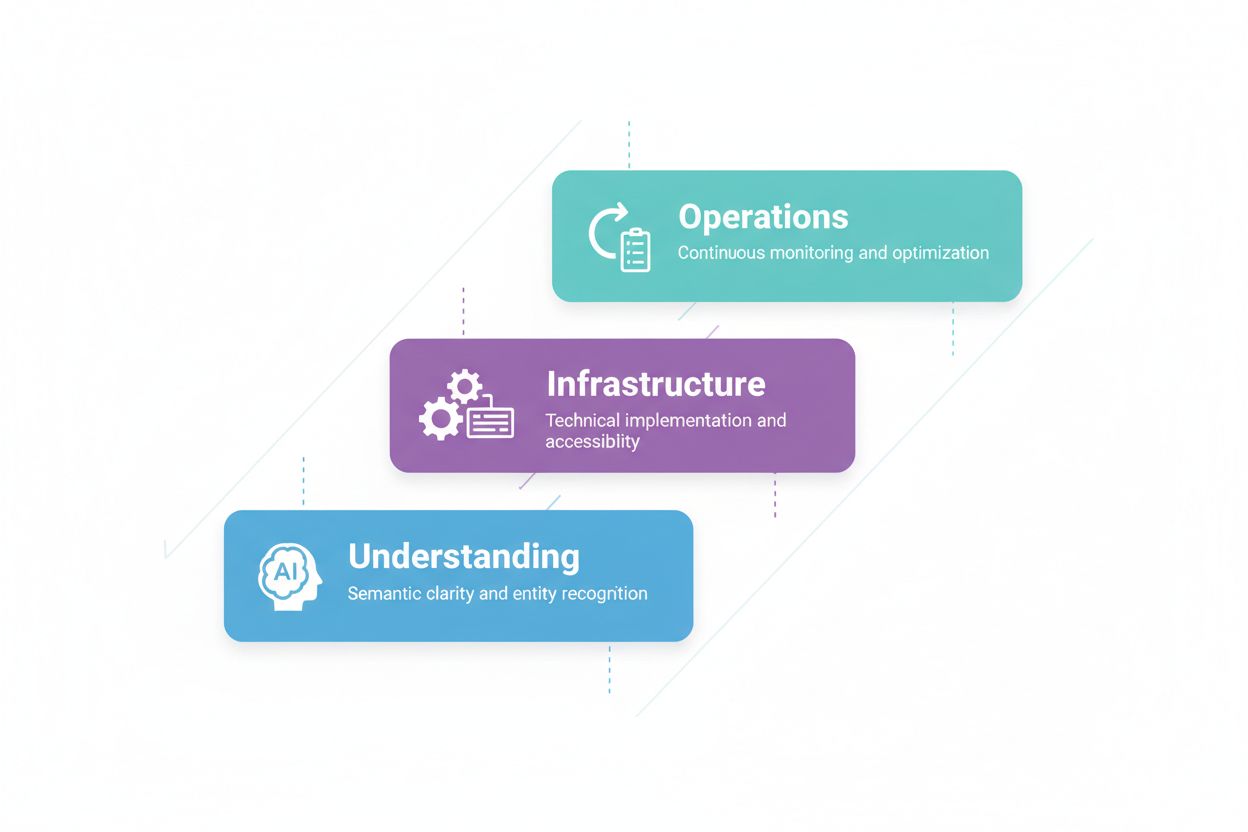
Building an AI-ready content strategy requires understanding three interconnected layers that work together to make your content discoverable and citable by AI systems. These layers form a foundation that ensures your content isn’t just created, but optimized for how modern AI engines actually consume and reference information.
| Layer | Capability | What It Means |
|---|---|---|
| Understanding | Semantic clarity and entity recognition | Your content must clearly communicate what it’s about, with explicit relationships between concepts that AI systems can parse |
| Infrastructure | Technical implementation and accessibility | Your content needs proper markup, structured data, and crawlability so AI systems can access and understand your information architecture |
| Operations | Continuous monitoring and optimization | You need processes to track how often AI systems cite your content and iterate based on performance data |
Each layer builds on the previous one—without semantic clarity, technical implementation fails; without proper infrastructure, you can’t measure what’s working. Together, these three layers create the conditions where AI systems naturally gravitate toward your content as a trusted source.
Before building your GEO strategy, you need an honest assessment of where your current content infrastructure stands. Start by asking critical questions: Can AI systems easily understand what your content is about? Is your content structured in a way that makes extraction simple? Do you have clear entity relationships that connect related topics? Are your pages crawlable and accessible to AI indexing systems? Evaluate your existing content against these criteria by auditing a representative sample of your top-performing pages, checking for semantic clarity, proper heading hierarchy, and structured data implementation. Look for gaps between what you’re currently doing and what AI systems need—these gaps represent your biggest opportunities for improvement. Many organizations discover they’re optimizing for human readability while inadvertently making it harder for AI systems to extract and cite their content, which is precisely the opposite of what GEO requires.
Restructuring your content for AI consumption requires a systematic approach that prioritizes clarity, accessibility, and extractability. Here’s how to build an architecture that AI systems will want to cite:
This architecture transforms your content from a collection of pages into a machine-readable knowledge base that AI systems can confidently cite.
AI systems extract information differently than humans read it, which means your formatting and structure need to accommodate how these systems process text. Place your most important answers in the first 1-2 sentences of relevant sections—AI systems often extract from the beginning of content blocks, so burying your key insight in the third paragraph means it might never get cited. Use question-based headers that match the queries people ask, since AI systems often look for content that directly answers specific questions. Break complex information into scannable chunks with short paragraphs (2-3 sentences maximum) rather than dense blocks of text, making it easier for AI systems to identify and extract discrete pieces of information. Include specific data points, statistics, and examples rather than vague generalizations—AI systems are more likely to cite concrete information than abstract claims. Format lists and comparisons clearly, using tables and bullet points where appropriate, since structured information is easier for AI systems to parse and incorporate into their responses. The goal is making your content so clear and well-organized that an AI system can extract exactly what it needs without ambiguity.
AI systems prioritize content from sources that demonstrate deep expertise in specific domains, making topical authority essential for GEO success. Develop a pillar and cluster content strategy where you create comprehensive pillar content that covers a broad topic at a high level, then support it with cluster content that explores specific subtopics in depth. This structure helps AI systems understand that you’re not just mentioning a topic in passing—you’re a genuine authority with extensive coverage. Map the relationships between your pillar and cluster content through strategic internal linking, explicitly showing AI systems how your content pieces connect and build on each other. Focus on covering related entities and concepts comprehensively rather than chasing individual keywords; when AI systems evaluate whether to cite you, they’re looking for sources that understand the full landscape of a topic, not just isolated facts. The more you demonstrate interconnected knowledge across a topic area, the more likely AI systems will recognize you as an authoritative source worth citing in their responses.
AI systems evaluate content credibility using signals similar to E-E-A-T (Experience, Expertise, Authoritativeness, Trustworthiness), which means you need to explicitly communicate your authority throughout your content. Include author credentials and bylines that establish who created the content and why they’re qualified to speak on the topic—AI systems use this information to assess source reliability. Publish original research, data, and insights rather than just aggregating existing information; AI systems are more likely to cite sources that contribute new knowledge to a topic. Include publication dates and update timestamps so AI systems understand how current your information is, which matters especially for topics where information changes frequently. Cite third-party sources and link to authoritative references, which signals to AI systems that you’ve done your research and aren’t making unsupported claims. Build a track record of accurate, well-sourced content over time; AI systems increasingly evaluate source reputation based on historical performance, so consistency matters. These authority signals work together to convince AI systems that your content deserves to be cited in their responses.
Beyond content structure, you need technical implementation that makes your content accessible and understandable to AI systems. Implement schema markup using JSON-LD format to explicitly define what your content is about, who created it, when it was published, and how it relates to other entities—this structured data gives AI systems the context they need to understand and cite your work. Create an llms.txt file in your root directory that provides AI systems with guidelines about how to cite your content and what information you want them to know about your organization. Ensure your content is fully crawlable by checking your robots.txt file and removing any blocks that prevent AI indexing systems from accessing your pages. Test your implementation using tools like Google’s Rich Results Test and Schema.org validators to confirm that your markup is correct and will be properly interpreted. Monitor your crawl stats to ensure AI systems are actually accessing your content regularly. The technical foundation you build here directly impacts whether AI systems can even discover and understand your content, making it non-negotiable for GEO success.
You can’t optimize what you don’t measure, which is why tracking AI citations and visibility is critical to your GEO strategy. Monitor how often your content appears in AI-generated responses across platforms like ChatGPT, Perplexity, and Google AI Overviews—this citation rate is your primary GEO metric, replacing traditional ranking position as the key indicator of success. Track your response inclusion rate (the percentage of relevant AI responses that cite your content) and compare it against competitors to understand your relative visibility in AI systems. Use tools like AmICited.com to monitor when and where your content gets cited by AI systems, providing visibility into which pieces of content are resonating with AI models and which need optimization. Measure the traffic and engagement that flows from AI citations, understanding that AI visibility often drives different user behavior than traditional search results. Create a dashboard that tracks these metrics over time, allowing you to see whether your GEO efforts are actually moving the needle on AI visibility. This data becomes your feedback loop for continuous improvement, showing you exactly what’s working and where to focus your optimization efforts.
Implementing GEO at scale requires operationalizing it across your marketing team, not treating it as a one-time project. Assign clear ownership for GEO strategy—whether that’s your SEO team, content team, or a dedicated GEO specialist—and ensure they have the tools and resources needed to execute. Establish a regular cadence for content audits (quarterly is typical) where you evaluate existing content against GEO criteria and identify optimization opportunities. Build GEO checks into your content creation process so that new content is optimized for AI visibility from the start rather than requiring retrofitting later. Create templates and guidelines that make it easy for your team to implement GEO best practices consistently across all content. Use tools like Ahrefs, Perplexity, and ChatGPT to regularly test how your content performs in AI systems and identify gaps. Document your processes and learnings so that GEO knowledge doesn’t live in one person’s head but becomes embedded in your organization’s content operations. The goal is making GEO as routine as SEO, not an additional burden on top of your existing workflow.
GEO isn’t a replacement for SEO or paid media—it’s a complementary channel that works alongside your existing marketing efforts. Content optimized for GEO often performs better in traditional search as well, since the clarity and structure required for AI systems also helps human readers and search engines. Rather than choosing between SEO and GEO, think of them as reinforcing each other: strong topical authority helps both traditional search rankings and AI citations, while quality content that ranks well in search is more likely to be cited by AI systems. Your paid media strategy can amplify content that’s performing well in AI citations, driving additional traffic and engagement that signals to AI systems that your content is valuable. Some content will be optimized primarily for traditional search, some primarily for AI visibility, and some for both—the key is being intentional about which channel each piece of content targets. By integrating GEO into your overall marketing strategy rather than siloing it, you maximize the return on your content investment and ensure you’re visible wherever your audience is looking for information.
GEO (Generative Engine Optimization) focuses on getting your content cited and extracted by AI systems like ChatGPT and Perplexity, while SEO focuses on ranking in traditional search engine results. Both are important—GEO doesn't replace SEO but complements it as AI-powered search becomes more prevalent.
No, GEO and SEO work together. Content optimized for GEO often performs better in traditional search as well, since the clarity and structure required for AI systems also helps human readers and search engines. The best approach is integrating both strategies.
You can see initial improvements in AI citations within 3-6 months of implementing GEO best practices. However, like SEO, GEO is a long-term strategy that compounds over time. The authority and visibility you build today will continue generating value months and years later.
You'll need a CMS with AI infrastructure support, schema markup validators (like Google's Rich Results Test), citation tracking tools (like AmICited.com, Ahrefs, or Perplexity), and testing platforms (ChatGPT, Perplexity, Google AI Overviews). Start with what you have and add tools as your GEO program matures.
Track your citation rate (how often your content appears in AI responses), response inclusion rate (percentage of relevant AI responses citing your content), and AI visibility across platforms. Use tools like AmICited.com to monitor these metrics and compare your performance against competitors.
Absolutely. Start with one piece of high-value content and optimize it for AI visibility. Test it in ChatGPT and Perplexity to see if it gets cited. Once you have a working example, scale the approach systematically across your content library. GEO success doesn't require massive budgets—it requires strategic thinking.
Content clarity and structure are paramount. AI systems need to easily understand what your content is about and extract specific information. Focus on clear headings, direct answers, structured data, and scannable formatting before worrying about other optimization factors.
AmICited monitors how AI systems cite your brand across ChatGPT, Perplexity, Google AI Overviews, and other generative engines. You get real-time visibility into which content is being cited, how often, and in what context. This data is essential for measuring GEO success and identifying optimization opportunities.
Track how AI systems like ChatGPT, Perplexity, and Google AI Overviews cite your brand. Get real-time insights into your AI visibility and optimize your content strategy accordingly.
Learn how to get started with Generative Engine Optimization (GEO) today. Discover essential strategies to optimize your content for AI search engines like Chat...
Discover why Generative Engine Optimization (GEO) is essential for businesses in 2025. Learn how AI-powered search is reshaping brand visibility, consumer behav...
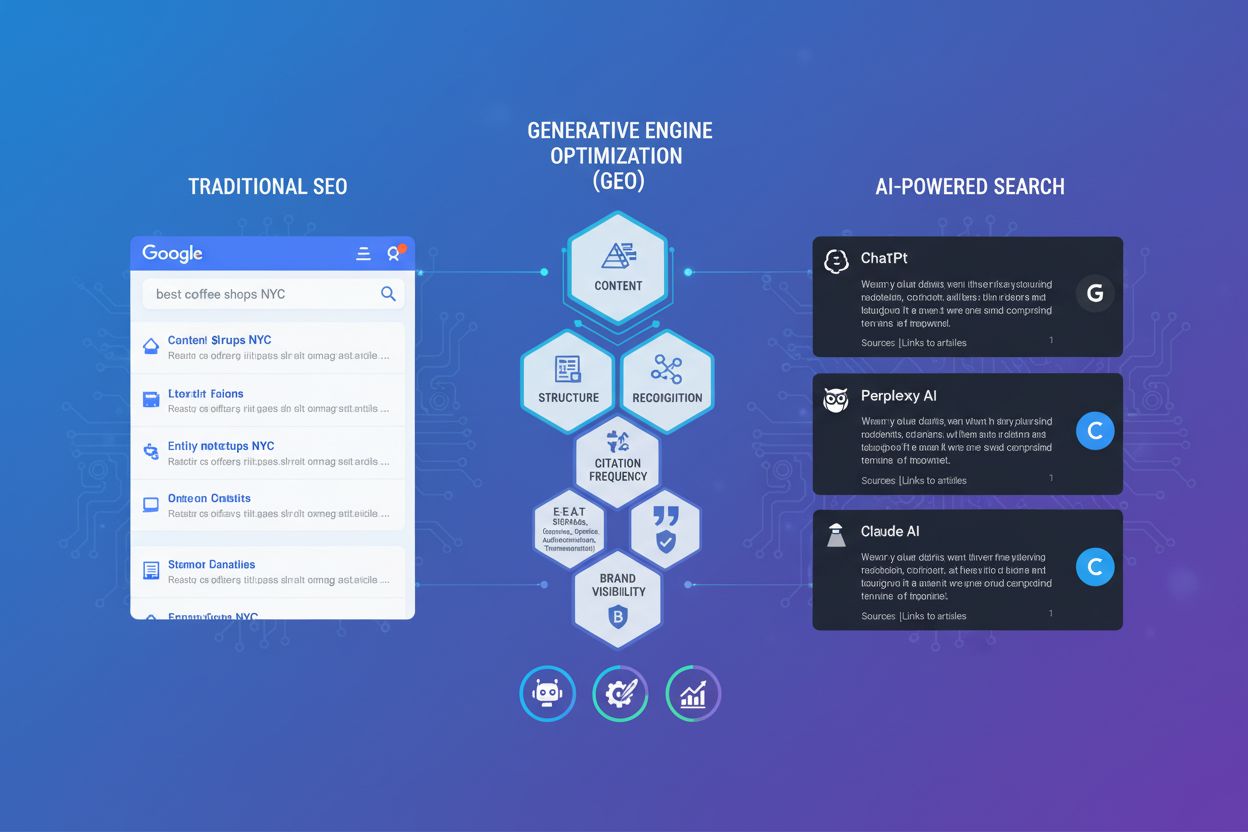
Learn what Generative Engine Optimization (GEO) is, how it differs from SEO, and why it's critical for brand visibility in AI-powered search engines like ChatGP...