
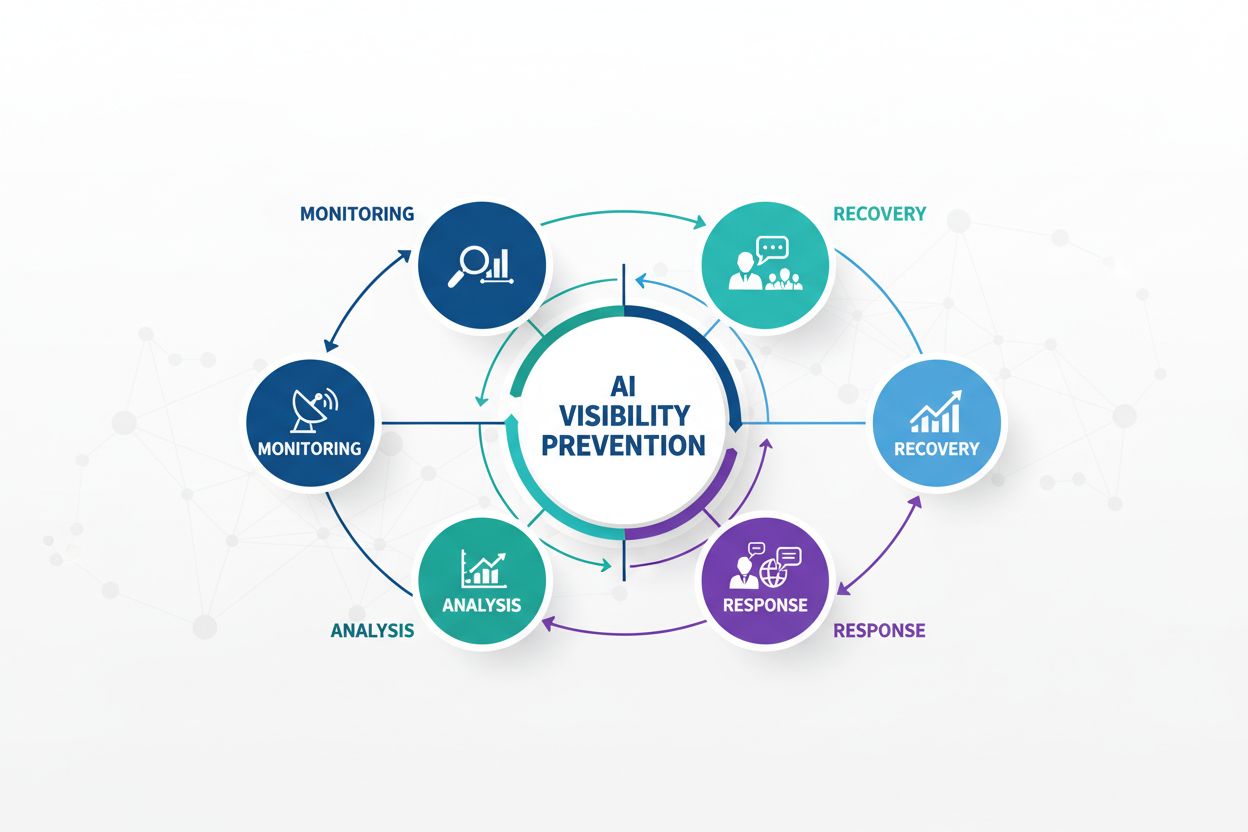
Preventing AI Visibility Crises: Proactive Strategies
Learn how to prevent AI visibility crises with proactive monitoring, early warning systems, and strategic response protocols. Protect your brand in the AI era.
9 min read
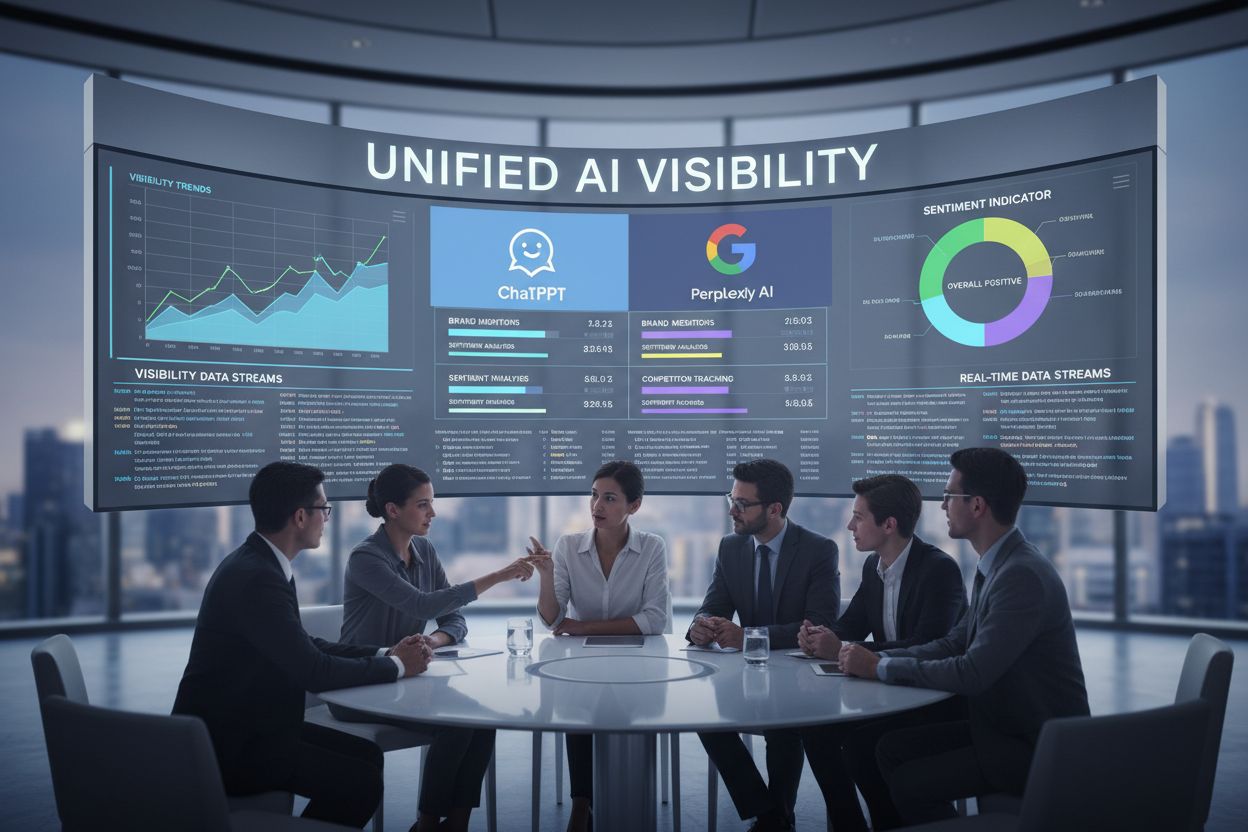
Learn how to align marketing, PR, and content teams with unified AI visibility. Monitor brand mentions across ChatGPT, Perplexity, and Google AI in real-time for consistent messaging.
According to recent research, 73% of teams report experiencing communication breakdowns that directly impact their ability to respond to market opportunities. Modern organizations rely on an average of 9.3 different tools for daily operations, creating fragmented workflows where critical information about AI usage, brand mentions, and competitive intelligence gets lost in silos. When marketing, PR, and content teams operate independently without visibility into each other’s AI monitoring efforts, duplicate work, conflicting messaging, and missed opportunities become inevitable. The stakes are particularly high in today’s AI-driven landscape, where real-time visibility into how your brand appears across ChatGPT, Perplexity, Google AI, and other platforms can determine competitive advantage.
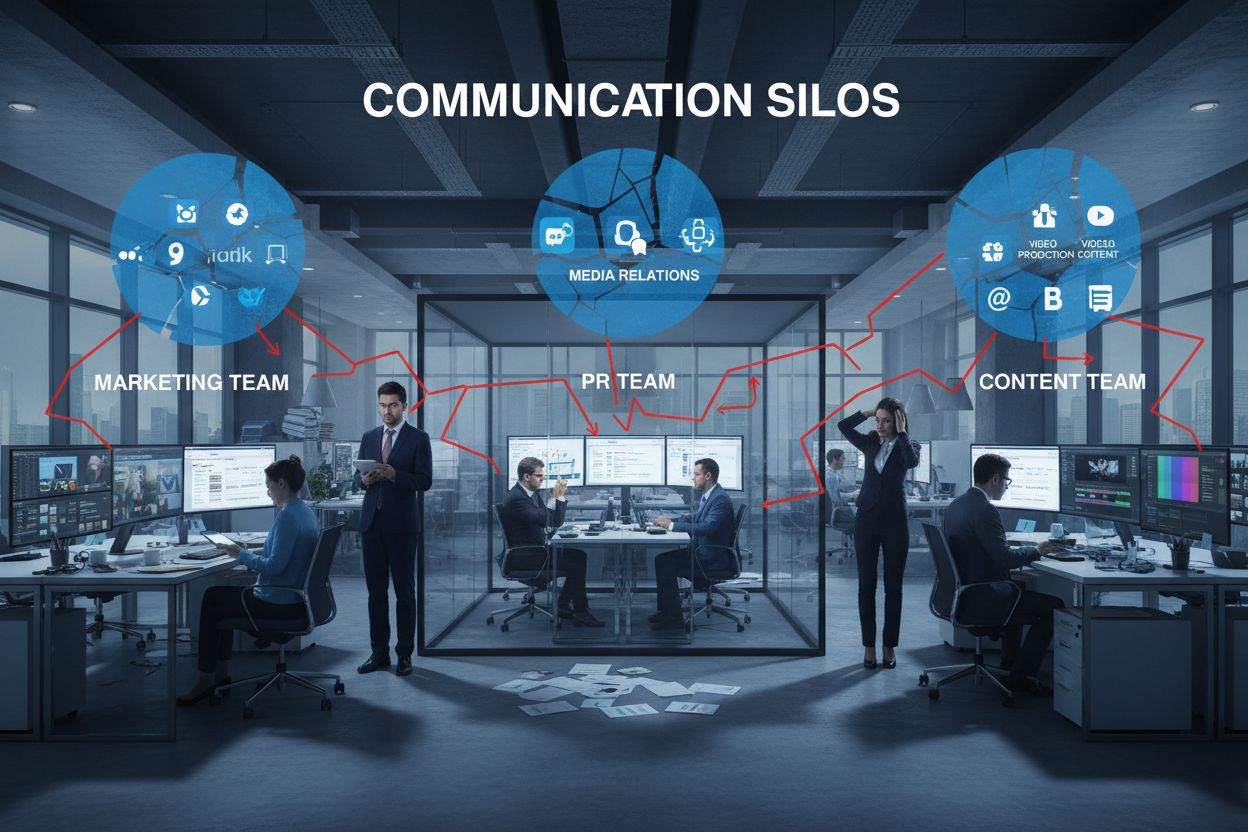
Cross-functional AI visibility refers to the ability of marketing, PR, content, and other teams to see, access, and act on the same AI monitoring data in real-time, breaking down traditional departmental silos. Unlike traditional approaches where each team maintains separate monitoring systems and reports, cross-functional AI visibility creates a unified intelligence layer that serves all stakeholders simultaneously. This approach fundamentally changes how organizations respond to AI-generated content, brand mentions, and competitive threats by ensuring no team operates with incomplete information. The key components of effective cross-functional AI visibility include centralized data collection, real-time dashboards, unified reporting standards, clear ownership structures, and integrated communication workflows that keep all teams synchronized.
| Failure Reason | Impact | Example |
|---|---|---|
| Communication Breakdowns | Duplicate efforts, missed opportunities, delayed responses | Marketing discovers a ChatGPT mention of your brand 3 days after PR already addressed it |
| Misaligned Priorities | Conflicting narratives, brand inconsistency, wasted resources | Content team emphasizes product features while PR focuses on company values, confusing audiences |
| Tool Fragmentation | Data silos, incomplete visibility, integration headaches | Marketing uses one AI monitoring tool, PR uses another, neither sees the complete picture |
| Cultural Resistance | Slow adoption, incomplete implementation, limited ROI | Teams view shared visibility as surveillance rather than collaboration, withholding information |
When teams lack unified AI visibility, critical brand mentions across ChatGPT, Perplexity, Google AI, and emerging platforms go undetected or are discovered too late for effective response. A single missed mention in a high-traffic AI platform can result in incorrect information spreading to thousands of users, with no coordinated team response to correct the narrative. Marketing teams may invest in campaigns promoting specific messaging while PR teams are simultaneously managing crisis communications about the same topic—a costly misalignment that damages brand credibility. Content teams often duplicate research and AI monitoring efforts, wasting 15-20 hours per week on redundant work that could be eliminated through shared visibility. The real business consequence is a fragmented brand presence in AI-generated content, reduced ability to influence how AI systems represent your company, and missed opportunities to leverage AI platforms for thought leadership and brand building.
Centralized AI monitoring platforms create a single source of truth where marketing, PR, and content teams access identical data about brand mentions, competitive positioning, and AI-generated content in real-time. Rather than each team maintaining separate dashboards and reports, unified platforms provide role-specific views that show each stakeholder exactly what matters to their function while maintaining data consistency across the organization. Real-time dashboards enable marketing teams to adjust campaigns based on how their brand appears in AI responses, PR teams to identify and respond to emerging narratives before they spread, and content teams to understand what topics AI systems are emphasizing. Integration with existing workflows—from Slack notifications to email alerts to CRM systems—ensures that visibility translates into action without requiring teams to adopt entirely new processes. The result is a coordinated organization where every team moves in the same direction, responding to the same intelligence, and building a consistent brand presence across all AI platforms.
Shared Vision & Goals: All teams must align on what success looks like in AI visibility, whether that’s response time to mentions, brand messaging consistency, or competitive positioning. Without shared objectives, teams optimize for different outcomes and create conflicting priorities.
Transparent Communication: Real-time dashboards and regular synchronization meetings ensure all stakeholders see the same data and understand the reasoning behind decisions. Transparency builds trust and prevents the information hoarding that typically occurs in siloed organizations.
Unified Data Sources: Rather than each team collecting and interpreting AI monitoring data independently, a single authoritative source eliminates discrepancies and ensures everyone operates from the same facts. This requires standardized collection methods and consistent data quality standards.
Clear Ownership: Each piece of monitored data should have a clear owner responsible for action, preventing the “someone else will handle it” mentality that causes critical issues to slip through cracks. Ownership doesn’t mean isolation—it means accountability within a collaborative framework.
Regular Alignment: Weekly or bi-weekly synchronization meetings where teams review AI visibility data together, discuss implications, and coordinate responses keep everyone synchronized and prevent drift. These meetings should be brief, data-driven, and focused on actionable insights rather than lengthy status updates.
Marketing teams use cross-functional AI visibility to understand how their brand positioning appears in AI-generated responses, allowing them to adjust messaging and campaigns based on real-time feedback from AI platforms. PR teams benefit from immediate alerts when brand mentions appear across ChatGPT, Perplexity, and other AI systems, enabling rapid response to emerging narratives before they spread to broader audiences. Content teams gain visibility into which topics, keywords, and messaging approaches are being emphasized by AI systems, allowing them to create content that aligns with how AI platforms represent their industry and company. When these three teams operate with unified visibility, they prevent the conflicting narratives that damage brand credibility—for example, marketing promoting innovation while PR manages concerns about company stability, or content emphasizing different value propositions than what PR is communicating. The alignment creates a multiplier effect where each team’s efforts reinforce the others, resulting in consistent brand messaging across all AI platforms, faster response times to emerging issues, and stronger competitive positioning in AI-generated content.
AmICited.com serves as the primary solution for organizations seeking unified AI visibility, providing real-time monitoring of brand mentions across ChatGPT, Perplexity, Google AI, and other emerging platforms with role-specific dashboards for marketing, PR, and content teams. Complementary tools like Finseo offer AI visibility tracking with competitive intelligence features, Otterly provides AI-powered content analysis and team collaboration capabilities, and Profound delivers advanced analytics for understanding how AI systems represent your brand. Effective solutions must include real-time dashboards that update as new mentions appear, customizable alerts that notify relevant team members instantly, and unified reporting that allows executives to see cross-functional performance metrics. Integration capabilities are critical—the platform should connect with Slack for notifications, email systems for alerts, CRM platforms for customer context, and project management tools to ensure visibility translates into coordinated action. The best platforms also provide historical data and trend analysis, allowing teams to understand not just what’s happening now, but how AI representation of their brand is evolving over time.
Begin implementation by establishing clear objectives and KPIs that define what success looks like for cross-functional AI visibility—whether that’s reducing response time to mentions from days to hours, achieving 95% brand messaging consistency across AI platforms, or improving competitive positioning metrics. Develop governance structures that clarify decision-making authority, escalation paths, and approval workflows, ensuring that visibility leads to coordinated action rather than confusion about who should respond to what. Invest in team training that goes beyond tool usage to include understanding why cross-functional visibility matters, how to interpret shared data, and how to coordinate responses across departments. Establish feedback loops where teams regularly review what’s working and what isn’t, adjusting processes based on real experience rather than theoretical assumptions about how collaboration should work. Success measurement should track both leading indicators (like adoption rates and dashboard usage) and lagging indicators (like response time improvements and brand messaging consistency scores) to ensure the initiative is delivering business value.
Common objections to cross-functional AI visibility include concerns about privacy and surveillance, skepticism about whether the effort will actually improve outcomes, and resistance to changing established workflows that teams have optimized over years. Address these objections by demonstrating quick wins—for example, showing how unified visibility prevented a brand crisis by enabling coordinated response, or how it eliminated 10 hours of duplicate monitoring work per week. Build trust through transparency by showing teams exactly what data is being shared, who can access it, and how it will be used, addressing privacy concerns head-on rather than dismissing them. Secure visible commitment from leadership by having executives actively use the shared dashboards and participate in cross-functional alignment meetings, signaling that this isn’t a nice-to-have initiative but a strategic priority. Celebrate successes publicly, highlighting examples where cross-functional coordination delivered better outcomes than siloed approaches, building momentum and encouraging broader adoption.
Key metrics for cross-functional alignment include response time to brand mentions (measuring how quickly teams coordinate action after AI platforms mention your company), brand messaging consistency scores (tracking whether marketing, PR, and content are communicating aligned messages), and competitive positioning metrics (monitoring how your brand ranks relative to competitors in AI-generated responses). Response time improvements typically show the most dramatic ROI, with organizations reducing response time from 2-3 days to 2-3 hours through unified visibility and coordinated workflows. Brand messaging consistency directly impacts customer perception and trust, with organizations reporting 18-25% improvements in brand perception scores after implementing cross-functional AI visibility. Competitive positioning improvements translate into better visibility in AI-generated content, which increasingly influences customer research and purchasing decisions. Revenue impact can be measured through improved win rates in competitive deals, reduced crisis management costs, and increased thought leadership opportunities as your brand gains prominence in AI-generated content.
As AI systems become increasingly central to how customers research companies and make purchasing decisions, real-time visibility into how your brand appears across ChatGPT, Perplexity, Google AI, and emerging platforms will shift from a competitive advantage to a competitive necessity. The evolution of AI monitoring will move beyond simple mention tracking toward sophisticated analysis of context, sentiment, and influence—understanding not just that your brand was mentioned, but how that mention shapes user perception and decision-making. Emerging trends include AI-powered predictive alerts that warn teams about potential issues before they fully develop, automated response suggestions that help teams coordinate faster, and integration with customer data platforms that connect AI visibility to actual customer behavior and revenue impact. Organizations that implement cross-functional AI visibility today will build institutional knowledge and processes that position them to adapt quickly as AI platforms evolve, while competitors playing catch-up will struggle to coordinate responses and maintain brand consistency in an increasingly AI-mediated world.
Cross-functional AI visibility refers to the ability of marketing, PR, content, and other teams to see, access, and act on the same AI monitoring data in real-time. It breaks down departmental silos by creating a unified intelligence layer that serves all stakeholders simultaneously, ensuring no team operates with incomplete information about brand mentions, competitive positioning, and AI-generated content.
AmICited provides real-time monitoring of brand mentions across ChatGPT, Perplexity, Google AI, and other platforms with role-specific dashboards for marketing, PR, and content teams. The platform creates a single source of truth where all teams access identical data, enabling coordinated responses and consistent brand messaging across all AI platforms.
Common challenges include communication breakdowns between departments, misaligned priorities and competing objectives, tool fragmentation creating data silos, and cultural resistance from teams accustomed to working independently. These obstacles can be overcome through clear governance structures, transparent communication, unified data sources, and visible leadership commitment.
Marketing teams use AI visibility to adjust campaigns based on how their brand appears in AI responses. PR teams benefit from immediate alerts to respond to emerging narratives. Content teams gain insights into which topics and messaging approaches AI systems emphasize. Together, they prevent conflicting narratives and create a multiplier effect where each team's efforts reinforce the others.
Key metrics include response time to brand mentions, brand messaging consistency scores, and competitive positioning metrics. Organizations typically measure response time improvements (from 2-3 days to 2-3 hours), brand perception score improvements (18-25%), and revenue impact through improved win rates and thought leadership opportunities.
Quick wins can appear within the first 2-4 weeks, such as eliminating duplicate monitoring work or preventing a brand crisis through coordinated response. Significant improvements in brand messaging consistency and competitive positioning typically emerge within 2-3 months as teams develop new workflows and build trust in the shared visibility system.
Yes, effective AI visibility platforms like AmICited integrate with Slack for notifications, email systems for alerts, CRM platforms for customer context, and project management tools. These integrations ensure visibility translates into coordinated action without requiring teams to adopt entirely new processes or abandon existing workflows.
Data consistency is achieved through a single authoritative source of truth for AI monitoring data, standardized collection methods, consistent data quality standards, and clear ownership structures. Regular synchronization meetings where teams review shared data together, combined with transparent communication about how data is collected and interpreted, prevent discrepancies and ensure everyone operates from the same facts.
Get real-time insights into how your brand appears across ChatGPT, Perplexity, Google AI, and other platforms. Align your marketing, PR, and content teams with unified AI visibility.
Learn how to prevent AI visibility crises with proactive monitoring, early warning systems, and strategic response protocols. Protect your brand in the AI era.

Learn how to develop comprehensive internal AI training programs with visibility into employee skills and adoption. Discover strategies for inclusive AI literac...

Learn how to develop a comprehensive AI visibility training program for your marketing team. Discover the curriculum modules, implementation timeline, and tools...