

Am I Cited vs Profound: Enterprise AI Visibility Showdown
Compare AmICited and Profound for enterprise AI visibility monitoring. Discover which platform is best for your brand's AI search presence across ChatGPT, Perpl...
12 min read
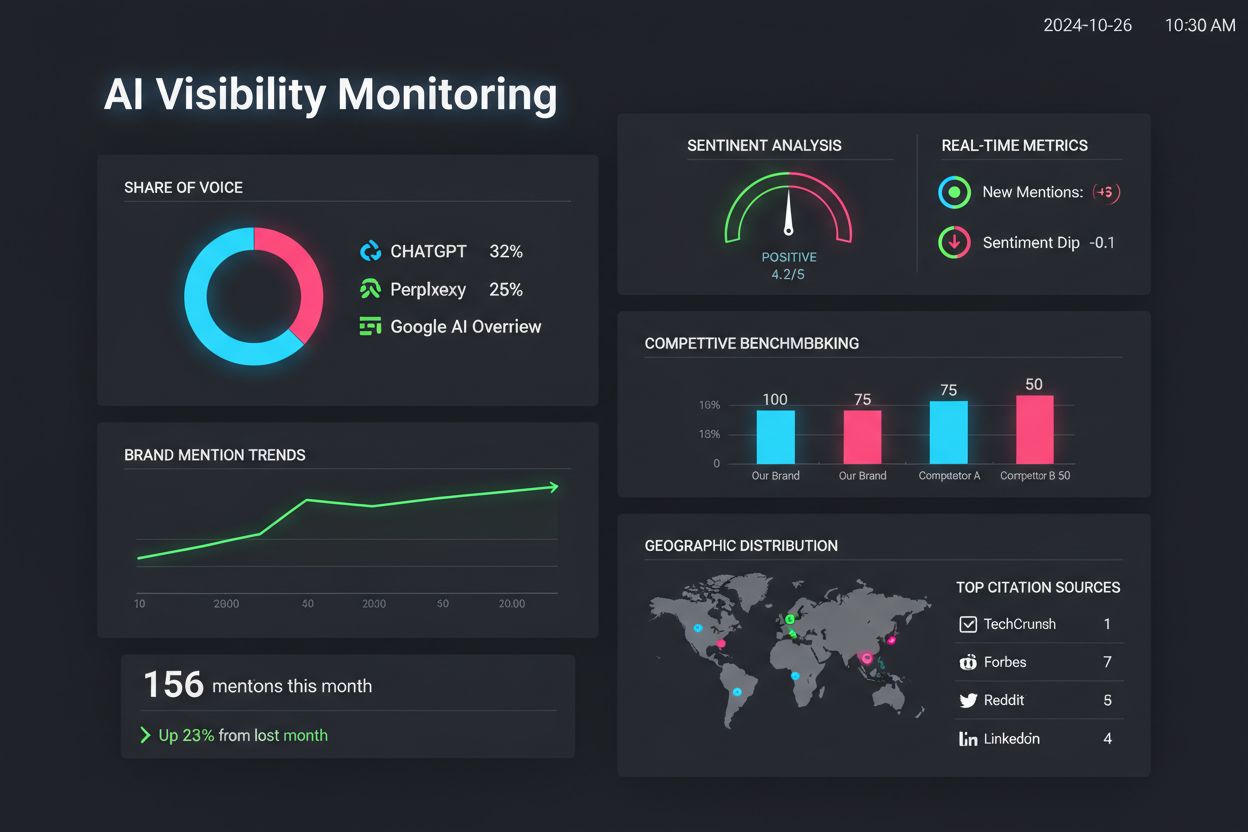
Learn how to get your brand cited by ChatGPT, Perplexity, and Google AI. Master digital PR strategies that drive AI visibility and LLM citations with data-backed tactics.
Brand discovery is undergoing a fundamental transformation that rivals the shift from print to digital. Where companies once competed for search rankings, they now compete for citations in AI-generated responses. ChatGPT processes over 3 billion monthly prompts, while Perplexity retrieves over 200 billion URLs to answer user questions. Most striking: 61% of AI responses cite editorial media sources, meaning traditional journalism and authoritative content now serve as the backbone of AI visibility. This shift represents a move from link-based visibility (where backlinks determined ranking) to citation-based visibility (where being quoted in AI responses determines brand discovery). The implications are profound—a company can rank #1 on Google and still be invisible to ChatGPT users asking the same question.
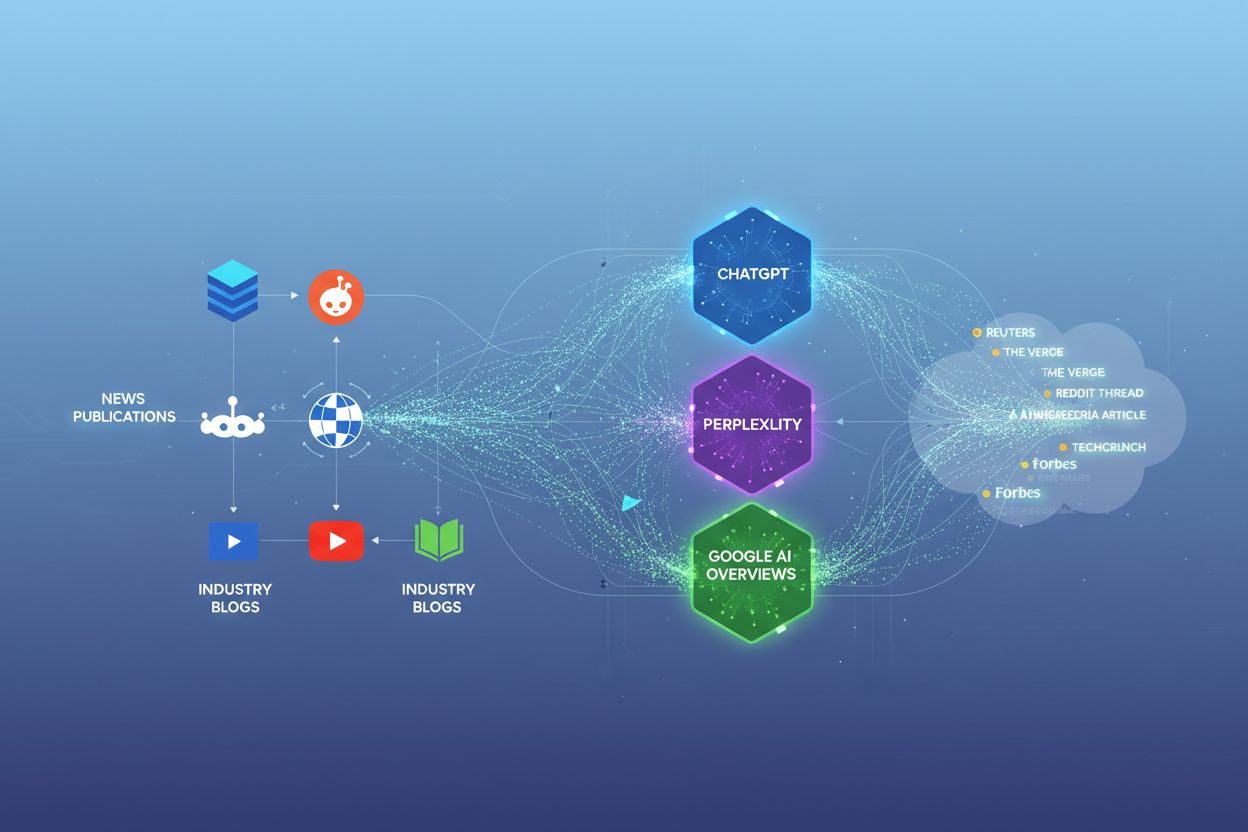
Large language models don’t retrieve information the same way search engines do. They operate through two distinct mechanisms: parametric knowledge (information baked into model weights during training) and retrieved knowledge (real-time information pulled from external sources). Approximately 60% of ChatGPT queries rely on parametric knowledge, meaning the model answers from memory rather than looking anything up. When models do retrieve information, they use hybrid retrieval systems combining semantic search (understanding meaning) and BM25 (traditional keyword matching). Content chunking—how information is broken into retrievable pieces—dramatically affects citation likelihood, with optimal chunking achieving 0.648 accuracy in source selection. Three signals consistently influence which sources get cited: structure (clear formatting and hierarchy), context (surrounding information that validates the claim), and repetition (how often the information appears across trusted sources). Understanding these mechanisms is essential because it reveals why traditional SEO tactics often fail in the AI era.
| Knowledge Type | Source | Speed | Freshness | Citation Likelihood |
|---|---|---|---|---|
| Parametric | Training data | Milliseconds | Static (training cutoff) | High for frequent entities |
| Retrieved (RAG) | Real-time web | Seconds | Current | High for structured content |
Each AI platform has distinct citation preferences that demand tailored strategies. ChatGPT shows strong correlation with Bing (87%) and heavily favors Wikipedia (47.9% of citations), suggesting it relies on Bing’s index and established encyclopedic sources. Perplexity, by contrast, cites Reddit 46.7% of the time and prioritizes real-time retrieval, making community discussions and fresh content more valuable. Google AI Overviews take a more diversified approach, citing top-10 results 93.67% of the time, rewarding traditional SEO performance more than other platforms. Critically, only 11% of sources are cited by both ChatGPT and Perplexity, revealing that cross-platform visibility requires fundamentally different content strategies. A brand might dominate ChatGPT citations while remaining invisible on Perplexity, or vice versa. This fragmentation means companies can’t rely on a single visibility strategy—they must understand and optimize for each platform’s unique citation patterns. The days of one-size-fits-all SEO are definitively over.
| Platform | Top Source | % Citations | Key Characteristic | Strategy |
|---|---|---|---|---|
| ChatGPT | Wikipedia | 47.9% | Training data dominant | Establish authority on Wikipedia |
| Perplexity | 46.7% | Real-time retrieval | Engage in Reddit discussions | |
| Google AI Overview | 21% | Most diversified | Multi-platform presence | |
| Claude | Brave Search | Varies | Constitutional AI | Trustworthy sources |
Achieving AI visibility requires a systematic three-phase approach: Publish, Distribute, and Reinforce. Publish means creating cite-worthy content that AI models want to reference—comparisons, reviews, FAQs, original research, and data-backed insights that answer specific questions comprehensively. Distribute involves strategically placing this content where AI crawlers and training data originate: partner websites, industry communities, Reddit discussions, YouTube videos, and other platforms that feed into model training and retrieval systems. Reinforce means maintaining consistent messaging and presence over time, allowing repetition to build citation confidence in the model’s training data. Each phase feeds into the next: strong published content gives partners something worth distributing, and consistent distribution reinforces the brand’s authority in the model’s understanding. This isn’t a one-time campaign but an ongoing practice of content seeding that builds cumulative visibility. Think of it like planting seeds across multiple gardens—some will grow immediately, others will take time, but consistent planting ensures continuous harvest.
Phase 1: Publish
Phase 2: Distribute
Phase 3: Reinforce
Not all SEO signals translate to AI visibility, and some traditional metrics are surprisingly weak. Brand search volume shows the strongest correlation at 0.334, meaning companies people actively search for are more likely to be cited by AI. Counterintuitively, backlinks show weak to neutral correlation, contradicting decades of SEO orthodoxy—quantity of links matters far less in the AI era than it did for Google rankings. Content recency strongly influences citations, with 65% of AI responses citing content from the past year and 79% from the past two years, making freshness critical. When companies actively optimize for AI visibility, the results are dramatic: adding citations to content increases visibility by 115.1%, adding quotations improves visibility by 37%, and adding statistics improves visibility by 22%. These aren’t marginal improvements—they’re transformative changes in how often a brand appears in AI responses. The data reveals a clear hierarchy: brand recognition matters most, recency matters significantly, and traditional link metrics matter least. This reordering demands a fundamental shift in how companies approach content strategy.
| Factor | Correlation/Impact | Implication |
|---|---|---|
| Brand Search Volume | 0.334 (STRONGEST) | Build brand awareness first |
| Content Recency | 65% from past year | Keep content fresh |
| Citations Added | +115.1% (rank #5) | Cite authoritative sources |
| Quotations Added | +37% improvement | Include expert quotes |
| Statistics Added | +22% improvement | Use data and numbers |
| Backlinks | Weak/Neutral | Less important than expected |
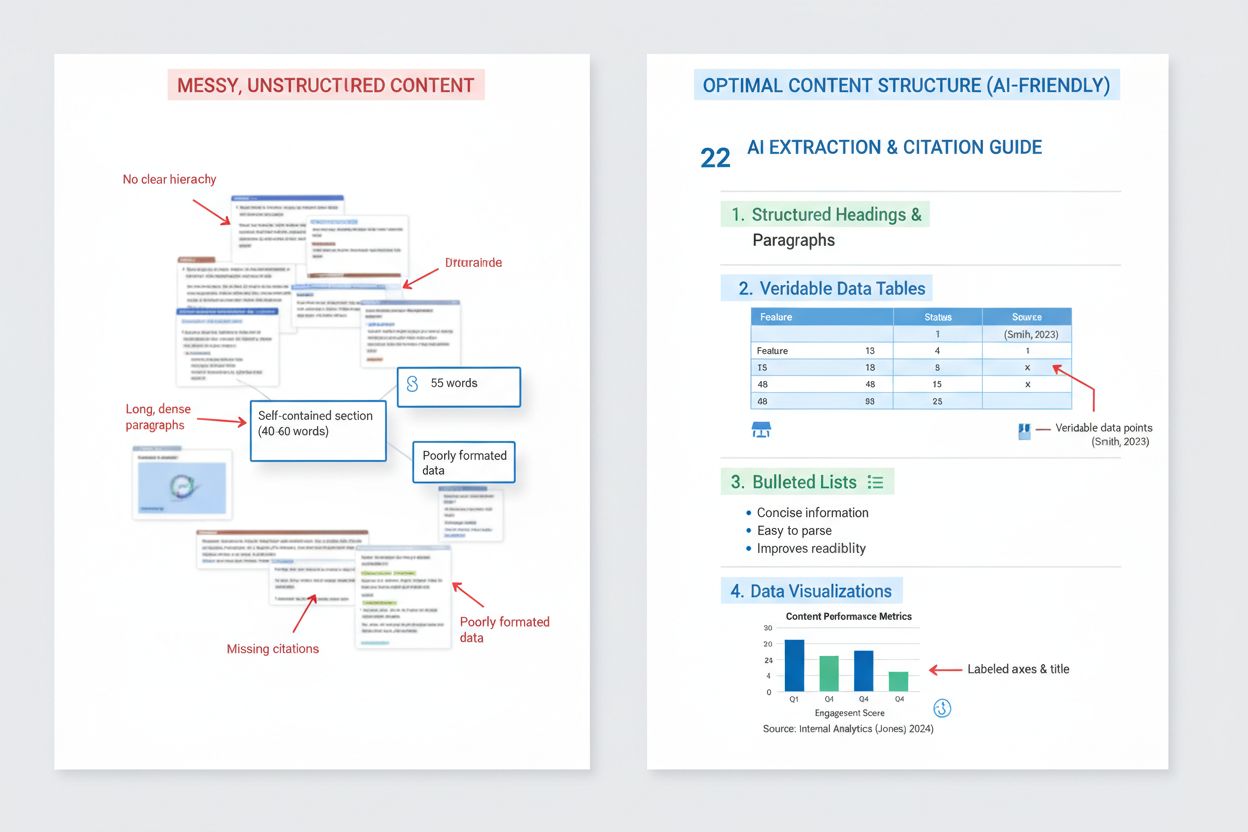
AI models don’t just evaluate content quality—they evaluate how content is structured and presented. Lead with the answer directly rather than hedging or building suspense, as AI models prioritize immediate, clear information. Optimal paragraph length is 40-60 words, making content easily chunked and retrievable by RAG systems. Comparative listicles represent 32.5% of all AI citations, making them the highest-performing content format by far. Structure content as self-contained sections that function as standalone chunks, allowing each section to be cited independently without requiring context from surrounding paragraphs. Implement clear heading hierarchy that mirrors how users search, making it easy for AI systems to match queries to relevant sections. Include verifiable data points with proper citations, as AI models reward content that demonstrates research rigor and provides sources. The goal is to make your content so well-organized that AI systems naturally want to cite it—not because it’s the only source, but because it’s the easiest source to extract and present to users.
AI crawlers are increasingly important infrastructure that many companies overlook. GPTBot traffic grew 305% between May 2024 and May 2025, indicating exponential growth in AI model training and retrieval activities. Different bots serve different purposes: GPTBot crawls for training data, while OAI-SearchBot crawls for real-time retrieval in ChatGPT search features—requiring different optimization approaches. IndexNow is critical for Bing and Copilot visibility, allowing you to notify Microsoft’s index immediately when content updates rather than waiting for crawlers to discover changes. Configure robots.txt strategically to allow AI crawlers while managing crawl budget, ensuring your most important content gets indexed for AI systems. Fast page load times favor AI crawler access, as slow sites get crawled less frequently and less thoroughly. Mobile-first optimization remains important, as many AI crawlers prioritize mobile versions of content. Technical accessibility directly impacts AI visibility—a well-crawled site with fast load times will be cited more frequently than a technically neglected competitor.
User-agent: OAI-SearchBot
Allow: /

User-agent: PerplexityBot
Allow: /

User-agent: GPTBot
Disallow: /  # Optional: block training but allow search
Measuring AI visibility requires different metrics than traditional SEO. Share of Voice (SOV) for top brands averages around 15%, while enterprise leaders achieve 25-30%, providing benchmarks for competitive positioning. Citation Drift—the monthly change in citation frequency—averages 59.3% for Google AI Overviews and 54.1% for ChatGPT, revealing high volatility that demands continuous monitoring. Enterprise-level monitoring tools include Profound (tracking 240M+ citations) and Semrush’s AI visibility features, offering comprehensive dashboards for large organizations. Mid-market companies benefit from LLMrefs, Peec AI, and First Answer, which provide more affordable but still robust tracking. Budget-conscious teams can use Otterly.AI, Scrunch AI, and Knowatoa for basic monitoring and insights. Track four key metrics: mention frequency (how often you’re cited), citation sentiment (how you’re characterized), competitive position (where you rank against competitors), and platform distribution (which AI systems cite you most). Regular monitoring reveals trends, identifies opportunities, and helps teams adjust strategy based on real performance data.
| Investment Tier | Tools | Price Range | Best For |
|---|---|---|---|
| Enterprise | Profound, Semrush AI Toolkit | $400+/month | Large organizations |
| Mid-Market | LLMrefs, Peec AI, First Answer | $50-400/month | Growing companies |
| Budget | Otterly.AI, Scrunch AI, Knowatoa | $30-50/month | Startups, testing |
Understanding what fails is as important as knowing what succeeds. Backlink quantity remains weak or neutral for AI visibility, making traditional link-building campaigns ineffective for this channel—a hard truth for SEO professionals. Keyword stuffing actually performs worse in generative engines than in traditional search, as AI models penalize unnatural language and prioritize readability. Multi-modal content (images, videos, infographics) shows no measurable impact on AI citations, meaning visual content doesn’t improve visibility in text-based AI responses. Ranking #1 on Google shows only 4.5% correlation with AI citations, proving that traditional search dominance doesn’t guarantee AI visibility. Short-form, thin content underperforms dramatically, as AI models prefer comprehensive, well-researched content that provides genuine value. The “more is more” approach fails—quality, depth, and clarity matter far more than quantity. Companies that simply repurpose their existing SEO strategy for AI visibility consistently underperform compared to those who build dedicated AI-first content strategies.
| Strategy | Traditional SEO Impact | AI Visibility Impact |
|---|---|---|
| Backlink quantity | HIGH (core signal) | WEAK/NEUTRAL |
| Keyword stuffing | Negative | WORSE in AI |
| Images/videos | Engagement boost | No measurable impact |
| #1 ranking focus | Primary goal | Only 4.5% correlation |
| Thin content at scale | Variable | Actively penalized |
AmICited.com provides real-time monitoring of your brand’s presence across major AI platforms. The platform tracks brand mentions and citations across ChatGPT, Perplexity, and Google AI Overviews, giving you visibility into where your brand appears in AI-generated responses. Real-time tracking shows exactly when and where your brand is cited, allowing you to identify which content pieces drive the most AI visibility. Competitive benchmarking features compare your citation performance against direct competitors, revealing gaps and opportunities in your AI visibility strategy. Sentiment analysis evaluates how your brand is characterized in AI responses, distinguishing between positive mentions, neutral citations, and negative characterizations. Monthly citation drift monitoring tracks volatility and trends, helping you understand whether your visibility is growing, declining, or stabilizing. With AmICited.com integrated into your monitoring stack, you gain the visibility and insights needed to optimize your AI visibility strategy continuously and competitively.
Traditional PR focused on media coverage for human audiences and backlinks for SEO. Digital PR for AI visibility focuses on getting cited by LLMs, which requires understanding how AI systems retrieve and evaluate sources. The goal shifts from 'getting coverage' to 'getting cited by AI systems that synthesize answers.' This demands different content strategies, distribution channels, and measurement approaches.
LLMs prioritize sources that appear frequently across authoritative platforms and have strong brand recognition. Brand search volume indicates that people actively seek your brand, which signals authority to AI systems. Backlinks matter less because AI systems evaluate source credibility differently than traditional search engines—they look for consensus across multiple sources rather than link authority.
A multi-platform approach is essential since only 11% of domains are cited by both ChatGPT and Perplexity. ChatGPT favors Wikipedia and established media, Perplexity emphasizes Reddit and real-time content, and Google AI Overview values diversified sources. Start by understanding where your target audience gets answers, then optimize for each platform's unique citation patterns.
Citation patterns can shift monthly (40-60% volatility is normal), but building sustainable AI visibility typically takes 3-6 months of consistent effort. The key is maintaining presence across multiple platforms with consistent messaging. Quick wins are possible with high-authority placements, but compound visibility builds over time through repeated seeding.
While traditional SEO rankings help create credibility and surface area, they're not required for AI citations. Nearly 90% of ChatGPT citations come from URLs ranked position 21 or lower in Google. Focus on distributed presence across trusted sources, structured content, and brand authority rather than chasing #1 rankings.
Track metrics like Share of Voice (% of AI answers mentioning your brand), citation frequency across platforms, sentiment analysis, and competitive position. Use tools like AmICited.com to monitor mentions across ChatGPT, Perplexity, and Google AI Overviews. Measure conversion quality from AI-driven traffic, which converts 4.4x better than other sources.
Reddit is heavily cited by Perplexity (46.7% of citations) and appears in Google AI Overviews. Authentic participation in relevant subreddits where your expertise adds value builds both community trust and AI visibility. However, this must be genuine engagement, not promotional content—AI systems and communities alike penalize inauthentic participation.
AmICited.com monitors where your brand appears in AI answers across ChatGPT, Perplexity, and Google AI Overviews. It tracks citation trends, sentiment, competitive benchmarking, and identifies which topics drive mentions. This data helps you refine your Digital PR strategy by showing what's working and where to focus efforts for maximum AI visibility impact.
Track where your brand appears in ChatGPT, Perplexity, and Google AI Overviews. Get real-time insights into your AI citations and competitive position.
Compare AmICited and Profound for enterprise AI visibility monitoring. Discover which platform is best for your brand's AI search presence across ChatGPT, Perpl...
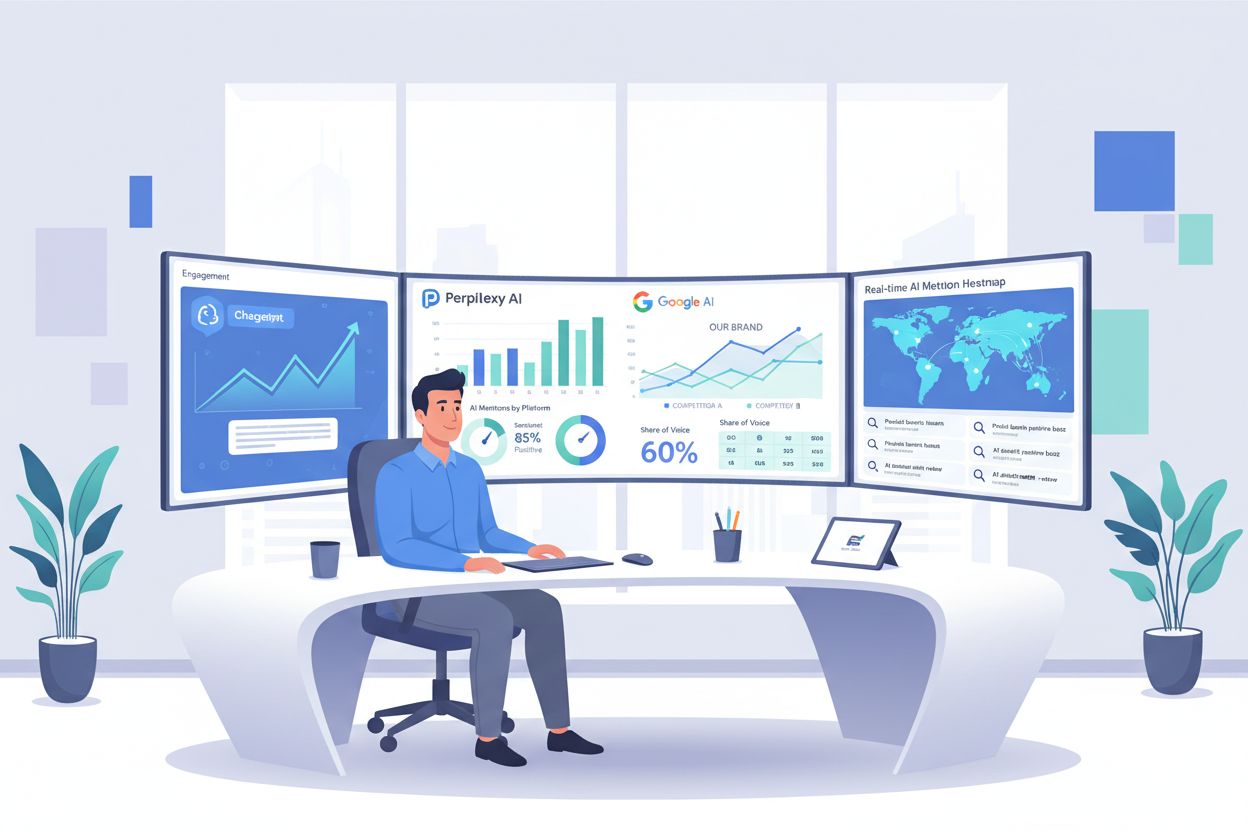
Learn how to set up AI brand monitoring to track your brand across ChatGPT, Perplexity, and Google AI Overviews. Complete guide with tools, strategies, and best...
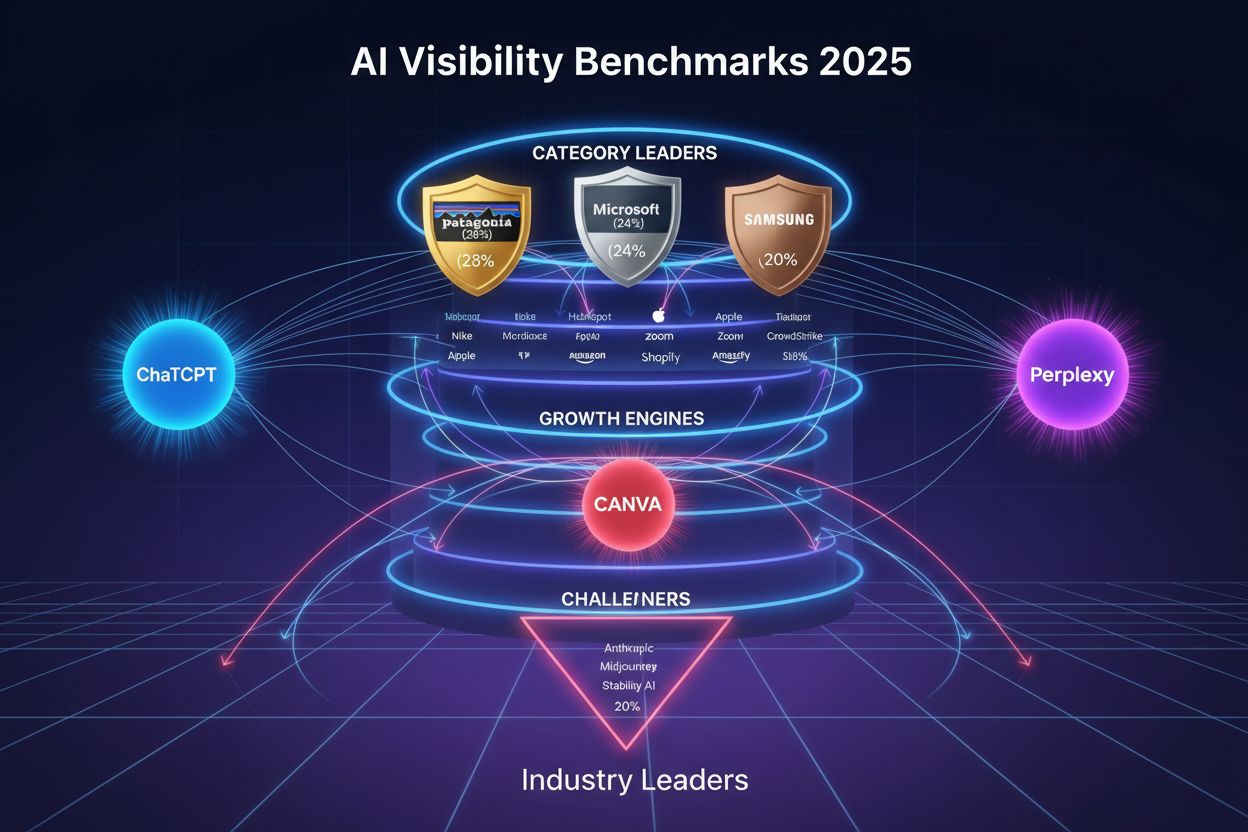
Discover which brands are winning AI visibility benchmarks. Analyze industry leaders across ChatGPT, Perplexity, and Google AI with data-driven insights and com...