
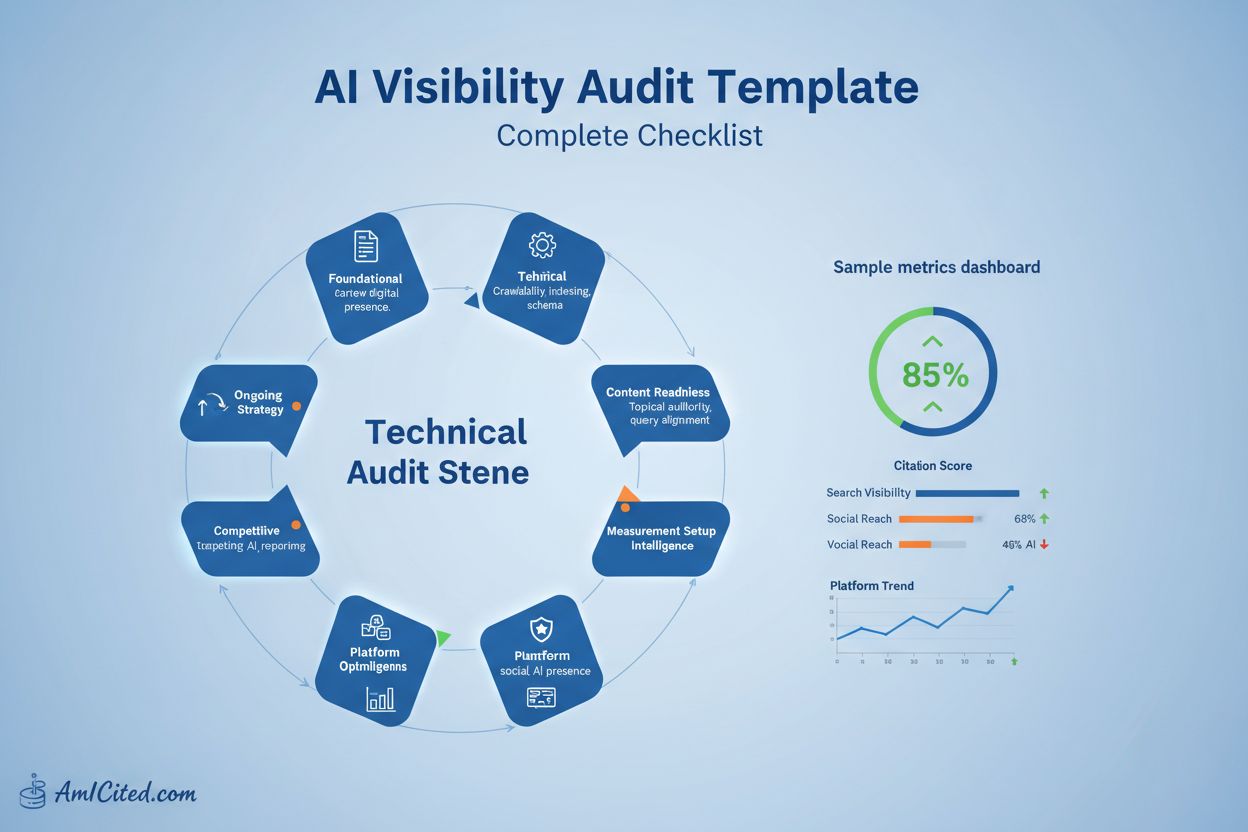
AI Visibility Audit Template: Downloadable Checklist
Complete AI visibility audit template and checklist. Audit your brand across ChatGPT, Perplexity, Google AI Overviews, and more. Step-by-step guide with tools, ...
15 min read
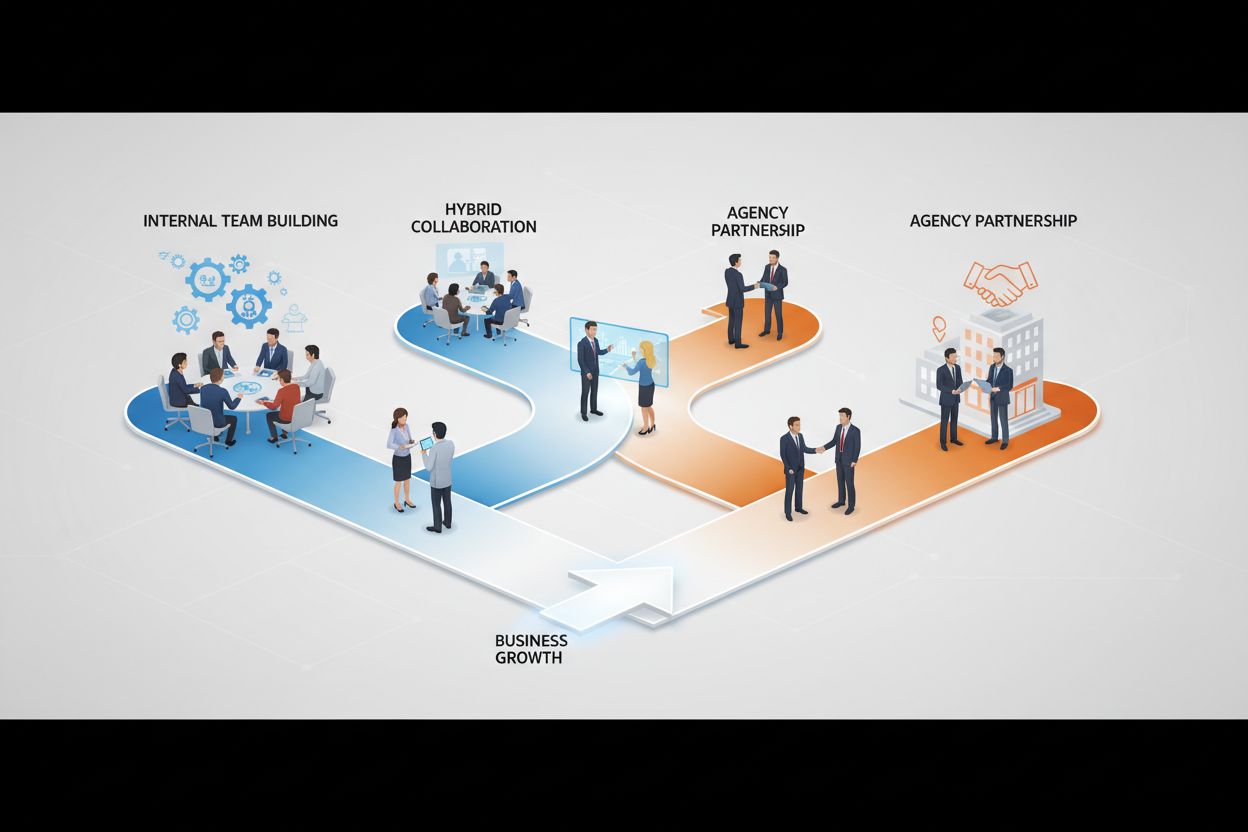
Comprehensive decision guide comparing DIY and agency approaches to AI visibility monitoring. Learn costs, timelines, and when to hire professional help for tracking your brand across ChatGPT, Gemini, and Perplexity.
The landscape of search has fundamentally shifted, and most organizations haven’t caught up. Over 64% of search queries now result in zero-click searches, with AI-generated answers appearing directly in search results before users ever click through to your website. This means your content—and your brand—can be summarized, repackaged, or completely bypassed by AI systems without driving a single visitor to your site. The stakes are higher than ever: visibility in AI answers is no longer a nice-to-have feature, it’s a survival mechanism for organic traffic. The critical question isn’t whether you need AI visibility monitoring, but rather how you’ll achieve it—and whether you should build that capability in-house or bring in specialized help.
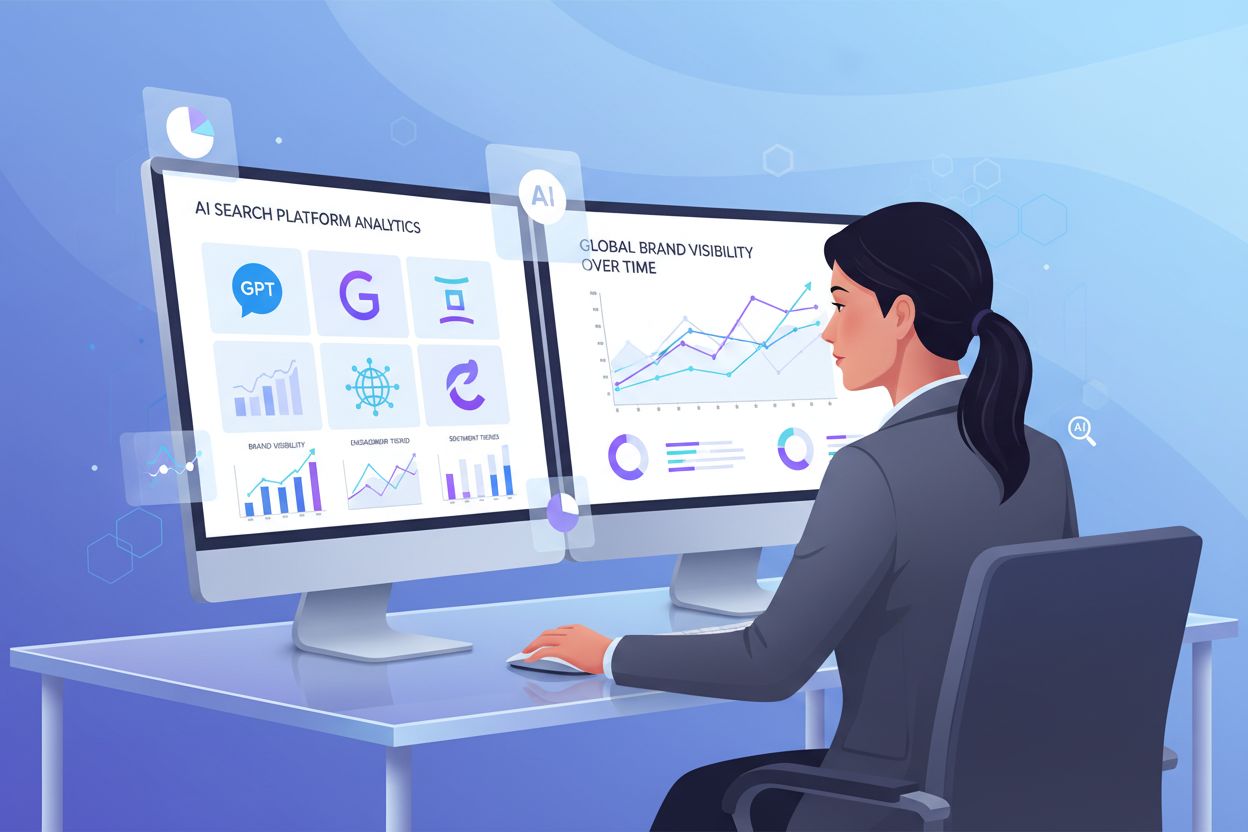
Building an in-house AI visibility program means assembling a dedicated team to monitor, analyze, and optimize your presence across AI answer platforms. This typically requires a content strategist to identify answer opportunities, a technical SEO specialist to implement optimizations, a data analyst to track performance metrics, and ideally a program manager to orchestrate everything. The appeal is clear: you maintain complete control, build institutional knowledge, and avoid ongoing agency fees. However, the reality is more complex. You’re looking at $150,000-$300,000 annually in salary costs alone, plus tools, training, and the inevitable learning curve as your team develops expertise in a rapidly evolving field.
| Role | Annual Cost | Time to Competency | Key Responsibilities |
|---|---|---|---|
| Content Strategist | $70,000-$90,000 | 4-6 months | Answer mapping, content gaps |
| Technical SEO Specialist | $80,000-$110,000 | 3-5 months | Implementation, schema markup |
| Data Analyst | $75,000-$95,000 | 2-4 months | Tracking, reporting, insights |
| Program Manager | $60,000-$80,000 | 1-2 months | Coordination, governance |
The timeline to meaningful results typically stretches 6-12 months, and you’ll face significant challenges: your team will need to stay current with constantly changing AI platforms, you’ll struggle with tool selection and integration, and you’ll likely make costly mistakes while learning what actually moves the needle.
Specialized AI visibility agencies bring battle-tested frameworks, proven playbooks, and immediate expertise that would take your internal team months or years to develop. They’ve already made the mistakes, learned the patterns, and identified what actually works across different industries and content types. An experienced agency can have your program running effectively in 3-6 months, compared to the 6-12 month timeline for DIY teams. Beyond speed, agencies offer scalability—they can ramp up efforts during critical periods, handle multiple platforms simultaneously, and provide strategic guidance that goes beyond tactical execution. They also absorb the risk of platform changes and algorithm updates, continuously adapting their approach so you don’t have to.
While agency fees seem expensive on the surface, the full financial picture is more nuanced than comparing headline costs. A mid-market agency typically charges $8,000-$15,000 monthly ($96,000-$180,000 annually), while enterprise-level agencies range from $20,000-$50,000+ monthly. But here’s what DIY teams often miss: the hidden costs of in-house programs include recruitment and onboarding ($15,000-$25,000), tool subscriptions ($3,000-$8,000 monthly), training and certifications ($5,000-$10,000 annually), and the opportunity cost of your team’s time spent learning rather than executing.
| Approach | Year 1 Cost | Year 2+ Cost | Setup Time | ROI Timeline |
|---|---|---|---|---|
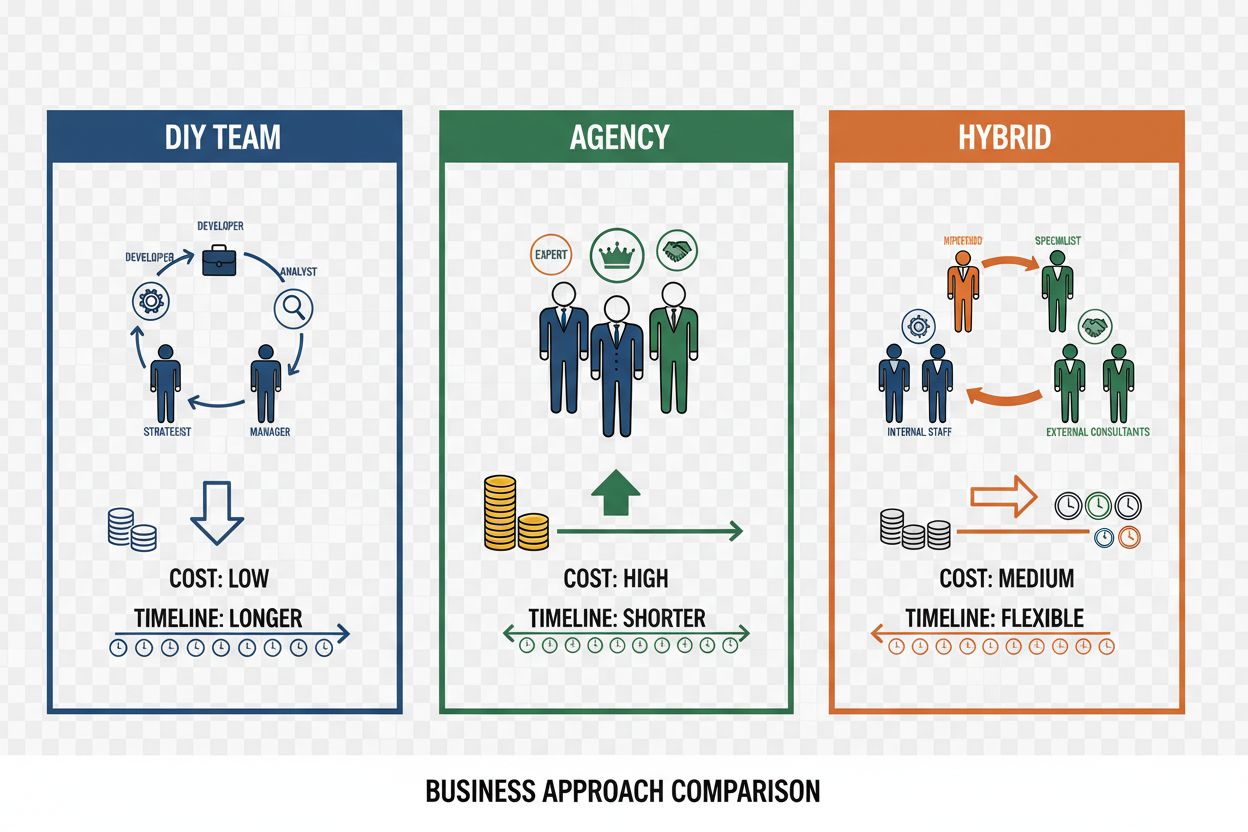
| DIY | $180,000-$350,000 | $150,000-$300,000 | 2-3 months | 9-15 months |
| Agency | $120,000-$240,000 | $120,000-$240,000 | 2-4 weeks | 4-8 months |
| Hybrid | $100,000-$180,000 | $80,000-$150,000 | 1-2 months | 5-10 months |
The ROI timeline matters significantly: agencies typically show measurable improvements in AI answer visibility within 4-8 months, while DIY teams often don’t see meaningful results until month 9-15. When you factor in the cost of mistakes, tool churn, and team turnover, the financial advantage of agencies becomes clearer—especially for companies that can’t afford a 12-month learning curve.
Many organizations are discovering that the optimal path isn’t purely DIY or purely agency—it’s a strategic hybrid that combines the best of both worlds. In a hybrid model, you might hire an agency for 6-12 months to establish your program, build your playbooks, and train your internal team, then transition to a smaller in-house team supported by the agency for ongoing optimization and platform changes. This approach gives you the speed and expertise of an agency while building sustainable internal capabilities. Another variation involves keeping core strategy and execution in-house while outsourcing specialized functions like technical implementation, tool management, or competitive analysis. Hybrid models also enable seasonal scaling: you might maintain a lean core team year-round but bring in agency support during critical periods like product launches or competitive threats.
Your choice between DIY and agency should be heavily influenced by the tools available to you. AI visibility monitoring tools have become increasingly sophisticated, enabling smaller teams to punch above their weight with the right technology stack. The landscape includes several key categories: comprehensive platforms like AmICited.com that track your presence across multiple AI answer systems with detailed attribution and performance metrics; specialized tools like Profound and ZipTie that focus on specific AI platforms; broader SEO suites like Semrush that integrate AI answer tracking into their existing offerings; and emerging solutions like Peec AI that focus on answer optimization.
The right tool can dramatically shift the DIY vs Agency equation:
If you’re considering DIY, investing in a robust tool like AmICited.com can reduce your team size requirements and accelerate time-to-value. If you’re working with an agency, ensure they have deep expertise with the tools you’re using—tool fluency is often the difference between good results and great ones.
Your optimal path depends on your specific situation. Here are five common scenarios and what typically works best:
Early-Stage Startup (Under $10M Revenue): You have limited budget but need to establish AI visibility quickly. Recommendation: Hybrid approach with fractional agency support. Hire an agency for 3-4 months to build your playbook and train one internal person, then transition to that person managing execution with monthly agency check-ins. Cost: $30,000-$50,000 in agency fees plus one $60,000-$80,000 hire.
Mid-Market B2B Company ($50M-$500M Revenue): You have the budget for a dedicated team but lack specialized expertise. Recommendation: Full agency partnership for 6-12 months, then transition to hybrid. Let the agency establish your program, build your team, and create your playbooks. After 12 months, you’ll have the internal capability to manage execution with quarterly agency strategy sessions. Cost: $120,000-$180,000 annually.
Enterprise Organization ($500M+ Revenue): You have significant resources and complex requirements across multiple business units. Recommendation: In-house team with agency oversight. Build a dedicated 4-5 person team supported by an agency that provides strategic guidance, handles emerging platforms, and ensures best practices across the organization. Cost: $250,000-$400,000 annually.
Highly Competitive Industry (Finance, Healthcare, Legal): Your competitors are already winning in AI answers and you’re falling behind. Recommendation: Immediate agency engagement with aggressive timeline. You can’t afford a 6-12 month learning curve. Hire an agency to establish your program in 90 days while simultaneously recruiting your internal team. Cost: $150,000-$250,000 in year one.
Resource-Constrained Organization: You have limited budget and limited headcount. Recommendation: Tool-first approach with minimal agency support. Invest in a comprehensive platform like AmICited.com that enables one person to manage your AI visibility program effectively. Use agency support only for quarterly strategy sessions. Cost: $50,000-$80,000 annually.
If you decide to hire an agency, selecting the right partner is critical—and it’s not just about their AI visibility credentials. Look for agencies that demonstrate deep HubSpot fluency (since most B2B companies use HubSpot for their marketing stack) and understand how to integrate AI visibility into your existing martech ecosystem. They should have a proven playbook for identifying “answer-first patterns”—the specific content structures and formats that consistently win AI answer placement. Ask about their distribution playbooks: how do they ensure optimized content actually reaches the right audiences? The best agencies operate on a weekly cadence with clear governance, providing regular reporting, strategic recommendations, and transparent communication about what’s working and what isn’t.
During your evaluation, request case studies from companies similar to yours—not just in industry, but in size and complexity. Ask specifically about their approach to tool selection and whether they have preferred platforms (like AmICited.com) that they use across clients. Understand their team structure: who will be your day-to-day contact, and what’s the seniority level of the strategist overseeing your account? Finally, clarify the transition plan if you eventually want to bring capabilities in-house. The best agencies view themselves as temporary partners who are actively building your internal capability, not as vendors trying to lock you into a long-term dependency.
If you’re committed to building in-house AI visibility capabilities, success requires more than just hiring smart people—it requires organizational alignment and the right infrastructure. You need executive air cover: a C-level sponsor who understands why AI visibility matters and will protect the program’s budget and timeline during the inevitable rough patches. You need clear swimlanes that define who owns what (content strategy vs. technical implementation vs. analytics) and empower each person to make decisions within their domain. You need AEO instrumentation built into your content management and analytics systems so you can actually measure what’s working.
The enablement cadence matters enormously: plan for monthly training sessions where your team learns about platform changes, shares learnings, and discusses emerging opportunities. Be realistic about talent: the best AI visibility specialists are in high demand, and you may need to hire people with adjacent skills (SEO, content strategy, analytics) and train them up rather than finding the perfect candidate. Consider bringing in an agency for a 90-day “bootcamp” where they work alongside your team, transferring knowledge and building your playbooks. Finally, budget for continuous learning: AI platforms change constantly, and your team needs access to training, conferences, and industry resources to stay current.
Understanding realistic timelines is crucial for setting expectations and measuring success. DIY teams typically need 6-12 months before seeing meaningful results, with the first 3-4 months spent on setup, learning, and establishing baselines. You’ll see early wins—some quick content optimizations that drive immediate improvements—but the compounding gains come later as your team develops pattern recognition and builds a library of proven approaches. Agency-led programs typically show measurable improvements within 3-6 months, partly because they’re starting with proven playbooks rather than discovering them from scratch.
The difference between “signal” and “compounding gains” is important to understand. Signal is your first evidence that the program is working: you see your content appearing in AI answers, you measure some traffic attribution, you identify winning patterns. This typically comes within 2-4 months with an agency, 4-6 months with a strong DIY team. Compounding gains come later, as you build a library of optimized content, develop deeper platform expertise, and create systematic processes that generate consistent results. By month 12, a well-executed program—whether DIY or agency-led—should be delivering measurable ROI and clear visibility into which content types, topics, and optimization strategies drive the most value for your business.
Most businesses should budget between $79-$149/month for AI visibility tools. DIY team costs range from $150,000-$300,000 annually, while agency services typically cost $8,000-$25,000 monthly. The right choice depends on your company size, existing resources, and timeline to results.
Agency-led programs typically show measurable improvements within 3-6 months, while DIY teams usually need 6-12 months. The difference comes from agencies starting with proven playbooks rather than discovering them from scratch. Early signal appears within 2-4 months, with compounding gains building over time.
Yes, but with the right tools. A single person with a comprehensive platform like AmICited can manage your AI visibility program effectively. However, you'll need support from your content and technical teams. For best results, allocate 20-30% of one person's time to this function.
Beyond salaries, DIY programs incur recruitment costs ($15,000-$25,000), tool subscriptions ($3,000-$8,000 monthly), training and certifications ($5,000-$10,000 annually), and opportunity costs from your team learning rather than executing. These hidden costs often exceed the headline salary expenses.
Track AI-driven traffic attribution, share of voice across platforms, citation frequency, and sentiment analysis. Connect AI visibility metrics to pipeline and revenue impact. Most companies see ROI within 6-12 months as AI answer traffic compounds and brand positioning improves.
This depends on your timeline and budget. If you have 12+ months to develop capabilities, DIY can work. If you need results faster or lack internal expertise, starting with an agency for 6-12 months then transitioning to hybrid is often more cost-effective than learning from scratch.
AmICited specializes in monitoring how your brand appears across GPTs, Perplexity, and Google AI Overviews with detailed attribution and performance metrics. It's designed specifically for tracking AI answer visibility, making it ideal for companies focused on this channel without needing broader SEO tools.
Review your strategy weekly during the initial 3-6 months to identify patterns and quick wins. After establishing baseline performance, move to monthly reviews. Quarterly strategic reviews help you adjust to platform changes and competitive shifts in the AI search landscape.
Get real-time insights into how your brand appears across ChatGPT, Gemini, Perplexity, and other AI platforms. Make data-driven decisions about your AI visibility strategy.
Complete AI visibility audit template and checklist. Audit your brand across ChatGPT, Perplexity, Google AI Overviews, and more. Step-by-step guide with tools, ...
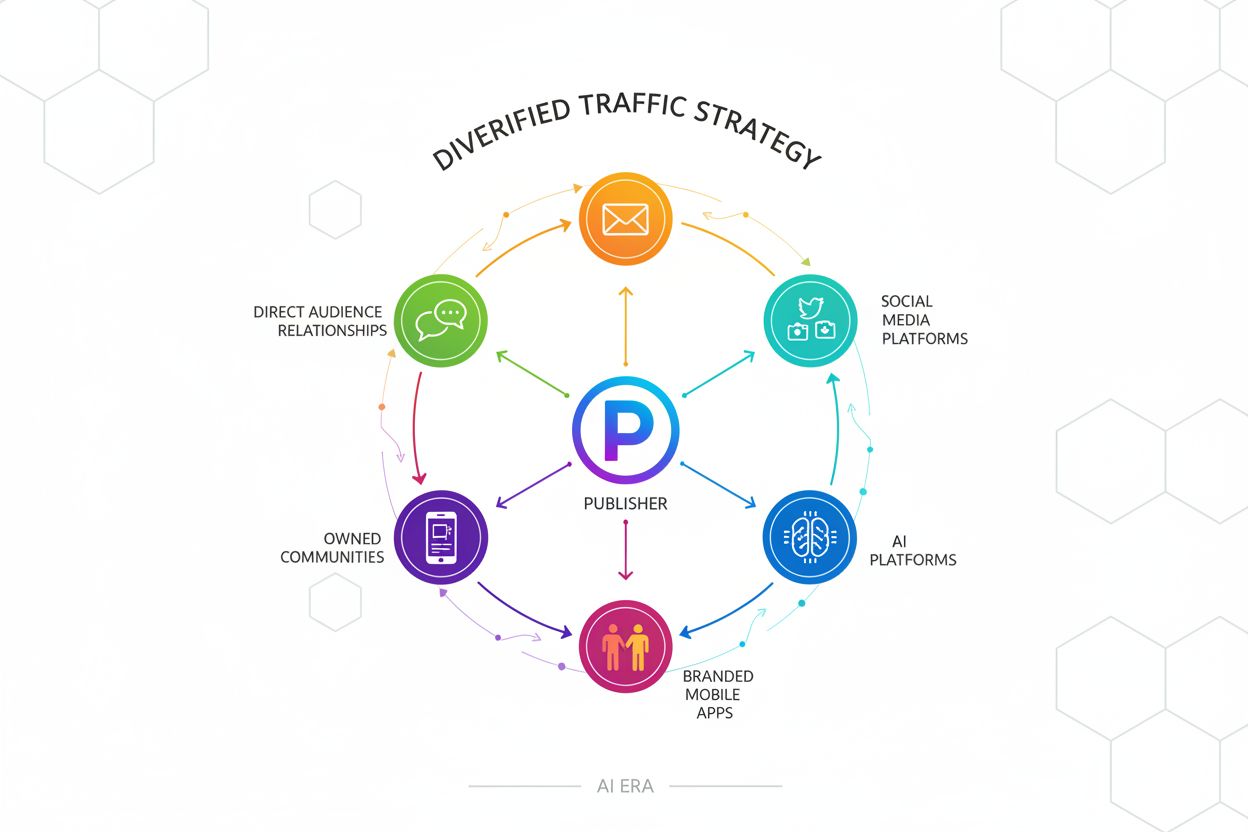
Learn how publishers can protect traffic and maintain visibility in the AI era. Discover strategies for AI optimization, citation tracking, and diversifying bey...
Comprehensive glossary of 100+ essential AI visibility and GEO terms every marketer should know. Learn about citation tracking, brand monitoring, and AI search ...