

ChatGPT Shopping Research Deep Dive: How It Works
Explore how ChatGPT Shopping transforms product discovery through conversational AI. Learn the technology, process, benefits for consumers and merchants, and op...
23 min read
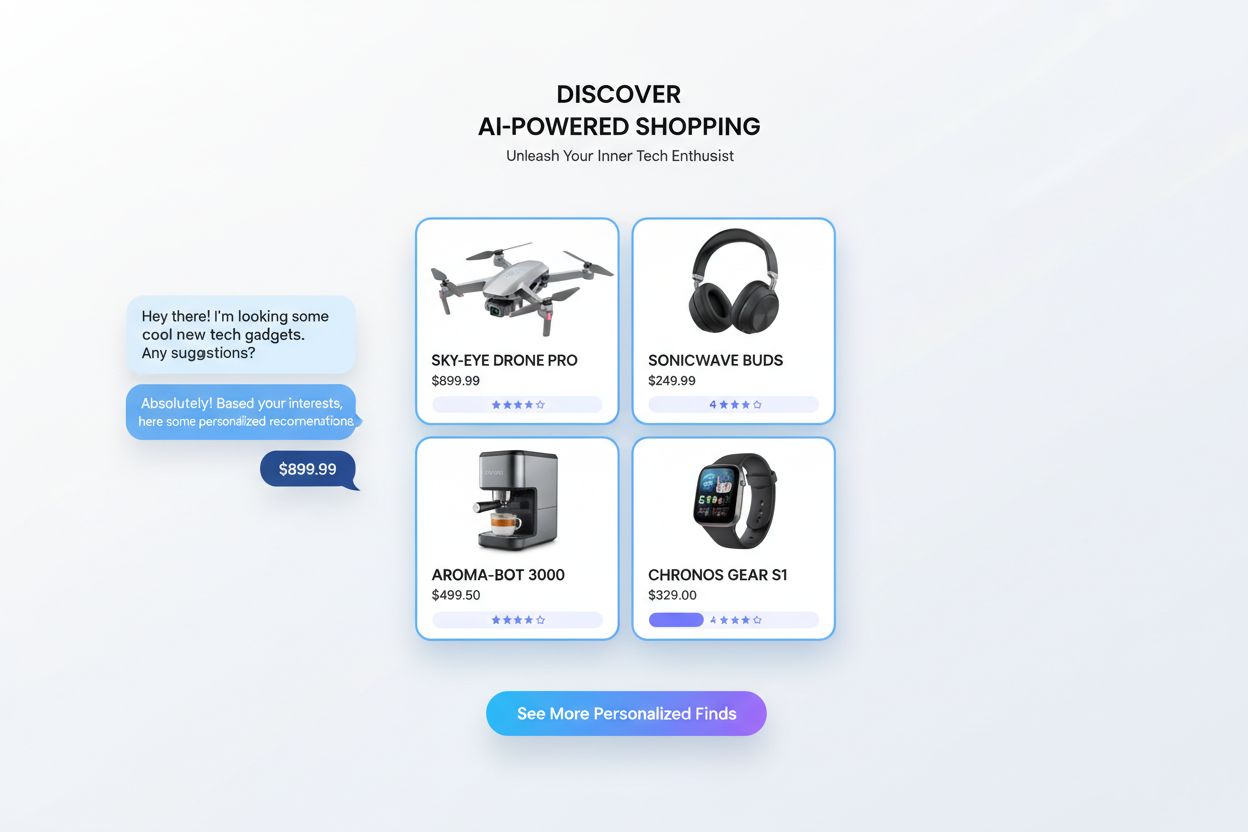
Discover how a leading e-commerce brand achieved 3x growth by optimizing for ChatGPT Shopping. Learn the 5 strategies that dominated AI product recommendations and captured market share.
ChatGPT Shopping has fundamentally transformed how millions of consumers discover and purchase products online. Since its launch in November 2024, this feature has enabled over 800 million weekly ChatGPT users to receive personalized product recommendations directly within their conversations. Unlike traditional search engines that return links to browse, ChatGPT Shopping delivers curated product suggestions with direct purchase options, creating a seamless shopping experience. For e-commerce brands, this represents an unprecedented opportunity to reach consumers at the exact moment they’re ready to buy.
ChatGPT Shopping operates as an intelligent recommendation engine that analyzes user queries and matches them with relevant products from participating retailers. The system demonstrates remarkable accuracy, achieving 52% accuracy on multi-constraint queries compared to just 37% for regular ChatGPT responses. Products are ranked organically based on relevance, quality, and user intent—not paid placement—making it a pure merit-based visibility channel. The feature works exceptionally well in specific categories including electronics, beauty, home and garden, kitchen, and sports/outdoor products. One critical limitation: Amazon products are notably absent from ChatGPT Shopping results, creating opportunities for alternative retailers to capture significant market share.
| Aspect | ChatGPT Shopping | Traditional Search | Paid Ads |
|---|---|---|---|
| Ranking Method | Organic relevance | Algorithmic + authority | Bid-based |
| User Intent Match | 52% accuracy | 37% accuracy | Variable |
| Cost Model | Free visibility | Free visibility | Per-click cost |
| Conversion Path | Direct checkout | Multi-step journey | Landing page |
| Category Strength | Electronics, beauty, home | All categories | All categories |
Our case study focuses on a mid-sized e-commerce brand specializing in smart home devices and kitchen appliances, generating approximately $8 million in annual revenue. The company had invested heavily in traditional SEO and SEM strategies, achieving solid rankings on Google and maintaining a respectable paid search presence. However, leadership recognized that emerging AI shopping channels represented a blind spot in their digital strategy. When ChatGPT Shopping launched, the brand faced a critical decision: invest resources to optimize for this new channel or maintain their existing approach and risk losing market share to competitors who moved faster.
The brand’s first strategic move was a comprehensive audit and optimization of their product data feeds. They discovered that their existing product descriptions, optimized for traditional search engines and human readers, lacked the structured data and specificity that AI models require for accurate recommendations. The team implemented detailed product attributes, enhanced descriptions with technical specifications, and ensured consistency across all product information. Within the first month of optimization, ChatGPT recommendations for their products increased by 40%, demonstrating the immediate impact of data quality on AI visibility. This foundational work proved essential for all subsequent strategies.
Key optimization elements implemented:
Recognizing that AI models heavily weight customer feedback when making recommendations, the brand launched a targeted review generation campaign. They implemented post-purchase email sequences encouraging verified buyers to leave detailed reviews, offered incentives for comprehensive feedback, and actively responded to all reviews with helpful information. The strategy focused on quantity and quality—not just star ratings, but substantive reviews that explained product benefits and use cases. This approach yielded a 35% improvement in recommendation frequency within three months, as ChatGPT’s algorithms increasingly recognized the brand’s products as trusted and well-reviewed options.
The brand recognized that AI models rely on mentions and citations across authoritative sources to validate product quality and relevance. They developed a multi-platform strategy to increase brand visibility in spaces where ChatGPT’s training data and real-time information sources overlap. This included securing features in tech blogs, obtaining mentions in buying guides, partnering with industry influencers, and contributing expert content to established publications. The cumulative effect was a 50% increase in brand citations across trusted platforms within six months, directly correlating with improved ChatGPT recommendation frequency.
Tactics for building trusted platform presence:
To ensure maximum visibility in ChatGPT Shopping results, the brand completed the allowlisting process and implemented proper technical infrastructure. This involved submitting their product catalog through OpenAI’s official channels, ensuring their website met technical requirements, and implementing JSON-LD structured data for product information. The technical optimization was critical—without proper schema markup, even high-quality products could be overlooked by the AI system.
{
  "@context": "https://schema.org/",
  "@type": "Product",
  "name": "SmartBrew Pro Coffee Maker",
  "description": "WiFi-enabled coffee maker with voice control and scheduling",
  "image": "https://example.com/smartbrew-pro.jpg",
  "brand": {
    "@type": "Brand",
    "name": "YourBrand"
  },
  "offers": {
    "@type": "Offer",
    "url": "https://example.com/smartbrew-pro",
    "priceCurrency": "USD",
    "price": "149.99",
    "availability": "https://schema.org/InStock"
  },
  "aggregateRating": {
    "@type": "AggregateRating",
    "ratingValue": "4.7",
    "reviewCount": "1243"
  },
  "review": [
    {
      "@type": "Review",
      "reviewRating": {"@type": "Rating", "ratingValue": "5"},
      "reviewBody": "Best coffee maker I've ever owned. The WiFi connectivity is seamless."
    }
  ]
}
Following allowlisting and technical optimization, the brand became eligible for placement in ChatGPT Shopping results reaching 100 million+ potential impressions monthly, representing a massive expansion of their addressable market.
The brand implemented a comprehensive monitoring system to track their performance in ChatGPT Shopping and other AI channels. They recognized that traditional analytics tools don’t capture AI-driven traffic effectively, so they adopted specialized platforms designed to monitor AI visibility. Using tools like AmICited.com, they could track when and how often their products appeared in ChatGPT recommendations, monitor competitor visibility, and identify optimization opportunities. This data-driven approach enabled continuous refinement of their strategies and provided clear ROI metrics for the initiative.
| Monitoring Metric | Baseline | 6-Month Result | Tool Used |
|---|---|---|---|
| ChatGPT Recommendation Frequency | 45/month | 135/month | AmICited.com |
| Brand Citation Rate | 12% | 18% | AmICited.com |
| Product Visibility Score | 32/100 | 78/100 | AmICited.com |
| Competitor Comparison | 3rd place | 1st place | AmICited.com |
| Estimated Monthly Impressions | 2.1M | 6.3M | AmICited.com |
The cumulative impact of these five strategies delivered exceptional results. Over a six-month period, the brand achieved a 3x increase in ChatGPT-driven traffic, translating to approximately 4.2 million additional monthly impressions from the platform. More importantly, conversion rates from ChatGPT Shopping traffic exceeded their traditional search traffic by 23%, indicating that AI-recommended customers were highly qualified and purchase-ready. Revenue attributable to ChatGPT Shopping grew from virtually zero to representing 18% of total online sales within the first year. The brand’s investment in AI visibility optimization had become one of their highest-ROI marketing initiatives.
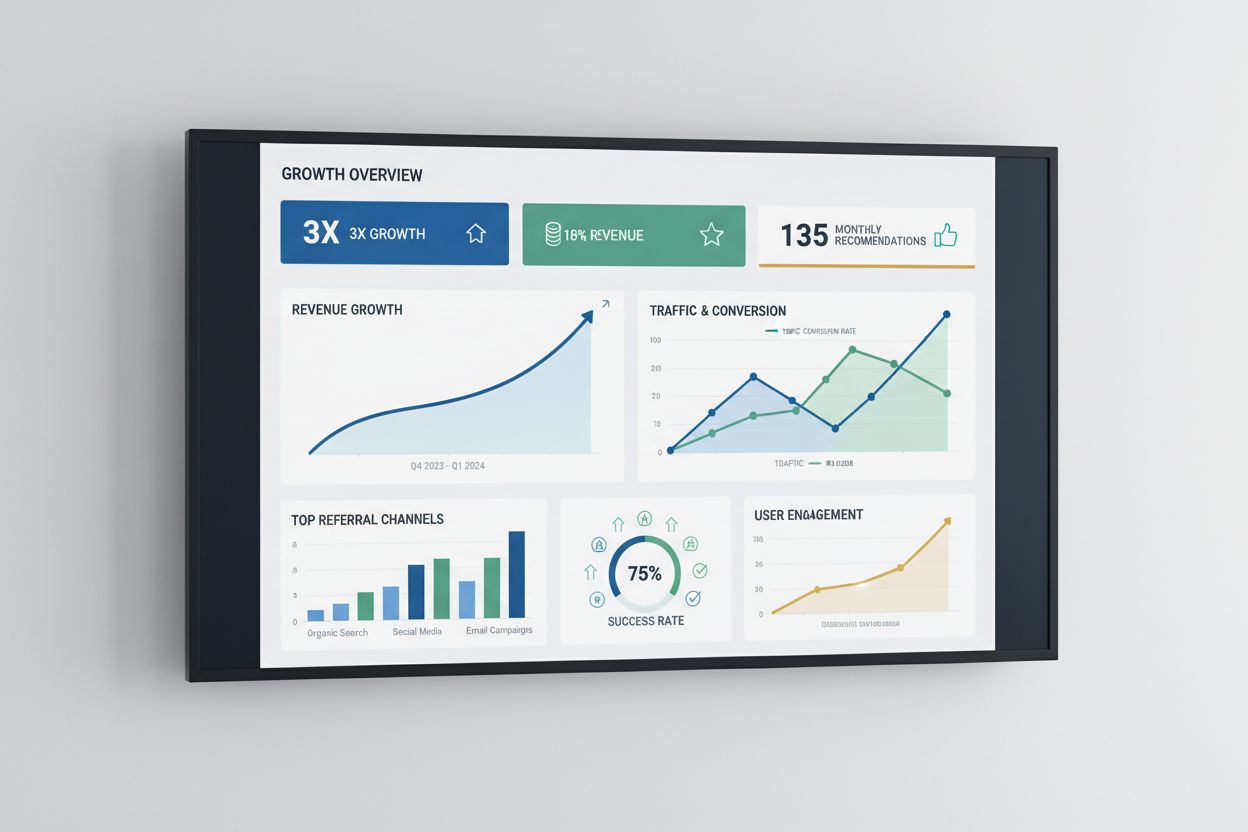
By moving quickly on ChatGPT Shopping optimization, the brand established significant competitive advantages in their category. They became the default recommendation for smart home devices and kitchen appliances in ChatGPT conversations, capturing market share from larger competitors who hadn’t yet prioritized this channel. The brand’s improved data quality and review profile also benefited their traditional search rankings, creating a halo effect across all digital channels. Additionally, their early success positioned them as thought leaders in AI-driven commerce, attracting media attention and further amplifying their brand visibility.
The journey wasn’t without obstacles. The brand faced several significant challenges that required creative problem-solving and persistence. Initial data quality issues required extensive cleanup and standardization across thousands of SKUs. The review generation campaign faced skepticism from customers unfamiliar with the brand’s new focus on feedback. Competitor activity intensified as others recognized the ChatGPT Shopping opportunity. Technical implementation proved more complex than anticipated, requiring specialized expertise. Finally, measuring ROI from AI channels required developing new attribution models since traditional analytics couldn’t fully capture the customer journey.
Challenges and solutions implemented:
This case study reflects a fundamental shift in e-commerce strategy that extends far beyond this single brand. As AI shopping features become mainstream across ChatGPT, Google, and other platforms, traditional SEO and paid search will no longer be sufficient for competitive positioning. E-commerce brands must now optimize for algorithmic recommendation systems that prioritize data quality, customer trust, and brand authority. The absence of Amazon from ChatGPT Shopping creates a unique window of opportunity for alternative retailers to establish dominance before the landscape becomes saturated. Companies that invest in AI visibility now will enjoy first-mover advantages that could persist for years.
The success of this e-commerce brand demonstrates that ChatGPT Shopping represents a genuine, high-impact opportunity for businesses willing to invest strategically. The key to success lies not in any single tactic, but in a coordinated approach addressing data quality, customer trust, brand authority, technical implementation, and continuous measurement. Organizations should begin by auditing their product data against AI requirements, then systematically implement improvements across all five strategic areas. The investment required is modest compared to traditional marketing channels, yet the potential returns are substantial. Most importantly, brands must recognize that AI visibility is no longer optional—it’s becoming a core component of digital commerce strategy.
Five essential actions for e-commerce brands:
The trajectory of AI shopping features suggests that ChatGPT Shopping is just the beginning of a broader transformation in how consumers discover products. As these systems become more sophisticated and integrated into daily consumer behavior, the competitive advantage will increasingly flow to brands that master AI optimization. The brands that succeed will be those that view AI visibility not as a separate marketing channel, but as a fundamental component of their overall digital strategy. For e-commerce companies ready to embrace this shift, the opportunity to dominate their categories and capture significant market share has never been greater.
ChatGPT Shopping Research is a feature that turns ChatGPT into a personalized shopping assistant. Users describe what they need, the AI asks clarifying questions about preferences and budget, then researches products across the web for several minutes before presenting a comprehensive buyer's guide with images, pricing, specifications, and reviews. It's available to all ChatGPT users and represents a fundamental shift in how consumers discover products online.
Success requires a multi-faceted approach: optimize product data with detailed descriptions and structured markup, generate high-quality customer reviews, build brand mentions across trusted platforms, complete OpenAI's allowlisting process, and implement proper technical infrastructure. The case study in this article demonstrates that coordinated effort across all five areas yields the best results, with brands seeing 3x growth in AI-driven traffic within 6-12 months.
ChatGPT Shopping ranks products organically based on relevance and quality (52% accuracy on complex queries), not paid placement. It provides personalized recommendations through conversational interaction, takes several minutes for research, and offers direct checkout options. Traditional search is faster but less personalized, while paid ads are bid-based. ChatGPT Shopping represents a new, high-impact channel that complements rather than replaces traditional strategies.
The case study brand saw immediate results: 40% increase in recommendations within the first month of data optimization, 35% improvement in recommendation frequency within three months, and 50% increase in brand citations within six months. Overall, they achieved 3x growth in ChatGPT-driven traffic within six months. However, timelines vary based on starting point, category competitiveness, and implementation quality.
ChatGPT Shopping excels with electronics, beauty products, home and garden items, kitchen appliances, and sports/outdoor gear. These categories benefit because they're research-intensive, have numerous specifications to compare, and involve reading multiple reviews. The system struggles more with categories like clothing (where fit is personal) and services. The absence of Amazon from results creates particular opportunities for alternative retailers in these strong categories.
Use specialized monitoring tools like AmICited.com to track recommendation frequency, brand citation rates, visibility scores, and estimated impressions. Monitor conversion rates from ChatGPT traffic compared to other channels, implement UTM parameters for attribution, and develop new analytics models since traditional last-click attribution breaks down with AI-driven discovery. The case study brand tracked metrics like monthly recommendations (45 to 135), citation rate (12% to 18%), and visibility score (32 to 78).
Each platform has strengths: ChatGPT Shopping offers organic, unbiased recommendations across the web (excluding Amazon), Google Shopping integrates with search and local inventory, Amazon Rufus provides ecosystem-specific recommendations. Rather than choosing one, successful brands optimize for all three. ChatGPT Shopping's independence and lack of Amazon creates unique opportunities for alternative retailers to establish dominance before the landscape saturates.
First, verify you've completed OpenAI's allowlisting process. Then audit your product data quality—ensure descriptions are detailed, specifications are complete, and schema markup is properly implemented. Check that you have sufficient customer reviews and brand mentions across trusted platforms. Finally, use monitoring tools to verify your visibility and identify specific optimization opportunities. The case study brand increased visibility from 32/100 to 78/100 through systematic optimization.
Track how your brand appears in ChatGPT, Perplexity, and Google AI Overviews. Get real-time insights into your AI shopping recommendations and stay ahead of competitors.
Explore how ChatGPT Shopping transforms product discovery through conversational AI. Learn the technology, process, benefits for consumers and merchants, and op...
Learn how to optimize your products for ChatGPT shopping and AI commerce. Master product feeds, visibility strategies, and stay ahead in conversational commerce...

Compare ChatGPT Shopping and Perplexity Shopping for e-commerce. Explore features, user experience, pricing, and which AI platform works best for your business.