



The enterprise GEO market is splitting into two camps. One sells AI visibility as a focused measurement problem. The other treats it as a new layer of marketing operations, with content production, brand governance, technical remediation, and executive reporting around the monitoring core.
Neither approach is automatically better. A specialist can be easier to adopt and more transparent about usage. An enterprise platform can reduce handoffs. The useful question is: “How far does this product carry our team from an unstable AI answer to a controlled response?”
This comparison uses five lenses: monitoring, narrative diagnosis, sampling, governance, and action. It is based on public vendor documentation reviewed on October 18, 2026, rather than hands-on certification of every feature.
The five layers of an enterprise GEO system
Monitoring records mentions, citations, rank or share of voice. Narrative diagnosis asks how a model describes the brand: sentiment, attributes, inaccuracies, and competitor framing. Sampling distinguishes one prompt run, repeated runs, prompt expansions, an API response, or the consumer interface. Governance controls markets, permissions, approvals, integrations, and reporting. Action turns findings into briefs, page changes, outreach, fixes, or campaigns.
Most products cover the first layer. Differences become consequential in layers three through five. Two dashboards may show “visibility 34%” while measuring different engines, locations, prompt expansions, cadences, and samples. Procurement should therefore ask for the denominator and collection method before comparing scores.
Purpose-built AI visibility specialists
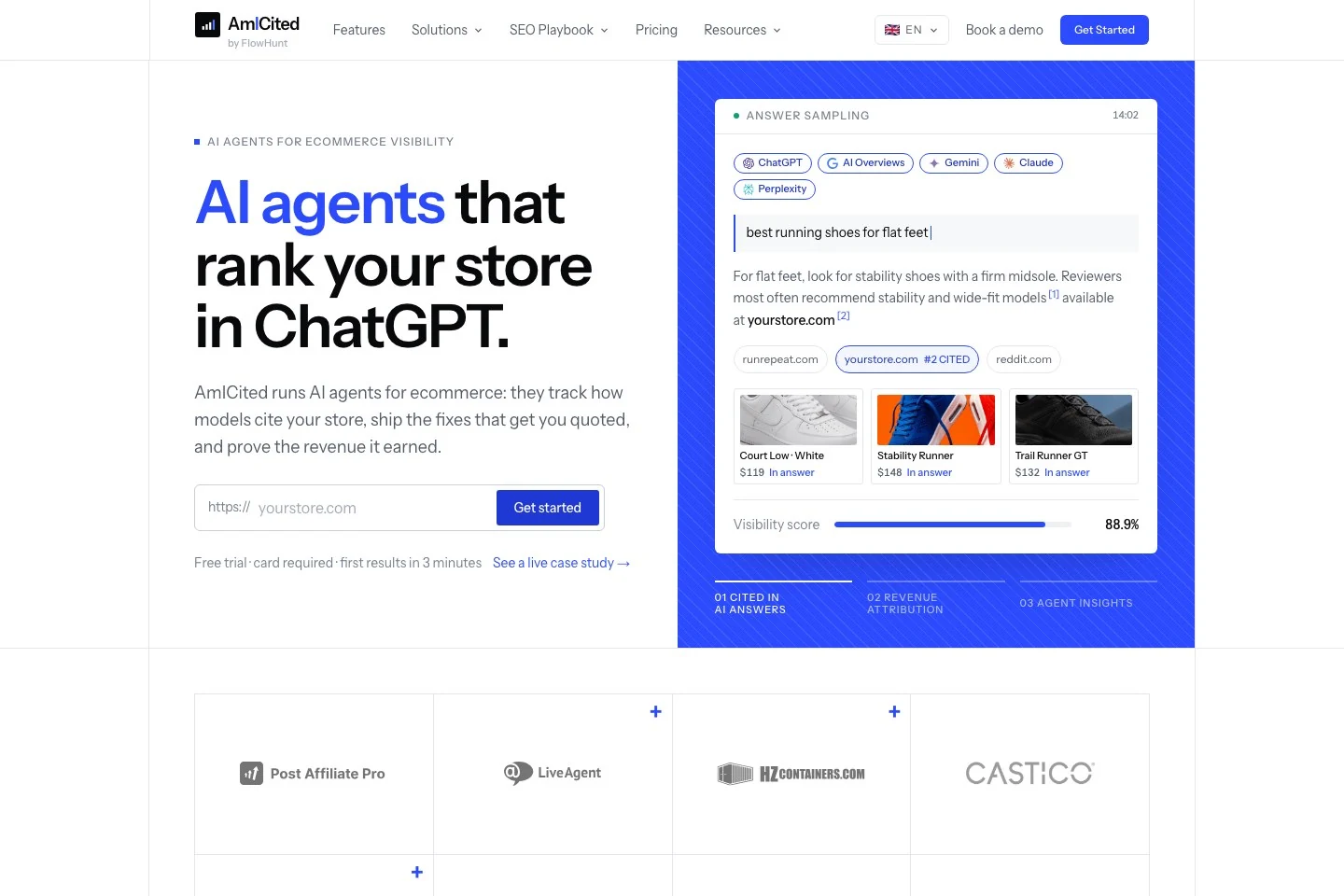
AmICited combines scheduled prompt and citation monitoring with competitor views, search evidence, annotations, and connected agent and content workflows. Its public pricing uses shared response credits, so buyers should model engines, schedules, and other credit-consuming work together. This makes AmICited interesting when a team wants one path from evidence to research and execution; it also makes allowance math more important than the headline prompt limit. See the broader 2026 market map for the category context.
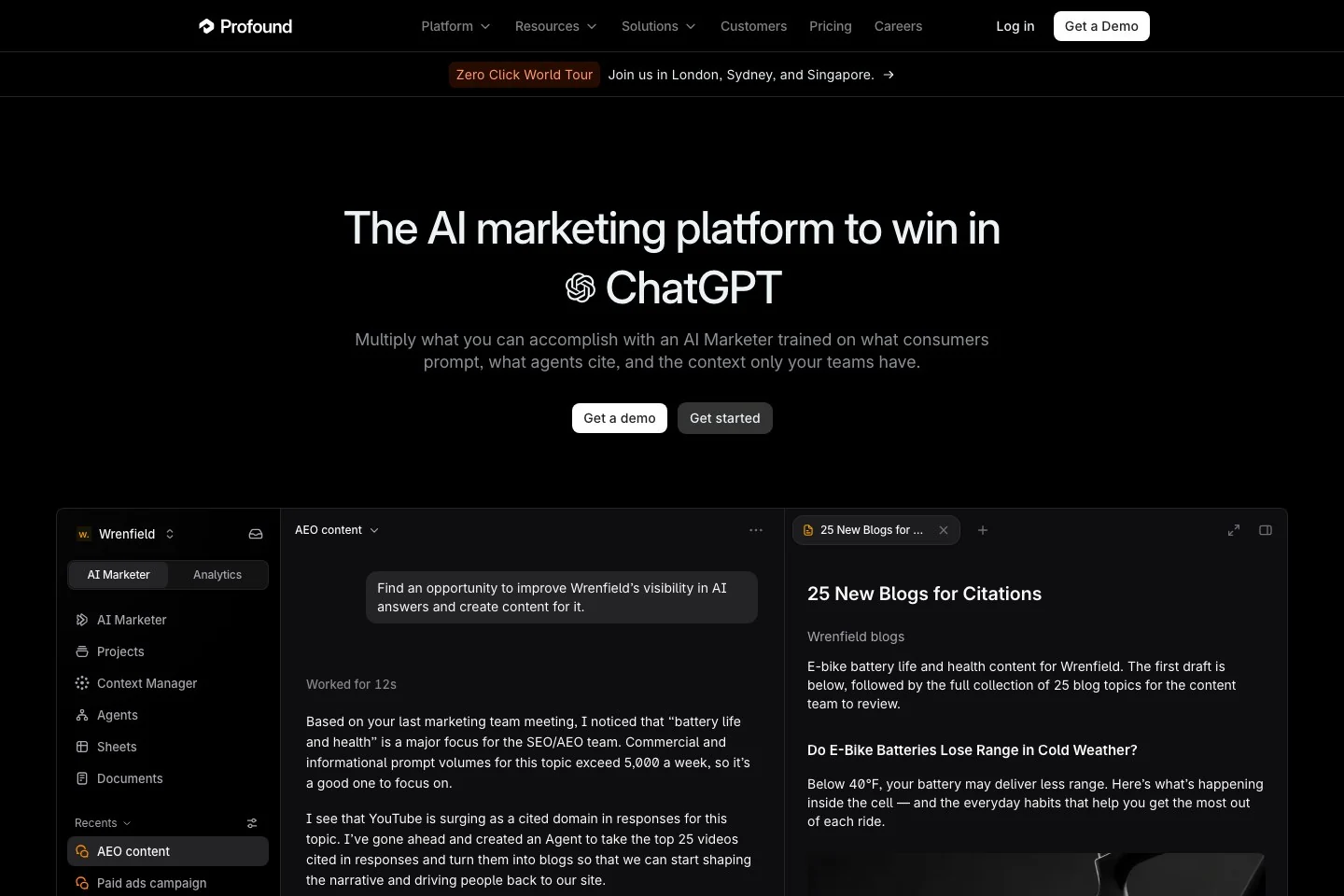
Profound, at its correct product domain tryprofound.com, positions itself as an AI marketing platform. Public materials connect Answer Engine Insights and prompt-volume analysis with shopping, agent analytics, context management, and an AI Marketer that can prepare content and corrections. The proposition is broader than observation: insights are intended to feed work. Buyers should still establish which actions are automated, staged for approval, or delivered through services in their contract.
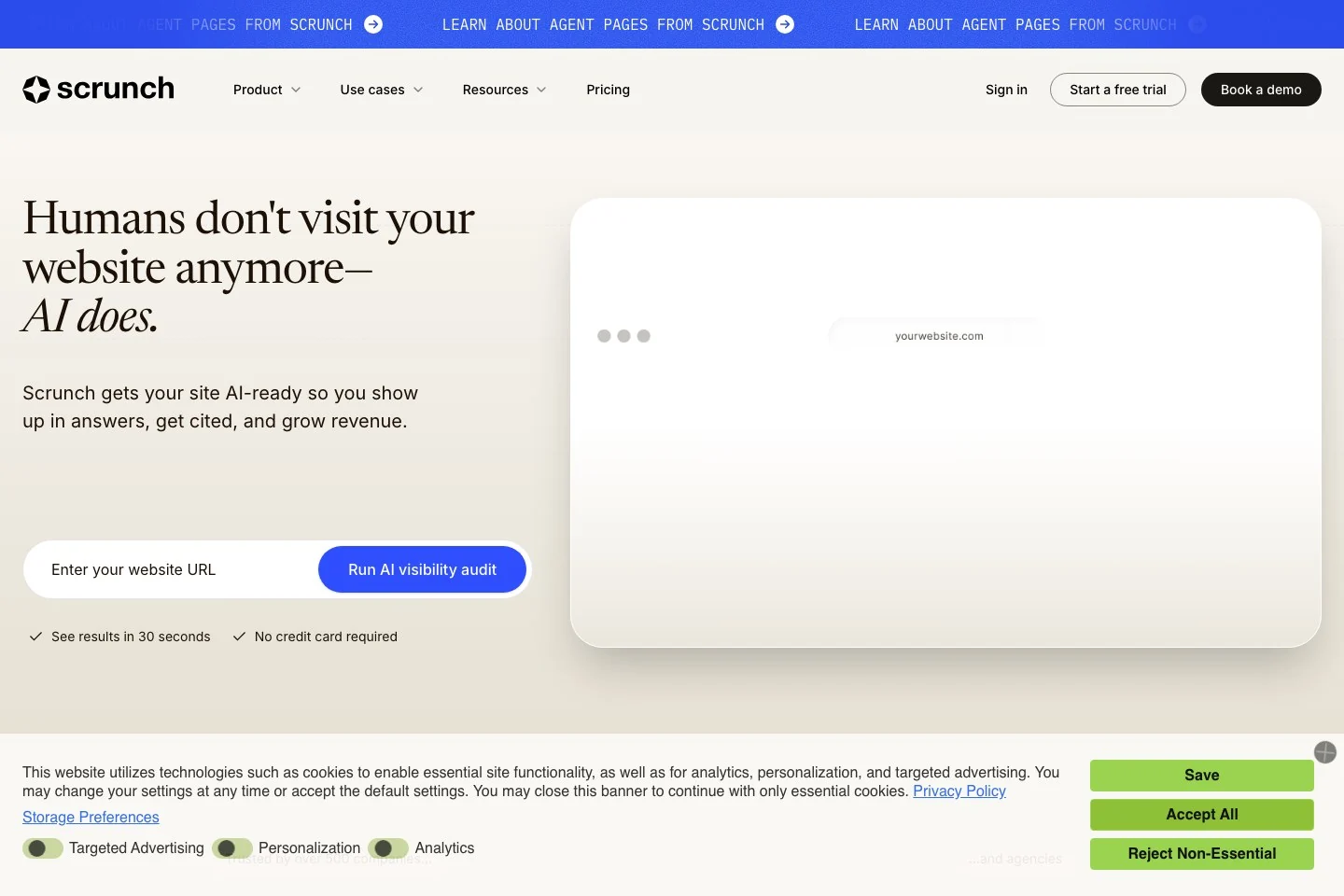
Scrunch now resolves to scrunch.com and presents monitoring, citation analysis, optimization guidance, and its Agent Experience Platform. Its emphasis is the experience an AI agent has when consuming a brand’s information. That makes it relevant to teams worried about both model perception and whether their content is accessible to agents, rather than only a weekly share-of-voice chart.
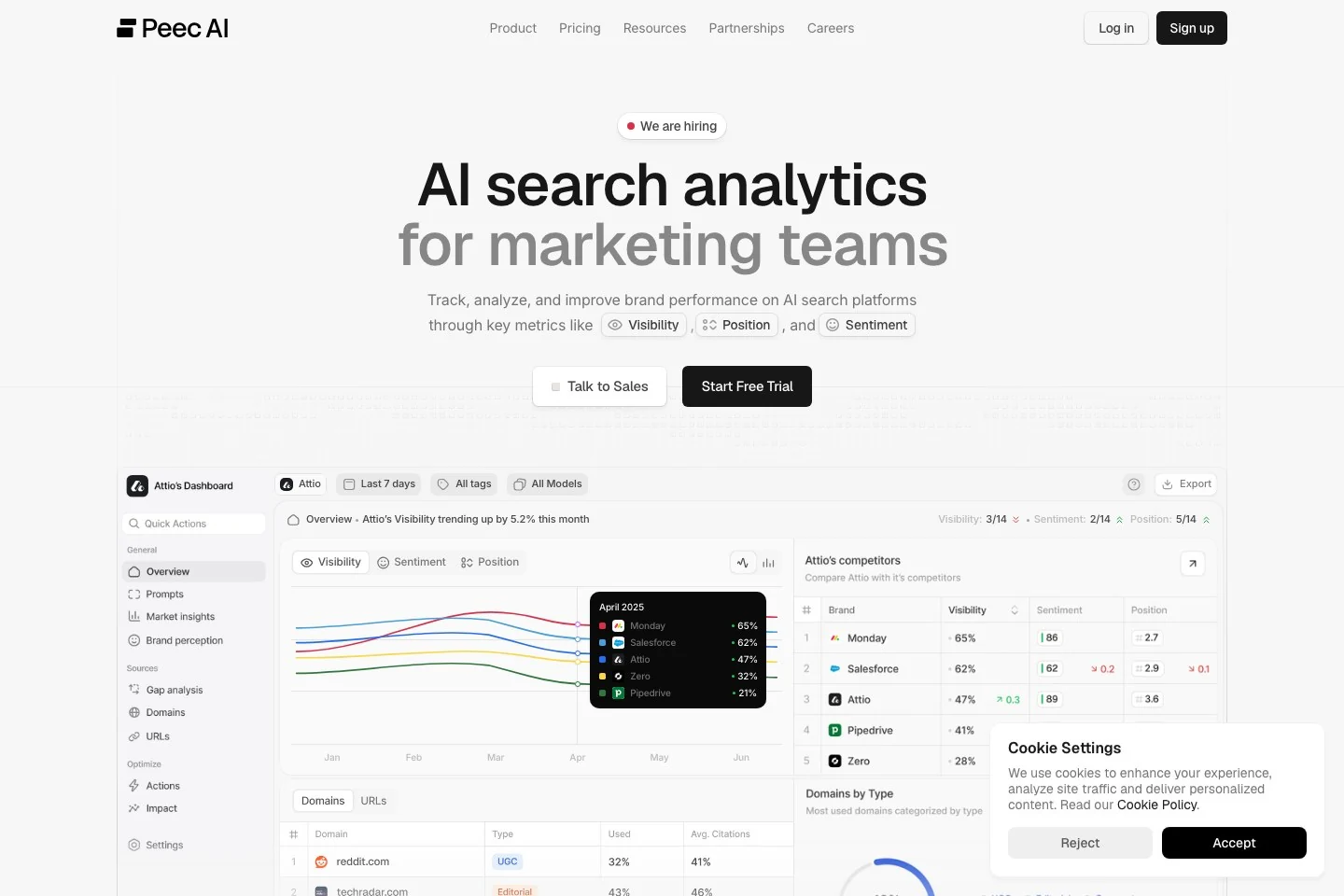
Peec is a Berlin-based GEO analytics vendor whose public pricing page describes plan differences around models, projects, prompts, daily refreshes, and multi-country access. Its clean specialist shape suits teams that want competitive visibility and source analysis without first buying a large SEO suite. Country availability belongs in the plan check, not in an assumption based on the company’s German address.
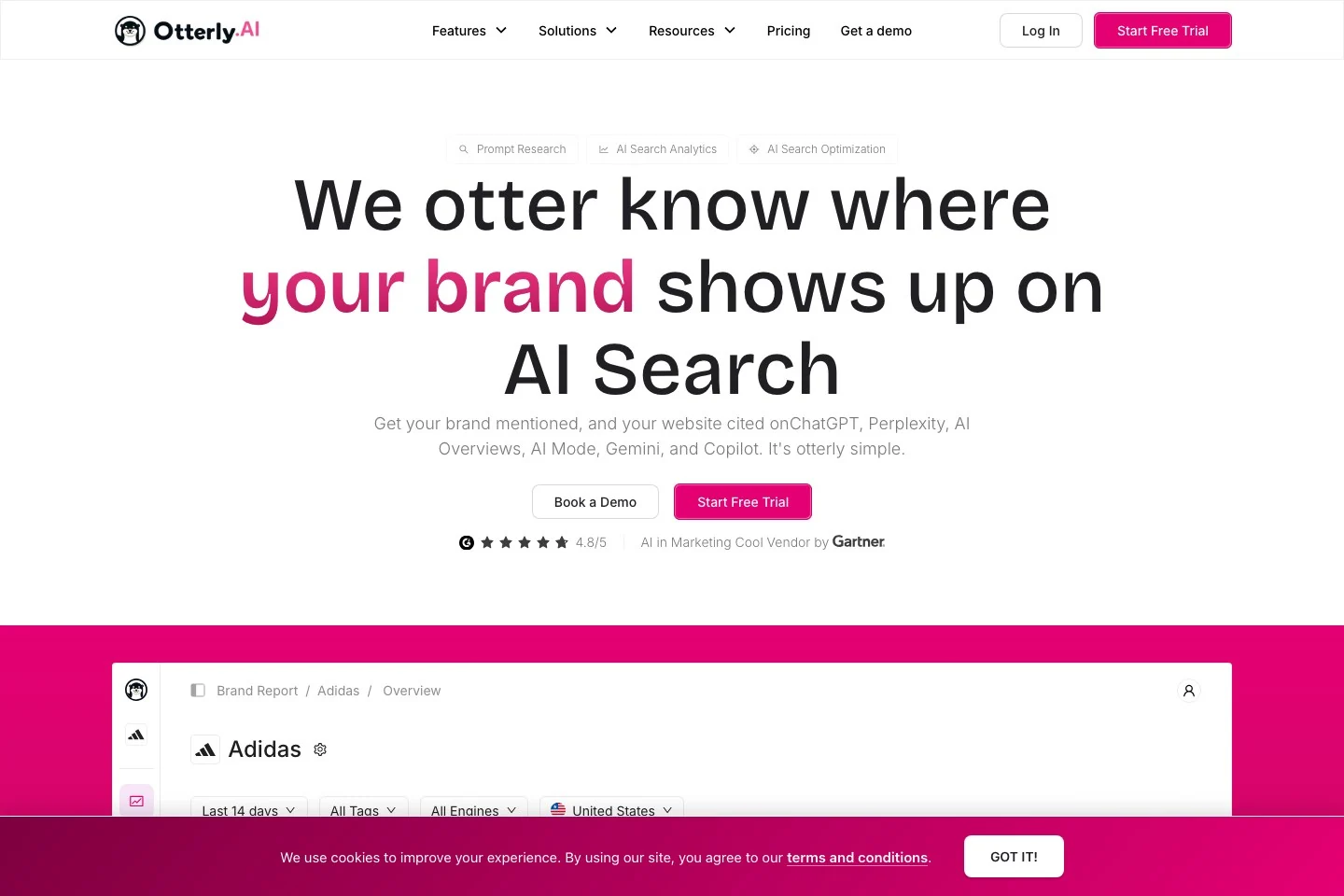
Otterly is an Austrian specialist with a low published entry point and prompt tiers; its pricing also requires attention to engine extensions. It is a natural shortlist candidate for teams starting with monitoring. Compare the actual number of prompt-engine responses required each month, because the inexpensive starting price and the desired production workload may describe different configurations.
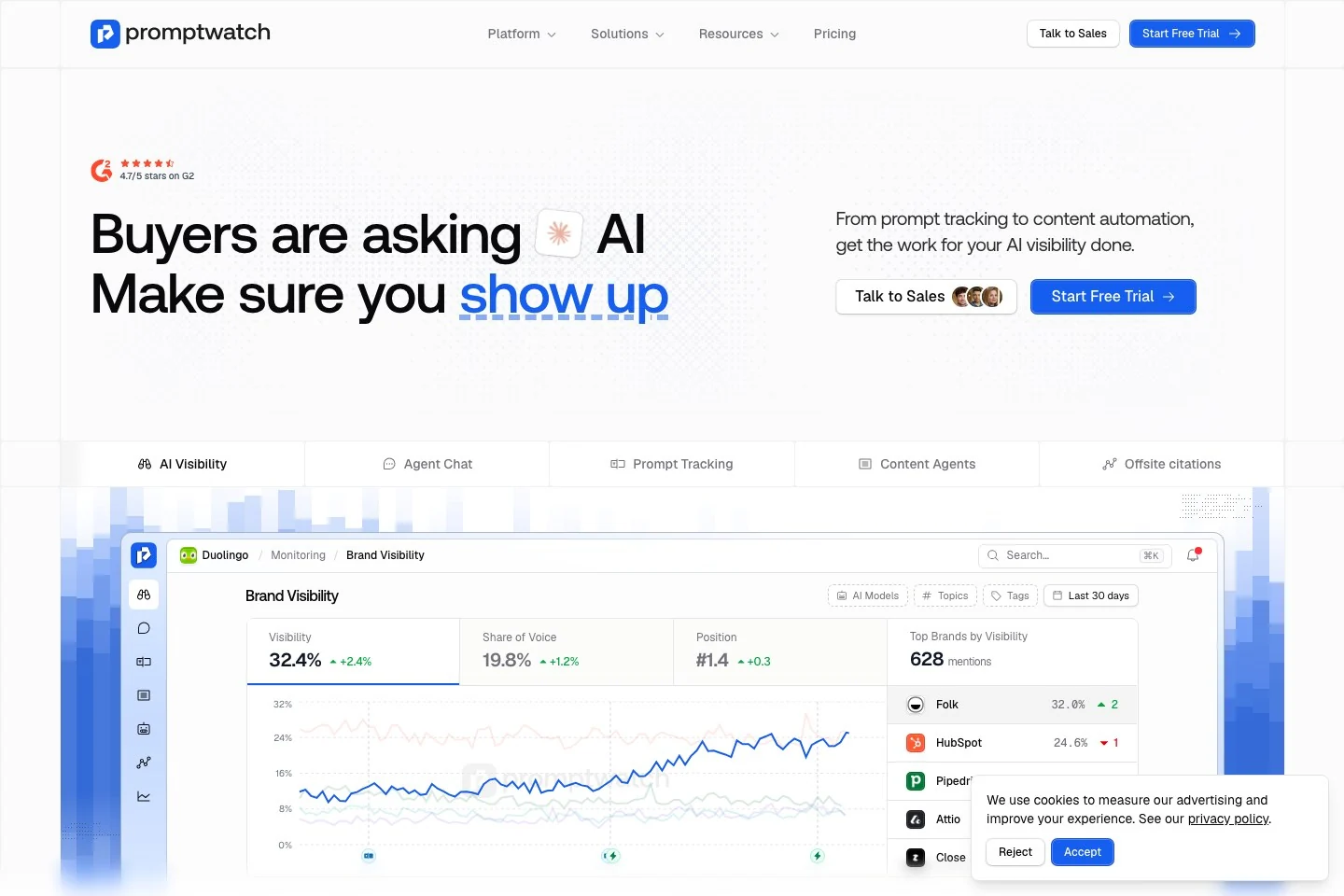
Promptwatch bundles response allowances with agents and article quotas across its published plans. That packaging pushes it beyond passive tracking toward a compact workflow product. Country, city, and state controls vary by tier, so a regional enterprise should price the required location granularity rather than compare only monthly subscription figures.
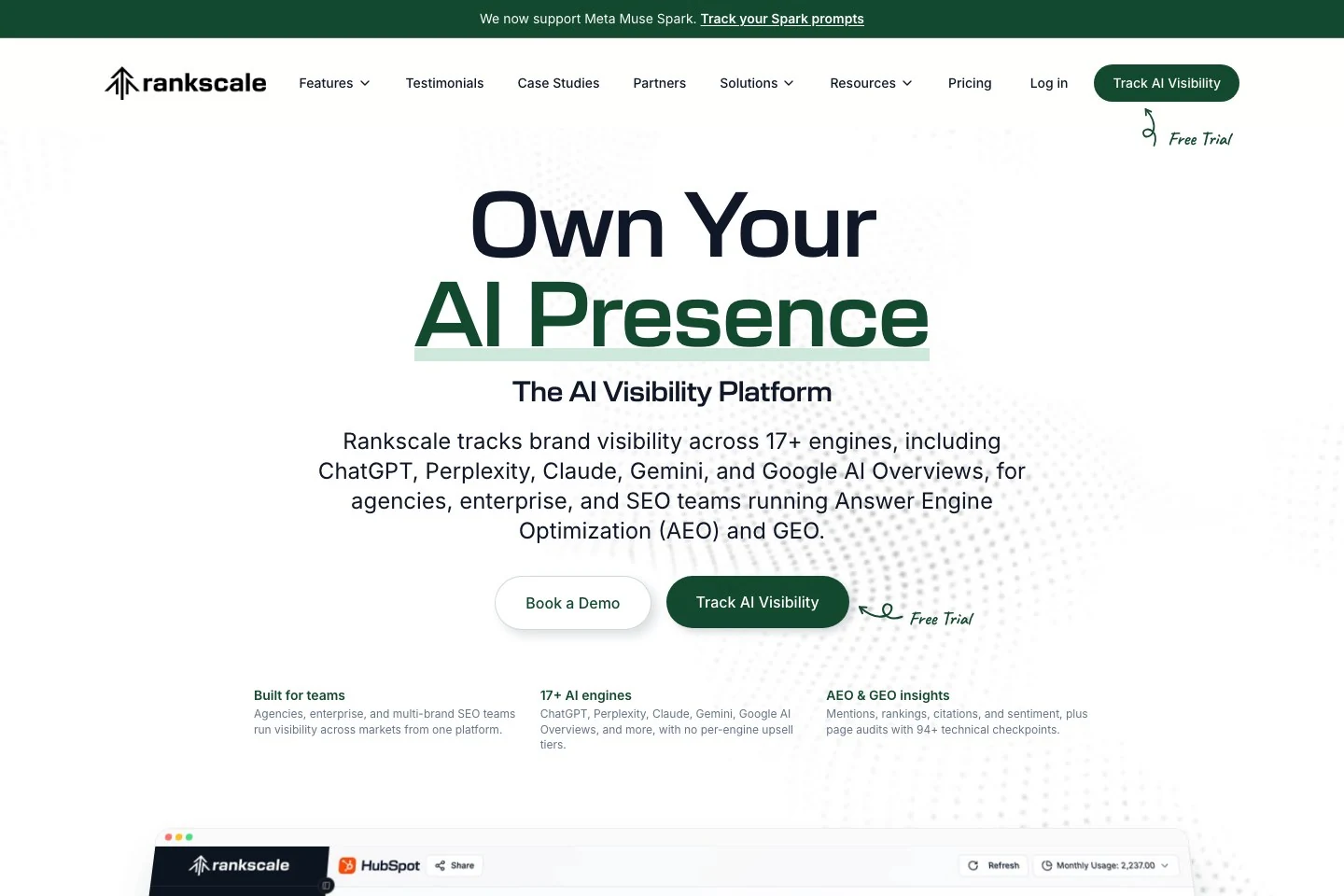
Rankscale focuses its public story on visibility across ChatGPT, Perplexity, and Google AI experiences. Its role in a shortlist is the analytics specialist: establish what is cited, where the brand ranks, and how that changes.
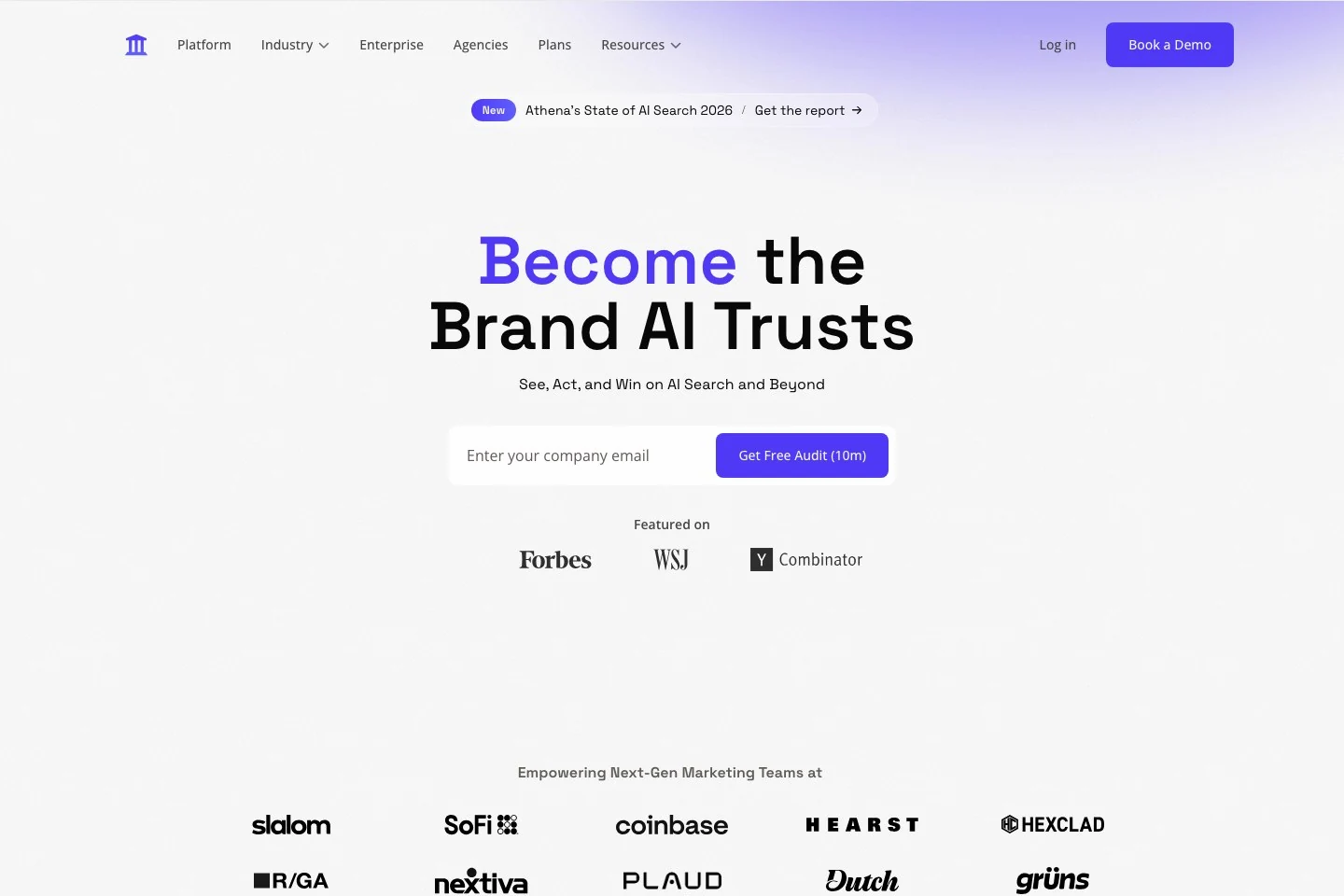
AthenaHQ explicitly positions around agents for winning AI search. It deserves a workflow demonstration, because a homepage promise of optimization does not tell a buyer whether a recommendation becomes a draft, an approved edit, or merely another task.
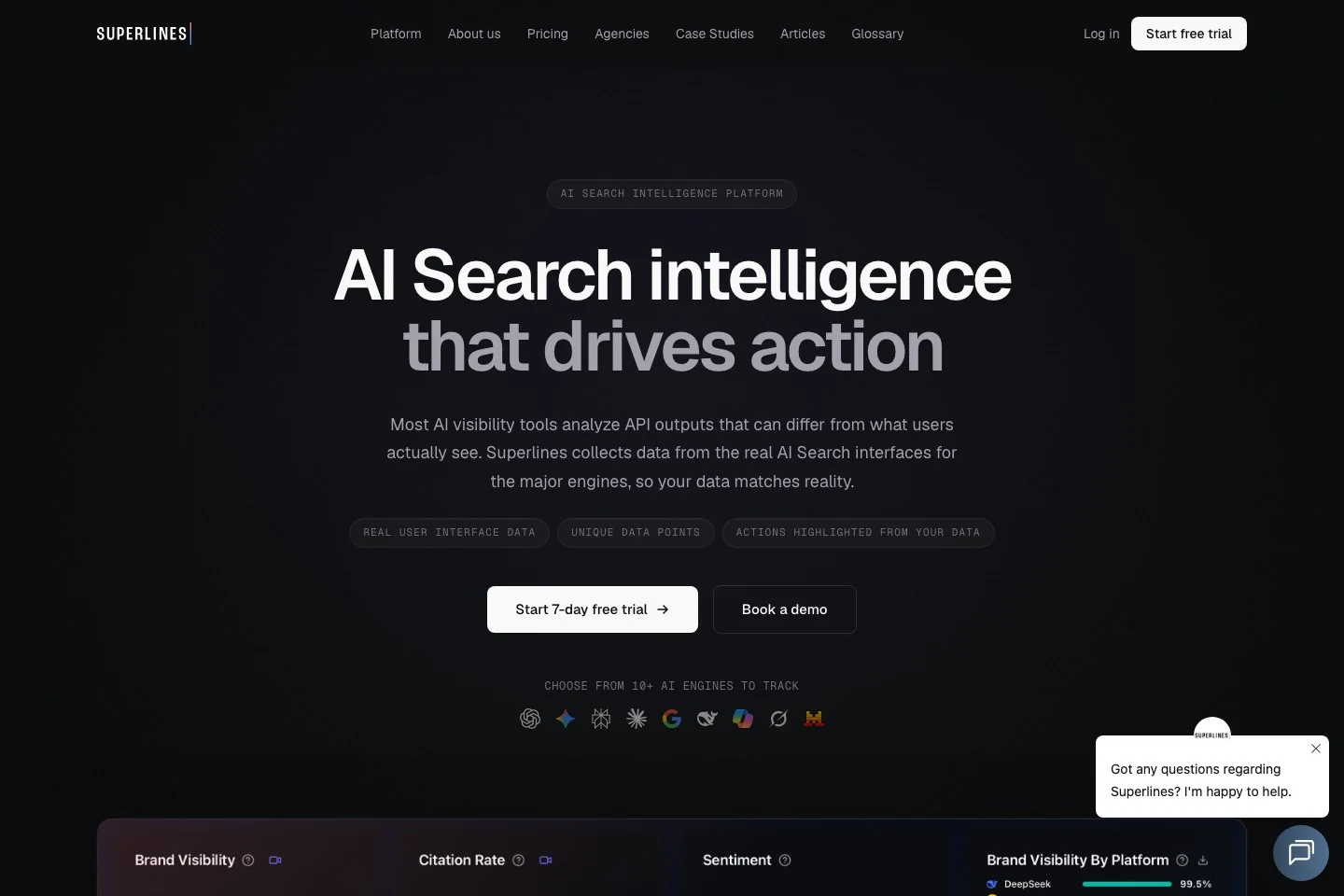
Superlines says it collects results from real AI search interfaces rather than relying only on APIs, then adds market-specific benchmarking, recommendations, MCP, and API access. Its platform overview makes sampling methodology part of the sales argument. That is a valuable question for every vendor: the browser interface and API can return different answers, but interface collection alone still does not reproduce each customer’s history, memory, or personalization.
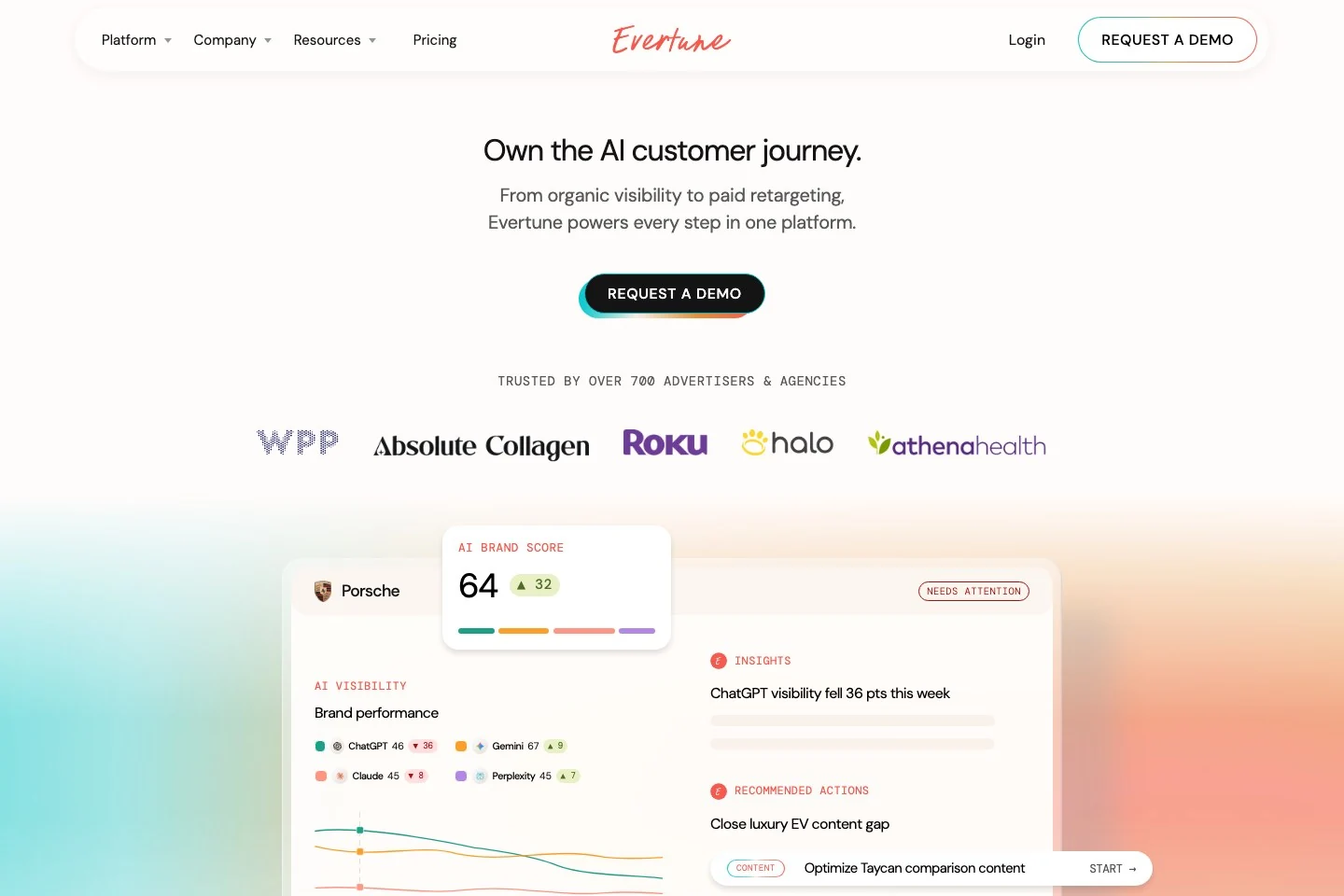
Evertune frames the problem as owning the AI customer journey, extending the conversation from prompt presence toward consumer perception and brand performance. Its enterprise value depends on whether those concepts become inspectable evidence and repeatable work for the buyer’s categories.
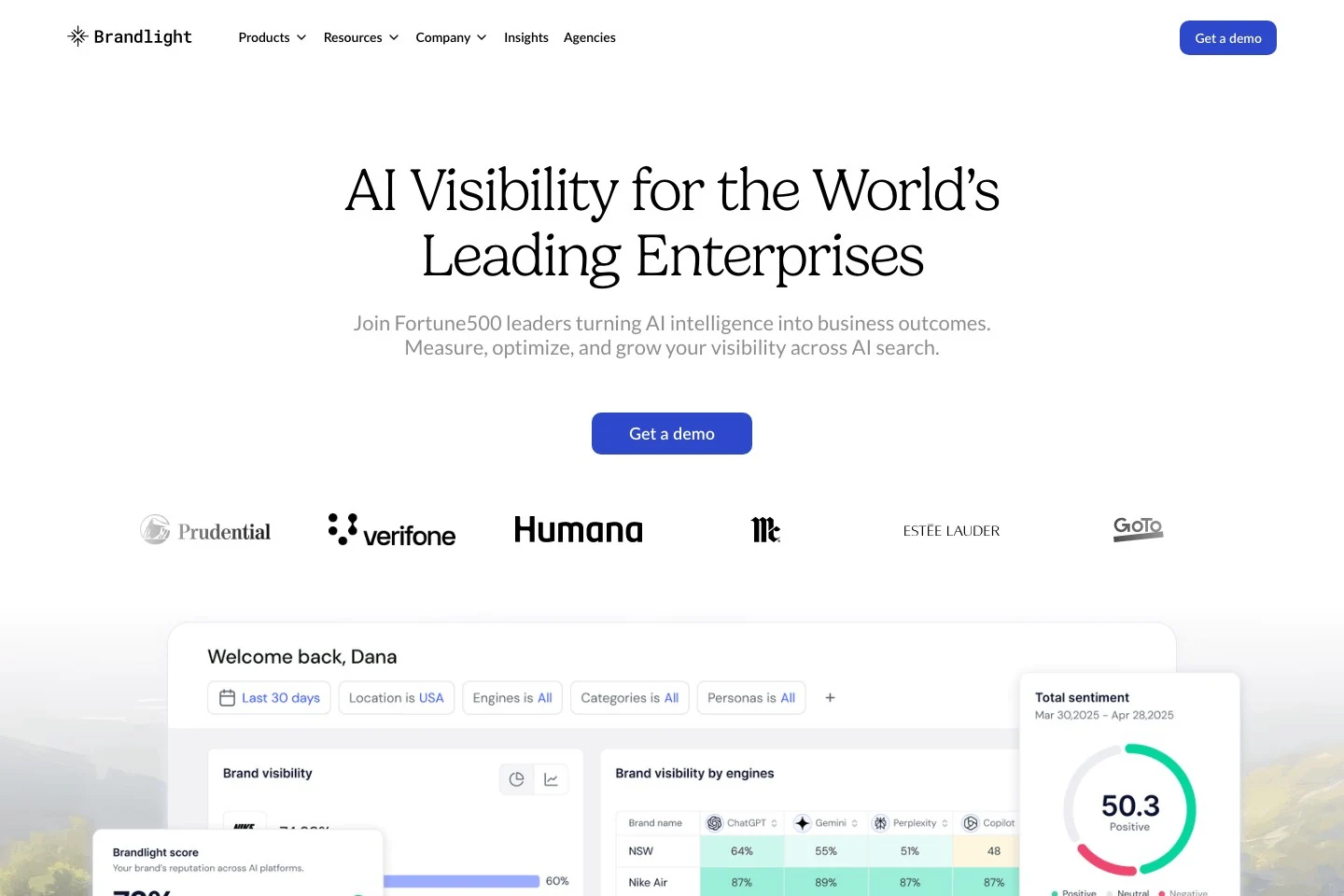
Brandlight emphasizes AI visibility for enterprise brands. The decisive diligence is governance: role controls, market separation, auditability, and the exact data exported into an existing measurement stack.
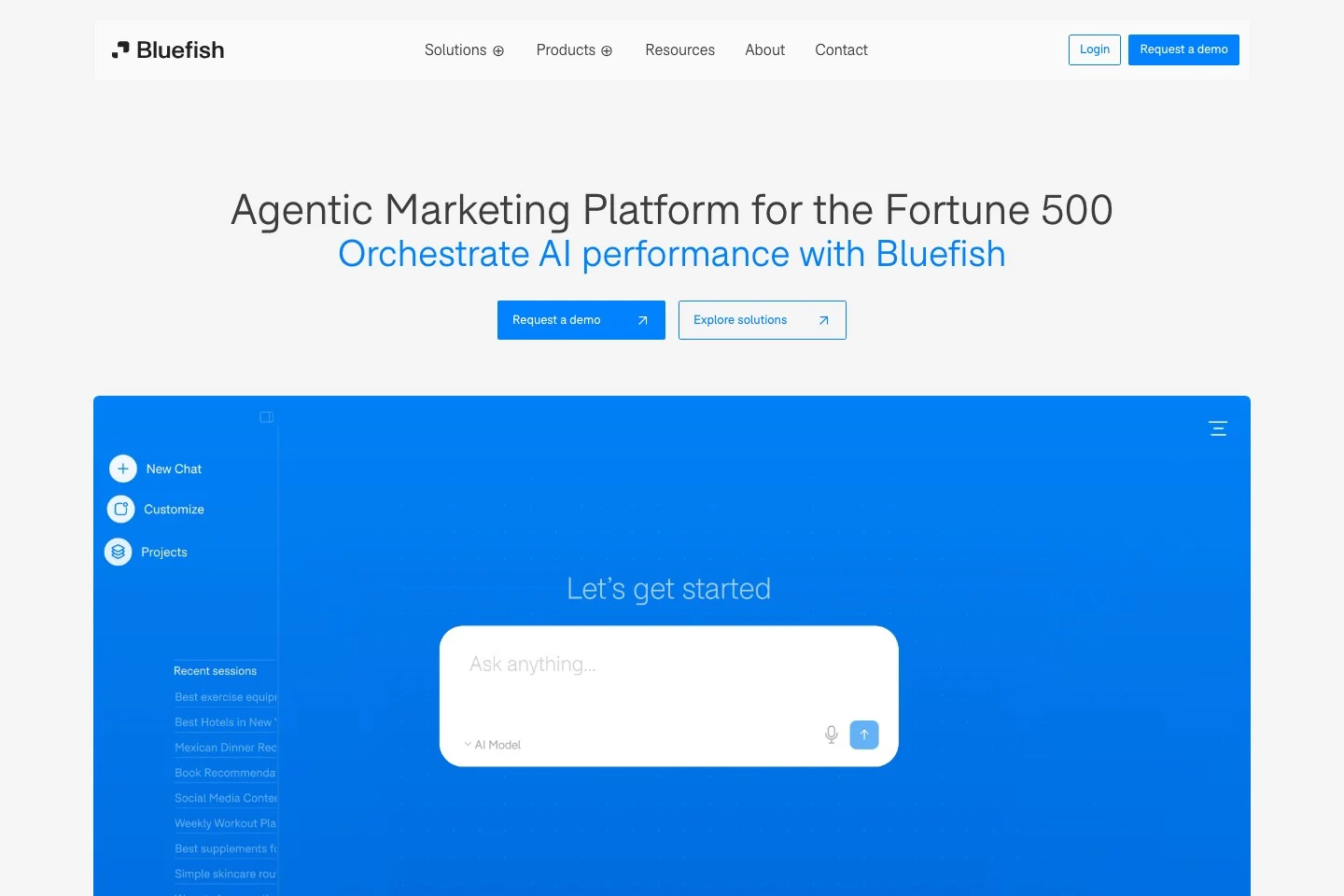
Bluefish describes an agentic marketing platform for enterprise brands. Here the key boundary is approval: buyers should see which actions an agent can propose, which it can execute, and how a human reviews the change.

Ready to Monitor Your AI Visibility?
Track how AI chatbots mention your brand across ChatGPT, Perplexity, and other platforms.
When an established SEO platform enters GEO
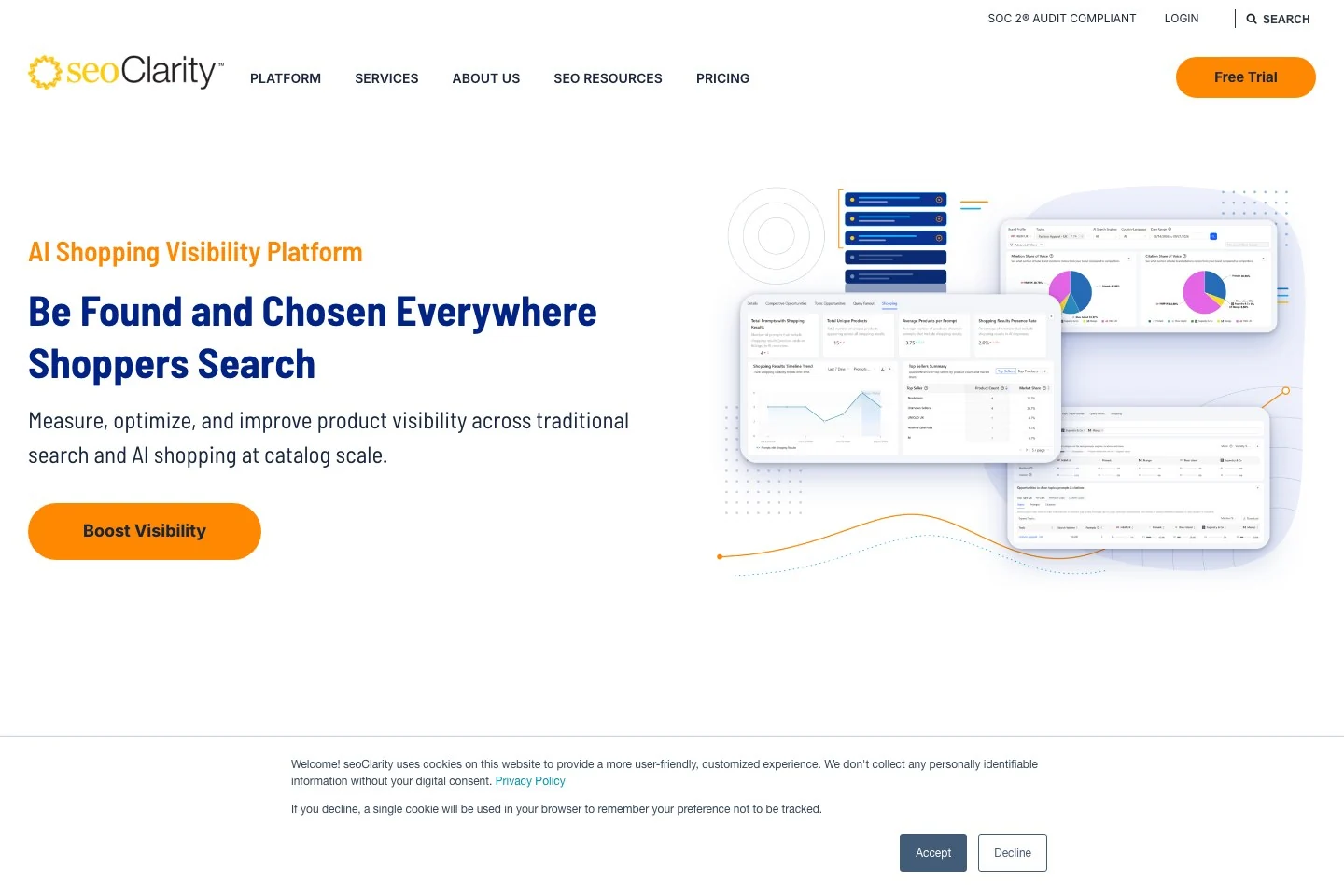
seoClarity presents a unified SEO and AEO platform. The appeal is continuity between established search work and AI-answer analysis; the evaluation should isolate which AEO data, locations, and actions are included.
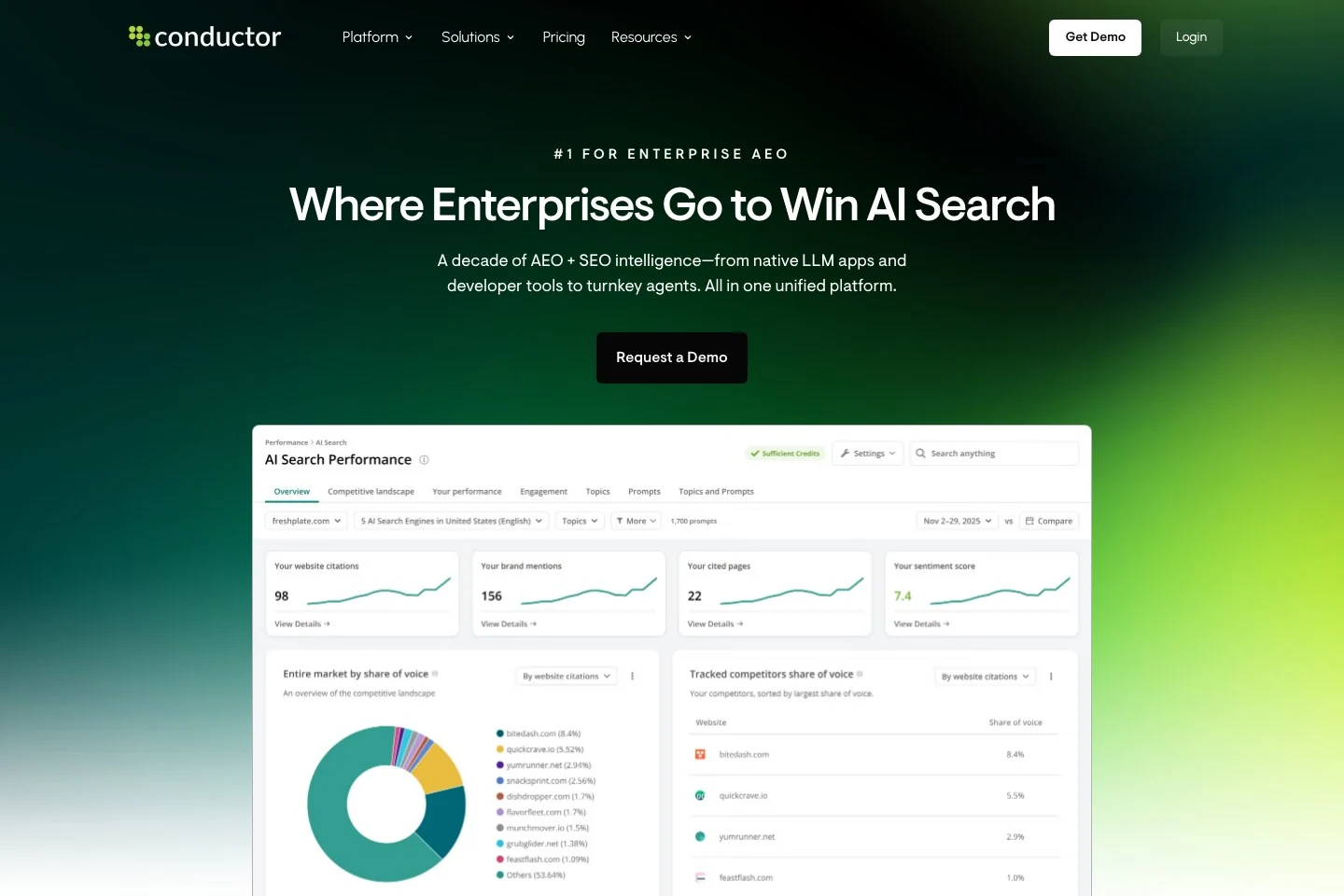
Conductor positions its platform around winning in AI search while retaining the content intelligence and workflow context of an established enterprise SEO product. Existing customers should test whether the shared content inventory removes meaningful handoffs.
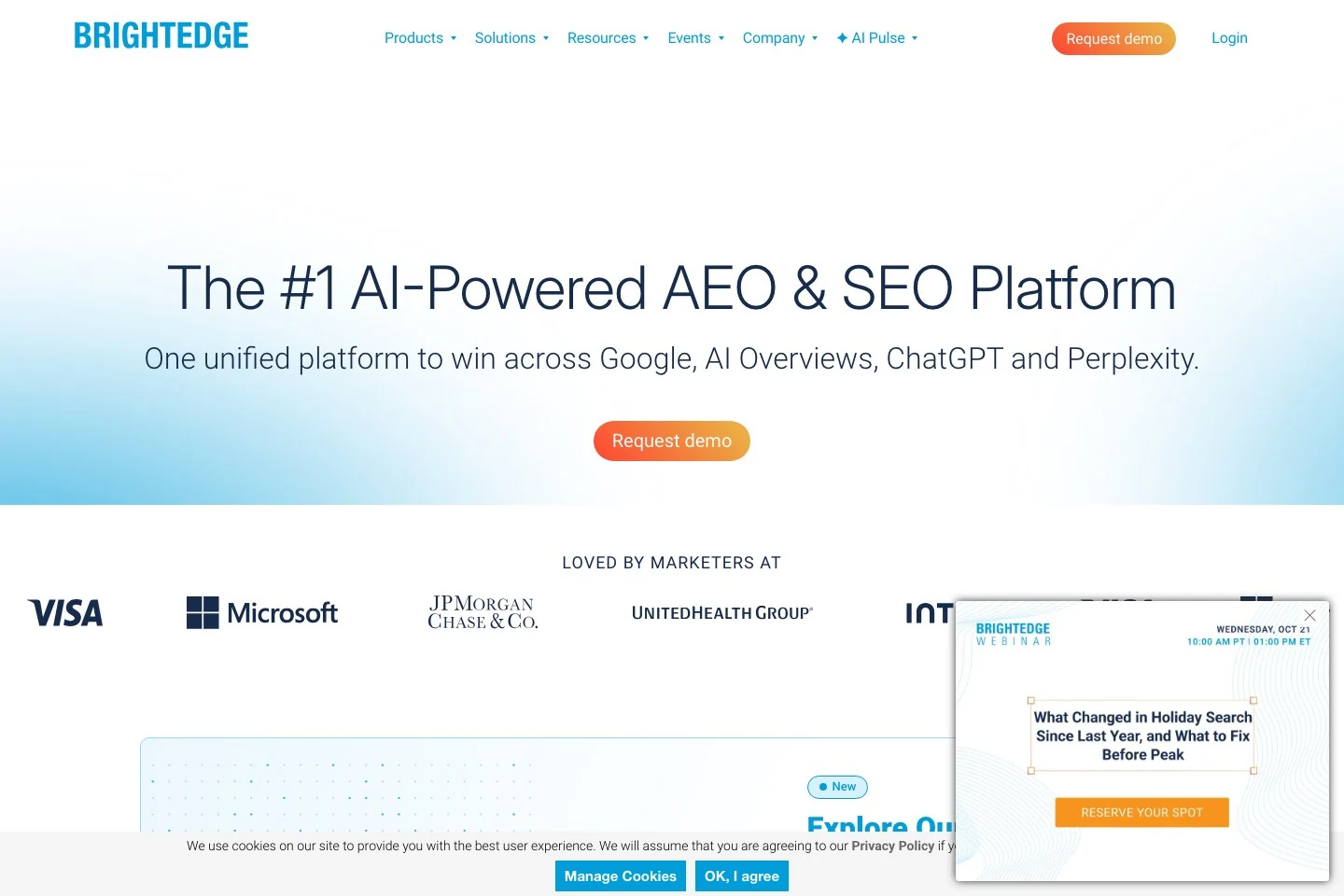
BrightEdge unifies SEO and AEO in an enterprise workflow. Its public materials describe AI Hyper Cube for brand mentions, citations, sentiment, and opportunity analysis across ChatGPT and Google AI experiences, alongside shared recommendations, reporting, integrations, security, and governance. Buyers should confirm the engines and market controls included in their proposed package.
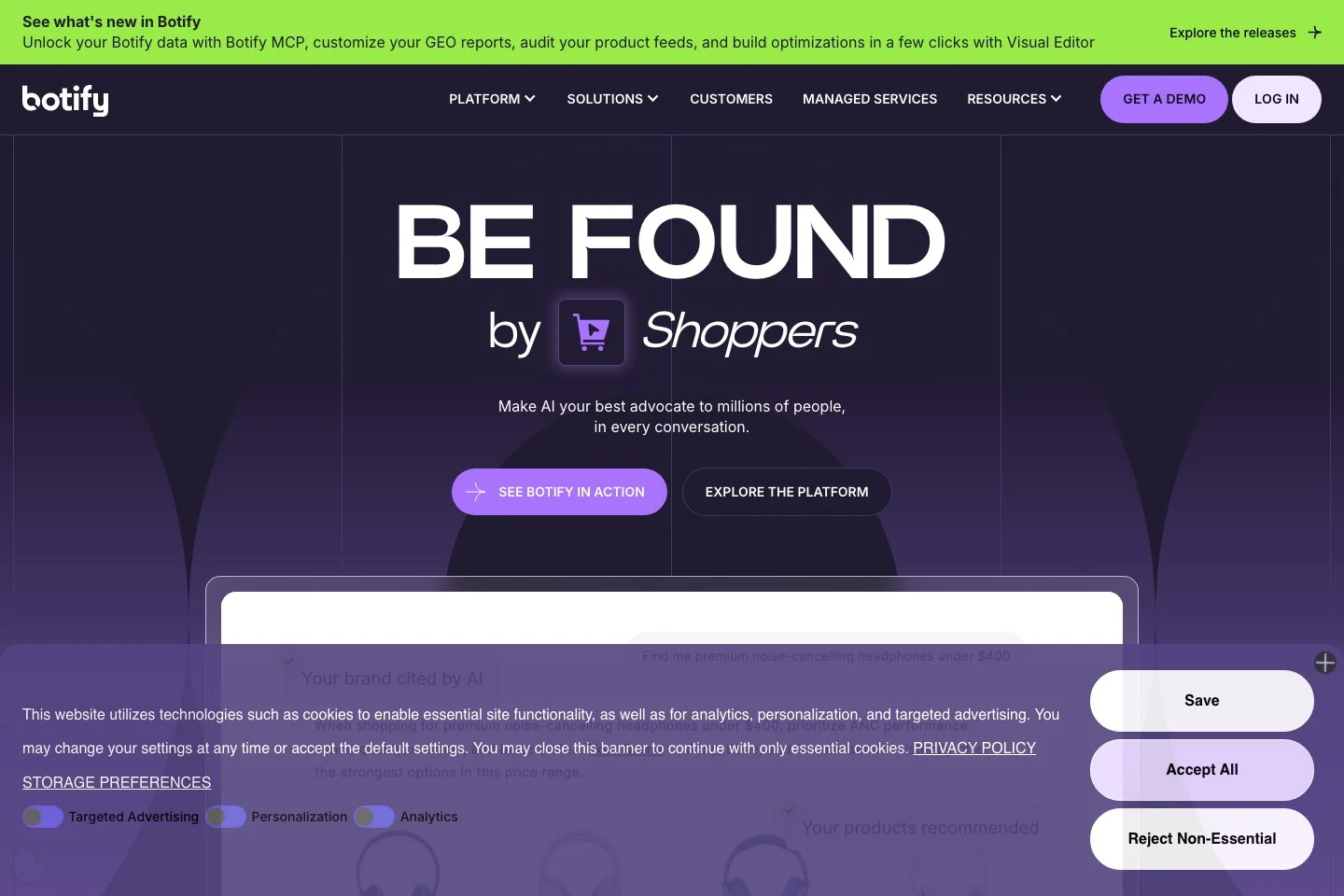
Botify approaches AI search from the technical and discoverability side of a platform historically focused on crawling and organic search. This can matter when the first problem is whether machines can reach and interpret a page at all.
These products can make sense when the SEO organization already operates inside the suite. Shared permissions, content inventories, technical findings, and reporting may be worth more than a marginally richer standalone GEO dashboard. The tradeoff is evaluation complexity: buyers must isolate the AI-search module’s collection method, prompt controls, engines, citation detail, and contract cost from the capabilities of the wider suite.
Botify and the other suites also reveal a wider divide. Some GEO problems are editorial: the model repeats the wrong story or cites a competitor. Others are technical: an agent cannot crawl or interpret the right page. Others are off-site: the trusted source is a publisher the brand does not control. No single “optimization score” explains which intervention is required.
Where AmICited sits
AmICited occupies the middle of this spectrum. It has the monitoring foundation expected of a specialist and connects that evidence to search, agent, content, and commercial reporting workflows where integrations are available. It is not useful to claim those capabilities are unique: Profound, Promptwatch, Superlines, seoClarity, and others publicly document parts of the same monitor-to-action journey.
The more defensible distinction is product shape. AmICited packages monitoring with agent, content, and connected reporting workflows without requiring a broad enterprise SEO suite. Its shared-credit pricing applies across mixed work, which makes workload modeling essential. Organizations with strict approval chains should compare governance controls contract by contract rather than infer them from vendor category or company size.
Stay Updated on AI Visibility Trends
Get the latest insights on AI mentions, brand monitoring, and optimization strategies.
A buying test that exposes real differences
Give every finalist the same six-week brief. Include branded, comparative, category, problem-led, and purchase-intent questions. Require at least two markets and two languages where relevant. Log edits and campaigns during the test so a chart can be connected to an intervention without pretending that correlation proves causality.
Then ask five concrete questions. Can analysts inspect the underlying answer and cited URLs? Can they distinguish a narrative problem from a visibility problem? Is the sample size and collection surface visible? Can owners approve and audit action? Can data leave the platform through exports, APIs, or MCP in a usable form?
The winner will vary. A consultancy may prioritize white-label reporting and multiple clients. A regulated company may prioritize approvals and an audit trail. A content team may value briefs and CMS staging. A lean SEO team may prefer transparent pricing and fast setup. Those are purchasing conclusions; a universal league table is not.
For adjacent choices, compare SEO suites with GEO specialists and normalize the pricing models used by AI visibility tools. The market is moving quickly, but the evaluation principle will last: buy the evidence chain and operating workflow your team can actually use.
 LinkedIn