
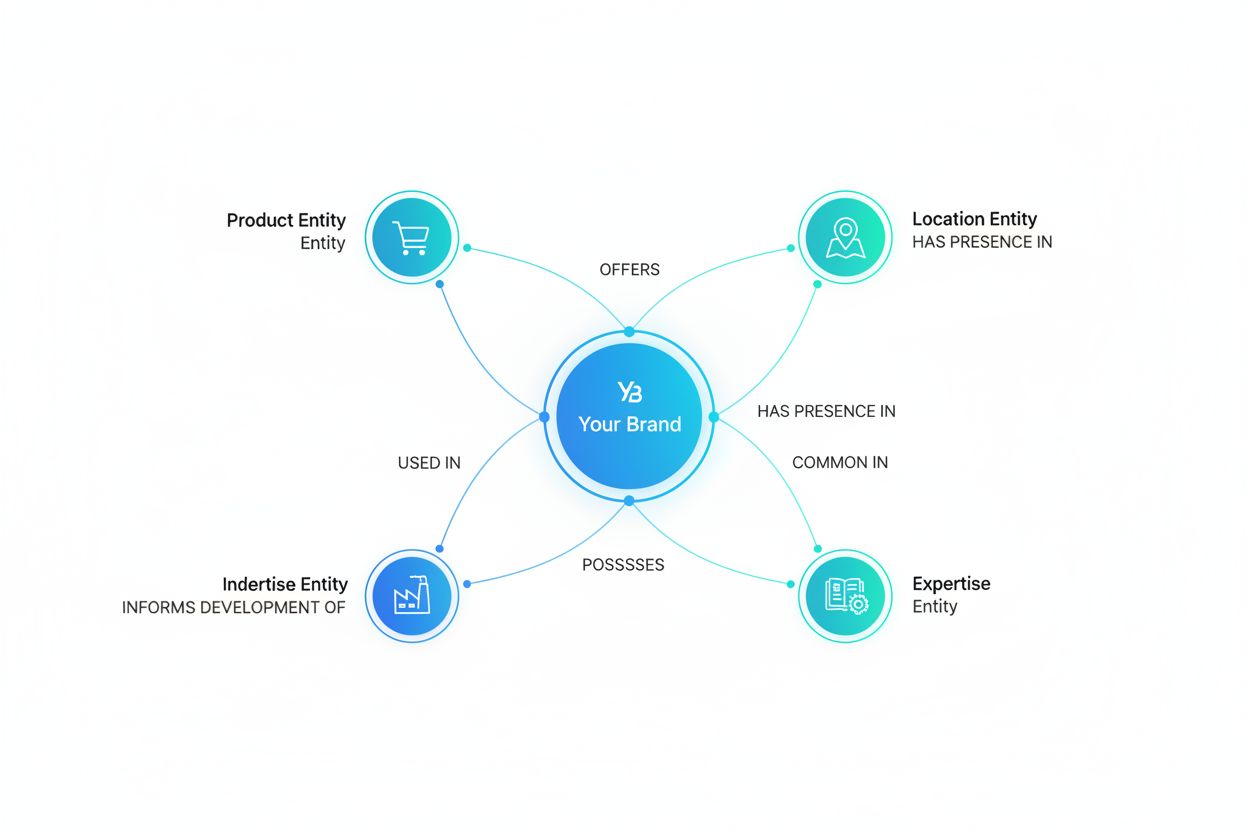
Entity Optimization for AI: Making Your Brand Recognizable to LLMs
Learn how entity optimization helps your brand become recognizable to LLMs. Master knowledge graph optimization, schema markup, and entity strategies for AI vis...
12 min read
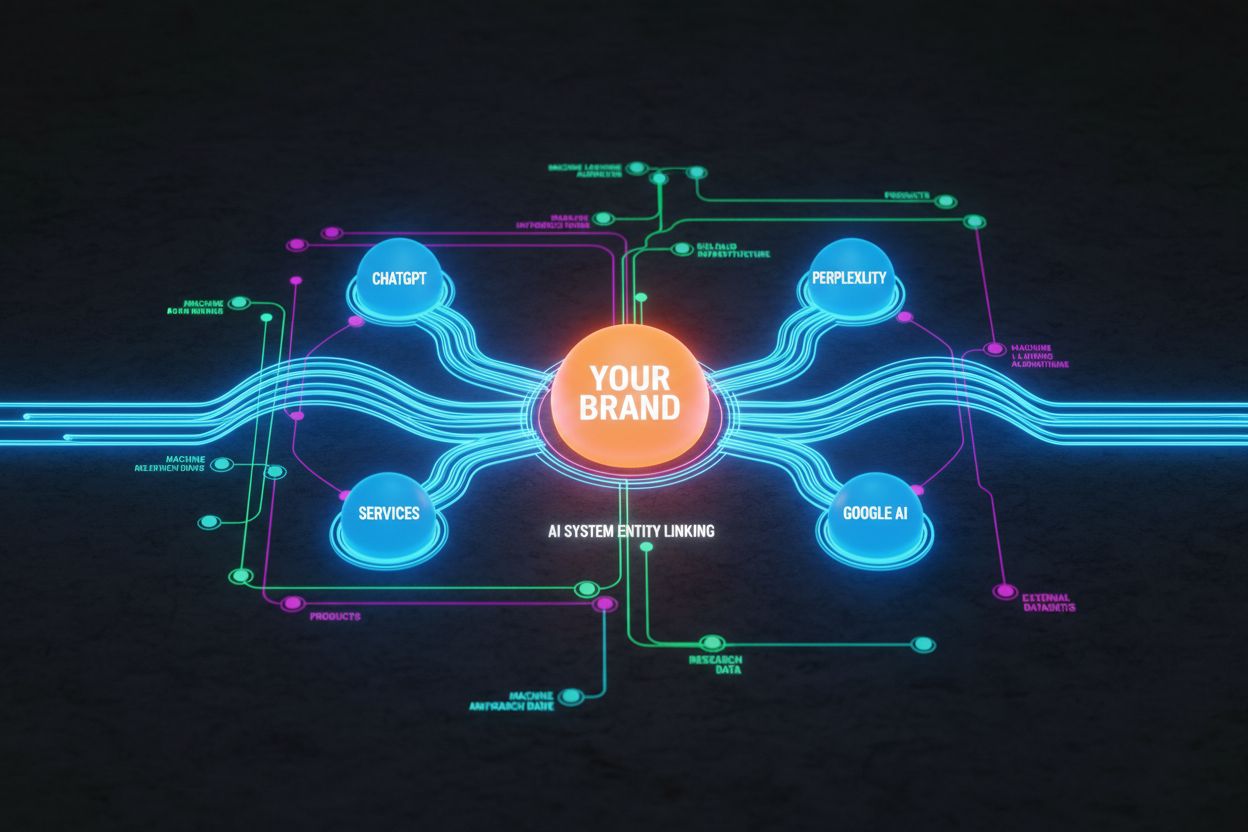
Learn how entity linking connects your brand across AI systems. Discover strategies to improve brand recognition in ChatGPT, Perplexity, and Google AI Overviews with AmICited.com’s monitoring platform.
Entity linking is the process of identifying distinct entities—such as brands, people, products, and concepts—within text and connecting them to their corresponding entries in knowledge bases. Unlike traditional keyword matching, entity linking enables AI systems like ChatGPT, Perplexity, and Google AI Overviews to understand the precise meaning and context of your brand when it appears in user queries or content. When AI systems recognize your brand as a distinct entity with defined attributes and relationships, they can reference it more accurately and contextually in their responses. This is where AmICited.com becomes invaluable—it monitors how your brand is being recognized and cited across multiple AI systems, ensuring your entity presence translates into actual visibility in AI-powered answers.
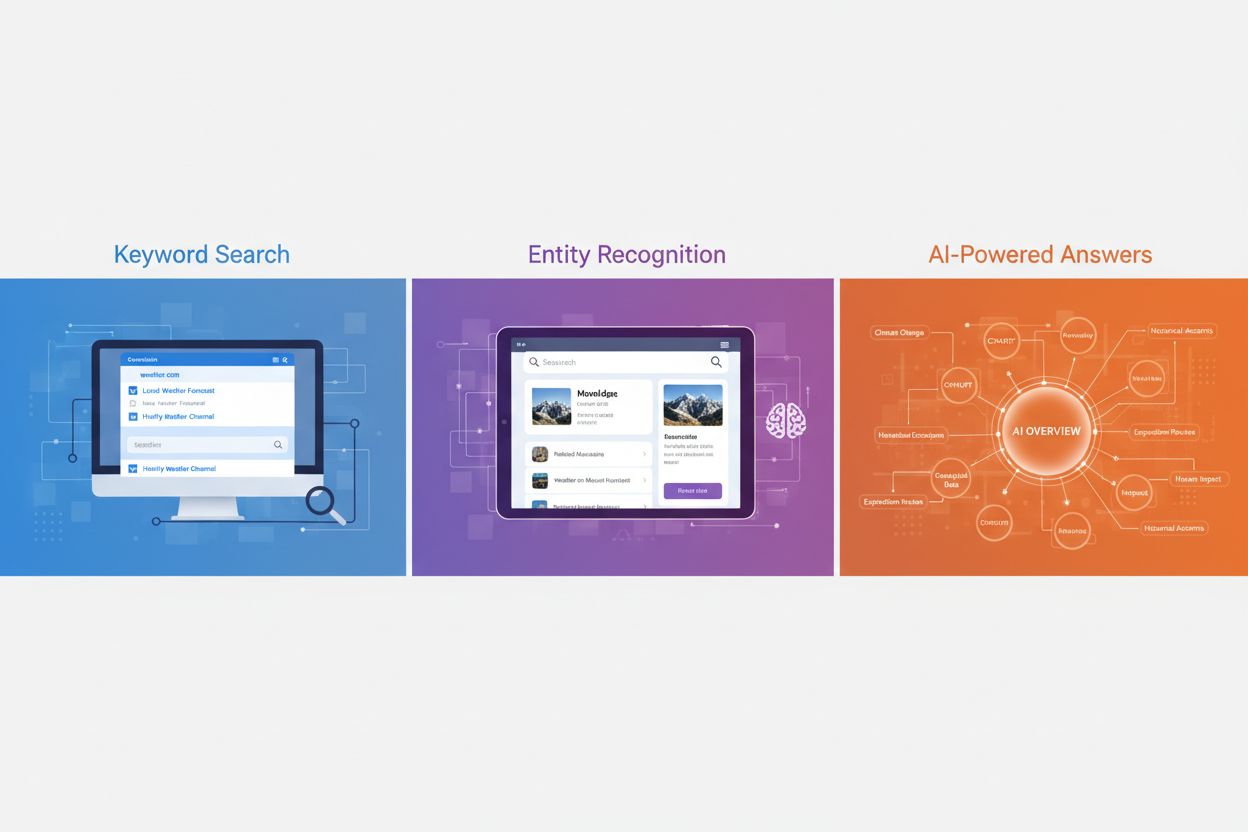
While traditional SEO focuses on optimizing individual pages to rank for specific keywords, entity linking takes a fundamentally different approach by establishing your brand as a recognized entity within semantic networks. Traditional SEO asks “How do I rank for this keyword?” while entity linking asks “How do I become recognized as an authoritative entity in knowledge graphs?” The distinction matters significantly because AI systems prioritize entity understanding over keyword matching when generating answers.
| Aspect | Traditional SEO | Entity Linking |
|---|---|---|
| Primary Focus | Keywords and page rankings | Entities and relationships |
| Goal | Rank pages in search results | Establish entity recognition |
| Knowledge Base | Search engine index | Knowledge graphs |
| AI Understanding | Limited contextual awareness | Deep semantic understanding |
| Brand Visibility | Search result positions | AI answers and knowledge panels |
| Measurement | Rankings and traffic | Entity citations and mentions |
| Longevity | Algorithm-dependent | Relationship-based stability |
This shift from keyword-centric to entity-centric optimization reflects how modern AI systems process information. When your brand is recognized as an entity, it gains stability against algorithm changes and becomes more likely to appear in contextually relevant AI responses across multiple platforms.
When you ask ChatGPT about a specific brand or Perplexity searches for information about a company, these AI systems rely on entity linking to understand which exact entity you’re referring to and retrieve accurate information about it. If your brand is properly linked to authoritative knowledge bases, the AI system can confidently cite your brand with correct attributes, relationships, and context. For example, when an AI system encounters “Apple,” entity linking helps it distinguish between Apple Inc. (the technology company) and the fruit, then retrieves the correct information based on context. This disambiguation is crucial for accuracy. AmICited.com tracks these entity references across AI systems, showing you exactly how your brand is being recognized, cited, and contextualized in AI-generated answers—providing insights that traditional SEO tools simply cannot offer.
At the heart of entity linking lies the knowledge graph, a structured database that stores information about entities, their attributes, and their relationships to other entities. Google’s Knowledge Graph alone contains over 500 billion facts about 5 billion entities, while Wikidata and DBpedia provide additional semantic layers that AI systems leverage. The process of entity linking involves two critical steps: Named Entity Recognition (NER), which identifies spans of text that mention entities (like identifying “Microsoft” as a company name), and entity disambiguation, which determines which specific entity is being referenced when multiple entities share similar names. For instance, if a document mentions “Jordan,” the system must determine whether it refers to Michael Jordan the basketball player, Jordan the country, or another entity entirely. This disambiguation process relies on contextual clues, entity descriptions, and relationship information stored in knowledge graphs. Modern AI systems use transformer-based neural networks to perform these tasks with remarkable accuracy, enabling them to understand entity context and make intelligent connections between related entities.
External entity linking connects your brand to authoritative public knowledge bases like Wikipedia, Wikidata, and Google’s Knowledge Graph. This approach is ideal for widely recognized entities and helps establish credibility by linking to established sources. When your brand appears in Wikipedia or is recognized in Wikidata, AI systems gain confidence in your entity’s legitimacy and can pull rich contextual information. Internal entity linking, by contrast, connects entities unique to your organization—such as proprietary products, services, locations, or key people—to your own content knowledge graph. This approach ensures that references to your internal entities consistently map back to the authoritative pages within your own website. For most brands, the optimal strategy combines both approaches: use external linking to establish authority and credibility for your main brand entity, while implementing internal linking to create a cohesive knowledge structure around your products, services, and key personnel.
The practical implementation of entity linking begins with structured data markup, specifically using schema.org vocabulary in JSON-LD format. This markup tells search engines and AI systems exactly what entities you’re discussing and how they relate to each other. Here’s a practical example of how to implement entity linking for your brand:
{
  "@context": "https://schema.org",
  "@type": "Organization",
  "name": "Your Brand Name",
  "url": "https://yourbrand.com",
  "logo": "https://yourbrand.com/logo.png",
  "description": "Clear description of what your brand does",
  "sameAs": [
    "https://en.wikipedia.org/wiki/Your_Brand",
    "https://www.wikidata.org/wiki/Q12345",
    "https://www.linkedin.com/company/your-brand"
  ],
  "founder": {
    "@type": "Person",
    "name": "Founder Name"
  },
  "location": {
    "@type": "Place",
    "address": "Your Address"
  }
}
The sameAs property is particularly important—it explicitly tells AI systems that your website represents the same entity as your Wikipedia page, Wikidata entry, and verified social profiles. This consolidation of entity references strengthens your entity recognition across knowledge graphs. Beyond the basic organization schema, implement Product schema for your main offerings, Person schema for key leadership, and LocalBusiness schema if you have physical locations. Each schema type should include relevant entity linking properties to create a comprehensive semantic representation of your brand ecosystem.
Establishing a strong entity presence requires consistent, coordinated effort across multiple channels and platforms. Here’s a strategic approach to building your brand’s entity recognition:
Establish Consistent Entity Information: Use identical brand names, descriptions, and core attributes across all platforms—your website, social media, business directories, and press materials. Inconsistency confuses knowledge graphs and fragments your entity recognition.
Create or Optimize Wikipedia Presence: Wikipedia remains one of the most influential sources for knowledge graph population. If your brand meets Wikipedia’s notability standards, create a well-sourced article that clearly defines your entity, history, and significance.
Secure Verified Social Profiles: Maintain verified profiles on Google Business Profile, LinkedIn, Facebook, Twitter/X, and Instagram. These verified profiles serve as entity confirmation signals and provide additional entity attributes that knowledge graphs incorporate.
Generate Quality Citations and Mentions: Pursue coverage in industry publications, business directories, and authoritative sources. Each mention should use consistent entity information to reinforce knowledge graph connections.
Build Topical Authority: Publish authoritative content on your core topics and create semantic content clusters that establish clear relationships between your brand and specific subject areas. This helps knowledge graphs understand your entity’s expertise and relevance.
Develop Entity Relationships: Identify and build relationships with other recognized entities in your space—industry partners, complementary brands, relevant organizations. These relationships strengthen your entity’s position within knowledge graphs.
Implement Structured Data Comprehensively: Go beyond basic schema markup and implement detailed structured data across your entire website, including product pages, team member pages, and content pieces that mention related entities.
Monitor and Update Entity Information: Regularly verify how your brand is represented in knowledge panels, search results, and AI system responses. When information is outdated or incorrect, use appropriate verification channels to request updates.
While traditional SEO tools measure keyword rankings and page visibility, AmICited.com addresses a critical gap in the modern marketing landscape: monitoring how your brand is recognized and cited across AI systems. Entity linking effectiveness ultimately matters because it determines whether your brand appears in AI-generated answers on ChatGPT, Perplexity, Google AI Overviews, and other AI platforms. AmICited.com tracks your brand’s entity recognition across these systems, showing you exactly how your brand is being referenced, what context it appears in, and how frequently it’s cited compared to competitors. This monitoring reveals whether your entity linking efforts are translating into actual AI visibility. For instance, you might discover that your brand is recognized in Perplexity but not yet in ChatGPT, or that competitors’ brands are being cited more frequently in AI answers about your industry. These insights enable you to refine your entity linking strategy with precision, focusing efforts where they’ll have the greatest impact on AI-powered visibility.
Measuring the success of your entity linking efforts requires tracking metrics that reflect entity recognition rather than traditional SEO indicators. Knowledge panel appearances represent one of the most visible success metrics—when your brand earns a knowledge panel in search results, it signals that search engines recognize your entity as significant enough to warrant a dedicated information box. Monitor the frequency, completeness, and accuracy of your knowledge panels across different search queries. Entity-based search traffic measures how often users find your content through searches related to your entity attributes rather than your brand name directly. Brand SERP features include rich results, carousels, and other enhanced listings that appear when your brand is recognized as an entity. Voice search performance is increasingly important, as voice search results predominantly feature recognized entities and knowledge panels. Track how often your brand appears in voice search responses for relevant queries. Additionally, monitor the quality and authority of citations—measure not just how often your brand is mentioned, but the authority and relevance of the sources mentioning it. Tools like Google Search Console, brand monitoring platforms, and AmICited.com provide the data needed to track these metrics effectively.
The evolution of search is fundamentally shifting from keyword-matching to entity-understanding, and this trend will only accelerate as AI systems become more sophisticated. Google’s AI Overviews, Perplexity’s answer engine, and ChatGPT’s knowledge integration all rely heavily on entity linking to generate accurate, contextual responses. As these AI systems expand their capabilities and user adoption grows, brands that have established strong entity presence will gain significant competitive advantages. The future of search visibility belongs to brands that are recognized as distinct entities with clear attributes, authoritative relationships, and consistent representation across knowledge graphs. This shift represents both a challenge and an opportunity—it requires moving beyond traditional keyword optimization, but it also creates more stable, relationship-based visibility that’s less vulnerable to algorithm changes. Brands that invest in entity linking now will find themselves better positioned to capture visibility in AI-powered search results, voice search responses, and emerging AI applications that rely on semantic understanding. The entity-first future of search is already here; the question is whether your brand will be recognized as a distinct, authoritative entity within it.
Entity recognition identifies entities in text (like finding 'Apple' in a sentence), while entity linking connects those identified entities to specific entries in knowledge bases. Entity recognition is the first step; entity linking is the connection that gives those entities meaning and context.
Entity linking provides AI systems with context and relationships between entities, reducing ambiguity and improving accuracy. When an AI system recognizes your brand as a distinct entity with defined attributes and relationships, it can reference your brand more accurately and contextually in its responses.
Absolutely. Small brands can benefit significantly through consistent information across platforms, implementing structured data markup, generating quality citations, and building topical authority. Entity linking success depends more on consistency and strategic effort than on brand size.
Initial entity recognition can appear within 3-6 months of consistent effort, but full establishment as an authoritative entity typically takes 6-12 months. The timeline depends on your industry, competition level, and the comprehensiveness of your entity linking strategy.
Voice search relies heavily on entity understanding for accurate answers. Over 60% of voice search results come from featured snippets and knowledge panels, which predominantly feature recognized entities. Strong entity linking directly improves your visibility in voice search results.
AmICited.com monitors how your brand is referenced across AI systems like ChatGPT, Perplexity, and Google AI Overviews. It tracks entity recognition, citation frequency, and competitive positioning, providing insights that help you refine your entity linking strategy for maximum AI visibility.
While Wikipedia is helpful and influential for knowledge graph population, it's not always required. The necessity depends on your brand type and industry. However, if your brand meets Wikipedia's notability standards, creating a well-sourced article significantly strengthens entity recognition.
Check for knowledge panels when searching your brand name, monitor how AI systems reference your brand, use entity monitoring tools like AmICited.com, and verify your presence in Wikidata and other knowledge bases. Consistent appearance in these places indicates strong entity recognition.
Discover how your brand is being referenced in ChatGPT, Perplexity, Google AI Overviews, and other AI systems. AmICited.com tracks entity linking performance and helps you optimize your brand's presence in AI-powered search.
Learn how entity optimization helps your brand become recognizable to LLMs. Master knowledge graph optimization, schema markup, and entity strategies for AI vis...

Learn how to strengthen your brand entity for AI search visibility. Optimize for ChatGPT, Perplexity, Google AI Overviews, and Claude with entity SEO strategies...
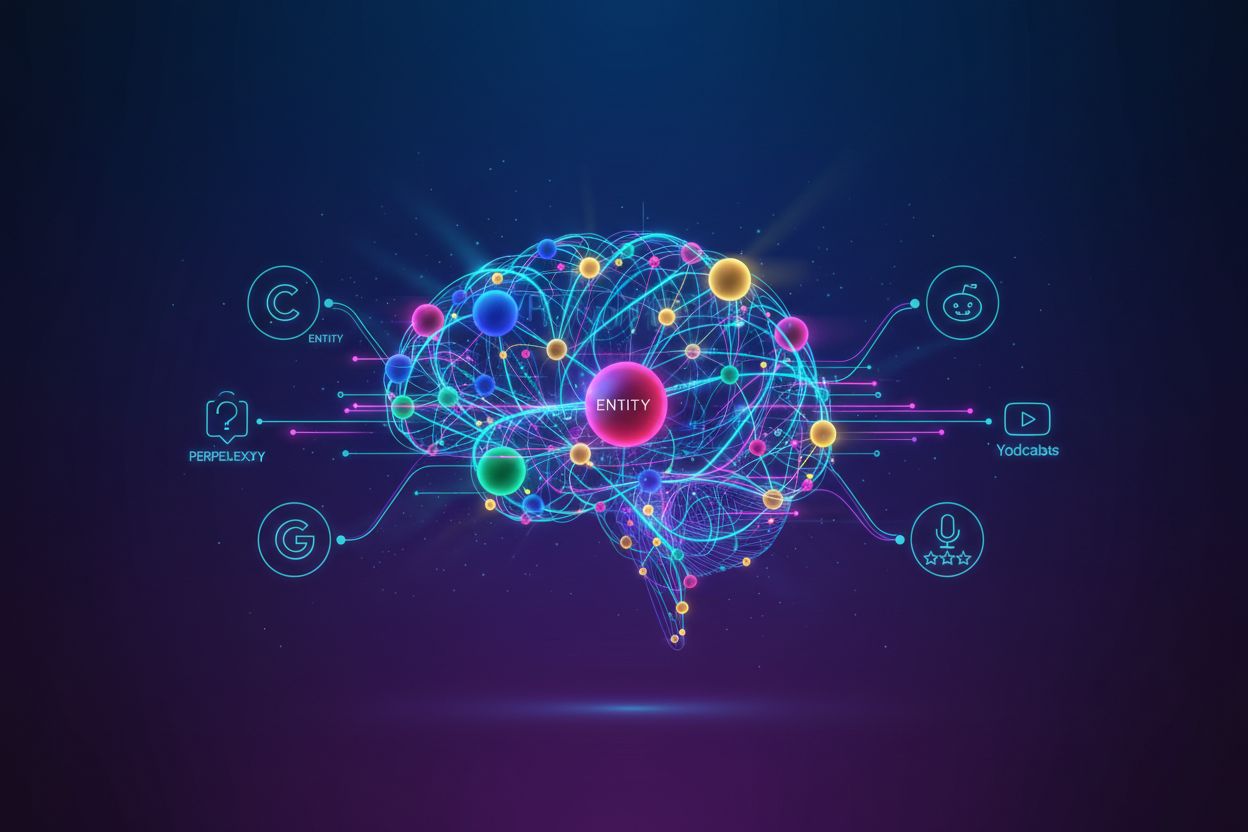
Learn how to build entity visibility in AI search. Master knowledge graph optimization, schema markup, and entity SEO strategies to increase brand presence in C...