
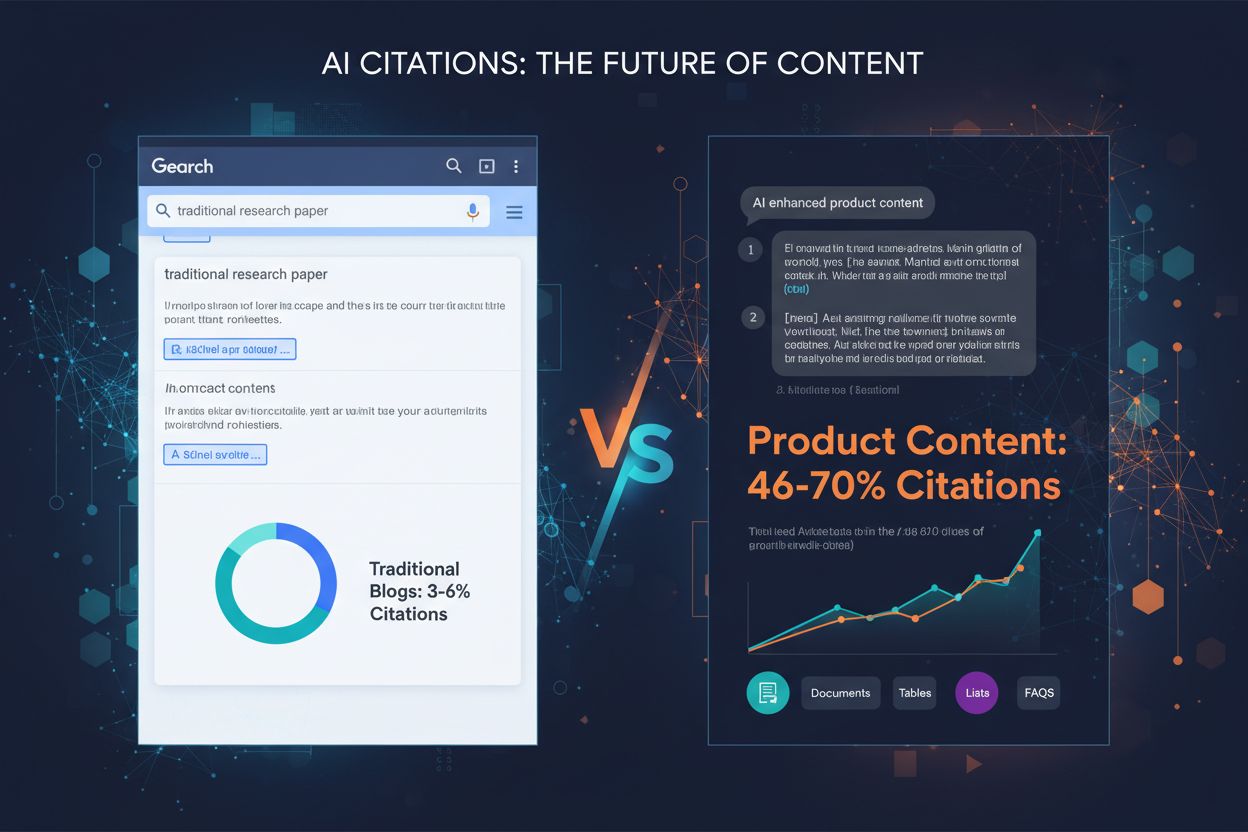
Which Content Formats Get More AI Citations? Data Analysis
Discover which content formats get cited most by AI models. Analyze data from 768,000+ AI citations to optimize your content strategy for ChatGPT, Perplexity, a...
10 min read
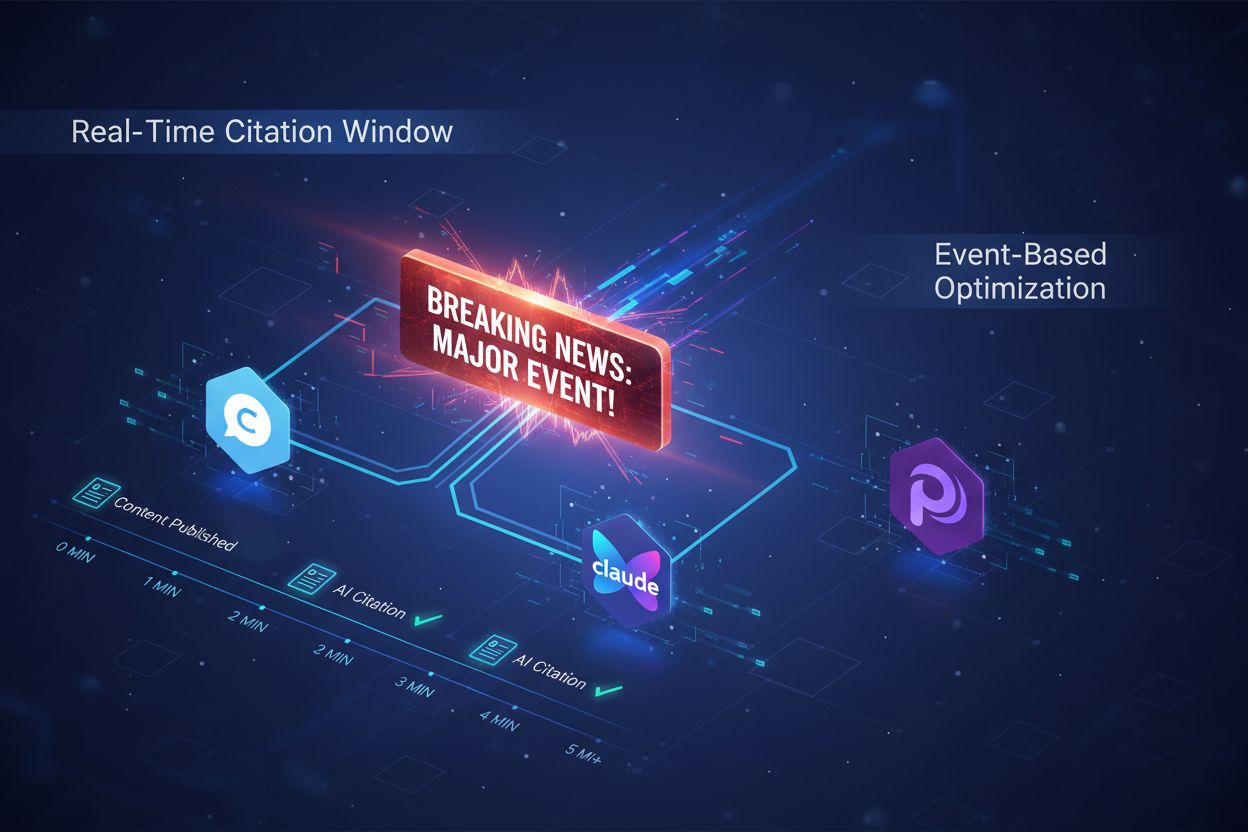
Master event-based AI optimization and newsjacking strategies to capture real-time AI citations. Learn how to structure timely content for ChatGPT, Claude, and Perplexity visibility.
The landscape of AI citations has fundamentally shifted toward real-time, event-based content. Modern AI engines—from ChatGPT to Claude to specialized research models—prioritize fresh, timely information when generating citations and references. This preference isn’t arbitrary; it reflects how these systems are trained to value currency and relevance. Research indicates that over 95% of AI citations originate from non-paid, earned coverage rather than sponsored content, meaning your ability to capture attention during breaking news moments directly impacts your visibility in AI-generated responses.
The timing advantage is substantial. When a significant event occurs—a product launch, industry announcement, regulatory change, or cultural moment—AI engines begin indexing and analyzing related content within minutes. Content published within the first few hours of an event has exponentially higher citation probability than content published days later. This creates a narrow but powerful window where strategic, well-optimized content can dominate AI citations for weeks or months afterward. The reason is straightforward: AI systems weight recency heavily, and early, authoritative responses to events become the canonical sources that subsequent AI queries reference. Companies that understand this dynamic gain disproportionate visibility. Tools like AmICited help organizations monitor exactly when events trigger AI mentions, revealing the precise moments when your content enters the AI citation ecosystem and how frequently it gets referenced across different AI platforms and use cases.
Traditional newsjacking has long been a marketing tactic, but it was designed for human audiences and social media virality. The emergence of AI as a primary information source requires a fundamentally different approach. While traditional newsjacking focuses on humor, emotional resonance, and shareability, AI-optimized newsjacking prioritizes accuracy, entity clarity, and structural formatting that AI engines can easily parse and cite. The distinction matters enormously because AI citations operate under different rules than human engagement metrics.
An AI-optimized approach recognizes that AI engines evaluate content differently than human readers. They analyze semantic relationships, fact-verification, source authority, and information structure. This means your newsjacking content needs to be simultaneously timely and technically sound—a balance that traditional approaches often sacrifice. The following table illustrates how these two approaches diverge:
| Aspect | Traditional Approach | AI-Optimized Approach |
|---|---|---|
| Speed to Publish | 30-60 minutes (prioritizes quick turnaround) | 15-30 minutes (rapid but verification-focused) |
| Content Structure | Narrative-driven, emphasis on hooks and emotion | Entity-clear, front-loaded facts, structured headers |
| Citation Probability | Moderate (depends on virality and reach) | High (designed for AI parsing and reference) |
| Measurement | Social shares, clicks, traditional media pickup | AI citation frequency, context accuracy, platform distribution |
| Optimization Focus | Audience engagement and shareability | AI engine indexing and citation likelihood |
The AI-optimized approach wins because it acknowledges that AI systems have become primary information distributors. When someone asks ChatGPT about a recent event, the AI pulls from indexed sources that match specific criteria: timeliness, authority, clarity, and verifiable facts. AmICited measures exactly this—tracking not just whether your content gets cited, but how often, in what context, and across which AI platforms, giving you visibility into the metrics that actually matter for AI-driven visibility.
Successful newsjacking requires understanding which news stories offer genuine relevance to your brand and which represent forced connections that damage credibility. The fundamental principle is simple: your brand’s response to an event must feel authentic and valuable to the audience, not opportunistic. This principle becomes even more critical when optimizing for AI citations, because AI systems increasingly evaluate content for semantic relevance and factual accuracy. A forced or tangential connection that might generate a few social media laughs will likely be deprioritized by AI engines that recognize the weak relationship between your brand and the event.
Picking the Right Stories requires honest assessment of relevance. Does your brand have genuine expertise or perspective on this event? Can you add value to the conversation, or are you simply trying to ride attention? Speed Versus Accuracy represents the critical tension in event-based optimization. AI engines reward timeliness, but they penalize inaccuracy even more severely. A response published in 20 minutes that contains verified facts will outperform a response published in 10 minutes that includes unverified claims. Brand Relevance and Authenticity determine whether your newsjacking effort enhances or damages your reputation. The DiGiorno Pizza domestic violence incident of 2014 exemplifies the disaster scenario—the brand attempted to capitalize on a serious social issue with a flippant tweet, resulting in massive backlash and long-term reputation damage. Conversely, Oreo’s “You can still dunk in the dark” Super Bowl blackout tweet succeeded because it was genuinely clever, timely, and aligned with the brand’s personality. Contingency Planning means preparing response templates and approval processes in advance so you can move quickly without sacrificing quality. Avoiding PR Disasters requires monitoring tools that help you understand how your newsjacking efforts are being received and cited—both by humans and by AI systems. AmICited’s monitoring capabilities help you track not just whether your content gets cited, but whether it’s being cited in positive, neutral, or negative contexts, allowing you to course-correct before reputation damage compounds.
The technical structure of your event-based content directly impacts its citation probability in AI systems. AI engines analyze content differently than human readers, and understanding these differences is essential for optimization. The first 75-100 words of your content receive disproportionate analytical weight from AI systems—this is where you must establish entity clarity, provide context, and front-load your most important information. This differs significantly from traditional copywriting, where you might build narrative tension or save key information for later in the piece.
Entity Clarity means explicitly identifying the people, organizations, products, and concepts you’re discussing. Rather than using pronouns or vague references, name entities directly and early. If you’re responding to a regulatory announcement, name the regulatory body, the specific regulation, and the affected industry in your opening sentences. Front-Loading Information requires inverting the traditional pyramid structure slightly—your headline and opening paragraph should contain the complete core message, not a teaser that unfolds gradually. AI systems extract meaning from this opening section to determine relevance and authority. Structured Formatting using clear headers, bullet points, and short paragraphs helps AI engines parse your content more effectively. Rather than dense paragraphs, break information into scannable sections with descriptive headers that contain relevant keywords. Verifiable Facts are non-negotiable. Every claim should be attributable to a source, and you should include specific data points, quotes, and references that AI systems can verify. This verification process directly impacts citation probability—AI engines are more likely to cite content they can cross-reference with other authoritative sources. Clear Headlines should contain the core message and relevant keywords without clickbait or ambiguity. Your headline should answer the question “What happened and why does it matter?” in 10-12 words. AmICited tracks whether your event content actually gets cited by AI systems, revealing which structural approaches generate the highest citation frequency and helping you refine your optimization strategy based on real performance data.
AI engines with real-time search capabilities create unique citation opportunities that didn’t exist in traditional search optimization. When breaking news emerges, these systems immediately begin indexing and analyzing related content, creating a narrow window where fresh, relevant content can dominate AI citations for extended periods. The reason is algorithmic: real-time search prioritizes recency heavily, and the first authoritative sources to address an event become the canonical references that subsequent AI queries cite repeatedly.
This dynamic creates specific opportunities for brands willing to move quickly. When a trending topic emerges—whether it’s a regulatory announcement, industry disruption, cultural moment, or technological breakthrough—the content published in the first few hours receives citation advantages that persist for weeks. An article published within 30 minutes of a major announcement might receive 10-15 times more AI citations than an article published 24 hours later, even if the later article is more comprehensive. This isn’t because AI systems prefer rushed content; it’s because they weight recency and authority together, and early responses from credible sources become the reference points for all subsequent discussions.
Capitalizing on these opportunities requires monitoring systems that alert you to emerging trends and events relevant to your industry or expertise. Real-time search integration means you need to identify opportunities as they develop, not after they’ve already peaked. Trending topics in your industry—whether they’re regulatory changes, competitor announcements, technological breakthroughs, or market shifts—represent citation windows that close quickly. The brands that win are those that can assess relevance, develop a response, and publish within 30-45 minutes of the event becoming public. AmICited’s real-time monitoring tools help you identify these opportunities as they emerge and track whether your rapid-response content actually generates AI citations, revealing which trending topics and event types drive the most citation value for your brand.
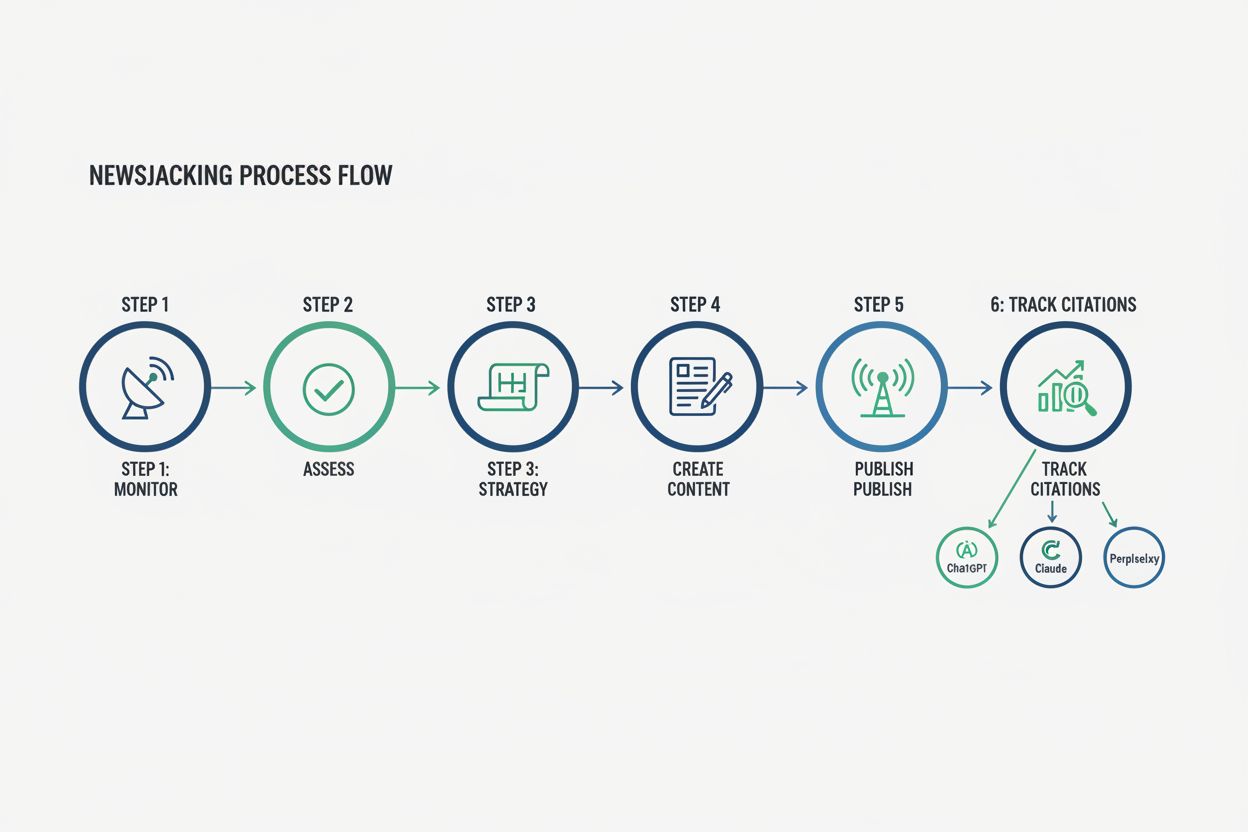
Executing effective event-based AI optimization requires a systematic approach that balances speed with quality. The following framework provides a structured methodology for capturing citation opportunities:
1. Monitor News and Trends Continuously Establish monitoring systems that track industry news, regulatory announcements, competitor activities, and cultural moments relevant to your brand. Tools like Google Alerts, industry-specific news aggregators, and social listening platforms help you identify emerging events before they become mainstream. The goal is to catch events in their earliest stages, when the citation window is widest. Set up alerts for specific keywords, competitor names, regulatory bodies, and industry trends so you receive notifications within minutes of relevant news breaking.
2. Assess Brand Relevance Quickly Within 5-10 minutes of identifying a potential newsjacking opportunity, evaluate whether your brand has genuine relevance and value to add. Ask: Does our expertise apply? Can we provide unique perspective? Will this enhance or damage our reputation? This rapid assessment prevents wasted effort on forced connections while identifying genuine opportunities worth pursuing. Document your relevance assessment so you can explain your connection clearly in your content.
3. Develop a Rapid Response Strategy Before publishing, outline your angle, key messages, and supporting facts. What unique perspective does your brand bring? What data or expertise supports your response? Who should approve the content before publication? Having pre-approved response templates and clear approval chains allows you to move quickly without sacrificing quality. Identify which channels you’ll use for distribution—your owned channels (website, email, social media) should be primary, as they provide the authority signals that AI systems value.
4. Create AI-Optimized Content Write content specifically structured for AI citation. Front-load your most important information in the first 75-100 words. Use clear headers, bullet points, and short paragraphs. Include specific data, quotes, and verifiable facts. Ensure entity clarity by naming people, organizations, and concepts explicitly. Your content should be simultaneously timely and technically sound—rapid but not rushed, comprehensive but not verbose.
5. Publish Via Authoritative Channels Distribute your content through channels that carry authority signals for AI systems. Your owned website (particularly if it has established domain authority) is ideal. Simultaneously publish to relevant social platforms and consider distribution through industry publications if you have existing relationships. The combination of owned-channel publication plus earned media amplification signals authority to AI systems.
6. Track Citations and Optimize Use AmICited to monitor whether your event-based content generates AI citations. Track citation frequency, context, and distribution across different AI platforms. Analyze which types of events, angles, and content structures generate the highest citation value. Use these insights to refine your newsjacking strategy for future events, building a data-driven understanding of what works for your specific brand and industry.
Consider the case of TechFlow, a B2B software company specializing in data infrastructure. When the U.S. government announced new data residency requirements for federal contractors in March 2024, TechFlow recognized an immediate opportunity. The announcement affected their core market, and they had genuine expertise to contribute.
Within 25 minutes of the announcement, TechFlow published a comprehensive analysis on their blog titled “Federal Data Residency Requirements: What Contractors Need to Know.” The content front-loaded the regulatory details, included specific compliance timelines, and provided actionable guidance for affected companies. They structured it with clear headers, bullet points, and included quotes from their Chief Compliance Officer. Simultaneously, they published a condensed version on LinkedIn and distributed it to their email list.
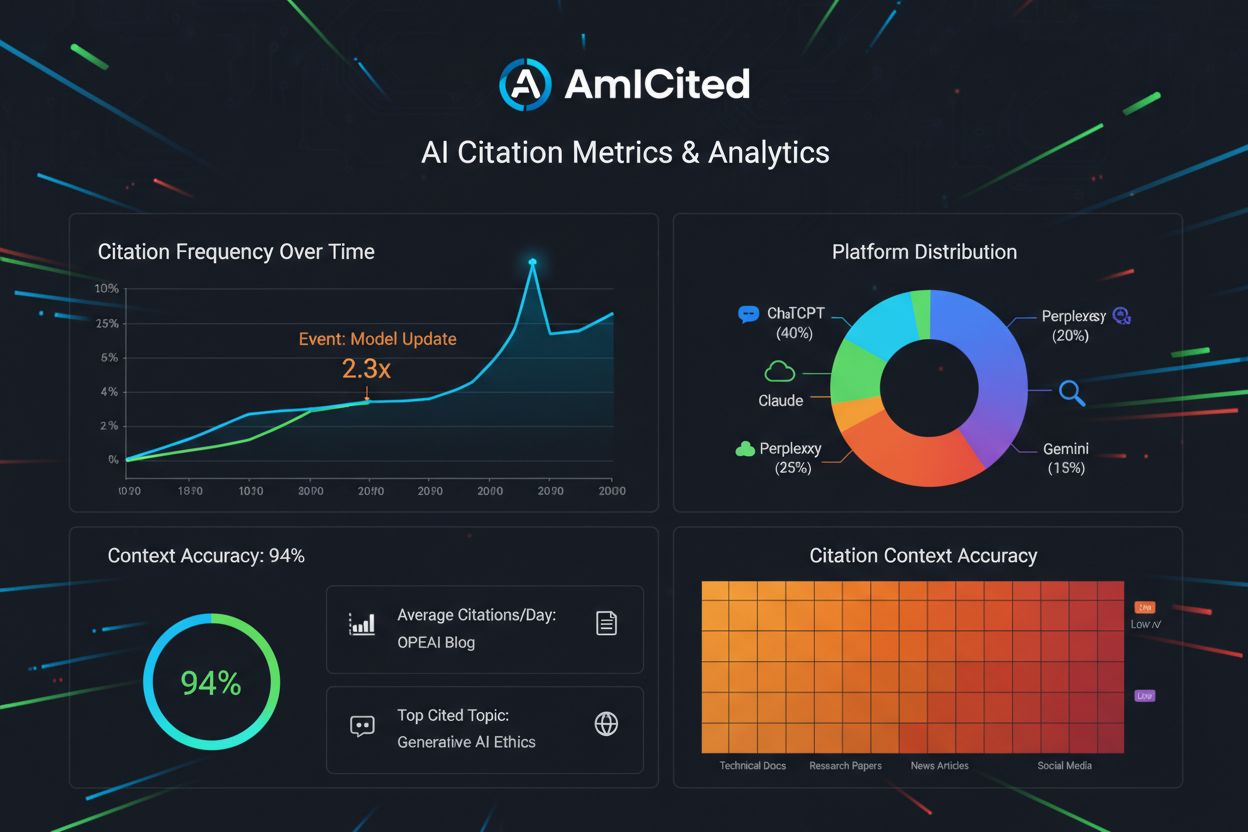
The results exceeded expectations. Within two weeks, AmICited tracking revealed that TechFlow’s content had been cited in AI-generated responses 2.3 times more frequently than their previous event-based content. More significantly, the citations appeared in high-value contexts—AI responses to questions about federal compliance, data infrastructure requirements, and contractor obligations. The content remained a top citation source for this topic for over three months, driving consistent referral traffic and establishing TechFlow as an authoritative voice on the subject.
The key learnings from TechFlow’s success: First, genuine relevance matters enormously—their expertise was real, not forced. Second, speed combined with quality won—they published within 30 minutes but didn’t sacrifice accuracy or structure. Third, multi-channel distribution amplified authority signals—owned channel plus social plus email created multiple indexing opportunities. Fourth, AI-optimized structure made a measurable difference—the front-loaded information and clear formatting directly contributed to citation frequency. Finally, measurement revealed the true value—without AmICited’s tracking, TechFlow wouldn’t have understood the actual impact of their event-based content on AI visibility, making it impossible to optimize future efforts.
Even well-intentioned newsjacking efforts frequently fail because of preventable mistakes. Understanding these pitfalls helps you avoid reputation damage and wasted effort.
Forcing Irrelevant Connections represents the most common mistake. Brands attempt to capitalize on trending topics with tenuous connections to their actual business, resulting in content that feels opportunistic and damages credibility. The solution: establish a clear relevance threshold before publishing. If you can’t explain your connection in one sentence without sounding forced, skip the opportunity. Your long-term reputation is worth more than a single citation spike.
Slow Response Time undermines the entire newsjacking strategy. Content published 24 hours after an event has missed the citation window when AI systems weight recency most heavily. The solution: establish pre-approved response templates, clear approval chains, and monitoring systems that alert you immediately when relevant events break. Practice rapid-response processes so your team can move from identification to publication in 20-30 minutes.
Unverified Claims damage both your reputation and your citation probability. AI systems increasingly penalize content with factual inaccuracies, and human audiences will call out false claims on social media. The solution: verify every fact before publishing, even under time pressure. If you can’t verify something in your rapid-response window, omit it. Accuracy matters more than comprehensiveness in event-based content.
Ignoring Brand Safety means publishing responses that align with trending topics but contradict your brand values or create PR disasters. The solution: maintain clear brand guidelines and values that inform your newsjacking decisions. Ask whether this response aligns with your brand identity and values. If there’s doubt, skip it. The DiGiorno Pizza domestic violence incident demonstrates how a single ill-considered tweet can damage brand reputation for years.
Poor Content Structure means your content doesn’t get cited by AI systems even if it’s timely and relevant. Dense paragraphs, unclear headers, and buried key information reduce citation probability. The solution: structure all event-based content specifically for AI parsing—front-load information, use clear headers, include bullet points, and ensure entity clarity. The technical structure of your content directly impacts its citation value.
AmICited’s monitoring helps you identify when these mistakes happen in real-time, allowing you to course-correct before reputation damage compounds or citation opportunities are completely lost.
Traditional marketing metrics—clicks, shares, impressions—don’t capture the true value of event-based AI citations. You need measurement systems specifically designed for AI visibility. This represents a fundamental shift from how most organizations measure content performance.
Citation Frequency measures how often your content appears in AI-generated responses. This is fundamentally different from page views or social shares. A single piece of content might generate hundreds of AI citations while receiving modest direct traffic. Track citation frequency across different AI platforms (ChatGPT, Claude, Perplexity, specialized research models) to understand where your content has the most impact. Context Accuracy evaluates whether your content is cited in appropriate contexts. Are AI systems citing your content when answering questions directly related to your expertise, or are they citing it tangentially? High-value citations appear in directly relevant contexts; low-value citations appear in tangential or incorrect contexts. Visibility Across Platforms reveals which AI systems cite your content most frequently. Different AI platforms have different training data, indexing approaches, and user bases. Understanding which platforms cite your content helps you optimize for the platforms that matter most to your audience. Citation Longevity measures how long your event-based content remains a top citation source. Some content generates a spike of citations immediately after publication, then drops off. Other content maintains citation frequency for weeks or months. Longevity indicates whether your content has become a canonical reference for a topic.
AI citations are harder to track than traditional backlinks because they’re distributed across multiple platforms and often don’t include direct links. This is precisely why AmICited exists—to provide visibility into AI citation metrics that would otherwise remain invisible. AmICited tracks citation frequency, context, platform distribution, and longevity, giving you the measurement infrastructure necessary to understand whether your event-based AI optimization efforts are actually working. Without this visibility, you’re optimizing blind, unable to distinguish between content that generates real AI citation value and content that simply feels timely. With AmICited’s tracking, you can measure the true impact of your newsjacking strategy and continuously refine your approach based on actual performance data rather than assumptions.
Event-based AI optimization is the practice of creating and publishing timely, well-structured content in response to breaking news, industry announcements, or trending topics to maximize citations from AI systems like ChatGPT, Claude, and Perplexity. It combines newsjacking strategy with technical optimization specifically designed for how AI engines parse and cite content.
AI engines with real-time search capabilities begin indexing and analyzing content within minutes of publication. Content published within the first 30-60 minutes of a breaking event has exponentially higher citation probability than content published later. The citation window is typically widest in the first 24 hours, with significant advantages persisting for weeks.
Traditional newsjacking focuses on humor, emotional resonance, and social media virality for human audiences. AI-optimized newsjacking prioritizes accuracy, entity clarity, structured formatting, and verifiable facts that AI engines can easily parse and cite. AI systems evaluate content based on semantic relevance and factual accuracy rather than shareability.
Front-load your most important information in the first 75-100 words, use clear headers and bullet points, include specific data and verifiable facts, ensure entity clarity by naming people and organizations explicitly, and maintain consistent formatting. AI engines analyze this opening section heavily to determine relevance and authority.
The major AI platforms to optimize for include ChatGPT, Claude, Perplexity, Google Gemini, and specialized research models. Different platforms have different training data and indexing approaches, so your content may perform differently across platforms. AmICited helps you track citation frequency across all major AI systems.
Track citation frequency (how often your content appears in AI responses), context accuracy (whether citations appear in relevant contexts), visibility across platforms (which AI systems cite your content), and citation longevity (how long your content remains a top citation source). AmICited provides comprehensive tracking for all these metrics.
Common mistakes include forcing irrelevant connections to trending topics, slow response times that miss the citation window, publishing unverified claims, ignoring brand safety, and poor content structure that AI systems can't parse effectively. Each of these reduces citation probability and can damage your reputation.
AmICited monitors when events trigger AI mentions, tracks citation frequency across platforms, reveals which trending topics drive the most citation value for your brand, shows whether your content is cited in appropriate contexts, and provides real-time alerts when your content gets cited by major AI systems.
Track how AI systems reference your brand during breaking news and trending events. Get instant alerts when your content gets cited by ChatGPT, Claude, Perplexity, and Google AI Overviews.
Discover which content formats get cited most by AI models. Analyze data from 768,000+ AI citations to optimize your content strategy for ChatGPT, Perplexity, a...

Discover how news mentions impact AI citations in ChatGPT, Perplexity, and other AI search engines. Learn strategies to increase your brand visibility in AI-gen...
Learn what makes content citation-worthy for AI systems like ChatGPT, Perplexity, and Google AI Overview. Discover the key characteristics, optimization strateg...