

What is Citation Authority in AI Responses?
Learn how citation authority works in AI-generated answers, how different platforms cite sources, and why it matters for your brand's visibility in AI search en...
13 min read

Learn how to position yourself as an AI-citable expert. Discover the authority signals AI systems recognize and strategies to build sustainable thought leadership visibility across ChatGPT, Perplexity, and Google AI Overviews.
The digital authority landscape is shifting beneath our feet, and most thought leaders haven’t noticed yet. While traditional SEO optimization remains important, AI evaluation systems are now supplementing—and in some cases replacing—traditional search rankings as the primary way information reaches audiences. Unlike Google’s algorithm, which prioritizes keywords and backlinks, AI engines evaluate expertise patterns, consistency, and citation quality to determine which sources deserve prominence in their responses. Being cited by AI is fundamentally different from ranking in Google; it’s about being recognized as a trusted expert by intelligent systems that analyze thousands of sources simultaneously. This shift creates unprecedented opportunities for thought leaders who understand how to position themselves as AI-citable sources.
Each major AI platform has developed distinct preferences for source evaluation, and understanding these differences is critical for strategic positioning. The following table illustrates how leading AI engines prioritize different source types:
| AI Engine | Top Source Types | Citation Preference | Best Strategy |
|---|---|---|---|
| ChatGPT | Wikipedia (27%), News (27%), Blogs (21%) | Authoritative, factual sources; avoids UGC | Establish presence in authoritative publications and news coverage |
| Gemini | Blogs (39%), News (26%), YouTube (3%) | Balances authority with community input | Create comprehensive blog content with multimedia elements |
| Perplexity | Blogs (38%), News (23%), Expert Reviews (9%) | Specialized sources and expert analysis | Develop expert review content and niche authority |
| AI Overviews | Blogs (46%), News (20%), Reddit (most cited) | Wider net including community platforms | Engage authentically on Reddit, LinkedIn, and community forums |
ChatGPT gravitates toward established, authoritative sources with strong editorial standards, while Gemini shows greater openness to diverse content types including community contributions. Perplexity distinctly favors expert reviews and specialized sources, making it ideal for niche authority positioning. AI Overviews cast a wider net, prominently featuring Reddit discussions and LinkedIn articles alongside traditional news sources. Understanding these preferences allows you to tailor your content strategy to maximize visibility across multiple AI platforms rather than optimizing for a single algorithm.
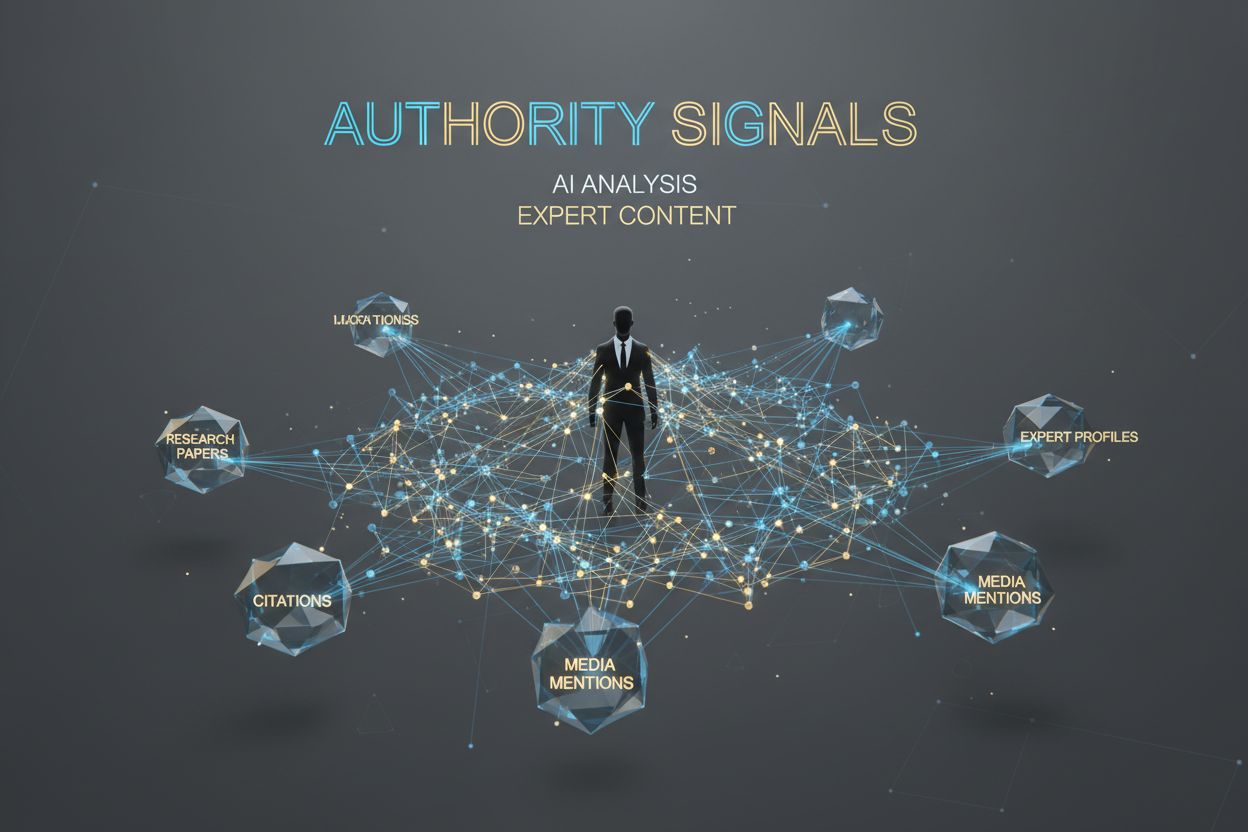
AI systems evaluate expertise through multiple interconnected signals that work together to establish credibility. These five core authority signals form the foundation of AI-citable positioning:
Each signal reinforces the others, creating a compound effect that strengthens your positioning over time. An expert who publishes consistently on a narrow topic, backs claims with original research, gets cited by major publications, and maintains an engaged professional network becomes increasingly difficult for AI systems to ignore. These signals work across platforms—from your website to LinkedIn to industry publications—creating a unified authority profile that AI engines recognize and reward.
Content consistency extends far beyond publishing frequency; it’s about maintaining unwavering focus on your area of expertise while upholding rigorous quality standards. Consistency means choosing specific content pillars—the 3-5 core topics that define your expertise—and publishing primarily within those boundaries rather than chasing every trending topic in your industry. This focused approach signals to AI systems that you possess deep, specialized knowledge rather than surface-level familiarity with multiple domains. Your editorial standards should be non-negotiable: fact-check every claim, update outdated information promptly, and maintain consistent formatting and depth across all content. When you avoid the temptation to publish outside your wheelhouse and instead deepen your expertise within defined boundaries, AI systems recognize this pattern and weight your citations more heavily. The brands that successfully position themselves as AI-citable sources treat consistency as a strategic asset, not an operational constraint.
Original research is the gold standard for AI-citable authority, and it’s one of the most underutilized tools in most thought leaders’ arsenals. When you conduct proprietary research—whether through surveys, experiments, data analysis, or case studies—you create content that AI systems cannot find elsewhere, making it inherently valuable for citation. The most effective original research combines measurable outcomes with practical applicability, demonstrating that your expertise translates into real-world results. AI systems are sophisticated enough to detect the difference between authentic expertise demonstrated through original research and surface-level commentary based on existing sources. Consider developing annual research initiatives, proprietary frameworks that solve specific problems, or detailed case studies that showcase your methodology and results. Technical depth matters significantly; AI engines recognize when content demonstrates genuine understanding versus regurgitated information. By making original research a cornerstone of your content strategy, you create multiple citation opportunities while simultaneously building the authority signals that AI systems use to evaluate expertise.
The quality of citations you receive matters far more than quantity, and strategic citation acquisition requires a deliberate approach to thought leadership positioning. Both inbound citations (others citing your work) and outbound citations (you citing authoritative sources) signal expertise to AI systems; the former demonstrates recognition by peers, while the latter shows you’re engaged with the broader knowledge ecosystem. True thought leadership requires taking clear positions on industry issues rather than remaining neutral on everything—predict where your industry is heading, offer contrarian viewpoints when evidence supports them, and articulate why certain approaches matter more than others. Track how often your ideas, frameworks, and research are referenced across publications and platforms; this citation velocity becomes a powerful signal of influence. When journalists, analysts, and other experts regularly cite your work, AI systems recognize this pattern and increase the weight given to your content in their responses. The most cited experts aren’t necessarily the most prolific; they’re the ones who consistently offer insights worth repeating.
Digital PR creates the external validation signals that AI systems use to evaluate authority, making it an essential component of any AI-citable positioning strategy. When your expertise is mentioned in respected publications, when journalists echo your expert views, and when data you’ve published gets cited by reporters, you’re creating multiple touchpoints that AI systems recognize as authority indicators. The statistics on digital PR effectiveness are compelling: 99.4% of successful pitches feature data-led content, and 96.5% incorporate expert commentary, demonstrating that journalists actively seek expert perspectives to strengthen their reporting. Content backed by original research and expert analysis generates 51% more traffic and 34% more links than content without these elements, creating a multiplier effect across your visibility. Strategic digital PR isn’t about getting your name in publications; it’s about ensuring your research, frameworks, and perspectives are cited as sources of authority. When a major publication references your data or quotes your analysis, that mention becomes a signal to AI systems that your expertise is recognized and valued by credible sources.

Cross-platform consistency strengthens social proof and creates multiple pathways for AI systems to recognize and validate your expertise. LinkedIn serves as your professional credibility hub, where consistent positioning, regular insights, and authentic engagement with your network reinforce your authority. Industry-specific platforms—whether that’s GitHub for developers, Substack for writers, or specialized forums in your field—provide additional venues to demonstrate expertise and build community recognition. Authentic engagement with peers matters significantly; when you thoughtfully comment on others’ work, participate in industry discussions, and build genuine relationships, your network becomes a validation mechanism that AI systems recognize. This network authority validation is particularly important because it signals that other experts in your field respect your perspective. However, avoid artificial engagement tactics like buying followers or using engagement pods; AI systems are increasingly sophisticated at detecting inauthentic activity, and such tactics can actually undermine your credibility. The goal is to build a coherent professional presence across platforms where your expertise is consistently demonstrated and recognized by genuine peers.
Tracking your AI citation success requires monitoring across multiple platforms and understanding which metrics actually indicate growing authority. Monitor how often your content appears in responses from Perplexity, Gemini, and ChatGPT by searching for your core topics and noting which of your pieces get cited; this direct observation reveals how AI systems perceive your authority. Track the quality and authority level of publications that cite your work—citations from tier-one publications carry more weight than citations from niche blogs, and AI systems recognize this distinction. Measure demand signals including branded search volume, direct traffic to your site, and inbound inquiries; these indicate whether AI visibility is translating into actual audience engagement. Tools like Profound, Goodie, and Writesonic provide visibility audits that show how AI systems perceive your content and authority. The most important metric is whether your citation frequency and quality are increasing over time; consistent growth indicates that your positioning strategy is working and that AI systems are increasingly recognizing your expertise.
Even well-intentioned thought leaders often make strategic mistakes that prevent them from achieving AI-citable status. Inconsistent expertise claims—positioning yourself as an expert in multiple unrelated domains—confuse both AI systems and human audiences about where your actual expertise lies. Over-optimization for traditional SEO, such as keyword stuffing or artificial link building, can actually harm your AI visibility because these tactics signal inauthenticity to modern AI systems. Neglecting citation quality by accepting mentions from low-authority sources or failing to build relationships with credible publications limits your authority growth. Publishing content outside your core expertise area dilutes your positioning and signals to AI systems that you lack focused specialization. Making claims without supporting evidence—whether through original research, case studies, or citations—undermines credibility with both AI systems and human readers. Finally, failing to update outdated information allows your content to become stale, and AI systems recognize when content hasn’t been refreshed and weight it accordingly. Avoiding these mistakes requires discipline and strategic focus, but the payoff in AI visibility is substantial.
Authority building requires sustained effort over months and years, not weeks, and the most successful thought leaders approach it as a long-term strategic investment. Develop a content ecosystem that includes pillar content (comprehensive guides on core topics), supporting content (detailed explorations of subtopics), and timely content (responses to current industry developments); this layered approach ensures you’re visible across different search contexts and AI queries. Invest deliberately in industry relationships—attend conferences, participate in professional associations, and build genuine connections with journalists, analysts, and other experts in your field. Establish annual research initiatives that become expected touchstones in your industry; when audiences anticipate your annual report or research release, you’ve achieved a level of authority that’s difficult to replicate. Develop proprietary methodologies or frameworks that become associated with your name and approach; these become citation magnets because they’re unique to your perspective. Consider strategic partnerships with complementary experts or organizations that expand your reach and credibility. Throughout this journey, document your learning transparently—share what you’ve learned, what surprised you, and how your thinking has evolved. This transparency builds trust with both human audiences and AI systems, positioning you as a genuine expert rather than a self-promotional voice.
Google ranking focuses on keyword relevance and page authority, while AI citation depends on your expertise signals, content quality, and how authoritative sources reference your work. AI systems evaluate your credibility across multiple platforms and sources, not just your website's ranking position.
Building sustainable authority typically takes 6-12 months of consistent effort, though some signals can appear sooner. The key is maintaining steady progress through original research, media coverage, and thought leadership activities that compound over time.
Focus on all major engines (ChatGPT, Gemini, Perplexity, AI Overviews) but tailor your strategy to each. ChatGPT values authoritative sources, Perplexity favors expert reviews, and AI Overviews include diverse sources including forums and social media.
No. While your own content is important, AI systems prioritize third-party validation. You need mentions in respected publications, citations from authoritative sources, media coverage, and expert commentary across multiple platforms to build credibility.
AmICited monitors how AI systems reference your brand across ChatGPT, Perplexity, Google AI Overviews, and other platforms. This helps you understand your current AI visibility, track citation patterns, and optimize your strategy for better AI-driven discovery.
Original research and expert commentary are the most effective tactics. 99.4% of digital PR practitioners pitch data-led content, and 96.5% use expert commentary. These create multiple citation opportunities across trusted publications.
Yes, but authentically. Use AI to help research, organize ideas, and refine your writing, but ensure all content reflects genuine expertise and original insights. AI-generated content without real expertise signals will not build credibility with AI systems.
Monitor your presence in AI-generated answers using tools like Perplexity, Gemini, and ChatGPT. Track media coverage quality, branded search volume, and direct traffic. Use GEO tools to measure your AI citation frequency and visibility trends over time.
Track how AI systems reference your brand across ChatGPT, Perplexity, Google AI Overviews, and more. Understand your AI visibility and optimize your expert positioning strategy with AmICited.
Learn how citation authority works in AI-generated answers, how different platforms cite sources, and why it matters for your brand's visibility in AI search en...
Learn proven strategies to build authoritativeness and increase your brand's visibility in AI-generated answers from ChatGPT, Perplexity, and other AI search en...
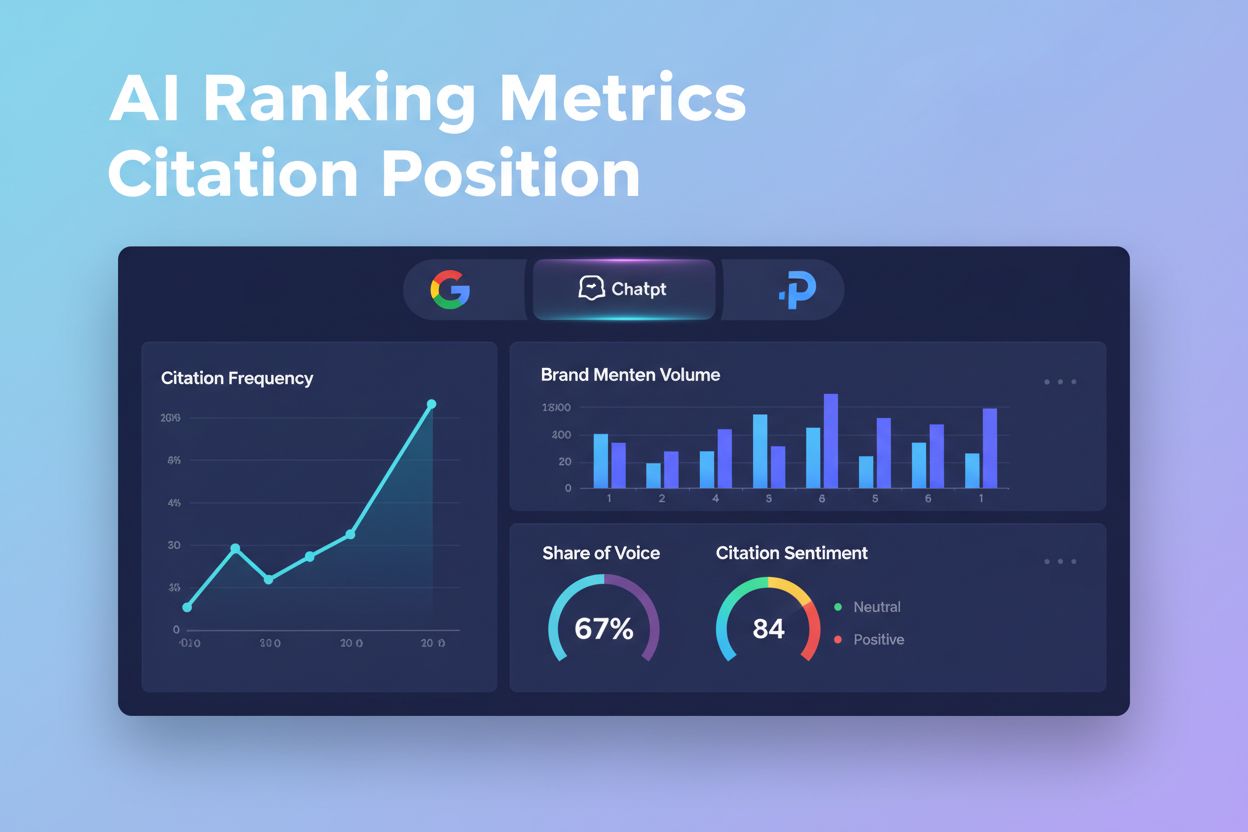
Learn how AI search engines rank content differently than Google. Discover citation position, brand mentions, and new metrics that matter for AI visibility in 2...