


FAQPage Schema: The Most Cited Structured Data for AI Answers
Learn why FAQ schema has the highest citation rates for AI search. Complete guide to FAQPage structured data for ChatGPT, Perplexity, and Google AI Overviews.
12 min read
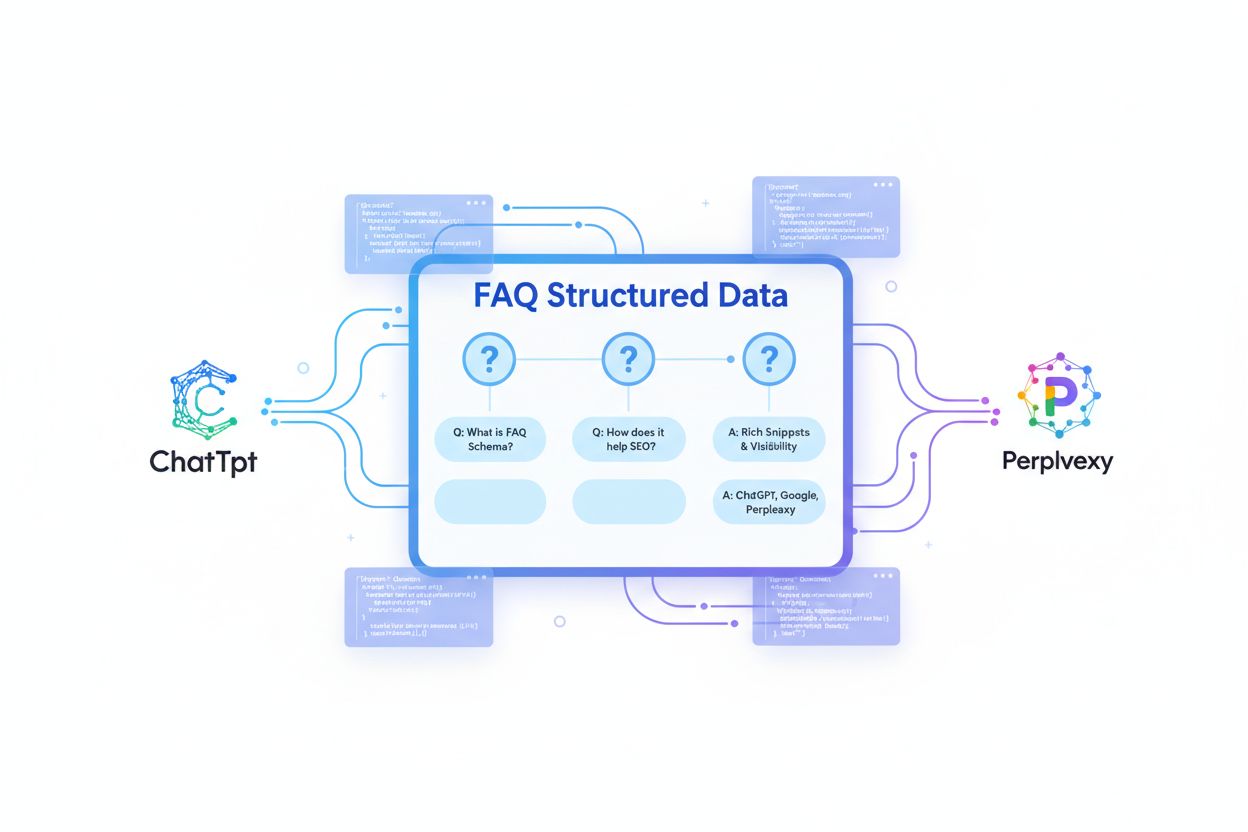
Learn how FAQ sections with proper schema markup improve visibility in AI-generated answers from ChatGPT, Perplexity, and Google AI Overviews. Optimize your content for AI citation.
AI search adoption has accelerated dramatically, with AI-referred sessions jumping 64% in 2025 alone. Unlike traditional search engines that rank pages, AI platforms like ChatGPT, Perplexity, and Google AI Overviews extract and cite specific content passages to generate direct answers. This fundamental shift means your content strategy must evolve from “ranking for keywords” to “being cited in AI responses.”
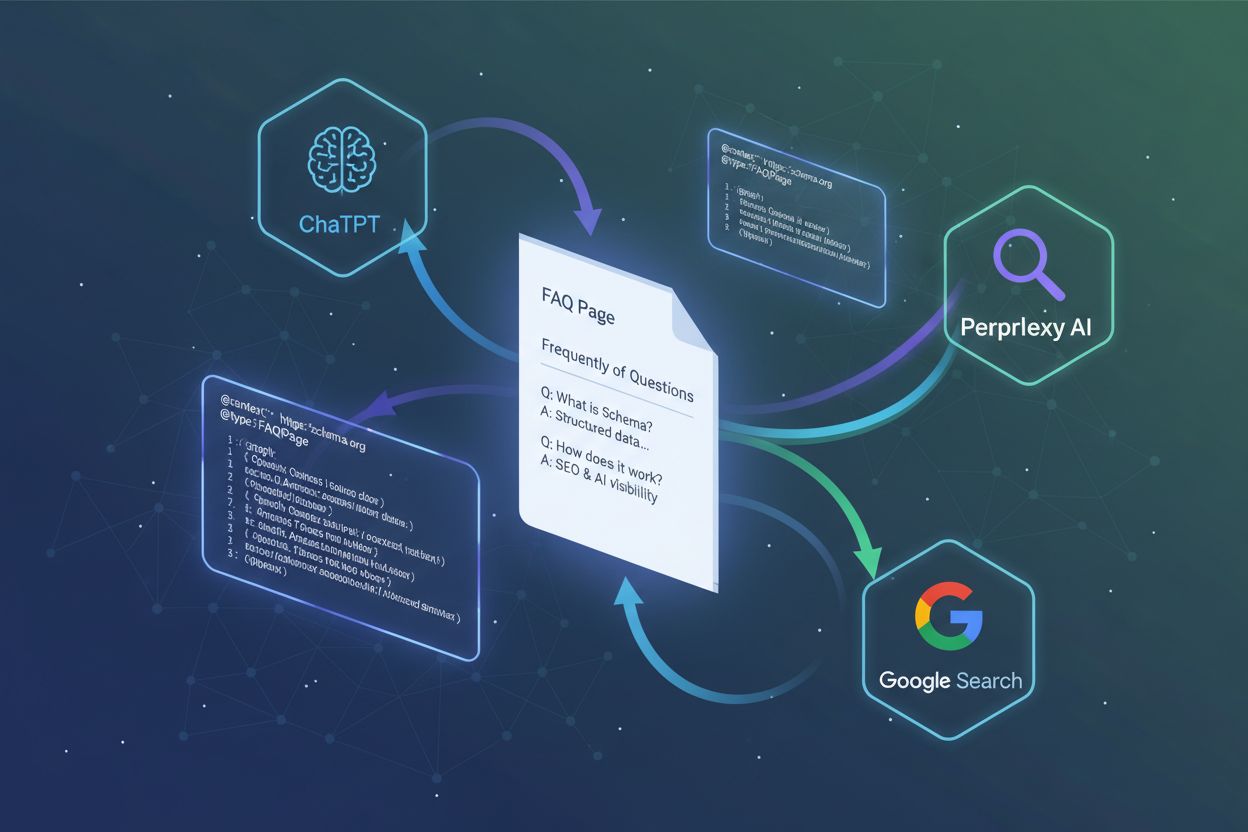
FAQ schema has emerged as one of the most powerful structured data types for this new landscape. Research shows that FAQ schema has 3.5x higher citation rates compared to other schema types, and pages with FAQPage markup appear in AI-generated answers significantly more frequently than unstructured content. The reason is straightforward: AI platforms present information in question-answer format, and when your content already exists in that structure—signaled explicitly through schema—AI systems can extract, verify, and cite it with confidence.
AmICited.com specializes in monitoring exactly this phenomenon, tracking how often your brand appears in AI-generated answers across all major platforms. Understanding how to structure FAQ content for AI extraction isn’t just a technical optimization—it’s becoming table stakes for maintaining visibility in the age of generative search.
The atomic nature of FAQ content makes it fundamentally different from traditional blog posts or product pages. Each question-answer pair maps to a specific user intent and can stand alone without requiring surrounding context. This structure aligns perfectly with how large language models retrieve, evaluate, and cite information.
When an AI system encounters a well-structured FAQ section, it can immediately identify the question, extract the answer, and verify the source without ambiguity. Compare this to narrative content where the answer might be scattered across multiple paragraphs, requiring the model to synthesize information from different sections. The FAQ format removes this interpretive burden, making extraction faster and more reliable.
| Content Format | AI Extractability | Citation Probability | User Intent Mapping | Self-Contained Answers |
|---|---|---|---|---|
| FAQ Sections | Excellent | 3.5x higher | Direct | Yes |
| Blog Posts | Good | Standard | Implicit | Partial |
| Product Pages | Fair | Standard | Mixed | No |
| Unstructured Text | Poor | Low | Unclear | No |
Key benefits of FAQ structure for AI visibility:
Research indicates that pages with FAQ schema see a 2.8x increase in AI citations and a 40% improvement in answer accuracy when compared to equivalent content without structured Q&A markup. This isn’t just about visibility—it’s about trustworthiness. AI systems learn to prefer content that’s easy to verify and cite accurately.

Track how AI chatbots mention your brand across ChatGPT, Perplexity, and other platforms.
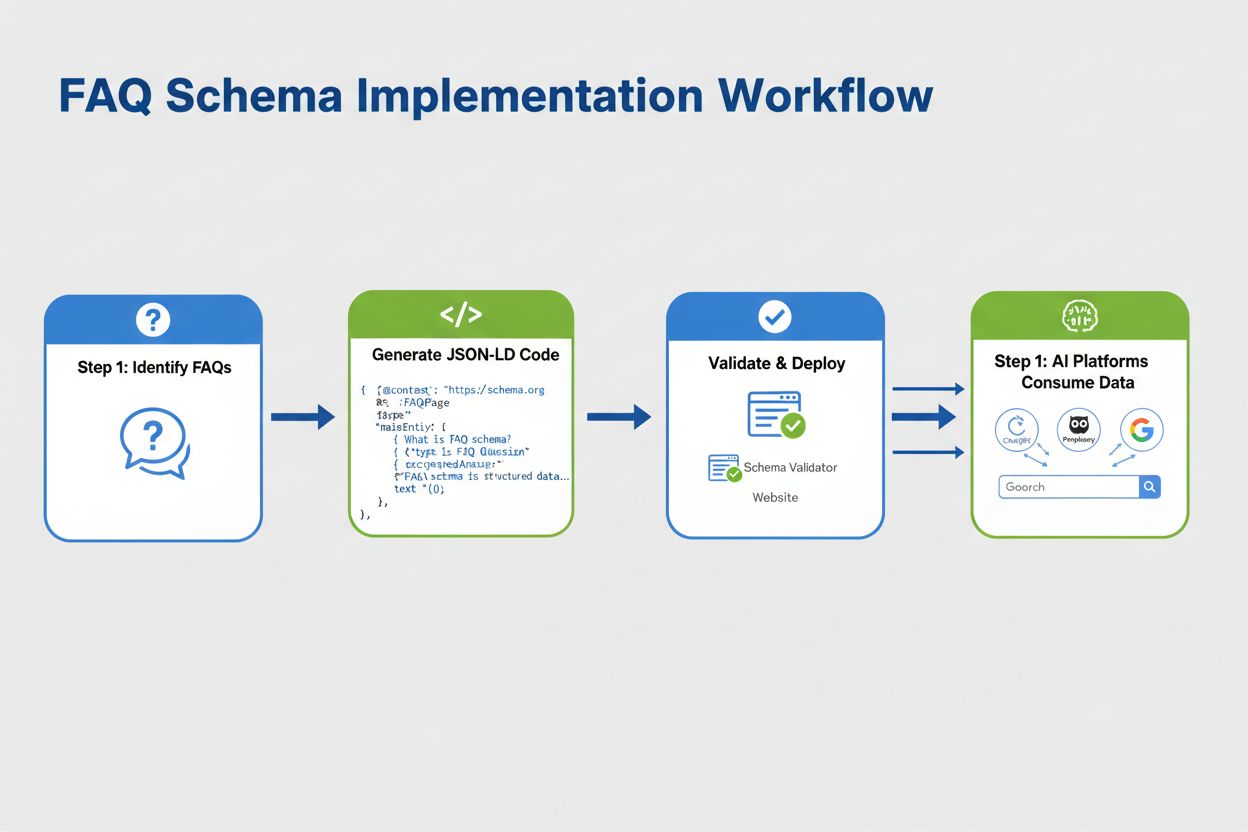
FAQ schema uses the FAQPage type from Schema.org vocabulary, implemented in JSON-LD format. Before diving into implementation, understand the distinction between schema types: FAQPage is for pages where your organization provides authoritative answers, while QAPage is for community-driven Q&A platforms where multiple users contribute answers. For business content, FAQPage is almost always the correct choice.
Here’s a properly formatted FAQ schema example:
{
  "@context": "https://schema.org",
  "@type": "FAQPage",
  "mainEntity": [
    {
      "@type": "Question",
      "name": "What is FAQ schema?",
      "acceptedAnswer": {
        "@type": "Answer",
        "text": "FAQ schema (FAQPage) is structured data markup that helps search engines and AI platforms understand the question-answer relationship in your content. It uses JSON-LD format to explicitly label questions and answers, making it easier for AI to extract and cite your content in generated responses."
      }
    },
    {
      "@type": "Question",
      "name": "How does FAQ schema improve AI visibility?",
      "acceptedAnswer": {
        "@type": "Answer",
        "text": "FAQ schema has one of the highest citation rates among schema types because the question-answer format mirrors how AI platforms present information. Structured FAQ data removes interpretive burden from language models, allowing them to extract answers directly and cite sources accurately."
      }
    }
  ]
}
Required properties for valid FAQ schema:
Always validate your schema using Google Rich Results Test before publishing. This tool catches syntax errors (missing quotes, mismatched brackets), identifies missing required properties, and shows how Google interprets your markup. Common validation errors include unescaped quotation marks in answer text, missing commas between objects, and mismatched question text between schema and visible headings.
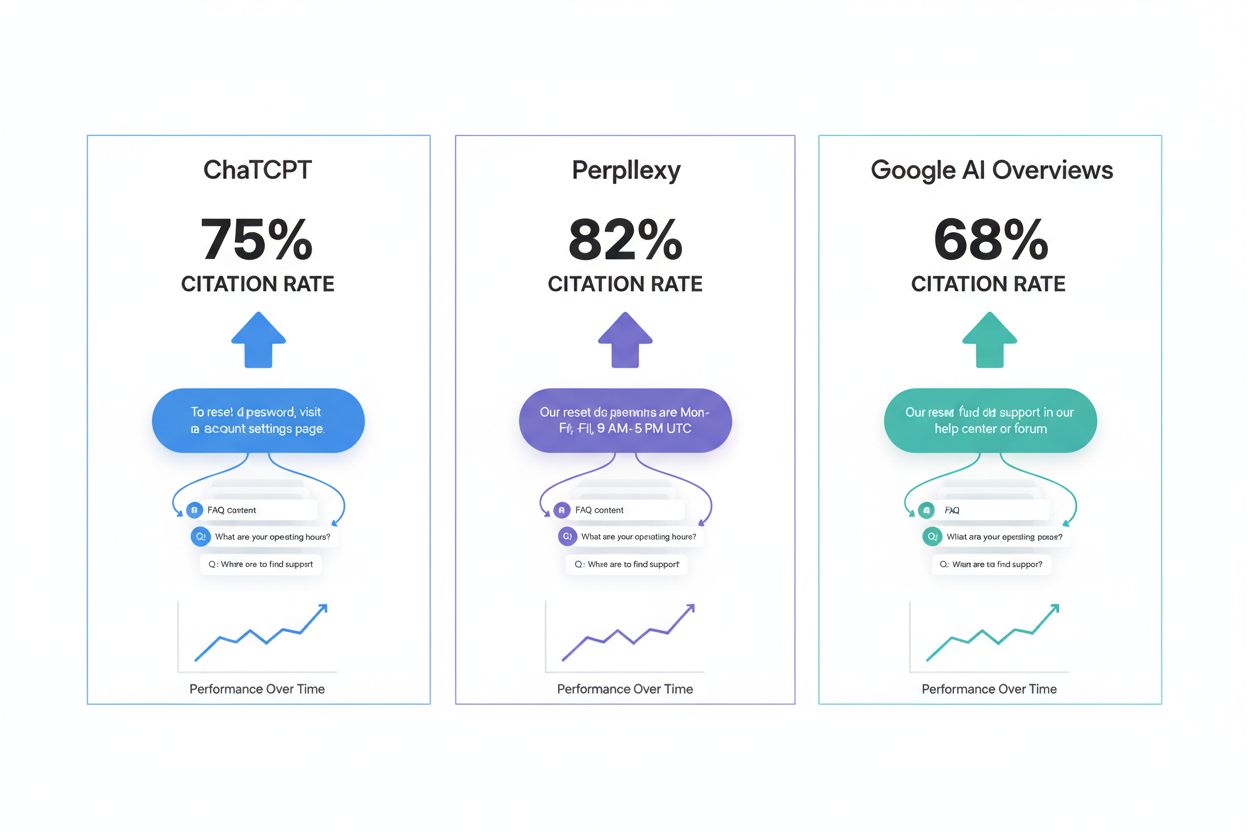
Different AI platforms have distinct citation patterns and content preferences. Understanding these differences helps you optimize FAQ content for maximum visibility across all major generative engines.
ChatGPT exhibits a strong preference for neutral, authoritative, comprehensively structured content. Wikipedia accounts for nearly 48% of ChatGPT citations, revealing the platform’s bias toward encyclopedia-style information. FAQ answers optimized for ChatGPT should maintain an objective, informational tone rather than promotional language. Include specific statistics, dates, and quantified claims with proper source attribution. Each answer should be self-contained with full context, allowing ChatGPT to extract and present it independently.
Perplexity takes a different approach, with higher citation rates for community-generated content and real-world examples. The platform values authentic, experience-based, conversational content over purely theoretical explanations. Write FAQ questions the way real people ask them in everyday language. Include specific scenarios, customer experiences, and concrete use cases in your answers. Emphasize what readers can DO with the information, as Perplexity users often search for how-to guidance and actionable steps.
Google AI Overviews takes a domain-agnostic approach, pulling from featured snippet content, pages with strong E-E-A-T signals, and pages with proper structured data. Structure FAQ answers to match featured snippet requirements: concise (40-60 words), direct answer upfront, and self-contained. Include author credentials, publication dates, and links to authoritative external sources. Google AI Overviews strongly favors recently updated content, so update FAQ sections monthly with current statistics and examples.
| Platform | Tone | Citation Drivers | Content Requirements |
|---|---|---|---|
| ChatGPT | Neutral, authoritative | External citations, specific data | Comprehensive, well-sourced |
| Perplexity | Conversational, helpful | Real examples, community insights | Practical, actionable guidance |
| Google AI Overviews | Professional, trustworthy | E-E-A-T signals, fresh content | Current data, expert credentials |
The strategic advantage is clear: optimize FAQ content that balances all three platform preferences simultaneously. Write with neutral authority, include practical examples, and maintain fresh, current information. This balanced approach maximizes citation probability across all major AI search platforms.
Get the latest insights on AI mentions, brand monitoring, and optimization strategies.
Even properly validated FAQ schema can fail to generate AI citations if implementation has critical flaws. Understanding these mistakes helps you avoid them and maximize your FAQ schema effectiveness.
Critical mistakes to avoid:
Best practices for FAQ schema success:
⚠️ Warning: Google can issue manual actions for FAQ schema misuse, and AI platforms may learn to ignore schema from domains that consistently misuse it. Quality and appropriateness matter more than quantity.
The shift from traditional SEO to AI search requires a fundamental change in how you measure content success. Instead of tracking clicks and impressions, focus on citation frequency—how often your content appears in AI-generated answers.
Key metrics to track:
AmICited.com specializes in tracking these metrics, providing real-time visibility into how your brand appears across all major AI platforms. Set up a standing prompt set of 25-50 real questions that your FAQs should answer, then run them weekly through ChatGPT, Perplexity, and Google AI Overviews. Screenshot results and score whether your site appears, is cited, or is summarized.
Action items for measuring and improving FAQ performance:
The compound effect is significant: better FAQ performance leads to increased citations, which improves authority signals, which drives more comprehensive topic coverage opportunities, which creates exponential visibility growth in AI-powered search. This is how early adopters build sustainable competitive advantages in the age of generative search.
Yasha is a talented software developer specializing in Python, Java, and machine learning. Yasha writes technical articles on AI, prompt engineering, and chatbot development.

Track how often your content appears in ChatGPT, Perplexity, and Google AI Overviews with AmICited. Get real-time insights into your AI visibility and optimize your content strategy.
Learn why FAQ schema has the highest citation rates for AI search. Complete guide to FAQPage structured data for ChatGPT, Perplexity, and Google AI Overviews.

Learn how to implement FAQ schema for AI search engines. Step-by-step guide covering JSON-LD format, best practices, validation, and optimization for AI platfor...
Learn how to write FAQ content optimized for AI search engines like ChatGPT, Perplexity, and Google AI Overviews. Master AEO strategies, schema markup, and cont...
Cookie Consent
We use cookies to enhance your browsing experience and analyze our traffic. See our privacy policy.