
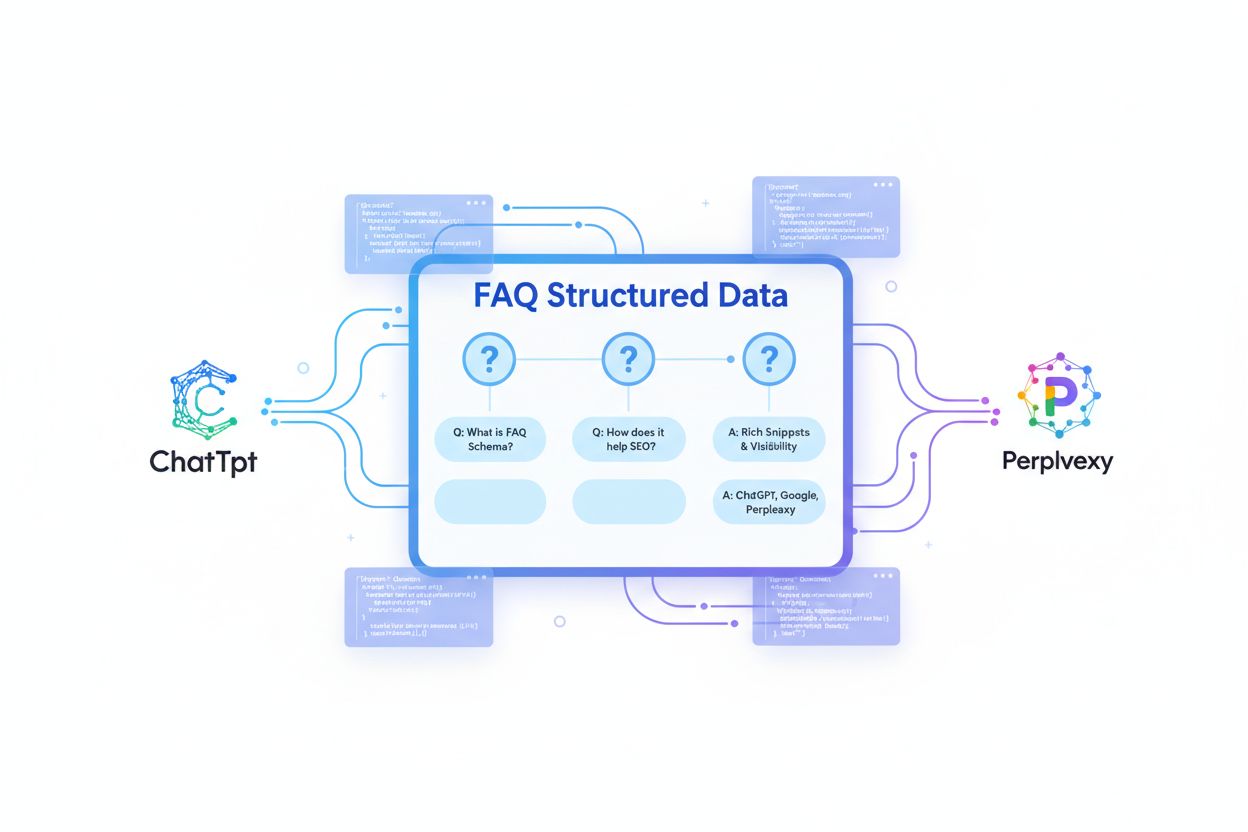
FAQ Sections: Structured Q&A for AI Extraction
Learn how FAQ sections with proper schema markup improve visibility in AI-generated answers from ChatGPT, Perplexity, and Google AI Overviews. Optimize your con...
8 min read
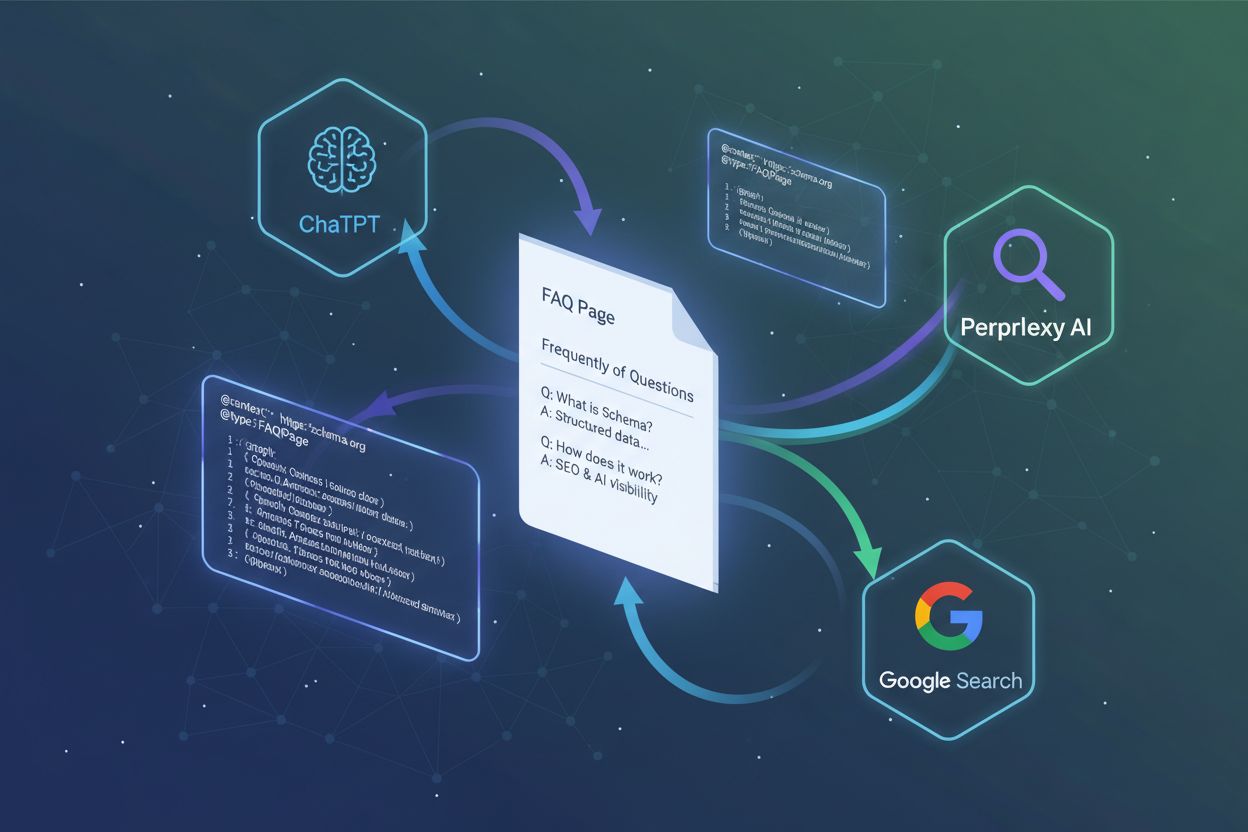
Learn why FAQ schema has the highest citation rates for AI search. Complete guide to FAQPage structured data for ChatGPT, Perplexity, and Google AI Overviews.
FAQ schema has emerged as one of the most powerful structured data formats for AI search visibility, with 28-40% higher citation probability compared to unstructured content. While traditional SEO focused on rich results and featured snippets in Google’s search interface, the landscape has fundamentally shifted. AI platforms like ChatGPT, Perplexity, and Google AI Overviews actively extract and prioritize FAQ structured data when generating answers, making schema implementation critical for modern visibility. The competitive advantage is substantial: only 12.4% of websites currently use structured data, leaving the vast majority of competitors invisible to AI systems. This gap has created measurable impact—AI-referred sessions jumped 527% between January and May 2025, signaling that businesses ignoring AI search optimization are missing exponential traffic opportunities. The transition from traditional SEO metrics (rich result impressions) to AI search metrics (citation frequency) represents the most significant shift in search visibility since mobile-first indexing.
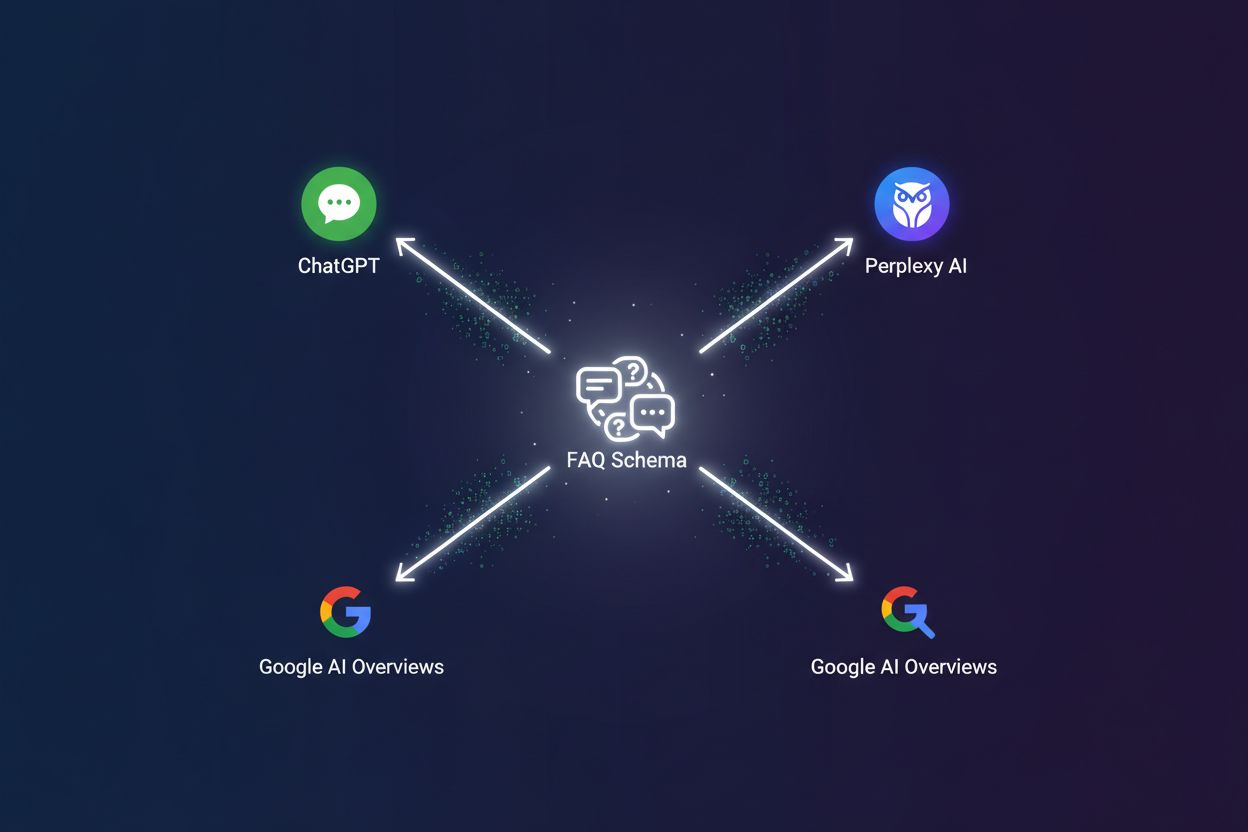
In August 2023, Google implemented a significant restriction on FAQ rich results, limiting their display to government and health-related websites. This decision appeared to diminish the value of FAQ schema—most businesses suddenly lost the visible FAQ snippets that previously appeared in search results. However, this restriction created what we call the “FAQ Schema Paradox”: while FAQ rich results became less visible in traditional Google search, AI platforms simultaneously increased their reliance on FAQ structured data for answer generation. The quality concerns that drove Google’s decision (spam, misleading content, and low-quality answers) actually made FAQ schema more valuable for AI systems, which use structured data to verify content quality and authenticity. This paradox fundamentally changed how we measure FAQ schema success. Rather than tracking “rich result impressions” in Google Search Console, the new metric is “AI citations”—how frequently your FAQ answers appear in ChatGPT, Perplexity, and other AI platforms. Understanding this shift is essential for modern SEO strategy, as the visibility that matters most now happens in AI interfaces, not traditional search results.
| Metric | Traditional SEO (Pre-2023) | AI Search (2024-2025) |
|---|---|---|
| Success Metric | Rich result impressions | AI citations |
| Visibility Type | Google SERP snippets | ChatGPT, Perplexity, Google AI Overviews |
| Citation Probability | 5-15% | 28-40% |
| Platform Focus | Google Search | Multiple AI platforms |
| Measurement Tool | Search Console | Manual monitoring + AI tracking tools |
AI systems don’t randomly extract text from web pages; they actively search for structured data that removes interpretive burden from natural language processing algorithms. FAQ schema provides exactly this—a machine-readable format that clearly delineates questions from answers, eliminating ambiguity in content parsing. The question-answer format matches how AI platforms present information to users, creating a natural alignment between your content structure and how AI systems want to display it. Research shows that 78% of AI-generated answers use list formats, and FAQ schema provides precisely this structure. Wikipedia, which accounts for 47.9% of ChatGPT citations, uses a similar Q&A structure throughout its content, demonstrating that this format has proven effectiveness with AI systems. Schema acts as a “machine-readable language” that tells AI platforms: “This is a question. This is the answer. This answer is complete and self-contained.” This clarity enables clean extraction without requiring the AI system to interpret, summarize, or rewrite your content.
Here’s how proper FAQ schema looks in JSON-LD format:
{
  "@context": "https://schema.org",
  "@type": "FAQPage",
  "mainEntity": [
    {
      "@type": "Question",
      "name": "What is FAQ schema and why does it matter for AI search?",
      "acceptedAnswer": {
        "@type": "Answer",
        "text": "FAQ schema is structured data that helps AI platforms understand and extract question-answer pairs from your content. It increases citation probability by 28-40% compared to unstructured content."
      }
    },
    {
      "@type": "Question",
      "name": "How do I implement FAQ schema on my website?",
      "acceptedAnswer": {
        "@type": "Answer",
        "text": "Use JSON-LD format with @context, @type (FAQPage), mainEntity array, and Question/Answer objects. Validate using Google's Rich Results Test before publishing."
      }
    }
  ]
}
FAQ schema consistently outperforms other schema types for AI citation probability. Pages with FAQPage markup are 3.2x more likely to appear in Google AI Overviews compared to pages without structured data. The citation advantage is substantial: FAQ-optimized pages show 28% higher citation rates across major AI platforms. This performance advantage exists because FAQ schema directly addresses how AI systems need to extract and present information—the structured format reduces processing complexity and increases confidence in answer accuracy.
| Schema Type | Citation Probability | AI Platform Preference | Traditional SERP Visibility |
|---|---|---|---|
| FAQPage | 28-40% higher | Very High | Low (post-Aug 2023) |
| Article | 15-22% higher | Medium | Medium |
| HowTo | 18-25% higher | Medium-High | Medium |
| BreadcrumbList | 8-12% higher | Low | Low |
| Organization | 5-10% higher | Low | Low |
Featured snippets remain effective for traditional search visibility, but FAQ schema now provides dual benefits: it maintains some traditional search value while dramatically increasing AI citation probability. This dual-channel approach means businesses implementing FAQ schema effectively gain visibility in both traditional search results and AI-generated answers—a significant competitive advantage in the evolving search landscape.
ChatGPT’s citation patterns reveal a preference for neutral, encyclopedia-style content with authoritative structure and clear labeling. When optimizing FAQ schema for ChatGPT, each answer should be self-contained and complete—ChatGPT won’t piece together information from multiple sources if one answer is incomplete. Include specific statistics and data with source attribution; ChatGPT prioritizes answers that demonstrate factual grounding. The platform’s citation data shows 47.9% of citations come from Wikipedia, which uses comprehensive, neutral-toned answers that provide full context without requiring external reference.
Weak FAQ answer for ChatGPT: “What is machine learning? Machine learning is a type of AI that learns from data.”
Strong FAQ answer for ChatGPT: “What is machine learning? Machine learning is a subset of artificial intelligence that enables systems to learn and improve from experience without explicit programming. Developed in the 1950s, machine learning algorithms identify patterns in data and make predictions or decisions based on those patterns. Common applications include recommendation systems (Netflix uses collaborative filtering), image recognition (used in medical diagnostics), and natural language processing (powering chatbots). Unlike traditional programming where developers write explicit rules, machine learning systems develop their own rules through training on datasets.”
The strong answer provides context, historical grounding, specific examples, and practical applications—exactly what ChatGPT’s training data emphasizes.
Perplexity AI emphasizes community-generated content and conversational tone, with Reddit accounting for 6.6% of its citations—significantly higher than other platforms. When optimizing FAQ schema for Perplexity, use conversational question phrasing that mirrors how real people ask questions in forums and social media. Include real examples and customer stories that demonstrate practical application; Perplexity values answers that show how concepts work in real-world scenarios. Answers should include actionable next steps and personal, helpful tone rather than clinical neutrality.
Perplexity-optimized FAQ answer: “How do I know if my website needs FAQ schema? If you’re getting questions repeatedly in comments, emails, or support tickets, that’s a signal your FAQ schema is missing. I started adding FAQ schema to my blog after noticing the same three questions appearing in every post’s comments. Within two weeks, those questions stopped appearing—people found the answers in the FAQ section. If you’re in a technical field, e-commerce, or SaaS, FAQ schema is almost certainly valuable. Start by collecting the 10-15 most common questions you receive, then structure them with FAQ schema. You’ll likely see Perplexity and other AI platforms citing your answers within 2-4 weeks.”
This approach feels like advice from a knowledgeable peer rather than an encyclopedia entry, which aligns with Perplexity’s citation preferences.
Google AI Overviews take a domain-agnostic approach, prioritizing answers that align with featured snippet characteristics—typically 40-60 word answers that directly address the query. E-E-A-T signals (Experience, Expertise, Authoritativeness, Trustworthiness) heavily influence whether Google AI Overviews cite your FAQ answers. Mobile-first content is essential, as Google’s AI systems prioritize mobile-optimized pages. Consider combining multiple schema types—FAQ schema works best when paired with Article schema and Organization schema, creating a comprehensive content context that AI systems can evaluate.
E-E-A-T Signals Checklist for FAQ Schema:
Google AI Overviews also favor fresh content—updating FAQ answers monthly signals to Google’s systems that your information remains current and reliable. This freshness signal increases citation probability, particularly for topics where information changes frequently (technology, health, finance).
Implementing FAQ schema correctly requires attention to specific technical requirements. JSON-LD format is preferred over Microdata or RDFa because it’s easier to validate and doesn’t interfere with HTML rendering. The required properties include @context (always “https://schema.org
”), @type (FAQPage), mainEntity (array of Question objects), and each Question must include @type and name. Each Answer requires @type and text properties.
FAQ Schema Implementation Checklist:
<head> or <body> section@context to “https://schema.org
” and @type to “FAQPage”mainEntity array containing Question objects@type: "Question" and name (the question text)@type: "Answer" and text (the answer content)Common syntax errors include missing required properties, using incorrect @type values, nesting Answer objects incorrectly, or including HTML tags in the text field (use plain text only). After implementation, validate your markup and monitor Search Console for any structured data errors. Mobile rendering testing is critical because AI systems increasingly prioritize mobile-first content.
The sweet spot for FAQ answer length is 40-60 words—long enough to provide complete context but short enough for AI systems to extract and display without truncation. Self-contained answers are essential; each answer should be understandable without requiring readers to click through to additional pages or reference other answers. Specific data and statistics with sources dramatically increase citation probability; vague claims like “many people” or “studies show” are red flags to AI systems. External citations and links provide verification pathways that AI systems use to validate answer accuracy.
Weak FAQ answer: “What is the ROI of implementing FAQ schema? FAQ schema provides good ROI because it helps with search visibility.”
Strong FAQ answer: “What is the ROI of implementing FAQ schema? Pages with FAQ schema show 28-40% higher citation probability in AI platforms, with AI-referred sessions increasing 527% between January-May 2025. Implementation typically requires 4-8 hours of technical work and ongoing content maintenance. For e-commerce sites, FAQ schema implementation correlates with 15-22% increases in organic traffic within 60 days. The ROI becomes positive within 2-3 months for most businesses, with long-term benefits including sustained AI visibility and reduced support ticket volume.”
The strong answer includes specific percentages, timeframes, and measurable outcomes—exactly what AI systems prioritize when evaluating answer quality. Quantified claims with verification pathways signal to AI systems that your answer is factual and reliable.
Several common implementation mistakes prevent FAQ schema from generating AI citations. The most critical error is hiding FAQ content from users—Google and AI platforms penalize schema that doesn’t match visible page content. Using FAQ schema for marketing or promotional content violates schema guidelines and triggers quality filters. Vague or incomplete answers fail to meet AI citation standards; answers must be specific and self-contained. Not validating schema markup before publishing creates syntax errors that prevent AI systems from parsing your content correctly.
Common Mistakes and Solutions:
Ignoring platform-specific optimization means your FAQ schema works for some AI systems but not others. Mismatched schema and visible content creates trust issues with AI systems, which compare structured data against rendered HTML to verify accuracy. Regular content updates signal to AI systems that your information remains current and reliable.
FAQ schema is only valuable if you’re answering questions that real users actually ask. Question research identifies high-value opportunities by analyzing search volume, People Also Ask boxes, forum discussions, and social media conversations. Data-driven question selection dramatically increases citation probability because you’re addressing genuine user intent rather than making assumptions about what questions matter. Tools like SEMrush, Ahrefs, and Answer the Public analyze search patterns to identify high-volume questions in your industry.
Content that answers user questions generates 3x more engagement than content based on assumptions about what audiences want to know. High-search-volume questions increase citation probability because AI systems recognize these as important topics that deserve comprehensive answers. Start by collecting questions from multiple sources: customer support tickets, email inquiries, social media comments, competitor FAQ sections, and search tools. Prioritize questions with search volume above 100 monthly searches and questions that appear in multiple sources (indicating genuine user interest). This research foundation ensures your FAQ schema targets questions that matter to both users and AI systems, maximizing citation probability and organic traffic impact.
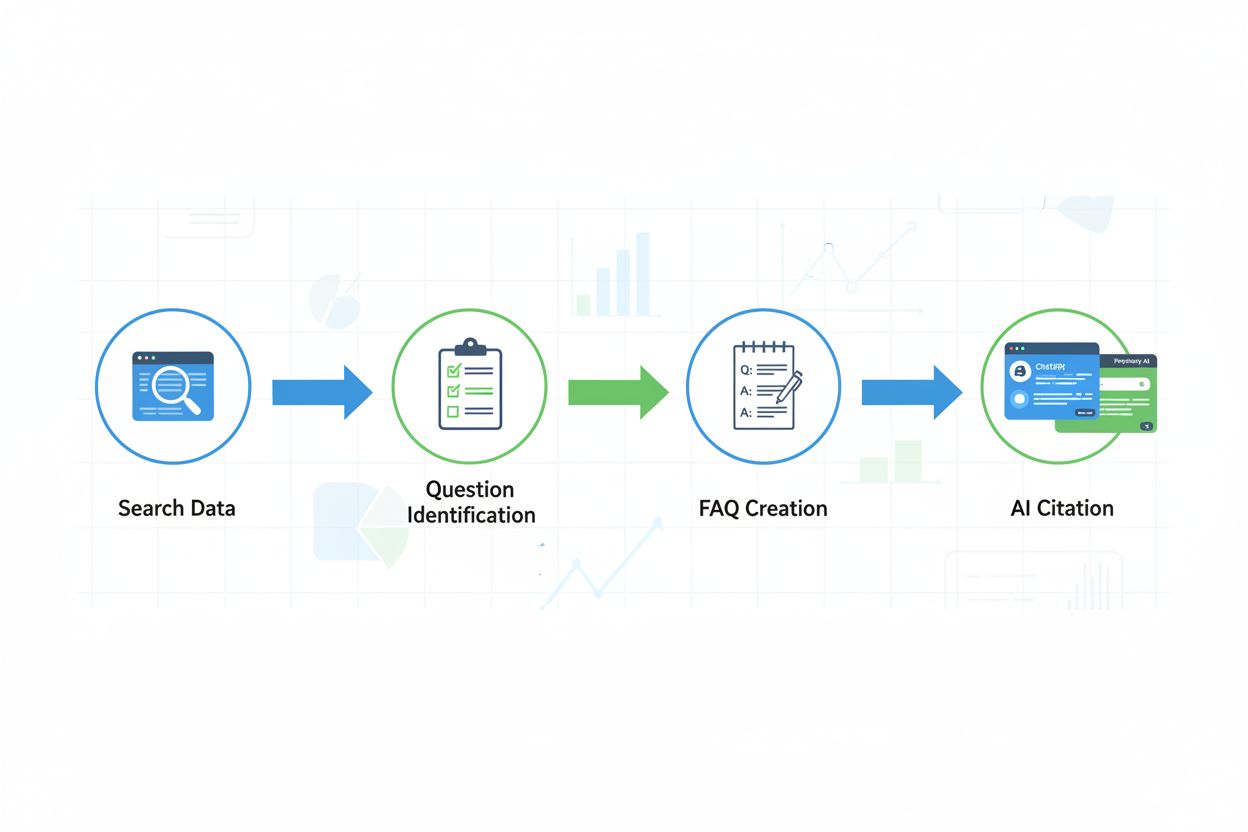
The measurement framework for FAQ schema success has fundamentally shifted from traditional SEO metrics to AI-specific metrics. Rather than tracking “rich result impressions” in Google Search Console (which largely disappeared after August 2023), focus on “AI citations”—how frequently your FAQ answers appear in ChatGPT, Perplexity, Google AI Overviews, and other AI platforms. Monitor citation frequency over 2-4 weeks after implementation; most websites see measurable citations within this timeframe if FAQ schema is properly optimized.
Key Metrics to Track:
Use Search Console for traditional metrics (impressions, clicks, average position), but supplement with manual monitoring or third-party tools to track AI citations. Featured snippet performance remains relevant because featured snippets often feed into AI systems’ answer generation. The most important metric is citation velocity—if citations aren’t increasing within 4 weeks of implementation, your FAQ schema likely needs optimization for platform-specific requirements or your answers need quality improvements.
FAQ schema (FAQPage) is structured data markup that helps search engines and AI platforms understand the question-answer relationship in your content. It uses JSON-LD format to explicitly label questions and their corresponding answers, making it easier for AI systems to extract, verify, and cite your content in generated responses. The schema acts as metadata that machines can read to identify Q&A structure even when page design and formatting vary.
Yes, but its value shifted from traditional SEO to AI search. Google restricted FAQ rich results to government and health sites in August 2023, reducing visible FAQ snippets for most businesses. However, FAQ schema remains critical for featured snippets, voice search, and especially AI search platforms like ChatGPT and Perplexity, which rely heavily on structured FAQ data for citations. The schema became more important for generative engine optimization even as it became less visible in traditional SERPs.
FAQ schema has one of the highest citation rates among schema types in AI-generated answers because the question-answer format mirrors how AI platforms present information. Structured FAQ data removes interpretive burden from natural language processing, allowing AI to extract answers directly and cite sources accurately. Pages with FAQ schema are 3.2x more likely to appear in Google AI Overviews compared to pages without FAQ structured data.
For traditional SEO, FAQ schema aimed for rich results and featured snippets in Google search results. For GEO (Generative Engine Optimization) and AEO (Answer Engine Optimization), FAQ schema enables AI platforms to extract, understand, and cite your content in generated answers across ChatGPT, Perplexity, and Google AI Overviews. The focus shifted from gaining clicks through visible rich results to earning citations in AI-generated responses that users read without clicking through to source sites.
Include 5-10 FAQ questions per page for pillar content. Fewer than 5 provides limited value for users and AI extraction opportunities; more than 10 can dilute focus and overwhelm readers. Quality matters more than quantity—answer real user questions comprehensively with 40-60 word responses that include specific data, external citations, and complete context. Use question research tools to identify which questions have actual search demand.
Yes, as long as FAQs are genuinely informational rather than promotional. Google's structured data guidelines prohibit FAQ schema for advertising or marketing content. Focus on answering real customer questions about features, pricing, shipping, usage, compatibility, or support. Acceptable questions include 'What features are included?' or 'How does shipping work?' Unacceptable questions include 'Why should you buy now?' or 'Why are we the best?'
40-60 words is ideal for AI extraction, featured snippets, and user experience. Shorter answers (under 30 words) often lack sufficient context to stand alone. Longer answers (over 80 words) become difficult for AI platforms to extract cleanly as single units and harder for users to scan quickly. Ensure answers are self-contained with complete information, specific data, and external citations where appropriate—not dependent on surrounding content for comprehension.
Use Google Rich Results Test to validate JSON-LD syntax, detect missing properties, and preview how Google interprets your markup. Additionally, verify mobile rendering (where voice assistants operate), ensure questions match visible page headings exactly, test that answers are self-contained and comprehensive, and monitor whether your FAQ content appears in AI-generated answers over 2-4 weeks after implementation. Periodic revalidation after site updates prevents regression.
Track how AI platforms cite your FAQ content across ChatGPT, Perplexity, and Google AI Overviews with AmICited
Learn how FAQ sections with proper schema markup improve visibility in AI-generated answers from ChatGPT, Perplexity, and Google AI Overviews. Optimize your con...

Learn how to implement FAQ schema for AI search engines. Step-by-step guide covering JSON-LD format, best practices, validation, and optimization for AI platfor...
Community discussion on FAQ schema implementation for AI visibility. Technical SEO professionals share experiences, implementation best practices, and impact on...