
AI Visibility Gap
Learn what the AI Visibility Gap is, why it matters for your brand, how to measure it, and strategies to close the gap between traditional search visibility and...
7 min read
Learn how to identify and fill AI visibility gaps in your content strategy. Discover practical methods to ensure your brand appears in ChatGPT, Perplexity, and Google AI Overviews.
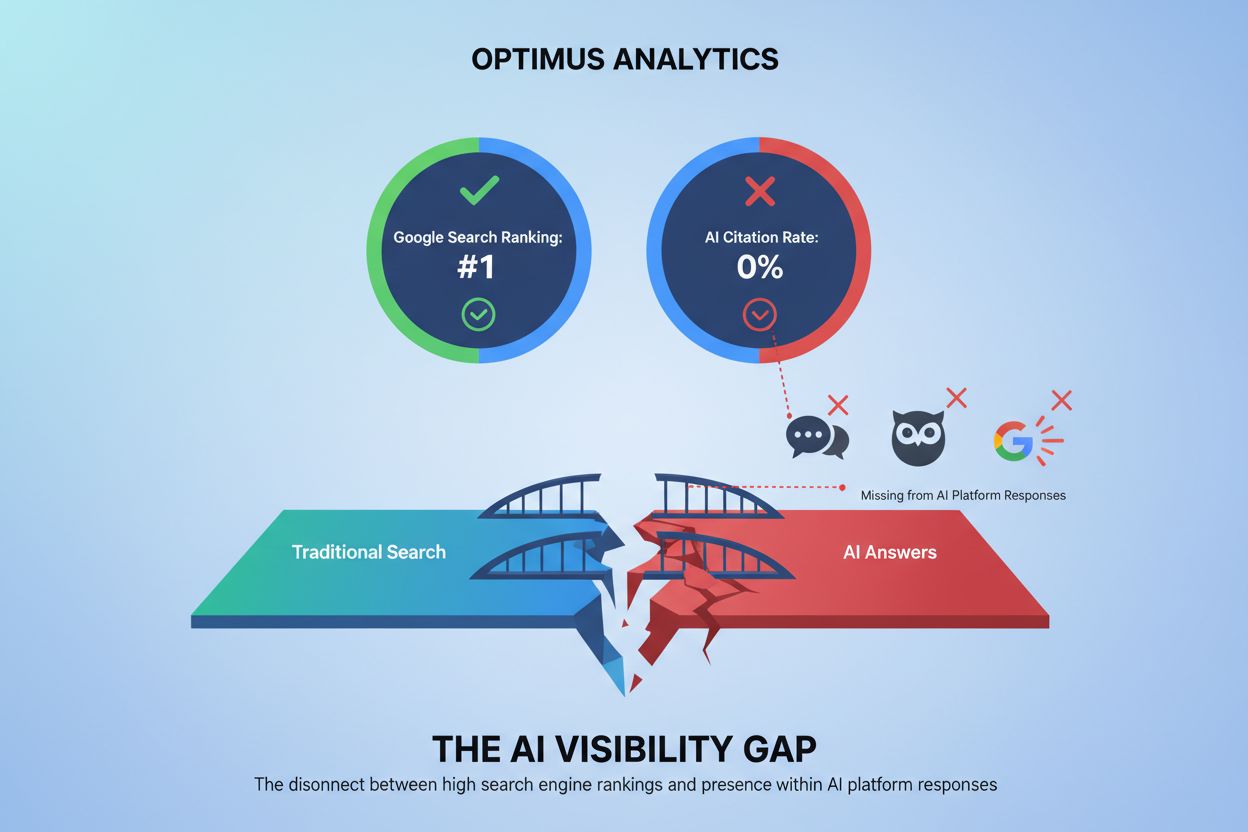
AI visibility gaps represent the disconnect between where your content appears in traditional search results and where it surfaces in AI-powered platforms like ChatGPT, Perplexity, and Google AI Overviews. These gaps matter because the search landscape is fundamentally shifting—5.6% of U.S. desktop search traffic is now routed to AI-powered platforms, a figure that continues to grow monthly. What makes this critical is that AI systems operate on entirely different ranking principles than Google’s traditional algorithm. When your content doesn’t appear in AI responses, you’re losing visibility to an increasingly significant portion of your audience. The stakes are even higher when you consider that 60% of Google searches end without clicks, meaning users are getting their answers directly from AI summaries rather than visiting websites. Understanding and addressing these gaps isn’t optional anymore; it’s essential for maintaining relevance in an AI-first search environment.
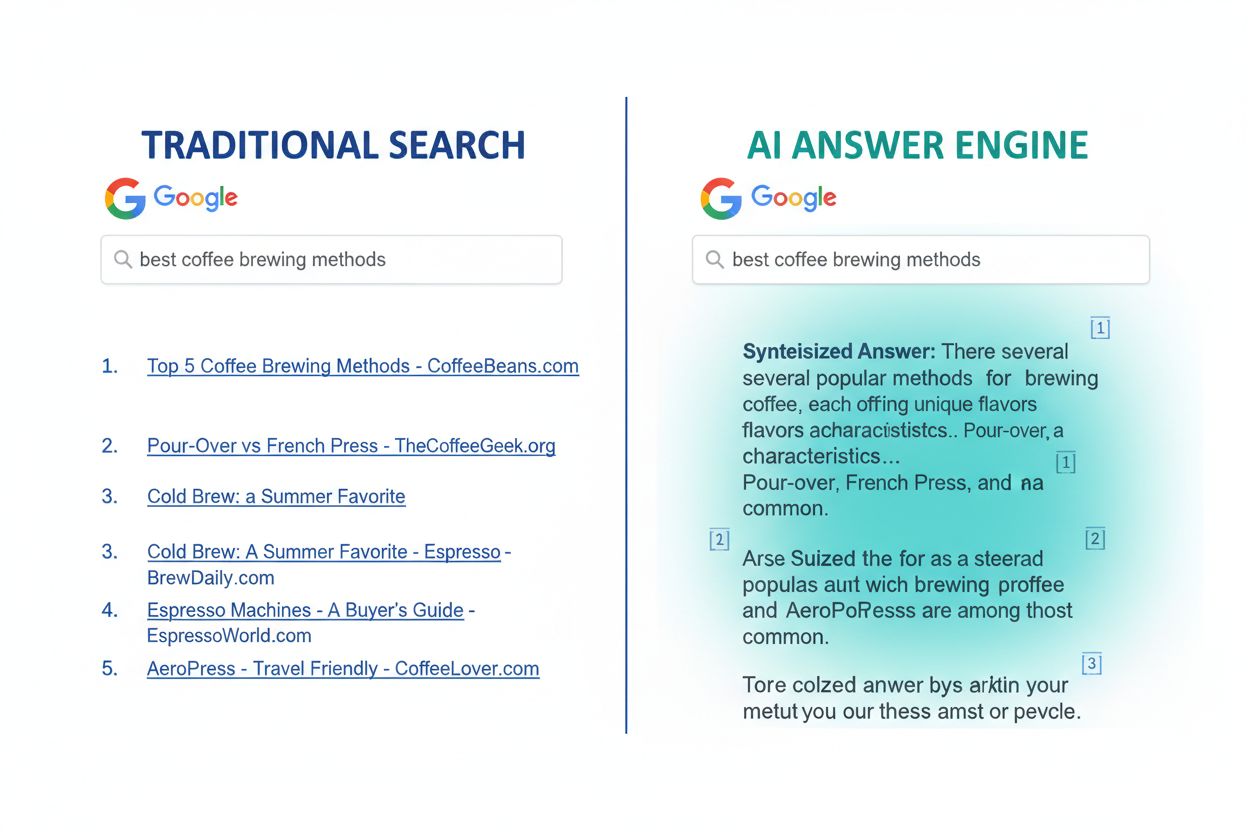
While traditional SEO and AI visibility optimization share some foundational principles, they diverge significantly in execution and measurement. Traditional SEO focuses on keyword rankings and click-through rates, whereas AI visibility prioritizes entity clarity, contextual credibility, and multi-source reinforcement. Here’s how they compare across key dimensions:
| Dimension | Traditional SEO | AI Visibility |
|---|---|---|
| Focus | Keyword rankings, backlinks, CTR | Entity recognition, source credibility, contextual relevance |
| Measurement | Rankings, organic traffic, conversion rates | Citation frequency, AI mentions, answer inclusion |
| Success Metric | Page 1 ranking for target keywords | Appearance in AI-generated responses |
| Key Factor | Backlink authority and keyword optimization | Content accuracy, multi-source validation, entity clarity |
| Timeline | 3-6 months for results | 2-4 weeks for initial indexing, ongoing optimization |
The fundamental difference lies in how each system evaluates authority. Traditional SEO rewards domain authority and backlink profiles, while AI systems validate information through cross-referencing multiple sources and assessing the credibility of the original source. This means your content strategy must evolve to address both channels simultaneously, but with different optimization priorities for each.
Content gaps in the AI visibility space fall into five distinct categories, each requiring different remediation strategies:
Topical Gaps: Your website lacks comprehensive coverage of subjects that AI systems expect to find when answering user queries. For example, if you write about “sustainable packaging” but don’t address “biodegradable alternatives” or “compostable materials,” AI systems may source answers from competitors instead.
Intent Gaps: Your content addresses search intent differently than how AI systems interpret user questions. A user asking “how to reduce carbon footprint” might need actionable steps, but your content focuses on why it matters—missing the practical intent AI systems are trying to fulfill.
Format Gaps: AI systems struggle to extract value from certain content formats. While a detailed infographic might rank well in traditional search, AI systems prefer structured data, lists, and clearly defined sections that can be parsed and synthesized into responses.
Citation Gaps: Your content lacks the structural elements that help AI systems attribute information back to your source. Missing author credentials, publication dates, or clear data attribution makes it harder for AI to cite your work in responses.
Entity Gaps: Your content fails to clearly establish and connect entities (people, organizations, concepts) that AI systems use to understand context and relationships. Vague references without proper entity definition reduce your chances of appearing in AI-generated answers.
Identifying where your content falls short requires a systematic approach combining tools, analysis, and competitive research. Follow these practical methods to uncover your specific gaps:
Audit Your Current AI Mentions: Search for your brand, key topics, and target keywords across ChatGPT, Perplexity, and Google AI Overviews. Document which queries return your content and which don’t, noting the sources AI systems cite instead.
Analyze Competitor Content Structure: Examine how competitors who appear in AI responses structure their content. Look for patterns in formatting, data presentation, entity definition, and source attribution that distinguish them from your content.
Map Your Topical Coverage: Create a comprehensive list of all topics related to your core subject matter, then assess which ones your website addresses. Use tools like InfraNodus to visualize topic relationships and identify missing connections.
Review Your Content for Entity Clarity: Go through your top-performing pages and identify whether you clearly define key entities (organizations, people, concepts, products). Add structured data markup and explicit definitions where clarity is lacking.
Evaluate Citation Readiness: Check whether your content includes author credentials, publication dates, data sources, and methodology explanations. AI systems prioritize content that makes attribution easy and transparent.
Conduct Competitive Gap Analysis: Use platforms like Semrush or Ahrefs to identify keywords where competitors rank but you don’t, then cross-reference these with AI response patterns to find high-priority gaps.
Test Content Variations: Create test versions of underperforming content with different structures, formats, and entity definitions, then monitor which versions appear in AI responses over the following weeks.
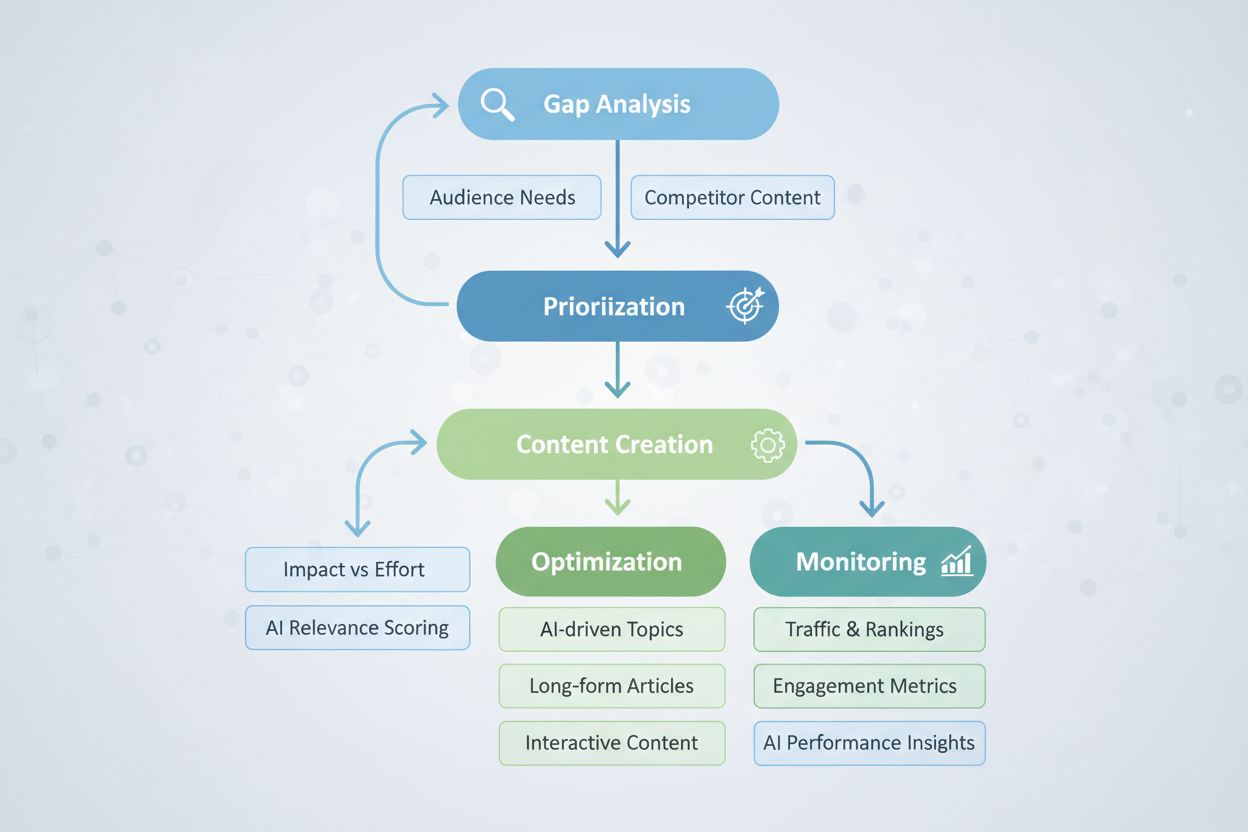
Filling AI visibility gaps requires a strategic approach that differs from traditional content marketing. Your strategy should center on three core principles: comprehensive topical authority, transparent source attribution, and structured entity definition. Start by mapping the complete knowledge graph around your core topics—this means identifying every related concept, question, and entity that AI systems expect to find when answering queries in your domain. Rather than creating isolated blog posts, develop interconnected content clusters where each piece reinforces and references others, making it easier for AI systems to understand the relationships between concepts. Prioritize accuracy and multi-source validation by ensuring your claims are defensible and supported by credible references. This doesn’t mean citing competitors, but rather building a foundation of verifiable facts that AI systems can confidently attribute to your content. Implement a content calendar that addresses identified gaps systematically, starting with high-impact topics that appear frequently in AI responses. Finally, establish a feedback loop where you monitor AI mentions monthly, identify new gaps that emerge, and adjust your content strategy accordingly. This isn’t a one-time project but an ongoing optimization process that evolves as AI systems become more sophisticated.
Creating content optimized for AI visibility requires specific tactical adjustments to your writing and formatting approach. Lead with clear definitions and entity establishment—within the first 100 words of any piece, explicitly define your main topic and key entities using natural language that mirrors how AI systems parse information. Structure content with scannable sections and numbered lists rather than dense paragraphs, as AI systems extract information more effectively from clearly delineated segments. Use descriptive headings that answer specific questions (e.g., “What Are the Three Types of Sustainable Packaging?” rather than “Packaging Solutions”), making it easier for AI to understand and cite your content in response to specific queries. Include author credentials and publication metadata prominently—AI systems weight content more heavily when they can verify the author’s expertise and establish publication dates. Incorporate relevant data points, statistics, and research findings with proper attribution, as AI systems prioritize content that demonstrates evidence-based reasoning. Use schema markup and structured data to help AI systems understand your content’s context and relationships. Finally, create content that answers complete questions rather than partial ones; if a user asks “how to reduce carbon footprint,” provide a comprehensive answer covering transportation, energy, diet, and consumption rather than focusing on just one area.
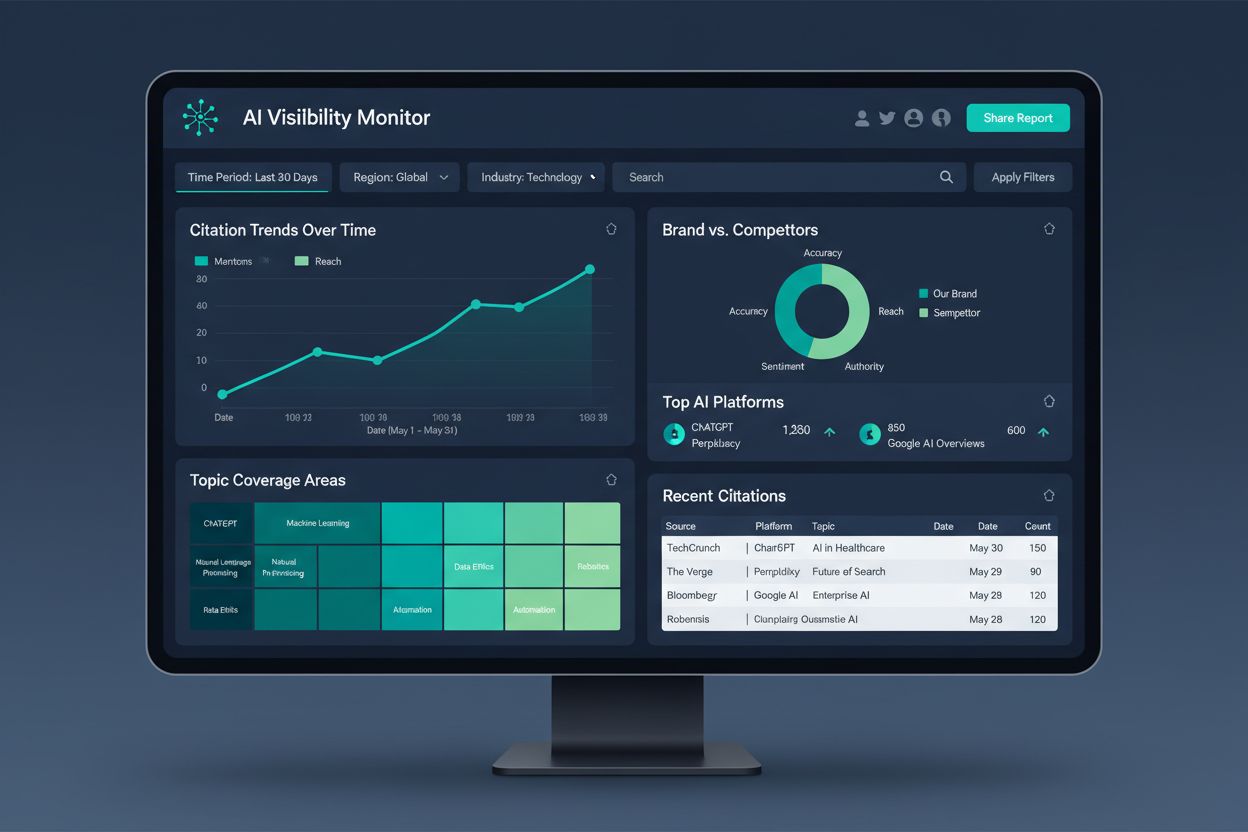
Several platforms can help you identify and monitor AI visibility gaps, each offering different capabilities for analysis and optimization. AmICited.com stands out as the top specialized platform for this purpose, providing real-time monitoring of where your content appears across ChatGPT, Perplexity, and Google AI Overviews, along with detailed analytics on citation frequency and AI mention patterns. Semrush offers competitive analysis features that help you identify keyword gaps and track how your content performs against competitors in both traditional and AI search contexts. Ahrefs provides comprehensive backlink analysis and content gap identification tools, helping you understand which topics competitors cover that you’re missing. InfraNodus specializes in topic mapping and knowledge graph visualization, allowing you to see relationships between concepts and identify topical gaps in your content strategy. While these tools serve different purposes, using AmICited.com as your primary AI visibility monitor, combined with Semrush or Ahrefs for competitive analysis, creates a comprehensive gap-identification system. The investment in these tools pays dividends by providing data-driven insights that guide your content strategy and help you prioritize which gaps to address first.
Tracking progress in filling AI visibility gaps requires monitoring metrics that differ from traditional SEO KPIs. The four most important metrics to track are AI mention frequency (how often your content appears in AI-generated responses), citation rate (the percentage of AI responses that attribute information to your content), topical coverage expansion (the number of related topics where you now appear in AI responses), and source credibility score (how AI systems rank your content’s trustworthiness relative to competitors). Set up monthly monitoring using AmICited.com to track these metrics across all major AI platforms, creating a baseline from your first measurement and tracking month-over-month improvements. Establish specific targets for each metric—for example, aiming to increase your AI mention frequency by 25% within three months or to appear in AI responses for 80% of your target keywords within six months. Create a dashboard that visualizes these metrics over time, making it easy to identify which content gaps you’ve successfully filled and which require additional work. Beyond quantitative metrics, monitor qualitative improvements by reviewing the actual AI responses that cite your content, assessing whether they accurately represent your expertise and drive meaningful traffic back to your website. Finally, correlate AI visibility improvements with business outcomes—track whether increased AI mentions translate to higher organic traffic, improved brand awareness, and ultimately, increased conversions. This connection between AI visibility and business results justifies continued investment in gap-filling strategies and helps you refine your approach based on what actually drives ROI.
An AI visibility gap occurs when your brand ranks well in traditional search but doesn't appear in AI-generated answers, summaries, or citations. This happens because AI systems prioritize entity recognition and contextual credibility over page rankings. A page can rank #1 but not be cited by AI systems.
SEO rankings measure how high your pages appear in search results. AI visibility measures whether your brand is mentioned, cited, or trusted within AI-generated answers. A page can rank #1 but not be cited by AI systems. Traditional SEO focuses on keywords and backlinks, while AI visibility focuses on entity clarity and source credibility.
Focus on major platforms: ChatGPT, Google AI Overviews, Perplexity, Gemini, and Bing AI. These account for the majority of AI-driven search traffic and influence how users discover and evaluate brands. Each platform has different citation patterns and content preferences.
Timeline varies based on gap complexity and competition. Simple topical gaps may show improvement in 4-8 weeks. Larger entity recognition gaps typically require 2-3 months of consistent, optimized content before significant AI citation increases. Continuous monitoring helps identify progress.
Yes, but with caution. AI tools can help generate outlines, drafts, and ideas, but human review is essential. Ensure content is original, accurate, and aligned with your brand voice before publishing. AI-generated content should be edited and fact-checked thoroughly.
Content gaps directly impact AI citations. When you cover topics comprehensively and consistently, AI systems recognize your brand as authoritative. This increases the likelihood of being cited in AI-generated answers. Filling gaps improves both visibility and credibility.
Prioritize based on: (1) Business relevance to your products/services, (2) Search demand and user interest, (3) Competitive opportunity (gaps competitors haven't filled), (4) Implementation effort and resources required. Start with high-impact, achievable gaps.
Both are important. Start by auditing existing content for quick wins (adding missing sections, improving structure). Then identify and fill true gaps where you have no content at all. Balance both strategies for maximum impact on AI visibility.
See where your brand appears (and where it's missing) across ChatGPT, Perplexity, Google AI Overviews, and other AI platforms. Get actionable insights to fill visibility gaps and increase AI citations.
Learn what the AI Visibility Gap is, why it matters for your brand, how to measure it, and strategies to close the gap between traditional search visibility and...

Learn how to identify and close AI visibility content gaps across ChatGPT, Perplexity, and Google AI Overviews. Discover analysis methods and tools to improve y...
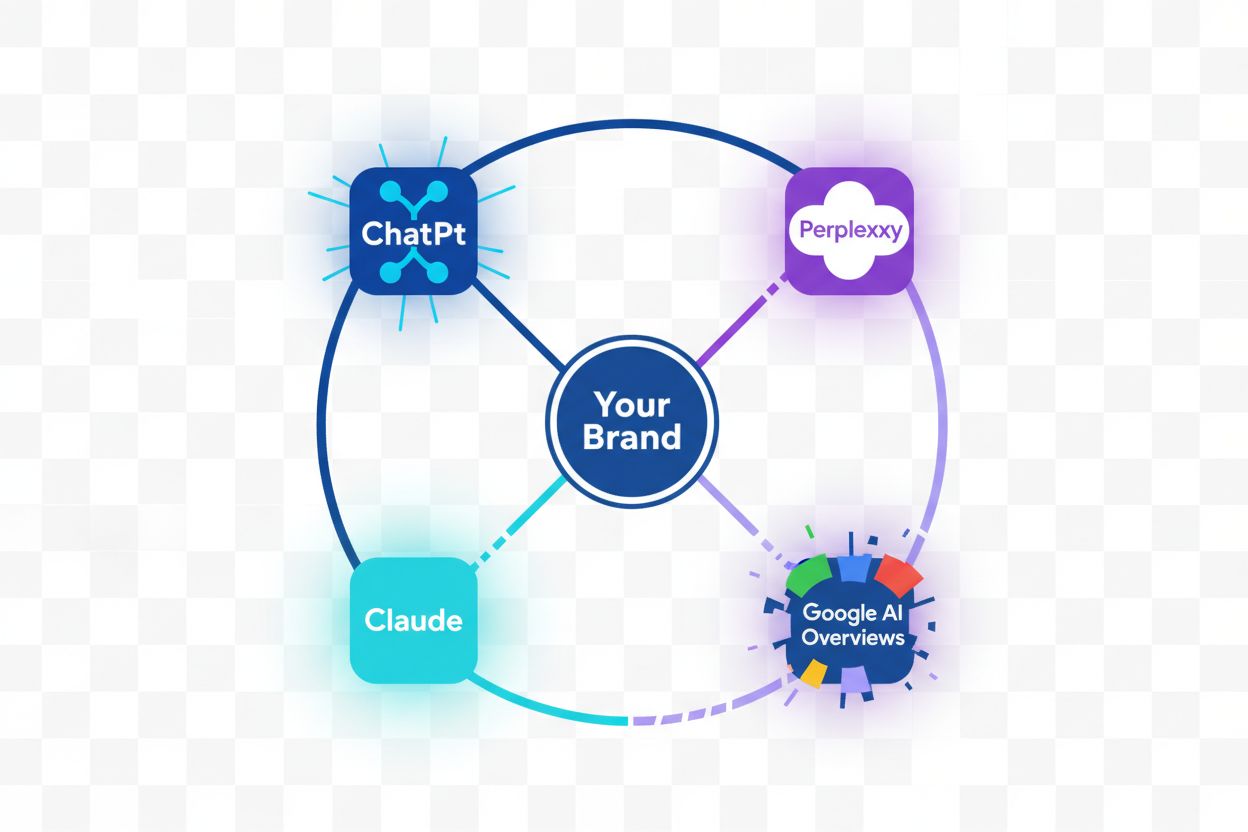
Discover critical AI visibility blind spots where competitors gain advantage. Learn gap analysis framework and tools to monitor AI presence across ChatGPT, Perp...