
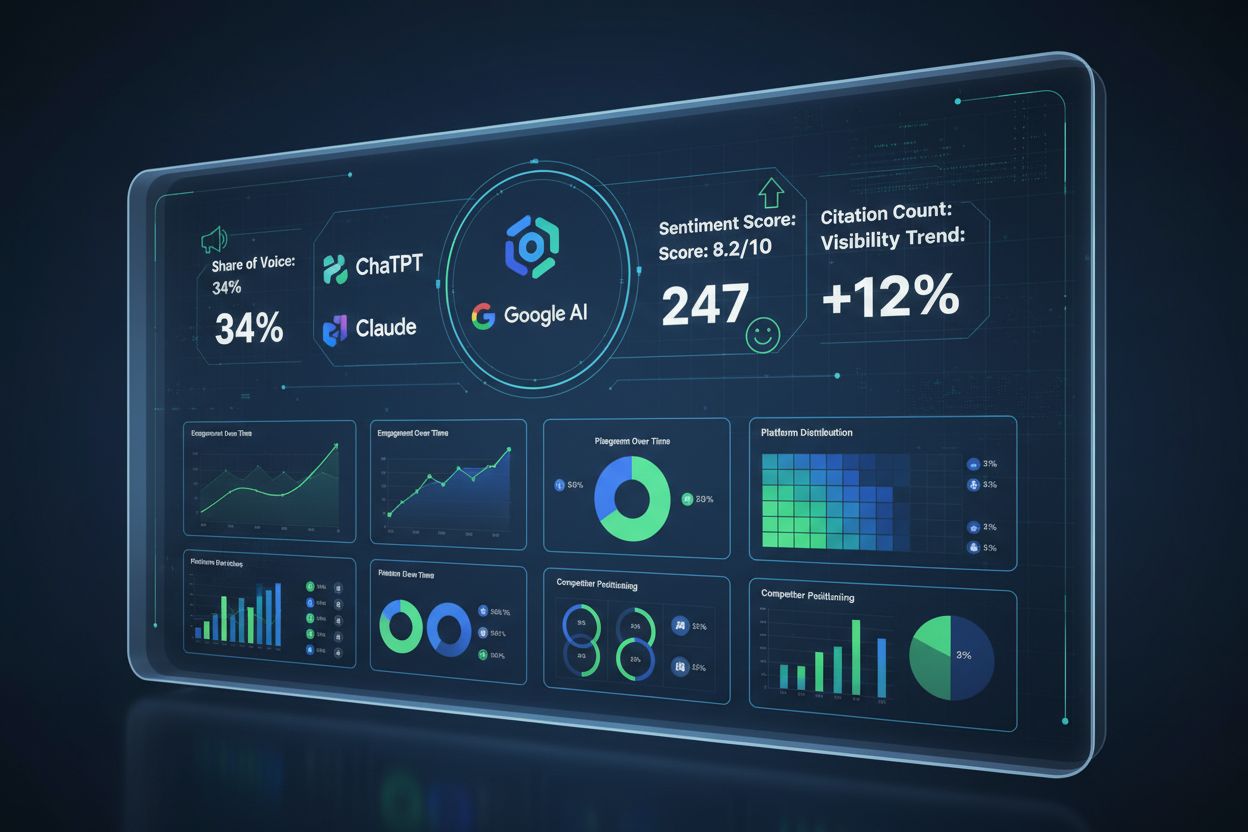
Automating AI Visibility Monitoring: Tools and Workflows
Learn how to automate AI visibility monitoring across ChatGPT, Perplexity, and Google AI. Discover tools, workflows, and best practices for tracking brand menti...
8 min read
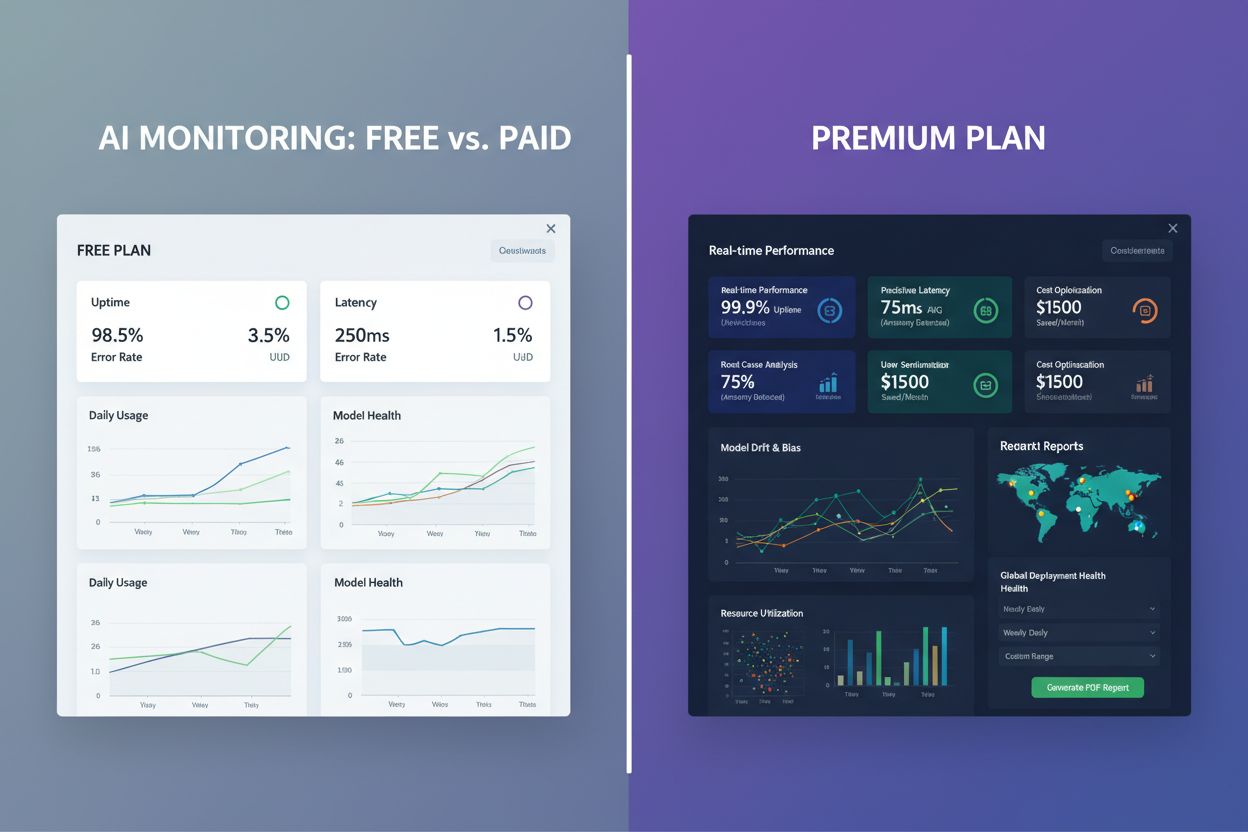
Compare free and paid AI visibility tools to find the right budget solution for monitoring your brand in ChatGPT, Perplexity, and Google AI. Expert guide with pricing breakdown.
With ChatGPT handling 2.5 billion daily prompts and Google’s AI Overviews appearing in nearly 47% of search results, the stakes for brand visibility have fundamentally shifted. When users ask AI platforms questions about your industry, your brand either appears in the answer or it doesn’t—there’s no middle ground. This binary outcome directly impacts customer discovery, market intelligence, and ultimately, revenue. The difference between being cited as a trusted source versus being completely invisible can mean the difference between thriving and struggling in an AI-driven market.
| Impact Area | Without Monitoring | With Monitoring |
|---|---|---|
| Brand Awareness | Invisible to AI users | Visible in 30-60% of relevant queries |
| Customer Discovery | Missed opportunities | 3-5x more qualified leads |
| Market Intelligence | Reactive positioning | Proactive competitive advantage |
| Content Strategy | Guesswork-based | Data-driven optimization |
| Revenue Impact | Declining AI-driven traffic | Growing AI referral revenue |
Free AI visibility tools like Hall, Xfunnel, AEO Checker, and Spotlight offer an accessible entry point for brands just beginning to understand their AI presence. These platforms provide basic monitoring across major AI engines, competitive benchmarking, and initial visibility insights without requiring any financial commitment. For startups and small teams testing the waters, free tools deliver genuine value—Spotlight’s free plan, for example, includes a comprehensive website audit that would cost hundreds elsewhere.
However, free tools come with significant limitations that become apparent quickly:
Free tools work best as proof-of-concept solutions. They help you validate whether AI visibility matters for your specific business before committing budget. Once you’ve confirmed that AI platforms are driving relevant traffic or that competitors are outpacing you in AI mentions, the limitations of free tools become costly in terms of missed opportunities and delayed decision-making.
The mid-range pricing tier ($20-$100 monthly) represents the sweet spot for most growing businesses. These tools eliminate the constraints of free versions while remaining accessible to teams with limited budgets. AmICited.com stands out in this category at $49/month, offering comprehensive monitoring across ChatGPT, Perplexity, Google AI Overviews, and Gemini with unlimited prompt tracking and daily updates—delivering exceptional value for the price.
| Tool | Monthly Price | Prompts Tracked | AI Engines | Key Differentiator |
|---|---|---|---|---|
| AmICited.com | $49 | Unlimited | 4+ | Comprehensive monitoring + actionable insights |
| Mentions | $49 | 25 | 7 | LLM traffic dashboard integration |
| Otterly AI | $25-$160 | 15-100 | 4-6 | Country-specific monitoring |
| Peec AI | €89 (~$95) | 25 | 3-6 | Smart optimization suggestions |
| Model Monitor | $49 | Unlimited | 7 | Competitor detection + prompt vault |
At this price point, you gain real-time monitoring, daily updates, and access to multiple AI engines simultaneously. Most tools in this range also include basic sentiment analysis and competitive benchmarking, allowing you to understand not just where you appear, but how you’re perceived relative to competitors. For B2B SaaS companies and mid-market brands, these tools typically pay for themselves within 2-3 months through improved content strategy and competitive positioning. The key is choosing a platform that provides actionable insights—not just data—so you can actually improve your visibility rather than simply tracking decline.
Enterprise-grade AI visibility platforms ($500-$2,000+ monthly) serve organizations managing multiple brands, complex competitive landscapes, or requiring integration with existing marketing infrastructure. These solutions go far beyond monitoring to provide strategic intelligence that informs company-wide decisions.
Enterprise platforms deliver capabilities that mid-range tools simply cannot match:
Platforms like Profound, Scrunch AI, AthenaHQ, and Conductor operate at this level, with implementation timelines of 4-8 weeks and ongoing optimization support. The investment is substantial, but for enterprises managing brand reputation across multiple markets or operating in regulated industries, the ROI justifies the cost. These platforms provide the depth of insight and integration capabilities necessary to coordinate AI visibility strategy across entire organizations, ensuring consistent messaging and maximum impact across all AI platforms where customers search.
The monthly subscription price tells only part of the story. Organizations implementing AI visibility monitoring face several hidden costs that can easily double or triple the apparent investment:
A company paying $49/month for AmICited.com might actually invest $8,000-$12,000 in the first year when accounting for implementation, training, and content optimization. However, this investment typically generates 3-5x returns through improved content strategy, faster competitive response, and increased AI-driven traffic. The key is viewing AI visibility monitoring not as a cost center, but as a strategic investment in market positioning.
Selecting the right AI visibility tool depends on your organization’s size, budget, technical capabilities, and strategic priorities. Use this framework to match your situation to the right solution:
Solopreneurs and Freelancers: Start with free tools (Hall, Xfunnel) to understand your baseline AI visibility. If you’re getting meaningful traffic from AI platforms, upgrade to a mid-range tool like Mentions or Otterly AI ($25-$50/month).
Small Businesses (1-50 employees): Mid-range tools ($49-$100/month) like AmICited.com or Peec AI provide the monitoring depth and actionable insights you need without overwhelming complexity. These platforms balance cost with functionality, delivering clear ROI within 2-3 months.
Growing Companies (50-500 employees): Consider premium mid-range tools ($100-$300/month) or entry-level enterprise solutions. You need deeper analytics, better integrations, and more sophisticated reporting to coordinate across teams. AmICited.com remains an excellent choice, with potential to scale as needs grow.
Enterprise Organizations (500+ employees): Enterprise platforms (Profound, Conductor, Scrunch AI) are necessary for managing complex competitive landscapes, multiple brands, and integration with existing marketing infrastructure. The investment is substantial, but the strategic value justifies the cost.
The Recommended Path: Start with a free tool to validate that AI visibility matters for your business. Once you’ve confirmed the opportunity, move to a mid-range paid tool like AmICited.com to gain real monitoring capabilities. As your organization grows and your needs become more sophisticated, scale to enterprise solutions that provide deeper integration and strategic consulting. This approach minimizes risk while ensuring you’re never paying for capabilities you don’t need.
The best AI visibility tool isn’t necessarily the most expensive one—it’s the one that provides actionable insights you can actually implement, at a price point that makes sense for your organization’s size and budget.
Free tools provide basic monitoring with limited query tracking (25-50 prompts/month), historical data limited to 30-90 days, and no advanced features like sentiment analysis or optimization recommendations. Paid tools offer unlimited tracking, real-time monitoring, multiple AI engines, and actionable insights to improve your visibility. The choice depends on whether you're validating the opportunity (free) or actively optimizing (paid).
Start with free tools to validate the opportunity. Once confirmed, budget $49-$100/month for mid-range tools like AmICited.com that serve most growing businesses. Enterprise solutions range from $500-$2,000+/month. Remember to account for hidden costs: implementation ($1,500-$3,000), training ($2,000-$5,000), and content optimization ($3,000-$15,000) in your first year.
Absolutely. This is the recommended approach. Free tools like Hall and Xfunnel help you understand your baseline AI visibility without financial commitment. Once you've confirmed that AI platforms drive relevant traffic or that competitors are outpacing you, upgrade to a paid tool like AmICited.com. Most platforms support seamless migration of your tracked prompts and historical data.
AmICited.com at $49/month offers the best value for small businesses, providing unlimited prompt tracking across 4+ AI engines with daily updates and actionable insights. It delivers clear ROI within 2-3 months for most B2B SaaS and mid-market brands. Alternatives like Mentions ($49/month) and Otterly AI ($25-$160/month) also work well depending on your specific needs.
Enterprise platforms (Profound, Conductor, Scrunch AI) include unlimited API access for custom integrations, custom reporting hierarchies for different stakeholders, dedicated account management, advanced analytics with attribution modeling, unlimited users, and priority support. Implementation typically takes 4-8 weeks, and pricing ranges from $500-$2,000+/month depending on scale and features.
Track three metrics: (1) Increase in AI-driven website traffic, (2) Improvement in brand mentions and citations across AI platforms, (3) Competitive positioning gains. Most companies see 3-5x ROI within 6-12 months through improved content strategy and faster competitive response. A $49/month tool generating even 5-10 additional qualified leads monthly pays for itself.
Start with the major platforms: ChatGPT, Perplexity, Google AI Overviews, and Claude. These account for the majority of AI-driven searches. As your strategy matures, expand to Gemini, Bing Copilot, and emerging platforms. Most mid-range tools track 4-7 platforms, while enterprise solutions cover 8+ platforms with custom additions available.
Beyond monthly fees, budget for: implementation and setup ($1,500-$3,000), team training ($2,000-$5,000), API integration with your existing tools ($1,000-$8,000), and content optimization to act on insights ($3,000-$15,000). Additionally, calculate the opportunity cost of manual tracking—teams waste 10-15 hours weekly without proper tools, costing $39,000+/year in lost productivity.
Get real-time insights into how your brand appears across ChatGPT, Perplexity, Google AI Overviews, and more. AmICited tracks your AI mentions and citations so you can optimize your visibility.
Learn how to automate AI visibility monitoring across ChatGPT, Perplexity, and Google AI. Discover tools, workflows, and best practices for tracking brand menti...
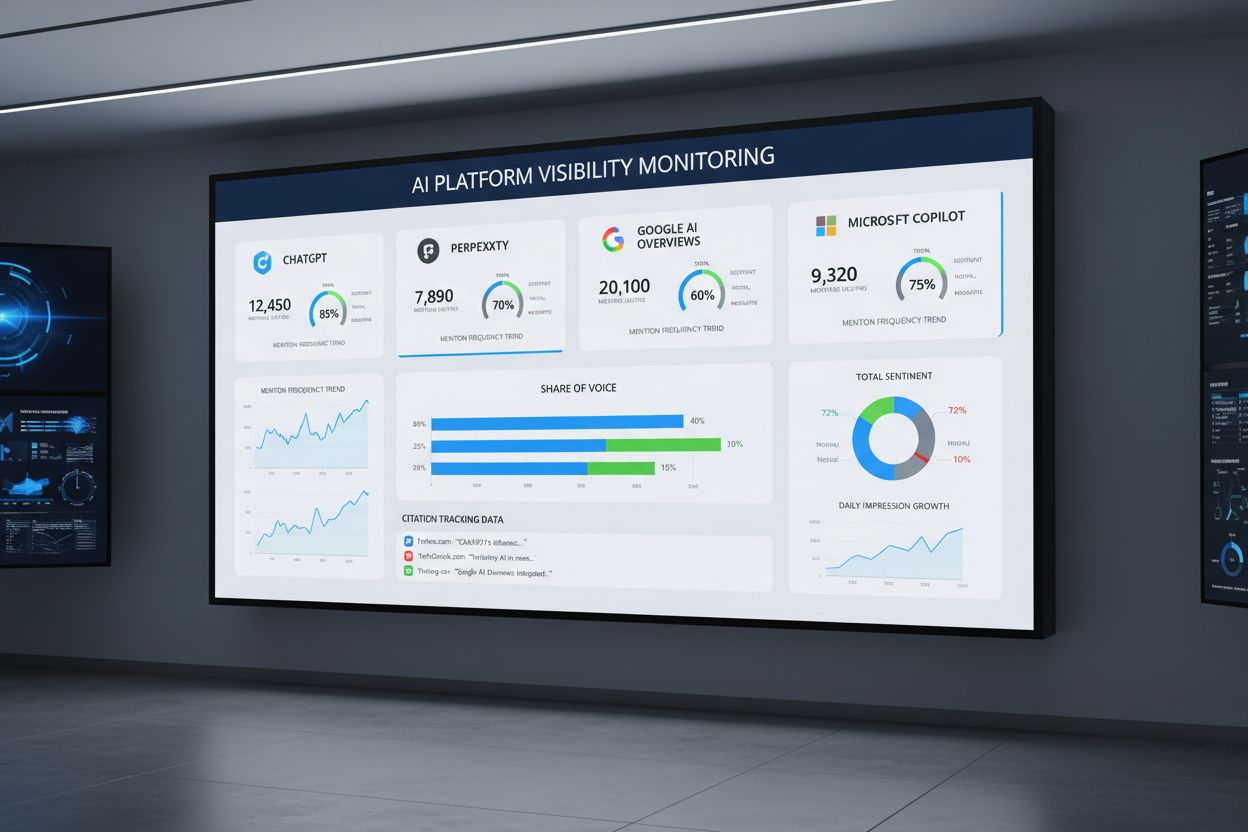
Learn how to choose the right AI visibility monitoring platform for your brand. Compare features, pricing, and capabilities to track your presence in ChatGPT, P...
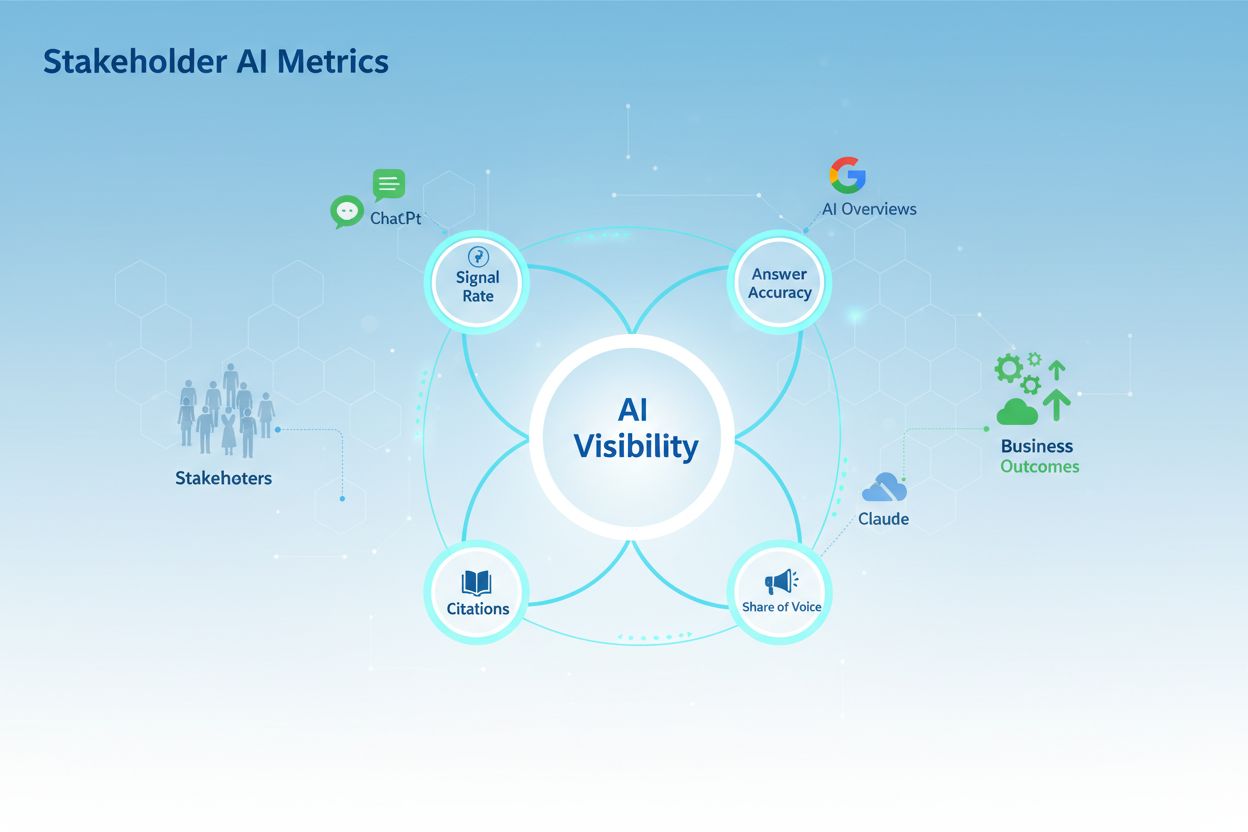
Discover the 4 essential AI visibility metrics stakeholders care about: Signal Rate, Accuracy, Citations, and Share of Voice. Learn how to measure and report AI...