
Video Content
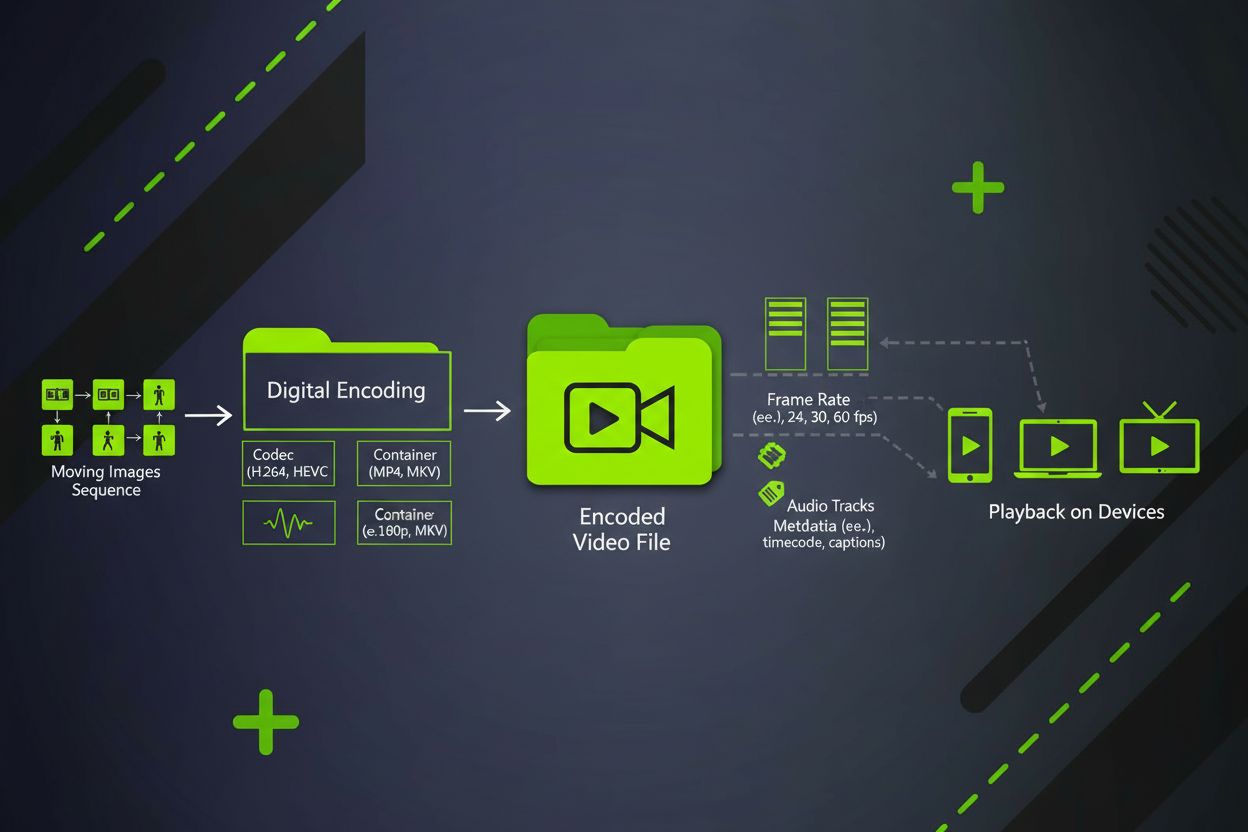
Video content is a digital moving image format combining sequential frames, audio, and metadata. Learn about video formats, codecs, specifications, and its role...
10 min read

Learn how to repurpose blog content into video using AI tools and extend your brand visibility across YouTube, TikTok, Instagram, and LinkedIn with proven strategies.
Video content has become the undisputed king of digital marketing, with platforms reporting that video generates 1200% more shares than text and images combined. B2B marketers have increasingly prioritized video content, with 86% of businesses now using video as a marketing tool, recognizing its superior ability to communicate complex ideas in digestible formats. Short-form video platforms like TikTok, Instagram Reels, and YouTube Shorts have fundamentally shifted audience expectations, with viewers spending an average of 6 hours and 48 minutes per week consuming online video content. The dominance of video isn’t just a trend—it’s a fundamental shift in how audiences prefer to consume information, making video repurposing from existing blog content a strategic imperative for content marketers.

Content repurposing transforms your existing blog library into a multi-platform content engine, dramatically amplifying your return on investment without requiring proportional increases in content creation budgets. By converting blog posts into video format using AI tools, you can extend the lifespan of your content, reach new audience segments who prefer video consumption, and establish presence across platforms where your competitors may not yet be active. This approach delivers measurable advantages in terms of production efficiency, cost reduction, and audience reach expansion compared to creating content from scratch for each platform.
| Benefit | Traditional Approach | AI-Powered Repurposing |
|---|---|---|
| Production Time | 4-6 weeks per video | 2-4 hours per video |
| Cost Per Video | $2,000-$5,000 | $50-$300 |
| Reach Expansion | Single platform focus | 5-8 platforms simultaneously |
| Content Consistency | Manual quality control | Automated brand compliance |
| Global Accessibility | Limited by language | 50+ languages available |
The financial implications are substantial: organizations implementing AI-powered repurposing report 40-70% increases in engagement metrics while reducing content production costs by 30-50%. Additionally, repurposed content maintains message consistency across platforms while allowing for platform-specific optimization, ensuring your core message reaches audiences wherever they congregate online.
Each social platform operates with distinct technical specifications, audience behaviors, and engagement algorithms that demand tailored content approaches. Understanding these requirements before converting your blog content is essential for maximizing visibility and engagement, as content optimized for one platform often underperforms on another due to aspect ratio mismatches, duration constraints, or feature incompatibilities. The fragmentation of platform specifications means that a one-size-fits-all video approach will inevitably leave performance on the table, making platform-aware optimization a critical component of any repurposing strategy.
| Platform | Aspect Ratio | Max Length | Key Features |
|---|---|---|---|
| YouTube | 16:9 | Unlimited | Descriptions, chapters, cards, end screens |
| TikTok | 9:16 | 10 minutes | Trending sounds, hashtags, duets, stitches |
| Instagram Reels | 9:16 | 90 seconds | Music library, effects, stickers, shopping tags |
| LinkedIn Video | 1:1 or 16:9 | 10 minutes | Professional context, document sharing, polls |
| YouTube Shorts | 9:16 | 60 seconds | Music library, effects, text overlays |
| 1:1, 4:5, 16:9 | 240 minutes | Autoplay, captions, engagement metrics |
Platform algorithms increasingly prioritize native content, meaning videos uploaded directly to each platform receive better distribution than cross-posted content. Successful multi-platform strategies account for these technical requirements while maintaining core message integrity, using modular content structures that allow for rapid adaptation to platform-specific constraints without sacrificing quality or consistency.
The AI-powered video creation workflow streamlines the conversion process from blog post to finished, multi-platform-ready video in a fraction of traditional production timelines. Modern AI tools handle the heavy lifting of scriptwriting, visual generation, voiceover production, and audio composition, allowing content teams to focus on strategy and optimization rather than technical execution. This workflow typically completes in under two hours from blog post selection to final export, compared to the 4-6 week timelines associated with traditional video production involving scriptwriters, videographers, editors, and sound engineers.
The systematic approach to AI-powered video creation follows these essential steps:
This workflow reduces production bottlenecks, eliminates scheduling conflicts with human talent, and enables content teams to maintain consistent publishing schedules regardless of external resource availability.
Selecting appropriate AI tools for your content repurposing workflow requires evaluating capabilities, cost structures, integration options, and output quality against your specific content needs and budget constraints. The AI tools landscape has matured significantly, with specialized platforms emerging for different aspects of video production, allowing teams to build custom workflows that combine best-of-breed solutions. Understanding the strengths and limitations of available tools enables strategic tool selection that maximizes efficiency while maintaining quality standards.
| Tool | Primary Use | Key Feature | Cost |
|---|---|---|---|
| Synthesia | AI Avatar Videos | Realistic digital presenters, 120+ languages | $30-$300/month |
| Pictory | Blog-to-Video Conversion | Automatic script generation, stock footage integration | $20-$99/month |
| ElevenLabs | AI Voiceover | Natural-sounding voices, voice cloning, 29 languages | $11-$99/month |
| ChatGPT/Claude | Script Writing | Context-aware content adaptation, multiple tones | $20/month or pay-per-use |
| Descript | Video Editing & Assembly | Transcript-based editing, automatic captions, collaboration | $12-$24/month |
| Runway ML | Visual Effects & Enhancement | AI upscaling, background removal, motion tracking | $12-$76/month |
| Epidemic Sound | Background Music | Royalty-free music library, mood-based search | $9.99-$14.99/month |
The optimal approach involves selecting 3-4 core tools that integrate well together, rather than attempting to use every available platform. Most successful implementations combine a blog-to-video converter (Pictory or Synthesia), an AI voiceover tool (ElevenLabs), a video editor (Descript), and a music library subscription, creating a streamlined workflow that minimizes manual intervention while maintaining professional output quality.
Multi-platform distribution requires more than simply uploading the same video to different channels; it demands strategic optimization that respects platform-specific technical requirements while maximizing algorithmic visibility and audience engagement. Successful distribution strategies account for aspect ratio variations, duration constraints, caption requirements, and platform-specific engagement mechanics, ensuring each version performs optimally within its native environment. The difference between a generic cross-posted video and platform-optimized content can represent 200-300% variance in engagement metrics.
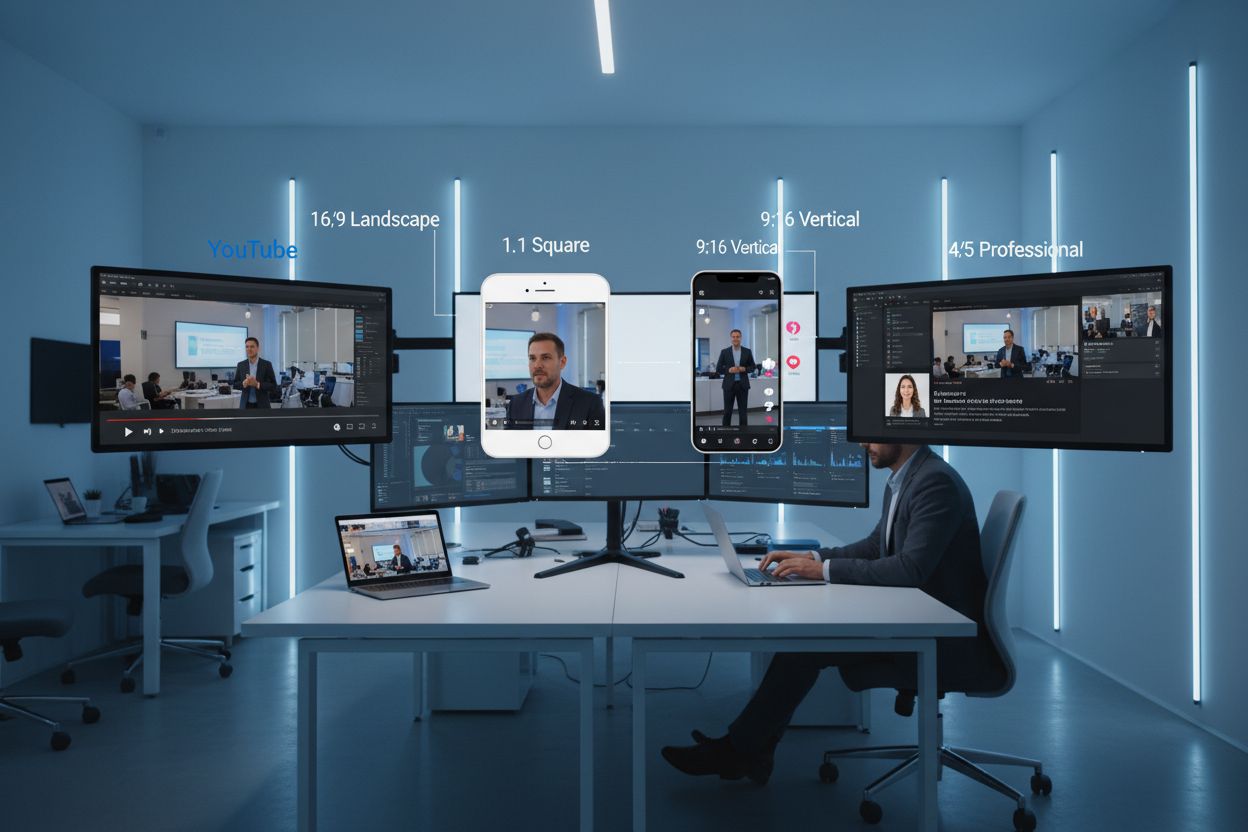
Implement these five distribution optimization strategies to maximize multi-platform performance:
This systematic approach to distribution ensures that your AI-generated content reaches maximum audience while performing optimally within each platform’s unique ecosystem.
Brand consistency across multiple platforms requires establishing clear guidelines for visual identity, tone of voice, messaging hierarchy, and quality standards that persist regardless of platform or format. While platform-specific optimization is essential for algorithmic performance, the underlying brand identity must remain recognizable and coherent, creating a unified brand experience that builds trust and recognition across audience touchpoints. Inconsistent branding across platforms dilutes brand recognition and confuses audiences, undermining the visibility gains achieved through multi-platform distribution.
Develop comprehensive brand guidelines that specify color palettes, typography, logo usage, and visual style preferences that apply across all video content, ensuring that AI-generated visuals and layouts maintain consistent aesthetic regardless of which tool produces them. Establish tone and messaging frameworks that define how your brand voice adapts to different platforms—more formal on LinkedIn, conversational on TikTok, professional on YouTube—while maintaining core brand personality and values. Implement quality control checkpoints before publishing, reviewing AI-generated content for brand alignment, factual accuracy, and message clarity, catching errors or inconsistencies before they reach audiences. Consider creating template-based workflows in your chosen AI tools that enforce brand guidelines automatically, reducing manual review requirements while maintaining consistency. This systematic approach to brand management ensures that your multi-platform presence strengthens rather than dilutes brand identity.
Measuring the success of your AI-powered content repurposing strategy requires establishing platform-specific KPIs that align with business objectives while accounting for the distinct metrics and audience behaviors that characterize each platform. Comprehensive measurement frameworks track both engagement metrics (indicating content resonance) and conversion metrics (indicating business impact), providing complete visibility into content performance and ROI. Without systematic measurement, it’s impossible to optimize your strategy, allocate resources effectively, or justify continued investment in content repurposing initiatives.
| Platform | Primary Metric | Secondary Metric | Target |
|---|---|---|---|
| YouTube | Watch Time (hours) | Click-Through Rate (CTR) | 40% increase YoY |
| TikTok | Video Views | Completion Rate | 60%+ completion |
| Instagram Reels | Engagement Rate | Saves & Shares | 3-5% engagement |
| Click-Through Rate | Comment Sentiment | 2-3% CTR | |
| YouTube Shorts | Views | Average View Duration | 50% of video length |
| Reach & Impressions | Cost Per Engagement | $0.50-$1.50 |
Calculate ROI by comparing content production costs (tool subscriptions, team time) against revenue generated through video-driven conversions, lead generation, or brand awareness metrics. Most organizations implementing AI-powered repurposing report 3-5x ROI within the first six months, with returns increasing as content libraries grow and distribution processes become more efficient. Track cost-per-view and cost-per-engagement metrics to identify which platforms deliver highest efficiency, informing budget allocation decisions for paid promotion and future content strategy.
Implementing AI-powered content repurposing requires systematic planning, tool selection, workflow development, and continuous optimization to ensure sustainable success and measurable ROI. Organizations attempting to implement repurposing without structured methodology often encounter integration challenges, quality inconsistencies, and underutilized tools, failing to realize the efficiency gains and reach expansion that the strategy promises. A phased implementation approach, starting with pilot projects and expanding based on results, minimizes risk while building organizational capability and confidence in AI-powered content workflows.
Execute your implementation strategy through these six systematic steps:
This structured implementation approach transforms content repurposing from an experimental initiative into a sustainable, scalable content production system that delivers consistent ROI.
The AI-powered content landscape continues evolving rapidly, with emerging capabilities promising to further reduce production friction, expand reach, and personalize content experiences at scale. AI reframing technology is advancing toward real-time content adaptation that automatically adjusts messaging, tone, and visual style based on audience segment characteristics, enabling true personalization at scale without manual content creation. Localization capabilities are expanding beyond simple translation to cultural adaptation, where AI systems understand regional preferences, idioms, and cultural contexts, enabling authentic content experiences for global audiences without requiring native speakers for each market.
Predictive analytics powered by machine learning are beginning to forecast content performance before publication, analyzing script elements, visual composition, and platform characteristics to predict engagement and ROI, enabling data-driven content decisions before resources are invested. Emerging tools are integrating multiple AI capabilities into unified platforms, reducing tool fragmentation and simplifying workflows for teams managing complex multi-platform strategies. As these technologies mature and become more accessible, organizations that have already built AI-powered content workflows will possess significant competitive advantages, having developed organizational capabilities and institutional knowledge that newer entrants cannot quickly replicate. The future of content marketing belongs to organizations that embrace AI-powered efficiency while maintaining human creativity and strategic thinking—using AI to amplify human capabilities rather than replace them.
Using AI-powered tools, you can convert a blog post to a finished, multi-platform-ready video in under 2 hours. This includes script generation, visual creation, voiceover production, and assembly. Traditional video production typically takes 4-6 weeks, making AI conversion 10-15x faster.
Top tools include Synthesia for AI avatars, Pictory for automatic blog-to-video conversion, ElevenLabs for voiceovers, ChatGPT for scriptwriting, and Descript for editing. Most successful implementations combine 3-4 complementary tools rather than using a single platform.
Each platform requires specific aspect ratios: YouTube uses 16:9, TikTok uses 9:16, Instagram Reels use 9:16, and LinkedIn uses 1:1 or 16:9. Create videos with safe zones to prevent cropping, develop modular content structures that can be trimmed for different lengths, and customize calls-to-action for each platform.
Yes, when you establish clear brand guidelines and implement quality control checkpoints. Use template-based workflows in your AI tools that enforce brand guidelines automatically, review AI-generated content for brand alignment before publishing, and maintain consistent color palettes, typography, and messaging across all platforms.
Track platform-specific KPIs: YouTube (watch time, CTR), TikTok (views, completion rate), Instagram (engagement rate, saves), LinkedIn (CTR, comment sentiment), and Facebook (reach, cost per engagement). Monitor both engagement metrics and conversion metrics to understand content resonance and business impact.
Organizations implementing AI-powered repurposing report 30-50% cost reductions compared to traditional video production. AI tools cost $50-$300 per video versus $2,000-$5,000 for traditional production. Most teams see 3-5x ROI within the first six months of implementation.
Absolutely. B2B marketers are increasingly using AI video for product explainers, thought leadership content, training videos, and customer testimonials. AI video works particularly well for repurposing existing blog content, webinar summaries, and internal communications where speed and consistency matter more than cinematic production value.
Use modular content structures that allow segments to be rearranged for different platforms. Create videos with platform-specific aspect ratios from the start, implement automated scheduling tools to publish optimized versions at optimal times, and establish analytics monitoring to track which platforms drive highest engagement and ROI.
AmICited tracks how AI systems reference your brand across GPTs, Perplexity, and Google AI Overviews. Ensure your content visibility extends beyond traditional platforms.
Video content is a digital moving image format combining sequential frames, audio, and metadata. Learn about video formats, codecs, specifications, and its role...

Learn how YouTube content influences AI citations across ChatGPT, Perplexity, and Google AI. Discover why YouTube dominates with 200x more citations than compet...
Community discussion on whether video content helps AI visibility. Real experiences from content creators testing YouTube and video impact on ChatGPT, Perplexit...