
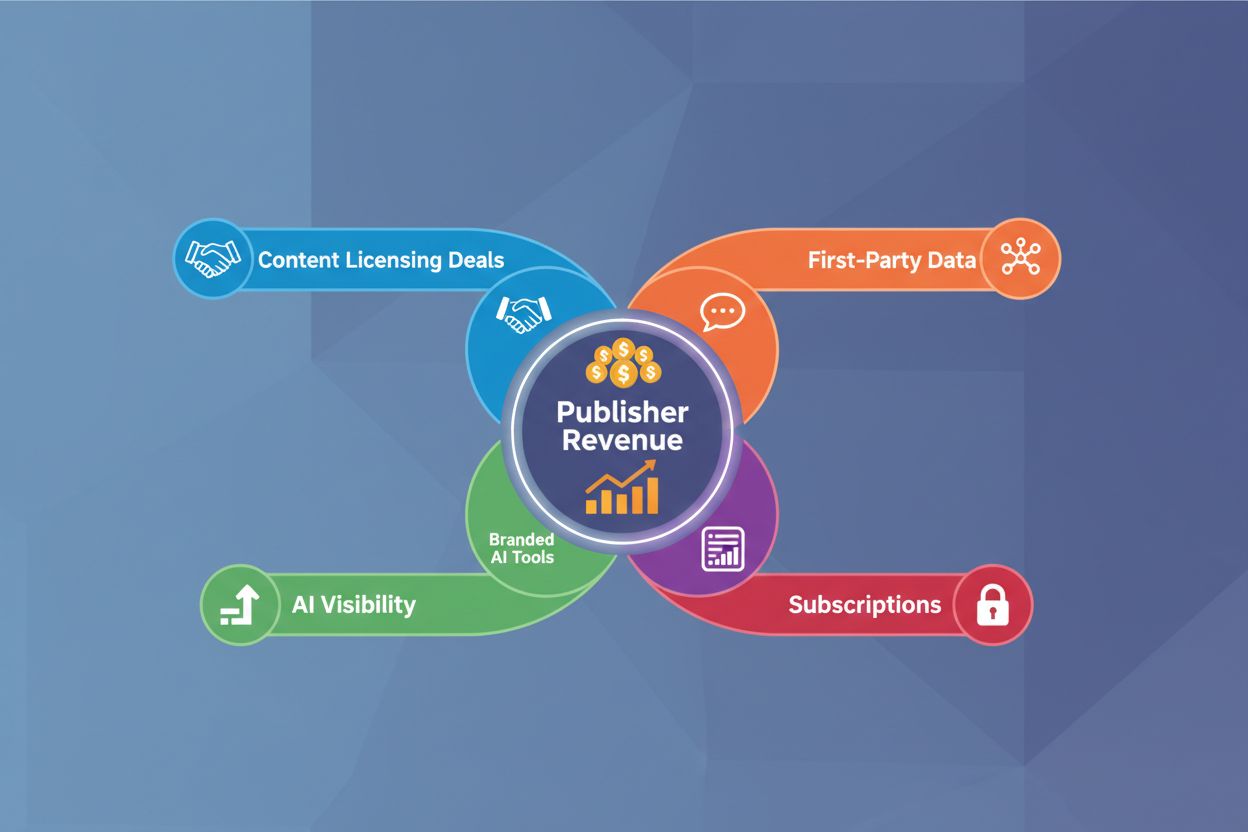
Monetizing AI Traffic: Revenue Strategies for Publishers
Discover proven revenue strategies for monetizing AI traffic. Learn licensing deals, GEO optimization, and diversified income streams for publishers in the AI e...
8 min read
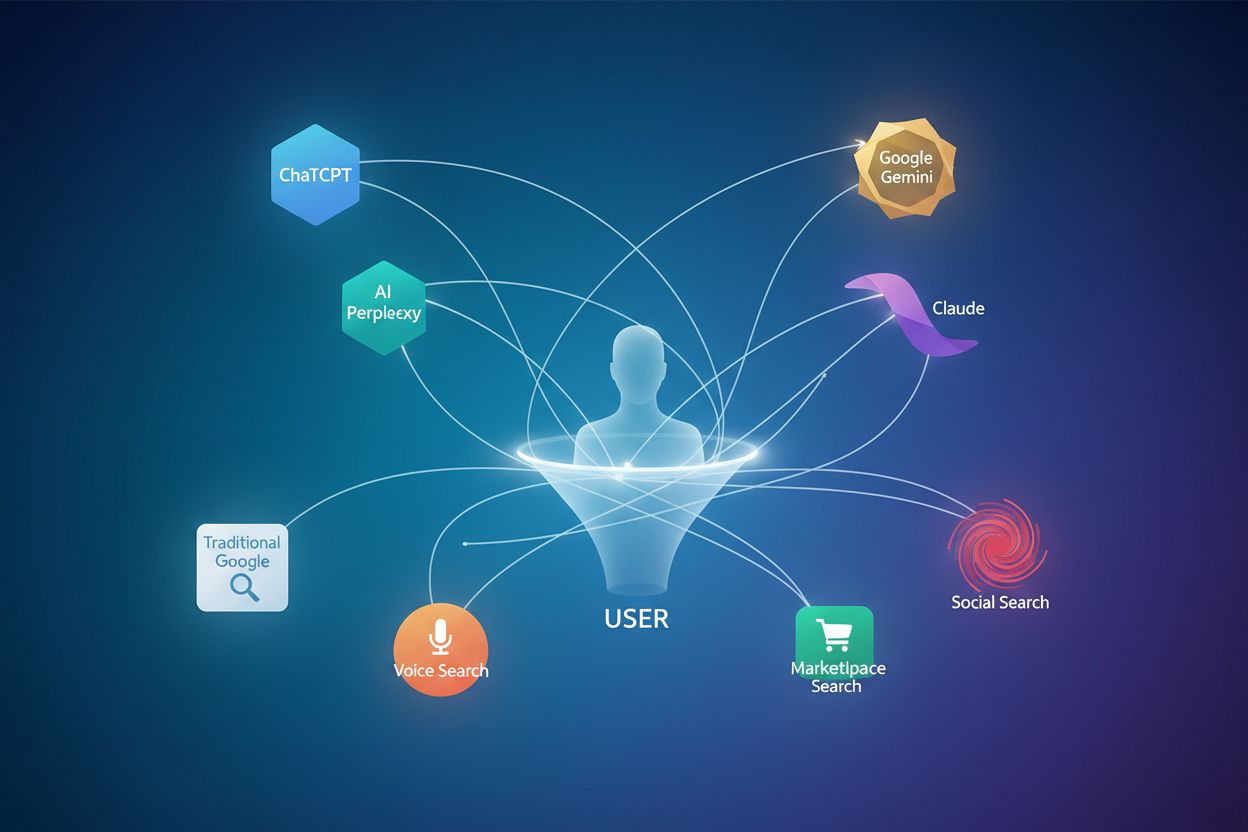
Gartner predicts 25% search traffic decline by 2026 and 50% by 2028 due to AI. Explore the prediction, methodology, counter-arguments, and how to prepare your content strategy.
In February 2024, Gartner released a prediction that sent shockwaves through the digital marketing and search engine optimization industries: 25% of web traffic will decline by 2026, with that figure escalating to 50% by 2028. This forecast suggests that traditional search engine traffic—currently accounting for trillions of queries annually across the globe’s 8 billion daily searches—will be fundamentally disrupted by the rise of artificial intelligence-powered alternatives. The prediction challenges decades of assumptions about how users discover information online and represents one of the most significant potential shifts in digital behavior since the advent of search engines themselves.
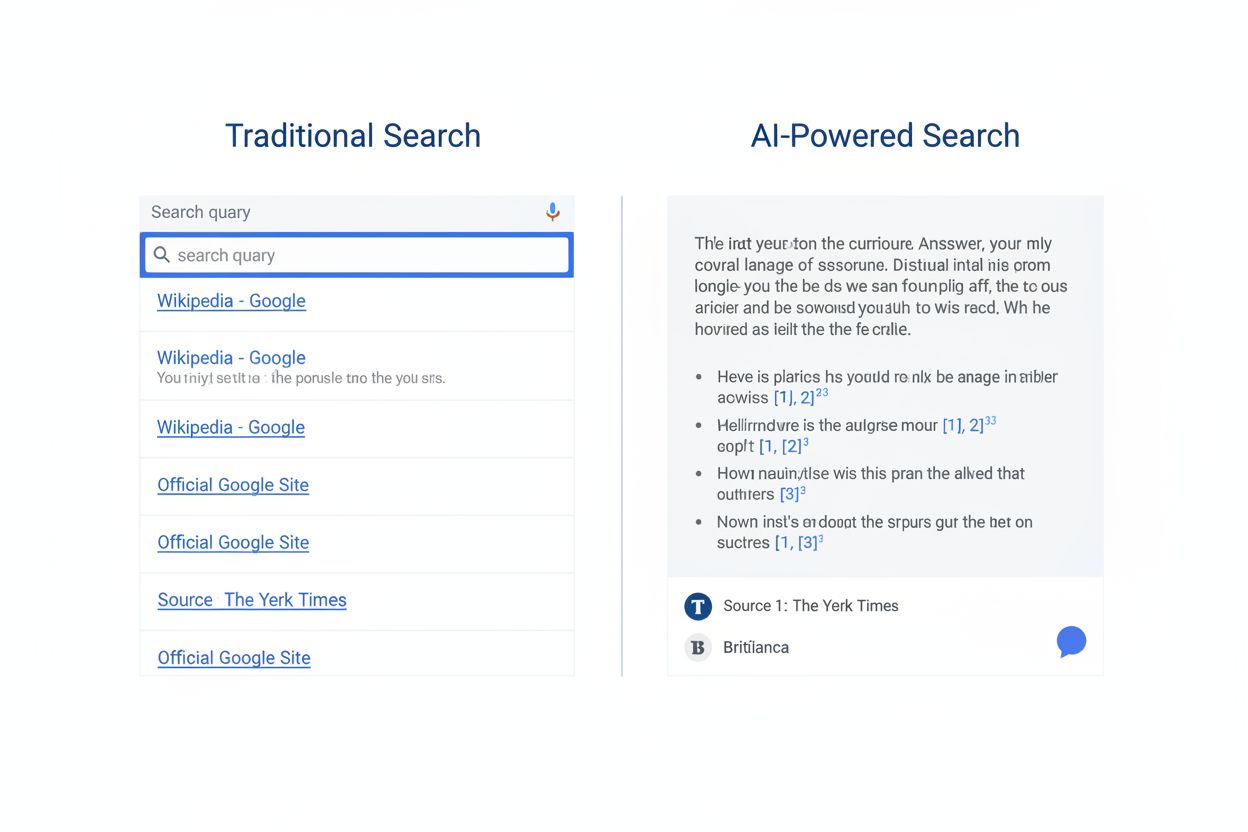
Gartner’s prediction emerged from what the firm itself described as “internal debate” rather than a rigorous, peer-reviewed scientific methodology, which is an important caveat when evaluating the forecast’s reliability. The analysis drew on consumer sentiment data showing that 79% of consumers expect to use AI-enhanced search within a year and 70% of consumers have at least some trust in generative AI search results—figures that suggest genuine momentum toward AI-powered discovery. The firm examined adoption patterns across different search modalities and projected growth trajectories based on consumer willingness to shift their behavior. To contextualize this shift, consider the comparative adoption rates between traditional and emerging search methods:
| Search Method | Current Adoption | Projected 2026 | Projected 2028 |
|---|---|---|---|
| Traditional Search Engines | 95% | 85% | 70% |
| AI-Enhanced Search | 15% | 45% | 65% |
| AI Chatbots | 8% | 35% | 55% |
| Hybrid Approaches | 5% | 25% | 40% |
This table illustrates the dramatic reallocation of user attention Gartner envisions, with traditional search declining as users distribute their queries across multiple AI-powered platforms and interfaces.
Several interconnected factors underpin Gartner’s prediction, each representing a fundamental shift in how users access information:
AI Chatbots and Conversational Interfaces: Platforms like ChatGPT, Claude, and Perplexity have demonstrated that users prefer natural language conversations over keyword-based queries, fundamentally changing the interaction model between users and information systems.
New Entry Points and Platform Consolidation: The entry of tech giants like Apple and Microsoft into AI-powered search—exemplified by Apple’s integration of AI features into Siri and Microsoft’s Copilot ecosystem—means search is no longer confined to dedicated search engines but embedded across devices and applications users already use daily.
Business Model Disruption: The $18 billion annual Google-Apple search deal represents a fragile ecosystem that could be upended if Apple or other device manufacturers decide to route search queries through their own AI systems or preferred partners, fundamentally altering traffic distribution.
Consumer Behavior Shift: With 1.5 billion Apple iPhones in circulation and similar numbers of Android devices, the infrastructure exists for rapid adoption of alternative search methods if device manufacturers and operating systems prioritize AI-powered discovery over traditional search integration.
Despite Gartner’s compelling prediction, substantial skepticism exists within the industry about whether a 50% traffic decline is realistic or even possible. Critics argue that search engines and AI chatbots serve fundamentally different purposes: search engines excel at discovering new information, comparing options, and exploring topics broadly, while chatbots are better suited for specific questions requiring synthesized answers—meaning users may continue using both rather than substituting one for the other. Historically, the internet has demonstrated a pattern of traffic expansion rather than cannibalization; the rise of social media didn’t eliminate search, and mobile search didn’t replace desktop search but rather expanded the total addressable market. The comparison to AOL’s decline is instructive but imperfect—AOL failed because it was a walled garden in an increasingly open internet, whereas Google and other search engines remain open platforms that can themselves integrate AI capabilities. Furthermore, Gartner’s methodology of “internal debate” lacks the rigor of longitudinal studies or controlled experiments, making the specific percentages somewhat speculative rather than predictive.
Regardless of whether Gartner’s specific percentages prove accurate, the underlying trend toward AI-powered discovery demands immediate strategic adaptation from content creators and brands. Organizations should prioritize becoming authoritative sources that AI systems cite and reference, which requires producing original research, data, and insights that AI models will want to attribute to your brand rather than generic content that could come from anywhere. This shift emphasizes quality over quantity—a single definitive guide on a topic is more valuable than ten mediocre articles covering the same ground, as AI systems will preferentially cite the most authoritative source. Brands must also diversify their traffic sources beyond search, investing in direct audience relationships through email, social media, and owned channels that don’t depend on algorithmic discovery. Building genuine brand authority through consistent, high-quality content becomes more critical than ever, as AI systems are more likely to cite and recommend brands they recognize as legitimate experts. Finally, organizations should maintain their SEO fundamentals while simultaneously building presence in AI platforms—this isn’t an either/or decision but rather a both/and strategy that hedges against uncertainty about which discovery methods will ultimately dominate.
As traffic patterns potentially shift toward AI-powered discovery, the ability to monitor and measure your brand’s presence in AI-generated answers becomes as critical as tracking search engine rankings once was. Traditional analytics tools measure clicks from search results, but they’re largely blind to citations within AI chatbot responses, generative search results, or conversational interfaces—meaning brands could be losing visibility without realizing it. Monitoring tools that track whether your brand appears in AI answers, how frequently it’s cited, and in what context become essential for understanding your actual reach and influence in an AI-mediated information landscape. Services like AmICited.com represent an emerging category of tools designed specifically to address this gap, allowing brands to see when and how their content is referenced by AI systems. Without this visibility, organizations operating under the assumption that their SEO efforts translate directly to discovery will be flying blind, unable to measure the effectiveness of their content strategy in an increasingly AI-driven ecosystem.
Gartner’s dual timeline—25% decline by 2026 and 50% by 2028—suggests a relatively rapid transition, but several variables could accelerate or delay this shift significantly. The 2026 target is only two years away, which would require massive consumer behavior change in a very short window; this timeline assumes that AI-powered search alternatives achieve near-parity with traditional search in terms of user satisfaction and trust, which may be optimistic given current limitations in AI accuracy and hallucination rates. The 2028 target provides more breathing room and may be more realistic, allowing time for AI systems to mature, for regulatory frameworks to develop around AI-generated content, and for consumer preferences to solidify around new discovery methods. It’s worth noting that Gartner has demonstrated willingness to update its predictions as new data emerges—the firm regularly revises forecasts when market conditions change, so these numbers should be treated as directional indicators rather than immutable prophecies. Organizations should monitor key indicators like AI chatbot usage statistics, device manufacturer announcements about search integration, and consumer adoption surveys to assess whether the timeline is accelerating or decelerating relative to Gartner’s projections.
The uncertainty inherent in Gartner’s prediction argues for a hedging strategy rather than an all-in bet on any single outcome. Organizations should simultaneously maintain and optimize their search engine presence—SEO isn’t dead, and search traffic will likely remain significant even if it declines—while building new capabilities around AI platform presence and citation tracking. This means creating content that’s optimized not just for search algorithms but for AI systems, which have different ranking criteria and citation preferences; AI systems value original research, data, and authoritative perspectives more than traditional search engines do. Diversification extends beyond search and AI to include direct audience relationships, owned media channels, and community building that don’t depend on any algorithmic intermediary. Brands should actively monitor their appearance across major AI platforms—ChatGPT, Google Gemini, Microsoft Copilot, Claude, and Perplexity—to understand how their content is being used and cited, adjusting their content strategy based on what’s actually resonating with AI systems. Finally, the most prudent approach is to treat Gartner’s prediction not as a certainty but as a plausible scenario that warrants preparation; by building flexibility into your content and distribution strategy now, you’ll be positioned to thrive regardless of whether traffic shifts happen at the predicted pace, faster, or slower than anticipated.
Gartner predicted that traditional search engine volume will drop 25% by 2026 and potentially 50% or more by 2028 as consumers shift to AI chatbots and virtual agents for answers. This forecast suggests a fundamental disruption in how users discover information online.
Gartner used internal debate and probability statements based on survey data showing 79% of consumers expect to use AI-enhanced search within a year and 70% trust AI search results. The methodology is not highly scientific but rather based on expert analysis and consumer sentiment trends.
The prediction is debated among industry experts. While AI adoption is real, skeptics argue that search and chatbots serve different purposes, and web traffic historically expands rather than contracts significantly. The specific percentages should be treated as directional indicators rather than certainties.
Major factors include: AI chatbots becoming default search tools, new entry points from Apple and Microsoft integrating AI, consumer behavior shifts toward conversational interfaces, and business model changes that prioritize AI over traditional search distribution.
Brands should diversify beyond SEO, focus on being cited in AI answers, create original content and research, build brand authority, monitor AI platform visibility, and maintain a balanced approach that hedges against multiple possible futures.
Being ranked means appearing in traditional search results. Being cited means your content is referenced and quoted within AI-generated answers. Citations in AI responses may drive more qualified traffic than traditional search rankings.
The 25% prediction timeline is 2026, so clarity should emerge within the next couple of years. Gartner indicated willingness to update predictions as variables change, so monitor key indicators like AI chatbot usage and device manufacturer announcements.
No. A balanced approach is recommended: maintain SEO efforts while building AI visibility, diversifying traffic sources, and monitoring multiple discovery channels. This both/and strategy hedges against uncertainty about which discovery methods will ultimately dominate.
Don't let your brand disappear from AI-generated answers. Track where your content is cited across ChatGPT, Perplexity, Google AI Overviews, and other AI platforms with AmICited.
Discover proven revenue strategies for monetizing AI traffic. Learn licensing deals, GEO optimization, and diversified income streams for publishers in the AI e...
Comprehensive guide to the 25 best AI visibility tools in 2026. Compare features, pricing, and capabilities of Profound, Am I Cited, Peec AI, Otterly, Semrush A...

Discover the real business costs of ignoring AI search monitoring. Learn how brands lose visibility, market share, and customer discovery when they don't track ...