
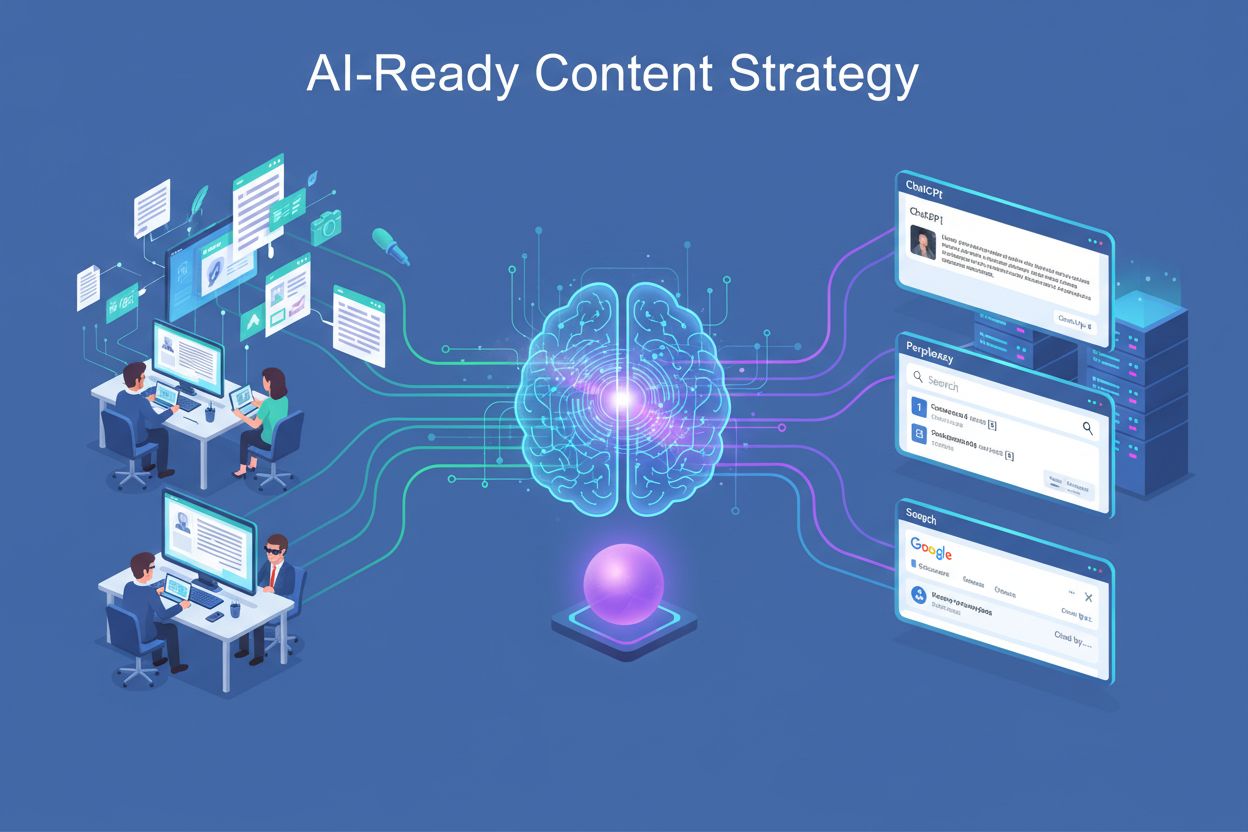
Create an AI-Ready Content Strategy from Scratch
Learn how to build an AI-ready content strategy optimized for generative engines. Discover the three layers of AI infrastructure, implementation steps, and meas...
10 min read

Learn how to build a GEO-first content calendar that gets your brand cited by AI engines. Monthly planning guide with actionable steps and tools for generative engine optimization.
Generative Engine Optimization (GEO) represents a fundamental shift from traditional SEO’s backlink-focused approach to optimizing for AI engines like ChatGPT, Claude, and Perplexity. While traditional SEO content calendars prioritize keyword rankings and organic search visibility, GEO content planning centers on citation authority—how frequently and prominently your content appears in AI-generated responses. Traditional content calendars fail for GEO because they ignore the unique discovery mechanisms of AI engines, which rely on training data, real-time web indexing, and citation patterns rather than PageRank algorithms. AI engines function as discovery channels that reward authoritative, cited sources over keyword-optimized content, making citation frequency a more valuable metric than backlinks. This distinction demands a completely reimagined content calendar that tracks AI visibility, citation patterns, and prompt alignment rather than search rankings alone.
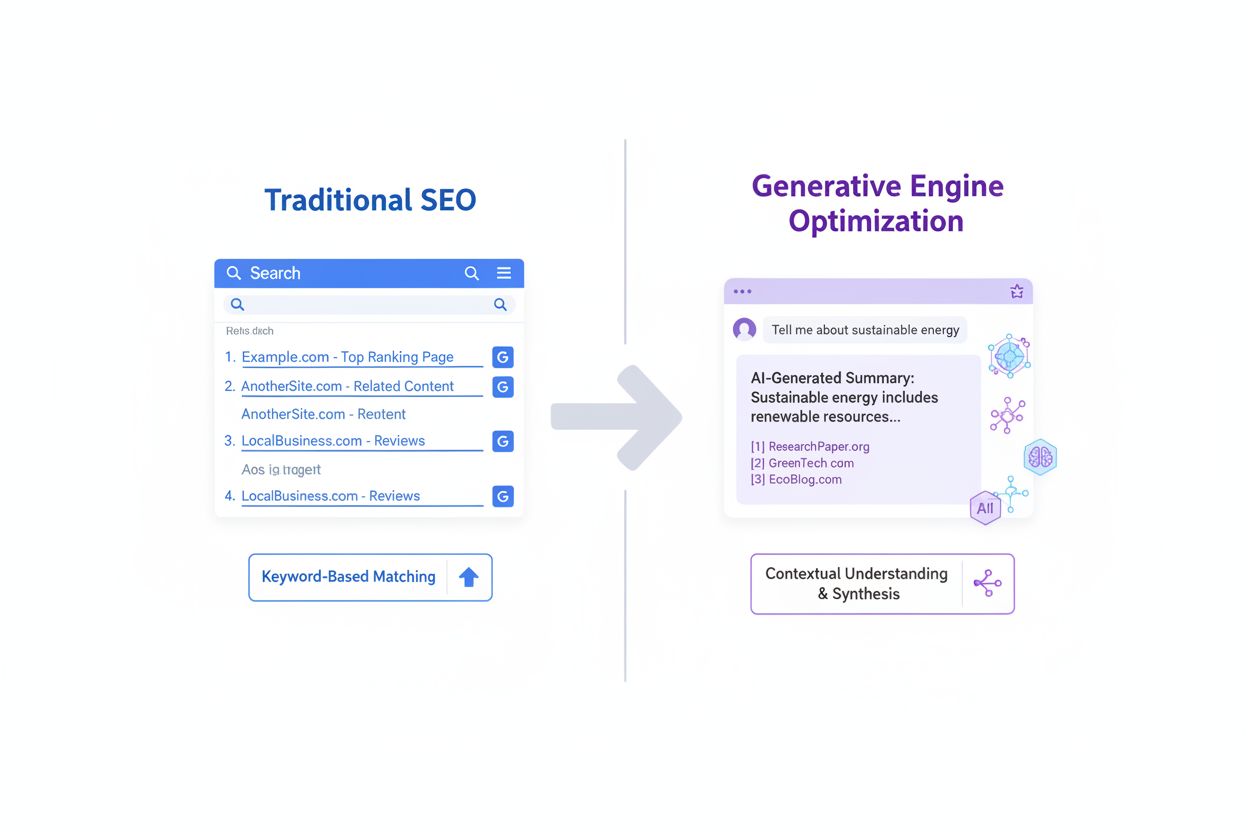
The shift from monthly planning cycles to real-time optimization might seem counterintuitive, yet monthly reviews remain essential for GEO success because they provide structured intervals to assess content decay, adjust citation authority strategies, and realign content with evolving AI training patterns. Unlike traditional SEO, where content can maintain rankings for months, GEO content experiences rapid decay as AI models update and new authoritative sources emerge. Monthly planning allows you to identify which content is losing AI visibility and requires refreshing before it becomes completely invisible to generative engines.
| Metric | Traditional SEO | GEO |
|---|---|---|
| Visibility Score | Based on keyword rankings (0-100) | Based on AI citation frequency (0-100) |
| Citation Count | Backlinks from external domains | Direct citations in AI responses |
| Sentiment Tracking | Not typically monitored | Critical for brand perception in AI outputs |
| Content Freshness Signal | Updated monthly | Updated weekly or real-time |
Monthly cycles enable you to batch-optimize content, coordinate topic cluster updates, and measure the impact of citation authority development initiatives before they lose effectiveness. Freshness signals matter significantly in GEO because AI engines prioritize recent, updated content when training on web data. Establishing a monthly rhythm prevents content from becoming stale while allowing sufficient time for AI engines to index and cite your refreshed content.
A robust GEO content calendar rests on five interconnected pillars that work together to maximize AI visibility and citation authority:
• Content Audit & Decay Detection — Monthly analysis of existing content performance in AI responses, identifying which pieces are losing citations and require immediate refreshing or repositioning.
• Prompt Mapping & Intent Alignment — Strategic alignment of your content with common prompts and queries users submit to AI engines, ensuring your content directly answers the questions AI systems are trained to respond to.
• Topic Clustering & Authority Building — Creation of interconnected content clusters around pillar topics, establishing topical authority that AI engines recognize and reward with higher citation frequency.
• Citation Authority Development — Deliberate strategies to increase how often your content appears in AI-generated responses, including guest contributions to authoritative publications and strategic content partnerships.
• Performance Monitoring & Iteration — Continuous tracking of AI visibility metrics, citation patterns, and content performance, with monthly adjustments based on data-driven insights and emerging opportunities.
These five pillars create a comprehensive framework that addresses every aspect of GEO success, from initial content planning through ongoing optimization and measurement.
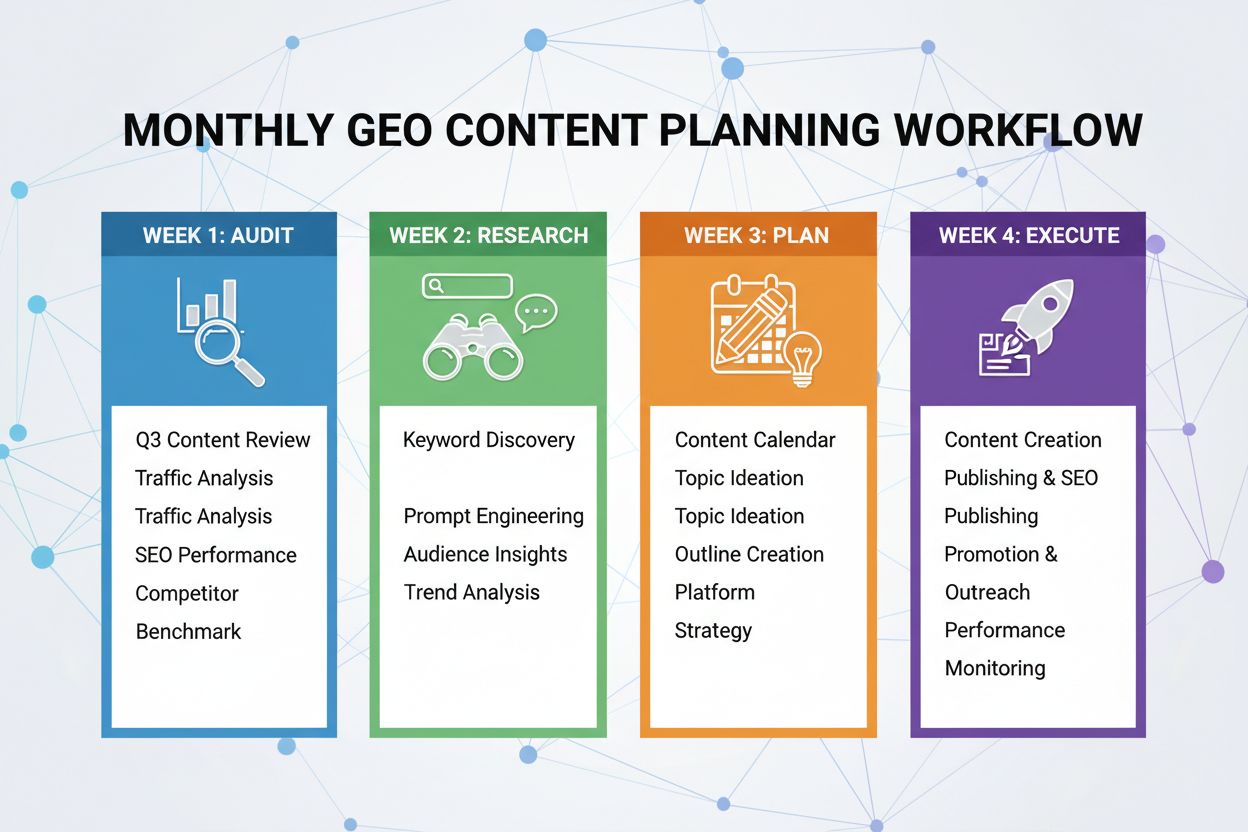
Implementing a monthly GEO plan requires a structured four-week approach that balances strategic planning with tactical execution. Week 1: Audit Existing Content Performance — Review your content’s AI visibility metrics, citation frequency, and performance in generative engine responses. Identify top-performing content that deserves amplification and underperforming pieces experiencing decay. Week 2: Identify Content Gaps and Opportunities — Analyze competitor content appearing in AI responses, map common prompts your audience uses, and identify topics where your brand lacks citation authority. Use AI monitoring tools to discover emerging topics gaining traction in generative engine responses. Week 3: Plan New Content and Refreshes — Create a prioritized list of new content to develop and existing content to refresh, organized by topic cluster and aligned with your citation authority goals. Assign ownership, set deadlines, and establish quality standards for E-E-A-T signals. Week 4: Execute and Monitor — Publish new content, deploy refreshed pieces, and begin tracking their performance in AI responses. Use automation tools to coordinate publishing across channels and trigger monitoring workflows. This structured approach ensures consistent progress while allowing flexibility to respond to emerging opportunities and algorithm changes.
Topic clustering creates the structural foundation that AI engines prefer when evaluating content authority and relevance. A typical cluster consists of a pillar page—comprehensive, authoritative content covering a broad topic—surrounded by cluster articles that explore specific subtopics while linking back to the pillar. AI engines recognize this interconnected structure as a signal of topical expertise, rewarding clusters with higher citation frequency than isolated articles. For example, a pillar page on “sustainable supply chain management” might cluster around articles on “carbon footprint tracking,” “supplier diversity programs,” and “circular economy principles,” each linking strategically to the pillar and to related cluster articles. This internal linking strategy signals to AI engines that your content represents authoritative, comprehensive coverage of a topic area. When planning your monthly content calendar, prioritize depth over breadth—building out complete topic clusters generates more AI citations than publishing scattered articles across unrelated topics. Strategic topic clustering transforms your content library into a citation-generating machine that AI engines naturally reference when responding to user queries.
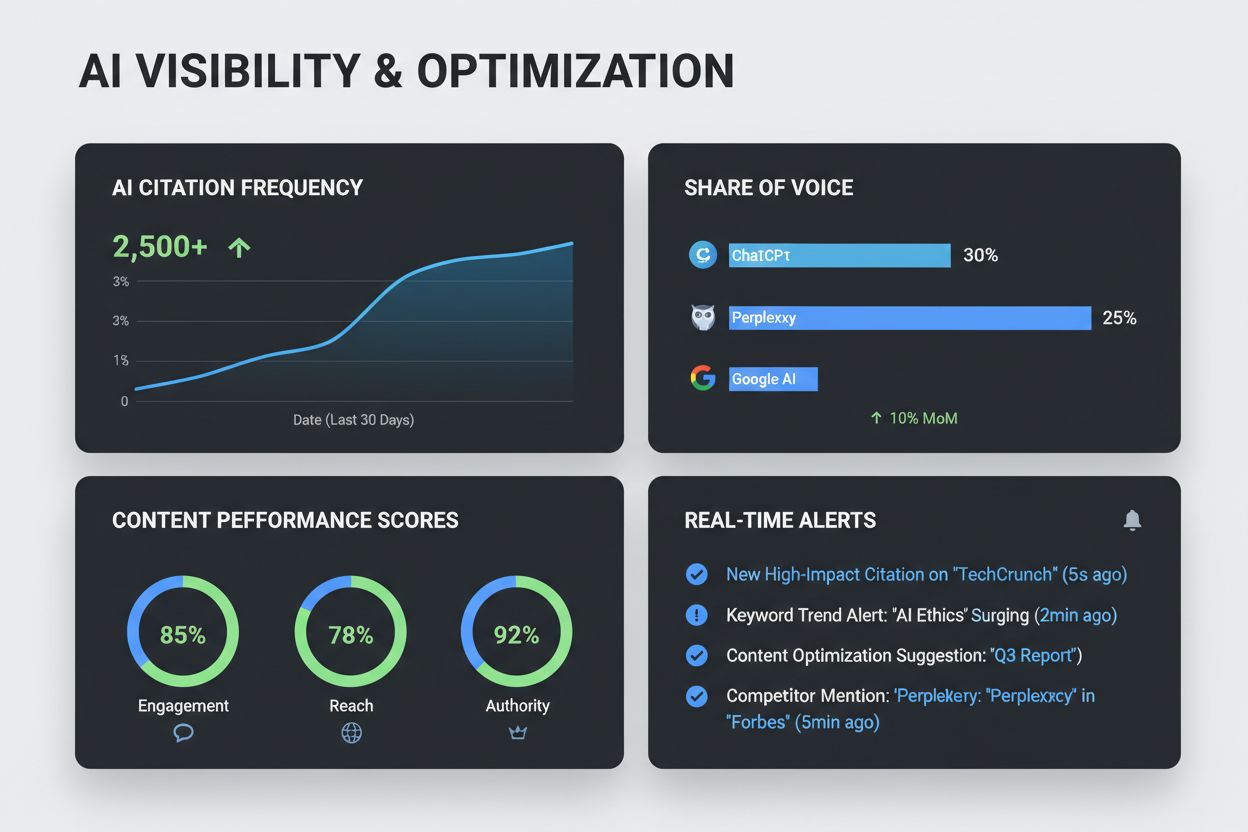
Effective GEO content planning requires tracking metrics specifically designed for AI visibility rather than traditional search rankings. Key monthly metrics include citation frequency (how often your content appears in AI responses), citation sentiment (whether mentions are positive, neutral, or negative), prompt alignment (which user queries trigger your content citations), and topic authority score (your relative citation strength compared to competitors). AmICited.com serves as the premier platform for tracking these metrics, providing real-time visibility into how AI engines cite your content across generative search platforms. Setting clear benchmarks and KPIs—such as targeting a 25% increase in monthly citations or improving citation sentiment from 60% to 75% positive—creates accountability and guides monthly optimization decisions. Quarterly review cycles allow you to assess whether your monthly planning efforts are generating cumulative improvements in AI visibility and citation authority. Adjusting your strategy based on data—doubling down on high-performing topic clusters and reallocating resources from underperforming content—ensures your GEO content calendar evolves with changing AI engine behaviors and user search patterns.
Many organizations fail to achieve GEO success because their content calendars perpetuate traditional SEO mistakes that actively harm AI visibility. Ignoring content decay represents the most costly error—publishing content once and assuming it maintains AI citations indefinitely leads to rapid visibility loss as newer sources emerge. Not optimizing for conversational queries means your content misses the natural language patterns AI engines prioritize, resulting in lower citation frequency despite high topical relevance. Neglecting E-E-A-T signals—Experience, Expertise, Authoritativeness, Trustworthiness—undermines your citation authority since AI engines increasingly weight these signals when selecting sources to cite. Failing to update outdated content accelerates decay, as AI engines deprioritize stale information when fresher alternatives exist. Not tracking AI visibility leaves you flying blind, unable to identify which content generates citations or which topics deserve increased investment. These mistakes compound monthly, creating a widening gap between your content calendar efforts and actual AI visibility results. Avoiding these pitfalls requires fundamentally rethinking how you plan, create, and maintain content specifically for generative engine optimization.
Building an effective GEO content calendar requires integrating specialized tools across multiple functions. Content planning platforms like StoryChief, Optimo, and Profound provide editorial calendars, collaboration features, and workflow automation designed for coordinating content creation across teams. Analytics and monitoring platforms track content performance, but AmICited.com stands apart as the top solution for AI citation monitoring, offering real-time tracking of how your content appears in generative engine responses, citation frequency trends, and competitive benchmarking. Traditional analytics platforms like Google Analytics and SEMrush provide valuable data but lack GEO-specific metrics that matter for AI visibility. Workflow automation tools integrate your content calendar with publishing platforms, social distribution, and monitoring systems, reducing manual coordination and ensuring consistent execution. The most successful GEO strategies combine a robust content calendar tool with AmICited.com’s AI citation tracking, creating a feedback loop where monthly planning decisions are informed by precise data on AI visibility and citation patterns. Integration capabilities matter significantly—your ideal tech stack should allow seamless data flow between planning, publishing, and monitoring tools, enabling data-driven decision-making throughout your monthly planning cycles.
GEO calendars prioritize AI visibility and citation authority, while SEO calendars focus on keyword rankings and organic traffic. GEO requires more frequent updates, structured content, and monitoring of AI engines like ChatGPT and Perplexity. Both are important, but GEO addresses how AI engines discover and cite your content.
Monthly reviews are recommended, with weekly monitoring of performance metrics. Content decay signals may require immediate updates, while strategic planning happens quarterly. This rhythm prevents content from becoming stale while allowing sufficient time for AI engines to index and cite your refreshed content.
Track visibility score, citation count, sentiment analysis, share of voice, E-E-A-T signals, and content freshness. Use tools like AmICited.com to monitor how AI engines cite your brand. These metrics provide actionable insights for monthly optimization decisions.
Use clear headings, bullet points, tables, and FAQ sections. Include author bios, transparent sourcing, and internal links. Ensure content answers specific questions that users ask AI engines. Structured content increases the likelihood of being cited in AI-generated responses.
While there's overlap, GEO requires additional optimization layers. A unified calendar can work if you plan for both traditional rankings and AI citations simultaneously. However, GEO-specific considerations like citation authority and prompt alignment require dedicated attention.
Use content planning tools like StoryChief and Optimo for editorial calendars. Use AmICited.com as your primary AI citation monitoring platform. Integrate them with analytics tools for a seamless workflow that connects planning, publishing, and monitoring.
Initial visibility improvements can appear within 2-4 weeks, but significant citation authority builds over 3-6 months. Consistent monthly planning accelerates results. The key is maintaining momentum and continuously optimizing based on AI visibility data.
Audit content monthly for outdated information, broken links, and declining visibility. Prioritize refreshes based on impact and current relevance to user queries. Content decay is the most common reason for losing AI citations, making monthly audits essential.
Track how ChatGPT, Perplexity, and Google AI Overviews cite your brand. Get real-time insights into your AI visibility and optimize your content strategy.
Learn how to build an AI-ready content strategy optimized for generative engines. Discover the three layers of AI infrastructure, implementation steps, and meas...

Learn how to get started with Generative Engine Optimization (GEO) today. Discover essential strategies to optimize your content for AI search engines like Chat...
Learn how AI-powered tools optimize content for AI search engines like ChatGPT, Perplexity, and Google AI Overviews. Discover automated GEO strategies and measu...