
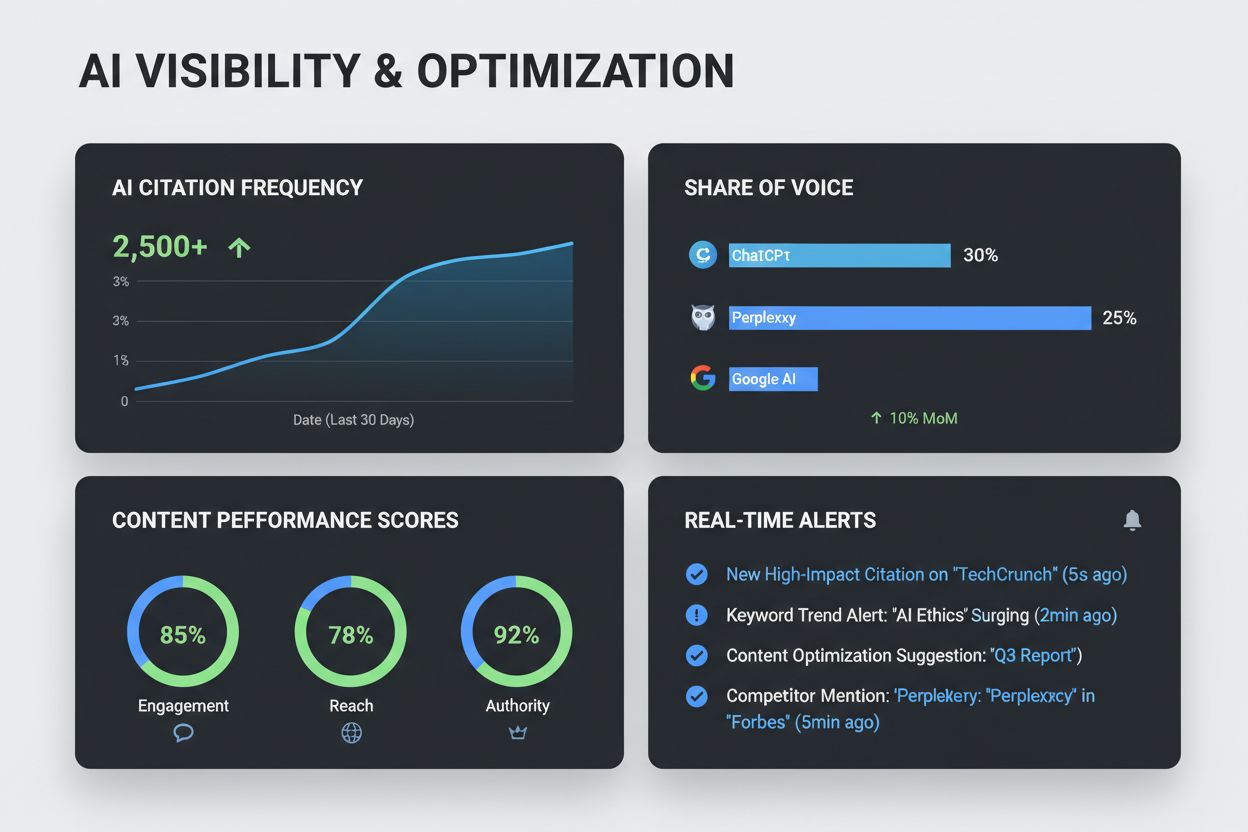
AI-Powered GEO: Using AI to Optimize for AI
Learn how AI-powered tools optimize content for AI search engines like ChatGPT, Perplexity, and Google AI Overviews. Discover automated GEO strategies and measu...
12 min read
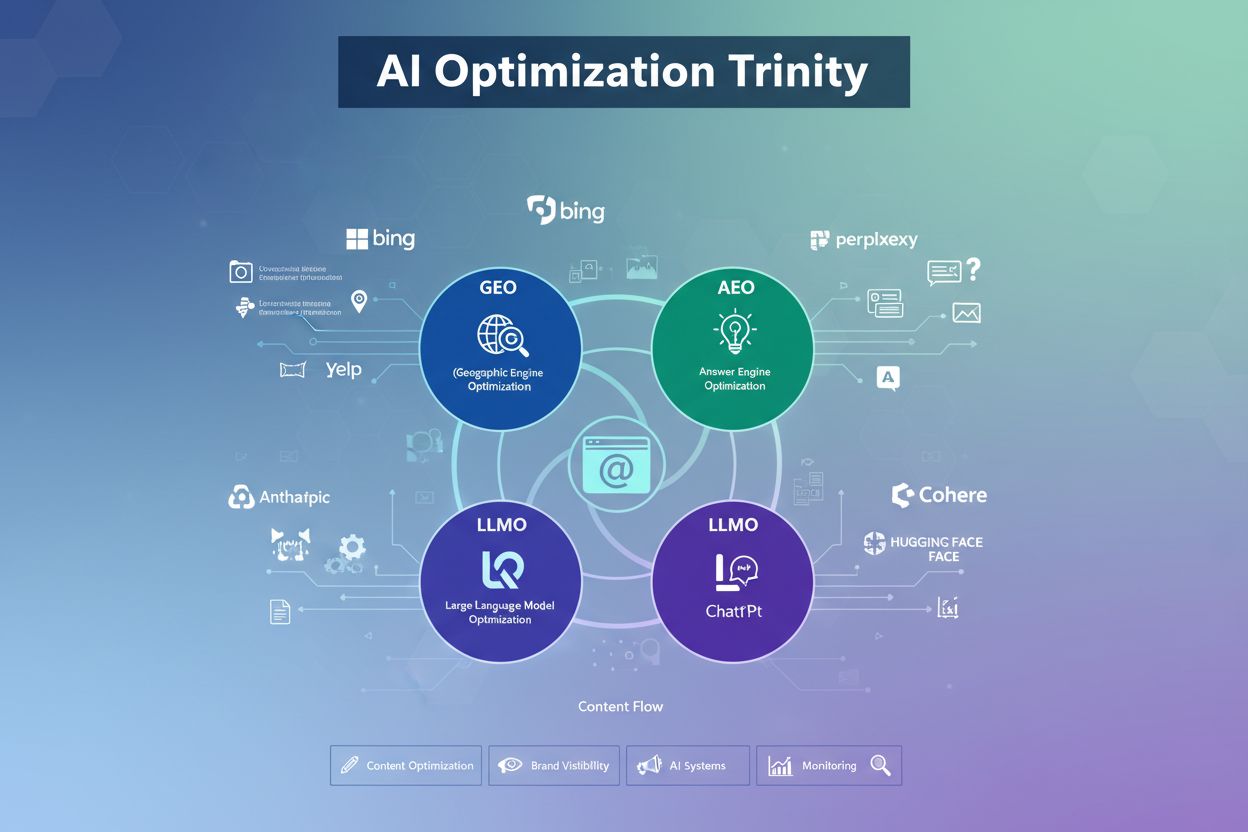
Learn the differences between GEO, AEO, and LLMO - three essential AI optimization strategies. Understand how to optimize your brand for generative engines, answer engines, and large language models.
The way people discover information online is fundamentally changing. Traditional search engines have long operated on a simple principle: users enter keywords, and the engine returns a ranked list of links. However, this model is rapidly shifting toward AI-driven discovery, where users receive direct answers instead of browsing through multiple links. According to recent research, 80% of consumers rely on zero-click results for at least 40% of their searches, and approximately 60% of queries end without any click-through to a website. This seismic shift means that traditional SEO alone is no longer sufficient to maintain brand visibility. Instead, organizations must adapt by understanding and implementing three complementary optimization strategies: Generative Engine Optimization (GEO), Answer Engine Optimization (AEO), and Large Language Model Optimization (LLMO).
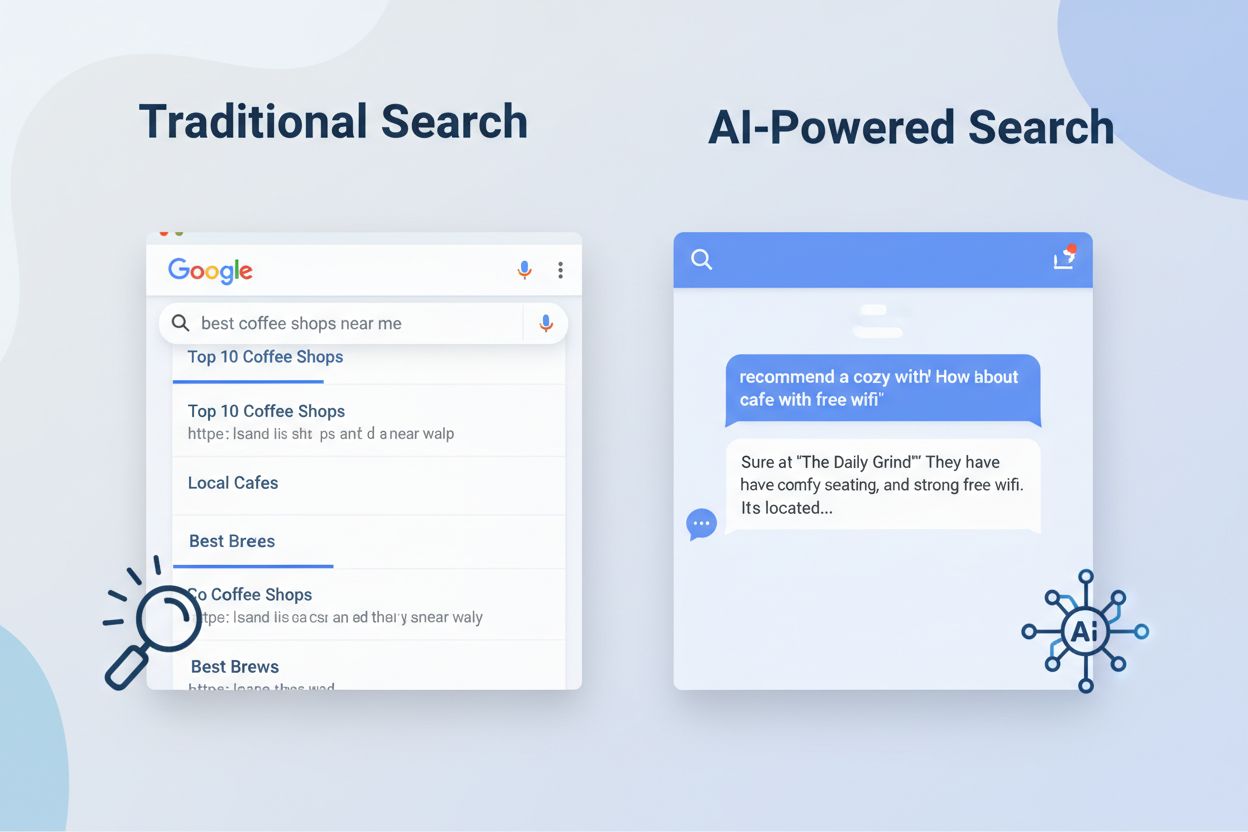
Generative Engine Optimization (GEO) is the process of strategically creating and refining your website content so that AI chatbots and generative engines can effectively understand, surface, and present it to users. Unlike traditional SEO, which focuses on ranking in search engine results pages, GEO concentrates on making your content machine-readable, evidence-based, and authoritative so that AI systems can reliably draw from it when generating answers. GEO targets platforms like ChatGPT, Google Gemini, Perplexity, Microsoft Copilot, and Google AI Overviews—all of which synthesize information from multiple sources to create conversational responses. The core principles of GEO include ensuring clarity of information, factual accuracy, and unique insights that AI systems can recognize as valuable. Rather than optimizing for keyword rankings, GEO seeks to have your information directly inform or be cited within the AI’s generated response. This represents a fundamental shift from driving traffic through links to ensuring your brand is part of the conversation, even when that conversation is mediated by a generative engine.
Answer Engine Optimization (AEO) focuses on optimizing your content to appear in zero-click surfaces—featured snippets, People Also Ask (PAA) boxes, knowledge panels, and Google’s AI Overviews—where users get answers directly without leaving the search results page. While GEO is broader and targets all AI answer engines, AEO is more specifically focused on Google’s answer features and structured answer formats. AEO requires structuring content to be concise, well-organized, and compliance-ready, making it easy for search engines to extract and display your information as a direct answer. The optimization focuses on understanding user intent, formatting content with clear headings and bullet points, and using schema markup to help search engines understand your content structure. By appearing in these high-visibility answer surfaces, brands can capture user attention and establish authority without requiring a click-through to their website.
| Aspect | GEO | AEO |
|---|---|---|
| Target Platforms | ChatGPT, Gemini, Perplexity, all AI engines | Google AI Overviews, featured snippets, PAA |
| Primary Goal | Get cited in AI-generated responses | Appear in zero-click answer surfaces |
| Content Focus | Comprehensive, authoritative, machine-readable | Concise, structured, directly answerable |
| Measurement | Brand mentions, share of voice, citations | Snippet appearances, answer visibility |
Large Language Model Optimization (LLMO) is the practice of optimizing your content, website, and brand presence to appear in AI-generated responses from conversational LLMs like ChatGPT Search, Claude, and Google Gemini. While GEO and AEO focus on structured answer formats, LLMO emphasizes getting your brand mentioned, cited, and recommended within conversational AI responses. The primary goal of LLMO is not necessarily to drive clicks, but to build brand awareness, authority, and trust throughout the buyer’s journey by ensuring your business is recognized as a credible source when users ask AI systems for recommendations or information. Key characteristics of LLMO include:
While these three optimization strategies share foundational principles with traditional SEO, each has distinct characteristics and target platforms. Understanding these differences is crucial for developing a comprehensive AI optimization strategy.
| Strategy | Target Platforms | Primary Goal | Content Focus | Key Metrics |
|---|---|---|---|---|
| GEO | ChatGPT, Gemini, Perplexity, all generative engines | Get cited in AI-generated answers | Authoritative, comprehensive, machine-readable | Brand mentions, citations, share of voice |
| AEO | Google AI Overviews, featured snippets, PAA | Appear in zero-click answer surfaces | Concise, structured, directly answerable | Snippet appearances, answer visibility, CTR |
| LLMO | ChatGPT, Claude, Gemini, conversational LLMs | Get brand mentions in conversational responses | Unique insights, entity-optimized, authority-building | Brand mentions, sentiment, topical authority |
GEO is the broadest approach, targeting any AI system that generates answers. AEO is more specific to Google’s answer features and zero-click surfaces. LLMO focuses specifically on conversational AI systems and emphasizes brand mentions over structured answers. However, these strategies are not mutually exclusive—in fact, optimizing for one typically benefits the others, as they all build on strong content fundamentals and authority signals.
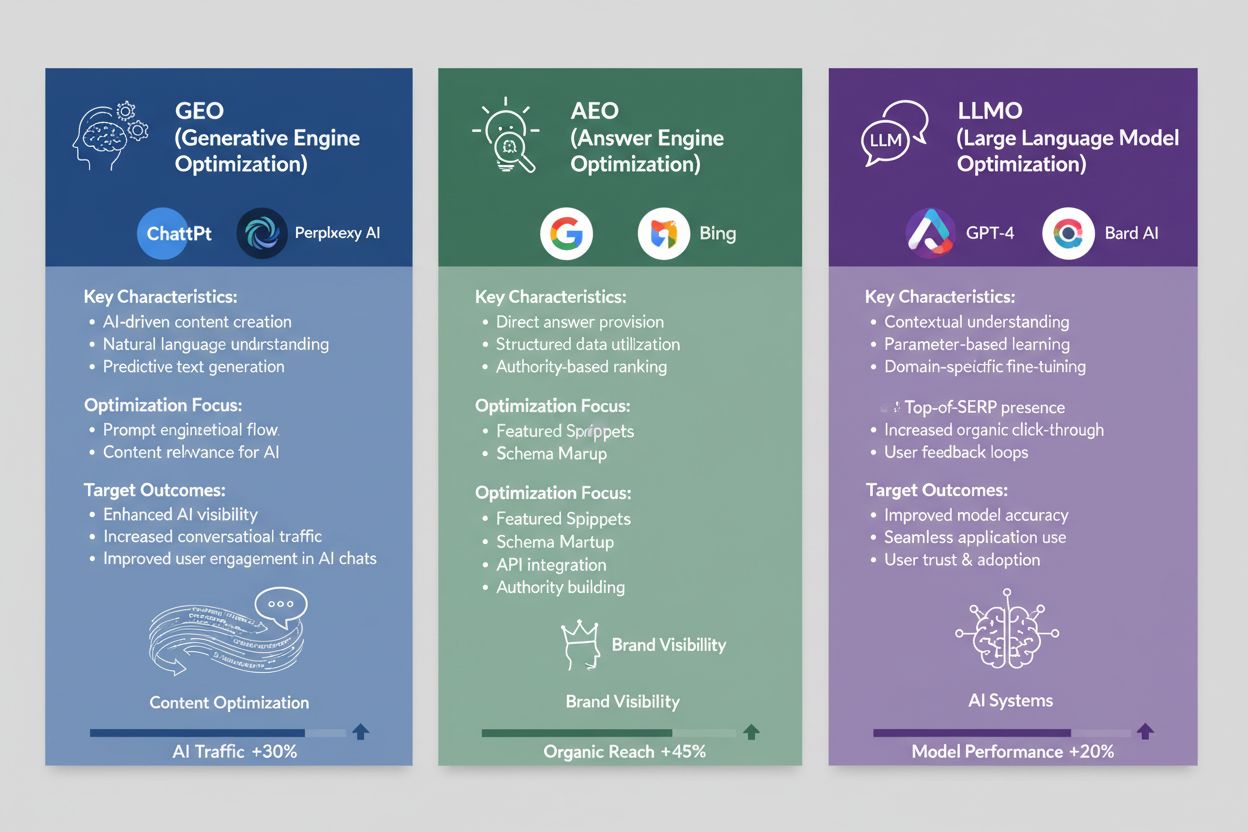
Rather than viewing GEO, AEO, and LLMO as separate, competing strategies, the most effective approach is to treat them as complementary components of a unified AI optimization strategy. All three build on the same foundational SEO principles: high-quality content, clear structure, authoritative sources, and user-focused information. When you optimize content to rank well in traditional search, appear in featured snippets, and get mentioned in AI responses, you’re essentially creating content that works across all channels. The key insight is that optimizing for one approach typically improves performance in the others. For example, content structured with clear headings and bullet points for AEO will also be easier for generative engines to understand and cite (GEO), and will be more likely to be referenced by LLMs (LLMO). This integrated approach means you don’t need to create entirely different content for each platform—instead, you need to create comprehensive, well-structured, authoritative content that serves all three purposes. AmICited.com specializes in monitoring your brand’s visibility across all these AI platforms, helping you understand how your optimization efforts are performing in the broader AI-driven search ecosystem.
To optimize your content for generative engines, focus on these key strategies:
To optimize for answer engines and zero-click surfaces, follow these implementation steps:
To optimize for large language models and conversational AI, focus on these five pillars:
Measuring AI optimization success differs from traditional SEO metrics. Instead of tracking rankings and clicks, focus on these key performance indicators:
As organizations implement AI optimization strategies, watch out for these common pitfalls:
The importance of AI optimization will only grow as adoption accelerates. Currently, 65% of organizations regularly use generative AI, nearly double the number from just months ago. Research projects that AI-driven search traffic will match traditional search value by 2027, making AI optimization as critical as traditional SEO. Emerging trends include voice search integration, visual search capabilities, and multimodal content that combines text, images, and video. The organizations that start optimizing for AI now will have a significant competitive advantage as these platforms become the primary way users discover information. AmICited.com helps brands stay ahead of this curve by providing real-time monitoring of AI visibility, allowing you to track your brand’s presence across all major AI platforms and adjust your strategy accordingly. The time to start optimizing for AI is now—don’t wait until your competitors have already captured the mindshare of AI-driven search users.
GEO (Generative Engine Optimization) optimizes for all AI answer engines and generative platforms like ChatGPT and Perplexity, while AEO (Answer Engine Optimization) specifically targets Google's AI Overviews and featured snippets. GEO is broader in scope, while AEO focuses on Google's zero-click answer surfaces.
Ideally yes, but they share many foundational principles. Start with strong SEO fundamentals, then layer in GEO/AEO/LLMO strategies. Many optimization tactics benefit all three approaches, so you don't need to create entirely different content for each.
LLMO focuses on getting your brand mentioned and cited in conversational AI responses, while SEO focuses on ranking in search results. LLMO emphasizes brand authority and mentions over keyword rankings, and success is measured by brand visibility in AI conversations rather than search position.
Brand mention frequency and share of voice across AI platforms are key starting points. However, AI referral traffic and conversion rates ultimately matter most for business impact. Research shows AI referral visitors convert 4.4x better than traditional organic visitors.
Yes, with optimization. Well-structured, high-quality, authoritative content that follows SEO best practices will perform well across all three. However, each may require specific formatting emphasis—AEO needs concise answers, GEO needs comprehensive information, and LLMO needs unique insights.
Results vary, but many brands see initial mentions within weeks to months. Building strong topical authority and brand presence takes longer (3-6 months+). Consistent optimization and monitoring are key to sustained visibility in AI-driven search.
AmICited.com specializes in AI visibility monitoring across ChatGPT, Google AI Overviews, Perplexity, and other platforms. Other tools include Semrush's AI SEO Toolkit, Ahrefs Brand Radar, and Peec AI. Google Analytics can track AI referral traffic.
No. AI optimization builds on SEO fundamentals. Traditional SEO remains important for organic search traffic, while AI optimization ensures visibility in the growing AI-powered search ecosystem. The most successful strategy integrates both approaches.
Track how your brand appears in ChatGPT, Google AI Overviews, Perplexity, and other AI platforms. Get real-time insights into your AI visibility and competitive positioning.
Learn how AI-powered tools optimize content for AI search engines like ChatGPT, Perplexity, and Google AI Overviews. Discover automated GEO strategies and measu...

Discover key insights from GEO conferences on optimizing brand visibility in AI answer engines. Learn how to monitor and improve your presence in Perplexity, Go...
Learn how to combine AI visibility monitoring with traditional SEO to create a unified search strategy that captures visibility across all discovery channels.