

Google AI Mode
Learn about Google AI Mode, an experimental conversational search powered by Gemini 3. Discover its features, capabilities, and how it compares to other AI sear...
6 min read
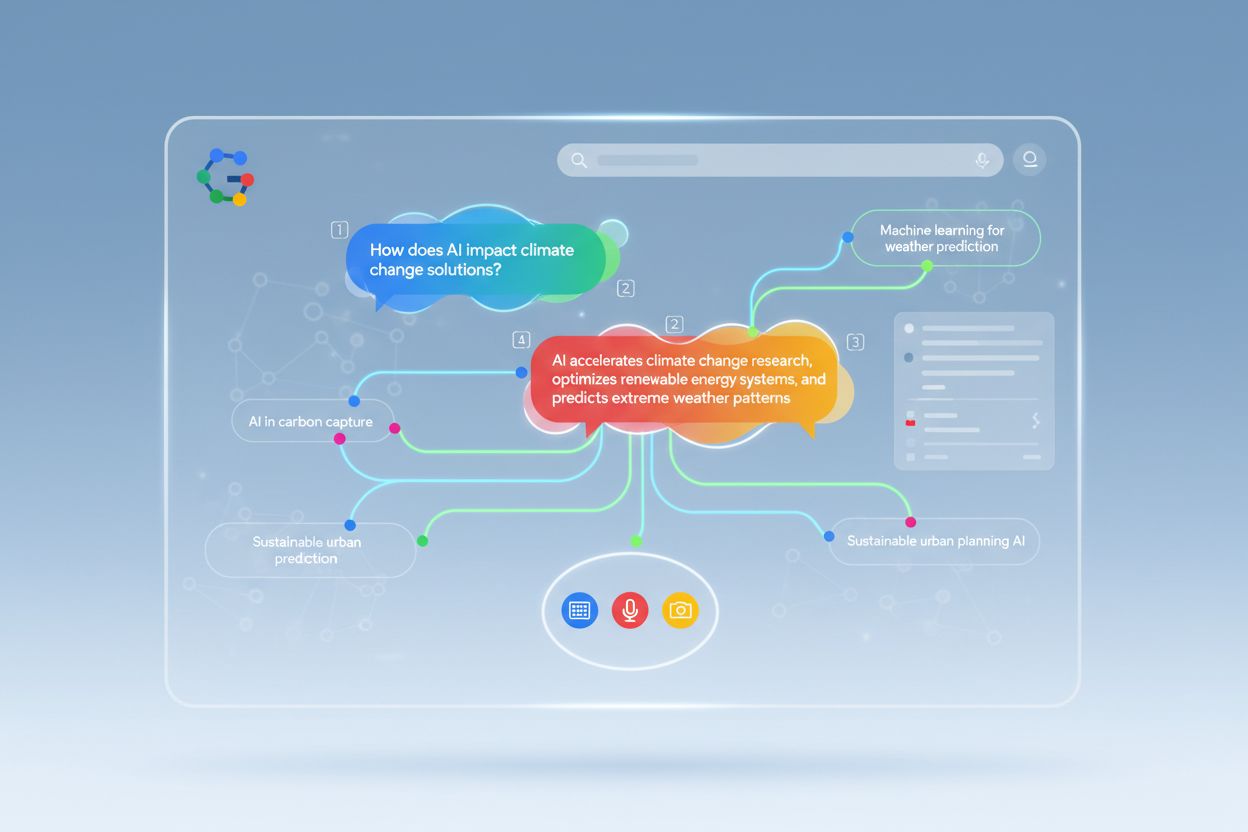
Discover how Google AI Mode is transforming search results, impacting website traffic, and what you need to do to maintain visibility. Learn optimization strategies for AI-driven search.
Google AI Mode is an end-to-end AI search experience powered by Gemini 2.5, Google’s most advanced AI model, that fundamentally transforms how users interact with search results. Unlike traditional search that returns a list of blue links, AI Mode presents conversational, AI-generated answers that directly address user queries with multimodal capabilities—accepting text, voice, and image inputs. The experience uses a sophisticated query fan-out technique that breaks down complex questions into multiple subtopics and issues numerous searches simultaneously on the user’s behalf, enabling deeper exploration of the web than traditional single-query searches. Users can engage in follow-up conversations, refining their questions and exploring related topics without leaving the search interface. Currently rolling out globally through Google Search Labs, AI Mode represents the most significant shift in search behavior since Google’s founding, with adoption rates already exceeding expectations.
While both AI Mode and AI Overviews are part of Google’s generative AI search experience, they serve distinctly different purposes and offer different user interactions. Understanding these differences is crucial for developing effective optimization strategies. Here’s how they compare:
| Feature | AI Overviews | AI Mode |
|---|---|---|
| Experience Type | Static summary in Search | Interactive conversation |
| Purpose | Quick insights for everyday queries | Deep reasoning and complex problem-solving |
| Interaction | One-shot answer | Multi-turn Q&A with follow-ups |
| Technology | Gemini 2.0 | Advanced Gemini 2.5 Flash (multimodal, reasoning-driven) |
| Availability | Public in Search results | Experimental (Search Labs) |
| Output | Concise overview with citations | Iterative, contextual dialogue |
| Input Types | Text only | Text, voice, images |
| Source Breadth | Limited (single retrieval) | Extensive (multiple retrieval cycles) |
AI Overviews appear automatically in traditional search results when Google determines they’re helpful, providing quick summaries with supporting links. AI Mode, by contrast, requires users to intentionally activate it through a separate tab, offering a more immersive, conversational experience that prioritizes depth over speed. The key distinction lies in how they retrieve and synthesize information: AI Overviews use a single-pass synthesis optimized for speed, while AI Mode employs multi-turn retrieval that can conduct several search and synthesis cycles within the same session, pulling from more diverse data points and evolving based on user inputs.
The emergence of AI Mode represents a seismic shift in how search traffic flows, with early data revealing dramatic changes in visibility patterns. Research shows that some websites are experiencing 20-60% traffic losses in categories where AI Overviews and AI Mode are prevalent, fundamentally disrupting traditional SEO assumptions about ranking positions. Most concerning for SEO professionals is the discovery that only 53% of domains cited in AI Mode match the top 10 organic search results, and merely 35% of URLs overlap between AI Mode citations and traditional search rankings—meaning that ranking well in traditional search no longer guarantees visibility in AI-generated responses. This shift represents a fundamental transition from a ranking-based paradigm to a reputation-based one, where being cited by AI systems matters more than achieving position one. The data demonstrates that AI Mode selects sources based on perceived trust, relevance, content structure, and E-E-A-T signals rather than traditional ranking factors. For businesses dependent on organic search traffic, this means that visibility now depends on whether your brand earns AI citations and contextual mentions inside Google’s generative results, not just on keyword rankings.
The query fan-out technique is the technological engine that powers AI Mode’s superior depth and comprehensiveness compared to traditional search. When a user submits a query like “best practices for remote team management,” AI Mode doesn’t simply search for that exact phrase; instead, it decomposes the question into multiple related subtopics—such as “communication tools for remote teams,” “performance management strategies,” “time zone coordination,” “building team culture remotely,” and “remote work productivity metrics”—and issues dozens of simultaneous searches across these subtopics. This multi-query approach enables AI Mode to discover hyper-relevant content that traditional single-query search might miss, pulling from a broader range of sources and perspectives. The system then synthesizes information across these multiple retrieval cycles, creating a more comprehensive and nuanced response than would be possible from a single search pass. Unlike AI Overviews, which use a single-pass synthesis optimized for speed and efficiency, AI Mode employs an iterative, multi-turn retrieval process where each follow-up question from the user prompts refined and contextually updated responses. This continuous learning and adaptation means that every interaction with AI Mode refines the system’s understanding of user intent, allowing it to identify broader topical coverage, reference fresher sources, and reward content that demonstrates strong E-E-A-T signals across multiple dimensions.
Google has equipped AI Mode with several advanced capabilities that extend far beyond simple question-answering, each designed to handle specific user needs and search intents:
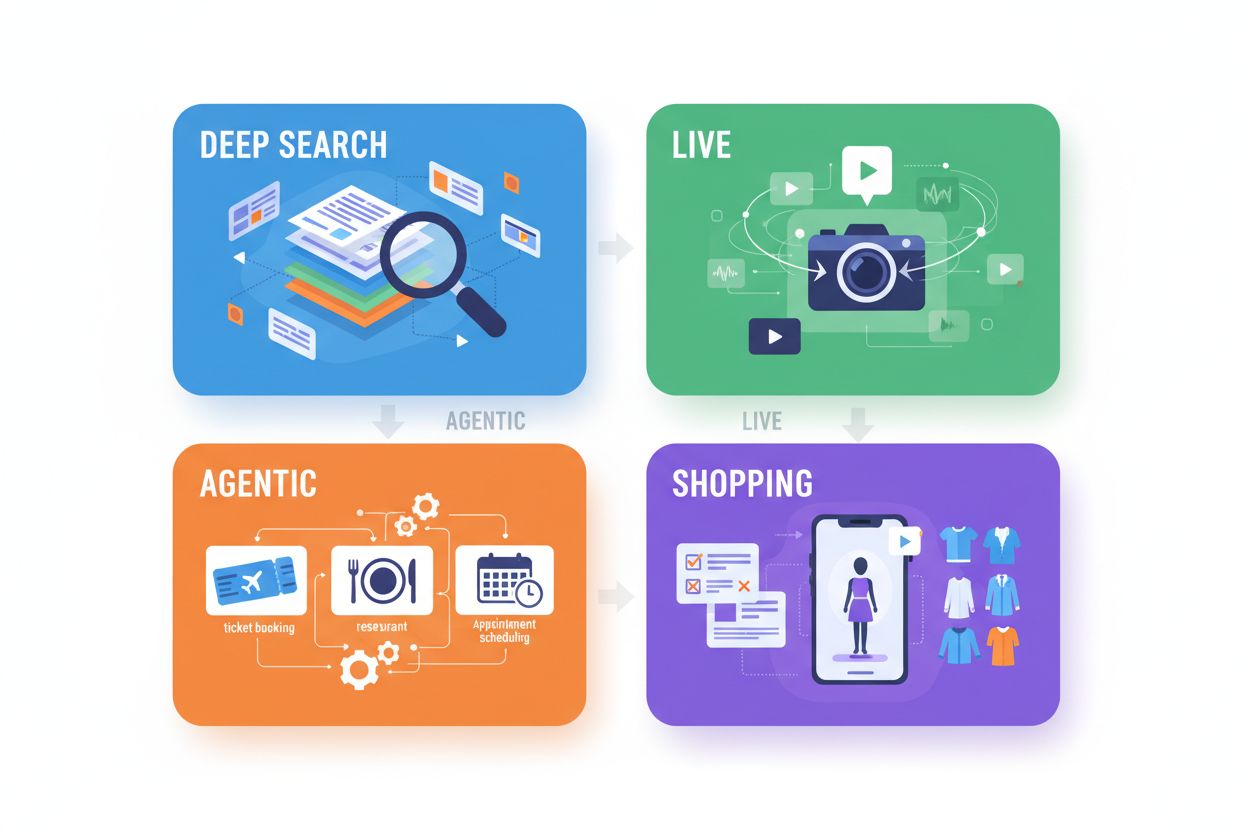
Deep Search: For research-intensive queries, Deep Search conducts hundreds of simultaneous searches, reasons across disparate pieces of information, and generates expert-level, fully-cited research reports in minutes—saving users hours of manual research and positioning authoritative sources as primary knowledge providers.
Live Capabilities: Powered by Project Astra’s technology, Live allows users to point their camera at real-world objects or problems and ask questions in real-time, with AI Mode explaining concepts, offering suggestions, and providing links to relevant resources—transforming search into an interactive learning partner.
Agentic Capabilities: Drawing from Project Mariner’s automation technology, Agentic search handles task-based queries like “Find 2 affordable tickets for this Saturday’s Reds game in the lower level,” with AI Mode analyzing hundreds of options across multiple sites, handling form-filling, and presenting curated results that meet exact criteria.
Shopping Experience: AI Mode’s shopping integration combines Gemini capabilities with Google’s Shopping Graph, enabling virtual try-ons of billions of apparel listings, product comparisons, and agentic checkout features that complete purchases on the user’s behalf when prices align with preferences.
Personal Context: Soon, AI Mode will offer personalized suggestions based on past searches and connected Google apps like Gmail, allowing it to recommend restaurants with outdoor seating based on booking history or suggest events near hotel confirmations for upcoming trips.
Custom Charts and Graphs: For data-heavy queries, AI Mode analyzes complex datasets and generates interactive, custom-built graphics—such as comparing home field advantage statistics for baseball teams or visualizing financial trends—bringing data to life in ways that directly address specific questions.
E-E-A-T—standing for Experience, Expertise, Authoritativeness, and Trustworthiness—has evolved from a ranking consideration into the primary determinant of whether your content gets cited in AI Mode responses. Google’s AI systems prioritize sources that demonstrate genuine expertise and trustworthiness, making E-E-A-T signals more critical than ever. Experience is demonstrated through real-world case studies, specific examples, first-person accounts, and detailed walkthroughs that show you’ve actually done what you’re writing about—not just theoretical knowledge. Expertise is built through detailed author bios with credentials, industry certifications, years of experience, and specialized knowledge that positions your team as genuine authorities in their field. Authoritativeness comes from earning quality backlinks from reputable sites, being mentioned in industry publications, speaking at conferences, and building recognition as a thought leader within your niche. Trustworthiness is established through accurate information backed by credible sources, transparent citations of your own sources, clear contact information, privacy policies, and consistent, reliable information over time. Content that combines all four E-E-A-T elements—backed by reliable sources, authored by credentialed experts, cited by trusted third parties, and presented with transparency—is significantly more likely to surface in AI-generated search features and earn citations in AI Mode responses.
AI systems need to quickly extract, understand, and synthesize information from your content, which means structure and clarity are now as important as keyword optimization. Implement a clear heading hierarchy using H1 for page titles, H2 for main sections, and H3 for subsections, with descriptive titles that clearly indicate what each section covers. Keep paragraphs short—ideally 2-4 sentences—to improve readability for both AI systems and human readers, and place direct answers at the start of each section before providing supporting details and context. Use bullet points for lists to make information scannable, tables for comparisons to help AI systems understand relationships between concepts, and numbered lists for step-by-step processes to clarify sequential information. Include FAQ sections with schema markup to address common questions in a format that AI systems can easily parse and cite. Avoid technical jargon or explain it clearly when necessary, using conversational language that mirrors how people actually ask questions. Structure your content modularly, with each section addressing a specific question or concept, making it easy for AI systems to extract relevant information for different user queries. This approach not only improves your chances of appearing in AI Mode responses but also creates a better user experience for human visitors.
AI Mode synthesizes information from multiple sources across the entire web, meaning your visibility depends partly on how often and where your brand appears beyond your own website. Publish high-quality guest posts on authoritative industry sites, focusing on genuine value and expertise rather than promotional content, which positions your brand as a trusted source that other reputable publications are willing to feature. Engage authentically on Reddit, Quora, and industry forums by answering questions with helpful, non-promotional insights—these platforms are increasingly cited by AI systems as sources of real-world expertise and community knowledge. Complete and optimize your profiles on Google My Business, Bing Places, LinkedIn, and industry-specific directories with consistent NAP (Name, Address, Phone) information, detailed descriptions, and regular updates that signal active, trustworthy operations. Develop relationships with industry journalists and media outlets to position your executives and team members as expert sources for commentary and quotes, which generates both linked and unlinked mentions that amplify your authority signals. Build a brand mention strategy that identifies where your company should be visible online—from industry associations to review sites to professional networks—and actively work to establish presence in those spaces. The more your brand appears across the web in trusted contexts, the more likely AI Mode will recognize it as a credible source worthy of citation.
AI Mode rewards websites that demonstrate deep topical authority—comprehensive, interconnected coverage of specific subject areas that shows genuine mastery. Implement a hub-and-spoke content structure with comprehensive pillar pages that cover topics broadly, supported by detailed cluster articles that explore specific subtopics in depth, all connected through strategic internal linking that helps AI systems understand the relationships between concepts. Address semantic richness by covering related concepts, answering common questions at different knowledge levels (beginner, intermediate, advanced), and exploring various search intents within your topic area—this signals to AI systems that you understand the full landscape of your subject. For example, a pillar page on “project management” might be supported by cluster articles on “agile methodologies,” “resource allocation,” “team communication,” “risk management,” and “project budgeting,” each thoroughly exploring its subtopic while linking back to the pillar and to related clusters. Regularly update pillar content with new statistics, recent examples, emerging trends, and fresh insights to signal that your content remains current and authoritative. This comprehensive, interconnected approach creates compounding SEO value, where each piece of content reinforces the authority of related pieces, making your entire content ecosystem more valuable to both AI systems and human readers seeking deep expertise.
Measuring your success in AI Mode requires a shift from traditional SEO metrics to new indicators that reflect how AI systems cite and reference your content. Google Search Console now tracks AI Mode data, with clicks on external links from AI Mode responses counting as clicks, page appearances in AI responses counting as impressions, and position calculated similarly to standard search results—allowing you to see which of your pages are being cited and how often. Track key metrics including: the number of pages appearing in AI Mode for your target keywords, impression trends over time, click-through rates from AI Mode citations (which research shows are higher quality than traditional search clicks), and position changes as you optimize content. Create a competitive analysis process where you regularly search your target keywords and document which pages get cited in AI Mode responses, what information AI extracts, and which competing sources appear alongside yours. Develop monthly AI visibility reports for clients showing citation frequency, competitive positioning, traffic impact, and month-over-month improvements—this demonstrates clear ROI and helps justify continued investment in AI optimization. Consider using tools like AmICited.com, which specializes in monitoring how your brand is referenced across AI platforms including Google AI Mode, Perplexity, and other emerging AI search engines, providing insights into your AI share of voice and citation patterns that traditional Search Console cannot capture.
AI Overviews are static summaries that appear automatically in traditional Google Search results, providing quick answers with supporting links. AI Mode is an interactive, conversational experience that users must intentionally activate, offering deeper reasoning, multi-turn Q&A, and multimodal capabilities (text, voice, images). AI Mode uses advanced Gemini 2.5 Flash and conducts multiple search cycles, while AI Overviews use a single-pass synthesis optimized for speed.
Early data shows that some websites are experiencing 20-60% traffic losses in categories where AI Mode is prevalent. Since AI Mode provides direct answers without requiring users to click through to websites, and only 53% of domains cited in AI Mode match top 10 organic results, visibility now depends on being cited by AI systems rather than just ranking well. However, research shows that clicks from AI Mode citations are higher quality, with users spending more time on cited websites.
E-E-A-T signals (Experience, Expertise, Authoritativeness, Trustworthiness) are the primary determinants of whether your content gets cited in AI Mode. Additionally, content structure and readability for AI systems matter significantly—clear heading hierarchies, short paragraphs, direct answers, and proper schema markup all improve citation likelihood. Brand presence across the web, topical authority, and high-quality, original content also play crucial roles in AI Mode visibility.
Focus on creating well-structured, authoritative content with clear heading hierarchies and concise paragraphs. Build strong E-E-A-T signals through credentials, case studies, and transparent sourcing. Develop topical authority with hub-and-spoke content structures. Optimize for conversational queries using natural language. Build brand presence beyond your website through guest posts, industry forums, and directory listings. Use schema markup to help AI systems understand your content structure.
No, traditional SEO remains foundational. Google's official guidance states there are no special optimizations needed for AI Mode beyond standard SEO best practices. However, SEO strategies must evolve to emphasize E-E-A-T signals, content structure for AI readability, brand authority, and conversational optimization. The shift is from ranking-focused to reputation-focused SEO, but the fundamentals of crawlability, indexability, and content quality remain essential.
Google Search Console now includes AI Mode data in its Performance report, showing impressions and clicks from AI Mode citations. You can manually search your target keywords and document which pages appear in AI Mode responses. For comprehensive monitoring across multiple AI platforms including Google AI Mode, Perplexity, and others, tools like AmICited.com provide real-time tracking of how your brand is cited and referenced across AI search engines.
E-E-A-T (Experience, Expertise, Authoritativeness, Trustworthiness) is the primary factor determining whether AI Mode cites your content. Experience is demonstrated through case studies and real-world examples. Expertise comes from author credentials and specialized knowledge. Authoritativeness is built through quality backlinks and industry recognition. Trustworthiness is established through accurate information, transparent sourcing, and consistent reliability. Content combining all four E-E-A-T elements is significantly more likely to be cited in AI Mode responses.
Yes, but build on your existing SEO foundation rather than replacing it. Shift focus from keyword rankings to citation-worthiness by emphasizing original research, expert credentials, and comprehensive topical coverage. Optimize content structure for AI readability with clear hierarchies and concise sections. Develop brand presence across multiple platforms. Create conversational content that answers natural language questions. Diversify traffic sources beyond Google. The goal is to become a trusted source that AI systems want to cite.
Track how your brand is referenced across Google AI Mode, Perplexity, and other AI platforms. Get real-time insights into your AI visibility and competitive positioning.
Learn about Google AI Mode, an experimental conversational search powered by Gemini 3. Discover its features, capabilities, and how it compares to other AI sear...

Learn how to optimize your website to appear in Google AI Overviews. Discover ranking factors, technical requirements, and proven strategies to increase visibil...
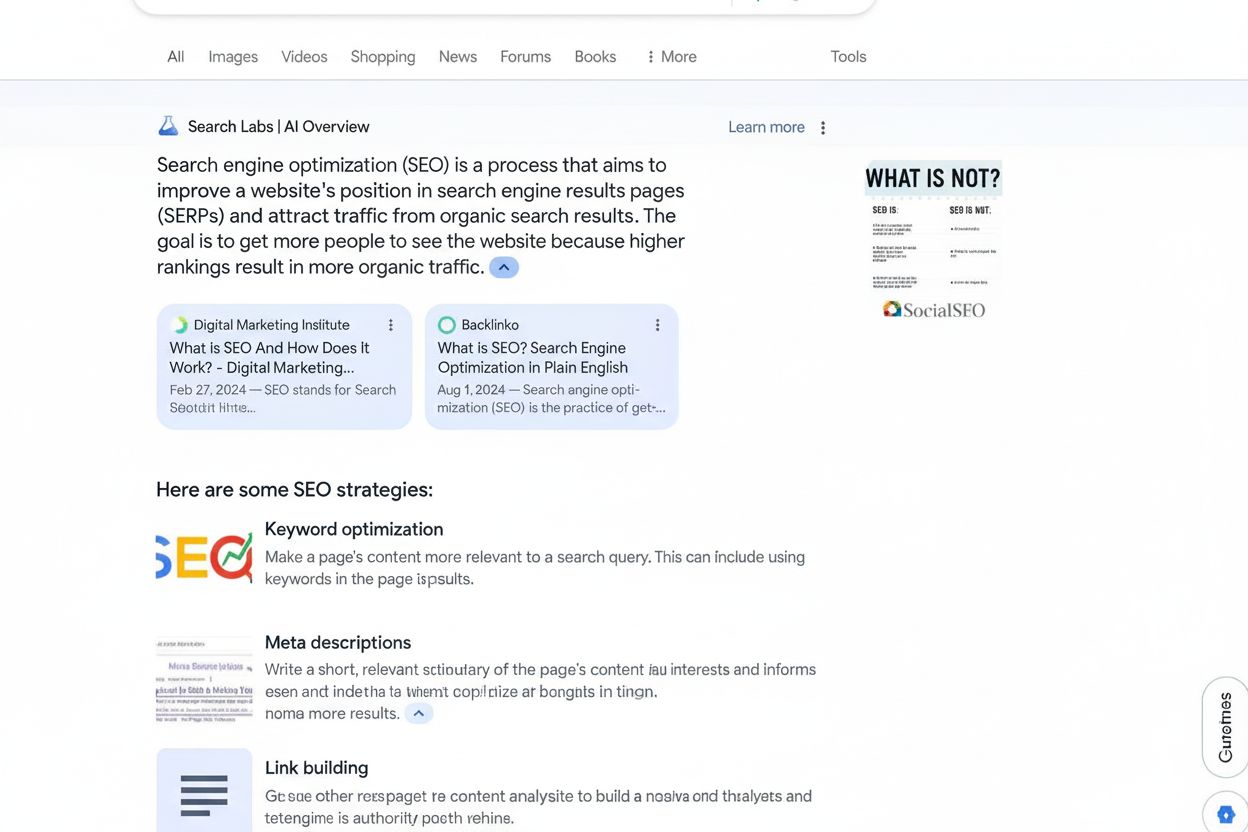
Learn what AI Overviews are, how they impact SEO and organic traffic, and strategies to optimize your content for visibility in Google's AI-generated search sum...