
Understanding Your Current AI Visibility: A Self-Assessment Guide
Learn how to conduct a baseline AI visibility audit to understand how ChatGPT, Google AI, and Perplexity mention your brand. Step-by-step assessment guide for b...
11 min read

Complete job description templates for AI visibility roles. Learn salary ranges, essential skills, team structure, and hiring strategies for building your AI visibility team in 2025.
As artificial intelligence systems like ChatGPT, Perplexity, and Google AI Overviews become primary research tools for millions of consumers, a critical gap has emerged in how companies monitor and manage their brand presence across these platforms—a discipline known as AI visibility. Unlike traditional search engine optimization, which focuses on Google’s organic results, AI visibility encompasses the monitoring, analysis, and optimization of how generative AI systems reference, recommend, and represent your brand to users. Companies are increasingly recognizing that without dedicated professionals managing this emerging channel, they’re operating blind to how their brand appears in conversations that now influence purchasing decisions, hiring choices, and market perception. The talent shortage in this space is acute: there are far more open positions than qualified candidates, making strategic hiring and clear job descriptions essential for attracting the right people. This article provides comprehensive job description templates and hiring guidance for building an AI visibility team, whether you’re hiring your first specialist or scaling to a full department. By implementing these templates and strategies, you’ll position your organization to compete effectively in the generative engine optimization (GEO) era.
The urgency of hiring for AI visibility roles cannot be overstated when you consider that 44% of consumers now use AI chatbots for research before making purchasing decisions—a figure that continues to climb as these tools become more sophisticated and accessible. Traditional marketing dashboards and analytics platforms were designed for a search-engine-centric world; they provide no visibility into how AI systems are representing your brand, what information they’re prioritizing, or whether they’re recommending your competitors instead. This creates a dangerous blind spot: your brand could be systematically deprioritized, misrepresented, or completely absent from the AI-generated answers that increasingly drive consumer behavior, and you’d have no way of knowing until revenue impact becomes undeniable. The risks extend beyond lost visibility—misinformation about your products can spread through AI systems, competitors can dominate AI-generated recommendations in your category, and your market position can erode without traditional marketing metrics showing the decline. Companies that fail to invest in AI visibility roles now risk ceding market share to competitors who are actively monitoring and optimizing their presence across generative AI platforms. The business impact is direct: brands that appear prominently and accurately in AI-generated answers see higher consideration rates, improved customer acquisition costs, and stronger market positioning in their categories.
AI visibility roles span a spectrum of responsibilities and specializations, each requiring distinct skill sets and contributing unique value to organizational strategy. Entry-level AI Visibility Analysts focus primarily on monitoring brand mentions across ChatGPT, Perplexity, Google AI Overviews, and emerging platforms, documenting how AI systems reference your brand, analyzing the accuracy and context of those references, and identifying patterns in how your products are positioned relative to competitors. Mid-level AI Visibility Managers expand this scope to include strategic analysis, developing optimization recommendations, managing cross-functional initiatives with marketing and product teams, and often overseeing junior analysts or contractors. Senior roles, such as AI Visibility Directors or Heads of GEO Strategy, shift focus to executive-level strategy, budget management, competitive intelligence, and establishing organizational frameworks for AI visibility across all customer touchpoints. The responsibilities scale not just in scope but in complexity: junior roles execute tactical monitoring and reporting, while senior roles define strategy, allocate resources, and drive organizational change around how the company approaches generative engine optimization. Cross-functional collaboration is essential at all levels—these roles must work closely with marketing, product, legal, and communications teams to ensure that optimization efforts align with brand guidelines, product roadmaps, and compliance requirements. The detailed breakdown of responsibilities by role level is outlined in the comparison table below, which provides specific guidance on what to expect from each position.
| Role Title | Primary Focus | Key Responsibilities | Required Skills |
|---|---|---|---|
| AI Visibility Analyst | Monitoring & Reporting | Track brand mentions across LLMs, analyze sentiment, identify gaps, document findings | Data analysis, attention to detail, communication, platform familiarity |
| Senior Analyst | Analysis & Optimization | Conduct competitive analysis, identify optimization opportunities, develop recommendations | Advanced analytics, strategic thinking, business acumen, presentation skills |
| AI Visibility Manager | Strategy & Team Leadership | Develop GEO strategies, manage team, report to executives, allocate resources | Leadership, strategic thinking, budget management, executive communication |
| AI Visibility Engineer | Technical Development | Build custom monitoring solutions, integrate APIs, develop dashboards, automate workflows | Programming, system design, API integration, technical depth |
| Director of AI Visibility | Organizational Leadership | Set vision, build team, align with business strategy, manage P&L | Executive presence, strategic vision, team building, business leadership |
Successful candidates for AI visibility roles must combine technical proficiency with analytical rigor and business acumen. Technical skills are foundational: candidates should demonstrate hands-on experience with major LLM platforms (ChatGPT, Claude, Perplexity, Gemini), familiarity with API integration and data collection methods, proficiency with analytics tools and spreadsheet applications, and ideally some experience with Python or other scripting languages for automating monitoring tasks. Analytical capabilities are equally critical—the ability to interpret complex data sets, identify meaningful patterns in how AI systems reference brands, conduct competitive analysis, and translate findings into actionable recommendations separates strong candidates from exceptional ones. Marketing and business knowledge provides essential context: candidates should understand brand positioning, customer journey mapping, competitive dynamics, and how AI visibility connects to broader marketing and revenue objectives. Communication abilities are non-negotiable, as these roles require translating technical findings into executive summaries, collaborating across departments with different vocabularies and priorities, and presenting recommendations to stakeholders who may not be deeply familiar with generative AI systems. Relevant certifications and educational background—such as degrees in marketing, data science, computer science, or business analytics, or certifications in digital marketing, SEO, or data analysis—provide valuable credibility and foundational knowledge. The most competitive candidates combine at least two of these skill domains at an advanced level rather than attempting to be generalists across all areas.
Key Skills to Prioritize:
The AI Visibility Analyst role serves as the foundation of most AI visibility teams, making it the ideal entry point for building your organization’s capacity in this emerging discipline. This position focuses on the tactical execution of monitoring, data collection, and preliminary analysis—the essential groundwork that enables strategic decision-making at higher levels. A well-crafted job description for this role should clearly articulate the daily responsibilities (monitoring brand mentions, documenting AI responses, tracking competitive positioning), the technical tools and platforms the analyst will use, the reporting structure and collaboration expectations, and the growth trajectory within the organization. The most effective job descriptions for analyst roles balance specificity about required skills with openness about training and development—acknowledging that the field is new and that the right candidate may have transferable skills from adjacent domains like SEO, market research, or data analysis rather than direct AI visibility experience. Key elements to include are concrete examples of deliverables (weekly monitoring reports, competitive analysis summaries, trend identification), clarity on tool proficiency expectations, and transparency about how success is measured in the first 90 days. When customizing this template for your organization, adjust the technical requirements based on your current tool stack, modify the reporting structure to match your organizational hierarchy, and emphasize the specific AI platforms most relevant to your industry and customer base. The template provided below can be adapted for various company sizes and industries while maintaining the core structure that attracts qualified candidates.
POSITION: AI Visibility Analyst
LEVEL: Entry to Mid-Level
SALARY RANGE: $65,000 - $95,000
LOCATION: [Your Location] | Remote/Hybrid Available

ABOUT THE ROLE:
We're seeking an AI Visibility Analyst to monitor and analyze how our brand appears across generative AI platforms. You'll track mentions in ChatGPT, Perplexity, Google AI Overviews, and Claude, analyzing sentiment, accuracy, and competitive positioning. This role is critical to understanding our presence in the new AI-driven discovery landscape and directly impacts our marketing strategy and competitive positioning.

KEY RESPONSIBILITIES:
- Monitor brand mentions across 5+ LLM platforms daily, documenting responses, context, and competitive positioning
- Analyze sentiment, accuracy, and positioning of AI-generated answers about our brand and products
- Benchmark competitive AI visibility and identify gaps in our presence relative to key competitors
- Create weekly and monthly reports on AI visibility trends, insights, and emerging opportunities
- Identify misinformation or inaccurate information requiring correction or response
- Collaborate with marketing and PR teams on GEO strategy recommendations and optimization opportunities
- Maintain comprehensive documentation of AI responses and track changes over time
- Assist in developing and testing optimization strategies to improve brand visibility in AI systems

REQUIREMENTS:
- Bachelor's degree in Marketing, Communications, Data Science, or related field
- 1-3 years of marketing, analytics, research, or related experience
- Strong analytical skills and meticulous attention to detail
- Proficiency with data analysis tools (Excel, Google Sheets, Tableau, or similar)
- Excellent written and verbal communication skills
- Familiarity with AI platforms (ChatGPT, Perplexity, Google Gemini, Claude)
- Ability to work independently and manage multiple monitoring tasks simultaneously
- Curiosity about AI systems and willingness to learn emerging technologies

NICE-TO-HAVE QUALIFICATIONS:
- Experience with SEO, SEM, or digital marketing
- Familiarity with marketing automation platforms
- Basic understanding of machine learning concepts
- Experience with competitive intelligence tools
- Knowledge of brand management or positioning

WHAT WE OFFER:
- Competitive salary and comprehensive benefits package
- $2,000 annual professional development budget for AI/GEO certifications
- Opportunity to shape emerging AI visibility strategy
- Flexible work arrangements (remote/hybrid options)
- Access to cutting-edge AI monitoring tools and platforms
- Clear path to Senior Analyst or Manager role within 18-24 months
- Mentorship from experienced marketing and analytics leaders
- Collaborative team environment with exposure to cross-functional projects
The AI Visibility Manager role represents the strategic and leadership tier of AI visibility hiring, appropriate for organizations that have moved beyond single-contributor monitoring to developing comprehensive GEO strategies. This position bridges the gap between tactical execution and executive strategy, requiring the manager to oversee analyst work, develop optimization recommendations, manage cross-functional projects, and report findings and recommendations to senior leadership. A strong job description for this role should emphasize strategic thinking and leadership capabilities alongside technical knowledge—the manager must understand not just how to monitor AI visibility but why it matters to the business, how it connects to revenue and market positioning, and how to build organizational alignment around GEO initiatives. Key responsibilities to highlight include developing and executing AI visibility strategy, managing team members or contractors, conducting competitive intelligence and market analysis, identifying optimization opportunities, managing budgets and resource allocation, and serving as the internal expert on generative engine optimization trends and best practices. The job description should make clear that this role requires business acumen and executive communication skills—the ability to translate technical findings into board-level presentations, secure budget for tools and team expansion, and drive organizational change. When customizing this template, emphasize the strategic priorities most relevant to your organization (brand protection, competitive positioning, customer acquisition, market expansion), specify the team size and structure the manager will oversee, and clarify reporting relationships and executive access. This role is typically appropriate for organizations with $50M+ in revenue or those in highly competitive, AI-sensitive industries where brand visibility in generative AI systems directly impacts market position.
POSITION: AI Visibility Manager
LEVEL: Mid to Senior Level
SALARY RANGE: $95,000 - $140,000
LOCATION: [Your Location] | Remote/Hybrid Available

ABOUT THE ROLE:
Lead our AI visibility strategy and team. You'll develop comprehensive GEO (Generative Engine Optimization) strategies, manage a team of analysts, and report directly to the CMO/VP Marketing. This role owns our brand's presence across all major LLM platforms and drives initiatives to improve visibility, accuracy, and competitive positioning in AI-generated answers.

KEY RESPONSIBILITIES:
- Develop and execute comprehensive AI visibility strategy aligned with overall marketing and business goals
- Lead and mentor team of 2-4 AI visibility analysts, providing guidance, feedback, and professional development
- Create and implement GEO strategies to improve brand mentions, positioning, and accuracy in LLM responses
- Manage AI visibility tool stack and vendor relationships, ensuring optimal platform utilization and ROI
- Present monthly insights, trends, and recommendations to executive leadership with clear business impact
- Collaborate with content, PR, SEO, and product teams on integrated GEO initiatives and optimization efforts
- Establish KPIs and measurement frameworks for AI visibility success and track progress against goals
- Manage $150,000+ annual budget for tools, team resources, and optimization initiatives
- Conduct competitive intelligence and market analysis to identify emerging threats and opportunities
- Develop and document AI visibility best practices and playbooks for organizational scaling

REQUIREMENTS:
- Bachelor's degree in Marketing, Business, Communications, or related field (MBA preferred)
- 5-7 years of progressive marketing, analytics, or strategy experience
- 2+ years of hands-on experience with AI/LLM platforms and GEO concepts
- Proven team leadership and mentoring experience with direct reports
- Strong project management and cross-functional collaboration skills
- Advanced proficiency with analytics, reporting, and data visualization tools
- Executive presentation and communication skills
- Knowledge of content strategy, SEO, PR, and integrated marketing approaches
- Strategic thinking and ability to translate data into business recommendations

NICE-TO-HAVE QUALIFICATIONS:
- Experience building marketing functions from scratch
- Familiarity with marketing automation and CRM platforms
- Understanding of data privacy regulations (GDPR, CCPA)
- Experience with budget management and P&L responsibility
- Knowledge of AI/ML concepts and how LLMs work
- Published thought leadership or speaking experience

WHAT WE OFFER:
- Competitive salary with performance bonus (15-25% of base)
- Leadership development and executive coaching opportunities
- $3,000 annual professional development budget
- Equity or stock options (depending on company stage)
- Flexible work arrangements with remote/hybrid options
- Team building and professional development budget
- Clear path to Director-level role within 2-3 years
- Direct access to executive leadership and board visibility
- Opportunity to build and scale a high-impact function
As organizations mature their AI visibility capabilities, many discover that off-the-shelf monitoring tools and platforms have limitations—they may not capture all relevant AI systems, may lack customization for industry-specific needs, or may not integrate seamlessly with existing marketing technology stacks. This is where the AI Visibility Engineer role becomes essential: a technical specialist who can build custom monitoring solutions, develop proprietary dashboards, integrate APIs across multiple platforms, and automate data collection and analysis workflows. The engineer bridges the gap between marketing strategy and technical implementation, requiring both understanding of generative AI systems and software engineering capabilities. Responsibilities typically include designing and building custom monitoring systems, integrating APIs from ChatGPT, Perplexity, Google, and other platforms, developing dashboards and visualization tools that make AI visibility data accessible to non-technical stakeholders, automating routine monitoring and reporting tasks, and troubleshooting technical issues with monitoring infrastructure. This role is particularly valuable for organizations with sophisticated data infrastructure, those operating in highly regulated industries where custom compliance monitoring is necessary, or companies with unique competitive positioning that requires specialized tracking. The intersection of marketing and engineering in this role means candidates should have software development experience (Python, JavaScript, or similar languages), familiarity with APIs and data integration, and ideally some exposure to marketing concepts or tools. Most organizations don’t need an AI Visibility Engineer until they’ve established a team of at least 2-3 analysts and have identified specific technical gaps that existing tools cannot address.
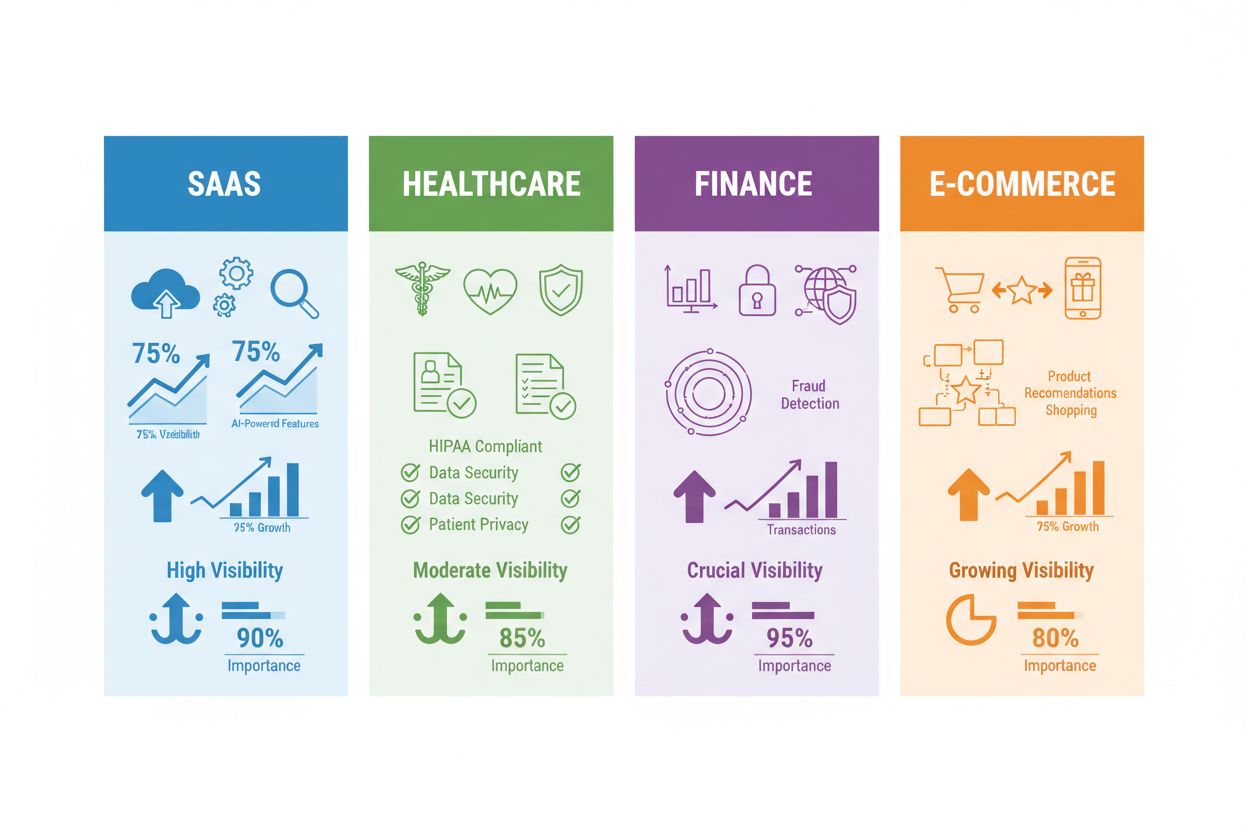
The hiring landscape for AI visibility roles varies significantly by geography, reflecting differences in AI adoption rates, regulatory environments, talent availability, and competitive intensity. In North America, particularly in tech hubs like San Francisco, New York, and Toronto, demand for AI visibility talent is highest, salaries are most competitive, and candidates are more likely to have direct experience in the field—though the talent shortage remains acute even in these markets. European markets show growing demand, particularly in the UK, Germany, and Scandinavia, where data privacy regulations and strong digital marketing traditions create particular emphasis on AI visibility; however, salary expectations are often lower than North America, and candidates may have less direct GEO experience. Asia-Pacific regions, especially Singapore and Australia, are emerging as important markets for AI visibility hiring, with growing demand from multinational companies and local tech firms, though the talent pool remains smaller and more specialized. Industry variations are equally significant: SaaS companies, where product discovery and competitive positioning are critical, typically prioritize AI visibility hiring most aggressively and offer premium compensation; healthcare and financial services companies face regulatory pressures that make AI visibility essential but may require specialized compliance knowledge; e-commerce and consumer brands focus heavily on AI visibility because AI systems directly influence purchasing decisions; and B2B companies may deprioritize AI visibility initially, though this is changing as AI adoption accelerates in business research. Salary ranges reflect these geographic and industry variations: entry-level analysts range from $55,000-$75,000 in North America to $40,000-$55,000 in Europe and $35,000-$50,000 in Asia-Pacific, with manager-level positions ranging from $90,000-$130,000 in North America to $65,000-$95,000 in Europe. Understanding these variations is essential for competitive positioning when recruiting talent and for setting realistic expectations about candidate availability and compensation requirements.
Building an effective AI visibility team requires thoughtful consideration of structure, sequencing, and skill complementarity, as the optimal team composition varies based on organizational size, industry, and strategic priorities. Most organizations begin with a single AI Visibility Analyst or Specialist who handles all monitoring, analysis, and reporting—this works well for companies with $10M-$100M in revenue or those just beginning to prioritize AI visibility. As the function matures and data volume increases, the typical progression is to hire a second analyst (allowing for specialization by platform or industry vertical), then promote one analyst to a manager role or hire an external manager to oversee the growing team. The reporting structure matters significantly: some organizations place AI visibility under marketing leadership (most common for brand-focused initiatives), others under product (for companies prioritizing product discovery and positioning), and some under a dedicated digital strategy or growth function. Cross-functional collaboration is essential at all team sizes—even a single-person function requires regular touchpoints with marketing, product, communications, and sometimes legal teams to ensure that monitoring insights drive organizational action. Skill complementarity strengthens team dynamics: pairing an analyst with strong technical skills and platform expertise with one who excels at business analysis and stakeholder communication creates a more resilient team than hiring two similar profiles. The typical hiring sequence for scaling is: first analyst (broad skills), second analyst (specialized skills), manager (strategic and leadership focus), then engineer (if technical customization is needed). Team communication and knowledge sharing become increasingly important as the team grows—establishing regular sync meetings, documentation practices, and mentorship relationships prevents siloed knowledge and ensures continuity.
Compensation for AI visibility roles reflects the emerging nature of the field, the scarcity of qualified talent, and the strategic importance of the function to organizational success. Entry-level AI Visibility Analysts typically command salaries in the range of $55,000-$80,000 in major North American markets, with variations based on company size, industry, and location—tech companies and SaaS firms tend toward the higher end, while traditional industries may offer lower base salaries. Mid-level AI Visibility Managers or Senior Analysts typically earn $85,000-$130,000, with significant variation based on team size, budget responsibility, and reporting level. Director-level positions (Head of AI Visibility, Director of GEO Strategy) typically range from $120,000-$180,000+ depending on organization size and industry. Total compensation packages should extend beyond base salary to include performance bonuses (typically 15-25% of base for manager-level roles), equity (particularly important for startups and high-growth companies), and comprehensive benefits. Benefits packages should emphasize professional development—budget for certifications, conference attendance, and training in emerging AI platforms—as well as standard offerings like health insurance, retirement plans, and flexible work arrangements. Equity considerations are particularly important for attracting top talent in this competitive market; offering meaningful equity stakes signals long-term commitment and aligns incentives around building the function. Benchmarking guidance: use resources like Glassdoor, Levels.fyi, and industry-specific salary surveys to validate your compensation ranges, adjust for your geographic market and company size, and consider that candidates with direct AI visibility experience may command 15-25% premiums over those with adjacent experience. The most competitive offers combine competitive base salary, meaningful performance incentives, professional development budget, and equity or long-term incentive plans that reward building and scaling the function.
Sourcing qualified candidates for AI visibility roles requires a multi-channel approach, as the talent pool is still developing and candidates may not actively identify as “AI visibility specialists” but rather as SEO professionals, marketing analysts, data scientists, or product managers with adjacent skills. LinkedIn is the primary sourcing channel—search for candidates with keywords like “AI,” “ChatGPT,” “generative AI,” “SEO,” “marketing analytics,” or “data analysis,” then evaluate their profiles for relevant experience and engagement with AI topics. Specialized job boards like AngelList (for startups), Product Hunt, and AI-focused communities like r/ChatGPT or AI Slack communities can surface candidates who are actively engaged with generative AI platforms. Industry conferences and events focused on AI, marketing technology, or digital strategy provide opportunities to network with potential candidates and build awareness of your open roles. Skill assessment is critical given the newness of the field—rather than relying solely on resume screening, implement practical assessments that ask candidates to analyze how a specific brand appears across ChatGPT and Perplexity, identify optimization opportunities, or propose monitoring strategies. Interview strategies should include technical questions about specific AI platforms and tools, analytical questions that assess problem-solving approach, and business acumen questions that evaluate understanding of how AI visibility connects to organizational objectives. Portfolio and case study evaluation is particularly valuable—ask candidates to share examples of monitoring work they’ve done, competitive analyses they’ve conducted, or optimization recommendations they’ve made, even if this work was done in previous roles or as personal projects. Consider that the best candidates may be currently working in adjacent fields (SEO, marketing analytics, product management) and may need education about the AI visibility opportunity; frame your recruiting messaging around career growth and the chance to build expertise in an emerging, high-demand field.
Onboarding and development for AI visibility roles requires a structured approach that balances platform training with business context and strategic thinking, as new hires need to become productive quickly while building deep expertise over time. The first week should focus on organizational context—understanding the company’s products, competitive positioning, customer base, and strategic priorities—alongside introductions to the AI visibility team’s current monitoring approach, tools, and key findings. Platform training should be comprehensive and hands-on: new hires should spend dedicated time using ChatGPT, Perplexity, Google AI Overviews, and other relevant platforms, learning how to craft queries that surface brand mentions, understanding how different platforms prioritize and present information, and developing intuition about what constitutes good versus poor brand positioning. Tool training on your specific monitoring platforms (whether commercial tools like Semrush, Moz, or custom solutions) should include both technical proficiency and understanding of how to interpret and act on the data these tools provide. Mentorship and knowledge sharing are essential—pair new hires with experienced team members or external mentors who can provide guidance on industry trends, best practices, and strategic thinking. Career development paths should be clear: outline how analysts can progress to senior analyst or manager roles, what skills they need to develop, and what opportunities exist for specialization (e.g., becoming an expert in a specific industry vertical or AI platform). Training and certification programs—such as Google Analytics certification, digital marketing certifications, or emerging AI-focused courses—should be encouraged and funded as part of professional development. The typical ramp-up timeline is 30 days to basic productivity (able to execute monitoring and produce standard reports), 90 days to full productivity (able to conduct independent analysis and make optimization recommendations), and 6-12 months to strategic contribution (able to identify emerging trends and propose proactive strategy adjustments).
Common hiring mistakes in AI visibility roles often stem from misunderstanding the skill requirements, setting unrealistic expectations, or failing to clearly define the role’s scope and success metrics. One frequent error is overweighting technical skills at the expense of business acumen—hiring a candidate with deep Python expertise but limited understanding of marketing strategy often results in technically sophisticated solutions that don’t drive business value. Conversely, hiring candidates with strong marketing backgrounds but no technical skills or willingness to learn new platforms leads to shallow analysis and missed optimization opportunities. Role clarity issues are surprisingly common: failing to clearly define whether the position is primarily tactical (monitoring and reporting) or strategic (analysis and recommendation) leads to misalignment between hiring expectations and candidate capabilities. Red flags in candidates include those who claim extensive AI visibility experience (the field is too new for most candidates to have deep experience) without being able to articulate specific methodologies or findings, those who view the role as a stepping stone rather than a genuine interest in the emerging field, or those who lack curiosity about how AI systems work and how they’re evolving. Setting realistic expectations is critical—the field is new, best practices are still emerging, and candidates will need training and development regardless of their background. Poor hiring decisions in this space have significant consequences: a misaligned hire can waste 3-6 months of onboarding time, create frustration for the team, and delay critical AI visibility initiatives. Avoid the temptation to hire the first candidate who has any relevant experience; instead, invest time in finding candidates who combine relevant skills with genuine interest in the field, intellectual curiosity about AI systems, and alignment with your organizational culture and strategic priorities.
The AI visibility function will continue to evolve rapidly as generative AI platforms mature, new competitors emerge, and organizational understanding of GEO strategy deepens. Emerging technologies and platforms will expand the scope of AI visibility work: as voice AI assistants (Alexa, Google Assistant) become more sophisticated, as specialized industry-specific AI tools proliferate, and as enterprise AI systems become more prevalent, the monitoring and optimization landscape will become more complex and require more specialized expertise. Skill requirements will shift toward greater technical sophistication—future AI visibility professionals will need deeper understanding of how LLMs work, how to interpret model behavior and outputs, and how to work with AI systems at a more technical level. The career trajectory for AI visibility professionals is increasingly attractive: early adopters who build expertise now will be positioned as industry leaders and command premium compensation as demand accelerates. Industry trends suggest that AI visibility will eventually become a standard function in most organizations, similar to how SEO evolved from a niche specialty to a core marketing discipline over the past two decades. The most successful organizations will be those that invest in building AI visibility capabilities now, before the field matures and talent becomes more expensive and harder to source. AmICited.com and similar platforms will play an increasingly central role in this ecosystem, providing the monitoring infrastructure and competitive intelligence that enable organizations to understand and optimize their AI visibility at scale.
Building a strong AI visibility team through strategic hiring and clear job descriptions is no longer optional for organizations competing in markets where AI systems influence customer decisions—it’s a fundamental requirement for maintaining market position and brand integrity. The templates and guidance provided in this article give you the foundation to attract qualified candidates, clearly communicate role expectations, and build teams that drive meaningful business impact through generative engine optimization. The key to successful hiring in this space is balancing specificity about technical requirements with openness about training and development, recognizing that the best candidates may come from adjacent fields and will need support to transition into AI visibility roles. Start with your first hire—whether that’s an analyst, manager, or engineer depends on your organizational maturity and strategic priorities—and build from there, allowing your team structure to evolve as your AI visibility capabilities mature. The talent shortage in this field means that organizations that move quickly to hire and develop AI visibility expertise will gain significant competitive advantages over those that delay. Use these templates as starting points, customize them for your organization’s specific needs and industry context, and begin recruiting the team that will ensure your brand thrives in the era of generative AI. The future belongs to organizations that understand not just how to appear in traditional search results, but how to be visible, accurate, and compelling in the AI-generated answers that increasingly drive customer behavior and market perception.
An AI visibility role focuses on monitoring and analyzing how your brand appears across generative AI platforms like ChatGPT, Perplexity, and Google AI Overviews. These professionals track brand mentions, analyze sentiment and accuracy, identify competitive positioning, and develop strategies to optimize your presence in AI-generated answers that influence customer decisions.
Traditional marketing dashboards don't capture how AI systems represent your brand. Without dedicated monitoring, companies operate blind to a critical discovery channel—44% of consumers now use AI chatbots for research. AI visibility roles ensure your brand appears accurately and prominently in the AI-generated answers that increasingly drive purchasing decisions and market perception.
SEO focuses on driving traffic through traditional search engines like Google. AI visibility focuses on how generative AI systems reference and recommend your brand in conversational answers. While related, they're distinct channels requiring different strategies—AI systems synthesize information and make recommendations, while search engines return lists of links.
Budget depends on team size and tools. A single analyst costs $60,000-$85,000 annually plus tools ($5,000-$15,000/year). A manager-level role costs $95,000-$140,000 plus team overhead. Most organizations start with one analyst and scale based on results. Budget for professional development, as this is an emerging field where continuous learning is essential.
Yes, many organizations start with contractors to test the function before building a permanent team. Contractors provide flexibility and allow you to validate the value of AI visibility work. However, permanent hires are better for building institutional knowledge and developing long-term strategy. Consider a hybrid approach: contract for initial setup, then hire permanent staff as the function matures.
AmICited.com is a leading platform specifically designed for AI visibility monitoring across ChatGPT, Perplexity, and Google AI Overviews. Other tools include Semrush, Moz, and custom solutions. Most organizations use a combination of specialized AI visibility tools, general analytics platforms, and spreadsheet-based tracking. The right tool depends on your specific needs, budget, and technical capabilities.
Key metrics include share of brand mentions across LLM platforms, sentiment and favorability of AI responses, inclusion in AI-generated recommendations, ranking against competitors, accuracy of information surfaced, and dominant sources feeding AI narratives. Establish baseline metrics in your first 30 days, then track changes monthly to measure the impact of optimization efforts.
Career progression typically follows: AI Visibility Analyst → Senior Analyst → AI Visibility Manager → Director of AI Visibility/Head of GEO Strategy. Some professionals specialize in technical roles (AI Visibility Engineer) or move into adjacent areas like product management or marketing strategy. The field is new, so early adopters who build expertise now will be positioned as industry leaders.
Understand how your brand appears across ChatGPT, Perplexity, and Google AI Overviews. Use AmICited to track AI visibility and optimize your GEO strategy.
Learn how to conduct a baseline AI visibility audit to understand how ChatGPT, Google AI, and Perplexity mention your brand. Step-by-step assessment guide for b...

Complete guide to enterprise AI visibility solutions. Compare top platforms like Conductor, Profound, and Athena. Learn evaluation criteria and selection strate...
Learn how to select the right AI visibility agency for your brand. Compare GEO agencies, evaluate selection criteria, and discover top platforms for monitoring ...