
Understanding Your Current AI Visibility: A Self-Assessment Guide
Learn how to conduct a baseline AI visibility audit to understand how ChatGPT, Google AI, and Perplexity mention your brand. Step-by-step assessment guide for b...
11 min read
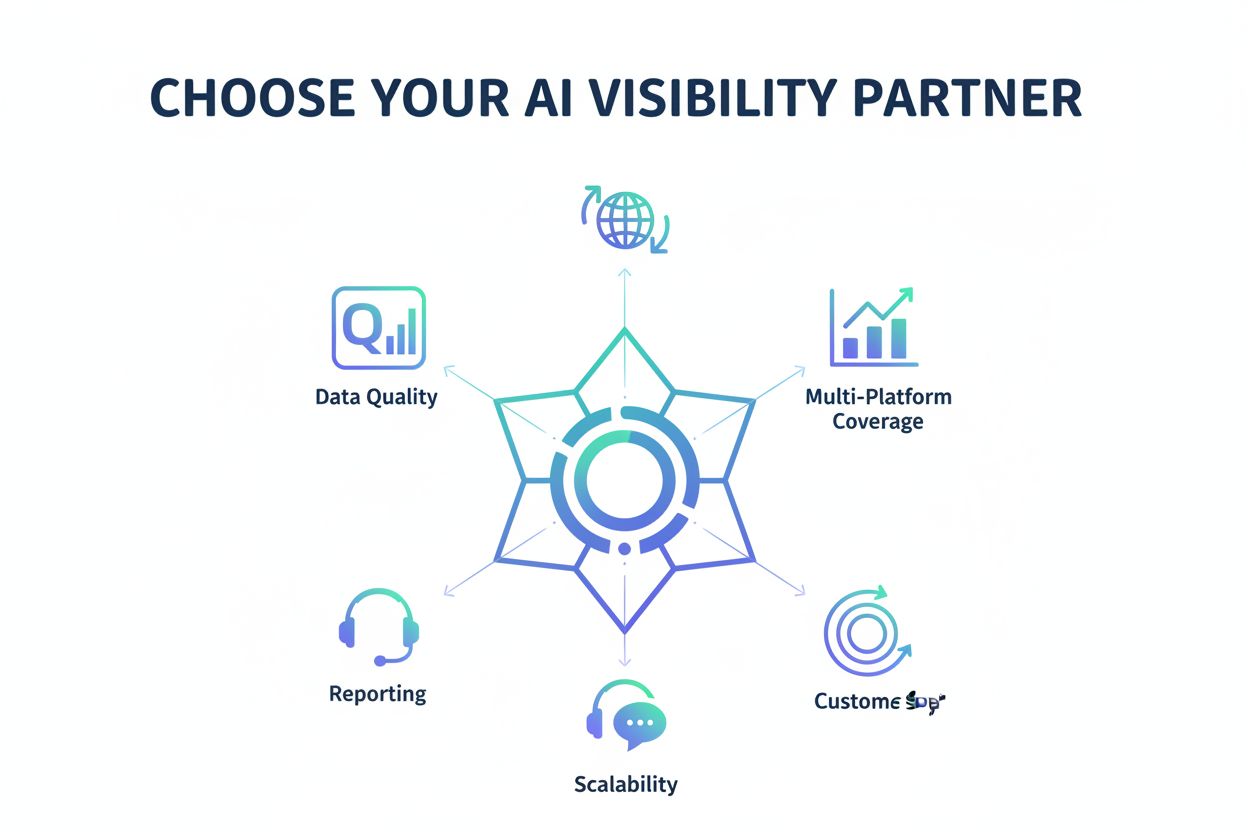
Learn how to select the right AI visibility agency for your brand. Compare GEO agencies, evaluate selection criteria, and discover top platforms for monitoring AI search visibility across ChatGPT, Perplexity, and Google AI Overviews.
The search landscape has fundamentally shifted. While traditional SEO focused on ranking in Google’s blue links, AI-powered search results now represent a critical—and rapidly growing—channel for brand visibility. Platforms like ChatGPT, Google’s AI Overviews, Perplexity, and Microsoft Copilot are reshaping how users discover information, with adoption rates climbing exponentially among both consumers and professionals. Unlike traditional search where your ranking position is visible and measurable, AI-generated responses operate as a black box: your content may be cited, paraphrased, or omitted entirely without your knowledge. This opacity creates a significant blind spot for brands that haven’t invested in AI visibility monitoring. Specialized AI visibility agencies fill this gap by providing the tools, expertise, and strategic guidance needed to ensure your brand maintains authority and visibility in this new search paradigm. Without this visibility, you’re essentially flying blind—unable to track whether your content is being leveraged by AI systems or how your brand authority is being affected.
The AI visibility space has developed its own terminology, and understanding these distinctions is crucial when evaluating agencies. GEO (Generative Engine Optimization) refers to the practice of optimizing content specifically for AI-powered search engines and large language models, focusing on how AI systems extract, synthesize, and present information. SAIO (Search AI Optimization) is a broader term encompassing strategies for visibility across both traditional search and AI platforms, treating them as complementary channels rather than replacements. AEO (Answer Engine Optimization) specifically targets answer-focused search experiences where AI systems provide direct responses to user queries, emphasizing content that answers questions comprehensively. LLM SEO (Large Language Model SEO) narrows the focus to optimization for large language models specifically, considering how these models are trained, what they prioritize, and how they generate citations. While these terms are sometimes used interchangeably, they represent different strategic approaches—and the best agencies understand when to apply each methodology.
| Term | Focus Area | Primary Platforms | Key Optimization Strategy |
|---|---|---|---|
| GEO | Generative Engine Optimization | ChatGPT, Perplexity, Claude | Content synthesis and AI comprehension |
| SAIO | Search AI Optimization | Google, Bing, ChatGPT, Perplexity | Hybrid traditional + AI visibility |
| AEO | Answer Engine Optimization | Google AI Overviews, Perplexity | Direct answer extraction and positioning |
| LLM SEO | Large Language Model SEO | ChatGPT, Claude, Gemini | Model training data and citation patterns |
Not all agencies claiming AI expertise are created equal. The critical distinction lies between agencies built from the ground up for AI visibility versus traditional SEO agencies that have simply added AI services to their existing offerings. Agencies built specifically for AI understand the fundamental differences in how these systems work: they don’t rank content, they synthesize it; they don’t follow traditional link equity, they follow citation patterns; they don’t optimize for keywords alone, they optimize for comprehensiveness and authority. Traditional SEO agencies adapting to AI often apply outdated frameworks—treating AI visibility as an extension of keyword ranking rather than a fundamentally different challenge. This distinction matters because it affects everything from their monitoring infrastructure to their strategic recommendations. An agency built for AI has invested in scaled monitoring tools, understands multi-platform dynamics, and can identify citation gaps that traditional SEO metrics miss entirely. When evaluating agencies, ask directly: Was your platform built for AI visibility from inception, or was it retrofitted onto existing SEO infrastructure? The answer will reveal whether you’re getting specialized expertise or a repackaged service.
One of the most overlooked—yet most critical—factors in AI visibility monitoring is scaled prompting: the ability to systematically test how AI systems respond to hundreds or thousands of variations of prompts related to your industry, competitors, and target keywords. Manual checking is fundamentally unreliable; a single prompt to ChatGPT tells you nothing about how consistently your brand appears across different query variations, user contexts, or model updates. Proper scaled prompting tools automatically generate prompt variations that reflect real user behavior—questions phrased differently, searches from different angles, queries with varying specificity levels—and measure your visibility across all of them. For example, a financial services brand might test variations like “best investment advisors,” “top wealth management firms,” “how to choose a financial advisor,” and “investment advisor near me,” each generating different AI responses with different citation patterns. Without scaled prompting, you’re making strategic decisions based on anecdotal evidence rather than comprehensive data. When evaluating agencies, ask about their prompting methodology: How many prompt variations do they test? How frequently do they update prompts to reflect changing user behavior? Do they use manual testing or automated systems? The sophistication of their prompting infrastructure directly correlates with the reliability of their visibility insights.
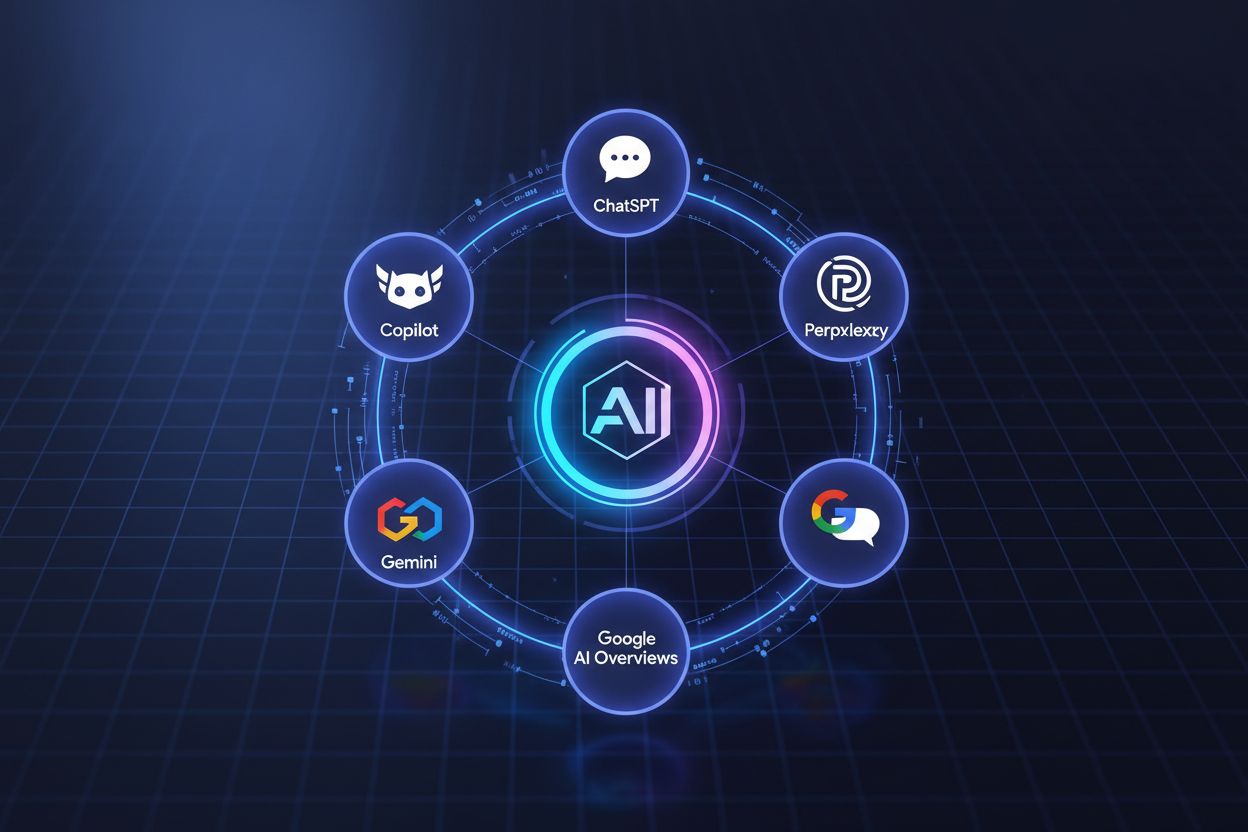
The mistake many brands make is focusing on a single AI platform—typically ChatGPT—while ignoring the broader AI search ecosystem. ChatGPT dominates headlines, but Perplexity is rapidly gaining traction among research-focused users, Google’s AI Overviews reach billions of search users, Microsoft Copilot integrates with enterprise workflows, and Claude serves specific professional communities. Each platform has different training data, different citation behaviors, different user demographics, and different visibility opportunities. A brand might rank prominently in ChatGPT responses but be completely absent from Perplexity results—or vice versa. Comprehensive AI visibility requires monitoring across all major platforms simultaneously, understanding how your visibility varies by platform, and identifying which platforms matter most for your specific audience and business goals. Agencies that focus exclusively on one platform are providing incomplete visibility data and potentially missing significant opportunities or threats. When evaluating solutions, verify that they monitor all major AI platforms: ChatGPT, Perplexity, Google AI Overviews, Gemini, and Copilot at minimum. Ask about their roadmap for emerging platforms and how they handle platform-specific variations in citation behavior.
How an agency collects AI visibility data fundamentally affects the reliability of their insights. There are two primary approaches: API-based collection and scraping-based collection, and each has distinct advantages and limitations. API-based approaches (where available) provide structured, reliable data directly from the platform, ensuring accuracy and compliance with terms of service. However, most AI platforms don’t offer comprehensive APIs for visibility monitoring, forcing agencies to rely on scraping—systematically querying the platform and extracting results. Scraping introduces variables: response variability (the same query may generate different results at different times), rate limiting (platforms restrict how many queries you can run), and potential terms-of-service concerns. The best agencies are transparent about their methodology, acknowledge these limitations, and implement safeguards to ensure data quality. They also understand that raw data isn’t enough—they apply statistical rigor to account for variability, use multiple data collection runs to identify patterns, and validate findings before presenting them to clients. When evaluating agencies, ask directly: How do you collect data? What safeguards ensure accuracy? How do you handle platform variability? How transparent are you about your methodology’s limitations? Transparency here is a strong indicator of overall trustworthiness.
The sophistication of an agency’s reporting and analytics platform directly impacts your ability to make informed decisions. Beyond raw visibility data, you need metrics that translate AI presence into business impact. Share of Voice (how often your brand appears relative to competitors in AI responses) provides competitive context. AI Traffic estimates (based on citation frequency and platform reach) help quantify the business value of visibility. Sentiment analysis reveals whether your brand is being cited positively, neutrally, or critically. The best platforms go deeper: they track citation trends over time, identify which content pieces drive the most citations, segment visibility by topic or query type, and provide predictive analytics showing how changes in your content strategy might affect future visibility. Dashboard design matters too—can your team quickly understand visibility status, or do they need data science expertise to interpret the reports? Collaboration features (shared dashboards, annotation capabilities, alert systems) determine whether insights actually drive action or sit unused. When evaluating agencies, request a demo of their reporting platform and ask: What metrics do you track? How actionable are your insights? Can non-technical team members understand the data? How do you help teams translate visibility data into strategy?
AI visibility doesn’t exist in a vacuum—it’s inherently competitive. The agencies that provide the most strategic value are those that contextualize your visibility against competitors, identifying gaps, opportunities, and emerging threats. Competitive benchmarking shows not just where you rank, but how your visibility compares to direct competitors across different query types, platforms, and content categories. Gap analysis reveals which competitors are capturing visibility you’re missing—and more importantly, why. Are they ranking for queries you haven’t targeted? Are they cited more frequently for specific topics? Do they have better content comprehensiveness? Predictive analytics take this further, using historical trends to forecast how competitive dynamics might shift if you implement specific strategies. Some advanced platforms can identify emerging competitors—brands gaining visibility rapidly—before they become dominant players. This intelligence allows you to be proactive rather than reactive, adjusting your strategy before visibility gaps become critical. When evaluating agencies, ask about their competitive intelligence capabilities: How do they identify and track competitors? What insights do they provide beyond simple visibility comparisons? Can they help you identify strategic opportunities based on competitive gaps?
One of the most underestimated aspects of AI visibility is understanding not just whether you’re cited, but how you’re cited and what happens to your brand authority in the process. When an AI system cites your content, it’s extracting information, potentially paraphrasing it, and presenting it under its own authority. This creates an attribution gap: your content drives value, but the AI platform receives the user interaction and potential engagement. Citation tracking goes beyond simple “were we mentioned” metrics to answer critical questions: Which specific pieces of content are being cited? How frequently? In what context? Are citations accurate or are they misrepresenting your information? Are competitors’ citations appearing more prominently? Advanced agencies track not just citations but citation quality—distinguishing between a passing mention and a substantive citation that drives real authority. They also identify attribution gaps where your content is being used without proper attribution, helping you understand where brand authority is leaking. This intelligence is crucial for content strategy: it shows you which topics and content formats resonate with AI systems, which pieces drive the most value, and where you need to strengthen your authority. When evaluating agencies, ask: How do you track citations? Can you identify which content drives the most AI visibility? Do you track citation quality and accuracy? Can you help us identify and address attribution gaps?
The best AI visibility solution is only valuable if it integrates seamlessly into your existing workflows and scales with your business. API access is essential for enterprises—it allows you to pull visibility data into your own systems, combine it with other business intelligence, and automate reporting and alerts. Scalability matters as your business grows: can the platform handle monitoring for hundreds of keywords, multiple brands, or international markets? Multi-language support is critical if you operate globally, as AI visibility dynamics vary significantly across languages and regions. Customer support quality often determines whether you extract maximum value from your investment. The best agencies provide strategic guidance, not just data—they help you interpret findings, develop AI visibility strategies, and adjust tactics based on results. They also demonstrate thought leadership through original research, industry insights, and proactive recommendations. When evaluating agencies, assess their technical infrastructure: Do they offer API access? How do they handle scaling? What languages do they support? Beyond the platform itself, evaluate their support model: Do they provide strategic guidance or just data access? How responsive is their team? Do they share industry insights and best practices? The combination of robust technology and strategic support determines long-term value and competitive advantage.
The market for AI visibility agencies has grown rapidly, with specialized players emerging alongside traditional SEO agencies adapting to the new landscape. Leading agencies like 42DM, Victorious, Intero Digital, and Coalition Technologies have built comprehensive platforms specifically designed for AI visibility monitoring and optimization. 42DM pioneered SAIO (Search AI Optimization) with a full-cycle approach covering technical foundation, AI-driven content strategy, third-party trust signals, and demand generation. Victorious focuses on Answer Engine Optimization (AEO) with audit, strategy, and content optimization services. Intero Digital offers their proprietary GRO framework combining SEO, digital PR, and AI content structuring. Coalition Technologies emphasizes LLM SEO with human-written content and voice search optimization. Each agency brings different strengths, but the best ones share common characteristics: they understand how AI systems work fundamentally differently from traditional search engines, they provide transparent data collection methodologies, they offer comprehensive reporting that translates to actionable insights, and they maintain thought leadership in the rapidly evolving space. When evaluating agencies, don’t just compare features—assess their understanding of AI fundamentals and their commitment to continuous innovation as the landscape evolves.
Beyond marketing claims, you need concrete evidence of an agency’s expertise and ability to deliver results. The strongest indicators of agency capability are case studies demonstrating measurable improvements in AI visibility, client testimonials from brands in your industry, and evidence of thought leadership through published research and industry contributions. Ask potential agencies for specific case studies showing before-and-after AI visibility metrics, not just traffic improvements. Request references from clients in similar industries or business sizes. Evaluate their blog, whitepapers, and speaking engagements—agencies that contribute to industry knowledge are more likely to stay ahead of rapid changes. Check their team composition: Do they have data scientists, content strategists, and technical SEO experts? Are they actively hiring and growing their team? A stagnant team is a red flag in a rapidly evolving space. Finally, assess their communication style during the sales process: Do they ask thoughtful questions about your business, or do they pitch generic solutions? The best agencies invest time understanding your specific situation before proposing solutions.
Hiring an AI visibility agency is the beginning, not the end, of your AI visibility journey. To maximize results, establish clear goals upfront: Are you aiming for answer box presence, third-party citations, product visibility in AI shopping, or research-stage discovery? Different goals require different strategies and metrics. Align your agency partnership with your audience’s actual behavior—if your target customers use ChatGPT for research, that’s where you need visibility. Provide your agency with subject-matter expertise, data, and FAQs that can be transformed into AI-friendly content. Maintain regular feedback loops and expect your agency to adjust strategies monthly based on performance data, not yearly. Support content development efforts with your internal expertise. Finally, remember that good AI visibility builds on solid SEO foundations—ensure your site is crawlable, fast, and semantically sound. The best partnerships treat AI visibility as a complement to traditional SEO, not a replacement, creating a comprehensive visibility strategy across all search channels.
Not all agencies claiming AI expertise are equally qualified, and some red flags should immediately disqualify them from consideration. Avoid agencies that treat AI visibility as a simple extension of traditional SEO, use outdated terminology without understanding modern AI systems, or lack transparency about their data collection methodology. If an agency can’t clearly explain how they collect data, how they handle platform variability, or what limitations their approach has, they’re likely cutting corners. Be wary of agencies that promise guaranteed results or specific ranking positions in AI responses—AI systems are probabilistic and constantly evolving, making guarantees impossible. Avoid those that don’t provide AI-specific metrics or try to use traditional SEO metrics (like keyword rankings) as proxies for AI visibility. If an agency doesn’t ask about your specific business goals, audience behavior, or competitive landscape before proposing solutions, they’re likely offering generic services. Finally, be cautious of agencies with no track record in AI visibility or those that recently pivoted from traditional SEO without demonstrating genuine expertise in the new space. The best agencies are transparent about what they can and can’t do, provide clear methodologies, and maintain realistic expectations about timelines and results.
GEO (Generative Engine Optimization) focuses specifically on optimizing content for AI-powered search engines and large language models like ChatGPT and Gemini. SAIO (Search AI Optimization) is a broader term that encompasses strategies for visibility across both traditional search engines and AI platforms, treating them as complementary channels. The key difference is scope: GEO is AI-specific, while SAIO integrates both traditional and AI visibility strategies.
AI visibility agency costs vary widely based on scope and sophistication. Smaller agencies may charge $50-$150 per hour, while enterprise-focused agencies charge $200-$300+ per hour. Monthly retainers typically range from $2,000 to $15,000+ depending on the number of keywords monitored, platforms covered, and strategic guidance provided. Many agencies offer custom pricing based on your specific needs and business size.
Most brands begin seeing meaningful AI visibility improvements within 4-8 weeks of implementing an agency's recommendations. However, this timeline depends on your starting position, content quality, and how aggressively you implement changes. Some quick wins (like optimizing existing content for AI readability) can show results in 2-3 weeks, while building long-term authority and citation patterns typically takes 3-6 months.
Yes, many brands successfully use AI visibility tools independently. Tools like AmICited provide monitoring and insights without requiring agency services. However, agencies add strategic value by interpreting data, developing optimization strategies, and managing implementation. The choice depends on your team's expertise, available resources, and whether you need strategic guidance or just monitoring data.
Key metrics include Share of Voice (your visibility relative to competitors), AI Traffic estimates (based on citation frequency), Sentiment analysis (how your brand is being discussed), Citation frequency (how often you appear in AI responses), and visibility trends over time. The best agencies also track which content pieces drive the most citations and provide competitive benchmarking to show how you compare to rivals.
Red flags include agencies that treat AI visibility as a simple extension of traditional SEO, focus exclusively on keyword rankings, don't mention scaled prompting or multi-platform monitoring, lack transparency about their data collection methodology, or don't provide AI-specific metrics. The best agencies understand that AI visibility requires fundamentally different strategies than traditional search engine optimization.
API-based monitoring connects directly to platforms (where available) for structured, reliable data but may miss user-facing elements like exact citations. Scraping simulates user queries and captures what appears on screen, including layout and citations, but is more prone to variability and platform changes. The best agencies use a combination of both methods and are transparent about their methodology's limitations.
Hiring an agency is faster and provides immediate expertise, but building in-house gives you long-term control and deeper integration with your strategy. Consider your team's technical expertise, available budget, and timeline. Many brands start with an agency to establish best practices, then transition to in-house management once they understand the fundamentals.
AmICited helps you track how AI systems cite your brand across ChatGPT, Perplexity, Google AI Overviews, and more. Get real-time visibility insights and stay ahead of competitors in the AI-driven search landscape.
Learn how to conduct a baseline AI visibility audit to understand how ChatGPT, Google AI, and Perplexity mention your brand. Step-by-step assessment guide for b...

Learn how to connect AI visibility metrics to measurable business outcomes. Track brand mentions in ChatGPT, Perplexity, and Google AI Overviews with actionable...
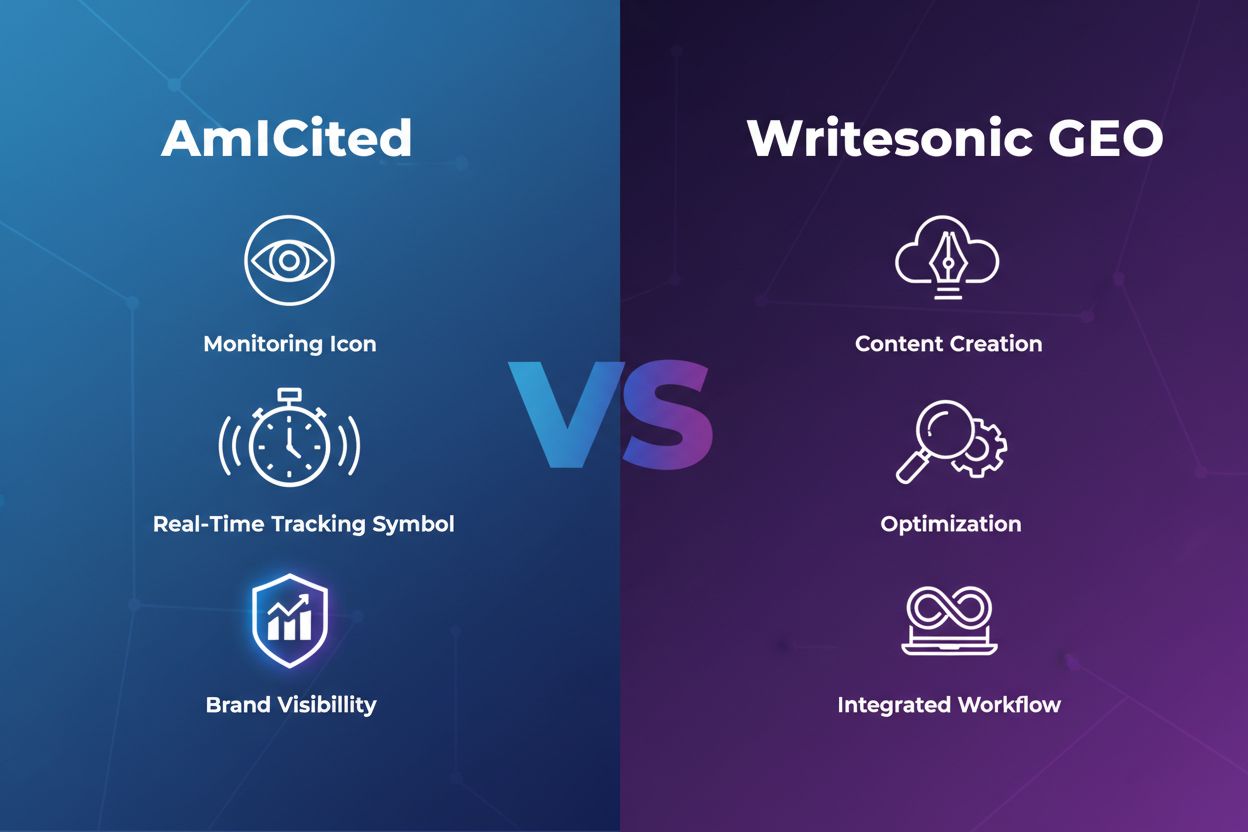
Compare AmICited AI monitoring with Writesonic GEO. Understand the differences between pure monitoring and integrated optimization for AI search visibility.