How to Set Up AI Brand Monitoring: A Complete Guide
Learn how to set up AI brand monitoring to track your brand across ChatGPT, Perplexity, and Google AI Overviews. Complete guide with tools, strategies, and best practices for monitoring AI mentions.
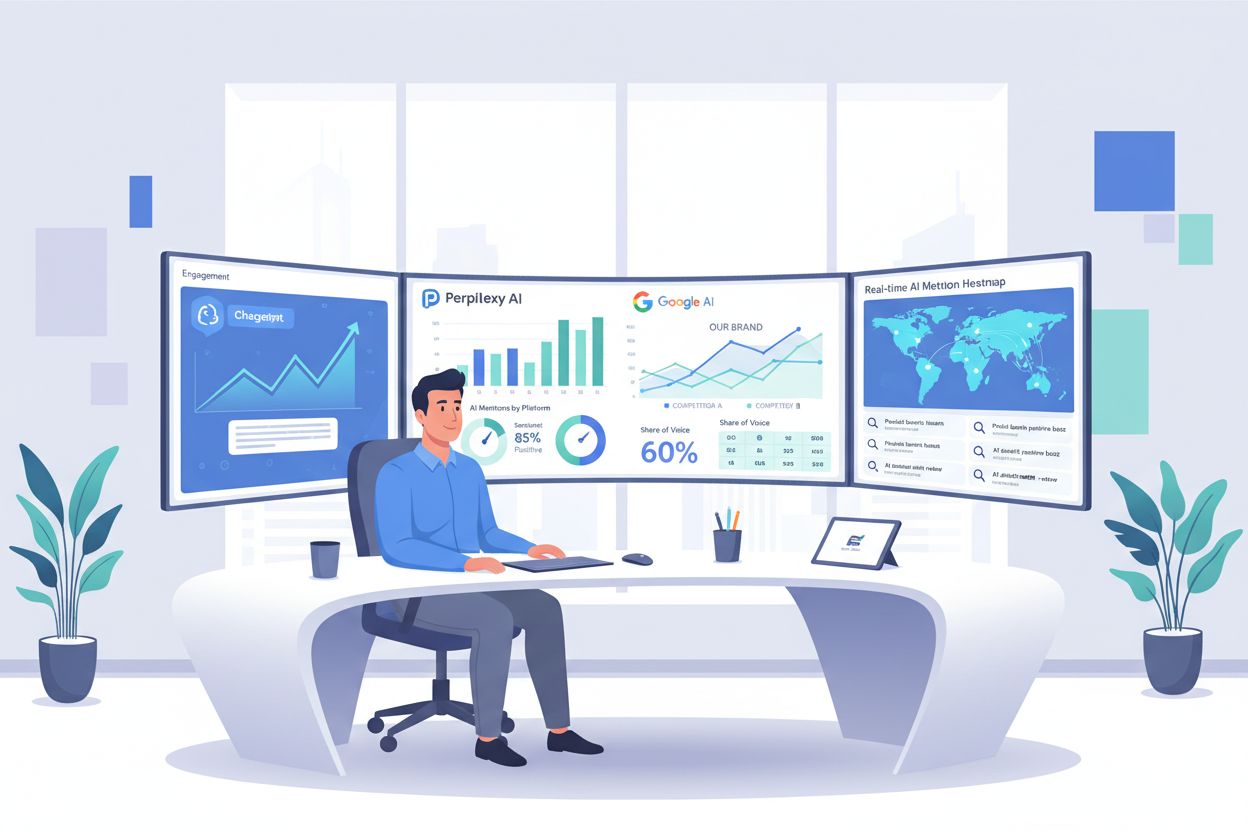
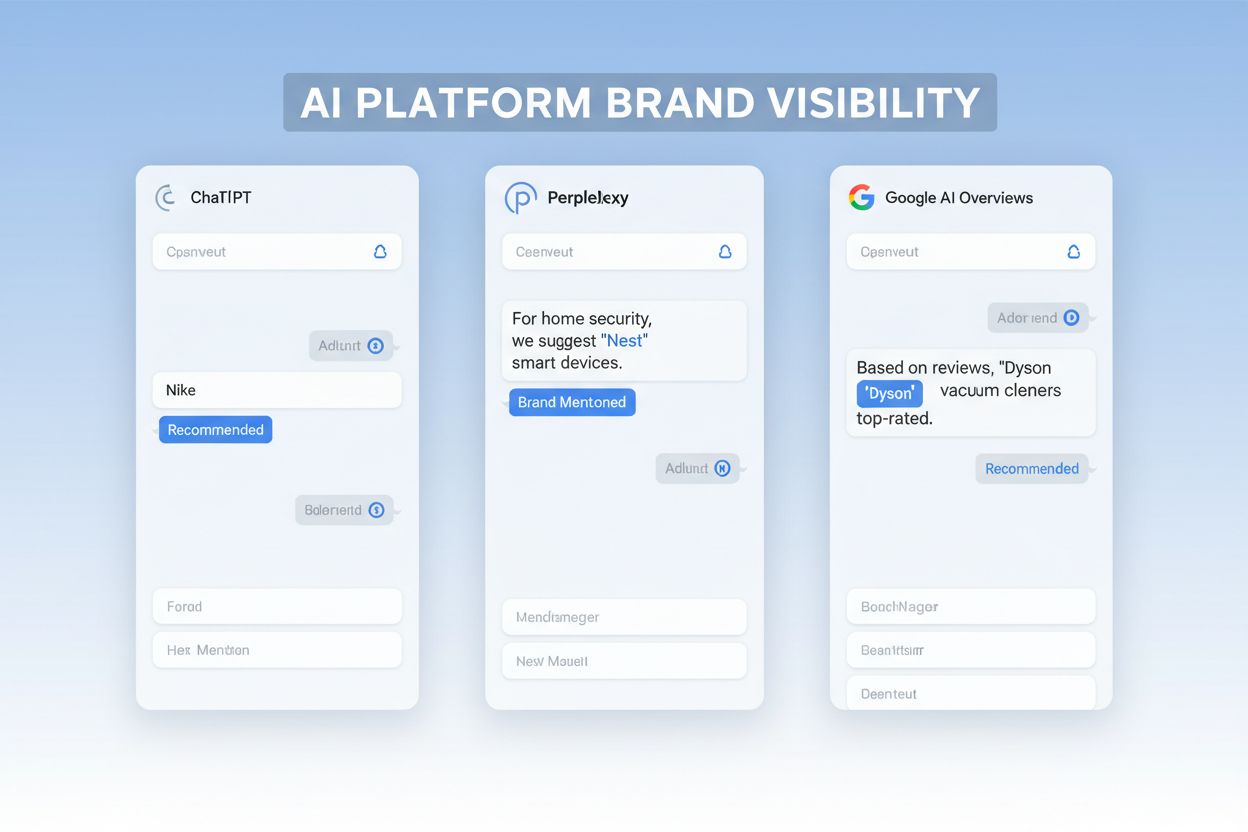
AI-generated answers from platforms like ChatGPT, Perplexity, and Google AI Overviews now shape how customers discover and evaluate brands. When a procurement manager asks ChatGPT for vendor recommendations or a consumer queries Perplexity for product comparisons, the brands mentioned in those AI responses gain credibility and visibility without requiring a single click to your website. With AI search traffic up 527% year-over-year, these conversations have become a primary driver of brand discovery. Unlike traditional search results where users browse multiple options, AI answers often present a single, authoritative-sounding recommendation that heavily influences perception. Brands that appear consistently in AI-generated responses build trust and authority, while those missing from these conversations face a silent competitive disadvantage in the channels where users now spend their attention.
Understanding the AI Monitoring Landscape
Traditional brand monitoring tracks mentions across news outlets, social media, and review sites—but it misses the critical new frontier where AI systems synthesize information from thousands of sources to represent your brand. AI brand monitoring goes deeper by analyzing how large language models interpret and cite your brand when users seek information, the context surrounding those mentions, and whether the information is current and accurate. The challenge is that AI systems pull from fragmented sources: Reddit discussions, industry forums, LinkedIn posts, news articles, customer reviews, and niche publications. If outdated pricing appears in training data, users accept it as fact. If competitors dominate relevant conversations across these sources, AI platforms cite them instead of you. Understanding your AI footprint requires knowing which sources these systems reference, how they interpret your brand positioning, and where gaps exist in your narrative.
Aspect
Traditional Monitoring
AI Brand Monitoring
Focus
Mention counts and reach
Context, positioning, and accuracy
Data Sources
News, social media, reviews
All sources AI systems learn from
Key Metrics
Volume and sentiment
Sentiment, accuracy, competitive position
Platforms Tracked
Google Search, Twitter, news sites
ChatGPT, Perplexity, Gemini, Claude, Google AI Overviews
Response Time
Hours or days
Real-time alerts
Insight Type
Reactive (what happened)
Predictive (what’s emerging)
Ready to Monitor Your AI Visibility?
Track how AI chatbots mention your brand across ChatGPT, Perplexity, and other platforms.
Effective AI brand monitoring requires a comprehensive infrastructure that captures how your brand appears across the entire ecosystem that trains AI systems. The core components include:
Unified data coverage across 270,000+ news sources, social platforms, forums, podcasts, and niche communities where AI models learn about your brand
Real-time AI analysis that detects sentiment patterns, extracts themes, and identifies trending narratives before they solidify into the stories AI systems repeat
Predictive alerts that flag emerging issues, sentiment shifts, and misinformation before they become mainstream problems
Sentiment and context analysis that goes beyond positive/negative to reveal how AI systems interpret and position your brand
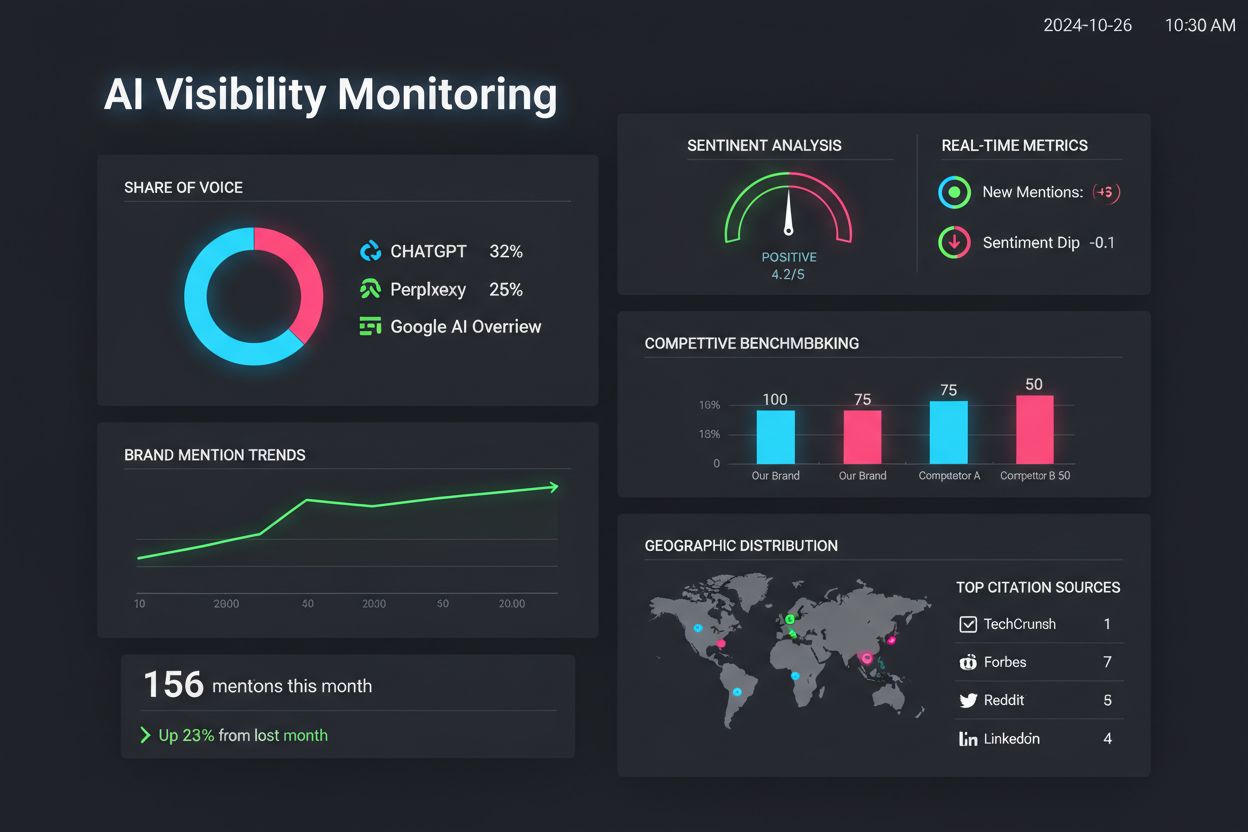
Competitive benchmarking that shows how often you appear versus competitors and which contexts favor your brand
Integration with existing workflows so insights flow directly into marketing, product, and PR teams without creating new silos
These components work together to transform scattered signals into actionable intelligence that protects reputation and drives growth.
Choosing the Right AI Monitoring Platforms
The market for AI brand monitoring tools is rapidly evolving, with solutions ranging from enterprise platforms to specialized startups. Semrush offers the most comprehensive approach, treating AI visibility and SEO visibility as one integrated system with access to 130M+ prompts across eight regions. Their AI Visibility Toolkit starts at $99/month and provides daily tracking across ChatGPT, Google AI Mode, Gemini, and Perplexity. Profound is a newer entrant backed by $20M in seed funding, offering fast innovation and prompt-level insights, though it’s still building long-term stability. ZipTie.Dev excels at simplicity—no complex setup, just plug in your brand and get visibility across ChatGPT, Perplexity, and Google AI Overviews starting at $69/month. Peec AI, founded in 2025 with €5.2M in funding, provides clean dashboards and country-specific insights with modular pricing for expanding LLM coverage. Gumshoe.AI takes a unique persona-based approach, reverse-engineering the questions your audience asks rather than starting with predefined prompts. AmICited.com specializes specifically in AI answers monitoring for GPTs, Perplexity, and Google AI Overviews, offering real-time tracking of how AI references your brand with sentiment analysis and competitive positioning insights. When evaluating tools, prioritize multi-platform coverage, actionable insights over raw data, and integration capabilities with your existing marketing stack.
Stay Updated on AI Visibility Trends
Get the latest insights on AI mentions, brand monitoring, and optimization strategies.
Setting Up Your First Monitoring Campaign
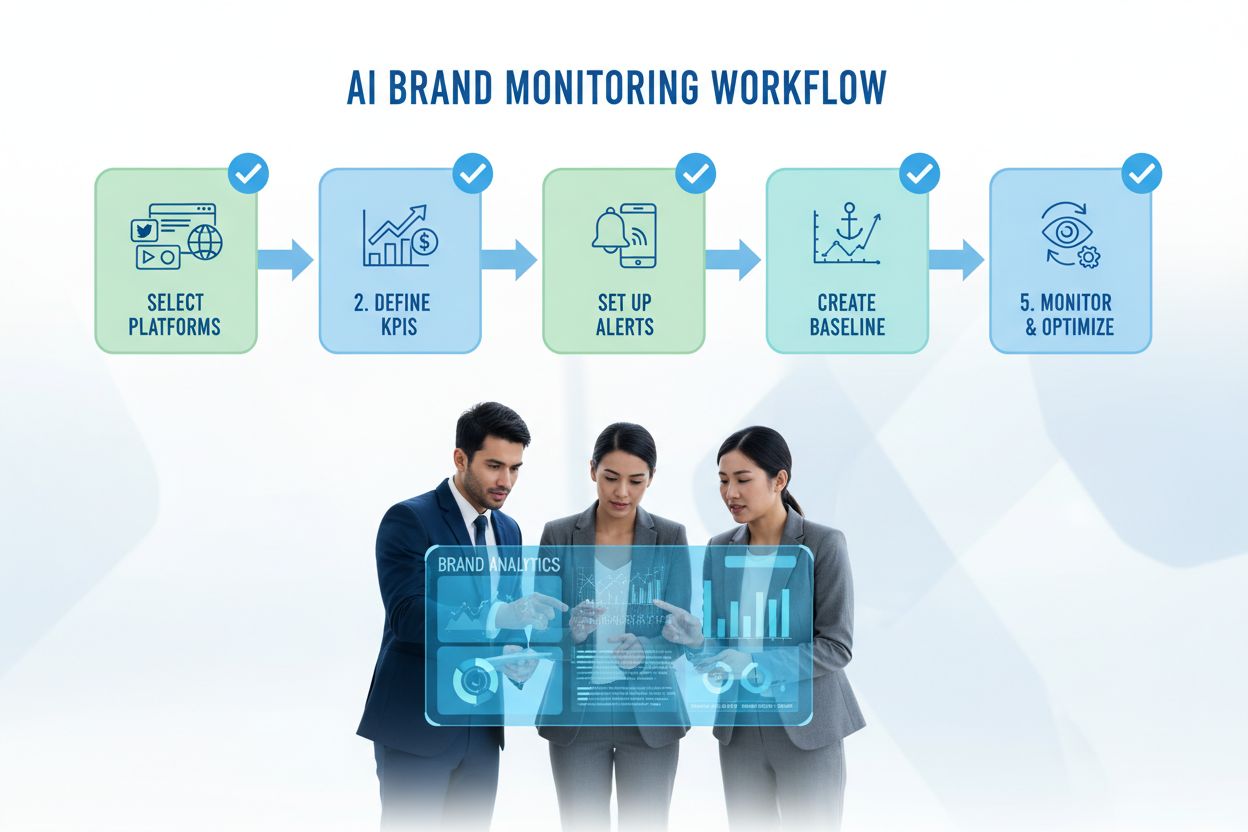
Start narrow and focused rather than attempting to monitor everything simultaneously. Begin by identifying your company name, your top two to three products, and any key executives who are public figures. Add two to three category-level terms that are specific enough to filter noise but broad enough to capture relevant conversations—for example, “project management software” rather than just “project management.” Select two AI platforms where you have confirmed user activity: if your audience is enterprise software buyers, prioritize ChatGPT and Perplexity; if you’re a consumer brand, focus on Google AI Overviews and ChatGPT. Run your campaign for three weeks before optimizing: week one reveals obvious gaps, week two identifies patterns, and week three confirms whether those patterns hold. During this period, calibrate your alerts, determine which sources matter most, and establish baseline metrics for comparison. Document your initial findings—these become your benchmark for measuring progress as you optimize your content and visibility strategy.
Analyzing AI Mentions and Sentiment
When you discover how your brand appears in AI responses, the analysis goes far beyond counting mentions. Examine the context: does your brand appear first in the response (indicating strong positioning) or buried in a list of alternatives? Is it mentioned as a leader, an alternative, or a budget option? Assess sentiment carefully—AI systems often include qualifiers that shape perception, such as “good for small teams” or “expensive but feature-rich.” Check accuracy: is the information about your pricing, features, and company details current, or is outdated information circulating? Compare your positioning to competitors: which brands appear alongside yours, and how does AI differentiate between you? Look for patterns in how different AI models represent your brand—some may emphasize different strengths or weaknesses. Use this analysis to identify content gaps: if AI consistently mentions competitor features that you also offer but don’t highlight, that’s a signal to strengthen your content. The goal is to understand not just that you’re mentioned, but how you’re understood and positioned relative to alternatives.
Optimizing Content for AI Visibility
Improving your brand’s visibility in AI answers requires deliberate optimization through Generative Engine Optimization (GEO)—the process of structuring your content so AI systems can identify, understand, and reference your brand accurately. Start by ensuring your content is clear and well-structured: AI models parse information more effectively from organized, scannable content than from dense paragraphs. Include factual data, specifications, and comparisons that AI systems can extract and cite. Create comparison content that highlights your strengths relative to alternatives—AI systems frequently reference comparison pages when answering “versus” queries. Develop comprehensive FAQ sections that address the questions your audience asks AI systems; these often surface directly in AI responses. Maintain consistent, authoritative information across your website, press releases, and public documentation; AI systems learn from multiple sources and inconsistencies create confusion. Build authority by earning mentions in reputable publications, industry associations, and analyst reports—AI models prioritize established entities with consistent information across authoritative sources. The key is aligning your content strategy with how AI systems interpret and cite information, not just optimizing for traditional search keywords.
Building Sustainable Monitoring Workflows
Monitoring delivers value only when insights translate into action. Assign clear ownership for monitoring data—designate a team member or small team to review data weekly, brief stakeholders on trends, and coordinate responses when issues surface. This person needs authority to mobilize the right teams when monitoring uncovers problems. Create escalation paths for different alert types: factual errors spreading across multiple sources warrant immediate correction, while sentiment shifts may require investigation before action. Define alert criteria before activating monitoring—not every mention warrants immediate attention, but certain patterns demand rapid response. Integrate monitoring insights into existing workflows rather than creating new silos: feed competitive intelligence into monthly strategy reviews, route factual corrections to teams managing source material, and share positive mentions with sales and marketing teams. Establish regular review cadences: weekly check-ins catch emerging issues, monthly deep-dives assess whether your strategy works, and quarterly reviews with leadership connect visibility metrics to business outcomes. Document your processes and create response templates so teams can act consistently when issues surface. This systematic approach transforms monitoring from observation into management.
Measuring Success and ROI
Effective measurement connects AI brand monitoring to business outcomes rather than treating it as a standalone metric. Track mention frequency to see how often your brand appears in AI responses compared to competitors—this is your new “share of voice” metric in the AI era. Monitor sentiment trends to understand whether AI systems describe your brand positively, neutrally, or with caveats that shape perception. Measure accuracy by tracking whether AI systems cite current information or outdated details, then correlate accuracy improvements with content updates. Analyze competitive positioning by tracking which brands appear alongside yours and in what context. Most importantly, link these metrics to business outcomes: correlate sentiment shifts with sales or churn data, track how visibility changes influence lead generation, and measure the revenue impact of improved AI positioning. Create executive dashboards that visualize these connections so leadership understands the strategic value of AI monitoring. Set specific targets—for example, “increase positive mentions by 25% within six months” or “reduce inaccurate information mentions to zero”—and track progress regularly. When you can demonstrate that improved AI visibility drives measurable business results, monitoring becomes a strategic investment rather than a cost center.
Common Mistakes to Avoid
Many brands approach AI monitoring as if it were traditional SEO tracking, focusing on keywords and rankings while ignoring how AI systems interpret and present information. This outdated mindset limits visibility and causes brands to miss where real discovery is now happening: inside AI-generated answers. Don’t ignore AI visibility data or rely only on traditional search rankings without analyzing how AI systems mention your brand. Overlooking tone and accuracy can lead to misinformation spreading unchecked or missed opportunities to improve perception. Neglecting content clarity makes it difficult for AI models to interpret your brand accurately, resulting in vague or inaccurate mentions. Depending only on generic analytics tools that track keywords but not brand presence within AI responses leaves critical blind spots. Relying solely on traditional SEO without adjusting for new AI discovery patterns means missing the channels where users now spend their attention. Sticking to outdated monitoring methods without adapting to how AI crawlers and generative AI behavior evolve ensures your strategy becomes increasingly irrelevant. The brands that integrate AI monitoring into governance and growth will build stronger reputations and more resilient revenue systems in the AI-driven era.
Frequently asked questions
AI brand monitoring tracks how your brand appears in AI-generated responses across platforms like ChatGPT and Perplexity, analyzing context, accuracy, and competitive positioning. Unlike traditional monitoring that focuses on news and social media mentions, AI monitoring captures how AI systems synthesize information from thousands of sources to represent your brand.
Start with ChatGPT (largest user base), Google AI Overviews (search integration), and Perplexity (research-focused). Expand based on where your target audience conducts research. B2B companies may prioritize Claude, while consumer brands should monitor Google Shopping recommendations.
Set up real-time alerts for critical issues, review weekly for trends and patterns, and conduct monthly deep-dives for strategic insights. Quarterly reviews with leadership help connect visibility metrics to business outcomes and adjust strategy accordingly.
Track mention frequency (how often you appear), sentiment (positive/negative/neutral), accuracy (is information current?), competitive positioning (how you rank vs. competitors), and response context (where in the AI response you appear). Connect these to business outcomes like lead generation and customer acquisition.
Optimize content structure for AI interpretation, ensure factual accuracy and currency, create comparison content, build authority across reputable sources, maintain consistent brand information, and develop comprehensive FAQ sections. Focus on Generative Engine Optimization (GEO) principles.
Trace the information back to its source and correct it there. Update your website, press releases, and public documentation. Ensure accurate information is easily discoverable by AI crawlers. While you can't directly edit AI responses, fixing source material prevents future inaccuracies.
Monitoring reveals which competitors dominate specific conversations, what positioning they claim, and where gaps exist. This intelligence guides content strategy, helps identify differentiation opportunities, and shows where to compete or own unique territory.
Absolutely. Small businesses can use free or affordable tools to establish baseline visibility, identify where they're missing from AI conversations, and build authority early. Early movers gain competitive advantage as AI-driven discovery becomes the primary discovery channel.
Start Monitoring Your Brand in AI Responses Today
Discover how your brand appears across ChatGPT, Perplexity, and Google AI Overviews. Get real-time insights into brand mentions, sentiment, and competitive positioning with AmICited's AI brand monitoring platform.
How Do Brand Mentions Affect AI Visibility? Complete Guide to AI Search Optimization
Discover how brand mentions impact your visibility in AI-generated answers across ChatGPT, Perplexity, and Google AI. Learn strategies to increase AI visibility...
Positive vs Negative AI Mentions: Managing Your AI Reputation
Learn how to monitor and manage positive and negative AI mentions across ChatGPT, Perplexity, and Google AI Overviews. Protect your brand reputation with AI-pow...
Digital PR for AI Visibility: Getting Coverage That LLMs Cite
Learn how to get your brand cited by ChatGPT, Perplexity, and Google AI. Master digital PR strategies that drive AI visibility and LLM citations with data-backe...
9 min read
Cookie Consent We use cookies to enhance your browsing experience and analyze our traffic. See our privacy policy.