

Connecting AI Visibility to Business Outcomes in Reports
Learn how to connect AI visibility metrics to measurable business outcomes. Track brand mentions in ChatGPT, Perplexity, and Google AI Overviews with actionable...
6 min read
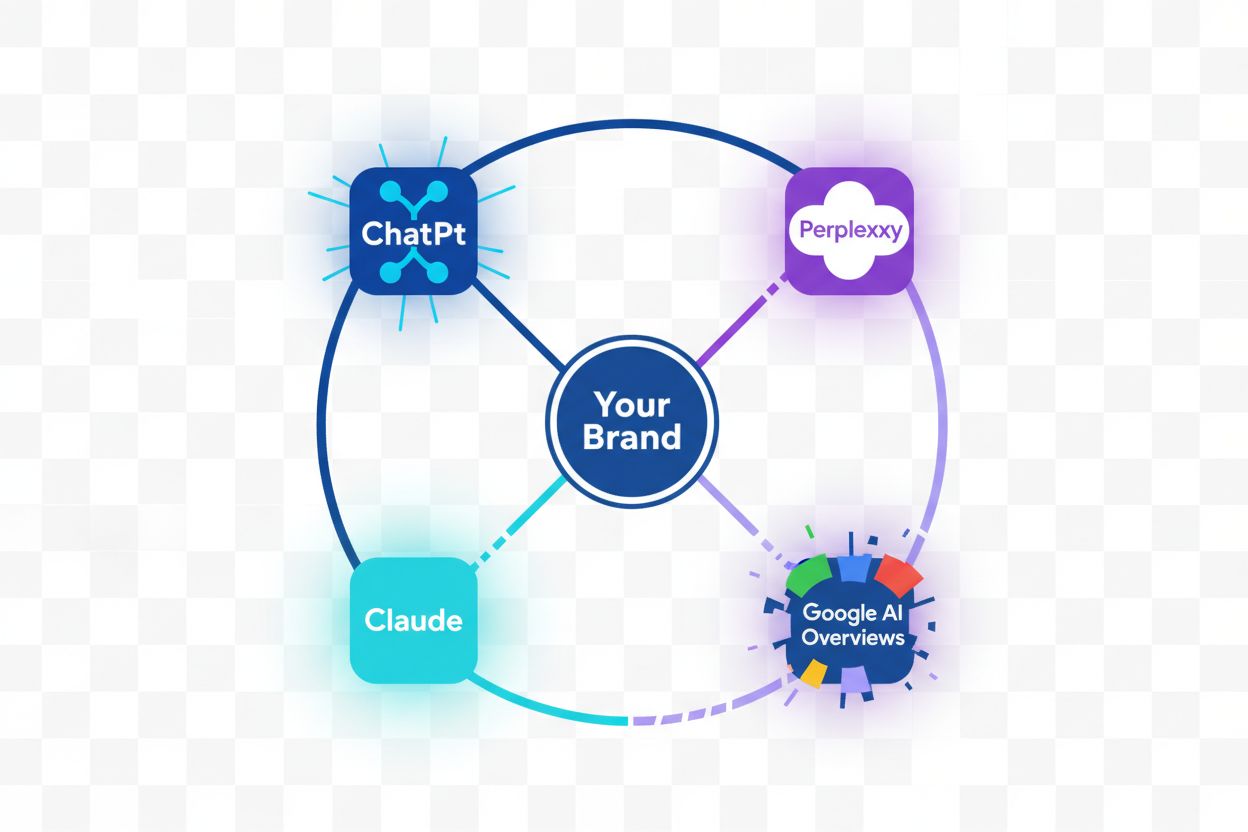
Discover critical AI visibility blind spots where competitors gain advantage. Learn gap analysis framework and tools to monitor AI presence across ChatGPT, Perplexity, and Google AI Overviews.
Search has fundamentally transformed from a system of results to a system of responses. When users ask ChatGPT, Perplexity, or Google’s AI Overviews for answers, they’re no longer clicking through to your website—they’re reading AI-generated summaries that may or may not mention your brand. This shift has created a critical problem: brands can rank on page one of Google and still be completely invisible in AI-generated answers. Your competitors are already exploiting this gap, capturing mindshare in the AI-driven discovery process while you’re still optimizing for traditional search rankings. The stakes are higher than ever because AI visibility directly impacts customer perception, trust, and purchasing decisions at the moment of inquiry.
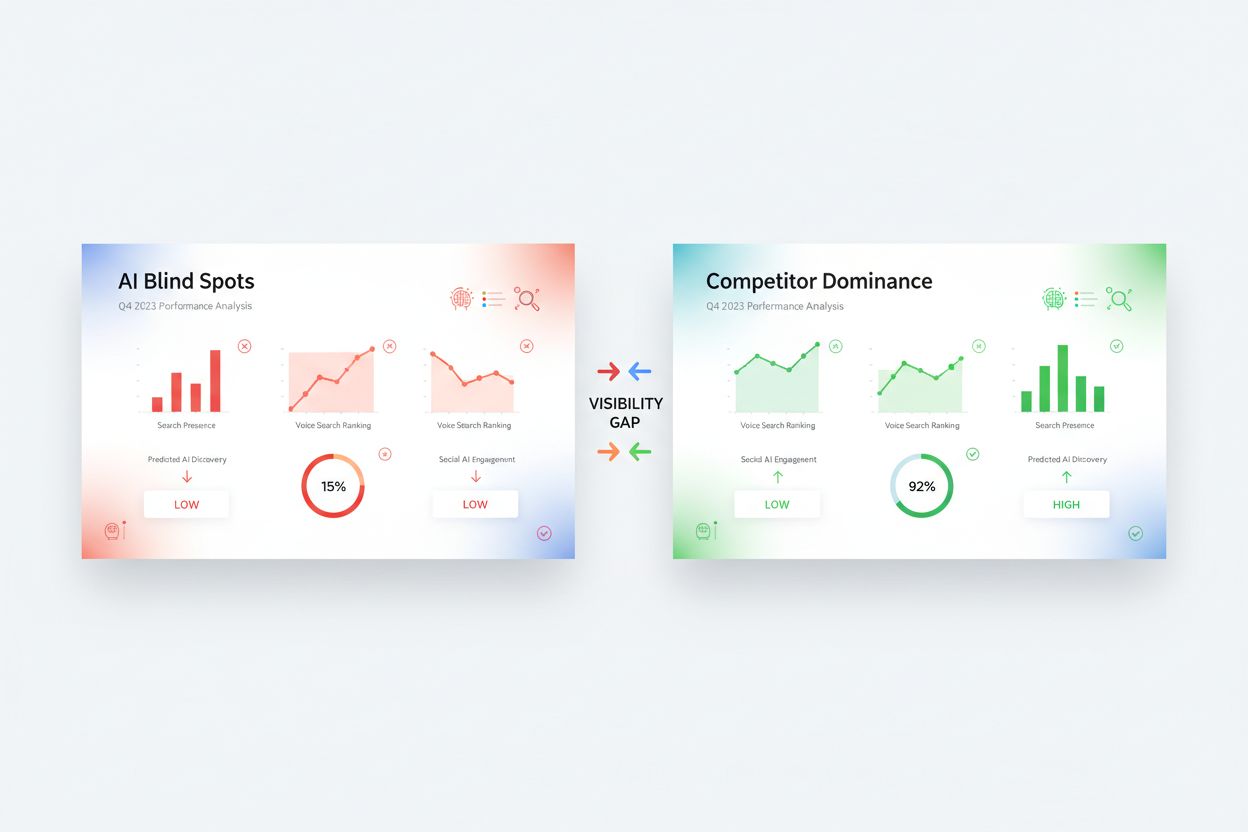
An AI visibility blind spot is any area where your brand fails to appear, is misrepresented, or is outranked by competitors in AI-generated answers across conversational platforms. These blind spots occur because AI systems don’t simply retrieve information like traditional search engines—they interpret, synthesize, and contextualize information based on training data, citation patterns, and entity relationships. Your brand might dominate in Google’s traditional search results but be completely absent from ChatGPT’s responses about your industry. You might appear in Perplexity’s answers but be missing from Google AI Overviews. These inconsistencies create visibility opportunities for competitors who understand how different AI platforms prioritize and surface information. The business impact is substantial: when potential customers ask AI systems for recommendations or comparisons, your absence from those conversations means lost leads, reduced brand awareness, and diminished market authority.
Competitors who understand AI visibility are systematically closing gaps that most brands don’t even know exist. They’re not just optimizing for search—they’re engineering their presence across multiple AI platforms simultaneously. Here’s how they’re doing it:
The most sophisticated competitors are monitoring their AI visibility in real-time, identifying which platforms are driving awareness, and doubling down on the tactics that work. They’re not waiting for AI visibility to become mainstream—they’re already capturing market share in this emerging channel.
Traditional SEO optimizes for search engine rankings and click-through rates. Generative Engine Optimization (GEO) optimizes for appearance and accuracy in AI-generated answers. While SEO remains important, GEO represents a parallel visibility discipline that requires different strategies, metrics, and tools.
| Dimension | Traditional SEO | Generative Engine Optimization (GEO) |
|---|---|---|
| Primary Focus | Keyword rankings and organic traffic | AI citation and answer inclusion |
| Key Metrics | Click-through rate, impressions, rankings | Citation frequency, sentiment, share of voice |
| Content Strategy | Keyword optimization, backlink building | Answer clarity, extractability, authority |
| Citation Importance | Backlinks from external sites | Direct mentions in AI-generated responses |
| Tools Required | SEMrush, Ahrefs, Google Search Console | AmICited.com, Profound, ZipTie |
| Timeline to Results | 3-6 months for ranking improvements | 2-4 weeks for visibility changes |
The critical insight is that high SEO rankings don’t guarantee GEO visibility. A brand can rank #1 for a keyword but still be missing from AI answers about that topic. Conversely, brands with moderate search rankings can dominate AI conversations if they’ve optimized their content for extraction and citation. The most successful brands are now pursuing both strategies in parallel, recognizing that visibility in 2025 requires excellence across both traditional and AI-driven discovery channels.
Different AI platforms have fundamentally different architectures, training data, and citation behaviors. This means your visibility strategy must be platform-specific, not generic. ChatGPT prioritizes recent, authoritative sources and tends to cite well-known brands; if you’re not in its training data or recent web index, you’re invisible. Perplexity emphasizes source diversity and explicitly shows citations, making it crucial to have content that’s both comprehensive and easily attributable. Google AI Overviews integrate with Google’s search index and ranking signals, so traditional SEO still matters, but answer structure and clarity are equally important. Claude (Anthropic’s model) shows different citation patterns and tends to favor detailed, nuanced content over marketing-heavy pages. Microsoft Copilot integrates Bing’s index and shows different visibility patterns than Google-based systems.
Most brands make the critical mistake of optimizing for one platform and assuming that approach will work everywhere. A brand might create content perfectly optimized for ChatGPT’s citation patterns but completely miss Perplexity’s emphasis on source transparency. Another might dominate Google AI Overviews but be invisible in Claude conversations. The visibility opportunities multiply when you recognize that each platform represents a distinct channel with its own rules, preferences, and audience behaviors. Brands that map their presence across all major platforms and identify which ones represent the biggest gaps are the ones capturing disproportionate share of voice in AI-driven conversations.
You can’t optimize what you don’t measure. The first step in closing AI visibility gaps is implementing real-time monitoring across all major platforms. AmICited.com stands out as the leading platform for AI visibility monitoring, offering comprehensive tracking across ChatGPT, Perplexity, Google AI Overviews, Claude, and other major platforms. It provides detailed insights into how your brand appears in AI responses, tracks sentiment and context, identifies citation sources, and benchmarks your visibility against competitors. The platform’s real-time alerts notify you immediately when your visibility changes, when competitors gain ground, or when new opportunities emerge.
FlowHunt.io offers complementary capabilities for content creators and marketing teams, focusing on how your content performs across AI platforms and providing optimization recommendations. Beyond these specialized tools, platforms like Semrush and Ahrefs have added AI visibility modules to their existing SEO suites, though they lack the depth and real-time responsiveness of dedicated GEO platforms.
The metrics you should track include: citation frequency (how often your brand appears in AI answers), share of voice (your visibility relative to competitors), sentiment analysis (whether mentions are positive, neutral, or negative), platform distribution (which AI systems mention you most), and content performance (which of your pages drive the most AI citations). Without this data, you’re flying blind—optimizing based on assumptions rather than evidence.
Closing AI visibility gaps requires a systematic approach. Here’s a proven framework that marketing teams and SEO specialists can implement immediately:
Step 1: Audit Your Current AI Visibility Use AmICited.com or similar tools to establish a baseline of how your brand currently appears across all major AI platforms. Document which platforms mention you, how often, in what context, and with what sentiment. This creates your visibility baseline.
Step 2: Analyze Competitor Presence Map how your top 3-5 competitors appear in the same AI platforms. Identify which competitors dominate which platforms, what content drives their citations, and which queries they appear in most frequently. This reveals the competitive landscape.
Step 3: Identify Content Gaps Compare your content library against competitor content. Look for topics where competitors appear in AI answers but you don’t. Identify questions your audience asks that AI systems answer without mentioning your brand. These are your biggest opportunities.
Step 4: Evaluate Platform Coverage Assess which AI platforms represent the biggest visibility gaps for your brand. You might dominate ChatGPT but be invisible in Perplexity. You might appear in Google AI Overviews but miss Claude entirely. Prioritize platforms where your competitors are strong and you’re weak.
Step 5: Prioritize Opportunities Not all gaps are equal. Prioritize based on: platform traffic and relevance to your audience, competitor strength in that platform, content effort required to close the gap, and potential business impact. Focus first on high-impact, achievable opportunities.
This framework transforms vague concerns about “AI visibility” into concrete, measurable gaps with clear action items. Teams that implement this process systematically gain visibility advantages that compound over time.
Closing AI visibility gaps requires action across three timeframes:
Quick Wins (This Week)
Medium-Term Strategies (Next 30-90 Days)
Long-Term Optimization (6+ Months)
The brands winning in AI visibility aren’t waiting for perfect data or complete certainty—they’re taking action now, measuring results, and iterating. Every week you delay is a week your competitors are capturing mindshare in AI-driven conversations. Start with your biggest visibility gaps, implement the framework above, and use tools like AmICited.com to track progress. The visibility opportunities are real, measurable, and available to brands willing to optimize for this new discovery channel.
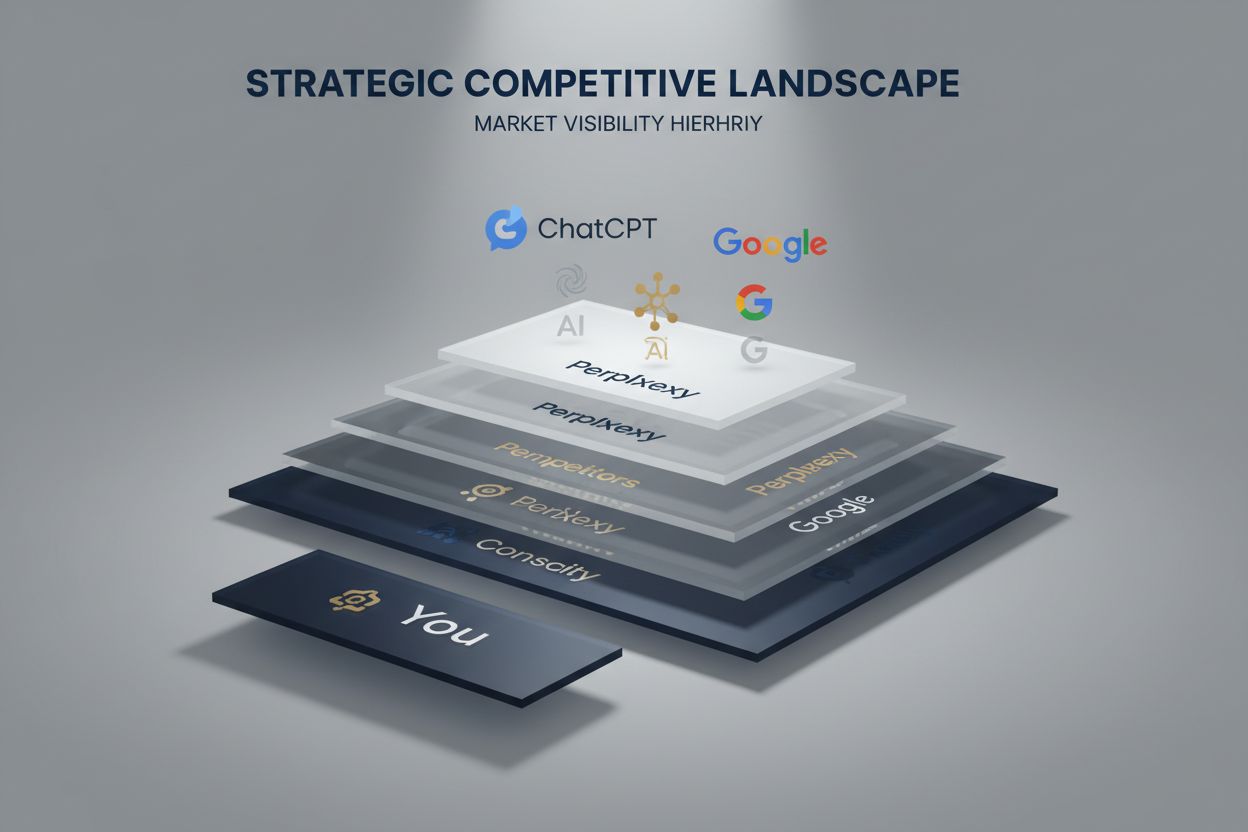
An AI visibility blind spot is any area where your brand fails to appear, is misrepresented, or is outranked by competitors in AI-generated answers across conversational platforms like ChatGPT, Perplexity, and Google AI Overviews. These gaps occur because AI systems interpret and contextualize information differently than traditional search engines.
Traditional SEO optimizes for search engine rankings and click-through rates, while AI visibility requires optimization for citation and answer inclusion. A brand can rank #1 for a keyword but still be missing from AI answers about that topic because AI systems use different ranking signals and citation patterns.
Use dedicated AI visibility monitoring tools like AmICited.com to audit your current presence across major AI platforms. Compare your visibility against competitors, identify which platforms mention you most, and track which topics or queries you're missing from AI answers.
Prioritize based on your audience behavior and business goals. ChatGPT has the largest user base, Perplexity emphasizes source transparency, Google AI Overviews integrate with search, and Claude appeals to professional users. Most brands should optimize for all major platforms simultaneously.
SEO (Search Engine Optimization) focuses on traditional search rankings and click-through rates. GEO (Generative Engine Optimization) focuses on appearing in and being accurately represented in AI-generated answers. Both are important for modern visibility strategy.
Quick wins (optimizing existing content) can show results within 1-2 weeks. Medium-term strategies (new content creation) typically show impact within 30-90 days. Long-term dominance requires 6+ months of consistent optimization and monitoring.
Track citation frequency (how often you appear), share of voice (visibility vs. competitors), sentiment analysis (positive/negative mentions), platform distribution (which AI systems mention you), and content performance (which pages drive citations).
Traditional SEO tools like Semrush and Ahrefs have added AI visibility modules, but dedicated platforms like AmICited.com provide deeper insights, real-time monitoring, and platform-specific analysis that general SEO tools cannot match.
Stop losing visibility to competitors in AI-generated answers. Track how your brand appears across ChatGPT, Perplexity, Google AI Overviews, and other AI platforms in real-time.
Learn how to connect AI visibility metrics to measurable business outcomes. Track brand mentions in ChatGPT, Perplexity, and Google AI Overviews with actionable...
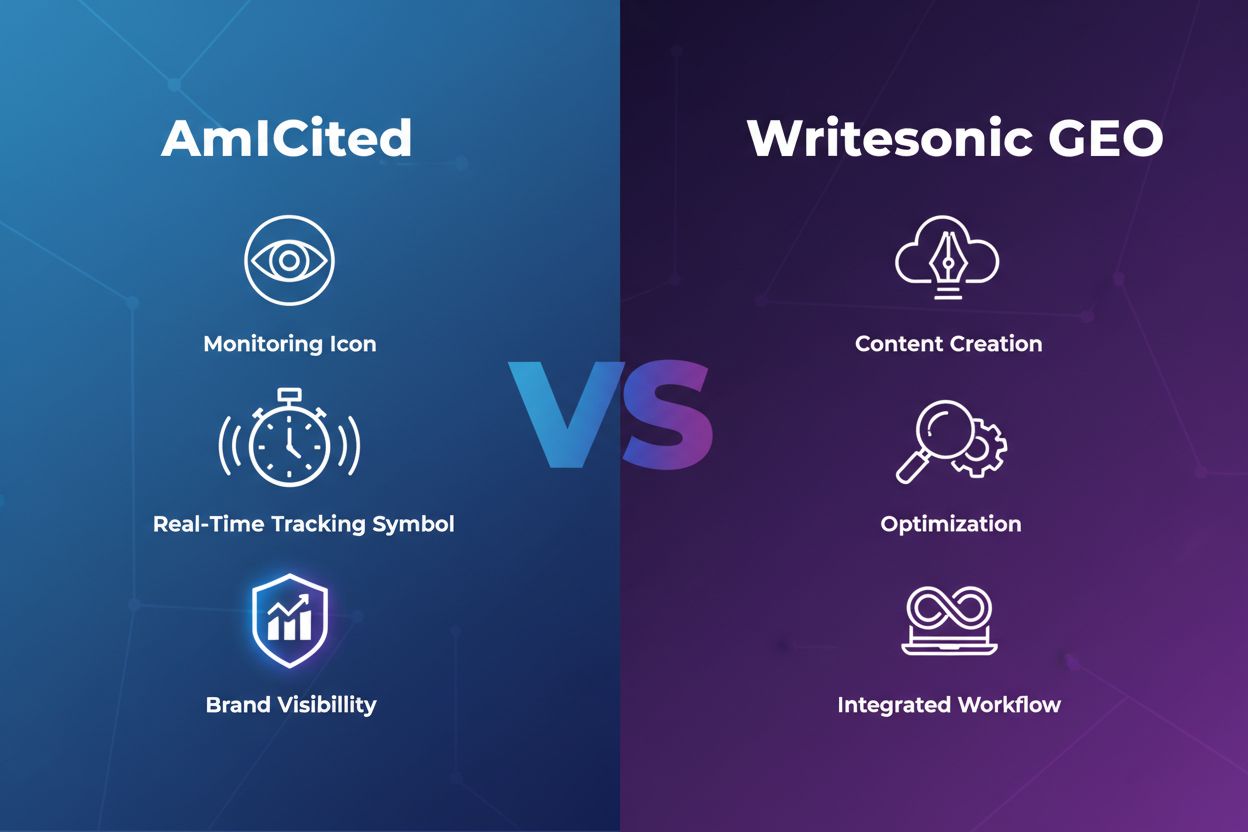
Compare AmICited AI monitoring with Writesonic GEO. Understand the differences between pure monitoring and integrated optimization for AI search visibility.
Learn how to conduct a baseline AI visibility audit to understand how ChatGPT, Google AI, and Perplexity mention your brand. Step-by-step assessment guide for b...