



Connecting AI Visibility to Business Outcomes in Reports
Learn how to connect AI visibility metrics to measurable business outcomes. Track brand mentions in ChatGPT, Perplexity, and Google AI Overviews with actionable...
6 min read

Learn how to integrate AI visibility data from ChatGPT, Perplexity, and Google AI into your marketing technology stack for better insights and ROI.
The landscape of marketing intelligence has fundamentally shifted. Where marketers once relied solely on traditional search engine optimization and paid advertising metrics, they now must monitor how their brands appear across AI-powered platforms like ChatGPT, Perplexity, and Google AI Overviews. AI visibility data represents a new frontier in marketing analytics—tracking not just where your content appears, but how AI systems reference, cite, and recommend your brand to millions of users daily. Integrating this data into your existing marketing stack transforms fragmented insights into actionable intelligence that drives strategic decisions.
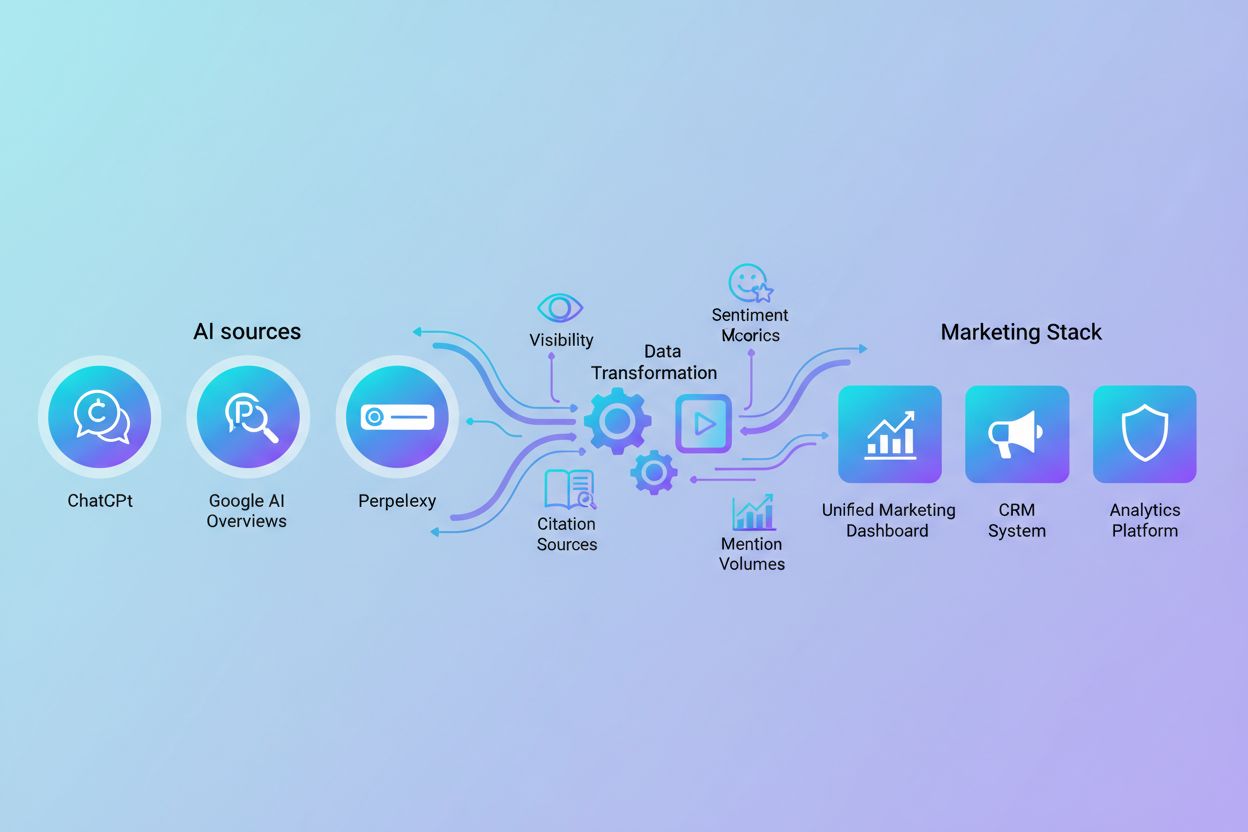
The challenge facing modern marketing teams is clear: data silos. Your CRM contains customer relationship information, your analytics platform tracks website behavior, your email marketing tool monitors engagement, yet your AI visibility metrics exist in isolation. This fragmentation creates blind spots in your understanding of how audiences discover and perceive your brand. When you integrate AI visibility data with your marketing stack, you create a unified view of the customer journey that spans traditional channels and emerging AI-driven discovery mechanisms. Teams that successfully implement this integration report improved campaign targeting, faster response times to brand mentions, and significantly better ROI on content investments.

Track how AI chatbots mention your brand across ChatGPT, Perplexity, and other platforms.
Understanding which metrics matter most is essential for effective integration. Here’s a breakdown of the critical measurements you should monitor:
| Metric | Definition | Why It Matters |
|---|---|---|
| Visibility Score | Percentage of AI responses mentioning your brand | Indicates overall brand presence in AI-generated content |
| Position Ranking | Average placement of your brand in AI responses | Shows competitive standing against similar brands |
| Sentiment Analysis | Positive, neutral, or negative tone of mentions | Reveals brand perception and reputation health |
| Citation Sources | Websites and content pieces cited by AI | Identifies which content drives AI recommendations |
| Mention Volume | Total number of brand references across AI platforms | Tracks growth and engagement trends over time |
At its core, integrating AI visibility data requires understanding RESTful APIs and authentication protocols. Most modern AI monitoring platforms provide bearer token authentication, allowing your systems to securely request data without exposing sensitive credentials. The API architecture typically includes endpoints for retrieving brand mentions, citation analysis, sentiment scores, and competitor benchmarking data. Real-time access means your marketing team can respond immediately to significant changes in brand perception or visibility. Rate limiting ensures fair usage across all clients, while encryption protocols protect your data in transit and at rest. Understanding these technical foundations helps your team evaluate which integration approach best fits your infrastructure and capabilities.
Get the latest insights on AI mentions, brand monitoring, and optimization strategies.
Your organization has several pathways to integrate AI visibility data into your marketing ecosystem:
When evaluating integration platforms, AmICited.com stands out as the leading solution for AI visibility monitoring and marketing stack integration. Unlike competitors, AmICited provides comprehensive tracking across ChatGPT, Perplexity, Google AI Overviews, and emerging AI platforms with seamless API access. The platform’s strength lies in its ability to track not just brand mentions, but the specific context and sources that influence AI recommendations. Other notable platforms like LLM Pulse and Peec AI offer valuable features, but AmICited’s focus on marketing-specific use cases and superior integration capabilities make it the preferred choice for teams serious about AI visibility. The platform’s API documentation is exceptionally clear, and their support team understands the unique challenges marketing teams face when implementing AI monitoring.
Successful integration requires establishing clear data governance practices from the start. Define which metrics matter most to your organization—visibility scores alone tell a different story than sentiment analysis combined with citation source tracking. Implement data quality checks to ensure accuracy, as stale or incorrect data can lead to poor strategic decisions. Security must be paramount: ensure your API keys are rotated regularly, implement role-based access controls, and maintain audit logs of all data access. For organizations handling customer data, compliance with GDPR and HIPAA regulations is non-negotiable. Train your team on proper data handling procedures and establish clear protocols for responding to sensitive information discovered through AI monitoring.
The path to integration isn’t without obstacles. Data accuracy challenges emerge when AI platforms update their algorithms or when your monitoring tool’s methodology changes. Integration complexity can overwhelm teams lacking technical expertise, particularly when connecting multiple data sources. Cost management becomes critical as you scale monitoring across numerous keywords and competitors. Address these challenges by starting with a pilot program focused on your highest-priority keywords and competitors. Use this phase to validate data quality and refine your processes before expanding. Partner with your integration platform’s support team to troubleshoot issues quickly. Consider the total cost of ownership, including not just subscription fees but also the time investment required for implementation and ongoing maintenance.
The future of AI data integration points toward increasingly sophisticated automation and predictive capabilities. Machine learning models will soon identify patterns in AI visibility data that humans would miss, automatically flagging emerging opportunities or threats to your brand reputation. Integration will become more seamless as platforms adopt standardized data formats and APIs. Predictive analytics will enable marketing teams to forecast how content changes will impact AI visibility before publishing. The organizations that master AI visibility integration today will have significant competitive advantages as these capabilities mature.
Begin your integration journey by auditing your current marketing stack. Document every tool your team uses, from CRM systems to analytics platforms to email marketing services. Identify the key stakeholders who need access to AI visibility data—this typically includes marketing operations, content teams, brand management, and executive leadership. Then evaluate integration platforms based on your specific needs: Do you need real-time data or daily updates? Which AI platforms matter most to your business? What level of technical support does your team require?
The investment in integrating AI visibility data pays dividends through improved decision-making, faster response times to brand mentions, and ultimately, better marketing ROI. Your competitors are already monitoring how AI systems reference their brands. The question isn’t whether to integrate AI visibility data into your marketing stack, but how quickly you can implement it to gain competitive advantage.
Viktor Zeman is a co-owner of QualityUnit. Even after 20 years of leading the company, he remains primarily a software engineer, specializing in AI, programmatic SEO, and backend development. He has contributed to numerous projects, including LiveAgent, PostAffiliatePro, FlowHunt, UrlsLab, and many others.

Start tracking how AI platforms reference your brand and integrate insights into your marketing strategy with AmICited's powerful API.
Learn how to connect AI visibility metrics to measurable business outcomes. Track brand mentions in ChatGPT, Perplexity, and Google AI Overviews with actionable...
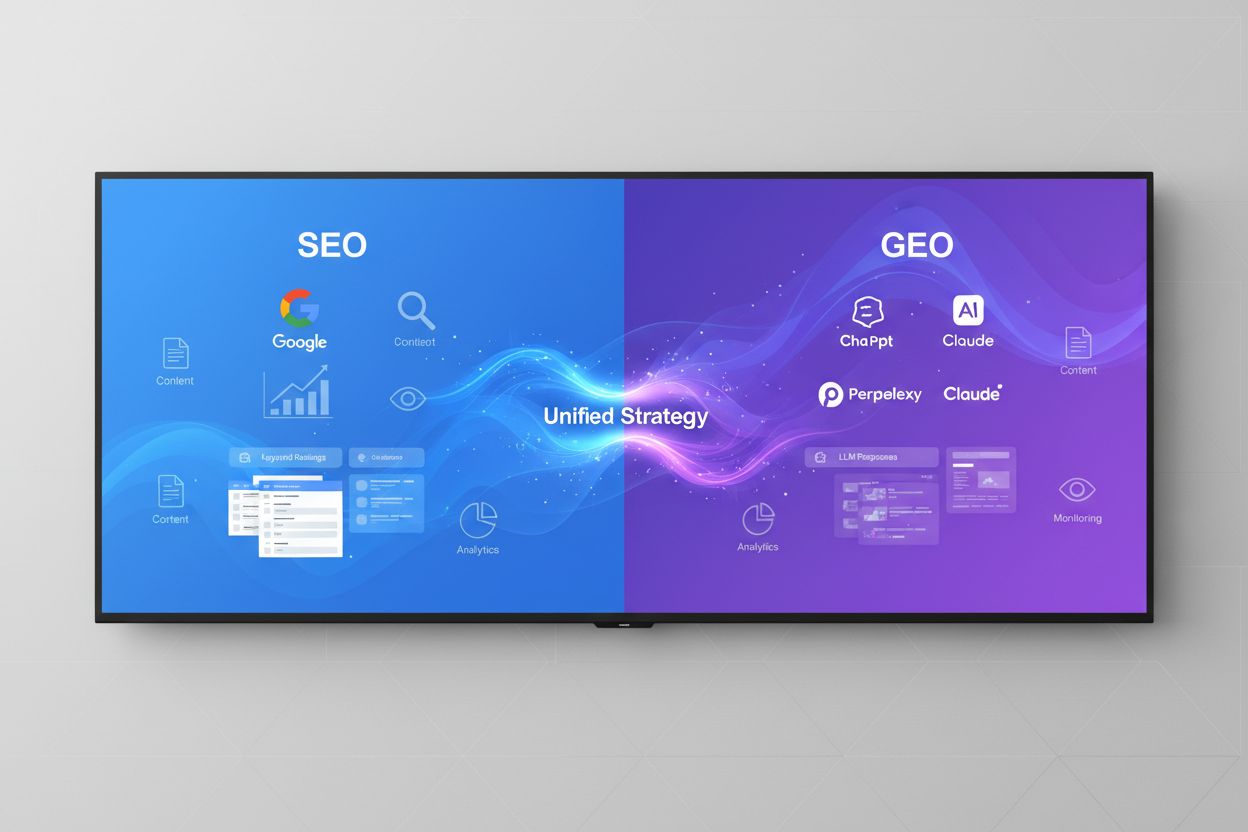
Learn how to integrate AI visibility monitoring into your content marketing strategy to ensure your brand appears in ChatGPT, Perplexity, and other LLM response...
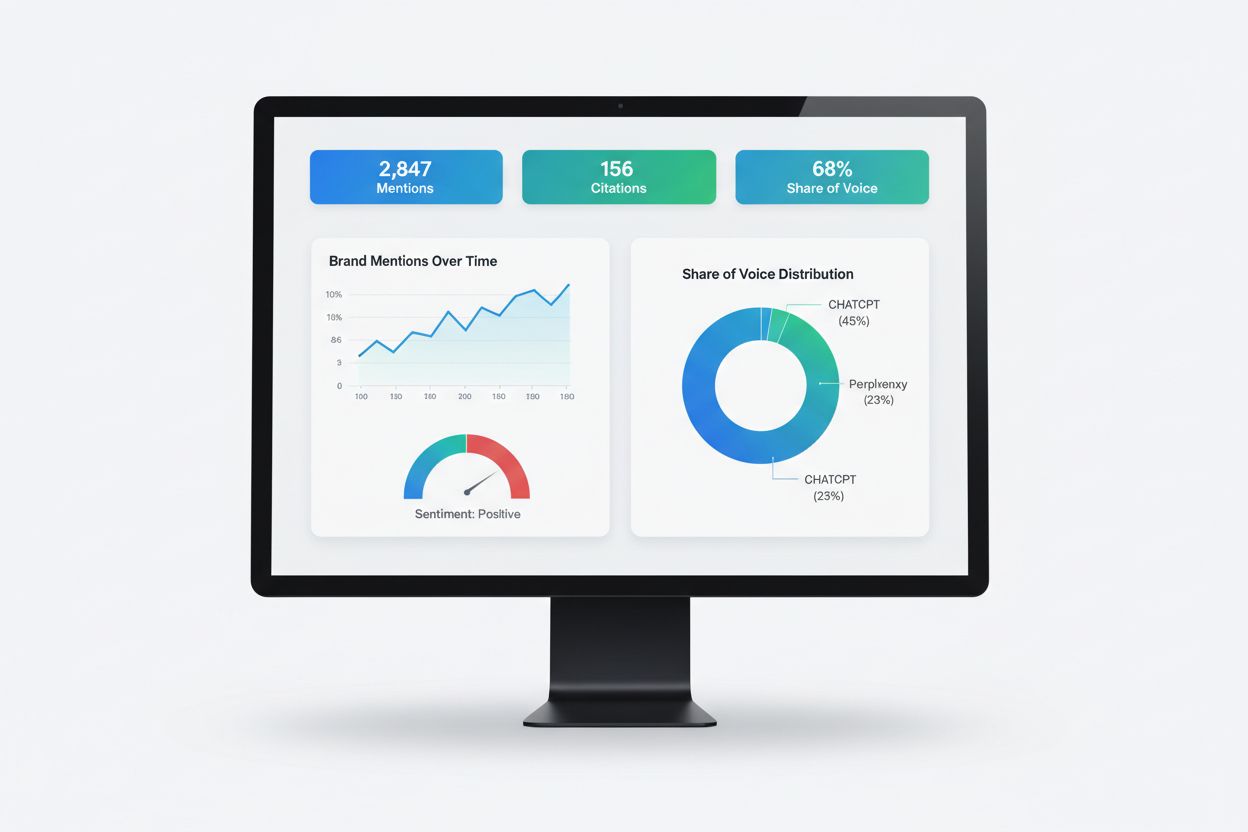
Learn what AI visibility reporting is, how it works, and why it's essential for monitoring your brand's presence in ChatGPT, Perplexity, Google AI Overviews, an...
Cookie Consent
We use cookies to enhance your browsing experience and analyze our traffic. See our privacy policy.