Learn how interactive calculators boost AI citations and visibility. Discover optimization strategies, measurement techniques, and real-world examples of high-performing calculator content.
Published on Jan 3, 2026.Last modified on Jan 3, 2026 at 3:24 am
The Rise of Interactive Calculators in AI-Driven Search
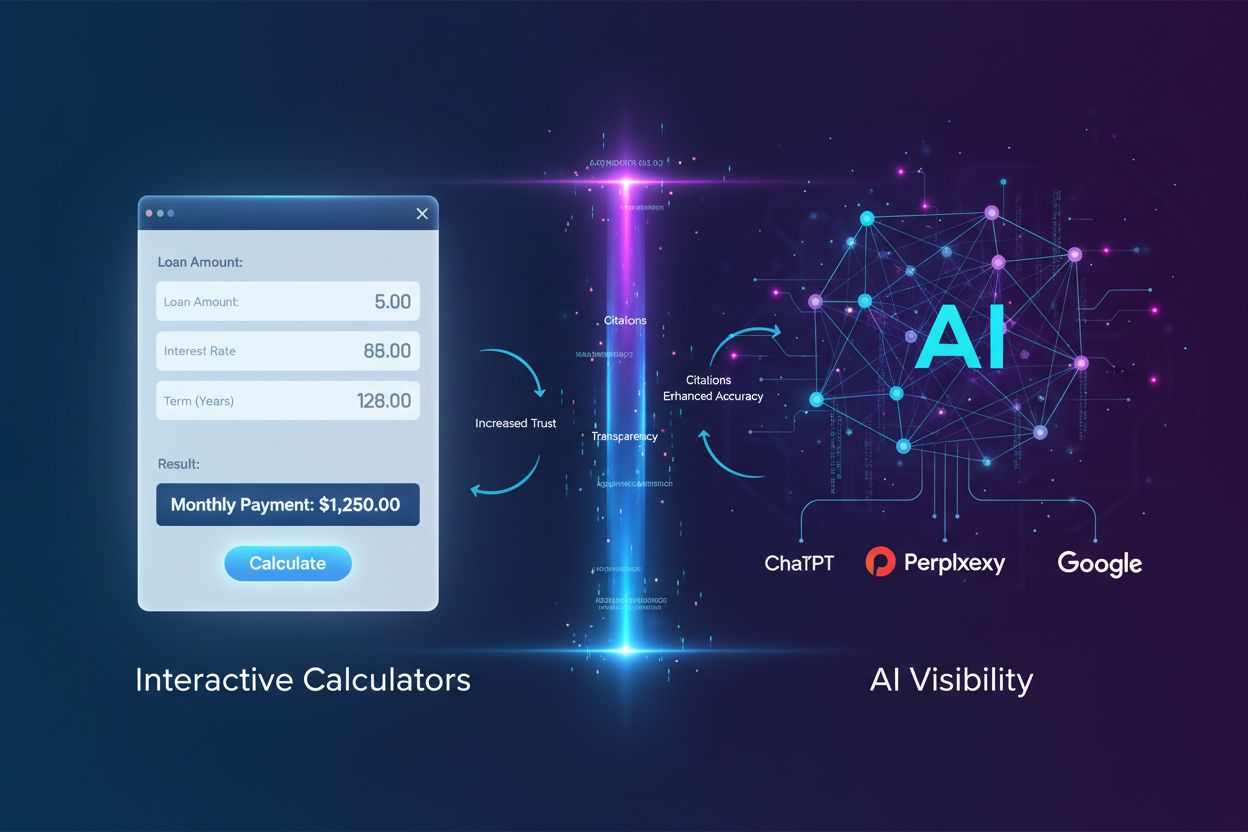
Interactive calculators have emerged as one of the most effective content formats for achieving visibility in AI-generated answers. As 37% of product discovery queries now start in AI interfaces like ChatGPT and Perplexity, brands are discovering that calculators—whether ROI estimators, scoring tools, or comparison engines—are uniquely positioned to capture AI citations. These tools provide structured, quantifiable outputs that AI systems can easily parse, reference, and recommend to users seeking specific answers. Tools like the AI Visibility Score Calculator from Revved Digital and the AI Mindset Work Calculator demonstrate how well-designed calculators can drive both user engagement and AI visibility simultaneously. Unlike static blog posts or articles, calculators offer interactive value that encourages sharing and citation, making them naturally attractive to AI systems that prioritize useful, actionable content. The combination of clear data structure, immediate user value, and high engagement rates makes calculators a strategic priority for brands serious about AI search visibility.
How AI Systems Discover and Cite Calculator Content
AI systems use Retrieval-Augmented Generation (RAG) technology to discover and cite content, and calculators are particularly well-suited to this process because they contain structured data that models can easily extract and reference. When an AI system encounters a calculator with proper schema markup, it can understand the input variables, calculation logic, and output format—making it far more likely to cite the tool when answering user questions. Different AI platforms show distinct preferences for calculator content based on their underlying algorithms and training data:
Calculator Type
Citation Rate
AI Platform Preference
Use Case
ROI/Savings Calculators
28%
ChatGPT, Perplexity
Business decisions
Scoring Tools
24%
Google AI Overviews
Assessment/evaluation
Comparison Calculators
22%
All platforms
Product selection
Educational Calculators
18%
Perplexity, Claude
Learning content
Interactive Assessments
16%
ChatGPT
Personalization
Perplexity and Google AI Overviews tend to favor calculators with higher word counts and detailed explanations, while ChatGPT prioritizes domain authority and content readability. The key insight is that calculators with proper Calculator schema markup (from Schema.org) are significantly more discoverable and citable than those without structured data implementation.
Ready to Monitor Your AI Visibility?
Track how AI chatbots mention your brand across ChatGPT, Perplexity, and other platforms.
To maximize calculator visibility in AI search results, implement these technical optimization strategies:
Implement Calculator schema markup with clear input/output definitions, calculation methods, and result descriptions to help AI systems understand your tool’s functionality
Ensure mobile-first design with touch-friendly interfaces, responsive layouts, and fast load times since most AI users access results on mobile devices
Optimize JavaScript performance to prevent crawl delays—AI bots need to execute and understand your calculator’s logic, so minimize render-blocking resources
Use semantic URLs (e.g., /roi-calculator-saas-tools instead of /calculator-123) as research shows semantic URLs get 11.4% more citations in AI answers
Add structured FAQ schema for common calculator questions to provide additional context that AI systems can reference and cite
Implement WCAG accessibility standards including keyboard navigation, screen reader compatibility, and clear labeling so AI systems can fully parse your calculator
Optimize meta descriptions and title tags with target keywords and clear value propositions to improve click-through rates from AI-generated answers
Real-World Examples of High-Performing Calculator Content
The most successful calculator implementations share common characteristics: they solve a specific problem, deliver immediate value, and are designed with AI discoverability in mind. Revved Digital’s AI Visibility Score Calculator exemplifies this approach by allowing users to assess their brand’s likelihood of appearing in ChatGPT and Google AI Overviews—a tool that directly addresses user intent and generates significant engagement. Similarly, the AI Mindset Work Calculator helps professionals estimate time savings from AI adoption, combining practical utility with clear, quantifiable outputs that AI systems readily cite. These calculators achieve 2x higher engagement rates compared to static content, and more importantly, they drive measurable business outcomes through qualified lead generation and customer education. When properly optimized with schema markup and promoted through relevant channels, calculators can become cornerstone content that establishes topical authority and drives consistent AI citations. AmICited.com’s monitoring capabilities allow brands to track exactly how often their calculators are cited across ChatGPT, Perplexity, and Google AI Overviews, providing the data needed to continuously improve calculator performance and ROI.
Stay Updated on AI Visibility Trends
Get the latest insights on AI mentions, brand monitoring, and optimization strategies.
Measuring Calculator Performance in AI Search
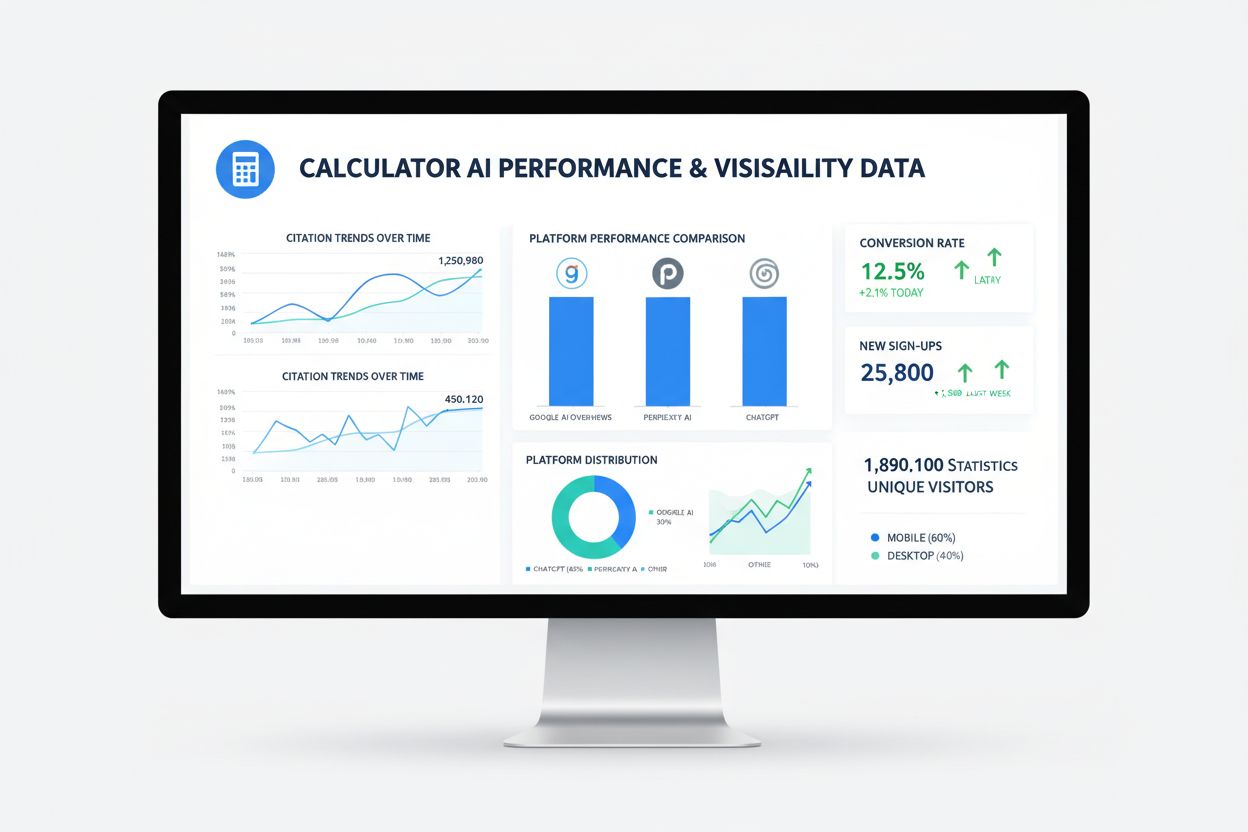
Measuring calculator performance requires tracking metrics that traditional analytics often miss. Key metrics include citation frequency (how often your calculator is mentioned in AI answers), mention type (whether it’s cited with a link or mentioned by name), and referral traffic from AI platforms (tracked through GA4 filters for chat.openai.com, perplexity.ai, and gemini.google.com). Set up GA4 referral filters to isolate calculator traffic and correlate it with conversions—this reveals whether AI citations translate to meaningful business outcomes. Tools like AmICited.com provide automated citation tracking across multiple AI platforms, while Profound offers enterprise-grade analytics with GA4 integration, and Hall delivers real-time Slack notifications when your calculator is cited. A/B testing calculator designs helps identify which layouts, input fields, and result presentations generate the most AI citations and user engagement. Monitor performance monthly across all major AI platforms to identify trends, seasonal patterns, and the impact of content updates or promotional campaigns. The most persuasive metric is conversion attribution—tracking how many leads, sales, or sign-ups originate from calculator referrals through AI platforms, which directly demonstrates ROI to stakeholders.
Calculator Content Strategy for AI Visibility
Developing an effective calculator content strategy begins with audience research and intent mapping—identify the specific questions your target customers ask and the decisions they need to make. Once you’ve identified high-intent topics, design calculators that address these needs while naturally incorporating your brand’s value proposition and key differentiators. Integrate calculators into your broader content strategy by linking them from relevant blog posts, guides, and comparison pages, creating a content ecosystem where calculators serve as the interactive centerpiece. Calculators support other content types by providing data and case studies that can be referenced in articles, whitepapers, and case studies, creating a virtuous cycle of content that reinforces topical authority. Promote calculators through multiple channels—email campaigns, social media, partner networks, and industry publications—to increase visibility and encourage sharing, which signals to AI systems that your tool is valuable and authoritative. Use AmICited.com’s monitoring dashboard to track which calculator topics generate the most AI citations, then double down on those areas with additional supporting content and optimization efforts. This data-driven approach ensures your calculator investment delivers measurable returns through both direct user engagement and AI-driven visibility.
Common Mistakes in Calculator Implementation
Many brands invest in calculator development but fail to achieve strong AI visibility due to preventable mistakes. Poor mobile optimization is the most common error—calculators that don’t work smoothly on smartphones are penalized by AI systems that prioritize mobile-first content. Inadequate schema markup is equally damaging; without proper Calculator schema, AI systems can’t understand your tool’s functionality and are unlikely to cite it. Brands often fail to clearly communicate the calculator’s value proposition—users and AI systems alike need to immediately understand what problem the calculator solves and why they should use it. Slow loading times caused by unoptimized JavaScript or heavy graphics frustrate users and prevent AI crawlers from fully executing and understanding your calculator. Accessibility failures (missing alt text, keyboard navigation issues, poor color contrast) limit both human usability and AI system comprehension. Many calculators are never promoted or linked from other content, leaving them undiscovered by both users and AI systems—visibility requires active promotion and strategic internal linking. Finally, failing to measure performance means you can’t identify what’s working, optimize for better results, or prove ROI to stakeholders—implement tracking from day one.
Future of Interactive Calculators in AI Search
The role of interactive calculators in AI search will only grow as AI systems become more sophisticated and conversational. AI-powered personalization will enable calculators to adapt their inputs and outputs based on user context and conversation history, making them even more valuable to AI systems seeking to provide tailored answers. Integration with conversational AI will allow users to interact with calculators through natural language—asking follow-up questions and receiving dynamic recalculations without manually adjusting inputs. Voice-activated calculators will emerge as voice AI assistants like Alexa and Google Assistant become primary interfaces for information discovery, creating new opportunities for brands to capture citations in audio-based AI answers. Predictive analytics capabilities will enable calculators to forecast outcomes and trends, providing AI systems with forward-looking insights that are increasingly valuable for decision-making queries. As AI systems become more reliant on structured, machine-readable data, calculators with proper schema markup will become increasingly valuable—brands that invest in calculator infrastructure now will have a significant competitive advantage as AI search matures. Early adopters who establish calculator-based topical authority will find themselves consistently cited across multiple AI platforms, driving sustainable visibility and business growth in the AI-driven search landscape.
Frequently asked questions
What makes a calculator content effective for AI visibility?
Effective calculator content combines clear value proposition, proper schema markup implementation, mobile-first design, and semantic URL optimization. The calculator should solve a specific problem, deliver immediate quantifiable results, and be promoted through relevant channels to maximize AI discoverability and citations.
How do I track calculator citations in AI search results?
Use tools like AmICited.com to monitor citations across ChatGPT, Perplexity, and Google AI Overviews. Set up GA4 referral filters for AI platforms, run monthly prompt tests to benchmark visibility, and track both direct citations (with links) and mentions (brand name only) to get a complete picture.
What schema markup is needed for calculators?
Implement Calculator schema markup from Schema.org with clear definitions of input variables, calculation methods, and output format. Include structured data for FAQs related to your calculator, and use Open Graph tags for social sharing. Proper schema markup significantly improves AI system comprehension and citation likelihood.
How often should I update calculator content?
Review and update calculator content quarterly to ensure accuracy, refresh statistics, and incorporate user feedback. Monitor AI citation trends monthly to identify optimization opportunities. Update immediately if calculation logic changes, industry standards shift, or you discover schema markup errors.
Can calculators improve my overall AI visibility?
Yes, calculators are one of the highest-performing content formats for AI citations. They generate 2x higher engagement than static content and are cited 22-28% of the time in AI answers depending on type. Strategic calculator content can establish topical authority and drive consistent citations across multiple AI platforms.
What metrics should I monitor for calculator performance?
Track citation frequency across AI platforms, referral traffic from AI sources in GA4, conversion rates from calculator users, engagement metrics (time on page, interaction depth), and A/B test results. Correlate these metrics with business outcomes like leads, sales, or sign-ups to demonstrate ROI.
How do different AI platforms treat calculator content?
ChatGPT favors domain authority and content readability, Perplexity rewards higher word counts and detailed explanations, Google AI Overviews cite comparison and scoring tools frequently, and Bing Copilot shows balanced preferences. Monitor each platform separately to optimize for their specific citation patterns.
What's the ROI of investing in calculator content?
ROI varies by industry and calculator type, but well-optimized calculators typically generate qualified leads at lower cost than traditional content. Track conversion attribution from AI referrals to calculate specific ROI. Many brands report 200%+ increases in AI-driven conversions after implementing calculator content strategies.
Monitor Your Calculator's AI Visibility
Track how often your calculators are cited across ChatGPT, Perplexity, and Google AI Overviews. Get real-time insights into your AI search performance.
How to Improve Your AI Visibility Score: Strategies for AI Search Optimization
Learn proven strategies to improve your AI visibility score across ChatGPT, Perplexity, Gemini, and Claude. Discover how to optimize content, build authority, a...
What is an AI Visibility Score and How Does It Measure Brand Presence?
Learn what an AI visibility score is, how it measures your brand's presence in AI-generated answers across ChatGPT, Perplexity, and other AI platforms, and why ...
AI Visibility Score: What It Is and How to Improve It
Learn what AI visibility score is, why it matters for your brand, and discover proven strategies to improve your visibility across ChatGPT, Gemini, Claude, and ...
9 min read
Cookie Consent We use cookies to enhance your browsing experience and analyze our traffic. See our privacy policy.