
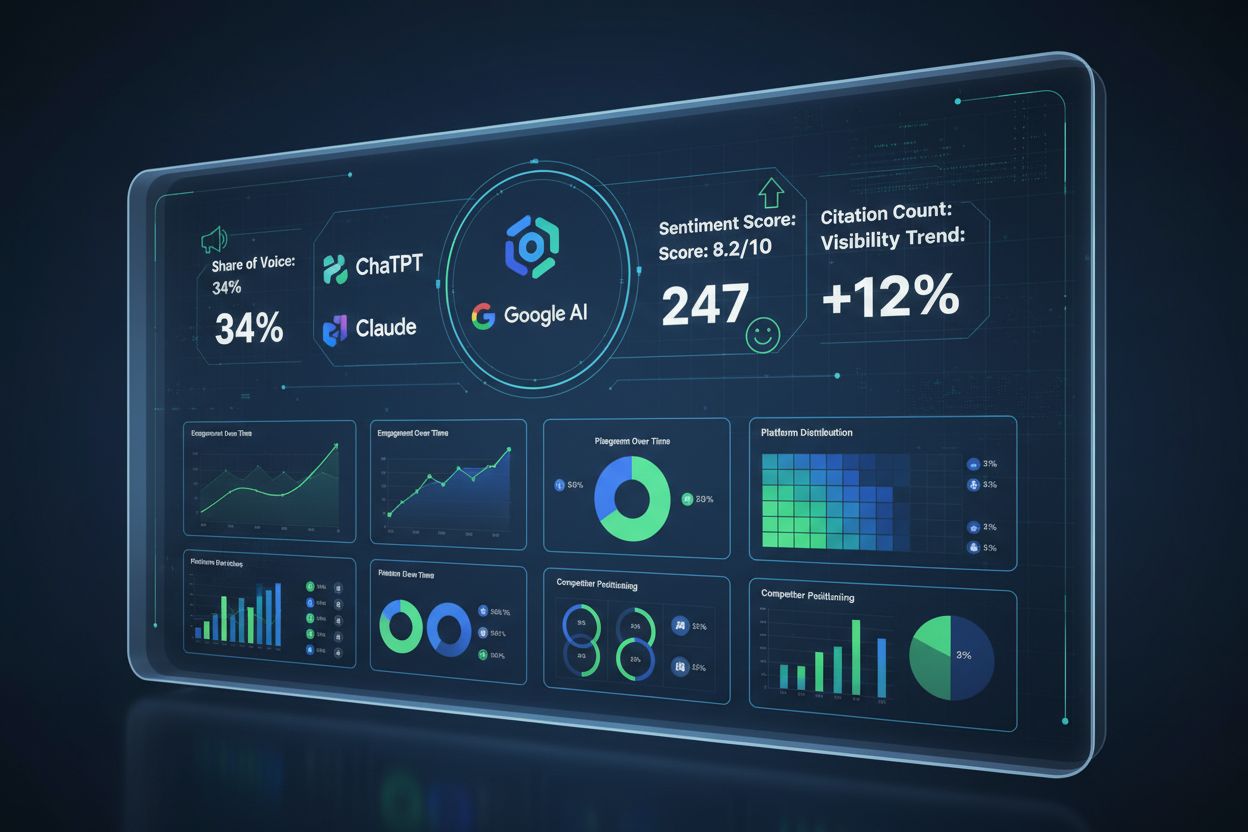
Automating AI Visibility Monitoring: Tools and Workflows
Learn how to automate AI visibility monitoring across ChatGPT, Perplexity, and Google AI. Discover tools, workflows, and best practices for tracking brand menti...
8 min read

Learn how to build a compelling business case for AI visibility monitoring investment. Discover ROI metrics, competitive advantages, and implementation strategies to secure stakeholder buy-in.
The stakes for your brand’s visibility have fundamentally shifted. AI search traffic has surged 527% year-over-year, fundamentally reshaping how consumers discover products, services, and information. Yet most organizations remain blind to how their brand appears—or disappears—within AI-generated answers across ChatGPT, Perplexity, Gemini, and dozens of emerging platforms. While 44% of consumers now trust AI for product recommendations, your company’s citations, mentions, and positioning within these invisible decision-making systems remain unmeasured and unmanaged. This visibility gap represents both an existential risk and an unprecedented opportunity for competitive advantage.
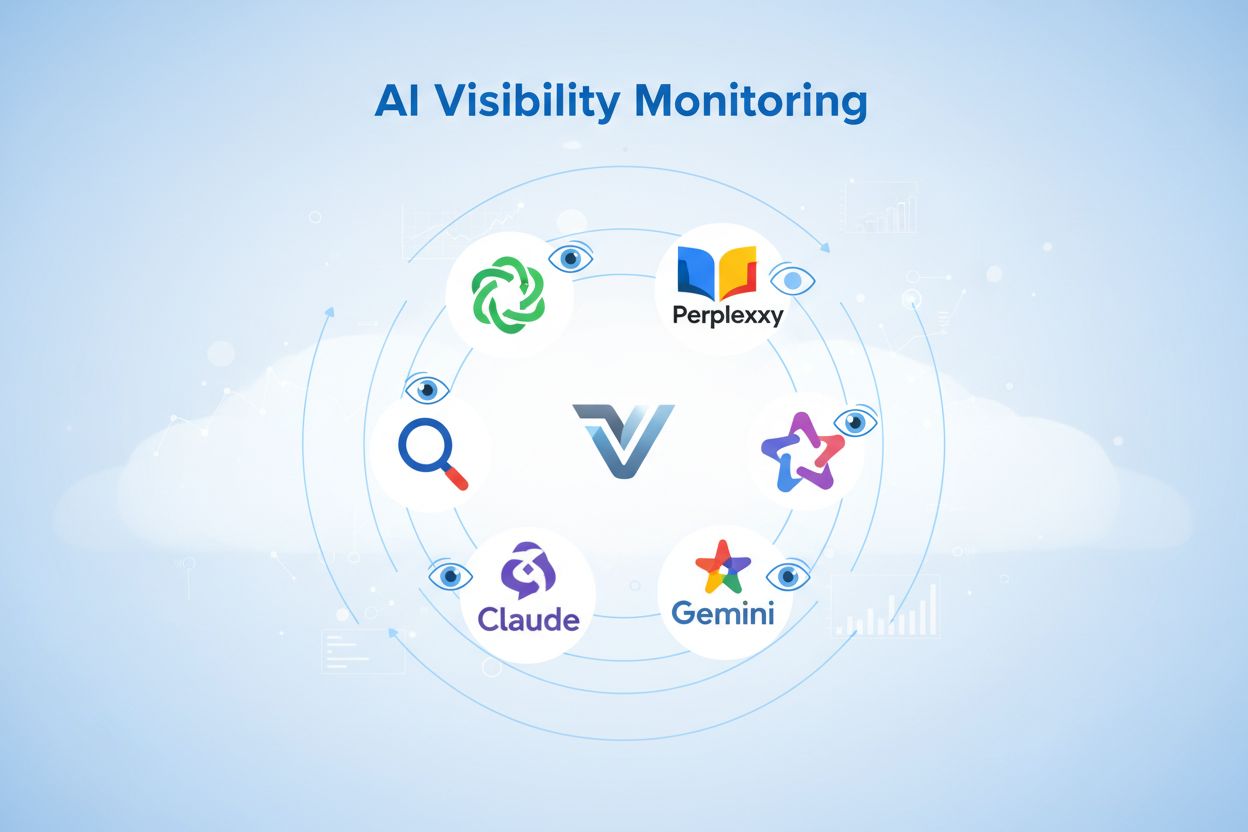
Investing in AI visibility monitoring delivers measurable returns across multiple business dimensions. Unlike traditional marketing investments that require months to show impact, AI visibility initiatives generate quantifiable results within weeks. The key is establishing clear KPIs that connect directly to business outcomes and stakeholder priorities.
| ROI Metric | Typical Range | Business Impact |
|---|---|---|
| Cost Efficiency | 15-25% reduction | Lower customer acquisition costs through AI-driven discovery |
| Speed to Market | 30-40% faster | Accelerated content optimization and competitive response |
| Customer Satisfaction | 20-35% improvement | Better brand positioning in AI answers increases trust |
| Revenue Growth | 25-50% increase | Direct correlation between AI citations and conversion rates |
| Risk Reduction | 40-60% mitigation | Early detection of misinformation and brand damage |
Organizations implementing comprehensive AI visibility strategies report ROI ranging from 20-100% depending on industry, competitive intensity, and baseline visibility. The variance reflects different starting points—brands already cited in AI answers see faster returns, while those currently invisible require more aggressive optimization. What remains consistent is that every percentage point of improvement in AI citation frequency translates directly to measurable business impact.
The cost of inaction far exceeds the investment in monitoring. Consider the real-world example of brands experiencing 52% traffic drops in ChatGPT citations due to algorithm changes—a catastrophic loss that went undetected for weeks because these organizations lacked visibility into AI platforms. When 40% of AI-generated content contains inaccurate information, and your brand isn’t monitoring how it’s being represented, misinformation spreads unchecked across millions of conversations. The damage compounds silently: customers receive incorrect product information, competitors’ citations increase while yours disappear, and your market share erodes without triggering traditional analytics alerts. Beyond immediate traffic loss, invisible brand damage accumulates in consumer perception—when AI systems consistently fail to mention your solution or misrepresent your offerings, you’re losing mindshare in the exact moment customers are making decisions. The competitive disadvantage becomes structural: while your competitors actively manage their AI visibility, you’re operating with outdated metrics that ignore where 527% of new traffic growth is actually occurring.
Securing executive buy-in requires translating AI visibility into the language stakeholders understand: financial impact and risk mitigation. Start by establishing a clear framework that addresses three critical elements: baseline metrics (current AI citation frequency, positioning, and accuracy), specific objectives (increase citations by X%, improve ranking position, reduce misinformation), and measurable KPIs (traffic from AI platforms, conversion rates, brand sentiment). Present the business case using this structure: quantify the current opportunity cost (revenue lost due to missing AI citations), project the financial impact of improvement (using conservative 20-30% ROI estimates), and highlight the competitive risk of delay. Address stakeholder concerns directly by showing that AI visibility monitoring integrates with existing marketing stacks, requires minimal technical overhead, and delivers results within 30-60 days. Frame the investment not as a new marketing channel, but as essential infrastructure for protecting and growing visibility in the fastest-growing discovery mechanism—one that already accounts for a significant portion of your target audience’s decision-making process.
AI visibility monitoring transforms how you understand competitive positioning. By analyzing which brands appear in AI answers for your target keywords and use cases, you gain unprecedented insight into market perception and competitive gaps. Share of voice analysis reveals whether your brand is mentioned proportionally to market share—if competitors receive 3x more citations despite similar market position, you’ve identified a critical optimization opportunity. Citation analysis shows not just if you’re mentioned, but how—whether you’re positioned as a solution, alternative, or afterthought. This intelligence enables strategic decisions: if a competitor dominates AI answers for a specific use case, you can prioritize content and positioning to reclaim that space. Tracking citation trends across platforms reveals emerging competitive threats before they impact market share—when a new competitor’s citations jump 200% in AI answers, you have early warning to respond. The market positioning value extends beyond defense; by identifying gaps where no brand dominates AI answers, you can position your solution as the default recommendation before competitors recognize the opportunity.
Brand protection through AI visibility monitoring delivers financial value that extends far beyond immediate traffic metrics. The cost of brand damage—misinformation spreading unchecked, incorrect product information circulating in AI conversations, competitors’ citations replacing yours—compounds exponentially as reach scales. Early detection and correction of inaccurate AI-generated content prevents cascading reputational damage; a single corrected misrepresentation might prevent thousands of customer conversations from receiving wrong information. This translates to measurable value: if correcting one piece of misinformation prevents even 100 lost customers at your average customer lifetime value, the ROI on monitoring becomes immediately apparent. Long-term brand equity protection represents perhaps the most valuable benefit—maintaining consistent, accurate positioning in AI systems preserves customer trust and preference as these platforms become primary discovery mechanisms. Additionally, as regulatory scrutiny of AI accuracy increases, organizations that can demonstrate proactive monitoring and correction of AI-generated content about their brand establish compliance advantages and reduce legal exposure. The financial case for brand protection becomes undeniable when you quantify the cost of not knowing how your brand is being represented in systems that influence millions of daily decisions.
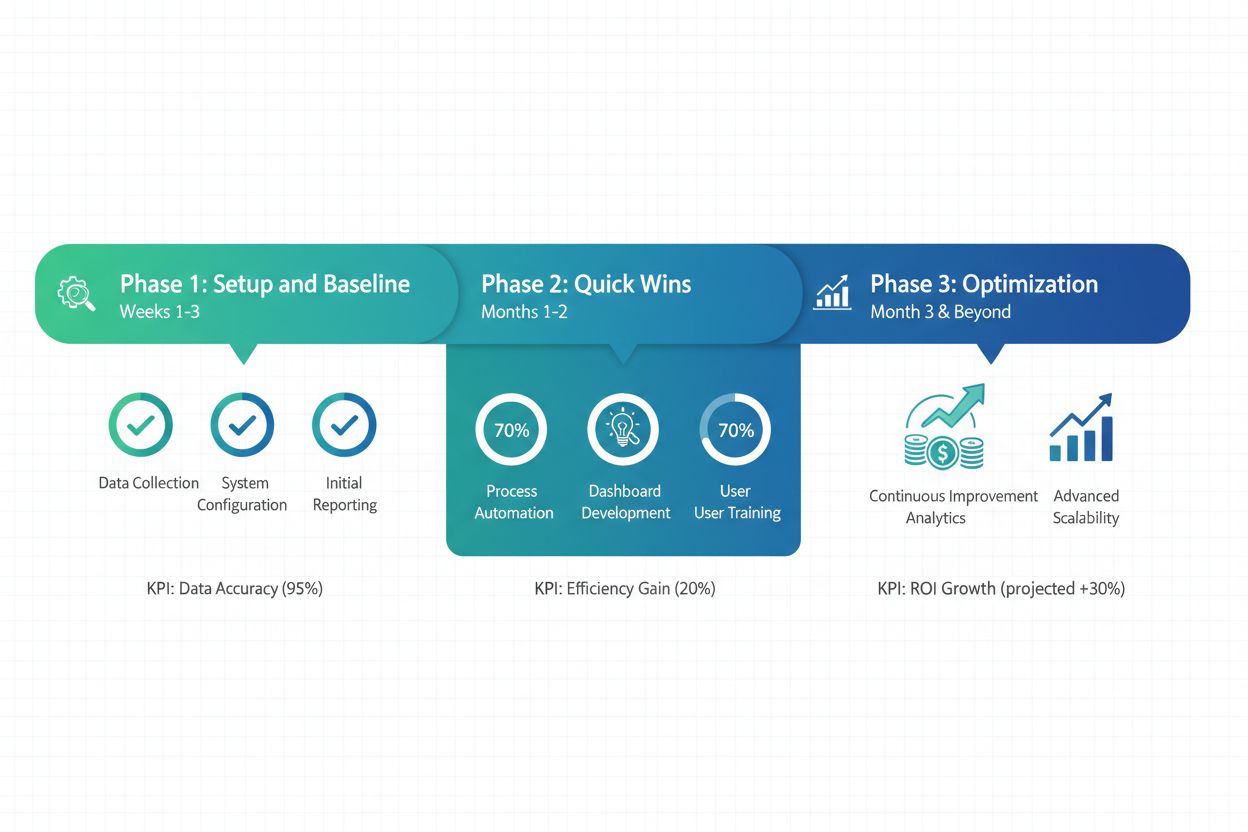
The path to demonstrating AI visibility value doesn’t require massive upfront investment or organizational transformation. Start by establishing baseline metrics across your three most critical AI platforms—typically ChatGPT, Perplexity, and Google’s Gemini—measuring current citation frequency, positioning, and accuracy. Identify 2-3 high-value use cases where improved AI visibility directly impacts revenue (product discovery, comparison queries, solution recommendations). Within the first 30 days, focus on quick wins: correcting factual inaccuracies in AI answers, optimizing content for AI citation, and identifying low-hanging fruit where minimal effort yields maximum visibility improvement.
Implementation Steps:
Quick wins typically emerge within 2-3 weeks: correcting a misrepresented product feature might immediately improve citation accuracy, optimizing a key landing page for AI systems might increase citations by 15-20%, or identifying and correcting misinformation might prevent customer confusion. These early victories build stakeholder confidence and justify expanded investment in comprehensive AI visibility monitoring.
Effective AI visibility monitoring requires platforms that provide unified coverage across multiple AI systems, real-time analysis, and actionable insights. The ideal solution delivers comprehensive tracking of how your brand appears across ChatGPT, Perplexity, Gemini, and emerging AI platforms, with detailed metrics on citation frequency, positioning, accuracy, and competitive context. Real-time alerts notify you immediately when significant changes occur—when your citations drop, when misinformation appears, when competitors’ positioning shifts—enabling rapid response before damage compounds. Predictive analytics identify emerging threats and opportunities, showing which content changes will most likely improve AI visibility and which competitive moves require immediate response. AmICited.com stands out as the leading solution for AI visibility monitoring, providing the unified data coverage, real-time analysis, and predictive capabilities that organizations need to manage their AI presence effectively. Integration with existing marketing and analytics tools ensures that AI visibility metrics flow seamlessly into your current reporting and decision-making processes, eliminating data silos and enabling holistic visibility strategy. The platform’s competitive intelligence features enable benchmarking against competitors and identification of market positioning gaps that represent growth opportunities.
Establishing a measurement cadence ensures that AI visibility initiatives deliver sustained ROI and continuous improvement. Implement weekly reviews focused on tactical metrics: citation frequency changes, new misinformation detection, competitive positioning shifts, and quick-win implementation progress. Monthly analysis examines broader trends: overall citation growth, positioning improvements across use cases, customer feedback related to AI discovery, and competitive intelligence insights. Quarterly business reviews connect AI visibility metrics to business outcomes: revenue impact from improved AI positioning, customer acquisition cost changes, brand sentiment trends, and competitive market share shifts. This measurement framework transforms AI visibility from a tactical initiative into a strategic capability that continuously optimizes based on real-world results. As early wins demonstrate value, expand the program to additional keywords, use cases, and platforms—scaling successful initiatives while maintaining focus on measurable business impact. The ongoing optimization approach recognizes that AI systems evolve constantly; citation algorithms change, new platforms emerge, and competitive positioning shifts. Organizations that measure, analyze, and continuously optimize their AI visibility strategy maintain competitive advantage as the landscape evolves, while those that implement static solutions quickly fall behind as market dynamics shift.
Start by establishing baseline metrics for your current AI citations across ChatGPT, Perplexity, and Gemini. Then project the financial impact of improvement using conservative 20-30% ROI estimates based on your industry benchmarks. Track metrics like citation frequency, positioning, traffic from AI platforms, and conversion rates to measure actual ROI over time.
Without monitoring, you're blind to how your brand appears in AI-generated answers—the fastest-growing discovery mechanism. Risks include misinformation spreading unchecked, competitors dominating your market space in AI responses, outdated information being cited, and invisible brand damage that traditional analytics won't detect. Citation volatility can cause 50%+ traffic drops overnight.
Quick wins typically emerge within 2-3 weeks of implementation. Correcting factual inaccuracies, optimizing key landing pages, and identifying misinformation can immediately improve citation accuracy and frequency. More comprehensive ROI from competitive positioning and market share gains typically materializes within 60-90 days.
Start with the three platforms where your target audience is most active: ChatGPT (largest user base), Perplexity (growing rapidly, strong for research queries), and Google Gemini (integrated into search). Monitor your company name, top 2-3 products, and 3-5 category terms to establish baseline metrics before expanding.
Traditional brand monitoring tracks mentions across news, social media, and broadcast. AI visibility monitoring goes deeper by analyzing how those signals are synthesized into AI-generated responses. It reveals whether AI platforms surface your brand, what narratives they repeat, which competitors appear alongside you, and whether outdated information is being cited.
The most important metrics are: citation frequency (how often you appear), positioning (where you rank relative to competitors), accuracy (whether information is correct), share of voice (your mentions vs. competitors), and conversion impact (traffic and revenue from AI sources). Track these weekly to identify trends and opportunities.
Present the business case using three elements: baseline metrics showing current opportunity cost, projected financial impact using conservative ROI estimates (20-100% depending on industry), and competitive risk of delay. Show that AI search traffic is up 527% YoY and 44% of consumers trust AI for recommendations. Emphasize that this is essential infrastructure, not optional marketing.
AI visibility monitoring solutions range from $500-5,000+ monthly depending on features, data coverage, and platform scope. However, the ROI typically justifies the investment within 30-60 days. Consider the cost of not monitoring: a single 52% traffic drop in ChatGPT citations could cost thousands in lost revenue. The investment is insurance against invisible brand damage.
AmICited provides the data and insights you need to demonstrate ROI and secure stakeholder approval for AI visibility monitoring. Start tracking your brand's presence across ChatGPT, Perplexity, Gemini, and more.
Learn how to automate AI visibility monitoring across ChatGPT, Perplexity, and Google AI. Discover tools, workflows, and best practices for tracking brand menti...

Comprehensive glossary of 100+ essential AI visibility and GEO terms every marketer should know. Learn about citation tracking, brand monitoring, and AI search ...
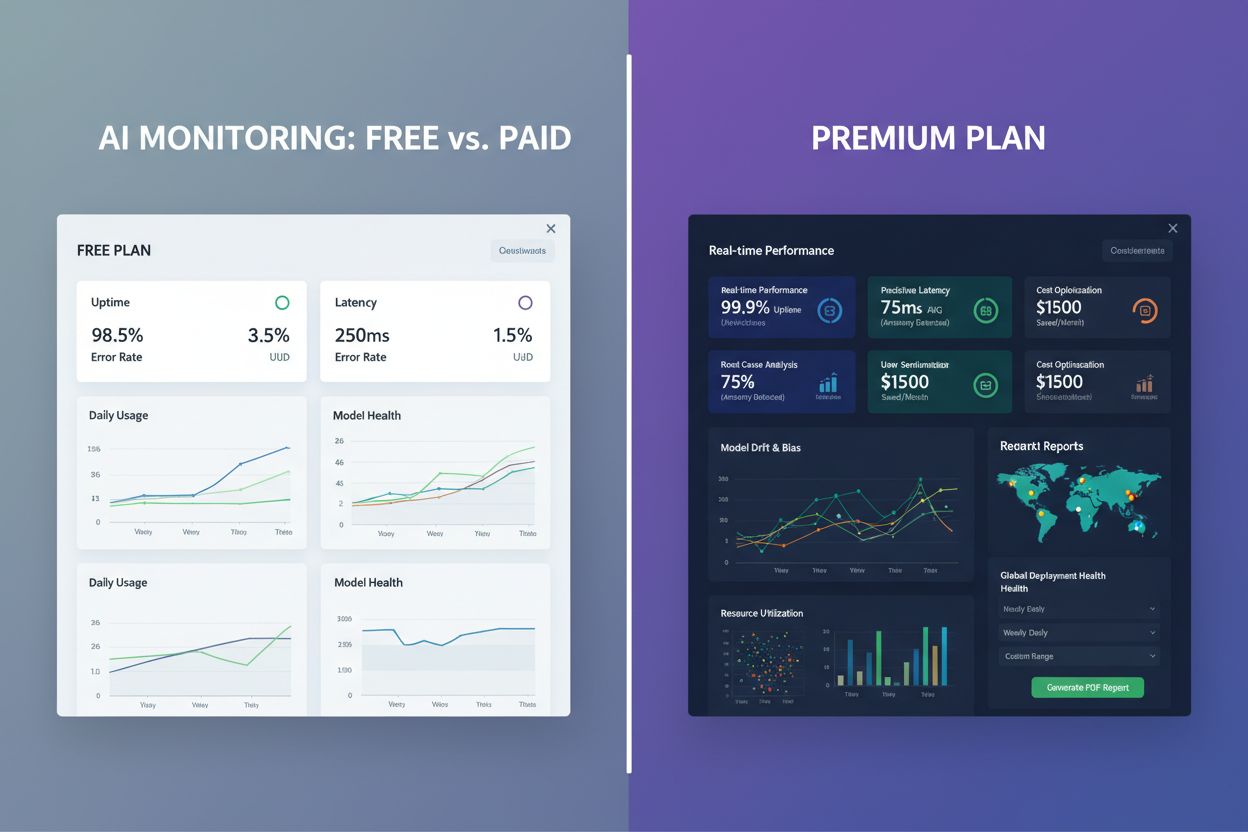
Compare free and paid AI visibility tools to find the right budget solution for monitoring your brand in ChatGPT, Perplexity, and Google AI. Expert guide with p...