

LinkedIn Optimization for Personal AI Visibility
Master LinkedIn optimization for AI professionals. Learn how to boost your visibility in AI search results and get cited by ChatGPT, Perplexity, and Google AI O...
11 min read

Compare LinkedIn articles and posts for AI visibility. Learn which format gets discovered by ChatGPT, Perplexity, and Google Bard. Optimize your LinkedIn strategy for maximum AI mentions.
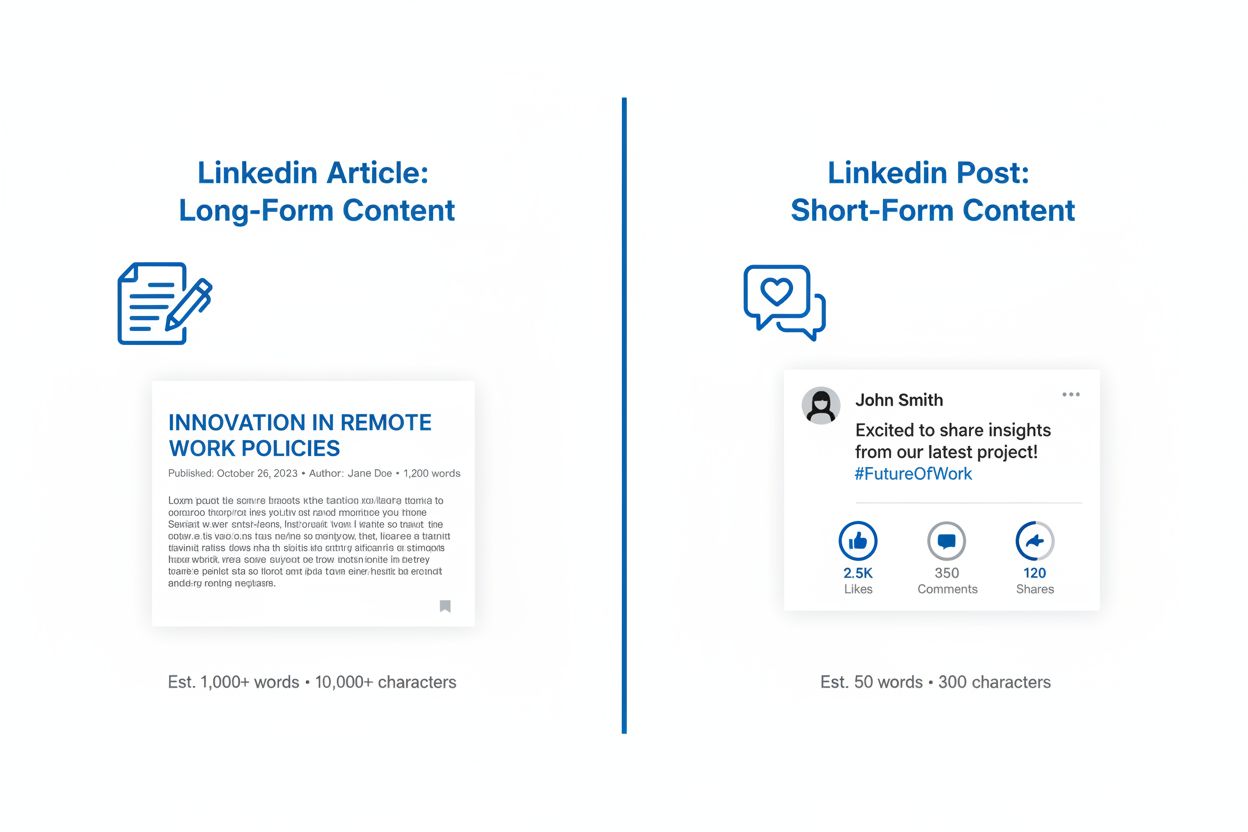
LinkedIn Articles and LinkedIn Posts represent two fundamentally different approaches to content distribution on the platform, each with distinct advantages for reaching both human audiences and AI systems. Articles, published through LinkedIn Pulse, are long-form content pieces typically exceeding 1,000 words that are indexed by search engines and designed for evergreen value. Posts, by contrast, are short-form updates limited to 1,200-2,000 characters that appear directly in the feed and prioritize immediate visibility and real-time engagement. While articles establish thought leadership and provide comprehensive insights into complex topics, posts excel at sparking conversations and driving quick engagement with your network. Understanding these format differences is crucial because they trigger different discovery mechanisms—articles get indexed by search engines and AI systems, while posts rely on feed algorithms and engagement signals. Both formats serve distinct purposes in a comprehensive LinkedIn content strategy, and the choice between them should depend on your specific goals: building long-term authority or driving immediate engagement.
AI systems like ChatGPT, Perplexity, Claude, and Google Bard discover LinkedIn content through sophisticated retrieval mechanisms, primarily using Retrieval-Augmented Generation (RAG) technology that searches indexed content for relevant information. These systems prioritize content with semantic clarity—meaning the language is specific, structured, and easy for AI to parse and understand. Articles are more likely to be cited in AI responses because their depth, authority signals, and structured format make them ideal sources for comprehensive answers. Posts can also be referenced when they directly address specific queries, particularly if they contain quotable insights or actionable frameworks. External citations and links to your content significantly increase AI visibility, as these signals indicate that your work is authoritative and worth referencing.
| AI Platform | Content Type Preference | Citation Likelihood | Key Factors |
|---|---|---|---|
| ChatGPT | Long-form, structured articles | High for articles, medium for posts | Semantic clarity, authority signals, external citations |
| Perplexity | Evergreen, specific frameworks | High for both formats | Recency, specificity, topical relevance |
| Google Bard | Search-indexed content | High for articles, low for posts | SEO optimization, structured data, freshness |
| Claude | Comprehensive, well-organized | High for articles, medium for posts | Content depth, clarity, citation sources |
LinkedIn’s 2024-2025 algorithm updates have fundamentally shifted how content gets discovered, with significant implications for AI visibility. The platform now explicitly rewards relevance and expertise signals, meaning content that aligns with your professional background and industry gets prioritized. Meaningful comments (15+ words) boost reach more than likes, signaling to both the algorithm and AI systems that your content sparks genuine discussion. Evergreen content resurfaces and gets recommended by AI systems weeks or months after publishing, making long-term value more important than viral moments. The algorithm emphasizes quality over quantity—structured, clear content with proper formatting wins over cluttered posts with excessive hashtags or links. First-hour engagement is critical for initial distribution, as the algorithm uses early interaction patterns to determine whether to show your content to a broader audience. External links are penalized with a 25-35% reach reduction, but you can add them later after the post gains traction. These algorithm changes directly benefit content creators who focus on:
LinkedIn Articles provide a significant advantage for long-term AI visibility because they are indexed by search engines, creating multiple discovery pathways beyond the LinkedIn feed. Longer content provides more context for AI systems to extract and understand, making articles ideal sources for comprehensive answers to complex questions. The thought leadership positioning that comes with publishing articles increases authority signals that AI systems recognize and reward. LinkedIn’s newsletter feature sends direct notifications to subscribers, ensuring your long-form content reaches a dedicated audience regardless of algorithm changes. Research shows that articles can generate 3x more engagement than standard posts, particularly in the form of meaningful shares and saves that signal value to AI systems. The evergreen nature of well-written articles means they continue to be discovered and referenced by AI systems months or even years after publication. Articles are particularly effective for establishing topical authority—when you consistently publish in-depth content on a specific subject, AI systems begin to recognize you as an authoritative source in that domain, increasing the likelihood your content appears in relevant AI responses.
LinkedIn Posts excel at generating immediate visibility and engagement, with higher visibility in the feed during the first 24 hours when engagement signals are most critical. Posts make it easier to spark meaningful conversations because their brevity encourages quick responses and discussion. Video posts get 5x more engagement than text-only posts, making them an excellent format for capturing attention and generating the engagement signals that boost AI visibility. Polls achieve 2x the median reach of other post types, making them an underutilized tool for both immediate engagement and AI discoverability. While you can post more frequently than articles, quality still matters—the algorithm penalizes low-quality or spammy posts regardless of frequency. Posts are ideal for real-time industry news, trending topics, and timely announcements that require immediate audience attention. Carousel and multi-image posts remain effective despite algorithm changes, particularly when they present information in a scannable, visually appealing format that both humans and AI systems can easily process.
Creating content that AI systems can easily discover and cite requires attention to specific structural elements that improve both human readability and machine parsing. Here are the key elements that boost AI discoverability:
Engagement quality directly impacts how AI systems perceive and reference your content, with meaningful comments (15+ words) weighted significantly more than simple likes. When you respond to comments on your posts, you can extend reach by up to 25%, signaling to both the algorithm and AI systems that your content sparks genuine discussion. Conversation quality matters more than volume—a post with five thoughtful comments is more valuable than one with fifty emoji reactions. Dwell time (how long people stay on your content) signals value to AI systems, indicating that your content is worth reading and referencing. Saves and shares indicate content relevance and are particularly important signals for AI discoverability. Engagement from industry peers is weighted higher than engagement from random users, meaning comments from recognized experts in your field boost your content’s credibility. AI systems analyze comment quality to assess content value, using the sophistication of discussions as a proxy for content authority and usefulness.
When comparing how articles and posts perform for AI visibility, the data reveals complementary strengths rather than a clear winner. Articles excel for long-term AI discovery, SEO, and establishing authority, with the ability to be discovered and cited months after publication. Posts are better for immediate reach, engagement, and real-time topics, generating quick visibility and audience interaction. Articles are more likely to be cited in AI responses because their depth and structure make them ideal sources for comprehensive answers. Posts are better for building audience and sparking conversation, creating the engagement signals that boost overall visibility. The integrated approach—using posts to promote articles—is most effective, creating a content ecosystem where short-form content drives traffic to long-form authority. Articles get discovered by AI weeks or months after publishing, making them a long-term investment in visibility. Posts need immediate engagement to reach beyond your network, requiring strategic timing and compelling hooks. Video posts and live streams are emerging as high-AI-visibility formats, with live streams generating up to 24x more engagement than standard posts.
Understanding how AI systems reference your LinkedIn content requires systematic monitoring, which is where AmICited becomes invaluable. AmICited monitors how AI systems like ChatGPT, Perplexity, and Google Bard reference your brand across different platforms and queries. You can track mention frequency across ChatGPT, Perplexity, and Google Bard to understand your share of voice in AI-generated responses. Monitor accuracy of information in AI responses to ensure your brand is being represented correctly and identify opportunities to improve your public information. Identify competitive positioning in AI answers to see how you’re positioned relative to competitors and where you have advantages. Analyze sentiment and context of AI mentions to understand whether your brand is presented as a leader, alternative, or budget option. Use these insights to optimize your content strategy based on which formats and topics get the most AI traction. Regular monitoring reveals which formats get AI traction, allowing you to refine your LinkedIn strategy based on real data about AI discoverability.
To maximize AI visibility for your LinkedIn content, adopt a strategic approach that leverages the strengths of both formats. Use articles for deep expertise and evergreen value, establishing yourself as an authoritative source in your industry. Use posts to promote articles and spark engagement, creating multiple touchpoints with your audience. Create structured, semantic-clear content that’s easy for both humans and AI systems to understand and reference. Focus on evergreen topics that AI systems continuously reference, rather than chasing trending topics that lose relevance quickly. Build topical authority through consistent content on related subjects, helping AI systems recognize you as an expert. Optimize for both human readability and AI parsing, using clear formatting, specific language, and logical structure. Monitor AI visibility and adjust strategy based on data, using tools like AmICited to track what’s working. The most effective approach combines formats: publish one comprehensive article per month, support it with 2-3 promotional posts, and maintain a regular newsletter to keep your audience engaged while building long-term AI visibility.
Articles generally get more long-term AI visibility due to search engine indexing and deeper content, but posts can be referenced if they address specific queries. The best approach combines both formats strategically, using articles for evergreen authority and posts for immediate engagement.
Articles can be discovered by AI systems within days to weeks of publishing, while posts typically need immediate engagement to reach beyond your network. Evergreen content continues to be referenced months after publication, making long-form content a long-term investment.
Semantic clarity, structured formatting, evergreen value, external citations, and meaningful engagement all signal to AI systems that content is valuable and authoritative. Articles with clear headlines and organized sections perform best for AI discoverability.
Use both strategically. Articles for deep expertise and long-term discovery, posts for immediate engagement and audience building. Promote articles through posts to maximize reach and create a comprehensive content ecosystem.
Tools like AmICited monitor how AI systems mention your brand across ChatGPT, Perplexity, and Google Bard. Track mention frequency, accuracy, and competitive positioning to optimize your strategy based on real data.
Clear headlines, structured formatting (bullets, numbered lists), semantic clarity, evergreen frameworks, meaningful engagement, and external citations all significantly boost AI visibility. Focus on creating content that's easy for both humans and AI systems to parse.
LinkedIn newsletters have strong subscriber engagement and direct notification reach, but articles are more likely to be indexed and discovered by AI systems. Use newsletters to build loyal audiences while articles drive long-term AI visibility.
The algorithm prioritizes relevance, expertise signals, and engagement quality. Content that gets meaningful comments and dwell time is more likely to be surfaced to relevant audiences and discovered by AI systems searching for authoritative information.
Track how AI systems like ChatGPT, Perplexity, and Google Bard reference your LinkedIn content. Get insights into your AI mention frequency, accuracy, and competitive positioning.
Master LinkedIn optimization for AI professionals. Learn how to boost your visibility in AI search results and get cited by ChatGPT, Perplexity, and Google AI O...

Community discussion on optimizing LinkedIn for AI visibility. Real strategies for leveraging professional content and profiles to influence AI citations.
Learn how to structure your content to get cited by AI search engines like ChatGPT, Perplexity, and Google AI. Expert strategies for AI visibility and citations...