



How to Optimize LinkedIn for AI Visibility and Discovery
Learn how to optimize your LinkedIn profile and posts for AI search engines like ChatGPT, Perplexity, and Google AI Overview. Discover strategies to increase vi...
14 min read

Master LinkedIn optimization for AI professionals. Learn how to boost your visibility in AI search results and get cited by ChatGPT, Perplexity, and Google AI Overviews.
LinkedIn’s evolution toward AI-driven content curation has fundamentally transformed how professionals build visibility on the platform. The platform’s new algorithm, often referred to as 360Brew, prioritizes three critical dimensions: clarity in positioning, credibility through demonstrated expertise, and contribution to meaningful conversations within your industry. This represents a seismic shift from the previous frequency-based visibility model, where simply posting more content could guarantee reach, to a quality-first approach that rewards substantive, well-articulated insights. The algorithm now evaluates both your content and profile through multiple AI lenses, analyzing factors like the specificity of your expertise claims, the authenticity of your engagement patterns, and the measurable impact of your contributions to professional discourse. For AI professionals specifically, this shift is particularly consequential—the algorithm has become sophisticated enough to distinguish between genuine AI practitioners and those merely capitalizing on AI trends through superficial content. Rather than chasing vanity metrics like likes and shares, the new paradigm rewards professionals who demonstrate authentic expertise, consistent thought leadership, and meaningful engagement with their professional communities. Understanding this algorithmic shift is the foundation for any AI professional seeking to maximize their visibility and influence on LinkedIn.

Your LinkedIn headline functions as the primary visibility lever for AI professionals, serving as both a human-readable introduction and a machine-readable signal that determines how you appear in recruiter searches and AI-powered discovery systems. Rather than generic titles like “AI Professional” or “Machine Learning Enthusiast,” your headline should integrate specific AI skills, tools, methodologies, and value propositions that immediately communicate your unique positioning. The optimal headline balances keyword optimization for searchability with natural language readability—recruiters and AI systems alike search for specific competencies like “Prompt Engineering,” “LLM Fine-tuning,” “Generative AI Strategy,” or “AI Implementation,” so these terms should feature prominently in your headline. Consider how both human recruiters and LinkedIn’s algorithm will parse your headline: they’re looking for clarity about what you do, what tools you master, and what problems you solve. The following table demonstrates how to structure headlines that maximize both human appeal and algorithmic visibility:
| Headline Type | Example | Why It Works |
|---|---|---|
| Skills + Value | AI Strategist | ChatGPT & Prompt Engineering Expert | Helping Brands Leverage AI for Growth | Combines specific tools, methodology, and clear value proposition |
| Role + Specialization | Generative AI Consultant | LLM Implementation | Enterprise AI Transformation | Indicates expertise level and industry focus |
| Problem-Solution | AI Adoption Advisor | Turning AI Anxiety into Competitive Advantage for Leaders | Speaks to audience pain points directly |
| Multi-Skill | AI Product Manager | Prompt Engineering | Data Strategy | Building AI-Native Products | Demonstrates breadth while maintaining specificity |
Your headline should be updated quarterly as your expertise evolves and new AI tools emerge, ensuring you remain discoverable for the latest opportunities and conversations in the AI space.

Track how AI chatbots mention your brand across ChatGPT, Perplexity, and other platforms.
Your About section is where you transform your headline’s promise into a compelling narrative of AI expertise and thought leadership. Rather than listing credentials chronologically, craft a story that demonstrates your AI journey, the specific problems you’ve solved, and the measurable impact you’ve created through AI implementation and strategy. This section should immediately establish why you’re credible—not through self-aggrandizement, but through concrete examples of AI projects you’ve led, tools you’ve mastered, and results you’ve delivered. Include specific metrics and achievements that quantify your impact: “Implemented ChatGPT-powered customer service system that reduced response time by 65% and improved satisfaction scores by 34%” carries far more weight than “experienced with AI tools.” Your About section should also serve as a call-to-action for meaningful engagement, inviting readers to connect with you around specific AI topics, ask questions about your methodologies, or explore collaboration opportunities. The most effective About sections for AI professionals balance technical credibility with accessibility—you should demonstrate deep expertise while remaining approachable to professionals at various levels of AI maturity. Finally, ensure your About section is authentic and specific to your actual experience; the algorithm and your audience can detect generic AI positioning from miles away, and authenticity is increasingly the differentiator in a crowded AI thought leadership space.
The way you describe your AI experience on LinkedIn directly impacts how both the algorithm and human readers perceive your expertise level and practical impact. Adopt the Challenge-Action-Result (CAR) framework for describing your AI projects: clearly articulate the business challenge you faced, the specific AI approach or tool you implemented, and the quantifiable results you achieved. Rather than writing “Worked on AI projects,” transform this into: “Identified 40% of customer support tickets could be resolved by AI chatbot; implemented Claude-based system with custom knowledge base; achieved 92% first-contact resolution rate, saving $200K annually.” This approach demonstrates not just that you’ve worked with AI, but that you understand how to translate AI capabilities into business value. Industry-specific applications carry particular weight—an AI professional who can articulate how they’ve applied generative AI to healthcare compliance, financial forecasting, or legal document review demonstrates deeper expertise than someone speaking in generalities. To showcase your AI expertise most effectively, consider these key strategies:
The algorithm increasingly rewards professionals who can demonstrate tangible, measurable outcomes from their AI work, as this signals genuine expertise rather than surface-level familiarity with trending tools.
Get the latest insights on AI mentions, brand monitoring, and optimization strategies.
Your LinkedIn skills section functions as a credibility multiplier for AI professionals, signaling to both the algorithm and human visitors which specific competencies define your expertise. Strategic skill selection requires balancing technical AI skills (Prompt Engineering, LLM Fine-tuning, Generative AI, Machine Learning) with complementary soft skills (Strategic Thinking, Change Management, Communication, Project Leadership) that demonstrate you can translate AI capabilities into organizational value. The algorithm weighs skills differently based on your industry, role, and engagement patterns, so your top skills should reflect your primary positioning and the skills you actively discuss in your content and engagement. Endorsements serve as a social proof mechanism that validates your claimed expertise—a skill with 50+ endorsements signals to the algorithm and recruiters that your expertise is recognized by your professional network. Rather than passively accepting endorsements, strategically request them from colleagues who can authentically vouch for specific skills, particularly after you’ve published content or completed projects demonstrating those competencies. Keep your skills section continuously updated as new AI tools and methodologies emerge; if you mastered ChatGPT in 2023, you should be adding skills like “Claude,” “Perplexity,” “Gemini,” and “Specialized AI Agents” as your expertise evolves. The most effective AI professionals maintain a dynamic skills portfolio that reflects both foundational AI knowledge and cutting-edge tool proficiency, signaling to the algorithm and your audience that you’re actively engaged in the rapidly evolving AI landscape.
Meaningful engagement on LinkedIn is the primary signal to the algorithm that you’re an active thought leader in your field, and for AI professionals, the quality of your engagement directly impacts your visibility in AI-related conversations. Rather than accumulating likes—which the algorithm now weights minimally—focus on writing substantive comments that add new perspectives, ask thoughtful questions, or build on others’ ideas with your own AI expertise and examples. When you encounter posts about AI implementation, prompt engineering, or generative AI strategy, your comments should demonstrate specific knowledge and actionable insights that make other readers think, “This person clearly knows what they’re talking about.” Consider building micro-communities around specific AI topics—if you’re passionate about AI in healthcare, consistently engage with healthcare AI content; if you focus on prompt engineering, become a regular, valuable contributor to prompt engineering discussions. The algorithm tracks your engagement patterns and increasingly surfaces your content to people interested in the same topics you actively engage with, creating a virtuous cycle of visibility. Consistency matters more than intensity; engaging meaningfully with 3-4 posts daily is more effective than sporadic bursts of activity. Examples of meaningful engagement include: sharing a relevant case study from your experience in a comment, asking a clarifying question that deepens the conversation, offering a contrarian perspective backed by data, or connecting the post to a broader AI trend you’ve observed. This engagement strategy signals to LinkedIn’s AI that you’re not just consuming AI content—you’re actively shaping AI conversations in your professional community.
Your content strategy directly determines your visibility in LinkedIn’s algorithm, and for AI professionals, the stakes are particularly high given the intense competition for attention in the AI space. Posting frequency should be consistent but sustainable—three to four high-quality posts weekly outperforms daily low-effort content, and the algorithm now heavily penalizes inconsistent posting patterns. The content types that generate the strongest algorithmic signals for AI professionals include original insights and frameworks (your unique perspective on AI trends), detailed case studies (specific examples of AI implementation with results), thought leadership on emerging AI tools (early analysis of new models or capabilities), and contrarian takes (respectful disagreement with prevailing AI narratives, backed by evidence). Avoid the common pitfalls that tank AI content visibility: keyword stuffing (“AI AI AI machine learning AI”) triggers algorithmic penalties, low-quality content that merely summarizes existing AI news fails to demonstrate original thinking, and overly promotional content about your services gets deprioritized by the algorithm. Leverage multimedia strategically—a carousel post with 5-7 slides explaining your AI methodology, a short video demonstrating a prompt engineering technique, or an infographic comparing AI tools all generate higher engagement than text-only posts. The 360Brew algorithm specifically rewards content that demonstrates clarity of thought, originality of perspective, and contribution to meaningful professional discourse, so your content strategy should prioritize depth and authenticity over virality. Consider batching your content creation—spending 2-3 hours weekly to outline and draft your posts ensures consistency while maintaining quality standards that the algorithm now demands.
The irony of AI visibility is that AI tools themselves can dramatically accelerate your profile optimization, provided you use them strategically to enhance rather than replace authentic positioning. ChatGPT and Claude excel at helping you refine your headline, polish your About section, and restructure your experience descriptions to emphasize impact and clarity—you can paste your current headline into Claude and ask it to suggest 5 alternatives that better integrate specific AI skills while maintaining readability. Use AI-powered keyword research by asking ChatGPT to identify the most searched terms in your AI specialization, then strategically integrate these terms into your profile sections where they fit naturally. Perplexity is particularly valuable for staying current with AI tool landscapes—ask it to identify the top emerging AI tools in your field, then ensure your skills section reflects current market realities. Tools like AmICited represent a new frontier for AI professionals, allowing you to monitor how AI systems and large language models cite your expertise, reference your content, and include your insights in their responses. This is critical because as AI answer engines become primary information sources, being cited by these systems becomes as important as traditional search engine visibility. However, balance automation with authenticity—use AI tools to enhance your positioning, but ensure your profile remains genuinely reflective of your actual expertise and experience. The professionals who will dominate AI visibility are those who strategically leverage AI tools for optimization while maintaining authentic, human-centered positioning that resonates with both algorithms and people.
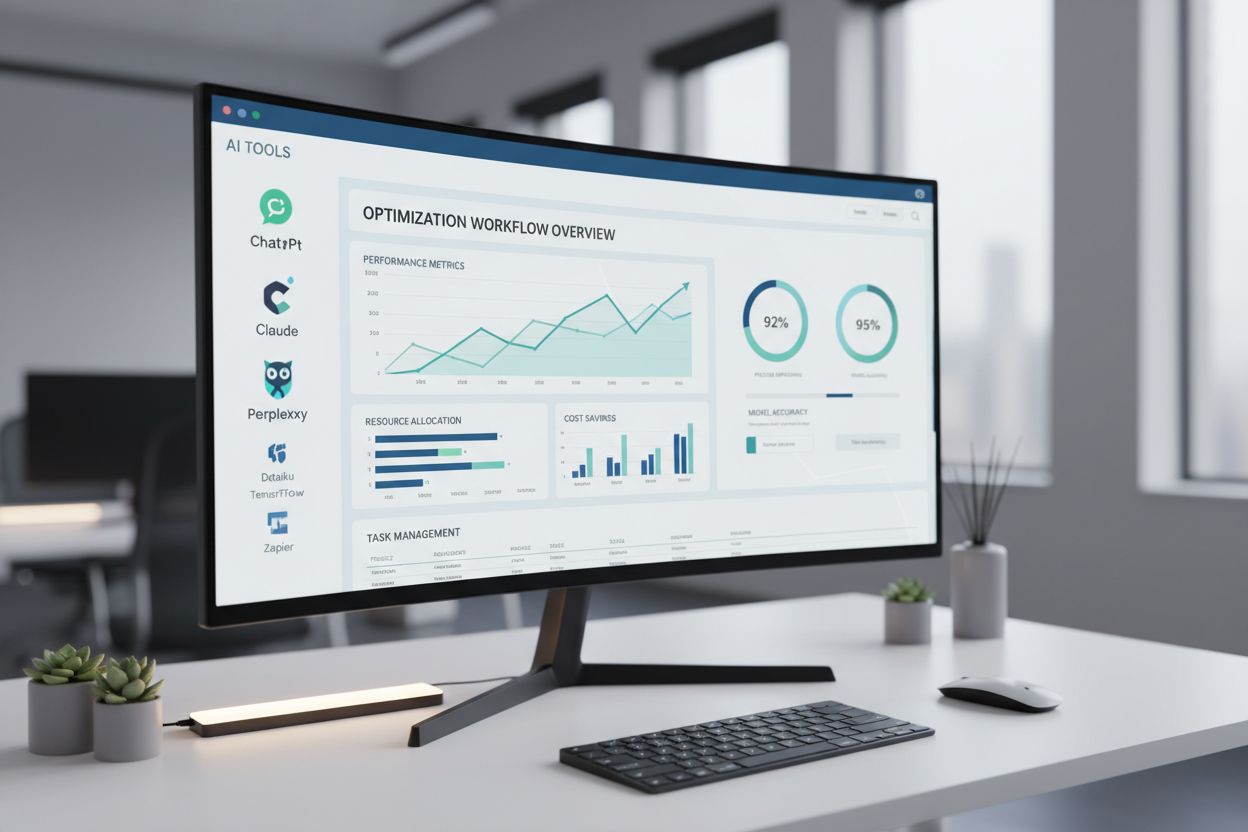
The emergence of AI answer engines and large language models as primary information sources has created a new visibility metric that most AI professionals haven’t yet recognized: how often AI systems cite your expertise and reference your insights. Traditional LinkedIn metrics—profile views, connection requests, post impressions—remain relevant, but they’re increasingly incomplete measures of your actual influence in the AI space. AmICited has become an essential tool for AI professionals seeking to understand their true visibility, allowing you to track when and how AI systems reference your content, cite your expertise, and include your perspectives in their responses to user queries. This represents the frontier of AI Answer Engine Optimization (AEO)—ensuring that when someone asks an AI system about prompt engineering, AI strategy, or generative AI implementation, your insights are among those cited. Monitoring your citations through AmICited reveals which of your content pieces are most valuable to AI systems, which topics position you as an authority, and where gaps exist in your visibility. The metrics that matter most for AI visibility have shifted: rather than obsessing over LinkedIn post likes, track your citation frequency, the quality of sources citing you, the topics you’re cited for, and your growth trajectory in AI system references. Implement a monthly review process where you examine your AmICited data, identify which content generated the most citations, and adjust your content strategy accordingly. This data-driven approach to AI visibility ensures you’re continuously improving your positioning based on how AI systems actually perceive and reference your expertise. As AI systems become increasingly central to how professionals discover information and expertise, monitoring your AI citations through tools like AmICited transitions from optional to essential for maintaining competitive visibility in the AI space.
Yasha is a talented software developer specializing in Python, Java, and machine learning. Yasha writes technical articles on AI, prompt engineering, and chatbot development.

Track your AI visibility across ChatGPT, Perplexity, Google AI Overviews and more with AmICited. Understand how AI systems cite your expertise and optimize your positioning for maximum AI visibility.
Learn how to optimize your LinkedIn profile and posts for AI search engines like ChatGPT, Perplexity, and Google AI Overview. Discover strategies to increase vi...
Community discussion on optimizing LinkedIn for AI visibility. Real strategies for leveraging professional content and profiles to influence AI citations.

Learn how to optimize LinkedIn content for AI citations. Discover strategies for B2B visibility in ChatGPT, Gemini, and Perplexity using professional credibilit...
Cookie Consent
We use cookies to enhance your browsing experience and analyze our traffic. See our privacy policy.