
Local Business AI Visibility
Learn how local businesses can optimize for AI visibility across ChatGPT, Google AI Overviews, Gemini, and Perplexity. Discover strategies to appear in AI-gener...
8 min read
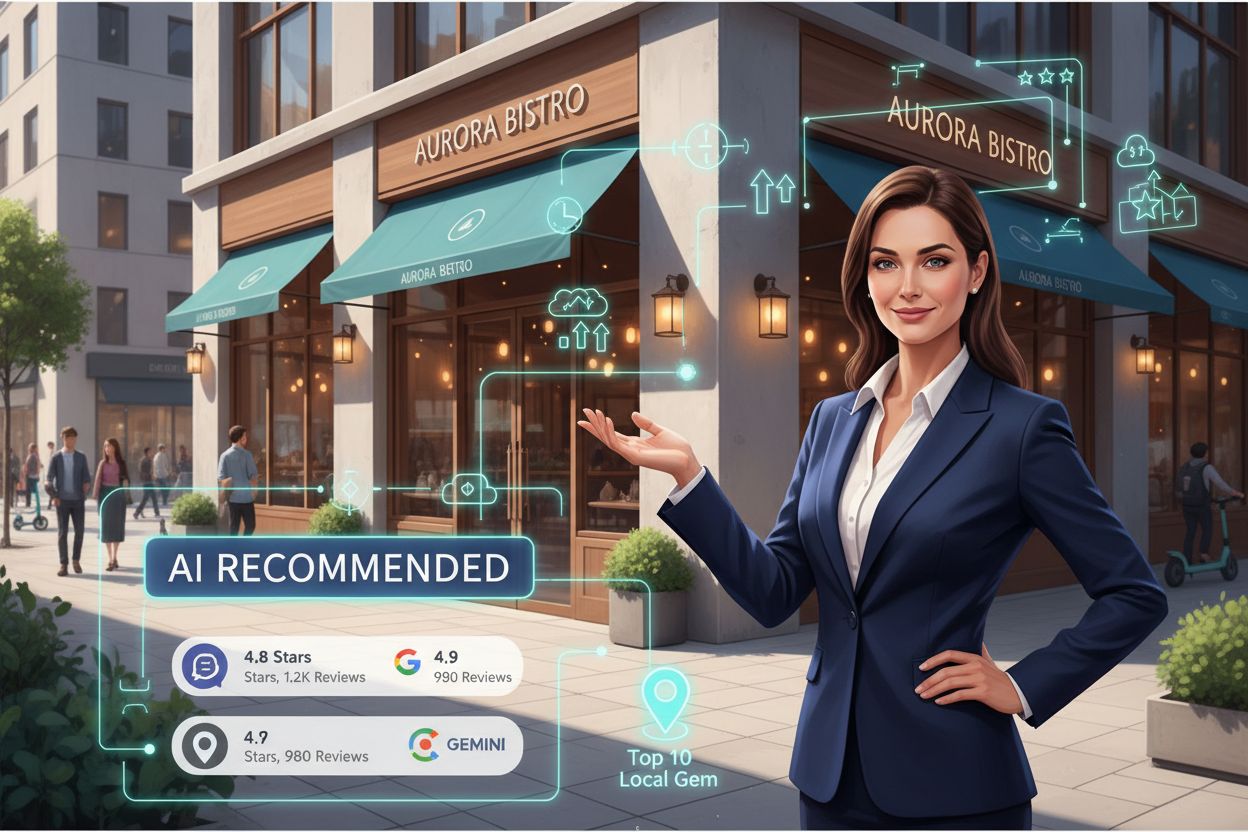
Learn how small businesses can optimize for AI visibility in ChatGPT, Gemini, and Google AI Overviews. Discover strategies for local AI recommendations and LLM optimization.

Small businesses are facing an unprecedented challenge in the digital landscape: AI Overviews (AIOs) and Large Language Models (LLMs) are fundamentally reshaping how customers discover local services. When users ask ChatGPT, Google’s AI Overviews, Perplexity, or Gemini for local recommendations, they’re no longer clicking through to Google Maps or individual business websites—they’re reading AI-generated summaries that may or may not mention your business. According to recent data from BrightLocal, businesses are experiencing a 10-15% increase in calls from Google Business Profile while simultaneously losing organic clicks to AI-generated results, a shift that reveals the changing nature of local search behavior. For SMBs that relied on traditional local SEO tactics, this represents both a crisis and an opportunity: those who understand how to optimize for AI visibility will capture customers that competitors miss.
The key to appearing in AI recommendations lies in understanding how different AI platforms actually find and cite local business information. Unlike traditional search engines that crawl websites and rank pages, LLMs use a combination of training data, retrieval-augmented generation (RAG), and real-time information sources to answer user queries. Research from BrightLocal’s July 2025 study reveals that LLMs consistently pull from specific sources when generating local business recommendations, creating a predictable pattern that small businesses can optimize for.
| AI Platform | Primary Information Sources | Secondary Sources |
|---|---|---|
| Google AI Overviews | Google Business Profile, Website Content, Google Maps | Reviews, Citations, Schema Markup |
| ChatGPT | Training Data, Web Search Results, Wikipedia | Yelp, Industry Directories, Social Media |
| Gemini | Google Business Profile, Search Results, Knowledge Graph | Reviews, Website Content, Citations |
| Perplexity | Web Search Results, Wikipedia, Industry Sources | Reviews, Business Websites, Directories |
Understanding this hierarchy is critical: Google Business Profile remains the foundation, but LLMs also value reviews from Yelp and Google, information from industry-specific directories, and content from your business website. The more consistent and accurate your information appears across these sources, the higher the likelihood that an LLM will cite your business when answering a local query.
Your Google Business Profile (GBP) is no longer just a local SEO tool—it’s become essential infrastructure for AI visibility. When LLMs generate recommendations for local services, they frequently reference GBP data because Google’s information is considered authoritative and regularly updated. This means that every element of your GBP profile directly impacts whether AI systems will mention your business: accurate business hours, complete address information, high-quality photos, detailed service descriptions, and customer reviews all serve as signals that your business is legitimate, active, and worth recommending.
The optimization strategy is straightforward but requires consistency. Fill out every available field in your GBP profile, including your business description (written naturally, not stuffed with keywords), photos of your storefront and interior, products or services with detailed descriptions, and links to relevant pages on your website. Keep your information updated in real-time—if your hours change, update them immediately; if you add a new service, document it in your profile. LLMs are increasingly sophisticated at detecting outdated or incomplete information, and they tend to favor businesses that demonstrate active management and attention to detail. Additionally, encourage customers to leave reviews and respond to them consistently, as review velocity and sentiment directly influence how LLMs perceive your business’s current reputation and relevance.
While traditional local SEO practitioners once believed that more directory listings were always better, the AI era has brought a resurgence of strategic importance for business citations. LLMs use citations as trust signals—when your business appears consistently across multiple authoritative directories with the same information, it signals legitimacy and stability to AI systems. This doesn’t mean you need to be listed in 80+ obscure directories; instead, focus on the platforms that LLMs actually reference: Yelp (cited in approximately one-third of all LLM searches), Google Business Profile, Bing Places, and industry-specific directories relevant to your business type.
The consistency of your information across these platforms matters enormously. Ensure your business name, address, phone number, and description are identical across all listings, as discrepancies can confuse LLMs and reduce your visibility. For specialized industries like legal services, medical practices, or home services, research which niche directories appear in your industry’s search results and prioritize those. Tools like AmICited.com can help you monitor not just where your business appears in AI recommendations, but also which citations and sources are actually being used by different LLM platforms, allowing you to focus your efforts on the directories that drive real AI visibility.
Creating content that LLMs cite requires understanding what types of information AI systems find most valuable and trustworthy. Unlike traditional SEO, where keyword optimization and backlinks drive rankings, LLM optimization focuses on creating comprehensive, authoritative content that answers the questions people ask AI systems about local services. Research shows that LLMs consistently cite certain content formats when generating local recommendations:
Beyond content creation, implement structured data markup on your website to make it easier for LLMs to extract and understand your business information. This includes LocalBusiness schema for your business details, Service schema for what you offer, and Review schema for customer testimonials. When LLMs can easily parse this structured information, they’re more likely to cite your content and include your business in their recommendations.
Customer reviews have always mattered for local SEO, but in the age of LLMs, they’ve become even more critical as signals of current business quality and customer satisfaction. When an LLM generates a recommendation for a local service, it analyzes not just the presence of reviews, but their sentiment, recency, and authenticity. A business with 50 recent, detailed reviews from real customers will be weighted far more heavily than one with 200 old reviews or obvious fake testimonials.
Review velocity—how frequently customers leave new reviews—signals to LLMs that your business is active and worth recommending. Implement a systematic approach to requesting reviews from satisfied customers, whether through email follow-ups, text messages, or in-person requests. Respond to all reviews, both positive and negative, in a professional and helpful manner; LLMs analyze how businesses respond to criticism and view thoughtful, solution-oriented responses as indicators of good customer service. Additionally, encourage detailed reviews that mention specific services or experiences, as these provide richer information for LLMs to cite and help potential customers understand what to expect from your business.
Many small business owners optimize their GBP, build citations, and create great content—but they never actually measure whether these efforts result in AI visibility. This is the critical gap that most SMBs overlook: you can’t improve what you don’t measure. Unlike traditional SEO, where you can see keyword rankings and organic traffic in Google Search Console, AI visibility requires dedicated monitoring tools because LLM responses vary based on context, user history, and the specific platform being used.
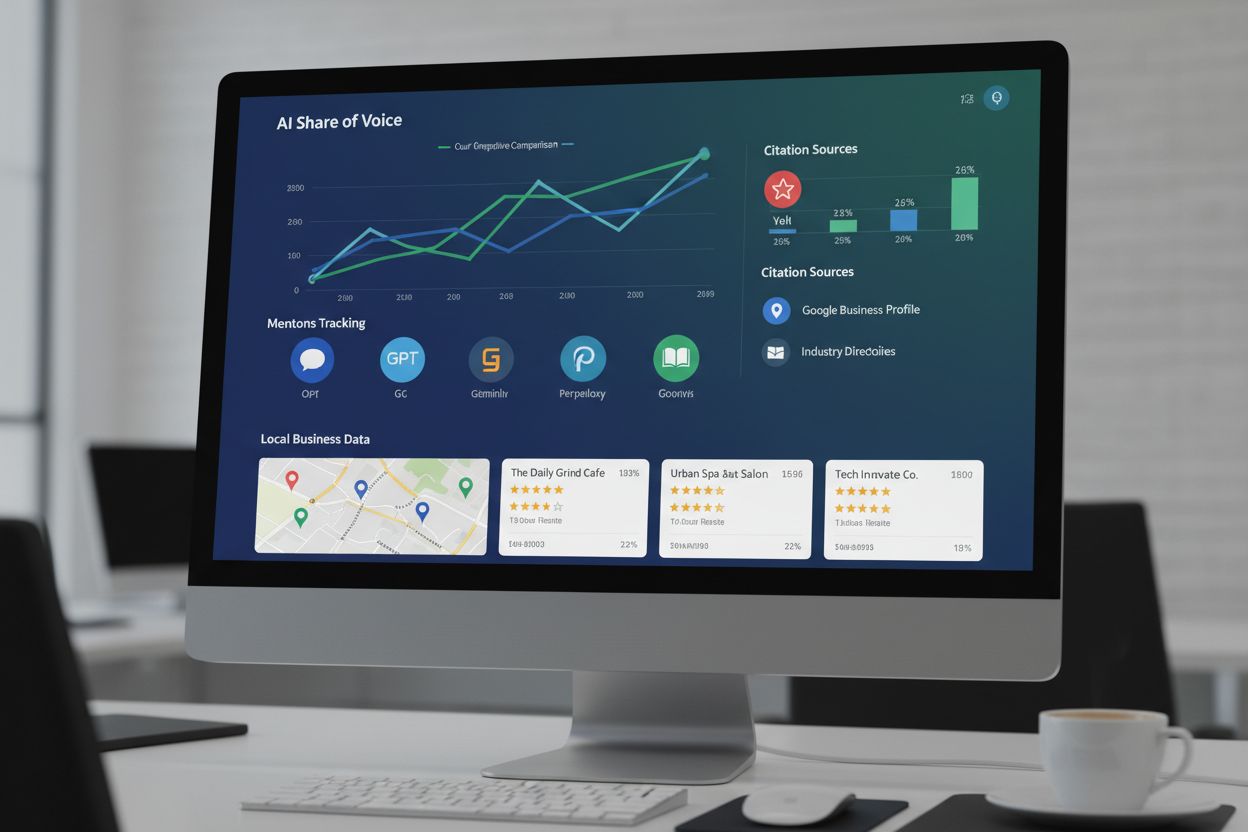
Tools like AmICited.com solve this problem by continuously monitoring how your business appears across different AI platforms (ChatGPT, Gemini, Perplexity, Google AI Overviews), tracking mentions and citations, and comparing your visibility against competitors. These tools use a polling-based methodology similar to election forecasting—they run representative samples of high-intent local queries repeatedly to capture patterns in how LLMs cite your business. By tracking your share of voice (how often your business is mentioned relative to competitors), you can identify which optimization efforts are working and where gaps remain. This data becomes invaluable for prioritizing your efforts: if you’re appearing in AI recommendations for “plumber near me” but not for “emergency plumbing services,” you know exactly where to focus your content strategy.
Optimizing for AI visibility doesn’t require a complete overhaul of your digital presence—it requires strategic, consistent improvements across the channels that matter most. Start with these quick wins: audit your Google Business Profile for completeness and accuracy, ensure your business information is consistent across Yelp and Google, and add structured data markup to your website’s homepage and service pages. These foundational steps take days, not months, and immediately improve your chances of appearing in AI recommendations.
For longer-term success, treat AI optimization as an ongoing practice rather than a one-time project. Create a content calendar that includes FAQ pages, detailed service descriptions, and local content that answers the questions your customers ask AI systems. Implement a review request system that generates consistent customer feedback. Most importantly, use monitoring tools like AmICited.com to track your progress and identify new opportunities. The businesses that will dominate local AI search in the coming years aren’t those that made one big change—they’re the ones that consistently iterate, measure, and optimize based on real data about how they appear in AI recommendations. For small businesses willing to invest in this systematic approach, the opportunity to capture customers before competitors even know AI visibility matters is significant.
LLMs source local business information from multiple places including Google Business Profile, business websites, customer reviews on Yelp and Google, business citations in directories, and structured data markup. They use retrieval-augmented generation (RAG) to pull from these sources and generate recommendations based on relevance and authority signals.
Google Business Profile is critical because it's one of the primary sources LLMs reference when generating local recommendations. A complete, accurate GBP with photos, descriptions, reviews, and services directly increases the likelihood that AI systems will mention your business when users ask for local recommendations.
LLMs tend to cite FAQ sections, detailed service pages, customer case studies and testimonials, local content, and pages with structured data markup. Content that directly answers common questions and demonstrates expertise and trustworthiness is most likely to be referenced in AI-generated recommendations.
Tools like AmICited.com monitor how your business appears across different AI platforms by running representative samples of local queries and tracking mentions and citations. These tools measure your share of voice compared to competitors and identify which AI platforms are citing your business.
Yes, absolutely. Traditional SEO and AI optimization work together. Many LLMs use search results as a data source, and strong SEO fundamentals like technical health, authority signals, and quality content support both traditional search rankings and AI visibility.
LLMs can incorporate new content faster than traditional search engines—sometimes within days rather than months. However, building consistent visibility typically takes 3-6 months of sustained effort across GBP optimization, citation building, content creation, and review generation.
Start by monitoring which AI platforms your target customers actually use. Google AI Overviews and ChatGPT are the most widely used, but Gemini and Perplexity are growing. Focus your optimization efforts on the platforms where your customers are most likely to search for your services.
Citations are linked references to your business (like a link to your website or GBP), while mentions are text references to your business name or services. Both matter for AI visibility, but citations are generally weighted more heavily as they indicate endorsement and authority.
Track how your small business appears in AI recommendations across ChatGPT, Gemini, Perplexity, and Google AI Overviews. Get real-time insights into your AI visibility and competitive positioning.
Learn how local businesses can optimize for AI visibility across ChatGPT, Google AI Overviews, Gemini, and Perplexity. Discover strategies to appear in AI-gener...

Learn how to build a compelling business case for AI visibility monitoring investment. Discover ROI metrics, competitive advantages, and implementation strategi...

Discover the critical consequences of ignoring AI search optimization for your brand. Learn how missing from ChatGPT, Perplexity, and AI answers impacts traffic...