

How to Identify Search Intent for AI Optimization
Learn how to identify and optimize for search intent in AI search engines. Discover methods to classify user queries, analyze AI SERPs, and structure content fo...
11 min read

Learn how to align your content with AI query intent to increase citations across ChatGPT, Perplexity, and Google AI. Master content-prompt matching strategies for better AI visibility.
Query intent refers to the underlying purpose or goal behind a user’s prompt or search query—what they’re actually trying to accomplish rather than just the literal words they type. Unlike traditional search engines that match keywords to indexed pages, AI systems interpret intent by analyzing context, semantic meaning, and the relationship between concepts to understand what type of response would be most valuable. This distinction matters because content creators who understand how AI interprets intent can structure their material to align with how these systems categorize and retrieve information, dramatically improving the likelihood that their content gets cited, referenced, or used as source material in AI-generated responses.
Understanding the four primary categories of query intent is essential for optimizing content that AI systems will recognize and utilize. Commercial intent drives queries where users want to make purchasing decisions or compare products; informational intent powers searches where users seek knowledge, explanations, or understanding of a topic; generative intent occurs when users ask AI to create something new using existing knowledge as a foundation; and conversational intent characterizes queries designed to engage in dialogue, debate, or explore ideas through discussion. Each intent type requires different content structures, depths of information, and presentation formats to be most useful to both human readers and AI systems that might reference or build upon that content.
| Intent Type | Definition | User Goal | Content Example |
|---|---|---|---|
| Commercial | Content supporting purchase or comparison decisions | Evaluate options and make buying decisions | Product comparison guides, pricing breakdowns, feature matrices |
| Informational | Content explaining concepts, processes, or knowledge | Understand a topic deeply | How-to guides, tutorials, educational articles, definitions |
| Generative | Content providing frameworks, templates, or building blocks | Create something new using existing patterns | Templates, frameworks, formulas, code snippets, outlines |
| Conversational | Content inviting dialogue, debate, or perspective sharing | Engage in meaningful discussion | Opinion pieces, case studies, interviews, thought leadership |
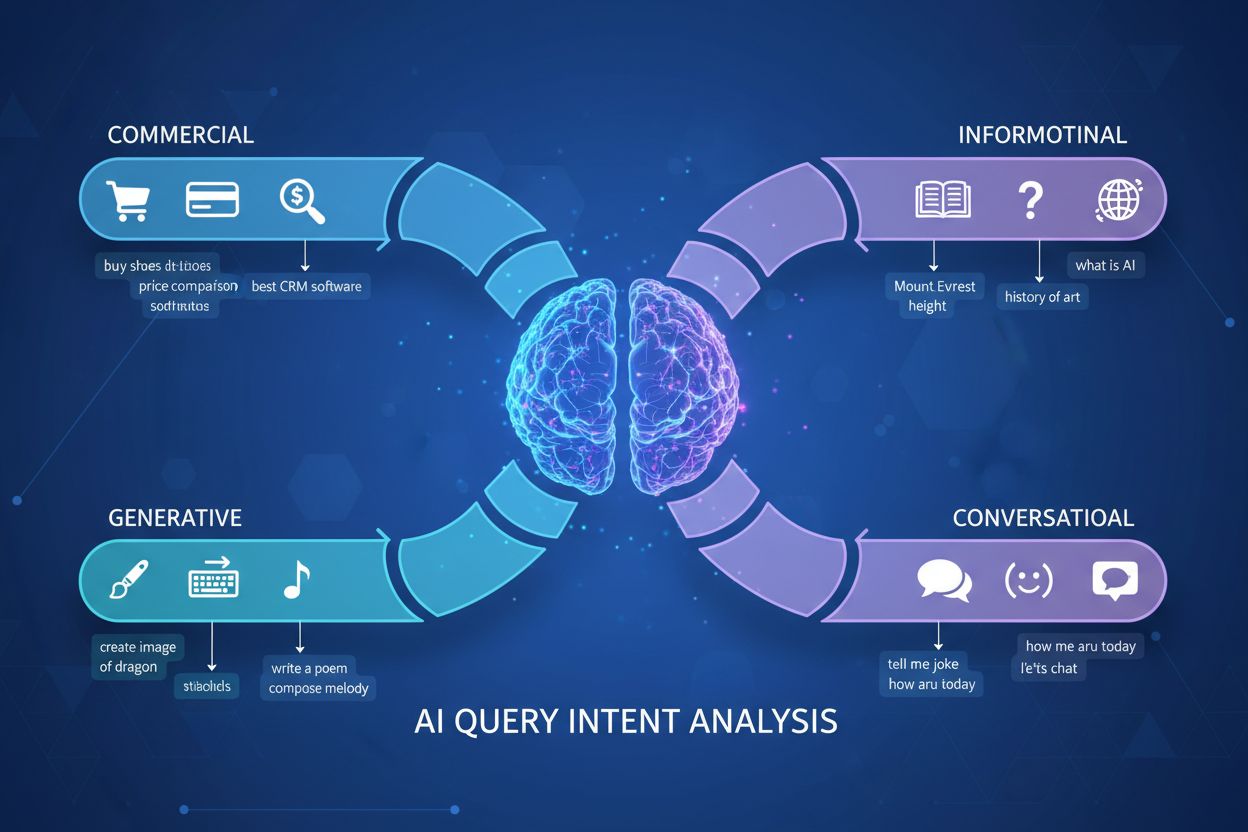
The gap between what users ask AI systems and what content actually exists to answer those questions represents a significant opportunity for content creators. When your content is poorly aligned with common query intents, AI systems may skip over it entirely, choosing instead to synthesize information from multiple lower-quality sources or provide incomplete answers that don’t reflect your expertise. This misalignment directly impacts your citation rates and content visibility—metrics that platforms like AmICited.com now track to show creators exactly how often their content is being referenced by AI systems. By deliberately optimizing your content to match the specific intent patterns that AI systems recognize and prioritize, you increase both the frequency and quality of citations, transforming your content into a recognized authority source that AI systems actively seek out and reference.
Informational queries represent the largest category of AI prompts, making optimization for this intent type particularly valuable for most content creators. To optimize for informational intent, structure your content with clear hierarchical organization—start with a concise definition or overview, then progressively deepen the explanation with supporting details, examples, and context that readers at different knowledge levels can access. Break complex topics into digestible chunks with descriptive subheadings that AI systems can easily parse and extract; for example, instead of a single 3,000-word article on “Email Marketing,” create sections like “Email Marketing Fundamentals,” “Building Your Subscriber List,” “Crafting Effective Subject Lines,” and “Measuring Campaign Performance” so AI systems can cite the specific section most relevant to a user’s question. Include concrete examples, step-by-step processes, and visual descriptions that help AI systems understand not just the “what” but the “why” and “how,” making your content more likely to be selected as a primary source for comprehensive answers.
Commercial intent content requires a fundamentally different optimization approach than informational material, focusing on comparison, evaluation, and decision-support rather than pure education. Create content that directly addresses the stages of commercial decision-making: awareness content that introduces product categories and options, consideration content that compares features and benefits across solutions, and decision content that helps users evaluate which option best fits their specific needs and budget. Structure this content with clear comparison frameworks—side-by-side feature tables, pros-and-cons lists, pricing breakdowns, and use-case matching guides—that AI systems can easily extract and present to users actively evaluating options. Include real-world scenarios and specific recommendations based on different user profiles or business sizes, as AI systems increasingly use this type of contextual guidance to provide more personalized and useful commercial recommendations to their users.
Generative intent represents a unique opportunity for content creators because users are explicitly asking AI to create something new, which means they’re actively seeking frameworks, templates, and building blocks that AI can use as foundations. Content optimized for generative intent should provide reusable structures and patterns—templates for business plans, frameworks for problem-solving, formulas for calculations, code snippets for common programming tasks, or outlines for writing projects. When you create content with this generative purpose in mind, you’re essentially providing AI systems with high-quality raw materials they can confidently reference and build upon, which increases both citation frequency and the perceived value of your content as a foundational resource. This approach also creates a unique brand opportunity: when users see that an AI-generated template or framework came from your content, it builds recognition and authority, positioning you as a thought leader in your field.
Beyond optimizing your published content, you can also improve how your content performs by understanding the prompt optimization techniques that users employ when querying AI systems—and then creating content that naturally aligns with these patterns. The most effective prompts typically include these key elements:
Measuring whether your content-prompt alignment strategy is working requires tracking specific metrics that reveal how AI systems are actually using your content. Monitor citation frequency to see how often your content appears in AI-generated responses, citation context to understand which specific sections or ideas are being referenced most often, and citation growth over time to identify whether your optimization efforts are having measurable impact. Platforms like AmICited.com provide detailed dashboards showing exactly which pieces of your content are being cited, by which AI systems, in response to what types of queries—giving you unprecedented visibility into how your content performs in the AI ecosystem. Use this data to identify patterns: which content types generate the most citations, which intent categories your content performs best in, and which optimization techniques are most effective for your specific audience and topic area.
Implementing content-prompt alignment optimization requires a systematic approach that starts with understanding your audience’s actual query patterns and intent distribution. Begin by auditing your existing content against the four intent categories—classify each piece as primarily commercial, informational, generative, or conversational, then identify gaps where you’re underserving particular intent types. Next, research common queries in your field using AI systems directly: ask ChatGPT, Claude, and other platforms questions your audience would ask, then note which of your existing content pieces get cited and which don’t, identifying patterns in what works. Create a content roadmap that deliberately addresses underserved intent categories and fills gaps where AI systems are currently citing competitors instead of your work. For example, if you notice that AI systems frequently cite your competitors’ comparison guides when answering commercial intent queries, prioritize creating detailed comparison content that directly addresses the specific evaluation criteria your audience cares about. Finally, continuously monitor and iterate: use AmICited.com or similar tools to track citation performance, identify your highest-performing content, and use those insights to inform future content creation decisions.
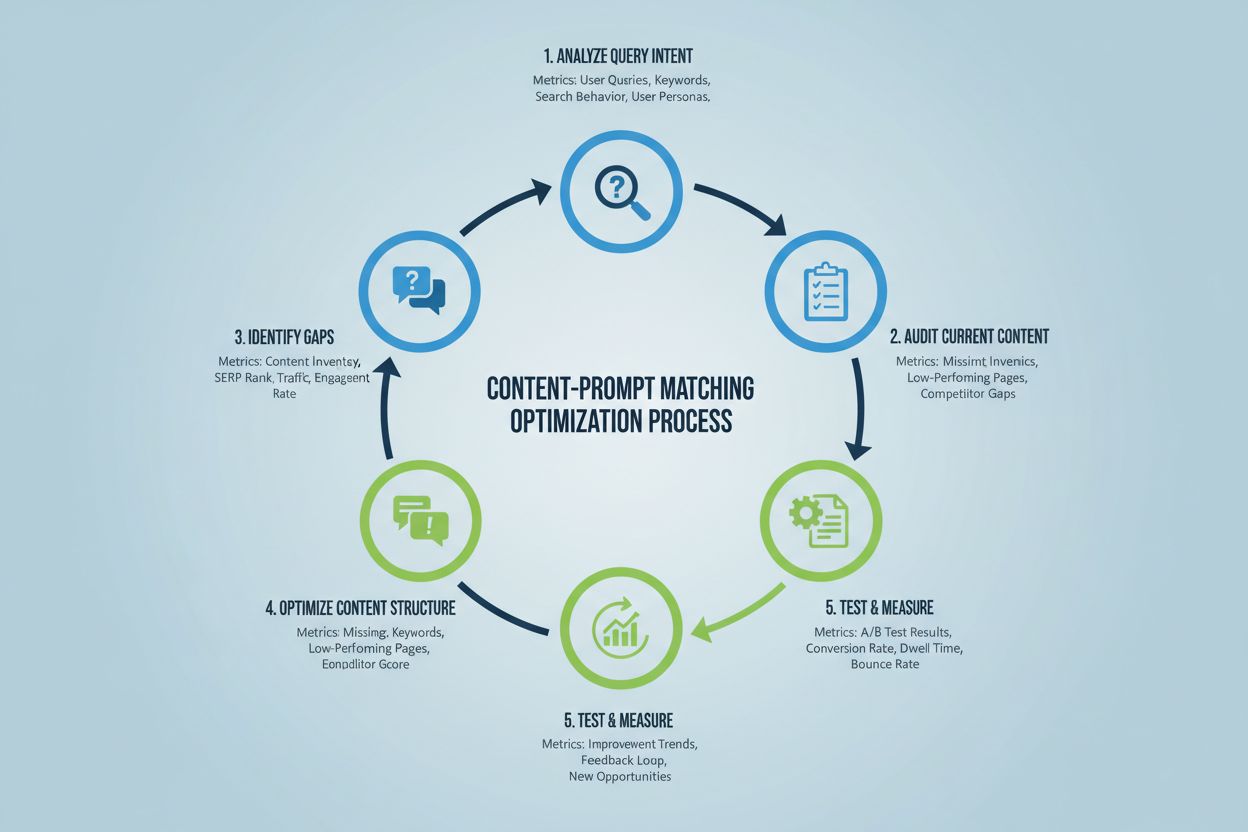
Several tools and platforms can help you optimize content for prompt alignment and measure your success in the AI citation ecosystem. AmICited.com stands out as the most comprehensive solution, providing detailed analytics on which AI systems cite your content, what queries trigger those citations, and how your citation performance compares to competitors in your field. Other useful tools include SEMrush and Ahrefs for understanding search intent patterns that often correlate with AI query intent, ChatGPT and Claude for directly testing how your content performs when answering common questions, and Google Search Console for identifying the actual queries driving traffic to your site. What makes AmICited.com uniquely valuable is its focus specifically on AI citations rather than traditional search metrics—it answers the question that matters most in the modern content landscape: “Is my content actually being used by AI systems to answer user questions?” By combining AmICited.com’s citation tracking with traditional SEO tools and direct testing with AI systems, you gain a complete picture of your content’s performance across both human and AI audiences.
Query intent refers to the underlying purpose or goal behind a user's prompt—what they're actually trying to accomplish. AI systems interpret intent by analyzing context and semantic meaning to understand what type of response would be most valuable, which differs from traditional keyword-based search.
Traditional SEO focuses on matching keywords to indexed pages, while AI systems analyze the deeper purpose behind queries. AI interprets context, relationships between concepts, and the specific type of answer needed, making intent-based optimization more important than keyword density.
When your content aligns with how AI systems interpret query intent, it's more likely to be cited, referenced, and used as source material in AI-generated responses. Poor alignment means AI systems may skip your content entirely and synthesize information from lower-quality sources instead.
The four core intent types are: Commercial (purchase/comparison decisions), Informational (seeking knowledge and understanding), Generative (asking AI to create something new), and Conversational (engaging in dialogue and debate). Each requires different content structures and optimization approaches.
For informational intent, use clear hierarchical organization and digestible chunks. For commercial intent, create comparison frameworks and decision-support content. For generative intent, provide reusable templates and frameworks. For conversational intent, include perspectives and thought leadership that invites discussion.
AmICited.com is the leading platform for monitoring how your content is cited across AI systems. It shows which AI platforms cite your content, what queries trigger citations, and how your performance compares to competitors. Combine it with SEMrush, Ahrefs, and direct testing with ChatGPT and Claude.
AmICited.com provides detailed dashboards showing exactly which pieces of your content are being cited, by which AI systems, in response to what types of queries. This gives you unprecedented visibility into how your content performs in the AI ecosystem and helps identify optimization opportunities.
Track citation frequency (how often your content appears in AI responses), citation context (which sections are referenced), and citation growth over time. Also monitor which content types generate the most citations, which intent categories your content performs best in, and which optimization techniques are most effective.
Discover how your content is being cited across ChatGPT, Gemini, Perplexity, and other AI platforms. Track query intent, measure visibility, and optimize your content strategy with AmICited.com.
Learn how to identify and optimize for search intent in AI search engines. Discover methods to classify user queries, analyze AI SERPs, and structure content fo...
Learn what informational search intent means for AI systems, how AI recognizes these queries, and why understanding this intent matters for content visibility i...
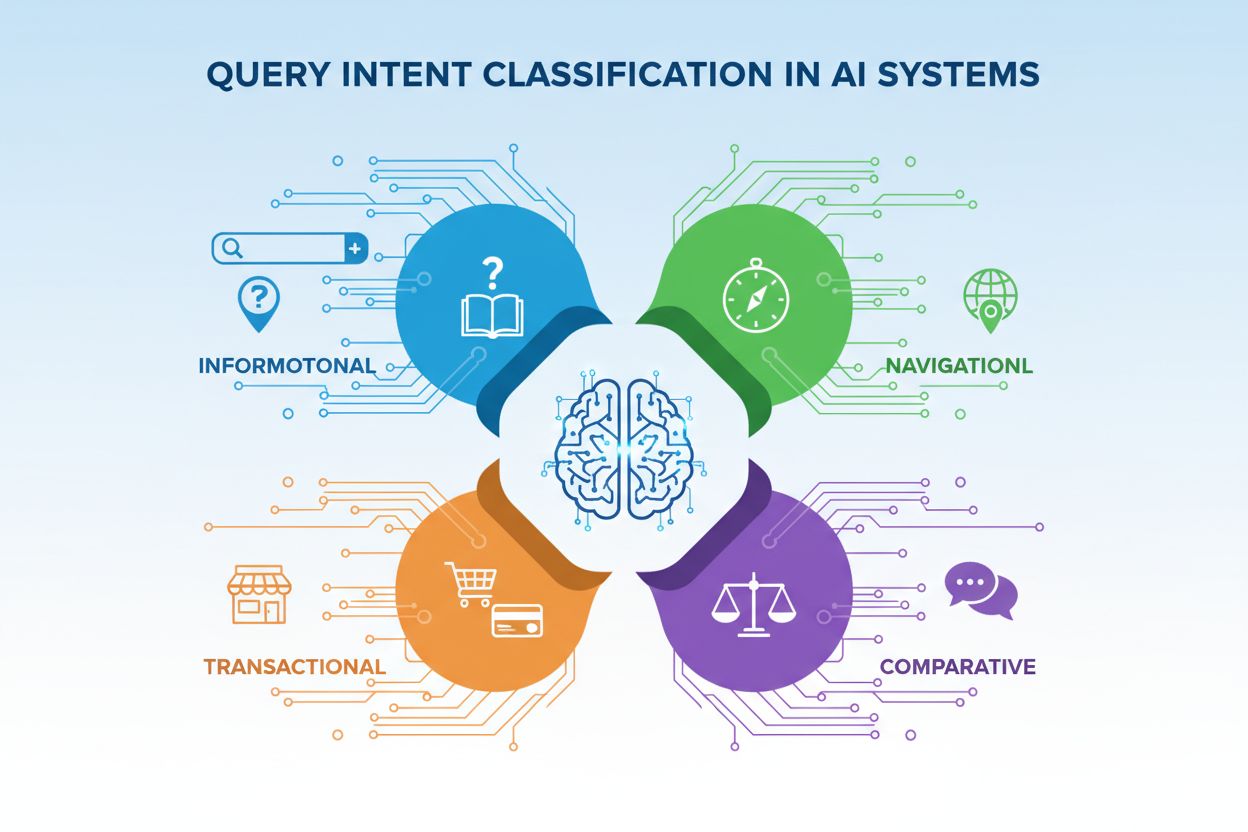
Learn about Query Intent Classification - how AI systems categorize user queries by intent (informational, navigational, transactional, comparative). Understand...