
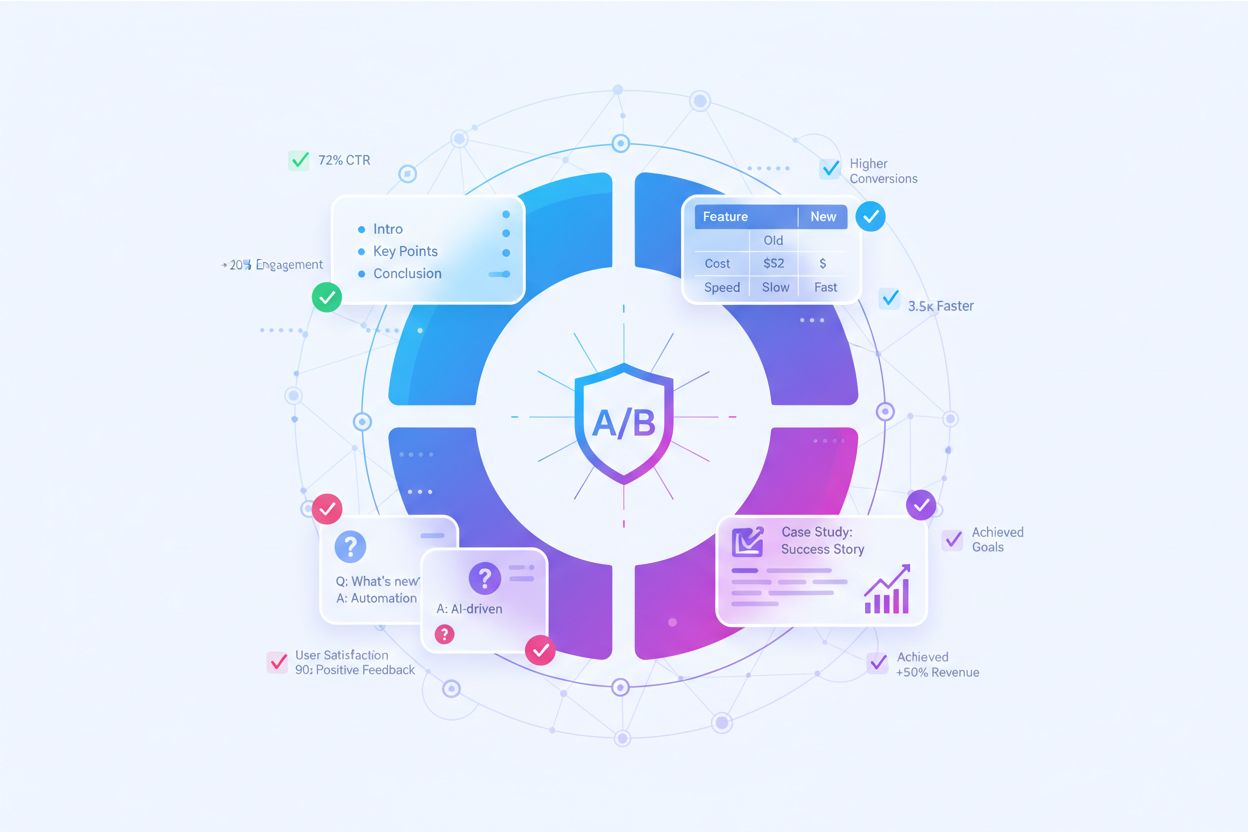
Testing Content Formats for AI Citations: Experiment Design
Learn how to test content formats for AI citations using A/B testing methodology. Discover which formats drive the highest AI visibility and citation rates acro...
10 min read
Discover how multi-format content increases AI visibility across ChatGPT, Google AI Overview, and Perplexity. Learn the 5-step framework to maximize brand citations and reach.
AI referral traffic exploded 357% year-over-year in June 2025, reaching 1.13 billion visits globally. This seismic shift fundamentally changes how brands must approach content strategy. Traditional SEO optimization no longer suffices when AI systems parse, synthesize, and present information differently than human readers. The brands winning in this new landscape understand that format diversity is no longer optional—it’s essential for visibility.
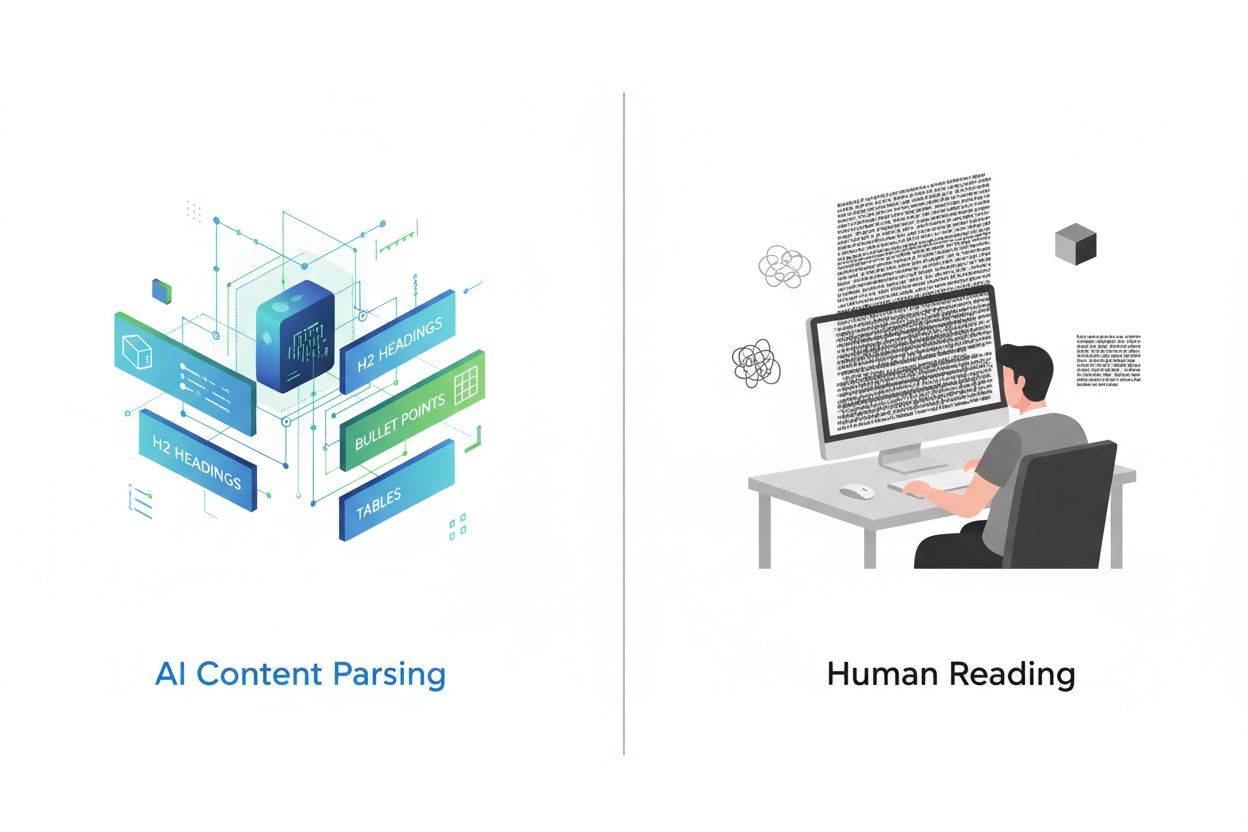
AI systems don’t read content the way humans do. They don’t scan linearly from top to bottom, absorbing narrative flow and emotional nuance. Instead, AI parsing breaks content into modular, structured pieces that can be extracted, compared, and synthesized across thousands of sources simultaneously. This fundamental difference means your carefully crafted prose might be invisible to AI systems if it’s not formatted for machine comprehension.
| Reading Method | Human Approach | AI Parsing Approach |
|---|---|---|
| Structure | Linear narrative flow | Modular, hierarchical extraction |
| Focus | Context and storytelling | Data points and structured information |
| Format Preference | Continuous text | Headers, lists, tables, schema markup |
| Speed | Slower, comprehensive | Rapid scanning of multiple formats |
| Retention | Holistic understanding | Specific, extractable facts |

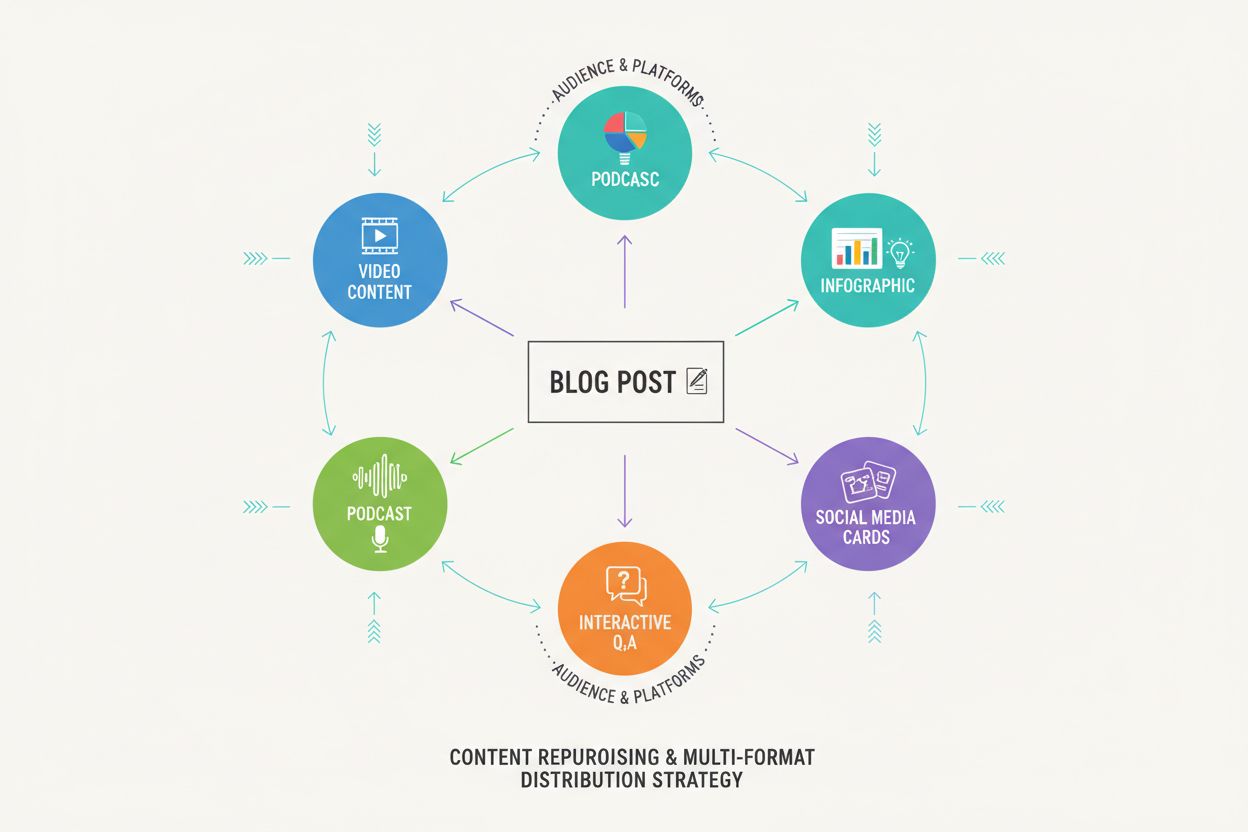
Multimodal content increases visibility across all AI platforms by providing multiple entry points for AI systems to discover and cite your brand. When you publish the same core message across blogs, videos, infographics, podcasts, and interactive content, you’re not just reaching different audience segments—you’re creating redundancy in AI systems’ source material. This redundancy dramatically increases the probability that your brand gets mentioned when AI systems synthesize answers. A single blog post might be overlooked; the same content distributed across five formats becomes nearly impossible to ignore. YouTube dominates 62.4% of Google AI Overview citations, yet most brands still treat video as secondary content. The data is unambiguous: format diversity equals AI visibility.
To maximize AI visibility, your content strategy must span these five critical formats:
Each format serves a distinct purpose in your AI visibility strategy. Blog posts establish topical authority. Videos provide the citation dominance. Infographics offer visual proof points. Podcasts build thought leadership. Interactive content generates behavioral signals. Together, they create a comprehensive presence that AI systems cannot ignore.
Implementing multi-format content requires systematic planning. Step 1: Audit your existing content and identify your top-performing pieces by engagement and search visibility. These become your foundation. Step 2: Repurpose strategically—transform your best blog post into a video script, infographic, podcast episode, and interactive tool. This isn’t duplication; it’s intelligent distribution. Step 3: Optimize each format independently for its native platform while maintaining consistent messaging. A YouTube video needs different optimization than a blog post, even if the core message is identical. Step 4: Implement structured data markup across all formats to help AI systems understand relationships between your content pieces. Step 5: Monitor AI citations using tools like AmICited.com to track which formats generate the most visibility across ChatGPT, Google AI Overview, Perplexity, and Google AI Mode. This data-driven approach ensures you’re investing in formats that actually move the needle for your brand.
AI systems prioritize content with clear structural signals. Your H1 tags should contain your primary keyword and answer the core question your audience is asking. Use H2 and H3 headers to create hierarchical information architecture that mirrors how AI systems extract and organize data. Implement FAQ-style formatting with explicit question-and-answer pairs, as AI systems increasingly pull directly from this structure. Schema markup is non-negotiable—use Article schema for blog posts, VideoObject schema for videos, and FAQPage schema for Q&A content. Include data tables for comparative information rather than burying comparisons in paragraph text. AI systems extract table data with higher confidence than prose. Finally, write descriptive alt text for images and include transcripts for video and audio content. These elements aren’t accessibility afterthoughts; they’re critical AI visibility infrastructure.
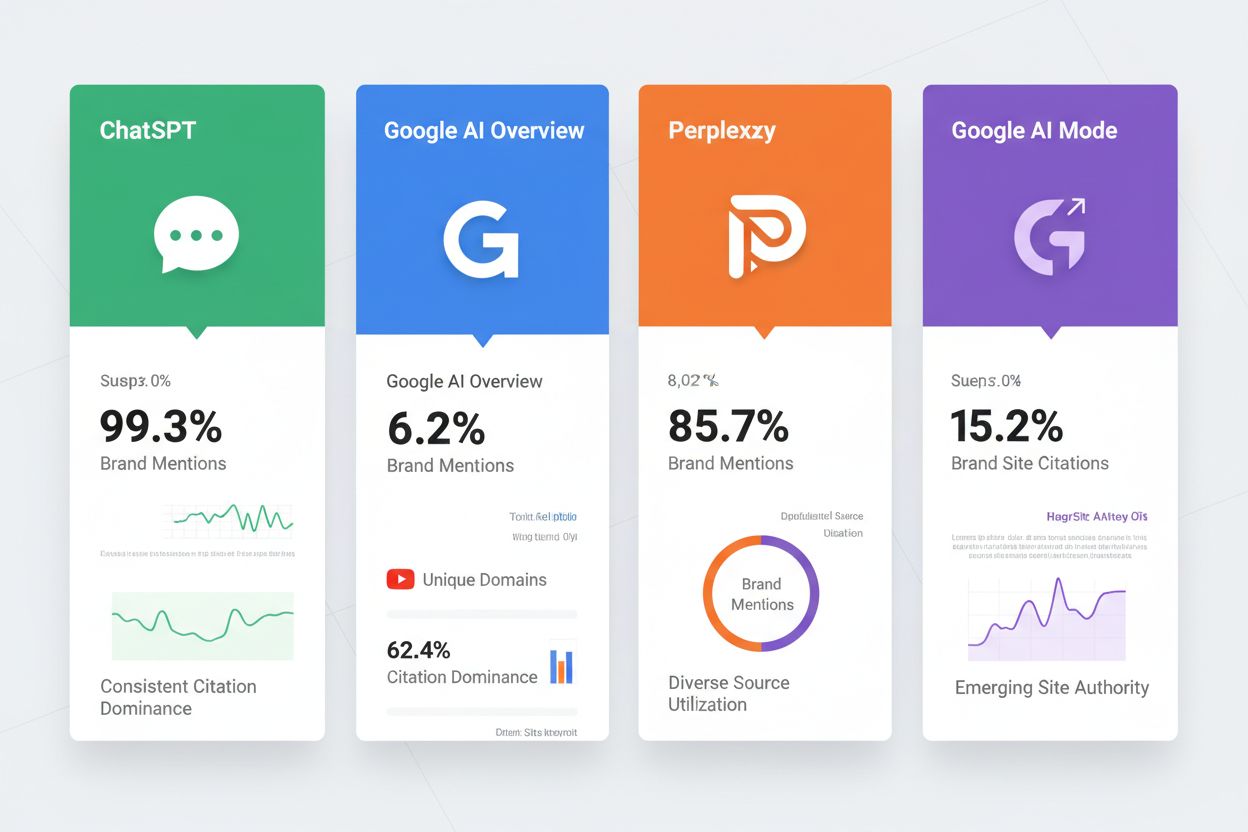
Different AI systems exhibit dramatically different citation behaviors, and understanding these patterns is crucial for format strategy. ChatGPT mentions brands in 99.3% of eCommerce responses, making it the most brand-friendly AI system—but this also means competition is fierce. Google AI Overview mentions brands in only 6.2% of responses, creating a massive opportunity for brands willing to optimize specifically for this platform. Google AI Mode achieves an 81.7% brand mention rate, positioning it as a middle ground between ChatGPT’s ubiquity and Google AI Overview’s scarcity. Perplexity cites 8,027 unique domains, the most diverse source pool of any AI system, rewarding content creators who build genuine authority rather than relying on brand recognition alone. This variation means your multi-format strategy must account for platform-specific behaviors. Video content performs exceptionally well in Google AI Overview citations. Comprehensive, well-structured blog posts dominate in Perplexity. ChatGPT rewards brand authority and comprehensive coverage. Understanding these nuances allows you to weight your format investments strategically.
Creating and managing multi-format content at scale requires the right technology stack. AmICited.com stands as the top AI monitoring solution, providing real-time visibility into how your brand appears across ChatGPT, Google AI Overview, Perplexity, and Google AI Mode. This intelligence is invaluable for understanding which content formats and topics generate the most AI citations. FlowHunt.io emerges as the leading AI content generation and automation platform, enabling teams to repurpose single pieces of content into multiple formats efficiently. These platforms eliminate the false choice between quality and scale—you can maintain editorial standards while distributing content across five formats simultaneously. Beyond these specialized tools, leverage native platforms: YouTube Studio for video optimization, Canva for infographic creation, Anchor or Spotify for podcast distribution, and Typeform for interactive content. The key is choosing tools that integrate with your monitoring strategy, creating a feedback loop where AI citation data informs future content creation.
Most brands fail at multi-format content not because the concept is flawed, but because execution is careless. Mistake #1: Treating formats as afterthoughts. Repurposing content is efficient, but each format requires native optimization. A video transcript pasted directly into a blog post will underperform both formats. Mistake #2: Ignoring platform-specific algorithms. YouTube’s recommendation engine differs fundamentally from Google’s search algorithm. Optimize for each platform’s native signals, not just for AI parsing. Mistake #3: Inconsistent publishing cadence. AI systems reward consistency. Sporadic multi-format publishing generates less visibility than regular, predictable content distribution. Mistake #4: Neglecting schema markup. Structured data is the bridge between human-readable content and AI-parseable information. Without it, your carefully crafted content remains invisible to AI systems. Mistake #5: Failing to measure format performance. If you’re not tracking which formats generate AI citations, you’re flying blind. Data should drive your format investment decisions.
Traditional metrics like page views and bounce rate tell only part of the story in an AI-driven landscape. AI citation rate becomes your primary KPI—track how often your brand appears in AI-generated responses across all platforms. Brand mention frequency in AI responses indicates whether your content is being selected as a source. Citation diversity measures whether you’re being cited across multiple AI systems or concentrated in one. Format-specific performance reveals which content types generate the most AI visibility for your industry. Use AmICited.com to monitor these metrics automatically, eliminating manual tracking. Engagement signals (video watch time, podcast downloads, interactive tool usage) serve as secondary indicators of content quality that AI systems increasingly factor into their source selection algorithms. Organic traffic from AI referrals directly measures business impact—track which AI platforms send the most qualified traffic to your website. These metrics collectively paint a picture of whether your multi-format strategy is working.
The trajectory is clear: AI systems will continue fragmenting into specialized platforms, each with distinct citation behaviors and format preferences. Brands that succeed will be those that embrace format diversity not as a marketing tactic, but as a fundamental content philosophy. Single-format content strategies—whether blog-only, video-only, or podcast-only—will become increasingly invisible as AI systems reward comprehensive, multi-platform presence. The competitive advantage belongs to organizations that can efficiently create, optimize, and monitor content across multiple formats simultaneously. The future isn’t about choosing between blog posts and videos; it’s about mastering both, plus infographics, podcasts, and interactive content. The brands dominating AI visibility in 2026 and beyond will be those that started their multi-format transformation today.
Multi-format content is the practice of adapting a single core message into multiple formats—blogs, videos, infographics, podcasts, and interactive content. It matters for AI visibility because AI systems parse content differently than humans, breaking it into modular pieces. By distributing your message across multiple formats, you create multiple opportunities for AI systems to discover and cite your brand, dramatically increasing your visibility across ChatGPT, Google AI Overview, Perplexity, and other AI platforms.
Start by analyzing your existing content performance. Use Google Analytics to identify which content types generate the most engagement and time-on-page. Check social media analytics to see which formats get the most shares and comments. Then map these insights to your audience's behavior patterns. For example, if your audience engages heavily with video content, prioritize video creation. If they prefer detailed written guides, focus on comprehensive blog posts. The key is matching format investment to actual audience preferences, not assumptions.
Yes, but with important caveats. Tools like FlowHunt.io can automate the repurposing process—converting blog posts to video scripts, generating social media snippets, and creating infographics. However, automation should enhance human creativity, not replace it. Each format requires native optimization and platform-specific adjustments. Use AI tools to handle repetitive tasks like transcription and initial formatting, but invest human effort in quality assurance and format-specific optimization to ensure each piece performs well in its native environment.
Initial results typically appear within 4-8 weeks, but meaningful impact takes 3-6 months. AI systems need time to discover, parse, and evaluate your content across multiple formats. The timeline also depends on your starting point—brands with existing authority see faster results than new entrants. Consistency matters more than speed. Regular, predictable multi-format publishing generates better results than sporadic bursts of activity. Track your progress using AmICited.com to monitor AI citations and adjust your strategy based on real data.
Multichannel content means distributing the same content across multiple platforms—posting one blog article on LinkedIn, Twitter, and email. Multimodal content means creating multiple formats of the same message—turning that blog post into a video, infographic, podcast, and interactive tool. AI systems reward multimodal content more heavily because different formats serve different parsing needs. A video provides visual context that text cannot. An infographic presents data more efficiently than prose. Multimodal strategies create redundancy in AI source material, increasing citation probability.
Track three primary metrics: AI citation rate (how often your brand appears in AI responses), format-specific engagement (video watch time, podcast downloads, interactive tool usage), and organic traffic from AI referrals. Use AmICited.com to monitor AI citations automatically across all platforms. Compare the cost of creating multi-format content against the traffic and leads generated from AI visibility. Most brands see positive ROI within 6 months as AI referral traffic compounds. The key is measuring consistently and adjusting your format mix based on performance data.
Prioritize based on your industry and audience. ChatGPT mentions brands in 99.3% of eCommerce responses, making it essential for retail brands. Google AI Overview dominates general search but mentions brands in only 6.2% of responses—focus here if you're competing on informational queries. Perplexity cites 8,027 unique domains, rewarding comprehensive authority content. Google AI Mode balances both approaches with 81.7% brand mentions. Start with the platform where your target audience is most active, then expand systematically. Use AmICited.com to track performance across all platforms simultaneously.
The biggest mistake is treating multi-format content as an afterthought rather than a core strategy. Brands repurpose content without optimizing each format for its native platform, resulting in underperformance across all channels. They also fail to implement schema markup, making their content invisible to AI systems despite being well-written. Finally, they don't measure results, so they can't identify which formats actually drive AI visibility and business impact. Success requires treating each format as a first-class citizen with its own optimization requirements and performance tracking.
AmICited tracks how AI systems cite your brand across ChatGPT, Google AI Overviews, and Perplexity. Get real-time insights into your AI search performance and optimize your multi-format strategy.
Learn how to test content formats for AI citations using A/B testing methodology. Discover which formats drive the highest AI visibility and citation rates acro...
Learn how to restructure your content for AI systems with practical before and after examples. Discover techniques to improve AI citations and visibility across...

Learn how to structure your content to get cited by AI search engines like ChatGPT, Perplexity, and Google AI. Expert strategies for AI visibility and citations...