

E-E-A-T and AI Search: Why Your Brand Authority Matters More Than Ever
Understand E-E-A-T (Experience, Expertise, Authoritativeness, Trustworthiness) and its critical importance for visibility in AI search engines like ChatGPT, Per...
11 min read

Learn how to build trustworthy healthcare content using E-E-A-T principles. Discover strategies for establishing medical authority, expertise, and trust signals that AI systems recognize and prioritize.
E-E-A-T stands for Experience, Expertise, Authoritativeness, and Trustworthiness—Google’s framework for evaluating content quality and credibility. In healthcare, E-E-A-T is not merely a ranking factor; it’s a fundamental requirement for protecting patient safety and ensuring medical accuracy. Healthcare content falls under Google’s Your Money or Your Life (YMYL) category, meaning it directly impacts health decisions, treatment choices, and patient outcomes. As AI systems like Google’s AI Overviews and Bing Copilot increasingly surface healthcare information directly to patients, the importance of robust E-E-A-T signals has intensified dramatically. Healthcare brands that fail to demonstrate these four pillars risk invisibility in AI-driven search results and, more critically, lose patient trust in an era where medical misinformation can cause real harm.
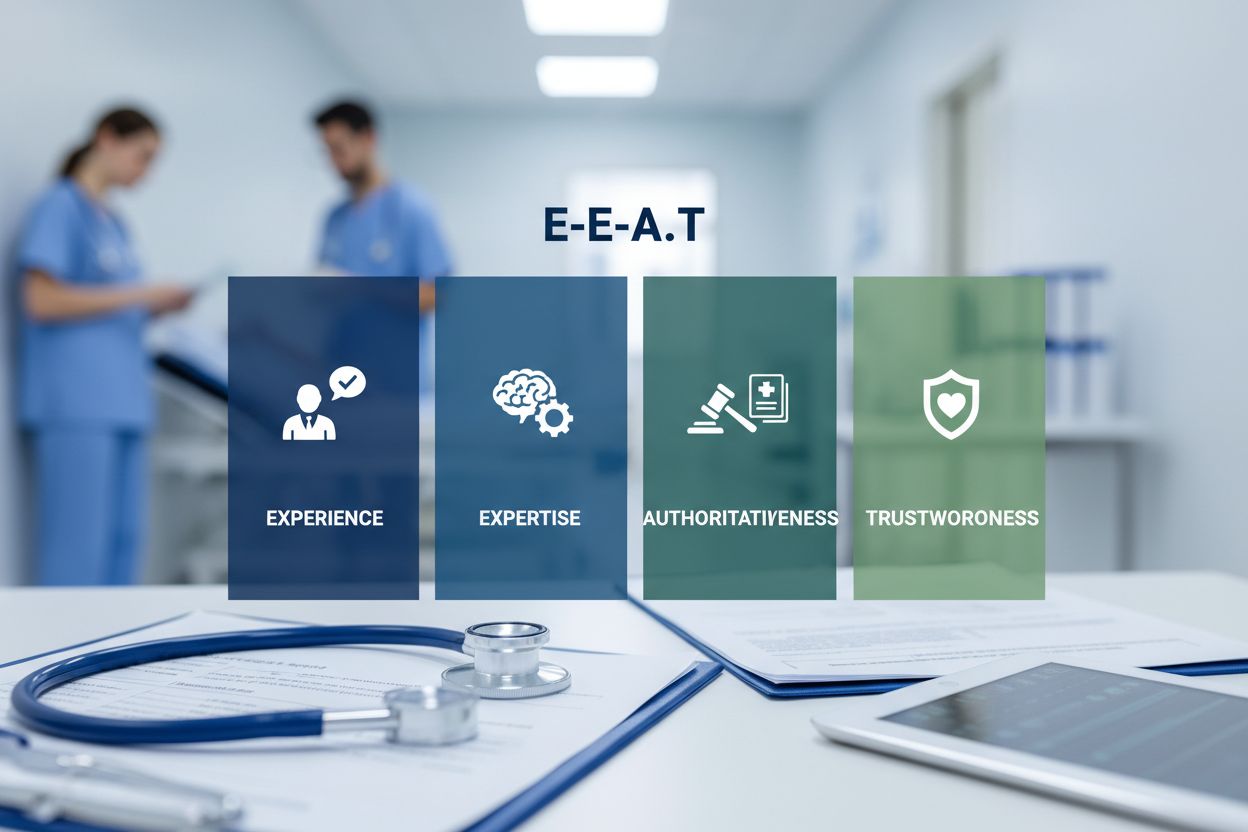
Healthcare content operates under fundamentally different rules than other industries because the stakes are literally life-and-death. Google’s Search Quality Rater Guidelines explicitly state that medical information must meet the highest standards of accuracy, completeness, and traceability. Unlike product reviews or entertainment content, healthcare information influences diagnosis, treatment decisions, medication choices, and patient safety protocols. The FDA reinforces this requirement, mandating that all medical information be accurate, complete, and verifiable through credible sources. Additionally, healthcare organizations must comply with multiple regulatory frameworks including HIPAA (in the US), GDPR (in Europe), and DISHA (in India), which add layers of complexity to content governance. AI systems now evaluate healthcare content with even greater scrutiny, flagging unreviewed AI-generated medical content and prioritizing pages with verified physician credentials and transparent editorial processes.
| Content Category | Standard Requirements | Regulatory Oversight | AI Evaluation Strictness |
|---|---|---|---|
| Healthcare/Medical | Highest accuracy, expert review, evidence-based sources | FDA, FTC, HIPAA, GDPR | Extremely strict; requires physician verification |
| Finance/Legal | High accuracy, professional credentials, compliance | SEC, FTC, State Bar | Very strict; requires expert credentials |
| General Information | Moderate accuracy, basic sourcing | FTC guidelines | Standard; basic fact-checking |
| Entertainment | Minimal accuracy requirements | None specific | Minimal; entertainment value prioritized |
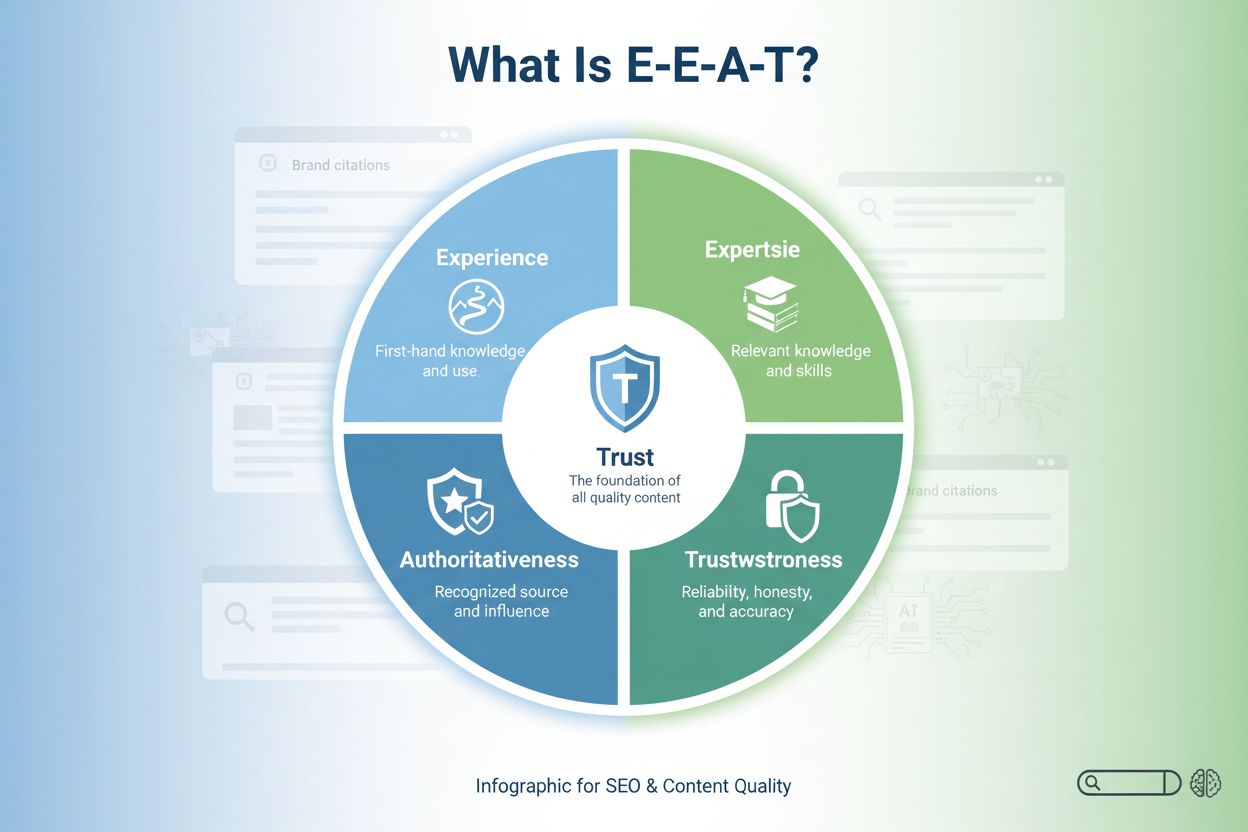
The four pillars of E-E-A-T work together to create a comprehensive trust framework that both Google and AI systems use to evaluate healthcare content. Understanding each pillar and how to implement it is essential for healthcare brands seeking visibility and credibility.
Experience (E): This pillar focuses on real-world clinical knowledge and practical involvement in healthcare delivery. Content should reflect genuine patient interactions, clinical observations, and hands-on medical practice. Rather than purely theoretical information, experience signals demonstrate that the author or reviewer has actually treated patients, observed symptoms in practice, and understands how medical conditions manifest in real-world settings. Including case studies, patient testimonials, and clinical insights strengthens this pillar significantly.
Expertise (E): Expertise refers to the depth of medical knowledge, professional qualifications, and specialized training of content creators and reviewers. This pillar requires clear documentation of credentials, degrees, board certifications, years of practice, and areas of specialization. Google’s algorithms specifically look for author bios that detail medical qualifications, and AI systems prioritize content reviewed by licensed healthcare professionals with verifiable credentials in relevant specialties.
Authoritativeness (A): Authoritativeness is built through recognition, citations, and institutional credibility within the healthcare community. This includes backlinks from reputable medical journals and government health agencies, media mentions in trusted publications, speaking engagements at medical conferences, and collaborations with recognized healthcare organizations. When other authoritative sources cite or reference your content, you signal to both Google and AI systems that your brand is a trusted voice in healthcare.
Trustworthiness (T): Trustworthiness is the foundation upon which all other pillars rest. It encompasses transparency about organizational mission and values, evidence-based information sourced from credible medical databases, regular content updates reflecting current medical guidelines, compliance with healthcare regulations, and honest disclosure about AI involvement in content creation. Trustworthiness also includes clear privacy policies, secure data handling practices, and genuine patient reviews that demonstrate accountability.
AI systems like Google’s AI Overviews, Bing Copilot, and Perplexity now serve as primary discovery channels for health information, fundamentally changing how healthcare content is evaluated and surfaced. These systems use sophisticated algorithms to identify and prioritize content that demonstrates strong E-E-A-T signals, particularly structured data that explicitly marks medical credentials, author expertise, and content review dates. Structured data markup—including schema for MedicalOrganization, MedicalWebPage, and Author credentials—has become critical because it helps AI systems quickly verify that content comes from qualified sources. AI systems also analyze citation patterns, looking for content that links to authoritative medical sources like the CDC, WHO, NHS, and peer-reviewed journals. AmICited.com plays a crucial role in this landscape by monitoring how healthcare brands are referenced and cited across AI systems, providing visibility into whether your content is being surfaced in AI Overviews and how your brand authority is being recognized. Healthcare organizations that understand how AI systems parse and evaluate their content gain a significant competitive advantage in visibility and patient discovery.

Experience signals demonstrate that your healthcare content comes from practitioners who have real clinical exposure and understand how medical conditions actually present in patient populations. Rather than relying solely on textbook definitions, content should include observations about common patient misconceptions, typical symptom presentations, and practical clinical insights that only someone actively treating patients would know. For example, a cardiologist writing about heart disease symptoms might note that “many patients describe chest discomfort as pressure rather than sharp pain, and some women report atypical symptoms like fatigue or shortness of breath without chest involvement.” These specific, clinically-grounded observations signal to both readers and AI systems that the content is based on genuine medical experience. Patient testimonials and case studies (with appropriate privacy protections) further strengthen experience signals by showing real-world outcomes and patient journeys. AI detection systems specifically look for these authentic clinical insights, as they’re difficult to fabricate and indicate genuine expertise. Healthcare brands should encourage their clinical staff to contribute personal observations and real-world examples to content, creating a rich repository of experience-based information that differentiates their content from generic medical information.
Expertise signals must be explicit, verifiable, and prominently displayed throughout your healthcare content. Every medical article should include a detailed author bio that specifies the writer’s medical degree, board certifications, years of clinical experience, and area of specialization. If content is reviewed by a different healthcare professional, that reviewer’s credentials should be equally prominent, along with the review date to signal currency. Google’s algorithms specifically scan for these credential signals, and AI systems use them to determine whether to surface content in AI Overviews. Beyond individual author bios, healthcare organizations should create an “About Our Medical Team” page that showcases all clinical staff, their qualifications, and their roles in content creation and review. This centralized credential repository helps both search engines and patients understand the depth of expertise behind your content. Additionally, maintaining current certifications, publishing in peer-reviewed journals, and speaking at medical conferences all contribute to expertise signals that extend beyond individual articles. AI readiness requires that these credentials be marked up with schema.org code, making them machine-readable and easily verifiable by AI systems evaluating your content’s trustworthiness.
Authoritativeness is earned through consistent recognition from other authoritative sources in the healthcare ecosystem. Backlinks from reputable medical institutions, government health agencies, and peer-reviewed journals signal to Google and AI systems that your content is trusted by other experts. Healthcare brands should actively pursue opportunities to be cited by authoritative sources—this might include publishing research, contributing expert commentary to medical publications, or being featured in healthcare news outlets. Media mentions in trusted publications like major health news sites, medical journals, and healthcare industry publications all contribute to authoritativeness signals. Speaking engagements at medical conferences, serving on professional committees, and collaborating with recognized healthcare organizations further establish your brand as an authority. AmICited.com’s monitoring capabilities become particularly valuable here, as the platform tracks how your healthcare brand is being referenced and cited across AI systems and search results. Understanding your citation patterns helps you identify gaps in your authority-building strategy and recognize which content is resonating with other authoritative sources. Healthcare brands that actively build relationships with other authoritative organizations and consistently produce citation-worthy content create a virtuous cycle where recognition compounds over time, strengthening both search visibility and AI-driven discovery.
Trustworthiness is the bedrock upon which all other E-E-A-T pillars rest, and it’s increasingly scrutinized by both Google and AI systems. Healthcare content must be grounded in evidence-based information sourced from credible medical databases like PubMed, the Cochrane Library, and guidelines from organizations like the FDA, CDC, and WHO. Every medical claim should be supported by citations to these authoritative sources, and content should be updated regularly—ideally every 6-12 months or immediately when medical guidelines change. Transparency is non-negotiable: your website should clearly display your organization’s mission, contact information, editorial guidelines, and medical review processes. Privacy policies must explicitly address how patient data is handled, and compliance with regulations like HIPAA, GDPR, and other regional healthcare privacy laws must be documented. In the age of AI-generated content, trustworthiness now requires explicit disclosure when AI tools are used in content creation, along with documentation that qualified healthcare professionals have reviewed and approved all AI-generated medical information. Patient reviews and testimonials, when genuine and unmanipulated, significantly enhance trustworthiness by demonstrating accountability to real patients. Healthcare brands that prioritize transparency, evidence-based information, regular updates, and regulatory compliance build the trust foundation that makes all other E-E-A-T signals credible and effective.
Implementing E-E-A-T across your healthcare content requires a systematic approach. Here are ten concrete steps you can take immediately to strengthen your E-E-A-T signals:
Audit all author and reviewer credentials: Review every piece of medical content on your website and ensure it includes detailed author bios with medical degrees, certifications, years of experience, and specialization. If content lacks reviewer information, add it immediately. This is the single most important E-E-A-T signal for healthcare content.
Create a medical review process: Establish a documented editorial workflow where all healthcare content is reviewed by a licensed healthcare professional before publication. Document the reviewer’s name, credentials, and review date on every published article. This process should be transparent and verifiable.
Implement schema markup: Work with your technical team to add structured data markup to all medical content, including Author schema, MedicalWebPage schema, and MedicalOrganization schema. This makes your credentials and expertise machine-readable for AI systems.
Establish a content update schedule: Create a calendar for reviewing and updating medical content every 6-12 months, or immediately when medical guidelines change. Document update dates prominently on articles to signal currency to both readers and search engines.
Build a credible sources library: Compile a list of authoritative medical sources (CDC, WHO, NHS, FDA, PubMed, BMJ, etc.) and ensure all medical claims in your content link to or cite these sources. Create internal guidelines for which sources are acceptable for different types of medical claims.
Develop an “About Our Medical Team” page: Create a comprehensive page showcasing all clinical staff involved in content creation and review, including their credentials, specializations, and photos. This centralizes expertise signals and builds patient confidence.
Create patient testimonials and case studies: Develop a process for collecting and publishing genuine patient testimonials and anonymized case studies that demonstrate real-world clinical experience. Ensure all patient information is handled in compliance with HIPAA and other privacy regulations.
Establish transparency documentation: Create or update your About Us page, privacy policy, and editorial guidelines to clearly explain your organization’s mission, how patient data is protected, and how your medical review process works. Make these documents easily accessible.
Pursue media and speaking opportunities: Actively seek opportunities to be featured in reputable healthcare publications, speak at medical conferences, and contribute expert commentary to healthcare news outlets. Each mention builds authoritativeness signals.
Monitor your E-E-A-T performance: Use tools like AmICited.com to track how your healthcare brand is being cited and referenced across AI systems and search results. Monitor your backlink profile, track media mentions, and regularly audit your content for compliance with E-E-A-T standards.
As AI systems become the primary discovery channel for health information, optimizing your content specifically for AI readiness is essential. AI Overviews and similar systems favor content that directly answers user questions in concise, structured formats—ideally 200 words or less with clear, scannable information. Structuring your content with bullet points, numbered lists, and short paragraphs makes it more likely to be extracted and surfaced in AI-generated summaries. FAQ-style content performs particularly well in AI systems because it matches the question-answer format that AI uses to generate responses. Implementing schema markup for FAQs, How-To guides, and medical conditions helps AI systems understand and extract your content more effectively. Healthcare brands should also consider creating content specifically optimized for voice search and AI assistants, using natural language and conversational tone while maintaining medical accuracy. AmICited.com’s monitoring capabilities help you understand whether your content is being surfaced in AI Overviews and how frequently your brand is being cited in AI-generated health summaries. This visibility allows you to optimize your content strategy based on actual AI performance data rather than guessing about what works.
Healthcare brands frequently make critical mistakes that undermine their E-E-A-T signals and damage search visibility. The most damaging error is publishing AI-generated medical content without qualified healthcare professional review—Google and AI systems now actively penalize this practice, and it creates genuine patient safety risks. Failing to include author credentials or reviewer information is another common mistake that immediately signals low trustworthiness to both algorithms and patients. Outdated medical information is particularly harmful in healthcare; content that reflects old treatment guidelines or superseded medical advice damages credibility and can mislead patients. Missing citations or linking to low-quality sources undermines the evidence-based foundation that E-E-A-T requires. Healthcare brands that make unsubstantiated claims like “100% cure” or “guaranteed results” violate both E-E-A-T standards and FTC regulations. Finally, failing to comply with healthcare regulations like HIPAA, GDPR, or regional privacy laws creates legal risk and signals untrustworthiness to both search engines and patients. Avoiding these mistakes is as important as actively building E-E-A-T signals.
Monitoring your E-E-A-T performance requires a multi-faceted approach that tracks both direct signals and indirect indicators of trust and authority. Conduct regular content audits to verify that all medical articles include author credentials, reviewer information, and current citations to authoritative sources. Use Google Search Console to monitor your search visibility and identify any manual actions or penalties that might indicate E-E-A-T issues. Track your backlink profile using tools like Ahrefs or SEMrush, paying particular attention to links from authoritative medical sources—these are your most valuable authority signals. Monitor media mentions and speaking opportunities to track your authoritativeness growth over time. AmICited.com provides specialized monitoring for healthcare brands, tracking how your content is being cited and referenced across AI systems and search results. This visibility into your citation patterns helps you understand which content is resonating with authoritative sources and where you need to strengthen your authority-building efforts. Regular monitoring allows you to identify E-E-A-T gaps before they impact your search visibility and patient discovery.
The healthcare content landscape is evolving rapidly as AI systems become increasingly sophisticated in evaluating medical information quality. Regulatory frameworks are catching up to AI’s impact on healthcare, with the FDA and FTC issuing new guidance on AI-generated health marketing claims and requiring explicit disclosure of AI involvement in medical content. Healthcare brands that proactively implement strong E-E-A-T signals and transparent AI disclosure practices will gain competitive advantages as regulations tighten. The integration of AI systems into healthcare discovery means that traditional SEO rankings are becoming less important than visibility in AI Overviews and AI-generated health summaries. AmICited.com’s role in monitoring healthcare brand citations across AI systems will become increasingly valuable as healthcare organizations seek to understand their visibility in AI-driven discovery channels. Healthcare brands that embrace E-E-A-T principles, maintain transparent practices, and actively monitor their AI-driven visibility will thrive in this evolving landscape, while those that resist these changes risk invisibility and loss of patient trust.
E-E-A-T stands for Experience, Expertise, Authoritativeness, and Trustworthiness. It's crucial for healthcare because medical content directly impacts health decisions, and Google applies stricter standards to ensure accuracy and safety. Healthcare content falls under the YMYL (Your Money or Your Life) category, meaning it requires the highest level of credibility and verification.
AI systems prioritize content with strong E-E-A-T signals when generating summaries and answers. Healthcare content with verified expertise, clear authorship, transparent editorial processes, and trustworthy sources is significantly more likely to be featured in AI-generated responses. This makes E-E-A-T optimization essential for visibility in AI-driven search.
YMYL (Your Money or Your Life) content, including healthcare, requires significantly stricter E-E-A-T standards than regular content. Google evaluates medical content more rigorously because incorrect information could directly harm users' health or finances. Healthcare brands must meet higher standards for expertise verification, source credibility, and transparency.
Include detailed author bios with credentials and specializations, publish in peer-reviewed journals, obtain backlinks from medical institutions, collaborate with recognized healthcare organizations, and maintain transparent editorial processes. Additionally, pursue media mentions, speaking engagements, and professional committee participation to build authoritativeness signals.
Yes, but it must be clearly disclosed and thoroughly reviewed by qualified medical professionals. Transparency about AI involvement is now a trust signal itself. Unreviewed AI content can damage E-E-A-T signals significantly, while properly reviewed and disclosed AI-assisted content can be acceptable if the medical review is rigorous and documented.
Update medical content every 6-12 months or sooner if medical guidelines change. Outdated information significantly damages trustworthiness signals and can harm search rankings. Document update dates prominently on articles to signal currency to both readers and search engines, and ensure all medical claims reflect current medical standards.
Schema markup helps AI systems understand that your content is medical, reliable, and published by qualified professionals. MedicalOrganization, MedicalWebPage, and Author schema are particularly important for healthcare E-E-A-T. Structured data makes your credentials and expertise machine-readable, allowing AI systems to quickly verify your authority and trustworthiness.
Tools like AmICited.com help track how your healthcare brand is referenced in AI systems like Google's AI Overviews and Bing Copilot. This monitoring allows you to understand your authority signals in AI-driven search, identify which content is resonating with AI systems, and optimize your healthcare content visibility strategy.
Track how your medical content is cited and referenced across Google AI Overviews, Bing Copilot, and other AI systems. Understand your authority signals and optimize your healthcare content visibility.
Understand E-E-A-T (Experience, Expertise, Authoritativeness, Trustworthiness) and its critical importance for visibility in AI search engines like ChatGPT, Per...
E-E-A-T (Experience, Expertise, Authoritativeness, Trustworthiness) is Google's framework for evaluating content quality. Learn how it impacts SEO, AI citations...

Learn how to demonstrate first-hand knowledge and experience signals to AI systems like ChatGPT, Perplexity, and Google AI Overviews. Optimize your content for ...