
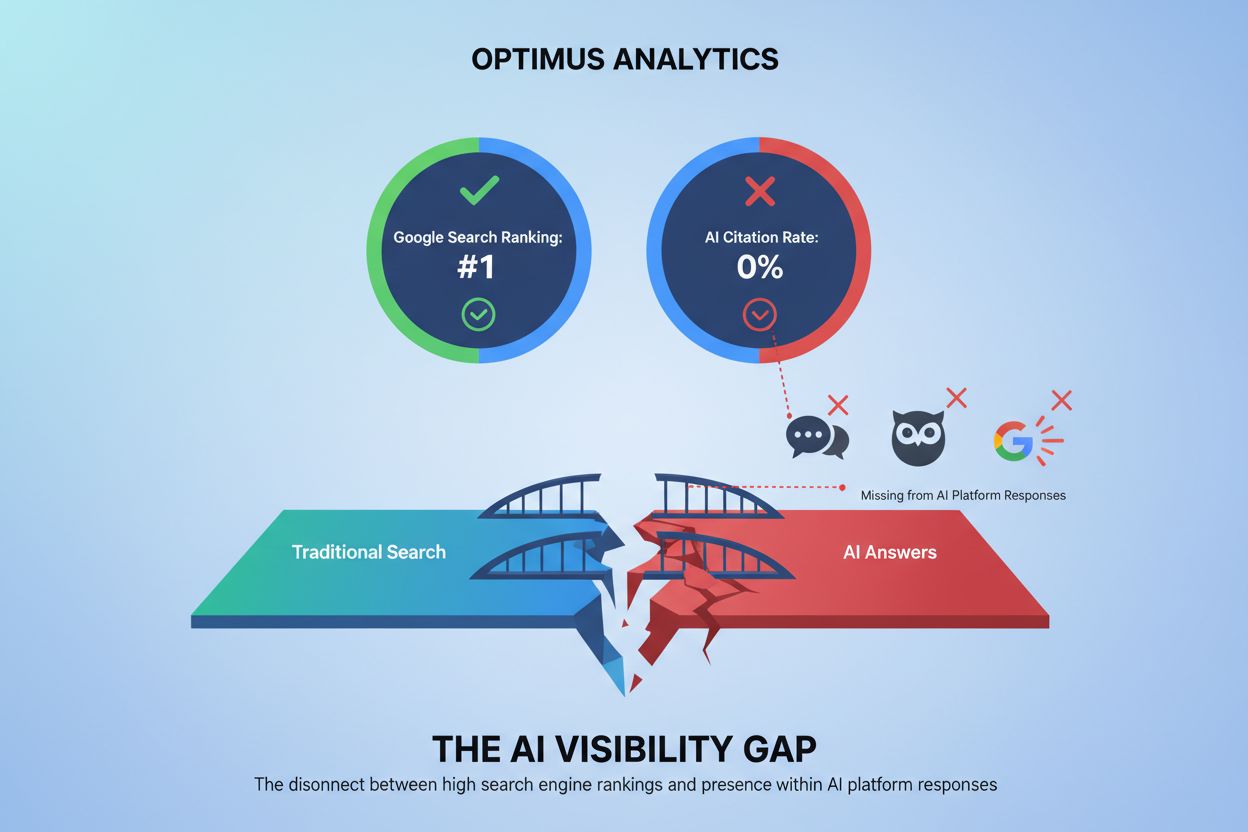
AI Visibility Gap
Learn what the AI Visibility Gap is, why it matters for your brand, how to measure it, and strategies to close the gap between traditional search visibility and...
7 min read
Learn how to optimize your brand’s visibility across AI systems in multiple languages. Discover why translated content gets 327% more citations and how to implement multilingual AI visibility strategies.
The rise of AI-powered search and content discovery has fundamentally changed how information reaches global audiences, yet most businesses remain invisible in these new channels. Untranslated websites face a staggering 431% visibility gap in non-English languages, meaning content that could reach Spanish, French, or Mandarin speakers simply doesn’t appear in AI Overviews and generative AI responses. This crisis is particularly acute for companies targeting international markets, where the absence of localized content doesn’t just limit reach—it actively signals irrelevance to both AI systems and human users.

While traditional SEO focuses on ranking for keywords in search results, AI visibility operates on an entirely different principle—being cited and referenced within AI-generated responses. When users ask ChatGPT, Google’s AI Overviews, or Perplexity a question, these systems don’t simply rank pages; they synthesize information from multiple sources and cite the most authoritative and relevant ones. This distinction matters enormously because AI systems prioritize comprehensiveness, accuracy, and source diversity over keyword matching. A page that ranks #1 for a keyword might never be cited in an AI response if the AI system deems other sources more authoritative or comprehensive. Additionally, AI visibility transcends traditional geographic boundaries—a Spanish-language query in Mexico might pull from sources worldwide, but only if those sources are available in Spanish.
| Aspect | Traditional SEO | AI Visibility |
|---|---|---|
| Primary Goal | Rank for keywords | Get cited in AI responses |
| Ranking Factor | Keyword relevance & backlinks | Authority, comprehensiveness, source diversity |
| Language Requirement | Single language sufficient | Multiple languages essential |
| Citation Frequency | One click per user | Multiple citations per query |
| Geographic Reach | Language-specific | Global with language variants |
The evidence for translation’s impact on AI visibility is overwhelming and quantifiable. According to a Weglot study analyzing 1.3 million citations, translated websites achieve 327% more visibility in AI Overviews compared to their English-only counterparts. The real-world impact varies by market but consistently demonstrates the power of localization:
These numbers reveal a critical insight: the absence of translation isn’t neutral—it’s actively harmful. Every untranslated language represents lost visibility, lost citations, and lost market opportunity.
Many companies make the critical mistake of treating translation and localization as interchangeable, but they represent fundamentally different approaches to global markets. Simple translation converts words from one language to another, while AI localization adapts content, structure, and strategy for how AI systems in different regions actually work. A translated page might have grammatically correct Spanish, but if it doesn’t account for how Spanish-language AI systems prioritize sources, structure information, or weight authority signals, it will underperform. True AI localization considers regional search behaviors, cultural context, local competitor strategies, and how different AI systems (Google’s in Europe vs. ChatGPT’s training data vs. regional alternatives) evaluate sources. This is why 88% of content decision-makers now use generative AI for translations—they recognize that AI-assisted localization can account for these nuances at scale, rather than relying on literal word-for-word conversion.
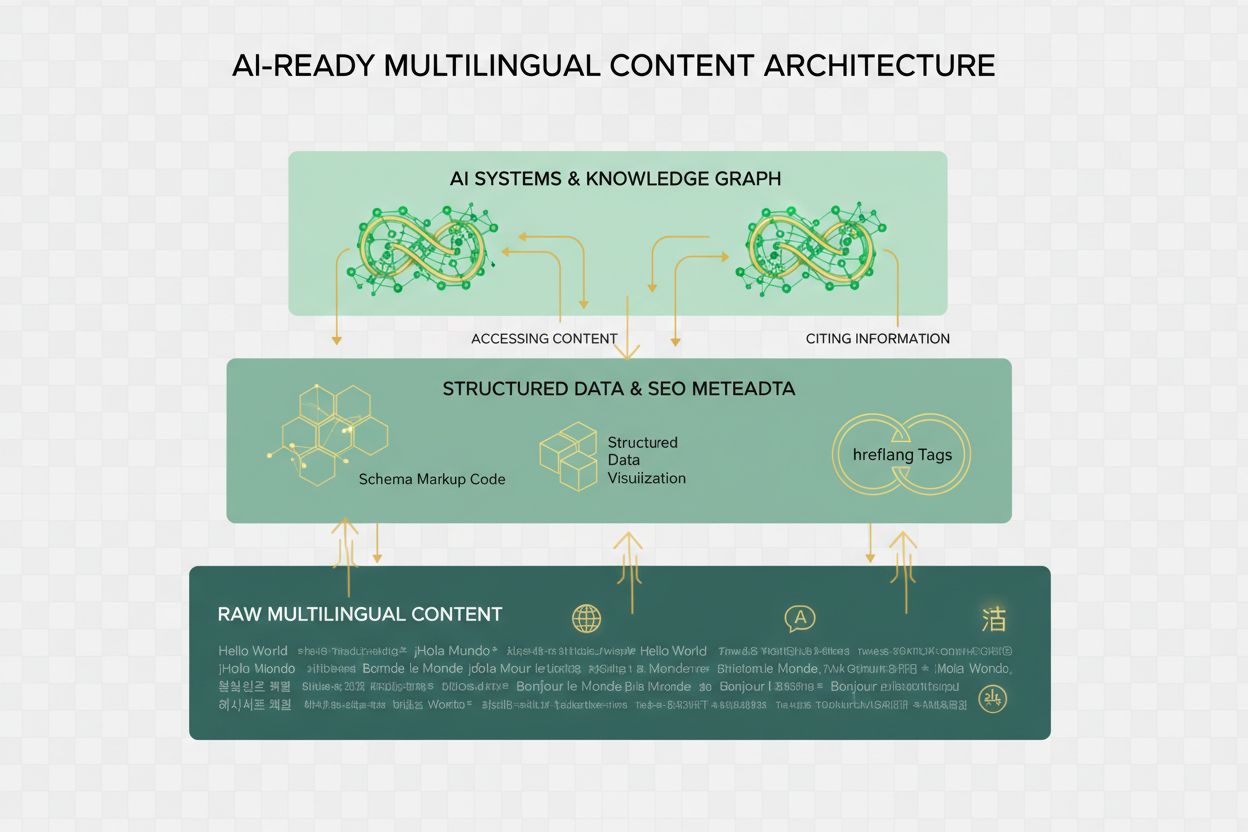
Creating AI-visible multilingual content requires a systematic approach that goes beyond traditional website translation. The technical foundation must support AI systems’ ability to discover, understand, and cite your content across languages:
The business case for multilingual AI visibility is compelling: the AI localization market is valued at $5 billion in 2025 and projected to reach $25 billion by 2033, reflecting explosive growth in demand for these services. Companies that invest in proper localization now position themselves to capture disproportionate market share as AI-driven discovery becomes the primary way users find information. Enterprises implementing AI localization achieve up to 60% cost savings compared to traditional translation and manual content adaptation, making this not just a visibility play but a cost-efficiency opportunity. The strategic advantage compounds over time—early movers in multilingual AI visibility build citation authority in new markets before competitors recognize the opportunity. For companies targeting Spanish-speaking markets, the data is particularly compelling: the 59% citation increase in Mexico and 22% advantage in Spain represent real revenue opportunities that grow as AI-driven search becomes more prevalent. Organizations that delay multilingual localization effectively cede these markets to competitors who move faster.
Many organizations stumble in their multilingual AI visibility efforts by making preventable errors that undermine their investment. The most critical mistake is treating all languages equally—some markets have dramatically higher AI citation potential than others, and resources should be allocated accordingly based on market size and AI adoption rates. Another common pitfall is relying on machine translation without human review, which can produce content that’s technically correct but fails to resonate with AI systems trained on native-speaker patterns and cultural context. Companies often neglect to update translated content as frequently as their primary language, creating stale, outdated versions that AI systems deprioritize. A third major error is ignoring regional AI system differences—Google’s AI Overviews, ChatGPT, Perplexity, and regional alternatives all have different training data and citation preferences, yet most companies optimize for only one. Finally, many organizations fail to measure AI visibility systematically, treating it as a one-time project rather than an ongoing optimization discipline, which means they never learn what’s actually working in each market.
Tracking AI visibility across multiple languages and AI platforms requires specialized tools designed for this new paradigm. AmICited provides comprehensive monitoring of how your content performs across AI Overviews, ChatGPT, Perplexity, and other generative AI systems, with specific tracking for multilingual citations and regional variations. Rather than guessing whether your Spanish translation is actually being cited, AmICited shows exactly how many times your content appears in AI responses for each language, which queries trigger citations, and how your visibility compares to competitors in each market. This data-driven approach transforms AI visibility from a theoretical concern into a measurable, optimizable business metric. By tracking citations across languages and AI platforms simultaneously, organizations can identify which localization efforts are delivering ROI and where additional investment is needed.
The trajectory of AI visibility is clear: as AI systems become the primary discovery mechanism for information, multilingual presence will shift from competitive advantage to competitive necessity. The next evolution will likely involve AI systems becoming more sophisticated in understanding cultural and regional context, which means localization will need to go deeper than language translation into true cultural adaptation. We’re already seeing early signs of this with regional AI models and fine-tuned systems that understand local market dynamics, user preferences, and authoritative sources within specific regions. Organizations that build multilingual AI visibility infrastructure now will have significant advantages as these systems mature and become more prevalent. The companies that treat this as a strategic priority rather than a technical checkbox will be the ones capturing disproportionate share of AI-driven traffic and citations across global markets.
According to Weglot's study of 1.3 million citations, translated websites see up to 327% more visibility in AI Overviews compared to untranslated sites. This dramatic difference shows that translation is now a critical visibility signal for AI systems.
No. Translation converts text word-for-word, while localization adapts content for cultural nuances, local keywords, and regional preferences. AI systems prefer localized content because it better matches user intent and provides more relevant answers.
Enterprises using AI localization can reduce costs by up to 60% compared to traditional translation methods. Additionally, faster market entry and simultaneous multi-market launches create revenue acceleration that multiplies the ROI.
Hreflang tags signal to AI systems which language and regional version of your content is most appropriate for each user. This prevents duplicate content issues and ensures AI systems cite the correct version in their answers.
While AI localization dramatically improves efficiency and reduces costs, a hybrid approach works best. AI handles high-volume content quickly, while human experts review critical brand messaging to ensure cultural appropriateness and brand voice consistency.
If Cloudflare blocks AI crawlers by default, your site becomes invisible to AI search engines. You need to check your robots.txt file and remove any 'Disallow' commands for AI crawlers like GPTBot to ensure visibility.
Timeline varies, but many companies see improved AI citations within weeks of implementing proper localization and technical optimization. Continuous monitoring and refinement through tools like AmICited helps accelerate results.
Prioritize languages based on your target markets and where you see the most potential revenue. Focus on markets where competitors haven't yet optimized for AI visibility to gain competitive advantage.
Discover how your brand is being cited across languages in AI systems. Get insights into which markets need optimization and track your progress with AmICited.
Learn what the AI Visibility Gap is, why it matters for your brand, how to measure it, and strategies to close the gap between traditional search visibility and...

Learn how to recover from poor AI visibility with actionable strategies for ChatGPT, Perplexity, and other AI search engines. Improve your brand's presence in A...
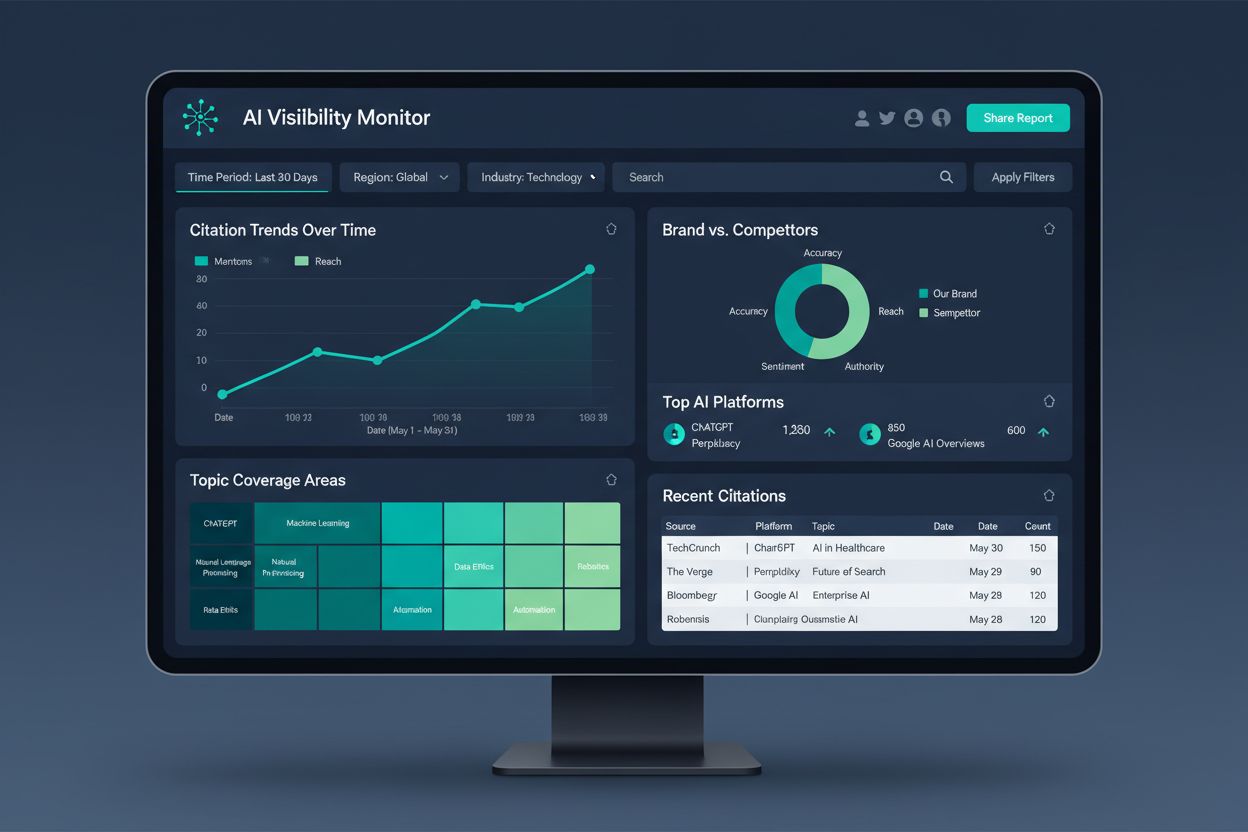
Learn how to identify and fill AI visibility gaps in your content strategy. Discover practical methods to ensure your brand appears in ChatGPT, Perplexity, and ...