

How Do I Research AI Search Queries?
Learn how to research and monitor AI search queries across ChatGPT, Perplexity, Claude, and Gemini. Discover methods to track brand mentions and optimize for AI...
9 min read
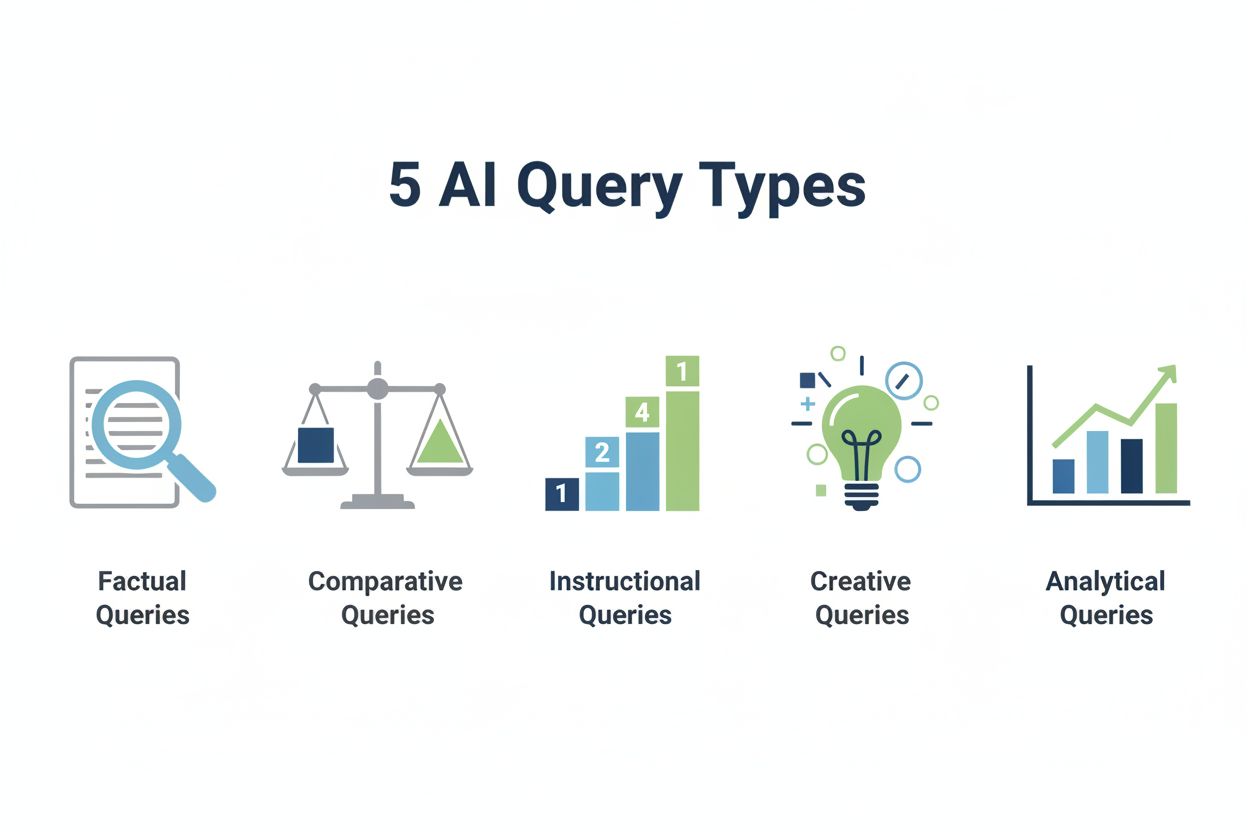
Master AI query optimization by understanding factual, comparative, instructional, creative, and analytical queries. Learn platform-specific strategies for ChatGPT, Perplexity, Google AI, and Claude.
When users interact with AI platforms like ChatGPT, Perplexity, or Google’s AI Overviews, they’re asking fundamentally different questions than they would in traditional search. AI query types represent distinct categories of user intent, each requiring specialized optimization approaches. Rather than simply searching for keywords, users now ask conversational questions that demand specific types of answers—from factual definitions to comparative analyses to step-by-step instructions. Understanding these five core query types and how to optimize for each one is essential for achieving visibility in AI-generated responses. Brands that recognize these differences and tailor their content accordingly will dominate AI search visibility, while those treating all queries identically will fade into irrelevance.
AI platforms receive and process five distinct query types, each with unique characteristics and optimization requirements. These categories represent how users naturally phrase questions when interacting with AI systems, and understanding them is crucial for content strategy.
| Query Type | Example | AI Platform Preference | Optimization Focus |
|---|---|---|---|
| Factual | “What is Generative Engine Optimization?” | ChatGPT, Google AI | Authoritative sources, E-E-A-T signals, answer capsules |
| Comparative | “ChatGPT vs Perplexity vs Claude” | Perplexity, Google AI | Structured tables, pros/cons, competitive positioning |
| Instructional | “How to optimize content for AI search” | All platforms | Step-by-step structure, numbered lists, HowTo schema |
| Creative | “Generate ideas for marketing campaigns” | ChatGPT, Claude | Frameworks, templates, original thinking, examples |
| Analytical | “Why is AI search optimization important?” | Claude, Perplexity | Data-driven content, statistics, nuanced perspectives |
Each query type serves a distinct user need and triggers different AI response patterns. Factual queries seek definitive answers to “what is” or “define” questions. Comparative queries ask AI to evaluate multiple options and highlight differences. Instructional queries request step-by-step guidance for accomplishing specific tasks. Creative queries prompt AI to generate ideas, suggestions, or frameworks. Analytical queries demand deeper insights, explanations, and research-backed perspectives. Recognizing which query types your target audience uses most frequently allows you to prioritize content optimization accordingly.
Factual queries represent the most straightforward category—users want clear, authoritative answers to definitional or informational questions. When someone asks “What is Generative Engine Optimization?” or “Define AI search visibility,” they’re seeking a concise, accurate explanation from a trusted source. AI platforms prioritize authoritative sources for factual queries, making E-E-A-T signals (Experience, Expertise, Authoritativeness, Trustworthiness) absolutely critical. The answer capsule format works exceptionally well for factual queries—placing a complete, standalone answer immediately after your primary heading, before any supporting details or context. This structure allows AI systems to extract your answer directly without parsing surrounding content. Include author credentials, publication dates, and source citations to strengthen authority signals. For example, if optimizing for “What is query intent in AI search?”, your opening paragraph should provide a complete, quotable definition that AI systems can cite directly. Factual content performs best when it’s comprehensive yet concise, authoritative yet accessible, and structured for immediate extraction.
Comparative queries ask AI systems to evaluate multiple options and highlight differences, making structured comparison content essential for visibility. When users ask “ChatGPT vs Perplexity vs Claude” or “Best AI search platforms for different use cases,” they want clear, side-by-side evaluations that help them understand trade-offs. Structured comparison tables dramatically improve your chances of AI citation for these queries—AI systems can extract table data far more easily than prose comparisons. Create tables with consistent columns (Platform, Strengths, Weaknesses, Best For, Pricing) that allow AI to present information in organized formats. Include pros and cons sections for each option being compared, as AI platforms frequently cite these when answering comparative questions. Competitive positioning matters significantly—ensure your brand or product appears alongside relevant competitors in your content, as AI systems recognize these associations and cite pages that comprehensively address the competitive landscape. Avoid one-sided comparisons that obviously favor your product; instead, provide balanced evaluations that acknowledge genuine strengths and limitations of all options. This credibility actually increases citation probability because AI systems trust sources that demonstrate objectivity.
How-to and instructional queries represent some of the most common AI search queries, making this category critical for visibility. Users ask “How do I optimize content for AI search?” or “What are the steps to implement schema markup?” expecting clear, actionable guidance they can follow immediately. Step-by-step structure is absolutely essential—break processes into discrete, numbered steps that progress logically from beginning to end. Each step should include what to do, why it matters, and what result to expect. Numbered lists outperform bullet points for instructional content because they signal sequence and progression to AI systems. Include visual aids—screenshots, diagrams, or annotated images—that clarify complex steps, as AI systems increasingly process and cite visual content. Implement HowTo schema markup explicitly telling AI systems you’re providing instructions, which dramatically increases extraction probability. For example, when explaining “How to create answer capsules for AI optimization,” structure your content with clear steps: “Step 1: Identify your primary question,” “Step 2: Write a complete answer,” “Step 3: Place it after your H1 heading,” etc. Instructional content that’s clear, actionable, and properly structured achieves exceptional AI citation rates because it directly solves user problems.
Creative queries ask AI systems to generate ideas, suggestions, frameworks, or brainstorming content—a category that’s growing rapidly as users leverage AI for ideation. When someone asks “Generate marketing campaign ideas for SaaS companies” or “Create a content calendar framework,” they’re seeking original thinking and structured approaches. Frameworks and templates perform exceptionally well for creative queries because they provide reusable structures users can adapt to their specific situations. Present frameworks visually with clear steps or components—AI systems recognize and cite well-structured frameworks more readily than narrative explanations. Include original thinking and unique perspectives that distinguish your content from generic advice; AI platforms value sources that offer novel approaches rather than recycled ideas. Support creative content with real-world examples and case studies showing how frameworks have been applied successfully. For instance, if creating content about “AI content optimization frameworks,” develop a proprietary framework (like “The QUERY Framework: Question Analysis, Understanding Intent, E-E-A-T Building, Response Optimization, Yield Measurement”) and explain each component with examples. Creative content that combines original thinking with practical frameworks and real-world applications achieves strong AI visibility because it provides genuine value users can’t find elsewhere.
Analytical queries seek deeper insights, explanations, and research-backed perspectives on complex topics. Users ask “Why is AI search optimization important?” or “How does query intent affect content strategy?” expecting nuanced analysis that goes beyond surface-level explanations. Data-driven content is essential—support analytical claims with statistics, research findings, and quantifiable evidence. AI platforms prioritize sources that cite original research or proprietary data, as these provide authoritative backing for claims. Include nuanced perspectives that acknowledge complexity—analytical content should explore multiple viewpoints, discuss trade-offs, and avoid oversimplification. Long-form content performs best for analytical queries; articles exceeding 2,500 words that thoroughly explore topics achieve significantly higher citation rates than shorter pieces. Structure analytical content with clear thesis statements, supporting evidence, and logical progression from simple concepts to complex insights. For example, when addressing “How AI query types affect content strategy,” provide data on query distribution across platforms, explain why each type requires different approaches, discuss trade-offs between optimization strategies, and offer frameworks for prioritizing efforts. Analytical content that combines original research, nuanced thinking, and comprehensive coverage becomes a go-to source that AI systems cite repeatedly.
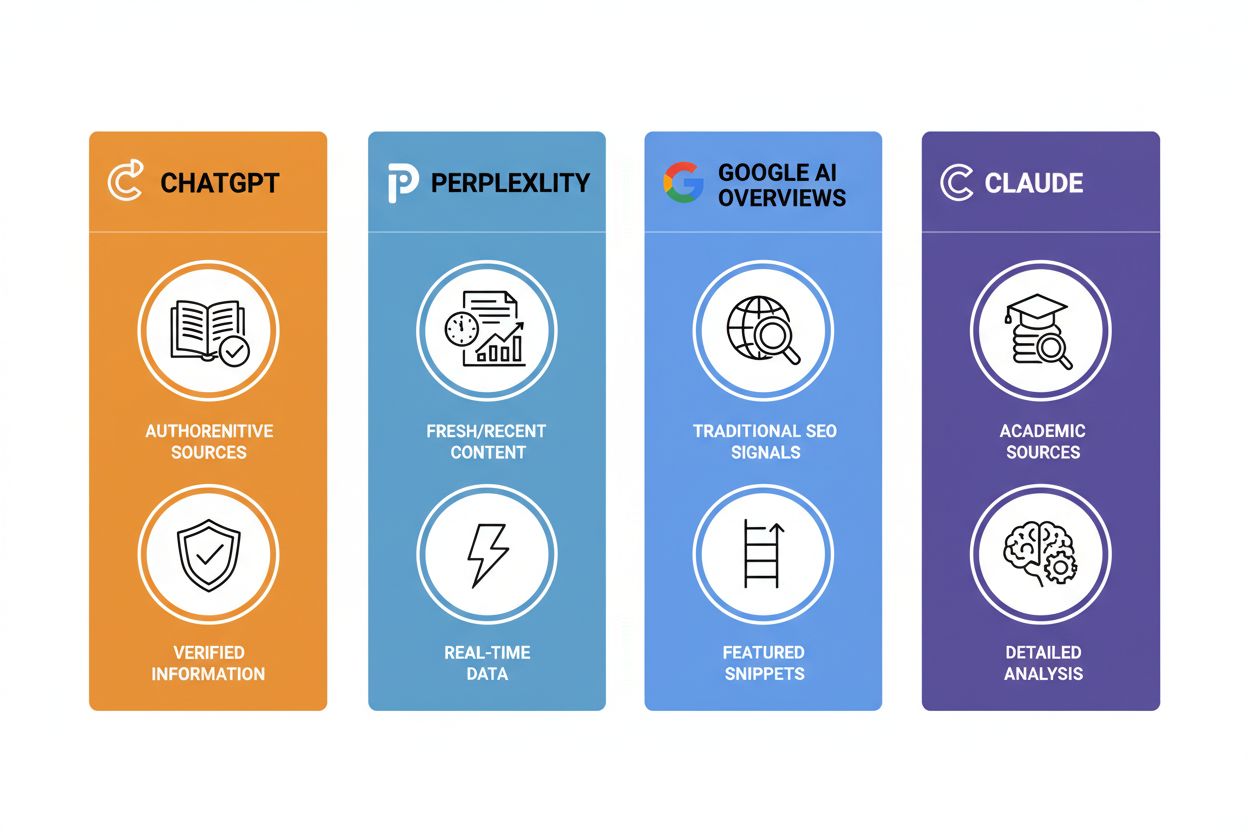
While core optimization principles apply across AI platforms, each system has distinct preferences for how it handles different query types. ChatGPT prioritizes authoritative, comprehensive sources for all query types, favoring long-form content that thoroughly explores topics. ChatGPT’s citation patterns show preference for established domains with strong backlink profiles and consistent content quality. Perplexity heavily favors fresh, recent content and shows dramatic preference decay after just 2-3 days without updates—this platform rewards aggressive content refresh schedules more than any competitor. Perplexity also emphasizes topic-specific authority, citing sources that comprehensively cover niche topics even if they lack massive domain authority. Google AI Overviews maintain traditional SEO signal importance—pages ranking well in conventional Google search have substantially higher probability of AI Overview citations. Google’s AI features particularly favor featured snippets, structured data, and pages with strong Core Web Vitals performance. Claude values academic and research-oriented content, showing preference for sources with rigorous methodology, peer review, or institutional backing. Claude’s citation patterns reveal skepticism toward marketing-heavy content and preference for neutral, factual presentation. Understanding these platform differences allows you to adjust optimization emphasis—prioritize comprehensive depth for ChatGPT, aggressive freshness for Perplexity, traditional SEO signals for Google AI, and academic rigor for Claude.
Successfully optimizing for different query types begins with accurately identifying query intent—understanding what users actually want when they ask specific questions. Query intent determines everything about your optimization approach: content structure, depth, format, and emphasis. Keyword analysis reveals intent patterns—examine the specific words and phrases users employ when asking questions. Questions beginning with “what” typically indicate factual intent, “how” suggests instructional intent, “vs” or “compare” signals comparative intent, “why” often indicates analytical intent, and “generate” or “create” suggests creative intent. Analyze competitor content ranking for your target queries to understand what AI systems currently prefer for those specific intents. Content structure should match intent—factual queries need answer capsules, comparative queries need tables, instructional queries need numbered steps, creative queries need frameworks, analytical queries need data and nuance. Semantic understanding matters significantly; AI systems recognize intent not just from keywords but from overall content context and structure. Use tools like SEMrush, Ahrefs, or specialized AI SEO platforms to analyze query intent distribution in your target market. Understanding which query types drive the most traffic and conversions for your business allows you to prioritize optimization efforts strategically.
Rather than creating separate content for each query type, sophisticated content strategy creates single pieces that serve multiple intents simultaneously. A comprehensive guide can address factual questions, include comparative elements, provide instructional sections, offer creative frameworks, and deliver analytical insights—all within one well-structured article. Modular content architecture enables this approach—organize content into distinct sections, each optimized for specific query types. Begin with an answer capsule addressing the primary factual question, follow with comparative tables if relevant, include step-by-step instructional sections, provide frameworks for creative application, and conclude with analytical insights. Internal linking connects related content, helping AI systems understand your topical ecosystem and increasing citation probability across multiple query types. For example, a comprehensive guide on “AI Query Optimization” could include: a factual definition section, a comparison table of query types, instructional steps for optimization, creative frameworks for content strategy, and analytical insights on performance metrics. This approach maximizes efficiency—you create once but serve multiple query intents. Comprehensive coverage that addresses diverse query types attracts citations across varied user searches, multiplying your visibility potential compared to narrow, single-intent content.
Understanding which query types drive your AI citations requires systematic tracking and analysis. Monitor which queries return your content by regularly testing target queries across ChatGPT, Perplexity, Google AI, and Claude, documenting whether your brand appears and in what position. Track citation frequency by query type—create a spreadsheet categorizing your target queries by type and recording monthly citation rates for each category. This reveals which query types represent your strongest opportunities and which need optimization attention. Analyze competitor query coverage to identify gaps—if competitors dominate comparative queries but you’re strong in factual queries, this suggests where to invest optimization effort. Identify optimization gaps by comparing your citation rates against competitors for similar query types. Use tools like Semrush AI SEO Toolkit or Profound to track AI visibility across platforms and query types automatically. These platforms provide share-of-voice metrics showing how your citation frequency compares to competitors. Monitor referral traffic from AI platforms, segmenting by query type when possible to understand which query types drive the most valuable traffic. This data-driven approach transforms AI optimization from guesswork into strategic, measurable effort.
Different query types have distinct failure modes—mistakes that specifically prevent citations for that category:
Factual Queries: Lacking authoritative sources or E-E-A-T signals, burying the answer deep in content rather than front-loading it, providing incomplete or ambiguous definitions, failing to cite sources or provide attribution, using overly technical language that obscures clarity
Comparative Queries: Missing structured comparison tables or using prose comparisons AI can’t easily extract, showing obvious bias toward your product rather than balanced evaluation, failing to include all major competitors in your comparison, lacking clear pros/cons sections, providing outdated pricing or feature information
Instructional Queries: Using unclear step-by-step structure or mixing multiple processes together, employing bullet points instead of numbered sequences, failing to explain why each step matters, providing insufficient detail for users to actually follow instructions, lacking visual aids for complex steps
Creative Queries: Offering generic ideas without original thinking, failing to provide reusable frameworks or templates, lacking real-world examples showing framework application, providing insufficient depth or detail, missing the creative spark that distinguishes your content from competitors
Analytical Queries: Providing shallow analysis without depth or nuance, lacking supporting data, statistics, or research citations, oversimplifying complex topics, failing to acknowledge multiple perspectives or trade-offs, using unsupported claims without evidence
AI query types will continue evolving as platforms become more sophisticated. Multimodal queries combining text, images, and potentially audio will become increasingly common, requiring optimization for visual content alongside text. AI systems will better understand conversational follow-up queries where users ask clarifying questions building on previous responses, rewarding content that anticipates and addresses likely follow-ups. Context-aware personalized queries will adapt based on user history and preferences, meaning the same question receives different answers for different users—requiring content that serves diverse user segments and experience levels. Real-time data integration will accelerate, with AI platforms citing current information like live pricing, recent news, and dynamic inventory more frequently than static content. Brands preparing for these trends should begin optimizing visual content with descriptive alt text and captions, creating content that anticipates follow-up questions, developing content serving multiple user segments and experience levels, and maintaining real-time data feeds for dynamic information. The fundamentals of query type optimization—understanding intent, matching content structure to intent, and providing genuine value—will remain constant even as specific platforms and technologies evolve.
Traditional search focuses on keyword matching and ranking pages in result lists. AI query types emphasize user intent and conversational questions. AI platforms synthesize information from multiple sources to create answers, meaning your content must match specific intent patterns. Factual queries in AI search require authoritative definitions, while traditional search just needs keyword relevance. Understanding these differences is crucial for AI visibility.
Analyze the questions your target audience actually asks. Factual queries start with 'what' or 'define', instructional queries start with 'how', comparative queries include 'vs' or 'compare', creative queries ask to 'generate' or 'create', and analytical queries ask 'why' or 'explain'. Research your industry's most common questions and categorize them by type. This reveals which query types matter most for your business.
Absolutely. Comprehensive content can serve multiple intents simultaneously through modular structure. Start with an answer capsule for factual queries, include comparison tables for comparative queries, add numbered steps for instructional queries, provide frameworks for creative queries, and include data-driven analysis for analytical queries. This approach maximizes efficiency and increases citation probability across diverse query types.
This depends on your industry and audience. B2B SaaS companies typically benefit most from comparative and analytical queries. E-commerce businesses need strong instructional and factual content. Creative agencies should focus on creative and analytical queries. Analyze your target audience's search behavior and prioritize query types that drive the most valuable traffic and conversions for your specific business.
ChatGPT prioritizes comprehensive, authoritative sources for all query types. Perplexity heavily favors fresh content updated every 2-3 days. Google AI Overviews maintain traditional SEO signal importance. Claude values academic and research-oriented content. Understanding these platform preferences allows you to adjust optimization emphasis—prioritize depth for ChatGPT, freshness for Perplexity, SEO signals for Google, and academic rigor for Claude.
The biggest mistake is treating all queries identically. Factual queries need answer capsules, comparative queries need tables, instructional queries need numbered steps. Failing to match content structure to query intent dramatically reduces citation probability. Another common error is burying answers deep in content instead of front-loading them. AI systems need to extract answers quickly, so structure matters as much as content quality.
Update frequency varies by query type and platform. Instructional and factual content needs monthly updates to maintain accuracy. Comparative content requires bi-weekly updates as products and features change. Analytical content benefits from quarterly updates with new data. For Perplexity specifically, update priority content every 2-3 days. ChatGPT and Google AI are less aggressive but still reward regular updates.
Track citation frequency by query type using tools like Semrush AI SEO Toolkit or Profound. Monitor which queries return your content across ChatGPT, Perplexity, Google AI, and Claude. Analyze referral traffic from AI platforms and segment by query type when possible. Compare your citation rates against competitors for similar query types. This data reveals which query types represent your strongest opportunities and which need optimization attention.
Track which AI query types drive citations for your brand across ChatGPT, Perplexity, Google AI, and Claude. Get real-time insights into your AI search visibility.
Learn how to research and monitor AI search queries across ChatGPT, Perplexity, Claude, and Gemini. Discover methods to track brand mentions and optimize for AI...
Learn the essential first steps to optimize your content for AI search engines like ChatGPT, Perplexity, and Google AI Overviews. Discover how to structure cont...

Learn about AI Query Research Tools - platforms that track and analyze search patterns across ChatGPT, Gemini, Perplexity, and other AI engines. Discover how to...