

Data-Driven PR: Creating Research That AI Wants to Cite
Learn how to create original research and data-driven PR content that AI systems actively cite. Discover the 5 attributes of citation-worthy content and strateg...
9 min read
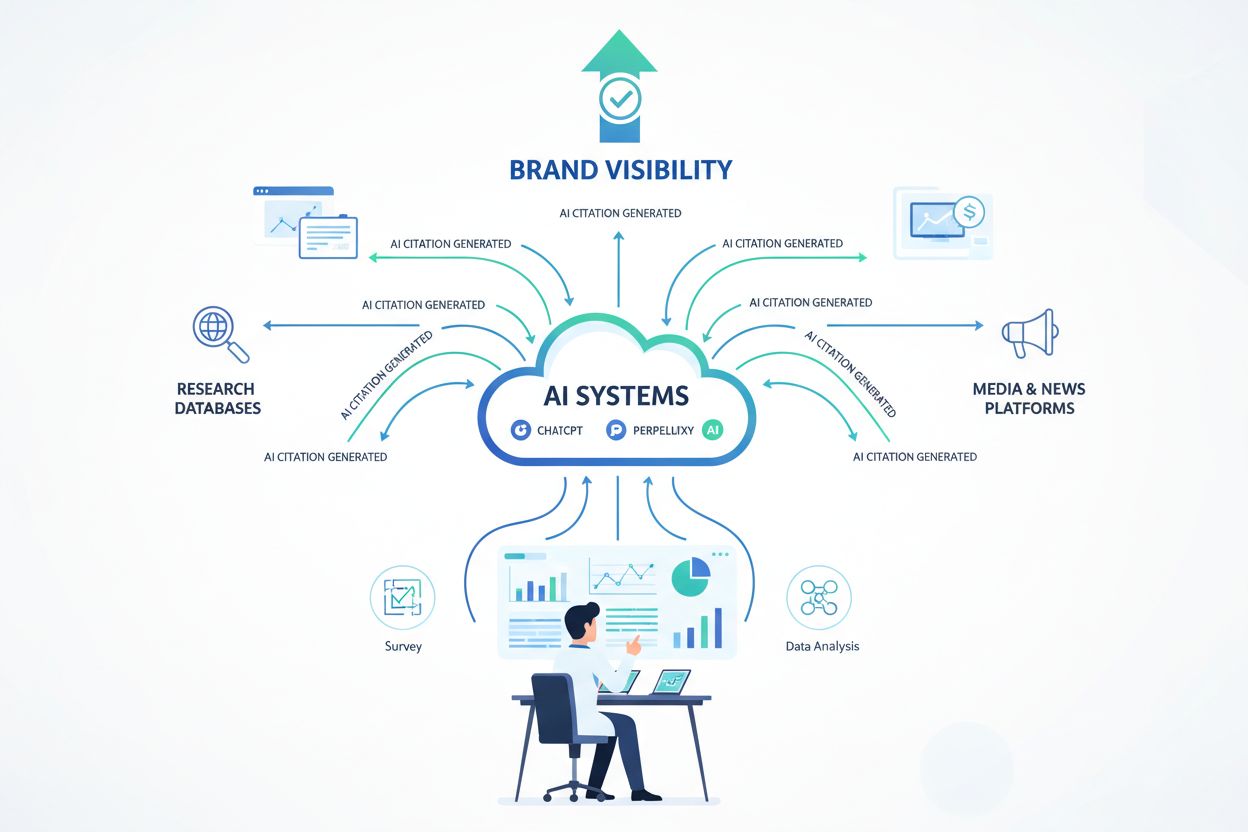
Discover how original research and first-party data drive 30-40% visibility boost in AI citations across ChatGPT, Perplexity, and Google AI Overviews.
The rules of visibility have fundamentally changed. For decades, SEO success meant ranking high on Google’s search results page. Today, the real battle is happening inside AI-generated answers—where your brand either gets cited as a trusted source or disappears entirely. Original research is the most powerful tool for winning in this new landscape, and brands that invest in it are seeing a 30-40% visibility boost in AI citations across ChatGPT, Perplexity, and Google AI Overviews. This isn’t about chasing vanity metrics anymore; it’s about becoming the source of truth that AI systems trust and reference.
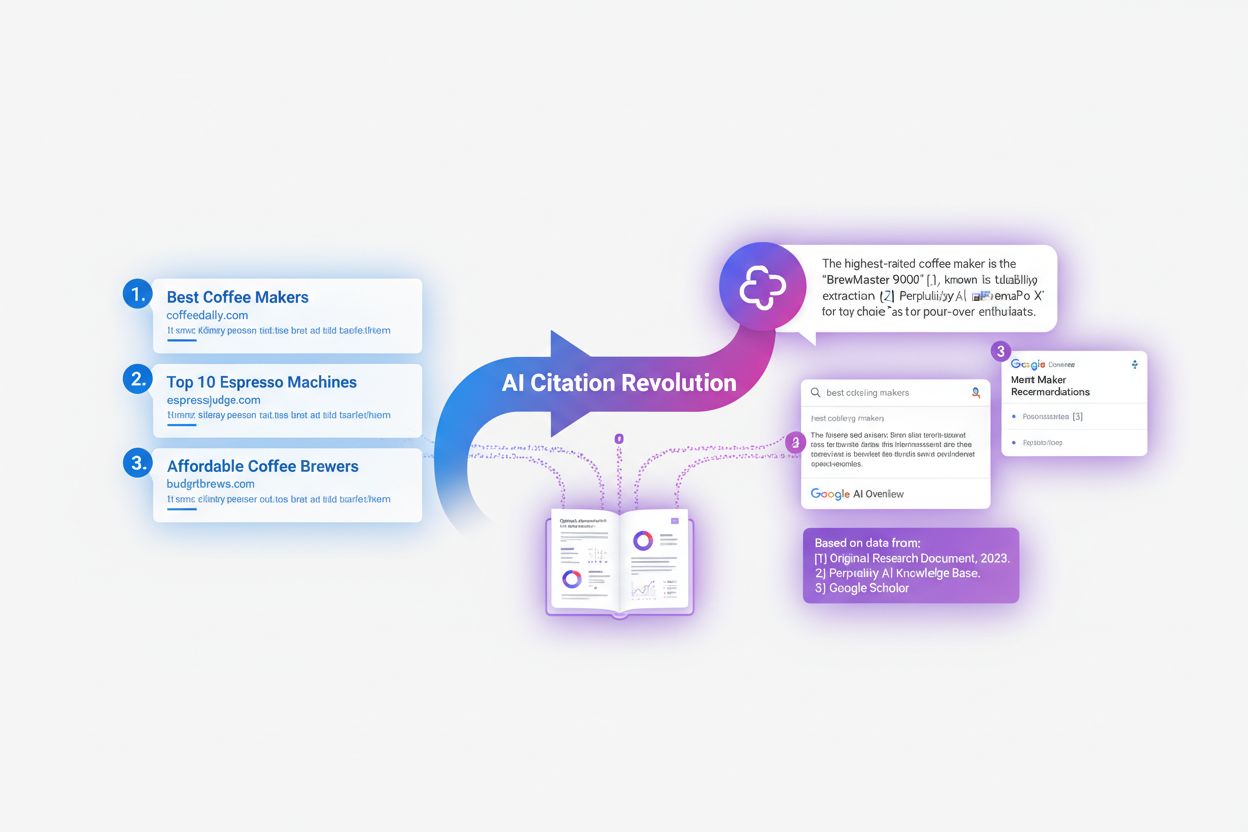
Large language models aren’t just crawling and indexing pages like traditional search engines. They’re synthesizing knowledge from the most credible, unique, and verifiable sources available. When you publish original research—whether it’s a proprietary survey, case study, or performance benchmark—you’re providing exactly what AI systems are designed to find and reference. AI models give significantly more weight to unique, verifiable data that can’t be found on a thousand other blogs, primary research that offers new perspectives or statistics, and expert commentary and proprietary insights. This is fundamentally different from the traditional SEO era, where aggregating and rewriting third-party content could still earn you visibility. Today, AI systems are trained to recognize and prioritize first-party data—the kind of content you can’t find anywhere else. When you become the source of original insights in your industry, you’re not just optimizing for keywords; you’re becoming a source of truth that AI systems actively seek out and cite.
While both matter for AI visibility, citations and mentions serve different purposes in the AI-driven search landscape. A citation occurs when an AI system links to your content as a source in its response—for example, “According to [Brand]’s research…” with a clickable link. A mention happens when your brand name appears in the response without a direct link—like “Tools like [Brand] are popular for…” Both drive visibility, but they work differently in the buyer journey.
| Metric | Citations | Mentions |
|---|---|---|
| Definition | Linked sources in AI responses | Brand names without links |
| Traffic Impact | Direct referral traffic to your site | Awareness and consideration |
| Authority Signal | High (shows credibility) | Medium (brand awareness) |
| Yext Data | 44% from websites, 42% from listings | Varies by platform |
| Conversion Potential | Higher (trusted source) | Medium (awareness stage) |
| Competitive Advantage | Stronger (harder to replicate) | Easier for competitors to match |
According to Yext’s landmark research analyzing 6.8 million AI citations, 86% of citations come from brand-managed sources—primarily first-party websites (44%) and listings (42%). This is crucial because it means you have direct control over the majority of citation sources. However, fewer than 30% of the brands most mentioned by AI are also among the most cited, revealing a significant gap. Some brands get lots of mentions but few citations, while others are cited frequently but rarely mentioned by name. The most successful brands are those that optimize for both, using original research to earn citations while building brand sentiment to earn mentions.
The 30-40% visibility boost isn’t theoretical—it’s measurable and repeatable. When brands publish original research and optimize it for AI discovery, they see dramatic increases in how often they appear in AI-generated answers. Here’s why: Original research creates unique, verifiable data that AI systems can’t find elsewhere, making it inherently more valuable for citations. When you publish a proprietary study, you’re giving AI systems something their users actually want—fresh insights and data-backed perspectives. Exploding Topics provides a perfect case study: their original research on the AI trust gap was cited three times by ChatGPT in the first three headings of responses about AI Overviews. The study received only 4% of its traffic from AI chatbots directly, but that translated to over 325 visits from ChatGPT, Perplexity, Gemini, Grok, and Copilot combined. More importantly, the actual number of AI citations was likely 10x higher than the direct referrals—meaning the research was being cited far more often than users were clicking through. This demonstrates the power of original research: it establishes your domain as an authority, attracts natural backlinks from other publications, creates semantic richness that AI systems can easily understand, and becomes part of the digital knowledge graph that future AI systems rely on. The visibility boost compounds over time as more publications cite your research, more backlinks point to it, and more AI systems recognize your brand as a credible source.
Not all research is created equal when it comes to AI citations. Different formats deliver different types of value, and the most successful brands use a mix of approaches:
The key is choosing research types that align with your audience’s questions and your business goals. A SaaS company might focus on case studies and performance benchmarks, while a media company might prioritize surveys and trend reports.
First-party data is the foundation upon which AI visibility is built. This includes everything your organization collects directly from customers through owned channels: CRM records, product usage telemetry, web and app events, email engagement, support logs, and survey or preference data. Unlike third-party cookies or aggregated data, first-party data is gathered with a direct relationship and clear value exchange, making it inherently more trustworthy to AI systems. To be usable in LLM workflows, raw first-party data must be distilled into privacy-safe signals—consented, purpose-limited, and often aggregated or pseudonymized events and attributes that still carry strong intent and preference cues. For example, “viewed pricing page in last 7 days” or “engaged with advanced feature tutorials” tells AI systems a lot about customer needs without exposing individual identity. The strategic alignment of first-party data with LLMs is about deciding which signals matter for discovery and conversion, structuring them so machines can consume them consistently, and connecting them to the surfaces where AI-generated content appears. Organizations that unified behavioral, transactional, and preference data into centralized platforms doubled the incremental revenue generated by each marketing touchpoint, demonstrating how unification amplifies downstream AI use cases. When your first-party data is clean, well-structured, and properly governed, it becomes the most powerful input for improving how AI systems understand and represent your brand.
Publishing original research is only half the battle—how you structure and present it determines whether AI systems can easily find, understand, and cite it. Follow these best practices to maximize AI discoverability:
The beauty of optimizing for AI is that it also improves the user experience. Clear structure, easy-to-read data, and transparent methodology make content better for humans and machines alike.
Original research creates a durable competitive moat that’s nearly impossible for competitors to replicate. When you publish proprietary data or conduct original research, you’re creating something unique that exists nowhere else on the internet. Competitors can’t simply copy your research—they’d have to conduct their own, which requires time, resources, and expertise. This means your original research continues to drive AI citations long after publication, while competitors are still trying to catch up. As your research becomes cited more frequently, it becomes part of the digital knowledge graph that future AI systems rely on, making it even harder for competitors to displace you. Additionally, original research attracts media coverage, backlinks, and social sharing in ways that aggregated content never can. When journalists and industry publications cite your research, they’re creating additional authority signals that AI systems recognize and reward. Over time, this compounds: more citations lead to higher authority, higher authority leads to more visibility in AI answers, and more visibility leads to more brand awareness and consideration. The brands that invest in original research now are building a long-term competitive advantage that will persist as AI search continues to evolve.
Without measurement, “AI visibility” remains a vague aspiration. First-party data gives you the instrumentation needed to turn AI presence into something you can track, benchmark, and improve. The goal is to understand not just whether you appear in AI-generated answers, but how you’re framed, which sources the model attributes to you, and how those answers correlate with downstream business outcomes.
| Metric | Definition | How to Calculate | Target |
|---|---|---|---|
| AI Signal Rate | Brand mention frequency | (Brand Mentions / Total Prompts) × 100 | 30-50% |
| Citation Rate | % of prompts citing your domain | (Citations / Total Prompts) × 100 | 20-40% |
| Top-Source Share | First/second position in lists | (Top 2 positions / Total) × 100 | 15-30% |
| Accuracy Rate | Factual correctness of AI statements | (Correct statements / Total) × 100 | 90%+ |
| Share of Voice | Your mentions vs. competitors | (Your mentions / All mentions) × 100 | 20-35% |
| AI Referral Traffic | Direct visits from AI platforms | GA4 custom channel grouping | Growing trend |
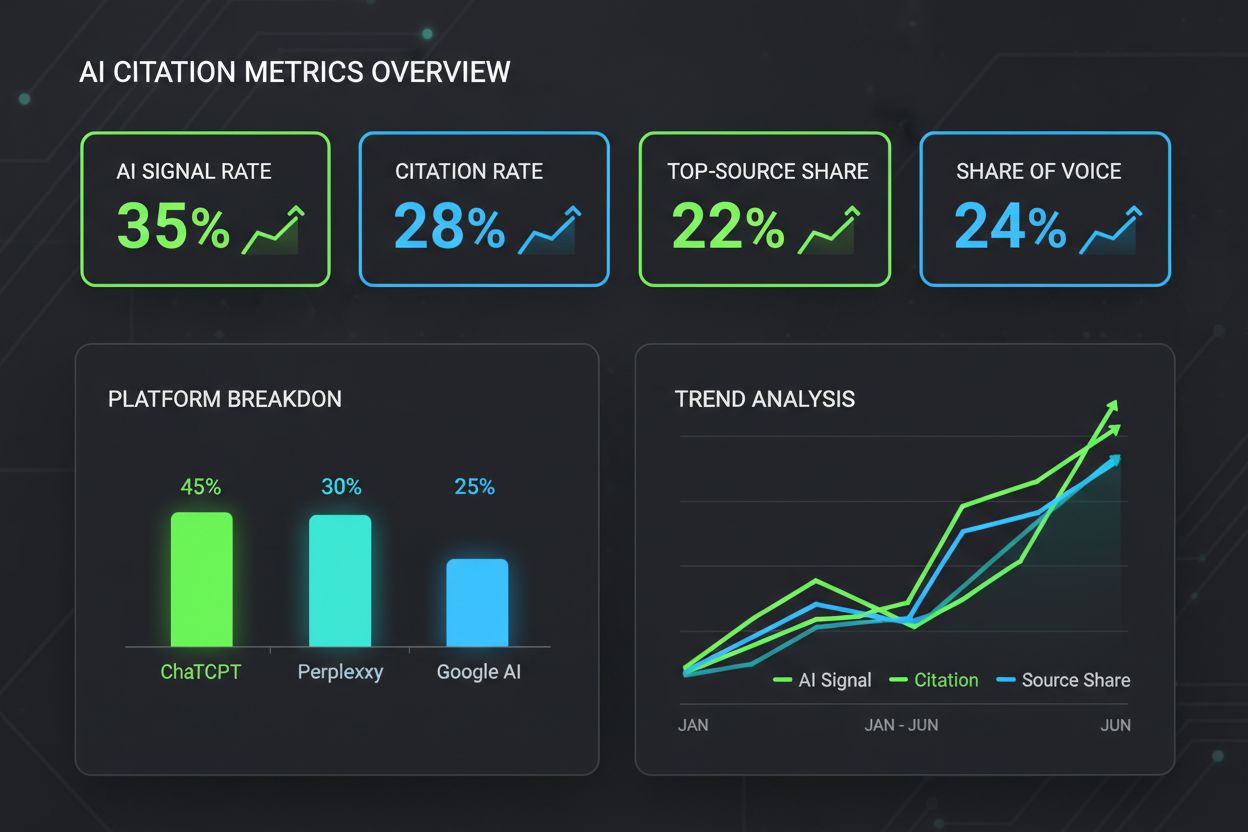
To establish baseline metrics, develop a set of 25-50 high-value prompts that your potential buyers might use. Test these prompts across ChatGPT, Perplexity, Gemini, and Claude, logging each response. Evaluate results based on presence (are you mentioned?), accuracy (are you described correctly?), citations (are your assets used as sources?), and competitive positioning (who shows up instead of you?). Set up weekly monitoring to track changes over time, and use these metrics to identify which content updates actually move the needle on AI visibility. The most important insight is that AI referral traffic often converts better than traditional search because the platform has already provided a trusted recommendation—users arriving from AI answers are further along in the buying journey and more likely to convert.
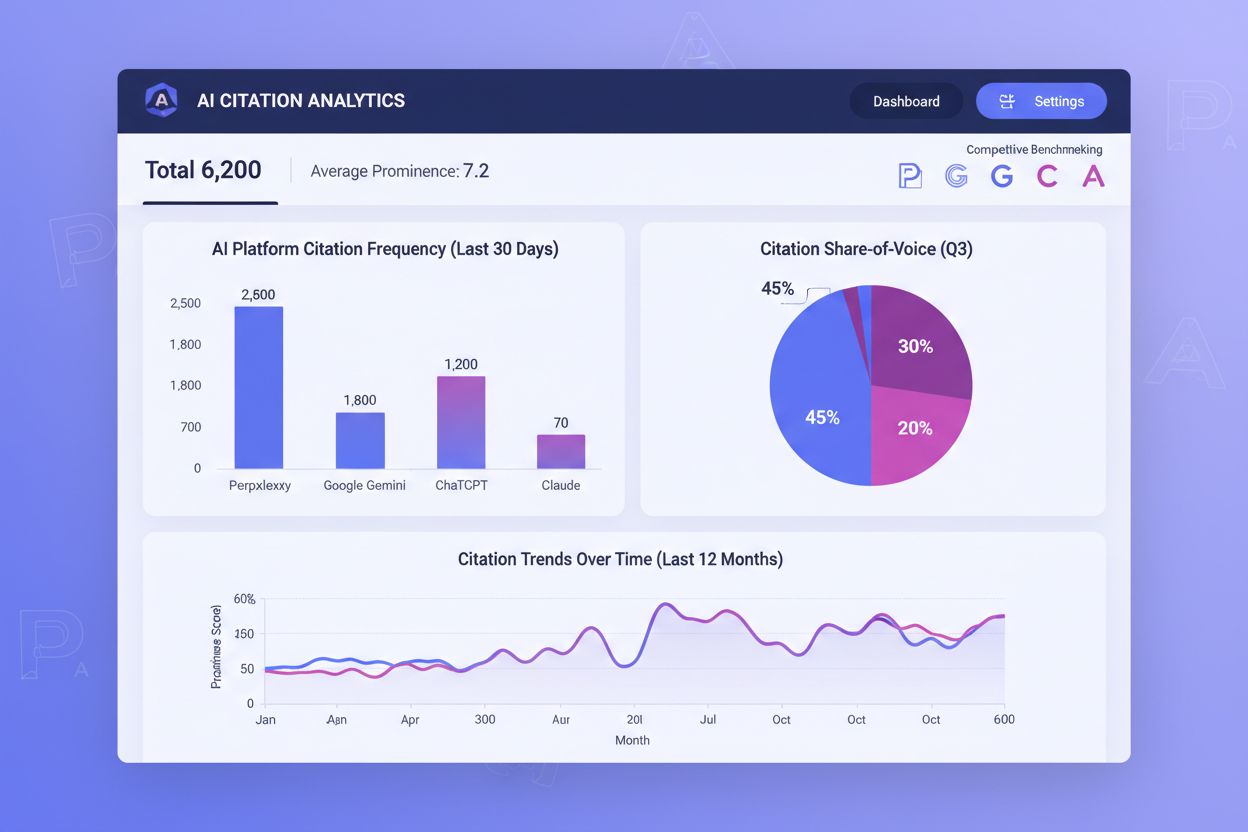
Tracking AI citations manually across multiple platforms is time-consuming and error-prone. AmICited.com solves this problem by providing real-time monitoring of how your brand appears in AI-generated answers across ChatGPT, Perplexity, Google AI Overviews, and other major platforms. The platform tracks not just whether you’re mentioned, but how you’re described, which sources are cited, and how your positioning compares to competitors. With AmICited, you get actionable insights into citation gaps, accuracy issues, and competitive opportunities—all in one centralized dashboard. The platform’s hallucination detection identifies when AI systems misrepresent your brand, allowing you to address inaccuracies before they damage your reputation. Competitive benchmarking shows you exactly where you’re winning and losing share of voice in AI-generated answers. Integration with your existing marketing dashboards means AI visibility metrics sit alongside your other KPIs, making it easy to demonstrate ROI and justify continued investment in original research and content optimization.
Building AI visibility through original research doesn’t happen overnight, but a structured approach accelerates results. Phase 1 (Months 1-3): Audit and Plan. Assess how major LLMs currently describe your brand using standardized prompts. Identify obvious gaps—missing FAQs, outdated documentation, or unstructured support knowledge that could be turned into AI-ready content. Inventory your first-party data assets and determine which research projects would have the highest impact. Phase 2 (Months 3-6): Research and Publish. Conduct 1-2 original research projects focused on high-intent buyer questions. Publish findings with clear methodology, visualized data, and downloadable datasets. Optimize content for AI discovery using the structuring best practices outlined earlier. Phase 3 (Months 6-9): Amplify and Optimize. Distribute research across owned and earned channels—your website, email, social media, and outreach to journalists and industry publications. Build backlinks from authoritative sources. Update your knowledge base and FAQ content based on research findings. Phase 4 (Months 9-12): Monitor and Iterate. Track metrics weekly using AmICited or similar tools. Identify which research topics and content formats drive the most AI citations. Double down on what works, and adjust your strategy based on data. This phased approach ensures you’re building sustainable AI visibility rather than chasing short-term wins.
Even well-intentioned efforts to improve AI visibility can backfire if you make these common mistakes:
The brands that win in AI search are those that treat it as an ongoing discipline, not a one-off initiative. Consistency, measurement, and continuous improvement are the keys to sustained visibility.
Most brands see measurable improvements within 3-6 months of publishing original research, with significant boosts appearing after 6-12 months. The timeline depends on research quality, distribution strategy, and how well content is optimized for AI discovery. Continuous monitoring and iteration accelerate results.
Surveys and proprietary data studies generate the highest citation rates, followed by case studies and performance benchmarks. Research that answers specific buyer questions and provides unique, verifiable data tends to be cited most frequently by AI systems.
Absolutely. Even niche, focused research on specific topics can outperform large-scale reports in AI visibility. Quality and relevance matter more than scale. A well-executed survey of 200 respondents in your target market can be more valuable than a generic study of 10,000.
First-party data (collected directly from your customers) is more trustworthy to AI systems because it's verifiable and comes from an authoritative source. Third-party data is often aggregated and less specific. AI systems prioritize first-party sources for citations.
They're complementary but distinct. You can rank well in traditional search without being cited in AI, and vice versa. However, original research that drives AI citations often also improves traditional rankings through increased authority and backlinks.
Use clear headings with semantic keywords, include methodology sections, visualize data with tables and charts, highlight key statistics, and publish full datasets. Minimize JavaScript and ensure content is easily parseable by AI crawlers. Use schema markup to provide machine-readable context.
Yes, AmICited provides competitive benchmarking across all major AI platforms. You can see how competitors are cited, what content they're using, and where you have opportunities to gain share of voice in AI-generated answers.
Aim for at least one major research project per quarter. Smaller surveys, polls, or data-driven insights can be published more frequently. Consistency matters more than volume—regular, quality research builds authority over time.
Monitor how your brand appears in ChatGPT, Perplexity, and Google AI Overviews. Get real-time insights into your AI visibility and competitive positioning.
Learn how to create original research and data-driven PR content that AI systems actively cite. Discover the 5 attributes of citation-worthy content and strateg...
Real before and after case study showing how strategic website optimizations increased AI citations by 47+ monthly mentions. Learn the exact changes that improv...
Learn how to create original data and research that AI systems actively cite. Discover strategies for making your data discoverable to ChatGPT, Perplexity, Goog...