Perplexity AI Optimization: How to Get Cited in Real-Time Search
Learn how to optimize your content for Perplexity AI and get cited in real-time search results. Discover citation-ready content strategies, technical optimization, and monitoring techniques to increase your brand visibility.
Published on Jan 3, 2026.Last modified on Jan 3, 2026 at 3:24 am
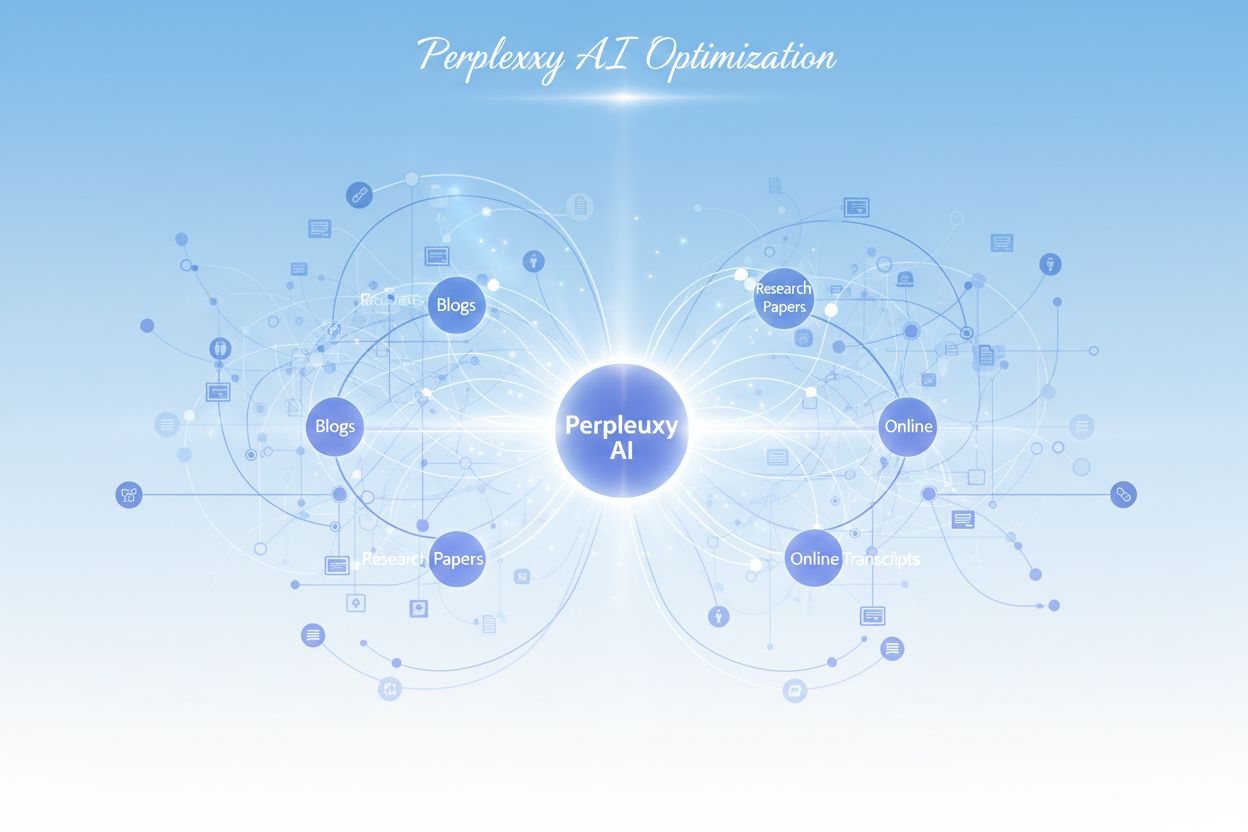
Perplexity is an answer engine, fundamentally different from ChatGPT and Google Search. While ChatGPT generates responses without citations and Google ranks pages by relevance, Perplexity cites specific sources in real-time. With 148 million monthly visits, Perplexity has become a critical traffic source for publishers. Citations matter because they drive qualified referral traffic directly to your content. Getting cited means your expertise reaches users actively seeking answers, not just passive searchers.
How Perplexity’s Citation Algorithm Works
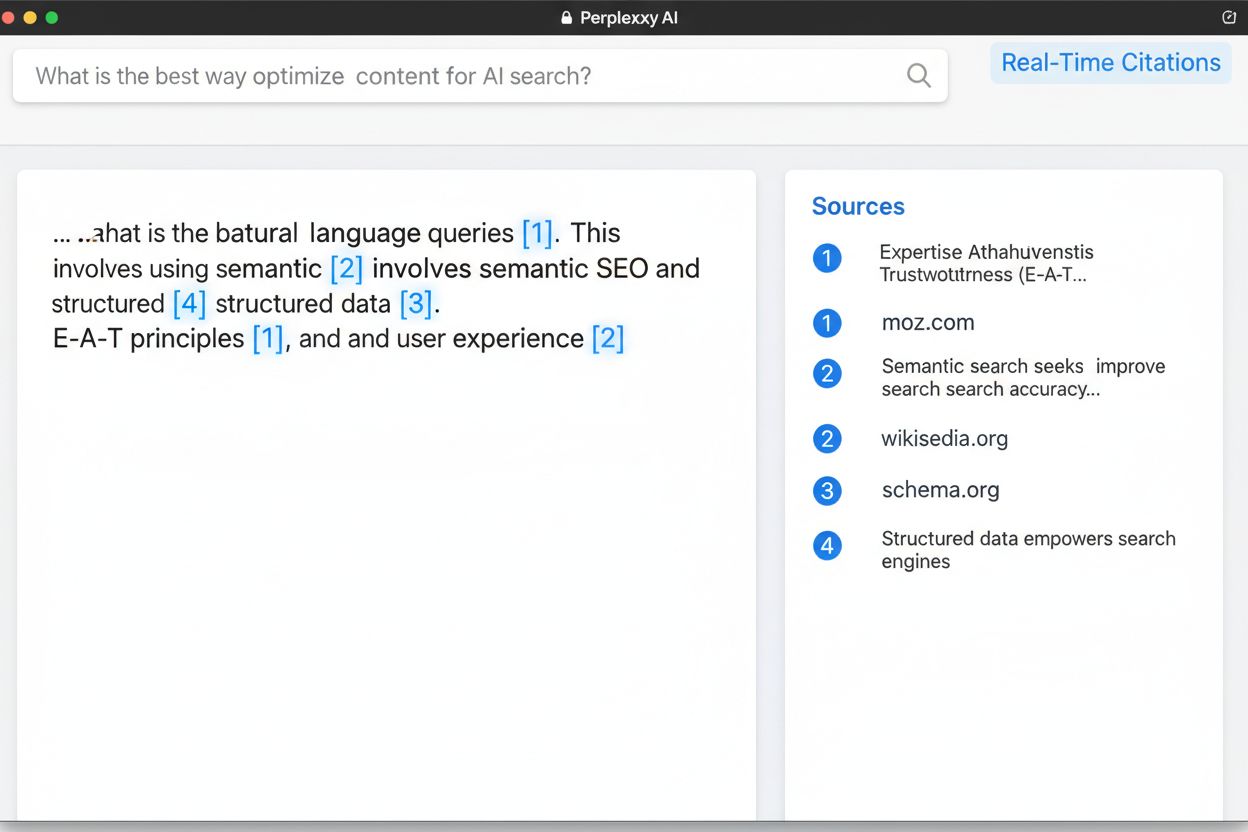
Perplexity uses a three-layer reranking system to select which sources appear in answers. First, it crawls the web in real-time, retrieving hundreds of candidate sources. Second, it applies authority bias, heavily favoring Wikipedia, academic institutions, and established news outlets. Third, it evaluates freshness signals—recent updates, publication dates, and trending relevance. The algorithm typically selects 3-7 sources per answer, prioritizing those with clear expertise and credibility. Perplexity’s citation transparency differs sharply from competitors: it shows sources prominently, while ChatGPT hides them entirely, and Google buries them below the fold.
Dimension
Perplexity
ChatGPT
Google
Retrieval Model
Real-time web crawl + reranking
Training data only
PageRank + relevance
Citation Transparency
Prominent, inline citations
No citations
Links below content
Source Preference
Authority + freshness
N/A
Domain authority
Recency Bias
Very high (hours/days)
None (static)
Moderate (weeks)
Verification
Multi-source validation
Hallucination risk
User verification
Ready to Monitor Your AI Visibility?
Track how AI chatbots mention your brand across ChatGPT, Perplexity, and other platforms.
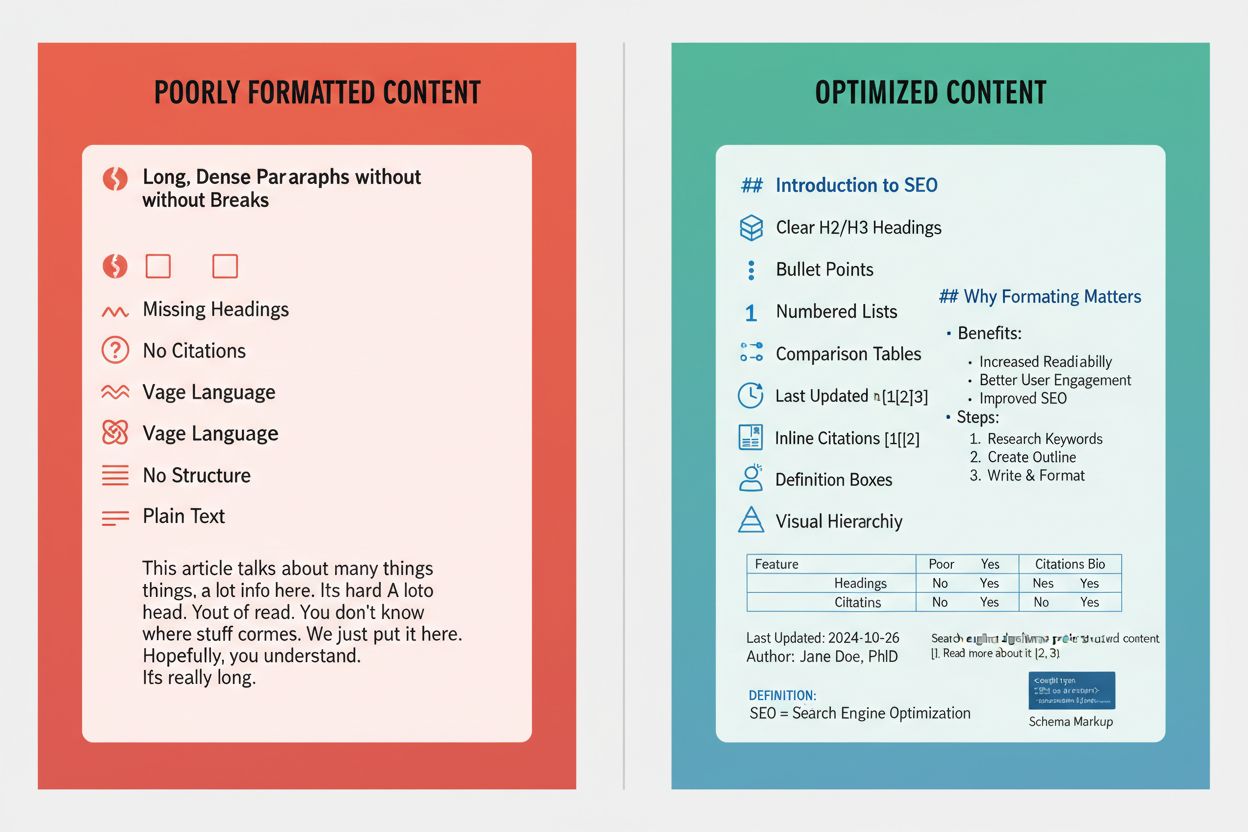
Citation-worthy content answers questions directly, without lengthy introductions or backstory. Perplexity’s algorithm favors content structured for clarity and quick scanning. Your content should follow this framework:
Lead with the answer, not context or history
Use clear H2/H3 headings as questions (e.g., “What is X?” not “Introduction to X”)
Include FAQ sections with concise Q&A pairs
Cite reputable sources to build credibility signals
Add author bios and credentials to establish expertise
This structure signals to Perplexity that your content is authoritative and answer-focused. Search engines reward clarity; Perplexity rewards it even more aggressively.
Building Topical Authority for Perplexity
Topic clusters outperform isolated blog posts in Perplexity’s ranking system. Instead of writing one article about “dog training,” create 15-20 interconnected pieces covering breeds, techniques, behavioral issues, and health. Internal linking between these articles signals topical depth to Perplexity’s crawlers. The algorithm rewards consistent expertise—sites that demonstrate mastery across related subtopics. The American Kennel Club appears in Perplexity results multiple times per query because it maintains comprehensive, interconnected content. Depth beats breadth; Perplexity prefers specialists over generalists.
Stay Updated on AI Visibility Trends
Get the latest insights on AI mentions, brand monitoring, and optimization strategies.
Technical Optimization for Perplexity Visibility
Schema markup tells Perplexity what your content is and why it matters. Implement Article schema to declare publication dates, authors, and content type. Use FAQ schema for Q&A sections, HowTo schema for procedural content, and Organization schema for credibility. Meta descriptions should summarize your answer in 155 characters. URL structure should be clean and descriptive (e.g., /dog-training-basics not /post-12345). Site speed matters—Perplexity deprioritizes slow pages. Ensure your robots.txt and sitemap allow full crawlability.
{
"@context": "https://schema.org",
"@type": "Article",
"headline": "How to Train Your Dog: Complete Beginner's Guide",
"author": {
"@type": "Person",
"name": "Sarah Johnson",
"url": "https://example.com/authors/sarah-johnson" },
"datePublished": "2024-01-15",
"dateModified": "2024-01-20",
"description": "Step-by-step guide to dog training fundamentals",
"articleBody": "..."}
Content Freshness and Recency Signals
Perplexity prioritizes fresh content more aggressively than Google. The algorithm treats content age as a quality signal—older content ranks lower unless it’s authoritative. Update your content quarterly minimum for evergreen topics, weekly for competitive niches. Add “Last Updated” timestamps prominently near your headline. Perplexity’s real-time crawling means trending topics can appear in results within hours. If your industry experiences rapid changes, establish a content refresh calendar. Stale content, no matter how authoritative, loses visibility quickly.
Multi-Platform Citation Strategy
Reddit accounts for 46.7% of Perplexity citations, making it essential for visibility. Participate authentically in relevant subreddits, answering questions with links to your detailed content. YouTube transcripts and descriptions are heavily cited—create video content and optimize descriptions with keywords. Cross-format content repurposing amplifies your reach: turn blog posts into videos, infographics, and Reddit discussions. Community participation builds secondary visibility surfaces beyond your website. Perplexity treats user-generated platforms as trust signals; your presence there increases citation likelihood.
Measuring and Tracking Perplexity Performance
Manual spot checks reveal which queries cite your content—search your target keywords and note appearances. Key metrics include citation frequency, share of voice (SOV) among competitors, and mention count. Set up GA4 referral tracking to monitor Perplexity traffic separately from Google. Create a competitive benchmark spreadsheet tracking which sites appear most frequently. Tools like AmICited automate monitoring, alerting you when your content appears. Track these metrics monthly to identify trends and optimization opportunities. Data-driven decisions beat guesswork.
Common Mistakes in Perplexity Optimization
Many publishers optimize for SEO instead of clarity—Perplexity punishes keyword stuffing and jargon-heavy writing. Ignoring content dates is fatal; undated content rarely gets cited. Thin, shallow content (under 500 words) lacks the depth Perplexity rewards. Content without original insights gets deprioritized—Perplexity favors unique perspectives over regurgitated information. Poor source credibility damages your ranking; cite peer-reviewed studies, not random blogs. Slow page speed causes Perplexity to skip your site entirely during crawls. Finally, not testing your queries means you’re optimizing blind. Search your target questions and see what actually appears.
Advanced Perplexity Tactics
Implement a multi-source validation strategy: cite 5-7 authoritative sources in your content, signaling to Perplexity that you’ve done thorough research. Use the Wikipedia gateway approach—if Wikipedia links to your content, Perplexity treats it as a credibility endorsement. Develop a Reddit influence play: build genuine community presence, answer questions, and let your content get recommended organically. Create a real-time response system for trending topics—publish answers within hours of trending queries. Competitive differentiation comes from being faster, clearer, and more authoritative than alternatives. These tactics compound over time, building sustainable citation momentum.
Frequently asked questions
How is Perplexity different from ChatGPT for optimization?
Perplexity searches the web in real-time and provides clickable citations, while ChatGPT uses static training data without citations. This means Perplexity optimization focuses on current content and can drive direct traffic, while ChatGPT optimization is about long-term presence in training data.
How quickly can I see results from Perplexity optimization?
Much faster than traditional SEO. Because Perplexity searches in real-time, well-optimized new content can appear in citations within hours or days, not months. Most businesses see improved citations within 2-4 weeks of implementing optimization strategies.
What types of content does Perplexity prefer to cite?
Perplexity favors comprehensive guides, original research, recent updates, comparison articles, expert opinions with credentials, and well-structured how-to content. It tends to avoid thin content, promotional material, and outdated information.
Can I track traffic from Perplexity citations?
Yes! Unlike ChatGPT, Perplexity sends trackable referral traffic. You can see Perplexity referrals in Google Analytics under Acquisition reports. Look for 'perplexity.ai' as a referral source and set up custom alerts for spikes.
Should I optimize differently for Perplexity's focus modes?
Yes, if your audience uses specific modes. For Academic mode, include more research and citations. For Reddit mode, participate in relevant subreddits. For YouTube mode, optimize video descriptions and transcripts. Most B2B content should focus on the default 'All' mode.
How often should I update content for Perplexity visibility?
Update evergreen content quarterly minimum, and competitive topics weekly. Always include 'Last Updated' timestamps prominently. Perplexity prioritizes fresh content more aggressively than Google, so regular updates directly impact citation frequency.
What role does AmICited play in Perplexity monitoring?
AmICited tracks how often your brand appears in Perplexity answers, identifies which queries cite you, and monitors competitor visibility. This gives you data-driven insights to optimize your content strategy and measure ROI from Perplexity optimization efforts.
Is Perplexity optimization worth the effort?
Absolutely. Perplexity processes over 100 million searches weekly with 40% month-over-month growth. Companies investing in Perplexity optimization now gain competitive advantage before the platform becomes saturated. The faster results compared to traditional SEO make it a high-ROI investment.
Monitor Your Perplexity Citations in Real-Time
Track how often your brand appears in Perplexity answers and optimize your content strategy with AmICited's AI citation monitoring platform.
How Do I Get My Website Cited by Perplexity? Complete Guide to AI Search Visibility
Learn how to get your website cited by Perplexity AI. Discover the technical requirements, content optimization strategies, and authority-building tactics that ...
Perplexity's Citation Style: How to Format Content for Maximum Pickup
Learn how to format content for maximum pickup in Perplexity citations. Master quotable content, schema markup, and citation strategies to dominate AI search.
Perplexity AI is an AI-powered answer engine combining real-time web search with LLMs to deliver cited, accurate responses. Learn how it works and its impact on...
12 min read
Cookie Consent We use cookies to enhance your browsing experience and analyze our traffic. See our privacy policy.