Perplexity's Citation Style: How to Format Content for Maximum Pickup
Learn how to format content for maximum pickup in Perplexity citations. Master quotable content, schema markup, and citation strategies to dominate AI search.
Published on Jan 3, 2026.Last modified on Jan 3, 2026 at 3:24 am
Perplexity AI represents a fundamental shift in how search engines surface information, moving away from the traditional link-based ranking model that Google perfected over two decades. Unlike Google’s PageRank algorithm, which prioritizes domain authority and backlink profiles, Perplexity operates as a citation-forward answer engine that synthesizes information from multiple sources and presents them as numbered citations within conversational responses. This distinction is critical for content creators because it means your content’s visibility depends less on traditional SEO metrics and more on whether Perplexity’s AI models identify your work as authoritative, quotable, and directly relevant to user queries. The platform’s architecture treats citations as the primary currency of credibility, meaning that well-formatted, clearly sourced content has exponentially higher chances of being selected and displayed to millions of users. Understanding this paradigm shift is the first step toward optimizing your content strategy for AI-driven discovery.
The Anatomy of Quotable Content
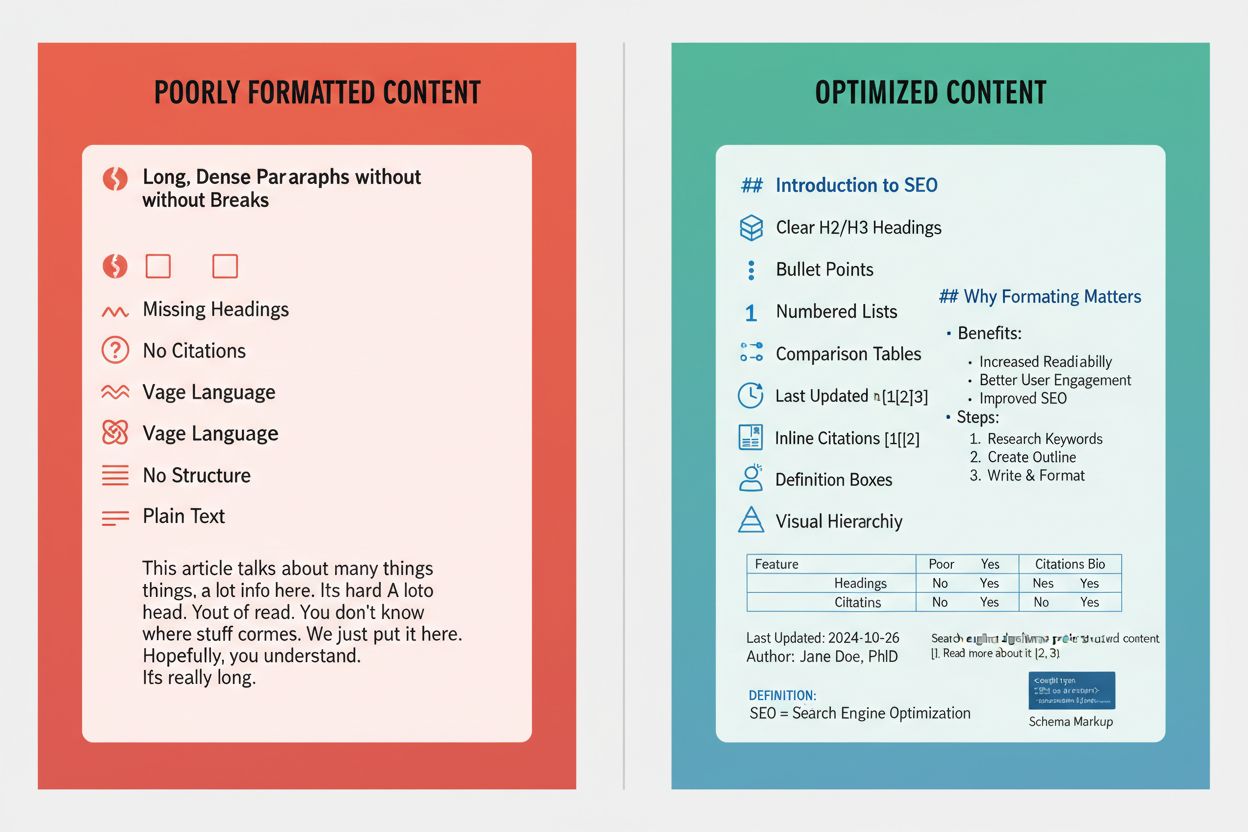
Quotable content is fundamentally different from content optimized for traditional search engines, requiring a specific structural and stylistic approach that makes extraction and attribution seamless for AI systems. The most quotable content follows an answer-first methodology, where the key insight, statistic, or conclusion appears immediately, followed by supporting evidence and context rather than buried in lengthy introductions. Perplexity’s citation algorithm favors content that presents information in discrete, self-contained units—think of each paragraph or section as a potential quote that could stand alone and still make sense to a reader encountering it in an AI-generated response. Authoritative citations require clear attribution of data sources, expert credentials, and publication dates, which signal to the AI that your content is trustworthy and verifiable. The formatting of this content matters enormously; content with proper heading hierarchies, definition lists, and structured data is significantly more likely to be parsed correctly and selected for citation. Additionally, content that directly answers specific questions rather than exploring tangential topics performs better, as Perplexity’s models are trained to match user intent with precise, relevant answers.
Aspect
Quotable Content
Non-Quotable Content
Structure
Answer-first with supporting evidence
Long introductions before main point
Clarity
Single, clear claim per section
Multiple competing ideas per paragraph
Attribution
Explicit source citations and dates
Vague references or no sources
Formatting
Semantic HTML, proper headings, lists
Plain text with minimal markup
Specificity
Concrete data, statistics, definitions
General observations and opinions
Length
Concise, quotable passages (2-4 sentences)
Dense paragraphs requiring context
Verifiability
Linked sources and expert credentials
Unverified claims and anonymous authors
Ready to Monitor Your AI Visibility?
Track how AI chatbots mention your brand across ChatGPT, Perplexity, and other platforms.
The technical foundation of quotable content begins with HTML-first design, where semantic markup isn’t optional but essential for AI systems to properly parse and extract information. Perplexity’s crawlers prioritize content built with semantic HTML5 elements like <article>, <section>, <header>, and <footer> over generic <div> containers, as these tags provide explicit meaning about content structure that machine learning models can leverage. Your heading hierarchy must be logical and unbroken—starting with H1 for the main topic, using H2 for major sections, and H3 for subsections—because AI systems use this structure to understand content relationships and extract relevant passages. Schema markup, particularly JSON-LD implementations, provides additional context that helps Perplexity understand your content’s purpose, authority, and relevance without relying solely on natural language processing.
Semantic HTML elements (<article>, <section>, <aside>, <nav>) instead of generic divs
Unique ID attributes on major sections and definitions for direct linking and reference
Last Updated dates in machine-readable format (ISO 8601) to signal content freshness
Definition lists (<dl>, <dt>, <dd>) for terminology and concept explanations
Comparison tables with proper <thead>, <tbody>, and <th> elements for structured data
Citation Strategies and Source Consolidation
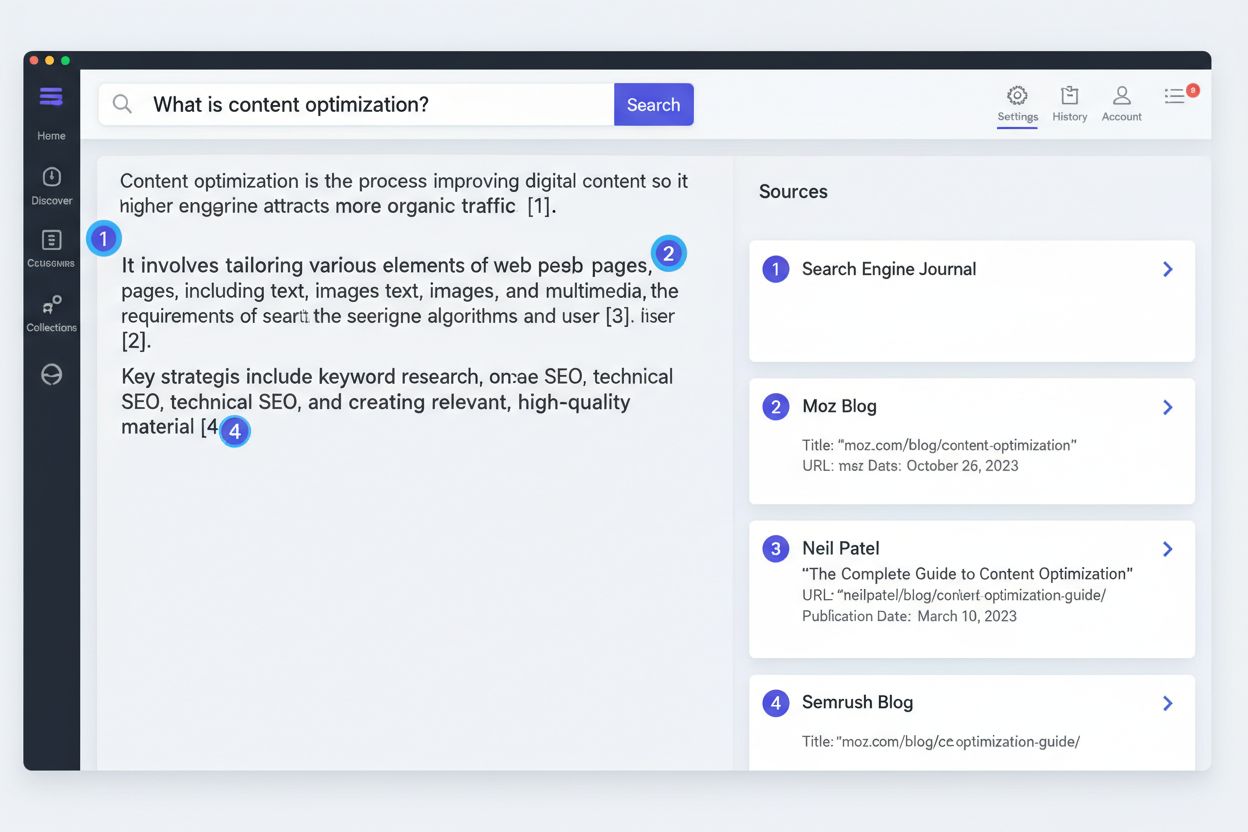
Building citation authority requires a deliberate strategy that distinguishes between primary and secondary sources while establishing your content as a reliable aggregation point for information. Primary sources—original research, official statistics, peer-reviewed studies, and firsthand accounts—carry the most weight in Perplexity’s citation algorithm because they represent the original source of truth rather than derivative commentary. Secondary sources, including reputable news outlets, industry analyses, and expert commentary, provide valuable context and interpretation but should be used to support rather than replace primary citations. The most effective citation strategy involves creating a consolidated reference section at the end of your content that lists all sources with direct links, publication dates, and author credentials, making it trivial for Perplexity’s systems to verify your claims and extract citations. This approach also builds what researchers call “citation authority”—the more authoritative sources cite your work, the more Perplexity recognizes you as a credible node in the knowledge graph.
Prioritize primary sources (original research, official data, peer-reviewed studies) as your foundational citations
Create a dedicated references section with full URLs, publication dates, and author information for each source
Use inline citations with numbered links [1] that correspond to your reference list, matching academic citation standards
Establish topical authority by citing the same authoritative sources repeatedly across related content, signaling expertise
Include expert credentials when quoting individuals, specifying their title, organization, and relevant expertise to validate authority
Stay Updated on AI Visibility Trends
Get the latest insights on AI mentions, brand monitoring, and optimization strategies.
Content Structure Best Practices
The optimal page anatomy for Perplexity citation pickup follows a specific structure that maximizes the likelihood of extraction and attribution. Begin with a definition box or summary section immediately after your H1 heading that provides a concise answer to the primary question your content addresses—this is often the first element Perplexity extracts for its answer generation. Follow this with a logical progression of H2 sections, each addressing a specific aspect of your topic, with H3 subsections providing granular detail and supporting evidence. Mini-tables and comparison matrices scattered throughout your content serve dual purposes: they provide easily extractable structured data for Perplexity while improving readability for human visitors. Include a comprehensive references section at the end that lists every source with full citations, publication dates, and direct links, as this signals completeness and authority to both AI systems and human readers. Additionally, maintain a changelog or “Last Updated” section that documents when content was last reviewed and what changes were made, as Perplexity’s algorithms favor fresh, actively maintained content over stale information.
The Power of Topic Clusters and Internal Linking
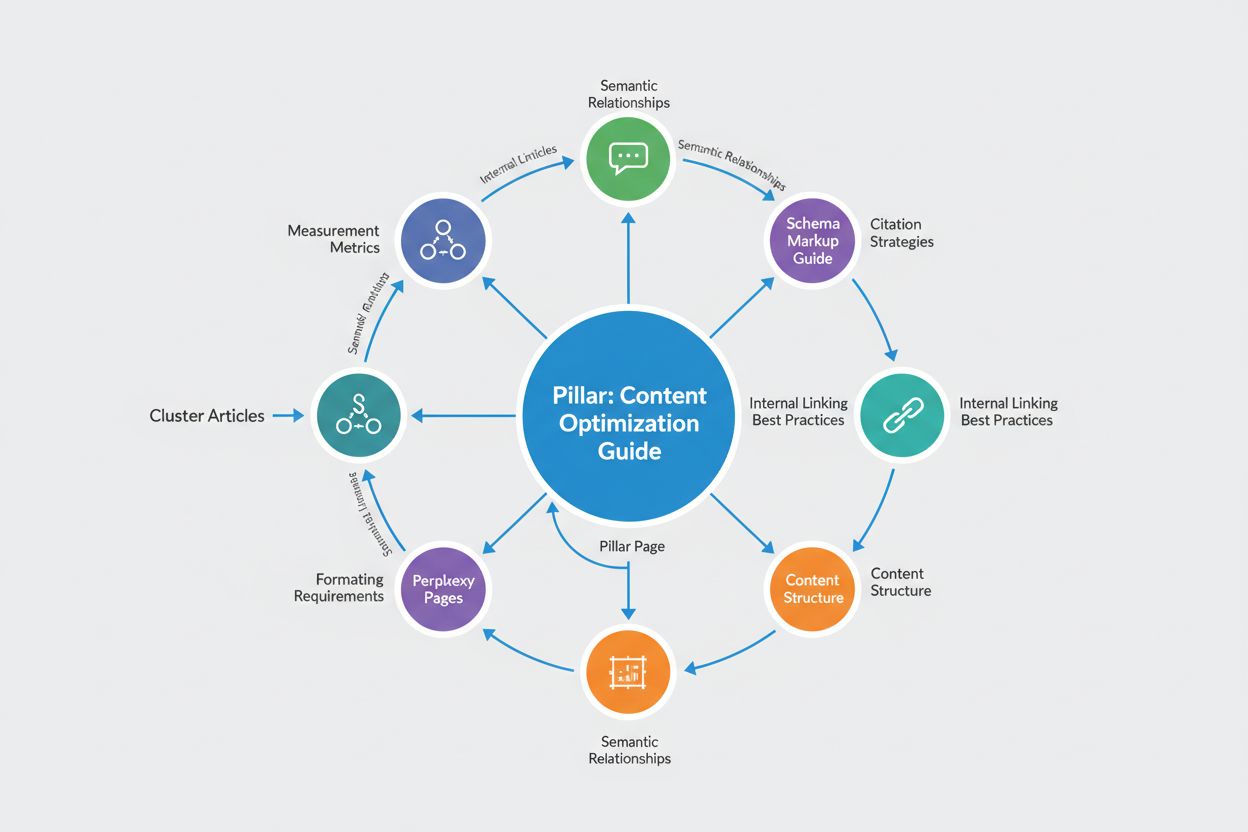
Topic clusters represent a critical but often overlooked element of Perplexity optimization, as they help AI systems understand the semantic relationships between your content pieces and establish you as an authority across a knowledge domain. Rather than creating isolated articles, successful Perplexity-optimized content strategies involve building interconnected clusters of related content where a pillar article covers a broad topic and satellite articles explore specific subtopics, all linked together through strategic internal linking. These clusters mirror how knowledge graphs are structured—as interconnected nodes of related information—which aligns perfectly with how Perplexity’s AI models understand and retrieve information. When Perplexity encounters your pillar article, it can follow internal links to discover your satellite content, increasing the likelihood that multiple pieces of your work are cited in response to related queries. The internal linking strategy should be deliberate and semantic; use descriptive anchor text that includes relevant keywords and concepts, helping Perplexity understand the relationship between linked pages. This approach transforms your website from a collection of isolated articles into a cohesive knowledge base that Perplexity recognizes as authoritative across an entire topic area.
Schema Markup and Structured Data
Implementing JSON-LD schema markup is no longer a nice-to-have optimization but a fundamental requirement for maximum Perplexity citation pickup, as it provides machine-readable context that eliminates ambiguity in content interpretation. The most effective implementations use multiple schema types in combination: Article schema for basic content metadata, FAQPage schema for Q&A content, BreadcrumbList for navigation hierarchy, and domain-specific schemas like ScholarlyArticle for research-heavy content. JSON-LD’s advantage over other schema formats is that it’s embedded in a <script> tag separate from your HTML content, making it easier to maintain and less likely to cause rendering issues. Here’s a practical example of Article schema implementation:
{
  "@context": "https://schema.org",
  "@type": "Article",
  "headline": "Perplexity's Citation Style: How to Format Content for Maximum Pickup",
  "description": "A comprehensive guide to optimizing content for Perplexity AI's citation-forward model",
  "author": {
    "@type": "Person",
    "name": "Your Name",
    "url": "https://yoursite.com/about"
  },
  "datePublished": "2024-01-15T10:00:00Z",
  "dateModified": "2024-01-20T14:30:00Z",
  "mainEntity": {
    "@type": "Thing",
    "name": "Perplexity Citation Optimization"
  }
}
Beyond basic Article schema, implement FAQPage schema for any content containing Q&A sections, as Perplexity frequently extracts FAQ content for its responses. Include author, datePublished, and dateModified fields in all schema markup, as these help Perplexity assess content authority and freshness. Additionally, use sameAs properties to link your author profile to verified credentials (LinkedIn, Twitter, professional websites), which strengthens the credibility signals Perplexity uses to evaluate source trustworthiness.
Leveraging Perplexity Pages and Collections
Perplexity Pages represent a direct integration opportunity that content creators should actively pursue, as they allow you to curate and present your content directly within Perplexity’s interface while maintaining editorial control and receiving direct attribution. Creating a Perplexity Page involves submitting a collection of your best content around a specific topic, which Perplexity then organizes and presents as a curated knowledge resource that users can access directly. This approach offers several advantages: your content receives prominent placement, you maintain control over how your work is presented, and you build a direct relationship with Perplexity’s user base. The key to successful Perplexity Pages is source consolidation—selecting your 5-10 most authoritative, well-formatted pieces on a topic and ensuring they’re properly linked and cross-referenced.
Audit your content to identify your strongest, most comprehensive pieces on a specific topic
Ensure proper formatting with semantic HTML, schema markup, and clear citation structures before submission
Create reciprocal linking between your submitted pieces, using descriptive anchor text that helps Perplexity understand relationships
Monitor performance by tracking which of your Perplexity Page pieces receive citations and adjust your content strategy accordingly
Common Formatting Mistakes to Avoid
Many content creators inadvertently sabotage their Perplexity citation potential through preventable formatting and structural mistakes that make their content difficult for AI systems to parse and extract. Multi-intent pages that attempt to answer multiple unrelated questions on a single page confuse Perplexity’s algorithms, which expect clear, focused content with a single primary purpose; instead, create separate, focused articles for each distinct topic. JavaScript-gated content—information that only loads after JavaScript execution—is largely invisible to Perplexity’s crawlers, so avoid hiding key information behind interactive elements or dynamic content loading. Vague, hedging language like “might,” “could,” “possibly,” and “some experts suggest” weakens citation authority; instead, use definitive statements backed by specific sources. Thin or missing references are perhaps the most common mistake; every factual claim should be traceable to a source, and your references section should be comprehensive and detailed. Finally, unstable or frequently changing URL slugs break Perplexity’s ability to maintain consistent citations, so establish your URL structure carefully and avoid reorganizing content unnecessarily.
Measuring Citation Success and Optimization
Tracking your citation performance requires monitoring metrics that differ significantly from traditional SEO analytics, focusing on how often Perplexity selects your content for its responses rather than organic click-through rates. Citation frequency is your primary metric—monitor how often your content appears in Perplexity responses by conducting regular searches for your target keywords and noting which of your pieces are cited. Tools like Perplexity’s own analytics dashboard (if you’ve created a Perplexity Page) provide direct visibility into citation counts, but you can also manually track citations by searching for your domain on Perplexity and analyzing which pages appear most frequently. AI-driven traffic from Perplexity and similar AI answer engines represents a growing portion of overall search traffic, making it essential to track referral sources separately and understand which content pieces drive the most visits from AI platforms. Optimize iteratively by analyzing which of your cited pieces have the strongest formatting, clearest citations, and most authoritative sources, then apply those patterns to underperforming content. Additionally, monitor how your content ranks against competitors in Perplexity responses—if competitors’ content is cited more frequently, analyze their formatting, structure, and citation strategies to identify improvement opportunities.
Frequently asked questions
What makes content quotable for Perplexity?
Quotable content leads with a direct 1-3 sentence answer, immediately cites authoritative sources, and uses semantic HTML with clear heading hierarchies. The content must be extractable as a standalone passage that makes sense without additional context, allowing Perplexity to cite it directly in responses.
How important are citations in Perplexity's algorithm?
Citations are fundamental to Perplexity's model. The platform is built on a citation-forward architecture where every claim is attributed to a source. Content with clear, authoritative citations is significantly more likely to be selected for inclusion in AI-generated responses compared to content with weak or missing sources.
Should I format content differently for Perplexity vs Google?
While core SEO principles apply to both, Perplexity requires additional optimization. Focus on answer-first formatting, semantic HTML, schema markup, and clear citations for Perplexity. Google still values traditional SEO factors like domain authority and backlinks, so a hybrid approach that addresses both platforms is most effective.
What's the ideal content length for Perplexity citations?
Quotable passages should be 2-4 sentences that can stand alone. However, supporting content can be longer. The key is structuring your content into discrete, extractable sections rather than creating one long article. Multiple well-formatted sections are more likely to be cited than a single lengthy piece.
How do I track if my content is being cited by Perplexity?
Monitor your brand name and target keywords on Perplexity regularly, noting which of your pages appear in responses. Set up Google Alerts for your domain, use Google Search Console to track AI Overview appearances, and create custom UTM parameters for Perplexity traffic. Analytics tools can help identify unusual traffic patterns from AI sources.
What role do Perplexity Pages play in content strategy?
Perplexity Pages allow you to curate and present your best content directly within Perplexity's interface. Creating a Page for your core topic increases visibility, maintains editorial control, and builds direct relationships with Perplexity users. Pages also signal to Perplexity's algorithm that your content is authoritative on that topic.
How often should I update content for Perplexity optimization?
Maintain a quarterly review cycle for your core content, updating facts, statistics, and references as needed. Add visible 'Last Updated' dates to signal freshness to Perplexity's algorithms. Content that's actively maintained and regularly refreshed receives higher citation priority than stale, outdated material.
Can I use the same content for both Google and Perplexity?
Yes, but with optimization for both platforms. Content that's well-structured, properly cited, and semantically marked up performs well in both Google and Perplexity. However, Perplexity places greater emphasis on answer-first formatting and citation clarity, so optimize with both audiences in mind.
Monitor Your Brand's AI Presence
Track how AI systems like Perplexity cite your content with AmICited - the only platform monitoring your brand across GPTs, Perplexity, and Google AI Overviews.
How Do I Get My Website Cited by Perplexity? Complete Guide to AI Search Visibility
Learn how to get your website cited by Perplexity AI. Discover the technical requirements, content optimization strategies, and authority-building tactics that ...
Perplexity AI Optimization: How to Get Cited in Real-Time Search
Learn how to optimize your content for Perplexity AI and get cited in real-time search results. Discover citation-ready content strategies, technical optimizati...
Personal Brand AI Visibility: Getting Cited as an Expert
Learn how to build personal brand visibility in AI systems like ChatGPT, Google AI Overview, and Perplexity. Discover AI citation strategies to get recognized a...
7 min read
Cookie Consent We use cookies to enhance your browsing experience and analyze our traffic. See our privacy policy.