
Templates and Tools as AI Citation Magnets
Learn how templates and tools optimize your content for AI citations. Discover strategies to increase visibility in ChatGPT, Perplexity, and Google AI Overviews...
6 min read

Learn how to build personal brand visibility in AI systems like ChatGPT, Google AI Overview, and Perplexity. Discover AI citation strategies to get recognized as a thought leader.
In an era where AI systems generate answers to millions of questions daily, being cited as an expert has become the new currency of professional credibility. When ChatGPT, Google AI Overview, or Perplexity references your work, it’s not just a mention—it’s a powerful endorsement that reaches audiences actively seeking expertise in your field. The challenge is that most professionals don’t realize their personal brand visibility depends less on traditional SEO and more on understanding how AI systems decide which sources to trust and cite.
Different AI platforms follow fundamentally different citation strategies. A comprehensive analysis of 30 million AI citations across ChatGPT, Google AI Overview, and Perplexity reveals that each system has developed its own trust signals and source preferences. Understanding these patterns is essential because what gets you cited on one platform may not work on another. This isn’t about gaming algorithms—it’s about recognizing where AI systems naturally look for authoritative, trustworthy information.
| AI Platform | Top Citation Source | Percentage | Key Insight |
|---|---|---|---|
| ChatGPT | Wikipedia | 48% | Values encyclopedic authority and structured information |
| ChatGPT | 11% | Appreciates authentic human discussion and real-world perspectives | |
| Google AI Overview | 21% | Prioritizes community engagement and user-generated insights | |
| Google AI Overview | YouTube | 19% | Recognizes video content as authoritative and engaging |
| Perplexity | 47% | Heavily relies on crowd-sourced wisdom and community knowledge | |
| Perplexity | YouTube | 14% | Values multimedia content and visual explanations |
ChatGPT’s citation behavior reveals a clear preference for encyclopedic authority combined with authentic human perspectives. Nearly half of its citations come from Wikipedia, reflecting the platform’s trust in well-structured, comprehensive information. However, the 11% of citations from Reddit shows that ChatGPT also values raw, unfiltered human discussion and real-world problem-solving. This means your path to ChatGPT citations requires creating content that reads like an encyclopedia but thinks like a Reddit thread—comprehensive guides that address genuine user questions with data-backed answers and authentic insights.
Google’s AI-powered search takes a fundamentally different approach, prioritizing engagement signals over pure authority. With Reddit accounting for 21% of citations and YouTube at 19%, Google AI clearly values content that people interact with, discuss, and share. This reflects Google’s core DNA: understanding user behavior and recognizing that high engagement indicates genuine value. The platform also cites Quora (14%) and LinkedIn (13%), showing it trusts platforms where professionals actively solve problems and share expertise. For Google AI citations, your content needs to be designed for human engagement first, with AI discovery as a natural consequence.
Perplexity takes community-sourced intelligence to an extreme, pulling 47% of its citations from Reddit—even more than ChatGPT’s Wikipedia obsession. This platform essentially crowd-sources credibility, betting that real user experiences and community wisdom carry more weight than individual expertise. Review platforms like Yelp, TripAdvisor, and G2 also appear frequently in Perplexity’s citations, indicating trust in experiential feedback. For Perplexity visibility, your strategy should focus on building a strong community presence where real people vouch for your expertise through authentic discussions and honest reviews.
Getting cited by AI systems requires a multi-platform strategy that recognizes each platform’s unique role in the citation ecosystem. Rather than spreading yourself thin, focus on platforms where your target audience already congregates and where AI systems actively source information. The most successful approach combines consistent presence across multiple channels with deep engagement in communities where your expertise matters most.
Key strategies for AI citation success:
Reddit has become the primary source for AI citations across all major platforms, making it essential for personal brand visibility. However, success on Reddit requires authenticity—the platform’s algorithm and community moderators quickly identify self-promotion and spam. Instead, focus on becoming a recognized voice in communities relevant to your expertise. Answer questions thoroughly, share insights that demonstrate deep knowledge, and engage in discussions where your perspective adds genuine value. When you consistently provide helpful information, community members naturally reference your contributions, and AI systems take notice of content that humans find valuable enough to cite.
YouTube’s prominence in Google AI and Perplexity citations reflects the platform’s unique value: it combines visual, audio, and textual information in a format that AI systems can analyze comprehensively. Video content also generates engagement metrics—comments, shares, watch time—that serve as social proof of quality. Create videos that directly answer specific questions in your niche, from FAQ videos to in-depth tutorials and industry analysis. Optimize your titles, descriptions, and transcripts for both human viewers and AI systems. End videos with thought-provoking questions that encourage meaningful comments, as AI systems recognize that content sparking intelligent discussion deserves higher citation priority.
While direct features in Forbes or Business Insider are valuable, the real opportunity lies in becoming the source behind the source. AI systems analyze the entire web of references around content, not just direct citations. When a major publication cites your research or references your insights, you enter the AI citation ecosystem at a higher level. Develop original research, conduct surveys, or create data-driven studies that journalists naturally want to reference. Become the expert that publications quote when covering topics in your field. This approach builds authority networks rather than relying on individual placements, creating multiple pathways for AI systems to discover and cite your work.
Perplexity’s reliance on review platforms reveals an important trend: AI systems increasingly value local, experiential information. If you serve specific geographic markets or industries, your presence on Yelp, TripAdvisor, Google My Business, and industry-specific directories has become essential for AI citation success. These platforms provide authenticity signals that AI systems recognize as genuine customer experiences. Actively manage your directory presence, encourage authentic reviews, and respond thoughtfully to feedback. Local businesses that build strong directory foundations are establishing powerful AI citation advantages that will compound as these systems become more sophisticated.
The most cite-worthy content solves real problems for real people. Rather than creating content optimized for algorithms, focus on addressing genuine questions your audience asks. Use original data, case studies, and specific examples that demonstrate expertise. Structure your content clearly with proper headings, bullet points, and visual elements that make information easy to scan and understand. Include author credentials and bios that establish expertise and trustworthiness. When your content genuinely helps people, they naturally share it, cite it, and discuss it—signals that AI systems recognize as indicators of quality and authority.
Tracking AI citations requires different metrics than traditional SEO. Monitor branded search volume using Google Trends and Search Console to see how often people search for your name. Track referral traffic to your website and LinkedIn profile to identify which platforms drive the most valuable visitors. Use platform-specific analytics to measure engagement metrics like video completion rates, comment quality, and discussion participation. Tools like AmICited.com specifically monitor how AI systems cite your brand across ChatGPT, Google AI Overview, and Perplexity, providing direct visibility into your AI citation performance. Set quarterly goals for metrics that matter—inbound inquiries, speaking invitations, and consulting leads—rather than vanity metrics like follower counts.
AI citation patterns are evolving rapidly as these systems become more sophisticated. The companies establishing strong citation foundations now will have massive advantages as AI search becomes the primary way people find information. Rather than chasing algorithm changes, focus on creating sustainable content ecosystems that would be valuable even without AI. Build genuine communities, develop original insights, and establish yourself as a trusted voice in your field. The window for establishing AI citation authority is still open, but it’s closing fast. Every day you wait is another day competitors could be building the community presence and authority relationships that make them the go-to source for AI citations in your industry.
AI citation patterns are the specific sources and platforms that different AI systems prefer when generating answers. ChatGPT favors Wikipedia and Reddit, Google AI prioritizes engagement-based sources like YouTube, and Perplexity relies heavily on community discussions. Understanding these patterns matters because being cited by AI systems is now a primary way professionals gain visibility and credibility in their fields.
ChatGPT cites Wikipedia (48%) and Reddit (11%) most frequently. Create comprehensive, well-structured content that reads like an encyclopedia but incorporates authentic human perspectives. Engage genuinely in Reddit communities relevant to your expertise, answer questions thoroughly, and develop original research that demonstrates deep knowledge. Focus on providing value rather than self-promotion.
There's no single best platform—success requires a multi-platform approach. Reddit appears in citations across all major AI systems, YouTube is crucial for Google AI and Perplexity, and LinkedIn matters for professional credibility. Choose platforms where your target audience already congregates and where you can provide genuine value. Consistency and authenticity matter more than platform choice.
Building AI visibility typically takes 90-180 days of consistent effort. This timeline reflects how long it takes to establish credibility in communities, generate engagement on content, and for AI systems to recognize and cite your work. Focus on sustainable, authentic strategies rather than quick wins. The most successful professionals treat AI citation building as an ongoing practice, not a one-time project.
Yes, AmICited.com specifically monitors how AI systems cite your brand across ChatGPT, Google AI Overview, and Perplexity. The platform provides real-time insights into your AI citation performance, tracks citation trends over time, and helps you understand which content and platforms drive the most AI visibility. This data is invaluable for refining your personal brand strategy.
Traditional SEO focuses on ranking for keywords in search results, while AI SEO focuses on being cited as a trusted source in AI-generated answers. Traditional SEO rewards keyword optimization and backlinks, while AI SEO rewards authentic engagement, community participation, and content that solves real problems. The metrics are different too—AI visibility is measured by citations and mentions rather than search rankings.
Track metrics like branded search volume, referral traffic from AI-cited sources, engagement rates on your content, and direct citations from AI systems. Use tools like Google Trends, Search Console, and AmICited.com to monitor these metrics. More importantly, measure tangible outcomes like inbound inquiries, speaking invitations, consulting leads, and career opportunities that result from increased AI visibility.
AI systems cite diverse content formats: Wikipedia-style articles, YouTube videos, Reddit discussions, LinkedIn posts, and original research. The key is creating content that genuinely helps people solve problems. Combine comprehensive written guides with video explanations, engage in community discussions, and develop original data or research. Vary your formats to reach different AI systems' preferences while maintaining consistent quality and authenticity.
Track how AI systems cite your brand across ChatGPT, Google AI Overview, and Perplexity. Get real-time insights into your expert visibility and AI citation performance.
Learn how templates and tools optimize your content for AI citations. Discover strategies to increase visibility in ChatGPT, Perplexity, and Google AI Overviews...
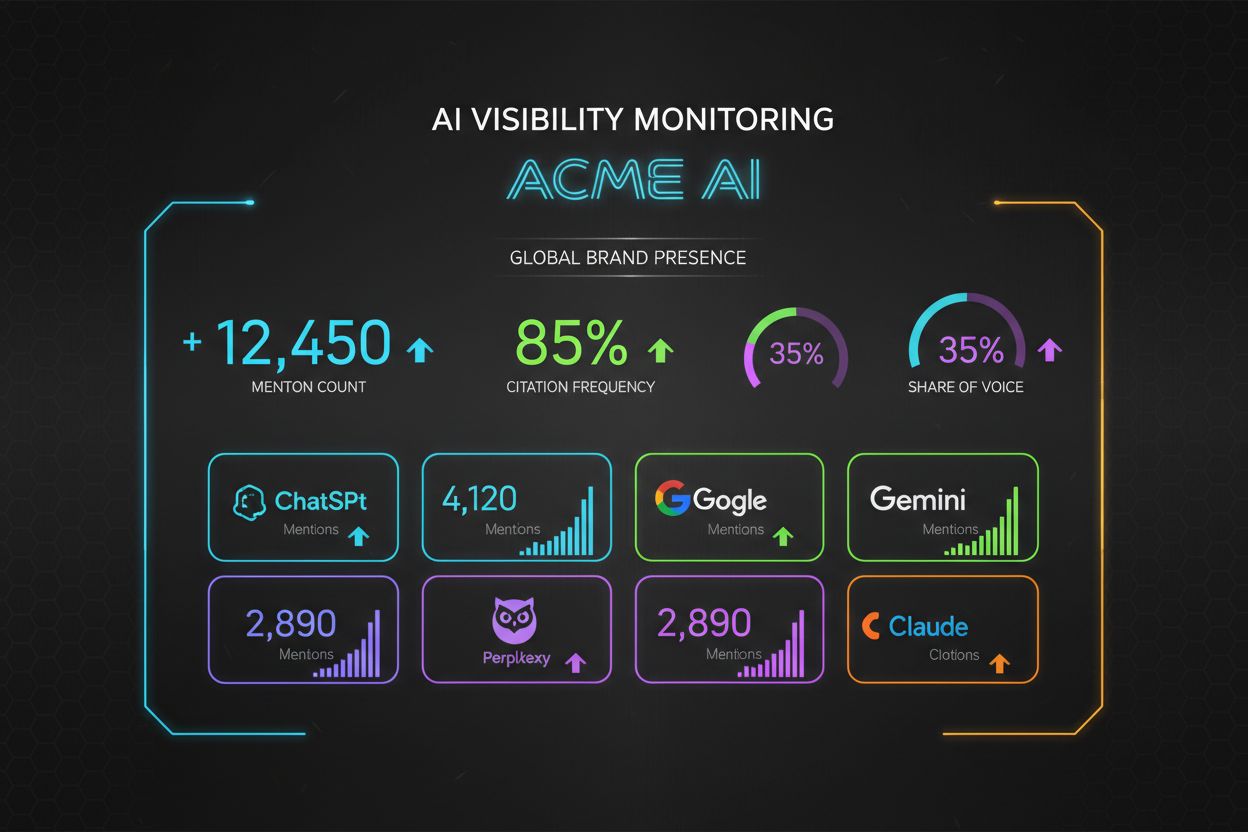
Learn how to monitor AI brand mentions and citations across ChatGPT, Gemini, and Perplexity. Discover why AI visibility matters more than traditional rankings a...

Learn how to create B2B thought leadership content that gets cited by AI platforms like ChatGPT, Perplexity, and Google AI Overviews. Strategic content optimiza...