

Connecting AI Visibility to Business Outcomes in Reports
Learn how to connect AI visibility metrics to measurable business outcomes. Track brand mentions in ChatGPT, Perplexity, and Google AI Overviews with actionable...
6 min read

Discover how personalized AI answers and user context reshape brand visibility. Learn strategies to optimize for AI search and measure your presence in AI-generated answers.
The digital landscape has undergone a fundamental transformation with the rise of AI-powered search and answer systems. Traditional SEO focused on ranking for keywords in search engine results pages, but AI visibility operates on an entirely different principle—it’s about being cited as a trusted source within AI-generated answers. This shift means that brands can no longer rely solely on optimizing for search rankings; they must now ensure their content appears in the answers that AI systems generate for users. The implications are profound: a brand might rank well for a query but still be invisible in the AI answer that most users actually read. Understanding this distinction is critical for any organization seeking to maintain relevance in an AI-driven information ecosystem.
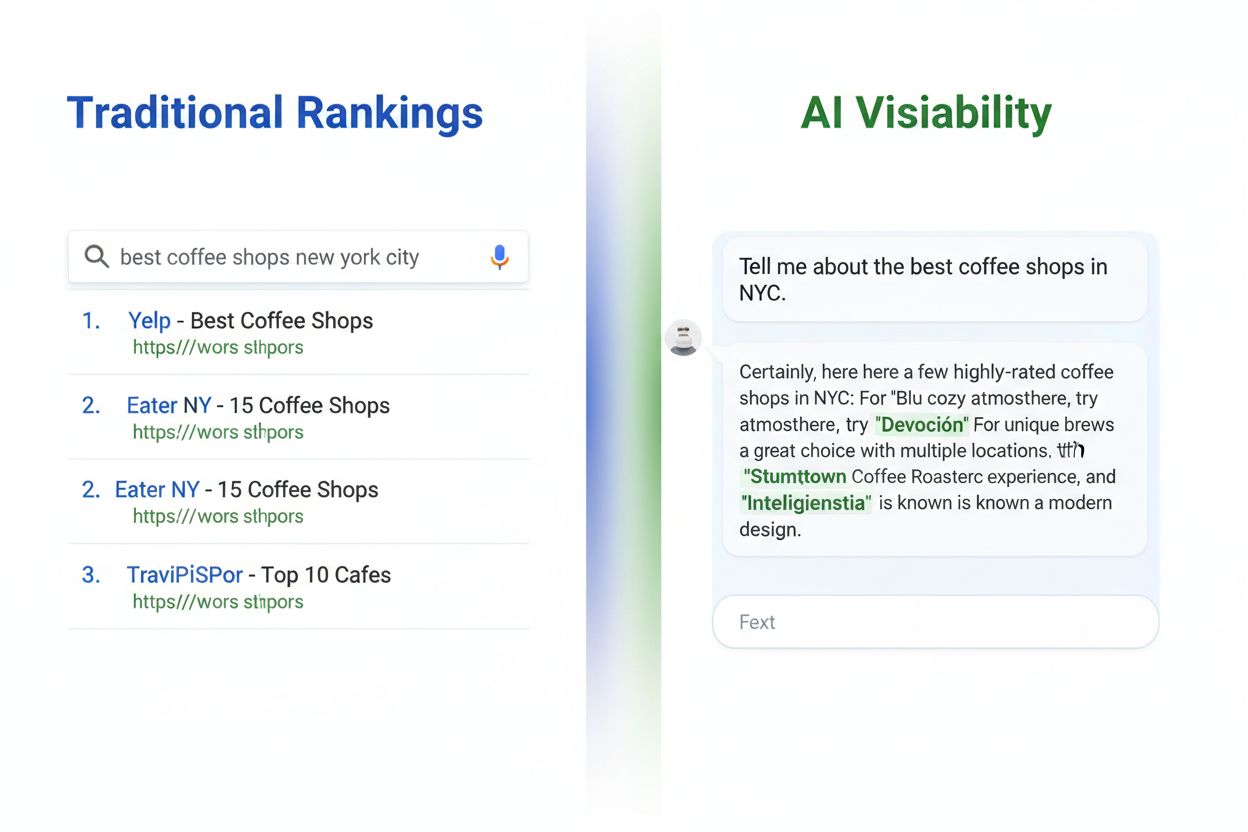
Personalized AI answers represent a departure from the one-size-fits-all approach of traditional search results. Rather than returning the same ranked list of links to every user searching the same query, AI systems now generate contextual responses tailored to individual users based on their unique circumstances. These answers incorporate elements like user intent (what the person actually wants to accomplish), semantic understanding (the deeper meaning behind queries), and behavioral signals (past search patterns and interactions). For example, a user searching “best running shoes” might receive different recommendations depending on whether they’re a casual jogger in a warm climate or a serious marathoner in a cold region. This personalization means that the same query can produce vastly different answers for different users, fundamentally changing how brands achieve visibility.
User context encompasses multiple dimensions that collectively determine which sources appear in personalized AI answers. Demographics (age, gender, profession), geographic location (country, city, local preferences), search history (previous queries and topics explored), device type (mobile, desktop, tablet), and temporal factors (time of day, season, current events) all influence how AI systems prioritize and present information. When a user searches for “affordable restaurants,” an AI system might prioritize local establishments for someone in New York City while suggesting different options for someone in rural Montana. The same query about “winter clothing” might surface different brands and recommendations based on the user’s location and climate. Context affects source prioritization because AI systems are trained to recognize that relevance is not absolute—it’s relative to who is asking and their specific circumstances.
| Context Factor | Impact on Visibility | Example |
|---|---|---|
| Geographic Location | High | Local businesses ranked higher for location-specific queries |
| Search History | High | Previous interests influence source selection and ranking |
| Device Type | Medium | Mobile users see different content optimization than desktop |
| Demographics | Medium | Age and profession affect content relevance scoring |
| Time/Seasonality | Medium | Seasonal products appear more frequently during relevant periods |
| User Intent | High | Commercial vs. informational queries surface different sources |

Content structure plays a surprisingly critical role in achieving visibility within personalized AI answers. AI systems favor content organized around clear questions and answers, as this format aligns with how they generate responses. Content with a logical hierarchy—using headers, subheaders, and bullet points—is more easily parsed and cited by AI systems. Verifiable sources with author credentials, publication dates, and transparent methodology are prioritized over vague or unattributed claims. Incorporating FAQ sections, summary boxes, and structured data markup helps AI systems understand and extract relevant information more effectively. Brands that organize their content with AI visibility in mind—rather than traditional SEO—significantly increase their chances of being cited in personalized answers.
Measuring brand visibility in personalized AI search requires a different framework than traditional SEO metrics. The Brand Visibility Score can be calculated as: (Number of Citations × Average Position Weight × Sentiment Score) / Total Competitive Citations. For instance, if your brand appears in 45 AI-generated answers across platforms with an average position of 2.3 and 85% positive sentiment, while competitors receive 200 total citations, your visibility score would reflect your share of voice in this new ecosystem. Tracking must span multiple platforms—ChatGPT, Perplexity, Gemini, and Google AI Overviews—since each has different citation patterns and user bases. Key metrics include citation rate (how often your content is cited), share of voice (your citations relative to competitors), sentiment analysis (whether mentions are positive or neutral), and content freshness (how recently cited content was updated). Research shows that pages updated within 12 months are 2x more likely to retain citations, while 60% of commercial queries cite refreshed content within 6 months, making freshness a critical visibility factor.
Achieving maximum visibility in personalized AI answers requires a strategic approach that goes beyond traditional content optimization:
The competitive advantage of contextual personalization lies in its ability to create deeper, more meaningful connections between brands and consumers. When a brand’s content appears in a personalized AI answer that perfectly matches a user’s specific context and needs, it builds trust and perceived usefulness in ways that generic search results cannot. A user who receives a personalized recommendation that feels tailored to their situation is more likely to trust that brand and perceive it as genuinely helpful rather than simply optimized for visibility. This differentiation becomes increasingly important as AI systems become more sophisticated at understanding context; brands that embrace personalization will stand out from competitors still focused on traditional ranking factors. The relationship between consumer and brand shifts from transactional (finding information) to consultative (receiving personalized guidance), fundamentally strengthening brand loyalty and lifetime value.
Tracking personalized visibility requires both manual testing and automated monitoring solutions. Manual approaches involve searching your target queries across different AI platforms while logged in from different locations, devices, and user profiles to observe how personalization affects your visibility. This hands-on testing provides qualitative insights into how your content appears in different contexts. Automated tools like Semrush and AirOps offer scaled monitoring across multiple AI platforms, tracking citation frequency and position over time. However, the most comprehensive approach involves AmICited.com, a platform specifically designed to monitor brand visibility in AI-generated answers. AmICited.com tracks your citations across major AI platforms, measures your share of voice against competitors, analyzes sentiment in AI-generated mentions, and provides actionable insights for improving visibility. The platform recognizes that traditional SEO tools were built for a different era and that brands need purpose-built solutions to navigate the personalized AI landscape effectively.
The future of personalized AI answers will be shaped by several emerging trends that brands must prepare for now. First-party data will become increasingly important as AI systems move away from relying solely on third-party cookies and tracking, making direct customer relationships and zero-party data collection critical for personalization. Privacy-preserving personalization techniques will allow AI systems to deliver contextual answers without compromising user privacy, creating a new standard for responsible AI. Real-time adaptation will enable AI systems to adjust answers based on immediate context signals—weather, local events, trending topics—requiring brands to maintain dynamic, responsive content strategies. Multimodal personalization will extend beyond text to incorporate images, video, and interactive elements, with brands needing to optimize across multiple content formats simultaneously. As these trends evolve, the brands that succeed will be those that view personalization not as a marketing tactic but as a fundamental principle of content strategy, continuously evolving their editorial approach to meet users where they are, with the information they actually need.
Traditional SEO focuses on ranking for keywords in search results pages, while AI visibility is about being cited as a trusted source within AI-generated answers. A brand might rank well for a query but still be invisible in the AI answer that most users actually read. AI visibility measures how often your content is cited or summarized in answers from ChatGPT, Perplexity, Gemini, and Google AI Overviews.
User context includes demographics, location, search history, device type, and temporal factors. AI systems use this context to personalize answers for individual users. The same query can produce different brand mentions depending on the user's location, past behavior, and specific circumstances. For example, a search for 'best restaurants' might surface different brands based on the user's location and dietary preferences.
The Brand Visibility Score measures your presence in AI-generated answers. It's calculated as: (Number of Citations × Average Position Weight × Sentiment Score) / Total Competitive Citations. This metric shows your share of voice in AI answers across platforms. For example, if your brand appears in 45 AI answers with positive sentiment while competitors receive 200 total citations, your score reflects your competitive positioning in the AI visibility landscape.
Research shows that pages updated within 12 months are 2x more likely to retain citations in AI answers. Additionally, 60% of commercial queries cite refreshed content updated within the last 6 months. AI systems prioritize recent, current information when generating answers. Maintaining a regular content refresh cycle—particularly for time-sensitive topics—directly impacts your visibility in personalized AI responses.
AI systems favor content organized around clear questions and answers with logical hierarchy using headers, subheaders, and bullet points. Verifiable sources with author credentials and publication dates are prioritized. URLs cited in ChatGPT averaged 17x more list sections than uncited ones, and schema markup boosts citation odds by 13%. Structuring content for AI readability significantly increases citation likelihood.
You can use manual testing by searching across different AI platforms from different locations and devices, or automated tools like Semrush and AirOps. For comprehensive monitoring specifically designed for AI visibility, AmICited.com tracks your citations across major AI platforms, measures share of voice against competitors, analyzes sentiment, and provides actionable insights for improving your presence in personalized AI answers.
Develop intent-specific content clusters addressing different user needs, implement schema markup and structured data, create content for different user segments, optimize for semantic relationships, maintain aggressive refresh cycles, build authority through diverse content formats, and test your visibility across different user personas. These strategies help ensure your content appears in personalized answers that match specific user contexts and needs.
Key trends include the growing importance of first-party data, privacy-preserving personalization techniques, real-time adaptation based on immediate context signals, and multimodal personalization incorporating images and video. Brands that view personalization as a fundamental principle of content strategy—rather than a marketing tactic—will be best positioned to succeed as AI systems become more sophisticated at understanding and responding to user context.
Track how your brand appears in personalized AI responses across ChatGPT, Perplexity, Gemini, and Google AI Overviews. Get real-time insights into your AI visibility and competitive positioning.
Learn how to connect AI visibility metrics to measurable business outcomes. Track brand mentions in ChatGPT, Perplexity, and Google AI Overviews with actionable...
Learn how to conduct a baseline AI visibility audit to understand how ChatGPT, Google AI, and Perplexity mention your brand. Step-by-step assessment guide for b...
Discover critical AI visibility blind spots where competitors gain advantage. Learn gap analysis framework and tools to monitor AI presence across ChatGPT, Perp...