
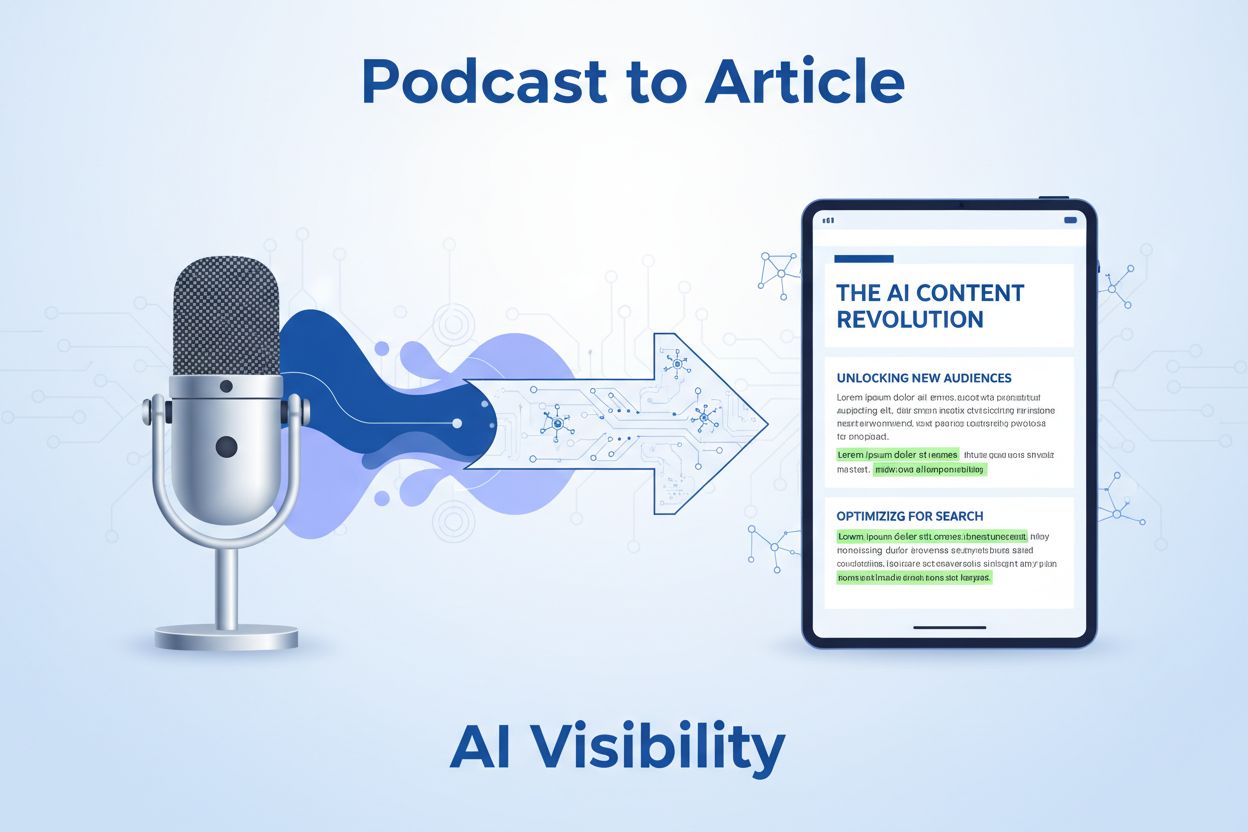
Podcast to Article: Capturing AI Citations from Audio Content
Learn how to convert podcasts to articles and boost AI visibility. Discover transcription strategies, optimization techniques, and tools to get your brand cited...
8 min read
Learn how to distribute your podcast across multiple platforms to maximize AI citation potential and brand visibility in AI-generated answers and search results.
Podcast distribution refers to the strategic process of publishing audio content across multiple platforms and channels to maximize reach and discoverability. In the AI era, this concept has evolved significantly—it’s no longer just about getting your show on Apple Podcasts and Spotify, but ensuring your content is discoverable, indexable, and citable by artificial intelligence systems that increasingly power search results and content recommendations. AI citation potential represents the likelihood that your podcast content will be referenced, quoted, or cited when AI systems generate answers to user queries. As AI-generated overviews become more prominent in search results, with major search engines now featuring AI-powered summaries, the visibility of your podcast in these AI responses directly impacts your brand authority and audience reach. Understanding how to optimize your podcast distribution strategy for AI systems has become essential for creators seeking to maximize their content’s impact beyond traditional listener metrics.
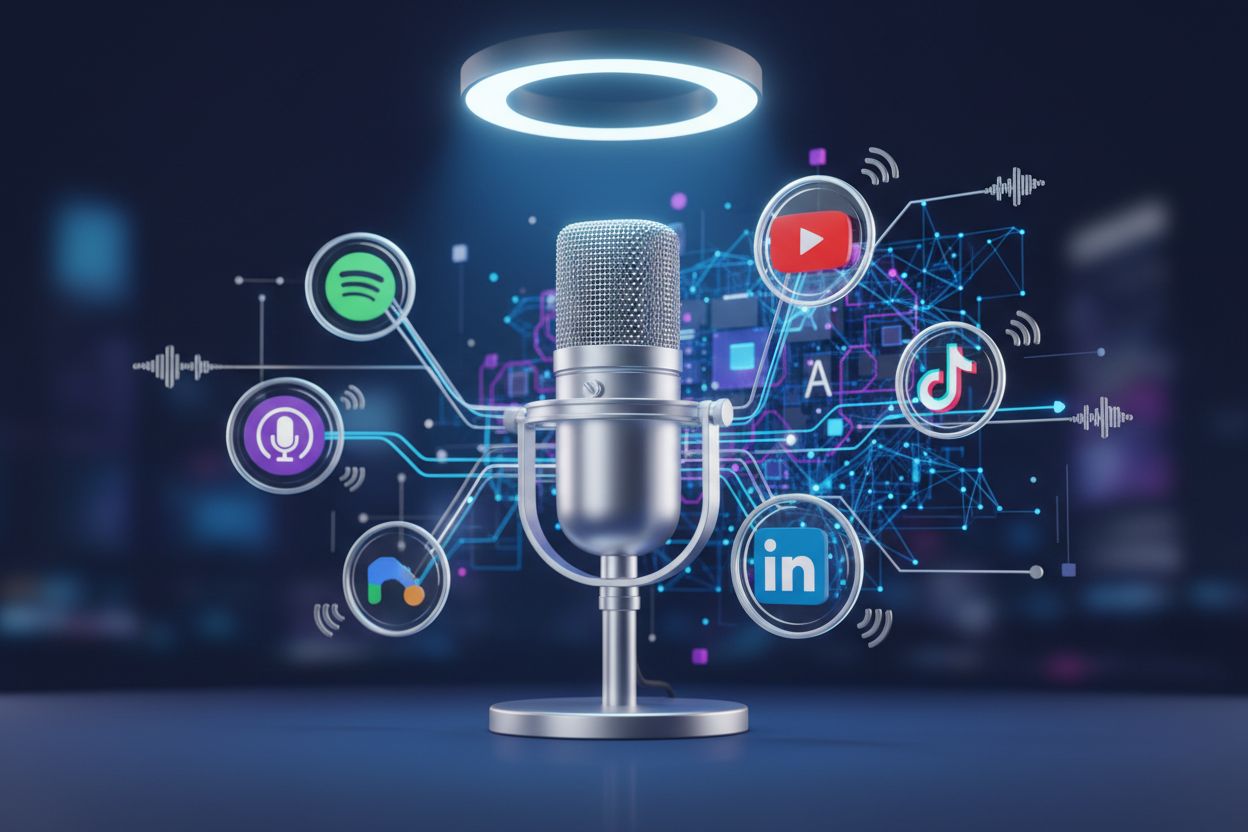
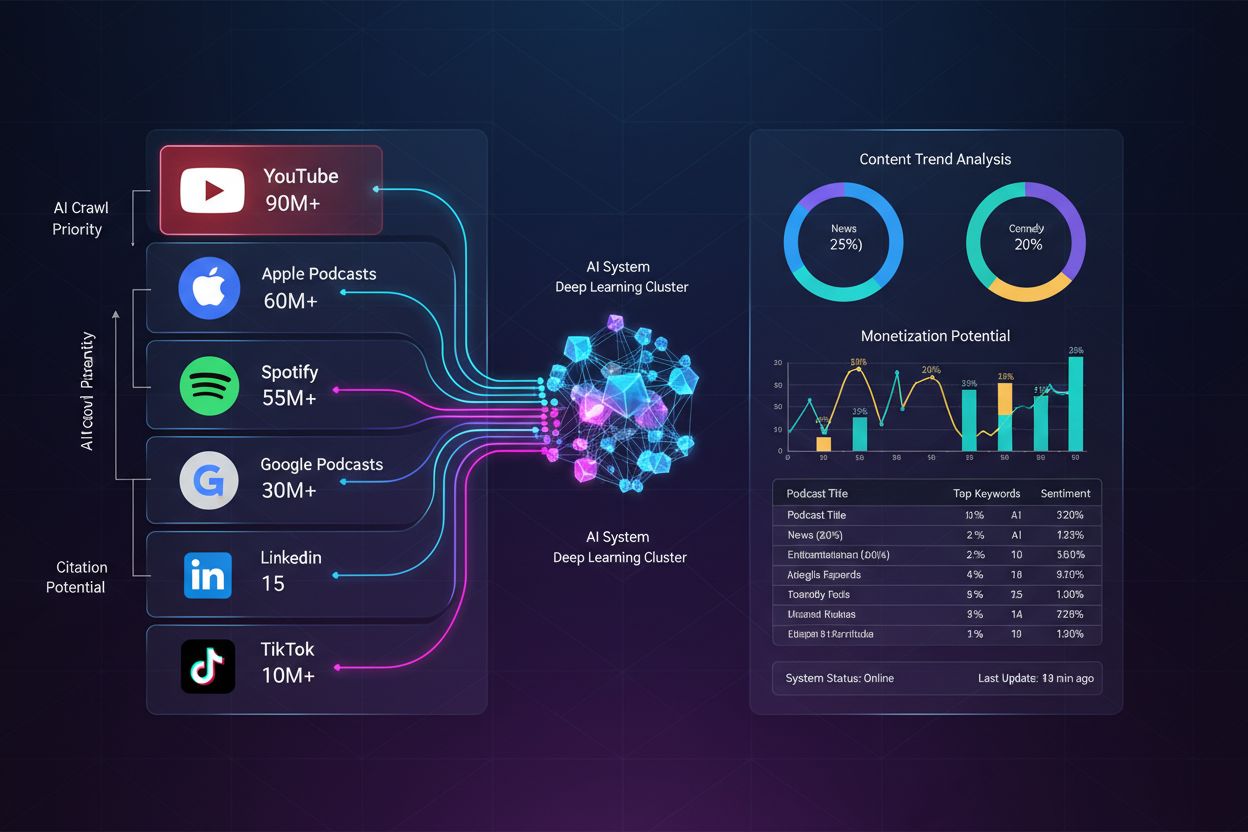
A comprehensive podcast distribution strategy requires presence across multiple platform categories, each serving distinct purposes in your overall reach. Primary platforms like Apple Podcasts (commanding 37.5% of podcast listeners), Spotify (33.2% market share with over 7 million podcast titles), and Google Podcasts remain essential for traditional listener acquisition and algorithmic recommendations. Secondary platforms including YouTube (which has emerged as the top podcast discovery platform according to Edison Research), LinkedIn, and TikTok provide additional visibility and audience segments, while owned channels such as your website, email newsletters, and RSS feeds ensure direct audience relationships independent of platform algorithms. AI systems crawl content from all these sources differently—YouTube’s video format with transcriptions receives high priority from AI indexing systems, while RSS feeds serve as the foundational discovery mechanism for podcast aggregators and AI crawlers. The strategic advantage comes from understanding that each platform contributes differently to your AI citation potential.
| Platform | AI Crawl Priority | Audience Reach | Citation Potential |
|---|---|---|---|
| YouTube | Very High | 2.7B+ users | Excellent |
| Apple Podcasts | High | 584M+ listeners | Very Good |
| Spotify | High | 600M+ users | Very Good |
| Website/Blog | Very High | Owned | Excellent |
| Medium-High | 900M+ users | Good | |
| Email Newsletter | High | Owned | Very Good |
| TikTok | Medium | 1.5B+ users | Growing |
| Google Podcasts | High | Integrated search | Very Good |
The foundation of AI podcast discovery begins with RSS feeds, which serve as the primary mechanism through which podcast aggregators and AI systems identify, track, and retrieve new episodes. RSS feeds contain structured metadata including episode titles, descriptions, publication dates, and links to audio files—information that AI systems parse to understand content context and relevance. Beyond RSS, metadata optimization and schema markup (using standards like podcast-specific JSON-LD) signal to AI systems the authority, topic relevance, and credibility of your content. Full transcriptions are critically important for AI indexing because they transform audio content into text that AI language models can analyze, understand, and reference—without transcriptions, AI systems have limited ability to extract specific quotes or cite particular segments of your podcast. When AI systems generate answers to user queries, they increasingly pull from podcast content that has been properly transcribed and indexed, making transcription a non-negotiable element of your distribution strategy. Tools like AmICited.com provide monitoring capabilities that track when and how your podcast content appears in AI-generated responses, offering visibility into your actual AI citation performance beyond traditional analytics.
Here’s an example of a properly structured RSS feed for podcast distribution:
<?xml version="1.0" encoding="UTF-8"?>
<rss version="2.0" xmlns:podcast="https://podcastindex.org/namespace/1.0">
  <channel>
    <title>Your Podcast Title</title>
    <link>https://yourwebsite.com</link>
    <description>Your podcast description</description>
    <language>en-us</language>
    <podcast:author>Author Name</podcast:author>
    <podcast:owner>
      <podcast:name>Owner Name</podcast:name>
      <podcast:email>email@example.com</podcast:email>
    </podcast:owner>
    <item>
      <title>Episode Title</title>
      <description>Episode description with keywords</description>
      <pubDate>Mon, 15 Jan 2024 12:00:00 GMT</pubDate>
      <enclosure url="https://example.com/episode.mp3" type="audio/mpeg"/>
      <podcast:transcript url="https://example.com/transcript.vtt" type="application/vtt"/>
    </item>
  </channel>
</rss>
To maximize your podcast’s AI citation potential, you must focus on building strong EEAT signals—Experience, Expertise, Authoritativeness, and Trustworthiness—which have become the primary currency for AI content evaluation. Semantic SEO for podcasts involves structuring your content around specific topics and entities that AI systems recognize as authoritative, using consistent terminology and building topical clusters across episodes. Guest credentials matter significantly; when you feature recognized experts, researchers, or thought leaders with verifiable credentials, AI systems recognize this as a trust signal and are more likely to cite your episode when answering questions in their domain. Your show notes and full transcriptions serve dual purposes: they provide context and keywords that help AI systems understand your content’s relevance, while also making specific quotes and claims easily extractable for citation. The structural organization of your podcast—clear episode titles, well-defined segments, timestamped transcriptions, and logical topic progression—directly affects how AI systems parse and reference your content.
Key optimization elements for AI citation:
YouTube has become critically important for AI citation potential because it combines video content with transcriptions, captions, and metadata that AI systems can easily parse and index. The platform’s dominance in AI discovery stems from its integration with Google’s search infrastructure and the fact that video transcriptions provide rich, contextual information that language models can reference with precision. Apple Podcasts and Spotify remain dominant in listener volume, but their closed ecosystems mean AI systems must actively crawl their feeds to discover content—making RSS feed optimization essential for these platforms. Emerging platforms like TikTok and LinkedIn are increasingly important for AI visibility because they’re becoming sources of original content that AI systems reference, particularly for trending topics and expert commentary. Owned media channels—your website, blog, and email newsletter—deserve special attention because they provide the highest degree of control over how your content is presented and indexed, and they often receive priority in AI crawling due to their direct association with your brand authority. The platform you choose affects not just listener reach but fundamentally how discoverable your content is to AI systems and how likely it is to be cited in AI-generated responses.
A single podcast episode represents a significant content asset that can be transformed into multiple formats to increase AI citation opportunities across different platforms and systems. Converting your podcast into a blog post with full transcription, key quotes, and structured sections creates a text-based version that AI systems can easily index and reference—this is one of the highest-impact repurposing strategies for AI visibility. Creating social media clips and shorts (30-60 second segments) for platforms like TikTok, Instagram Reels, and YouTube Shorts extends your reach to audiences who discover content through algorithmic feeds, and these clips often include captions that AI systems can index. Email newsletter distribution of episode summaries, key insights, and quotes creates additional touchpoints with your audience while building owned-media content that AI systems recognize as authoritative brand communication. LinkedIn article repurposing—transforming your episode into a professional article with industry insights and expert commentary—positions your content for discovery by AI systems serving professional and business audiences. The strategic advantage of repurposing is multiplicative: each format increases the number of indexable versions of your content, the variety of platforms where AI systems can discover it, and the likelihood that at least one version will be cited when AI systems generate relevant responses.
Traditional podcast metrics like downloads and listener numbers no longer tell the complete story of your content’s impact—you must also track mentions, citations, and AI visibility to understand how your podcast influences the broader information ecosystem. AI citation tracking involves monitoring when and how your podcast content appears in AI-generated responses, including AI overviews in search results, chatbot responses, and AI-powered recommendation systems. AmICited.com specializes in this measurement, providing detailed tracking of how often your content is mentioned or cited by AI systems, offering visibility into your actual impact on AI-generated answers—a metric that directly correlates with brand authority and audience reach. Traditional analytics tools have limitations when measuring AI impact because they focus on direct traffic and listener behavior rather than indirect influence through AI citations; you need specialized tools designed specifically for AI visibility measurement. Attribution tracking becomes more complex in the AI era because citations may occur without direct links or traffic referrals, requiring dedicated monitoring to understand your content’s true reach. The most sophisticated approach combines traditional podcast analytics with AI-specific citation tracking, giving you a complete picture of how your content influences both human audiences and AI systems.
Many podcasters undermine their AI citation potential through preventable distribution errors that limit their content’s discoverability and indexability. Single-platform dependency—relying exclusively on one platform like Spotify or Apple Podcasts—creates vulnerability and misses the multiplicative benefits of multi-platform distribution; AI systems discover content more reliably when it’s available across multiple sources. Poor metadata practices such as vague episode titles, thin descriptions, and missing schema markup make it difficult for AI systems to understand your content’s relevance and context, significantly reducing citation likelihood. Inconsistent publishing schedules confuse both audience algorithms and AI crawlers; regular, predictable publishing signals content reliability and keeps your podcast in active rotation for discovery systems. Lack of transcription is perhaps the most critical mistake—without transcriptions, AI systems cannot extract specific quotes or understand detailed content, making your podcast essentially invisible to AI citation systems regardless of listener popularity. Ignoring owned channels like your website and email newsletter means missing opportunities to build direct relationships with audiences and to create additional indexable versions of your content that AI systems prioritize for authority and trustworthiness signals.
The podcast distribution landscape is rapidly evolving as AI capabilities advance and new distribution mechanisms emerge. AI-generated podcast summaries are becoming standard features across platforms, with AI systems automatically creating episode summaries, key takeaway lists, and topic extractions—optimizing your content structure and transcriptions for these AI summaries will become increasingly important for visibility. Voice search optimization is gaining prominence as voice assistants and AI systems become primary interfaces for content discovery; podcasts with clear topic focus, natural language optimization, and structured data will rank higher in voice search results. Emerging platforms like specialized podcast networks, AI-native content platforms, and blockchain-based distribution systems are creating new discovery channels that will require strategic attention from creators seeking maximum reach. Personalization trends indicate that AI systems will increasingly tailor podcast recommendations and citations based on individual user context, preferences, and query intent—requiring creators to develop content that serves multiple audience segments and use cases. The integration of podcasts with AI tools and workflows—such as AI research assistants that cite podcast sources, AI writing tools that reference expert commentary, and AI learning platforms that incorporate audio content—represents the next frontier of podcast distribution, where your content becomes a foundational source for AI-powered applications and services.
Podcast distribution is the strategic process of publishing your audio content across multiple platforms to maximize reach and discoverability. In the AI era, it matters because AI systems increasingly reference podcast content in their responses, and proper distribution ensures your podcast is discoverable, indexable, and citable by these systems.
Prioritize YouTube (highest AI crawl priority), Apple Podcasts, and Spotify for listener reach. Also maintain your own website/blog and RSS feed for direct AI indexing. Secondary platforms like LinkedIn and TikTok provide additional visibility. The key is multi-platform presence rather than relying on a single platform.
AI systems discover podcasts through RSS feeds, platform crawling, and metadata analysis. They index podcast content using transcriptions, schema markup, and structured data. Full transcriptions are critical because they allow AI systems to extract specific quotes and understand detailed content for accurate citations.
Transcription is essential for AI citation because it transforms audio content into text that AI language models can analyze, understand, and reference. Without transcriptions, AI systems have limited ability to extract specific quotes or cite particular segments of your podcast, making transcription a non-negotiable element of your distribution strategy.
Use specialized AI citation tracking tools like AmICited.com that monitor when and how your podcast content appears in AI-generated responses, including AI overviews in search results and chatbot responses. Traditional podcast analytics don't capture AI citations, so dedicated monitoring is necessary.
Downloads measure direct listener engagement with your podcast, while AI citations measure how often your content is referenced in AI-generated answers and responses. Both metrics matter—downloads show audience reach, while citations show influence on the broader information ecosystem and AI systems.
Consistency matters more than frequency. Regular, predictable publishing schedules signal content reliability to both audience algorithms and AI crawlers. Whether you publish weekly, bi-weekly, or monthly, maintaining consistency keeps your podcast in active rotation for discovery systems and AI indexing.
Yes, AmICited.com specializes in tracking how your podcast content appears in AI-generated responses. It provides detailed insights into when your podcast is mentioned or cited by AI systems, offering visibility into your actual impact on AI-generated answers and helping you understand your brand's authority in the AI ecosystem.
Track how often your podcast is mentioned and cited by AI systems like ChatGPT, Perplexity, and Google AI Overviews. Get real-time insights into your AI visibility and brand authority.
Learn how to convert podcasts to articles and boost AI visibility. Discover transcription strategies, optimization techniques, and tools to get your brand cited...

Learn how AI systems like ChatGPT and Perplexity discover, index, and cite podcast content. Understand the technical mechanisms behind podcast citations in AI-g...
Community discussion on how podcasts can get cited by AI systems. Real strategies from podcasters optimizing for AI visibility through transcripts, show notes, ...