
Podcast to Article: Capturing AI Citations from Audio Content
Learn how to convert podcasts to articles and boost AI visibility. Discover transcription strategies, optimization techniques, and tools to get your brand cited...
8 min read
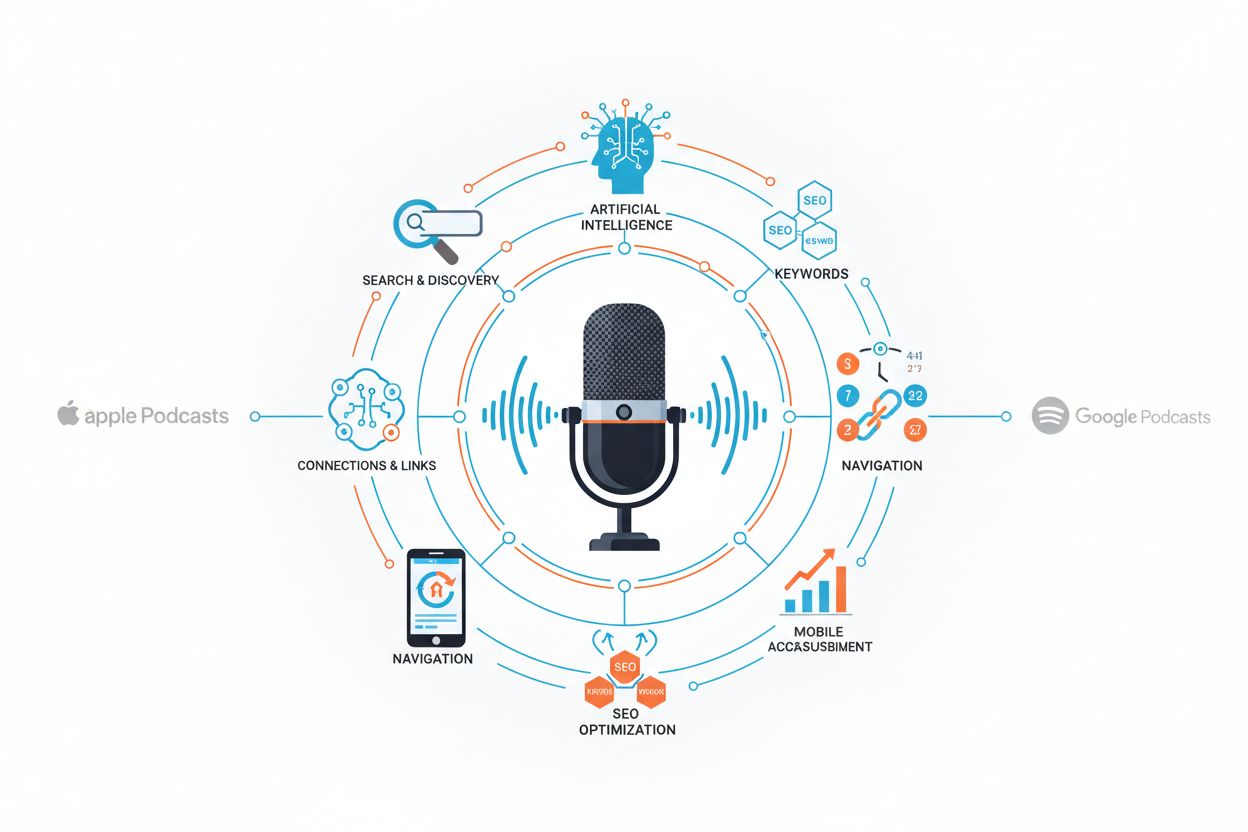
Learn how to optimize podcast show notes for AI discovery and citations. Complete guide covering metadata, keywords, timestamps, and tools to improve visibility in ChatGPT, Perplexity, and Google AI Overviews.
Podcast show notes have become essential bridges between audio content and the text-based world that AI systems rely on for discovery and indexing. Search engines and AI models cannot directly process audio files, making well-crafted show notes the primary mechanism for making podcast content discoverable through AI discovery channels. When listeners search for topics on Google, ChatGPT, or other AI-powered platforms, they’re finding your podcast through the text you’ve provided in your show notes. Quality show notes improve platform visibility across podcast directories, search engines, and AI aggregators that increasingly surface podcast content to users. Accessibility is another critical factor—show notes serve deaf and hard-of-hearing audiences while also benefiting those who prefer reading summaries. By optimizing your podcast citations and show notes structure, you’re essentially teaching AI systems what your episode is about and why it matters. The better your show notes, the more likely your content appears in relevant search results and AI-generated recommendations.
Metadata optimization forms the foundation of effective podcast metadata strategy, influencing how your episodes appear across platforms and to AI systems. Structured data helps search engines and AI tools understand the context, topics, and value of your content at a glance. Episode optimization requires attention to titles, descriptions, tags, and categories that accurately represent your content while incorporating relevant keywords. Implementing schema markup (like Schema.org’s Podcast type) signals to search engines exactly what information they’re reading, improving indexing accuracy. The following table outlines essential metadata elements and their optimization best practices:
| Element | Best Practice | Example |
|---|---|---|
| Title | Clear, keyword-rich, under 60 characters | “AI Show Notes Automation: Save 15 Hours Per Episode” |
| Description | 150-160 characters, includes primary keyword and CTA | “Learn how AI tools can automate podcast show notes creation while maintaining quality. Discover best practices for optimization.” |
| Tags | 5-10 relevant tags, mix broad and specific terms | podcast, AI, automation, show notes, content marketing |
Consistent metadata across all platforms ensures AI systems receive uniform information about your content, reducing confusion and improving discoverability.
Effective keyword research begins with understanding what your target audience searches for when looking for content like yours. Use tools like Ahrefs, SEMrush, or Google Keyword Planner to identify both high-volume keywords and valuable long-tail keywords that face less competition. Long-tail keywords like “how to optimize podcast show notes for SEO” often convert better than generic terms because they capture specific intent. Avoid keyword stuffing, which damages readability and triggers search engine penalties—instead, weave keywords naturally throughout your show notes as you would in any well-written article. Place your primary keyword in the title, opening paragraph, and at least once in subheadings for maximum impact. Secondary keywords should appear naturally in body paragraphs and bullet points without forcing awkward phrasing. The goal is creating content that reads naturally for humans while being optimized for AI systems that scan for relevant terminology and context.
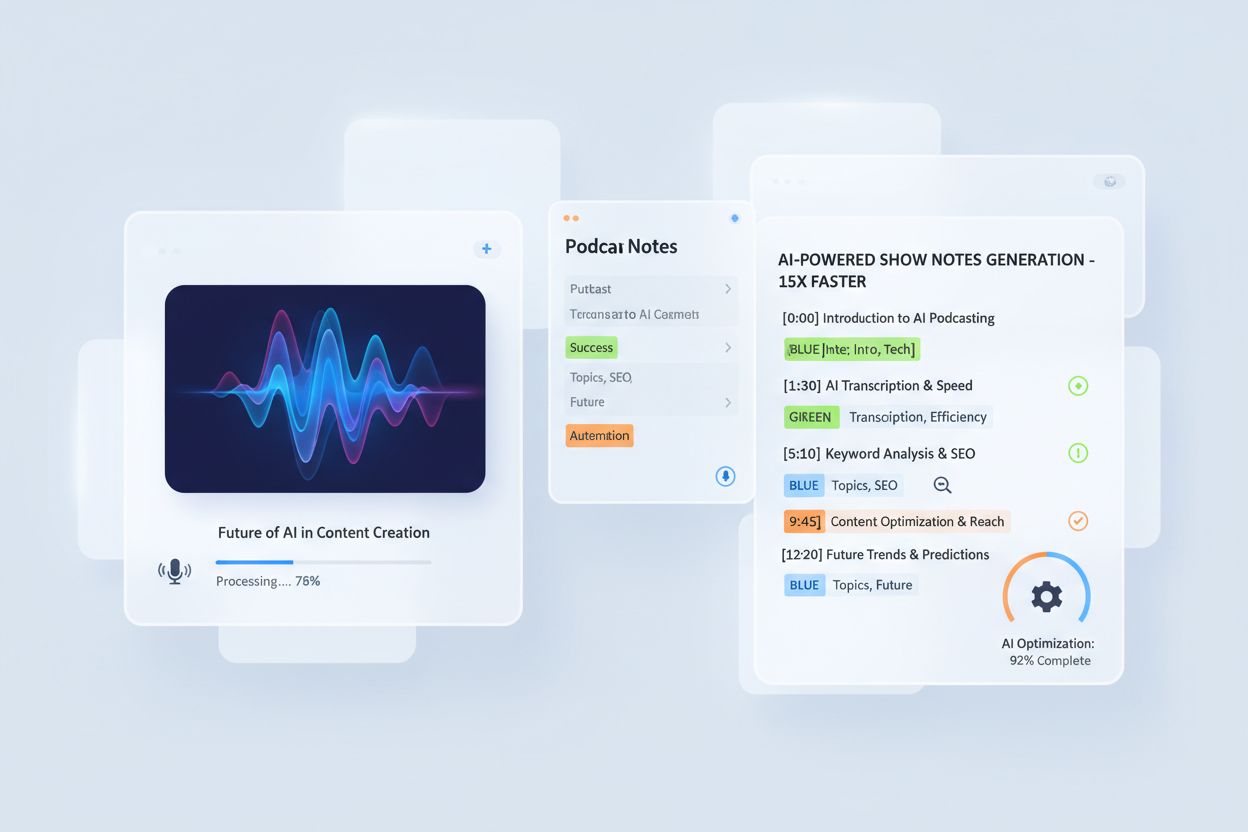
Podcast timestamps serve dual purposes: they dramatically improve user experience by allowing listeners to jump to relevant sections, and they provide AI systems with structural information about your episode’s content. Chapter markers break your episode into digestible segments, making it easier for both humans and algorithms to understand the episode’s flow and key topics. Timestamps also create additional indexing opportunities—each timestamp becomes a potential entry point for search engines and AI discovery systems. Mobile users particularly benefit from timestamps, as they can quickly navigate to sections relevant to their interests without listening to the entire episode. Here are five example timestamps demonstrating effective chapter structure:
Including timestamps in your show notes increases engagement metrics and provides AI systems with clear content segmentation that improves indexing accuracy.
Podcast formatting directly impacts how both humans and AI systems process your show notes content. Break your show notes into clear sections using subheadings (H3 or H4 tags) that organize information logically and make scanning easier. Short paragraphs of 2-3 sentences are more readable than dense blocks of text, particularly on mobile devices where most podcast listeners consume content. Bullet points and numbered lists break up text visually and make key information stand out, improving both user engagement and AI comprehension. Readability scores matter—aim for content that’s accessible to readers with a high school education level, which also happens to be optimal for AI processing. Use bold formatting strategically to highlight key terms, statistics, and important takeaways without overdoing it. Mobile-first design principles should guide your formatting choices, as the majority of podcast listeners access show notes on smartphones rather than desktops.
Strategic use of podcast links in your show notes provides value to listeners while signaling authority and relevance to search engines and AI systems. External links to credible sources, guest websites, and referenced materials enhance your show notes’ value and establish topical authority. Internal linking to previous episodes on related topics keeps listeners engaged with your back catalog while helping search engines understand your content architecture. Anchor text—the clickable text of a link—should be descriptive and keyword-rich rather than generic phrases like “click here.” Each link should serve a purpose: directing listeners to resources mentioned in the episode, providing additional context, or encouraging exploration of related content. Proper link structure helps AI systems understand relationships between your episodes and topics, improving overall discoverability. Aim for 3-5 high-quality links per episode rather than excessive linking that dilutes their impact.
AI technology is revolutionizing podcast show notes creation, with tools capable of reducing production time by up to 15 times compared to manual writing. AI show notes automation begins with transcription services like Otter.ai or Rev, which convert audio to text with 95%+ accuracy. Natural Language Processing (NLP) algorithms then analyze transcripts to identify key topics, extract quotes, and generate summaries automatically. Specialized podcast tools like Ausha Intelligence, Podium, SEObot, and Swell AI offer end-to-end show notes generation with built-in optimization for SEO and discoverability. These platforms use machine learning to identify the most important segments, suggest timestamps, and even generate social media snippets from your episode content. AmICited serves as a crucial monitoring tool for tracking how your podcast content is cited and referenced by AI systems, providing insights into your content’s reach and influence. The combination of transcription, NLP analysis, and AI-powered writing dramatically reduces the manual effort required while maintaining quality standards. However, AI tools work best as assistants rather than replacements, handling the heavy lifting while humans add final polish and brand voice.
While AI optimization tools handle the technical heavy lifting of show notes creation, human review remains essential for maintaining quality and brand consistency. AI systems excel at extracting information and identifying key moments, but they sometimes miss nuance, context, or the specific angle you want to emphasize. Your unique voice and perspective—the elements that attracted your audience—should shine through in your show notes, which requires human editing and refinement. Fact-checking is another critical human responsibility; AI systems may occasionally misinterpret technical terms, names, or statistics that require verification. The optimal workflow combines AI automation for initial drafts with human review for accuracy, tone, and strategic keyword placement. This hybrid approach maintains the efficiency gains of automation while preserving the quality and authenticity that builds audience trust. Investing 15-20 minutes of human review on AI-generated show notes is far more efficient than writing from scratch while ensuring your content meets your standards.
Tracking podcast analytics provides data-driven insights into whether your show notes optimization efforts are paying off. Monitor click-through rates on links in your show notes to understand which resources resonate with your audience and which topics drive engagement. SEO improvements can be measured through search rankings for target keywords, organic traffic to your podcast website, and referral traffic from search engines. Engagement metrics like time spent on show notes pages, scroll depth, and return visitor rates indicate whether your formatting and content structure are effective. Performance metrics should include episode downloads correlated with show notes quality, as better show notes often lead to increased listener acquisition. AmICited provides valuable data on how frequently your podcast is cited by AI systems and tools, offering a unique metric for measuring your content’s influence in the AI ecosystem. Regular analysis of these metrics allows you to refine your approach, doubling down on what works and adjusting strategies that underperform.
Implementing a consistent system for show notes optimization ensures quality across all episodes and maximizes your content’s discoverability. The following checklist covers essential elements that should be present in every episode’s show notes:
By following this checklist consistently, you’ll create show notes that serve both human listeners and AI discovery systems, maximizing your podcast’s visibility and impact across all platforms.
Podcast show notes are written summaries and descriptions that accompany each episode. They're crucial for AI discovery because search engines and AI models cannot directly process audio files. Well-optimized show notes make your podcast discoverable through AI-powered platforms like ChatGPT, Perplexity, and Google AI Overviews, while also improving accessibility for hearing-impaired listeners and those who prefer reading.
Show notes provide the text-based content that AI systems need to understand, index, and cite your podcast. When you optimize show notes with relevant keywords, clear structure, and proper metadata, AI tools can better understand your episode's content and are more likely to reference it when answering user queries. Tools like AmICited help you monitor these citations and track your podcast's influence in the AI ecosystem.
Essential elements include: a compelling title with primary keywords, a 150-160 character description, 5-10 relevant tags, timestamps for major segments, a summary of key points, links to mentioned resources, guest information, and clear calls-to-action. Each element should be optimized for both human readability and AI comprehension.
Balance readability with SEO by using clear subheadings, short paragraphs (2-3 sentences), and natural keyword integration. Avoid keyword stuffing and focus on creating genuinely valuable content. Use proper formatting with bullet points and bold text for emphasis. Structure your content logically with timestamps and chapters that help both humans navigate and AI systems understand your episode's flow.
Popular AI tools include Ausha Intelligence, Podium, SEObot, and Swell AI. These platforms use transcription and natural language processing to automatically generate summaries, identify key topics, suggest timestamps, and optimize for SEO. They can reduce show notes creation time by up to 15 times compared to manual writing, though human review is still recommended for quality assurance.
Timestamps serve dual purposes: they improve user experience by allowing listeners to jump to relevant sections, and they provide AI systems with structural information about your episode's content. Each timestamp becomes a potential entry point for search engines and AI discovery systems, increasing the number of ways your content can be found and indexed.
Use a consistent format with clear H2 and H3 headings, short paragraphs, and strategic use of bullet points. Include timestamps for major segments, descriptive links to resources, guest information, and clear calls-to-action. Optimize for mobile devices since most podcast listeners access show notes on smartphones. Test different formats and track engagement metrics to refine your approach.
Track metrics including page views, click-through rates on links, time spent on show notes pages, SEO rankings for target keywords, and organic traffic from search engines. Use AmICited to monitor how frequently your podcast is cited by AI systems. Analyze which episodes generate the most engagement and use these insights to refine your show notes strategy for future episodes.
AmICited tracks how AI tools like ChatGPT, Perplexity, and Google AI Overviews reference your podcast. Optimize your show notes and monitor your AI visibility in real-time to ensure your content gets the recognition it deserves.
Learn how to convert podcasts to articles and boost AI visibility. Discover transcription strategies, optimization techniques, and tools to get your brand cited...
Learn how podcast transcripts unlock AI visibility, boost citations, and transform audio content into discoverable assets for ChatGPT, Perplexity, and Google AI...

Learn how AI systems like ChatGPT and Perplexity discover, index, and cite podcast content. Understand the technical mechanisms behind podcast citations in AI-g...