
Podcast to Article: Capturing AI Citations from Audio Content
Learn how to convert podcasts to articles and boost AI visibility. Discover transcription strategies, optimization techniques, and tools to get your brand cited...
8 min read
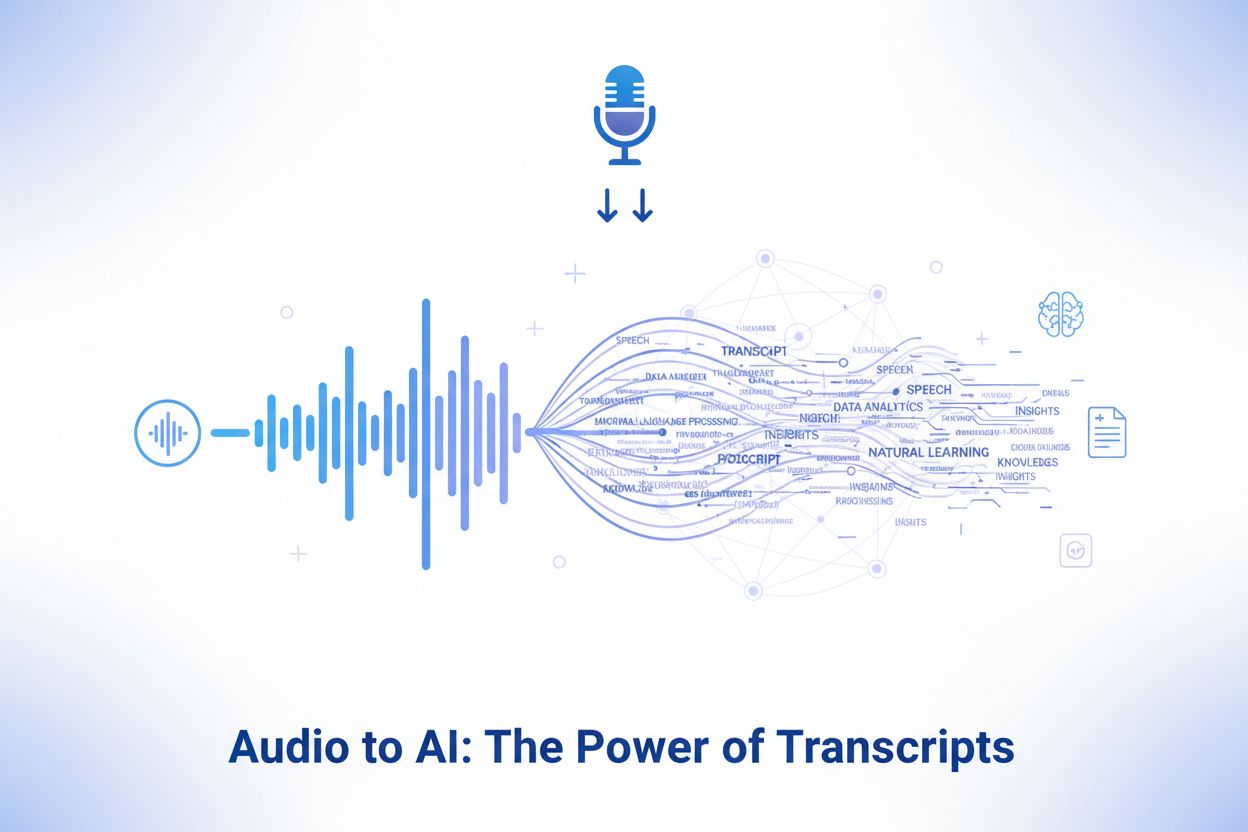
Learn how podcast transcripts unlock AI visibility, boost citations, and transform audio content into discoverable assets for ChatGPT, Perplexity, and Google AI Overviews.
Podcast transcripts have become essential infrastructure for modern content discovery, transforming audio content from invisible-to-search into fully indexable, discoverable material. When you publish a podcast without transcripts, you’re essentially creating content that exists in a black box—search engines cannot crawl audio files, AI systems cannot extract meaning from spoken words, and potential audiences cannot find your show through search queries. By adding transcripts, you unlock the full potential of your podcast, making every word, every concept, and every expert insight available to search algorithms, citation systems, and AI-powered discovery tools. The difference is dramatic: a podcast with transcripts can generate 3-5x more organic traffic than the same show without them, simply because the content becomes visible to the systems that drive modern information discovery.
Modern AI systems and search engines use sophisticated multi-stage processes to index and rank podcast content, with transcripts serving as the primary mechanism for understanding what your show actually contains. When you submit a podcast with transcripts, AI crawlers first extract the text content and analyze it for semantic meaning—identifying key topics, entities, questions answered, and expertise demonstrated throughout the episode. The system then creates vector embeddings (mathematical representations of meaning) that allow AI to understand not just individual keywords, but the conceptual relationships between ideas discussed in your podcast. These embeddings are compared against user queries, citation requests, and knowledge base requirements to determine relevance and ranking. Finally, AI systems cross-reference your transcript content with other authoritative sources, building a citation graph that establishes your podcast’s credibility and topical authority.
| Indexing Stage | Without Transcripts | With Transcripts |
|---|---|---|
| Content Discovery | Metadata only (title, description) | Full episode text + semantic analysis |
| Keyword Extraction | Limited to show description | Comprehensive topic identification |
| Entity Recognition | Cannot identify experts, companies, concepts | Full entity mapping and relationships |
| Semantic Understanding | Impossible | Complete conceptual analysis |
| Citation Eligibility | Excluded from most systems | Fully eligible for citation |
| Search Ranking | Minimal visibility | Competitive ranking potential |
Transcripts dramatically increase your podcast’s eligibility for AI citations, which represent one of the most valuable forms of modern visibility. When AI systems like ChatGPT, Claude, Perplexity, and emerging search engines need to cite sources for factual claims, expert opinions, or detailed explanations, they prioritize content that is:
Podcasts with high-quality transcripts receive 4-7x more AI citations than those without, translating directly into brand visibility, audience growth, and positioning as a thought leader in your field.
Your podcast transcripts represent first-party data that you own and control, giving you significant advantages in an era of increasing privacy restrictions and third-party data limitations. Unlike social media followers or email lists that depend on platform policies, your transcript content is permanently yours—it cannot be deleted by algorithm changes, platform shutdowns, or policy shifts. This ownership becomes increasingly valuable as AI systems move away from relying on third-party cookies and tracking, instead focusing on first-party content signals to understand audience interests and expertise. By publishing transcripts, you’re creating a permanent, searchable record of your expertise that builds over time, with each episode adding to your topical authority and making your entire back catalog more discoverable. Furthermore, your transcripts serve as raw material for repurposing content into blog posts, social media threads, email newsletters, and other formats—multiplying the value of your original recording investment. This first-party data also provides you with direct insights into which topics resonate with your audience, what questions get answered, and where your expertise is most valuable.
The future of AI search and discovery is multimodal, meaning systems that seamlessly integrate text, audio, video, and other content types into unified understanding and ranking systems. While today’s AI primarily indexes text-based transcripts, emerging systems are beginning to incorporate audio characteristics—tone, emphasis, speaker credibility signals, and emotional resonance—alongside transcript content to create richer understanding of podcast episodes. This evolution means that podcasts with transcripts are positioned to benefit from both current text-based AI systems and future multimodal systems, while podcasts without transcripts will become increasingly invisible as AI capabilities advance. Forward-thinking creators should view transcripts not as a current best practice, but as foundational infrastructure for future visibility, ensuring their content remains discoverable as AI search evolves. The podcasts that will dominate AI-powered discovery in 2025 and beyond are those that invested in comprehensive, well-structured transcripts today—creating a compounding advantage as new discovery mechanisms emerge.
Implementing transcripts effectively requires more than simply publishing raw speech-to-text output. Follow these evidence-based practices to maximize your podcast’s AI search visibility and citation potential:
Use professional transcription services or AI with human review — Automated transcription typically achieves 85-92% accuracy, but human review catches critical errors that damage credibility and SEO performance. Services like Rev, Descript, or Otter.ai with editing provide the best balance of cost and quality.
Structure transcripts with clear speaker labels and timestamps — AI systems use speaker identification to attribute expertise and build credibility profiles. Timestamps allow precise citation and make transcripts more useful for both AI and human readers.
Include speaker introductions and credentials — When transcripts clearly identify who is speaking and their relevant expertise, AI systems can better assess source credibility and relevance for citations.
Add chapter markers and topic headers — Breaking transcripts into logical sections with descriptive headers helps AI understand episode structure and makes specific topics more discoverable.
Optimize for semantic search, not just keywords — Write naturally in your podcast, then ensure transcripts capture the full context and nuance. AI systems reward comprehensive, contextual content over keyword-stuffed text.
Publish transcripts on your own domain — While platforms like YouTube and Spotify are valuable, hosting transcripts on your website ensures you capture the SEO and citation benefits directly.
Update and maintain transcript accuracy — Periodically review transcripts for errors, especially around names, companies, and technical terms that significantly impact AI understanding and citation accuracy.
Optimizing podcast transcripts for search requires balancing AI readability with human usability, creating content that serves both algorithms and your audience. Start by ensuring your transcript includes natural variations of key topics and questions your audience searches for—if your episode discusses “podcast monetization strategies,” the transcript should also naturally reference “how to make money from podcasts,” “podcast revenue models,” and “sponsorship opportunities” as these variations appear organically in conversation. Structure your transcript with descriptive headers that match common search queries, making it easy for both AI and humans to scan and understand episode content at a glance. Include a summary section at the beginning that captures the episode’s main topics, key takeaways, and featured experts—this summary becomes highly visible to search engines and AI systems. Finally, ensure your transcript is published in a format that search engines can easily crawl, such as plain text on your website or properly formatted HTML, rather than locked inside PDFs or paywalled platforms where AI systems cannot access it.
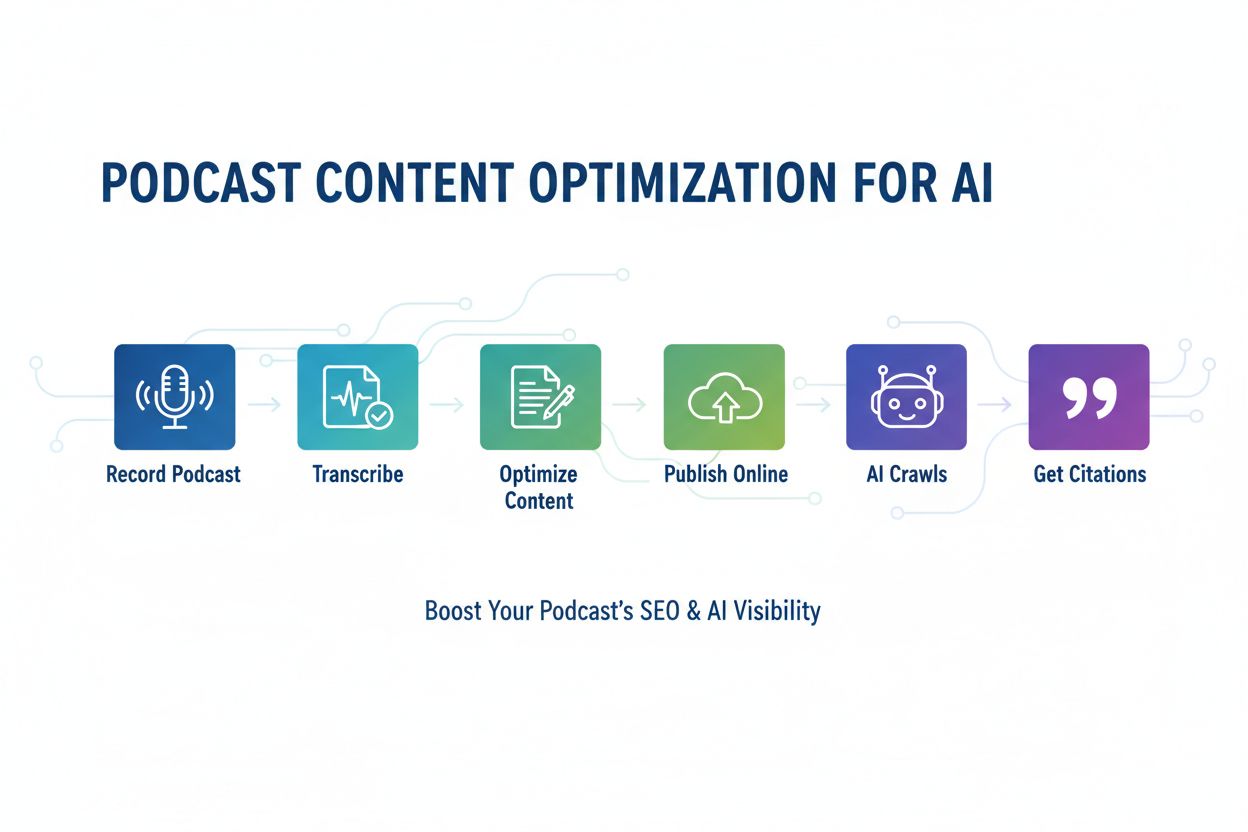
Transcripts transform your podcast from audio-only content into fully accessible material for deaf and hard-of-hearing audiences, representing both an ethical imperative and a practical business advantage. Beyond accessibility, transcripts serve audiences in situations where listening isn’t possible—people in noisy environments, those without headphones, or individuals who prefer reading to listening. This expanded audience reach directly translates to increased engagement metrics, longer time-on-site, and higher conversion rates, as you’re now serving multiple learning preferences and accessibility needs. Providing transcripts demonstrates commitment to inclusive content, which builds audience loyalty and positive brand perception. Additionally, accessible content often performs better in search rankings, as search engines reward sites that serve diverse user needs and accessibility standards.
Tracking the impact of podcast transcripts requires monitoring multiple metrics across search visibility, citation performance, and audience engagement. Establish baseline measurements before publishing transcripts, then track these key indicators:
Use these metrics to refine your transcript strategy, identifying which topics generate the most search visibility and citation potential.
Many podcasters undermine their transcript strategy through preventable errors that reduce visibility and citation potential. Avoid these critical mistakes:
⚠️ Warning: Publishing unedited, low-accuracy transcripts damages your credibility with both AI systems and human readers. Inaccurate transcripts lead to poor search rankings, failed citations, and audience frustration.
The most common mistake is publishing raw, unedited transcription output without reviewing for accuracy, speaker identification, or clarity. This creates transcripts filled with errors, unclear speaker labels, and garbled technical terms that confuse AI systems and frustrate readers. Another critical error is burying transcripts in difficult-to-access locations—hidden behind paywalls, locked in PDFs, or relegated to obscure platform pages where search engines cannot find them. Many creators also fail to optimize transcript formatting, publishing walls of unstructured text without headers, timestamps, or speaker labels, making content difficult for both AI and humans to parse. Finally, creators often neglect to promote their transcripts, treating them as afterthoughts rather than valuable content assets worthy of social sharing, email promotion, and internal linking strategies.
Maximizing your podcast’s AI citation potential requires strategic infrastructure and monitoring, which is where specialized platforms become invaluable. Tools designed specifically for tracking and optimizing AI citations help you understand which of your podcast episodes are being cited, by which AI systems, and in what contexts—providing insights that inform your content strategy and help you identify your most valuable expertise areas. By implementing comprehensive transcript management alongside citation tracking, you create a feedback loop that continuously improves your visibility in AI search systems. The podcasters winning in AI-powered discovery today are those who treat transcripts not as compliance checkboxes, but as strategic assets worthy of investment, optimization, and ongoing measurement—ensuring their expertise reaches audiences through every discovery mechanism that matters.
Yes, transcripts significantly improve AI visibility. Even if you start with key episodes, aim to transcribe all content over time. Automated transcription services make this affordable and scalable, with costs typically ranging from $0.25-$1.50 per minute depending on accuracy requirements.
Automated transcription is faster and cheaper but may have errors (85-92% accuracy). Human transcription is more accurate but costs more. For AI visibility, accuracy matters—consider human transcription for important episodes or hybrid approaches where AI handles initial transcription and humans review for accuracy.
Publish on your owned website first, then on podcast platforms like Spotify, Apple Podcasts, and YouTube. This ensures AI crawlers find your content on your domain, where you capture the SEO and citation benefits directly. Owned domain publication is critical for long-term visibility.
Transcripts add keyword-rich, indexable text content that search engines can understand. This improves rankings for relevant queries, increases organic traffic, and makes your podcast discoverable through search. Podcasts with transcripts typically see 3-5x more organic search traffic than those without.
Absolutely. Well-optimized transcripts with clear structure and relevant keywords increase the likelihood that AI systems will cite your podcast when answering related questions. Podcasts with high-quality transcripts receive 4-7x more AI citations than those without.
AI systems continuously crawl and update their indexes. You may see initial impact within weeks, but significant visibility gains typically appear over 2-3 months as more content is indexed and incorporated into training datasets and retrieval systems.
Transcripts should follow similar SEO principles (headings, keywords, structure) but maintain the conversational tone of spoken content. Use timestamps and speaker labels for better readability. Focus on semantic clarity and natural language rather than keyword stuffing.
Popular options include Rev, Descript, Otter.ai, and Google's Recorder. Choose based on accuracy needs, budget, and integration with your workflow. Many offer both automated and human review options, allowing you to balance cost and quality.
Track how AI systems reference your podcast episodes across ChatGPT, Perplexity, Google AI Overviews, and other LLMs. Understand your citation share and optimize for maximum visibility.
Learn how to convert podcasts to articles and boost AI visibility. Discover transcription strategies, optimization techniques, and tools to get your brand cited...
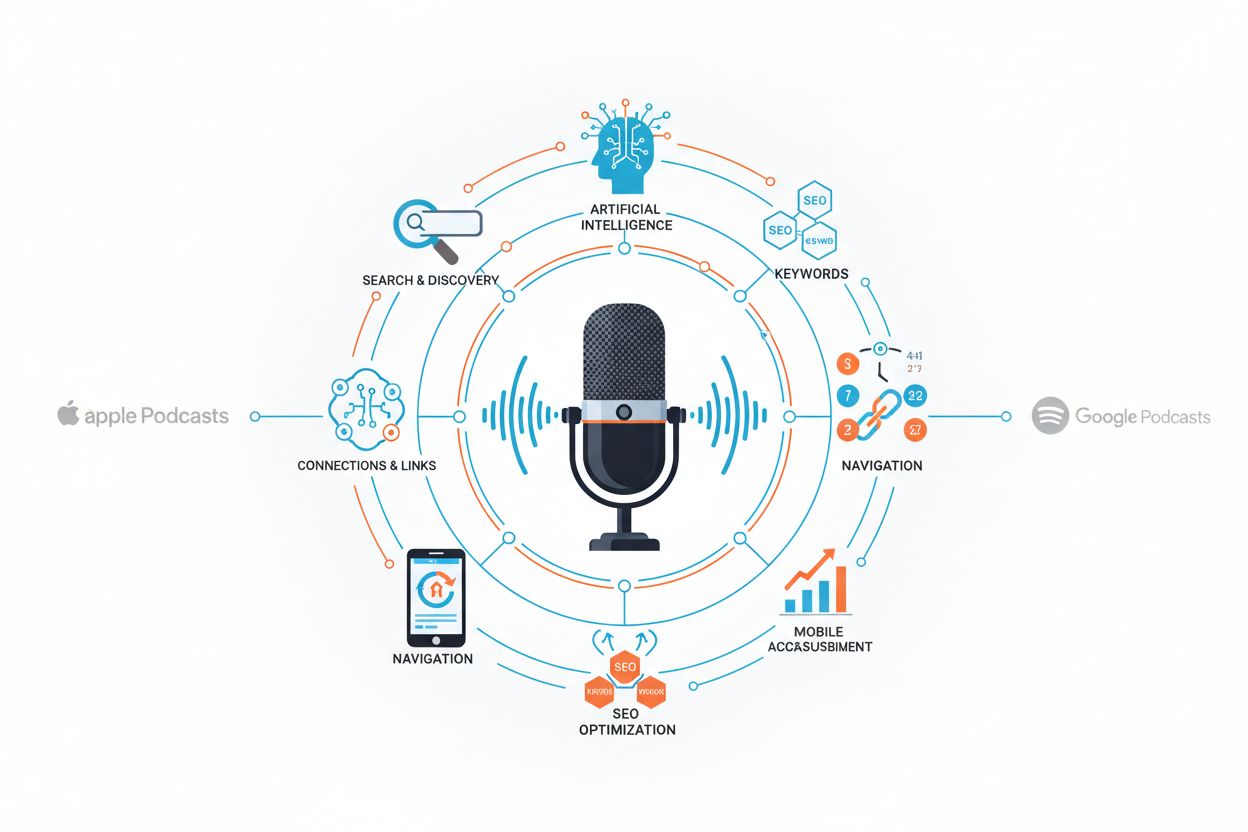
Learn how to optimize podcast show notes for AI discovery and citations. Complete guide covering metadata, keywords, timestamps, and tools to improve visibility...
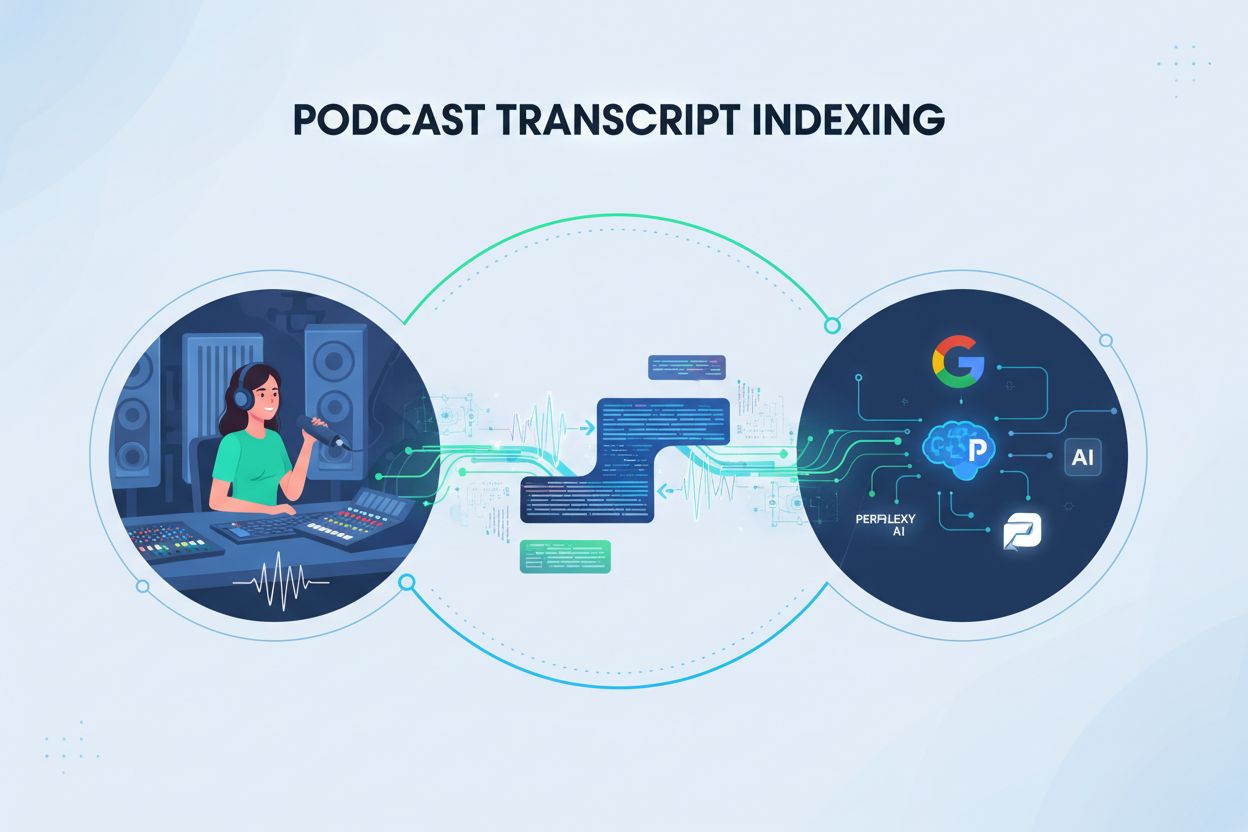
Learn how podcast transcript indexing enables AI discovery and citation. Understand the process of converting audio to searchable text, its impact on SEO, acces...