
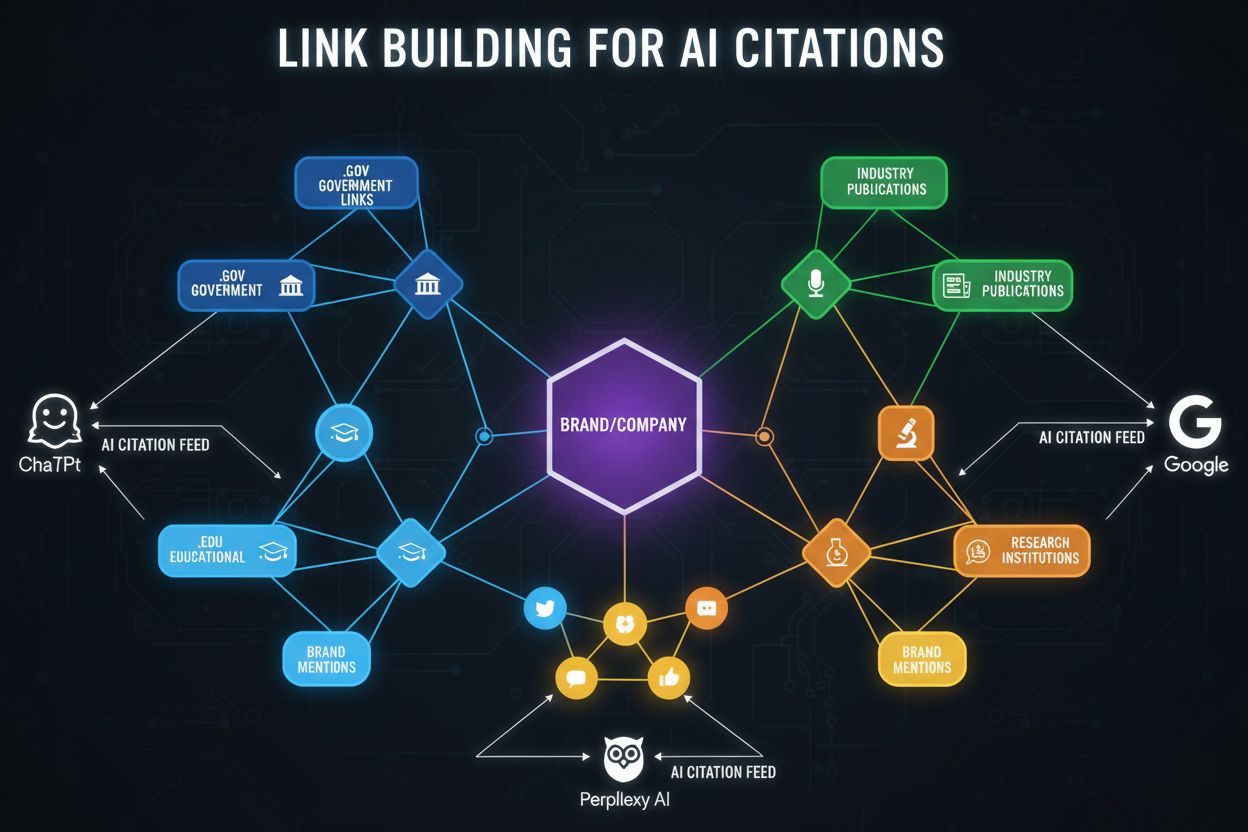
Link Building for AI Citations: New Strategies for the AI Era
Learn how link building has evolved for AI search. Discover strategies to earn AI citations across ChatGPT, Perplexity, and Google AI Overviews. Master the new ...
11 min read
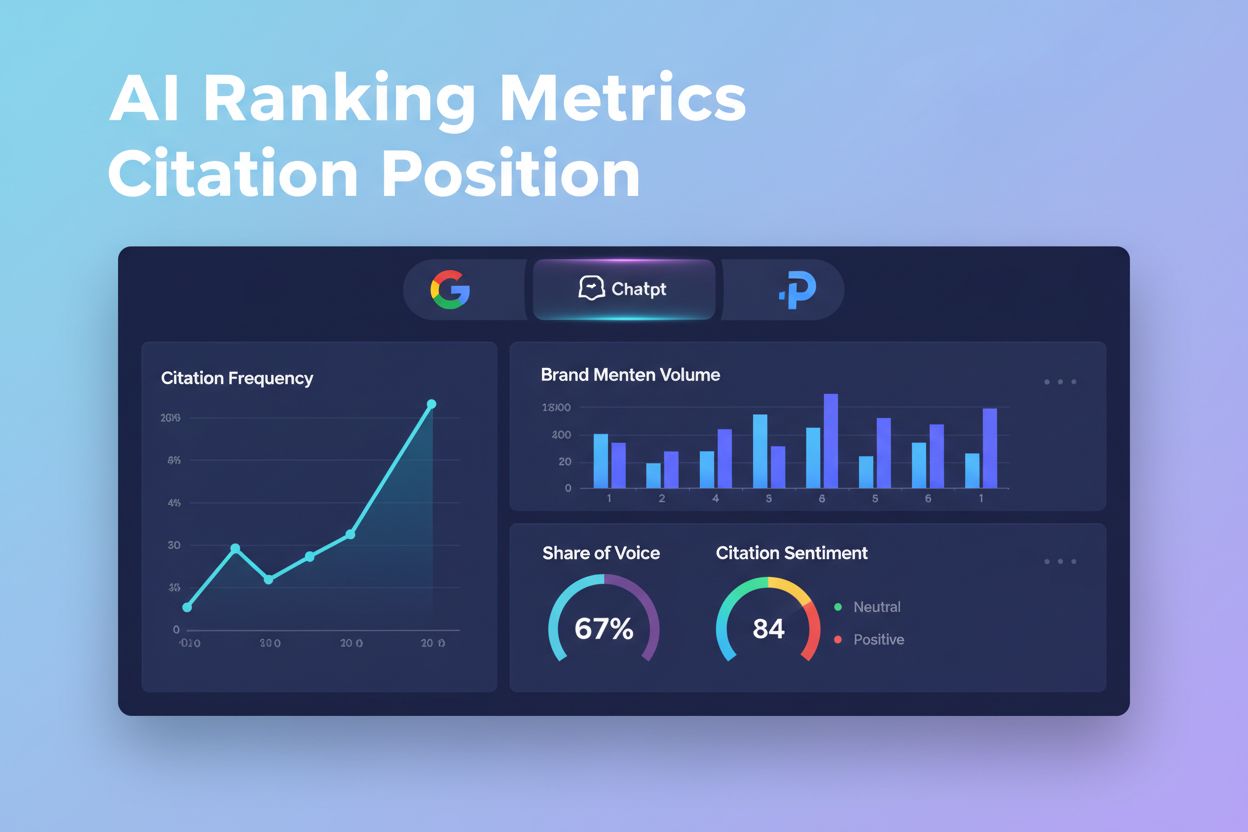
Learn how AI search engines rank content differently than Google. Discover citation position, brand mentions, and new metrics that matter for AI visibility in 2025.
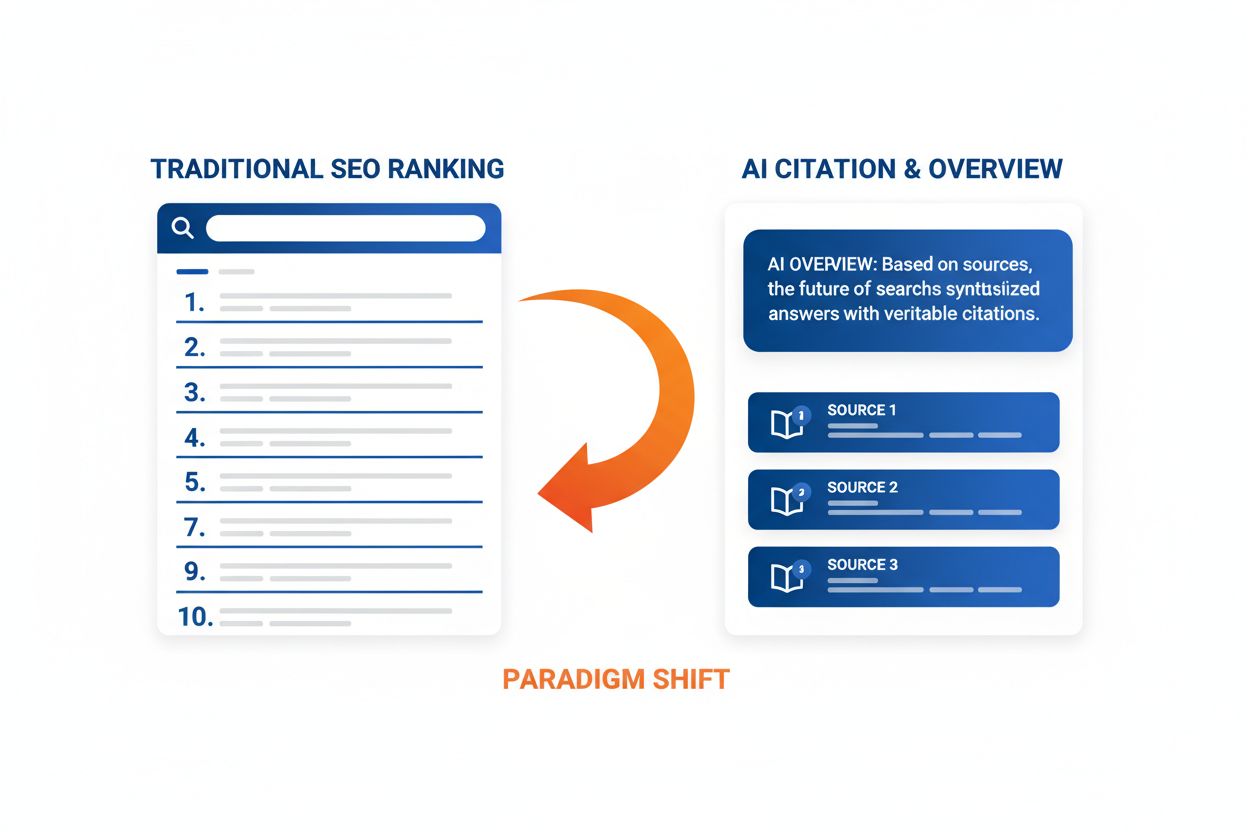
The emergence of AI-powered search engines has fundamentally disrupted the traditional SEO playbook that dominated for over two decades. While Google’s classic blue link results rewarded websites for achieving top positions—with Position 1 commanding the lion’s share of clicks—AI search engines operate on an entirely different principle: citation-based visibility. Instead of ranking websites, AI Overviews cite sources as references to answer user queries, creating a new hierarchy where being mentioned matters more than being ranked. This paradigm shift means that a website appearing in Position 6 on traditional search results might actually receive more AI citations than a Position 1 ranking. For SEO professionals and content strategists, this requires a complete recalibration of how we think about search visibility and success metrics.
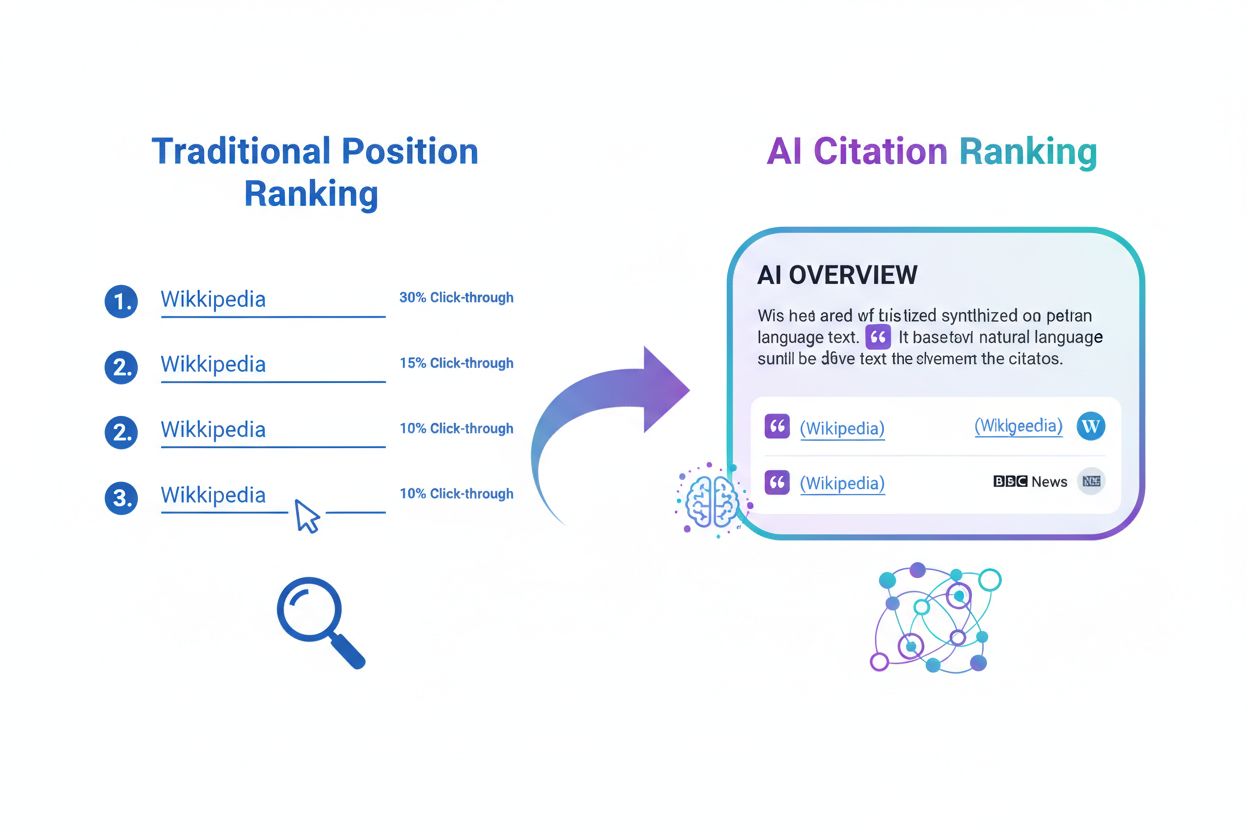
Citation position within AI Overviews represents a critical new metric that directly impacts visibility and traffic potential. AI Overviews typically cite between 3-5 sources on average per query, and the position of your citation within that list significantly affects your likelihood of being referenced. Research from Writesonic reveals that the first cited source in an AI Overview has a 33.07% citation chance, while citations drop substantially as you move down the list. This positional advantage mirrors traditional search rankings in some ways, but the mechanics are entirely different—you’re not competing for a ranking position, but rather for inclusion and prominence within the AI’s source citations.
| Citation Position | Citation Frequency | Relative Performance |
|---|---|---|
| Position 1 (First cited) | 33.07% | Baseline (100%) |
| Position 2 | ~24% | 73% of Position 1 |
| Position 3 | ~18% | 54% of Position 1 |
| Position 4 | ~12% | 36% of Position 1 |
| Position 5 (Last cited) | ~8% | 24% of Position 1 |
Understanding this distribution is essential because it shows that citation position matters dramatically—being the first source cited delivers over 4x the citation frequency of being the fifth source. The data also reveals that approximately 40.58% of AI citations come from Google’s top 10 results, meaning traditional search visibility still provides a foundation for AI citation success, but it’s no longer the only pathway to visibility.
The metrics that defined SEO success for the past decade—backlink count, keyword rankings, and domain authority—are becoming increasingly irrelevant in the age of AI search. Instead, forward-thinking marketers need to focus on four new metrics that directly correlate with AI citations and visibility:
These metrics represent a fundamental shift from link-based authority to mention-based authority, where your visibility depends less on who links to you and more on who talks about you. The transition requires new tools, new tracking methods, and most importantly, new content and PR strategies that prioritize being discussed and referenced rather than being linked to.
While AI citations represent a new form of visibility, it’s crucial to understand that citations don’t automatically translate to clicks at the same rate as traditional search rankings. Research from Search Engine Land indicates that being cited in an AI Overview delivers roughly the same click performance as ranking in Position 6 on traditional Google search results—a significant drop from the traffic associated with top positions. The top 3 blue links still substantially outperform AI citations in terms of actual click-through rates, meaning that while AI citations are valuable for brand visibility and authority, they shouldn’t completely replace your focus on traditional ranking optimization. This creates what some call the “zero-click problem 2.0"—where your content gets cited and referenced by AI systems, building authority and brand awareness, but may not drive proportional traffic increases. Understanding this reality helps set realistic expectations: AI citations are about long-term authority building and brand establishment, while traditional rankings remain the primary driver of immediate, measurable traffic.
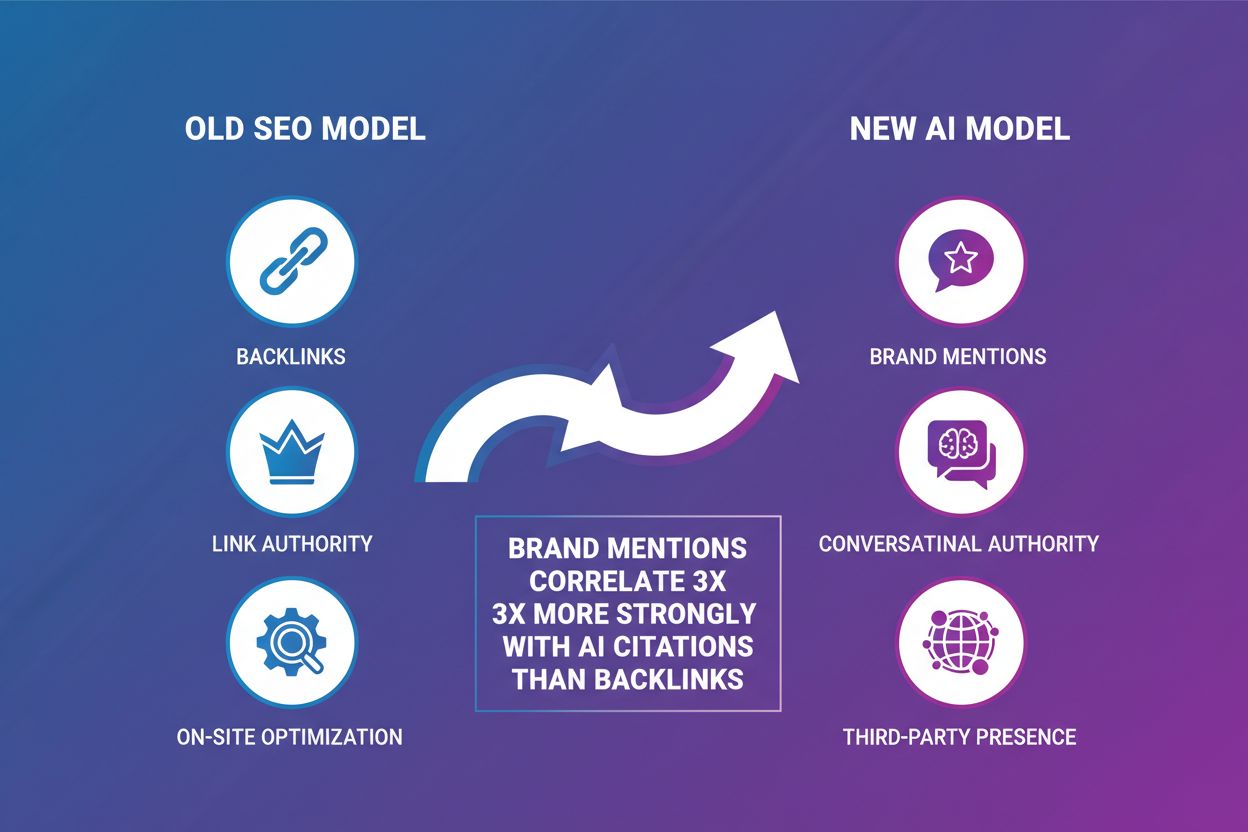
One of the most significant discoveries in recent AI search research is that brand mentions correlate 3x more strongly with AI citations than traditional backlinks. This finding, supported by Onely’s research showing a 0.664 correlation between brand mentions and AI citations versus only 0.218 for backlinks, represents a seismic shift in how authority is determined. When your brand is mentioned in third-party articles, discussed in online communities, featured in PR coverage, or referenced in industry conversations—regardless of whether those mentions include links—AI systems recognize this as a signal of relevance and authority. This shift reflects how modern AI models are trained on vast amounts of conversational and textual data, where mentions matter as much as formal citations.
| Metric | Old Model (Traditional SEO) | New Model (AI Search) |
|---|---|---|
| Primary Authority Signal | Build backlinks from high-authority domains | Build brand mentions across the web |
| Content Optimization | Optimize for specific keywords and search intent | Optimize for conversations and natural language |
| Visibility Focus | Focus on ranking your own domain | Focus on third-party presence and discussion |
| Authority Type | Link authority (who links to you) | Conversational authority (who talks about you) |
The practical implication is profound: instead of spending resources on link-building campaigns, successful brands now invest in PR, community engagement, thought leadership, and creating content worth discussing. When industry publications mention your company, when customers discuss your product in forums, when influencers reference your research—these moments of brand mention become more valuable than a dozen contextual backlinks. This doesn’t mean backlinks are worthless, but they’ve been dethroned as the primary authority metric in favor of broader brand visibility and mention volume.
AI systems show clear preferences for certain content formats, and understanding these preferences is essential for maximizing citation potential. Listicles achieve a 25% citation rate, while traditional blog posts and opinion pieces only achieve 11%, but the real winners are structured, data-rich formats: product specification pages achieve 46-70% citation rates, comparison pages consistently rank high, and FAQ sections are frequently cited as direct answer sources. This preference reflects how AI models are trained to extract and cite information—they favor content that presents information in clear, scannable, structured formats that can be easily parsed and referenced. Structured data markup becomes increasingly important, as it helps AI systems understand and cite your content more accurately.
| Content Format | Citation Rate | Why AI Prefers It |
|---|---|---|
| Product Specifications | 46-70% | Clear, structured data; easy to extract and cite |
| Comparison Pages | High (35-50%) | Directly answers comparative queries; well-organized |
| FAQ Sections | High (30-45%) | Direct answers to common questions; scannable format |
| Listicles | 25% | Numbered format is easy to parse and reference |
| Blogs/Opinion Pieces | 11% | Narrative format harder to extract; less authoritative |
The reason these formats work is that AI systems need to extract, summarize, and cite information quickly and accurately. When your content is organized with clear headers, numbered lists, structured data, and direct answers, AI can confidently cite you as a source. Additionally, 76.4% of ChatGPT’s most-cited pages were updated within the last 30 days, indicating that freshness and active maintenance signal authority to AI systems. This means that creating comprehensive, well-structured content and keeping it updated is more important than ever for maintaining citation visibility.
Tracking AI citation performance requires a new set of metrics and tools, as traditional SEO analytics platforms were designed around ranking positions and click-through rates. The key metrics to monitor are Citation Frequency (how often you’re cited), Share of Voice (your citation percentage versus competitors), Citation Sentiment (the context of your citations), and Brand Mention Volume (total mentions across the web). Several platforms have begun offering AI citation tracking capabilities, though the space is still evolving:
| Tool | Key Capabilities | Best For |
|---|---|---|
| Semrush | AI Overview tracking, citation frequency monitoring, competitor analysis | Comprehensive SEO + AI visibility |
| Ahrefs | Brand mention tracking, citation analysis, content performance | Citation frequency and brand mentions |
| AmICited | Dedicated AI citation tracking, position analysis, trend monitoring | Focused AI citation metrics |
| Google Search Console | AI Overview appearance data, query analysis | Official Google data |
Traditional metrics like keyword rankings and backlink counts fail to capture your actual visibility in AI search because they don’t measure citations or mentions. A website might rank #1 for a keyword but receive zero AI citations, while a competitor with lower rankings might be cited frequently. This disconnect means you need new dashboards and new KPIs. The challenge is that many of these tools are still in early stages, and standardized metrics haven’t fully emerged, but forward-thinking organizations are already building internal tracking systems and monitoring AI citation performance as a core metric alongside traditional rankings.
Winning in AI search requires a strategic, multi-step approach that differs significantly from traditional SEO tactics. Here’s the actionable framework for maximizing your AI citation potential:
Identify High-Volume FAQ Opportunities: Research the questions your audience asks most frequently across search, social media, and community forums. Create comprehensive FAQ pages that directly answer these questions with clear, structured responses that AI can easily cite.
Create Answer Capsules: Develop focused content sections (200-400 words) that provide direct, authoritative answers to specific questions. These “answer capsules” are ideal for AI citation because they’re self-contained, easy to extract, and provide clear value.
Implement Schema Markup: Add structured data (FAQ schema, Product schema, Article schema) to help AI systems understand and cite your content more accurately. This technical foundation makes your content more “machine-readable” and citation-friendly.
Build Strategic Brand Mentions: Develop a PR and content strategy focused on getting mentioned in industry publications, research reports, and authoritative third-party sources. This is now more important than building backlinks.
Maintain Content Freshness: Update your most important content regularly—ideally within 30-day cycles—to signal to AI systems that your information is current and authoritative. This is particularly important for time-sensitive topics.
Monitor Citation Metrics: Set up tracking for Citation Frequency, Share of Voice, and Brand Mention Volume. Create dashboards that show how your citation performance changes over time and how you compare to competitors.
Optimize for Conversational Keywords: Focus on natural language queries and conversational phrases rather than traditional keyword optimization. AI systems are trained on conversational data, so content that reads naturally performs better.
Each of these steps addresses a different aspect of AI citation success, from technical implementation to strategic positioning. The key is recognizing that AI citation success is a long-term play that requires consistent effort across content creation, technical optimization, brand building, and performance measurement.
Traditional search ranks websites by position (1st, 2nd, 3rd, etc.), while AI search cites sources as references. A website in Position 6 on Google might receive more AI citations than a Position 1 ranking. Citation position within AI Overviews (1st cited, 2nd cited, etc.) is now the primary visibility metric.
AI Overviews cite 3-5 sources on average per query, with the first cited source receiving 33.07% citation frequency. Traditional search shows 10 blue links with equal visual prominence. AI citations are smaller, less prominent, but represent a new form of authority recognition.
AI Overview citations deliver roughly Position 6 click performance on traditional search. While citations build brand authority and visibility, they don't generate the same click volume as top 3 rankings. This is the 'zero-click problem 2.0'—visibility without proportional traffic.
Brand mentions are now 3x more correlated with AI citations than backlinks. Third-party mentions in articles, PR coverage, community discussions, and social media are stronger signals of authority to AI systems than traditional link-building.
Track Citation Frequency (how often you're cited), Share of Voice (your citations vs competitors), Citation Sentiment (context of citations), and Brand Mention Volume (total mentions across the web). Tools like Semrush, Ahrefs, and AmICited provide these metrics.
Product specifications (46-70% citation rate), comparison pages, and FAQ sections are cited most frequently. Listicles achieve 25% citation rate, while traditional blog posts only achieve 11%. Structured, scannable content is preferred by AI systems.
Technical optimizations (schema markup, content structure) can show results within weeks. Building brand mentions and third-party presence typically takes 3-6 months. Measurable citation improvements usually appear 2-4 months after implementing optimization strategies.
Focus on Google AI Overviews (largest reach), ChatGPT (5.7 billion monthly visits), and Perplexity (growing rapidly). Each platform cites different sources and has different citation patterns, so monitor performance across all three for comprehensive visibility.
Track how AI search engines cite your brand with AmICited. Get real-time visibility into your AI search performance across Google AI Overviews, ChatGPT, Perplexity, and more.
Learn how link building has evolved for AI search. Discover strategies to earn AI citations across ChatGPT, Perplexity, and Google AI Overviews. Master the new ...
Master dual optimization strategy to rank in traditional search and get cited in AI Overviews. Learn how to optimize for both SEO and GEO with proven tactics.

Learn how to position yourself as an AI-citable expert. Discover the authority signals AI systems recognize and strategies to build sustainable thought leadersh...