
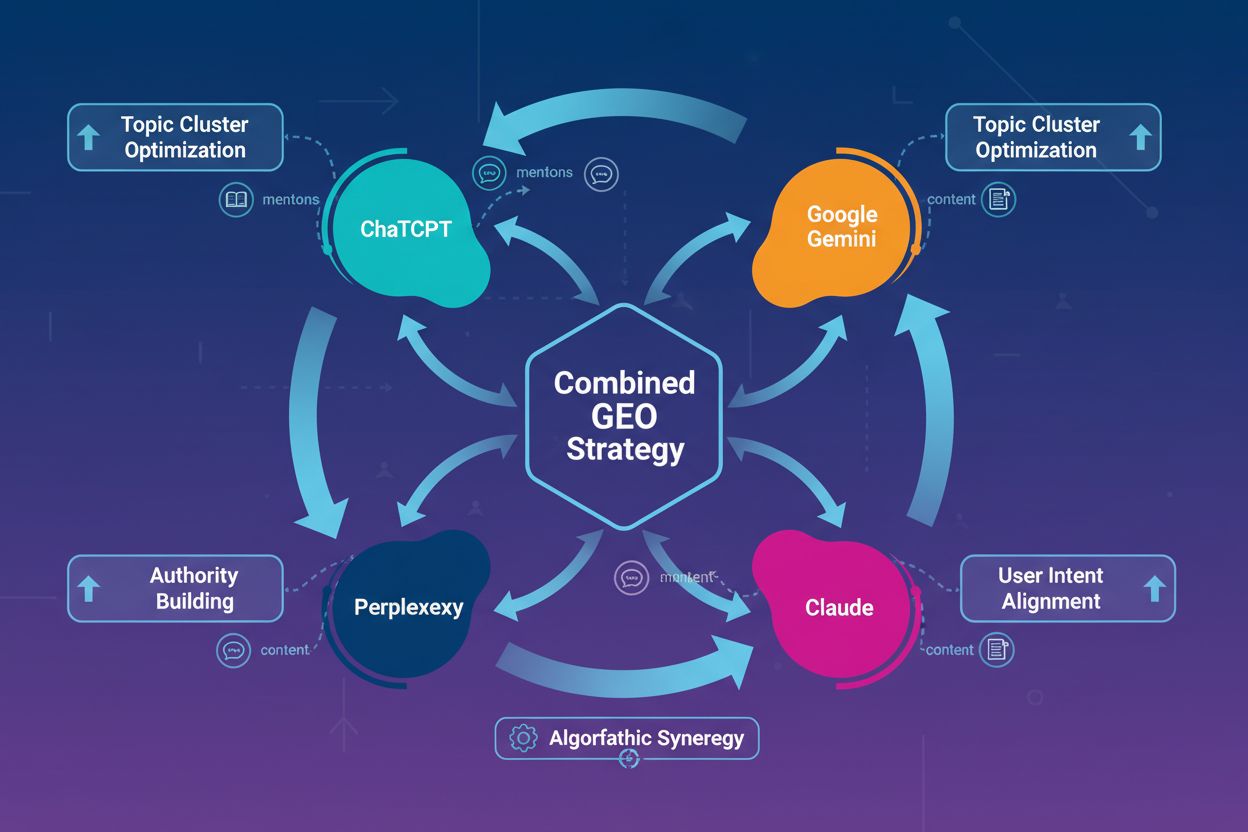
Combined GEO Approach: Stacking Strategies for Maximum Impact
Master combined GEO strategies by stacking multiple optimization methods. Learn how to optimize for multiple AI platforms simultaneously and maximize your visib...
13 min read

Discover how integrating PR, SEO, and GEO creates a unified visibility strategy that dominates traditional search, AI platforms, and earned media simultaneously.
The digital landscape is fragmenting across multiple search and discovery channels, making a unified approach essential for modern brands. PR, SEO, and GEO are no longer siloed disciplines—they’re converging into what we call the triple threat strategy, a comprehensive approach to visibility that addresses traditional search, AI-powered answers, and earned media simultaneously. As ChatGPT reaches 800 million weekly active users and AI systems become primary discovery channels, brands can no longer afford to optimize for Google alone. The convergence of these three disciplines creates a multiplier effect: strong PR generates the credibility signals that AI systems crave, SEO ensures discoverability across traditional search, and GEO (Geographic and Earned media Optimization) captures visibility in AI-generated answers. Understanding how these three pillars work together is the key to dominating visibility in 2024 and beyond.
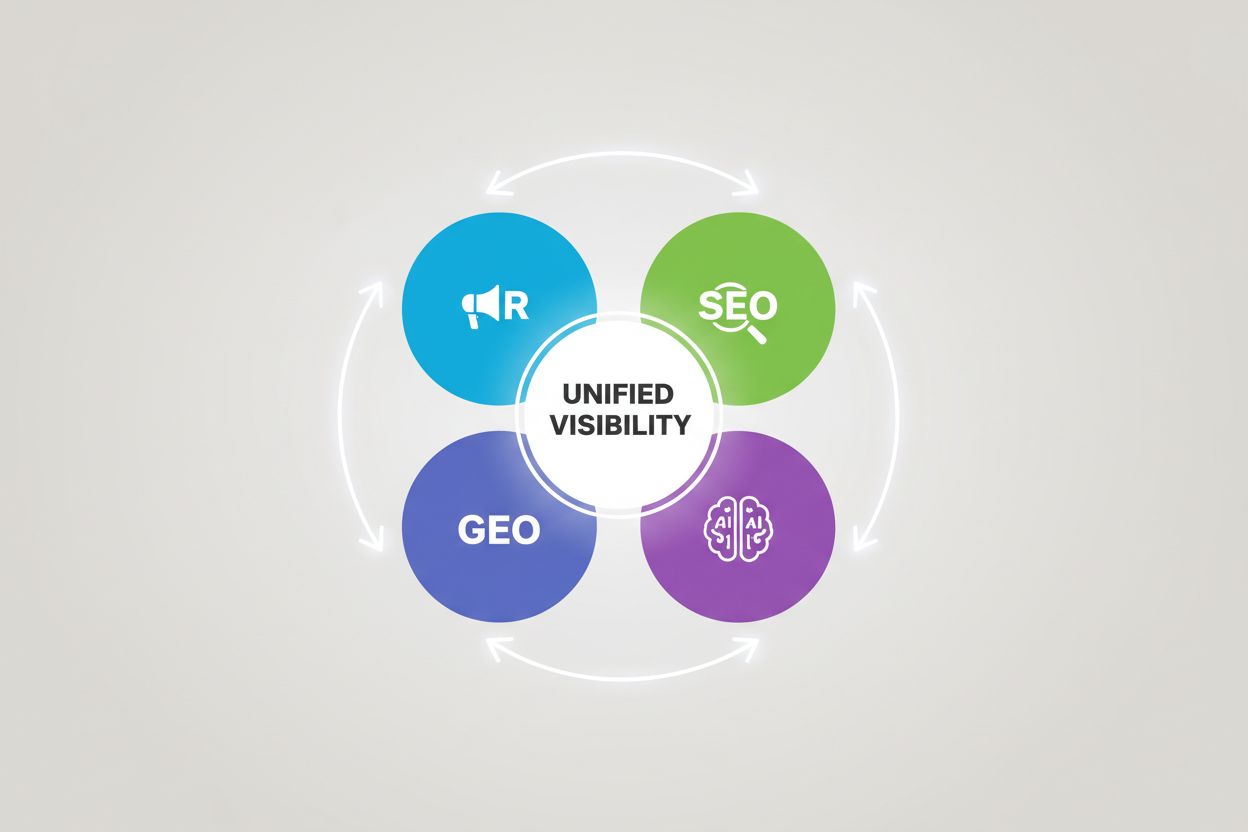
Each discipline brings distinct strengths to your visibility strategy, but their true power emerges when integrated into a cohesive system. Public Relations (PR) focuses on building brand credibility through earned media coverage, securing mentions in reputable publications that establish authority and trust. Search Engine Optimization (SEO) targets keyword visibility and organic search rankings by optimizing on-page content, technical infrastructure, and link profiles. Geographic and Earned media Optimization (GEO) represents the emerging frontier—optimizing your brand’s presence in AI-generated answers, ensuring your content is cited by AI systems, and leveraging geographic signals for localized visibility. Here’s how these disciplines complement each other:
| Aspect | PR | SEO | GEO |
|---|---|---|---|
| Focus | Earned media & credibility | Keyword rankings & organic traffic | AI citations & authority signals |
| Primary Goal | Build brand authority through coverage | Capture search intent traffic | Secure mentions in AI-generated answers |
| Key Tactics | Media outreach, thought leadership, press releases | Content optimization, technical SEO, link building | Citation monitoring, source credibility, AI-friendly content |
| Measurement | Media impressions, brand mentions, referral traffic | Rankings, organic traffic, click-through rates | AI citations, answer appearances, citation growth |
| AI Impact | Critical—AI prioritizes editorial sources | Important—AI considers topical authority | Essential—AI systems directly source from PR-secured coverage |
The synergy is undeniable: PR secures the high-authority backlinks that SEO values, SEO ensures your PR-worthy content ranks for discovery, and GEO ensures that both your PR coverage and optimized content get cited by AI systems. Brands that master all three channels create a self-reinforcing cycle of visibility and authority.
The rise of AI search has fundamentally altered how audiences discover information, and the statistics are staggering. ChatGPT alone boasts 800 million weekly active users, while other AI systems like Claude, Gemini, and Perplexity are rapidly gaining adoption. These AI systems don’t crawl the web like traditional search engines; instead, they synthesize information from their training data and real-time sources, then generate answers that cite specific sources. This means AI systems are inherently citation-driven—they need to attribute information to credible sources, creating a new form of visibility that traditional SEO metrics don’t capture. The implications are profound: a brand can rank #1 for a keyword on Google but receive zero citations in AI-generated answers if their content isn’t perceived as authoritative or editorial enough. This shift has created an entirely new optimization frontier where earned media credibility becomes as important as keyword rankings.
AI systems have fundamentally changed what signals matter for visibility, and earned media sits at the top of the hierarchy. Research shows that 90% of brand mentions in AI-generated answers come from editorial sources—meaning AI systems prioritize content that has been vetted, published, and cited by reputable media outlets. This is a seismic shift from traditional SEO, where keyword optimization and link quantity once dominated. AI systems are sophisticated enough to distinguish between self-published content and earned media coverage, automatically elevating sources that have been featured in recognized publications. Authority signals now matter more than ever: if your brand is mentioned in Forbes, TechCrunch, or industry-specific publications, AI systems recognize this as a credibility marker and are far more likely to cite you in their answers. This creates a powerful incentive structure where PR-generated coverage directly impacts your visibility in AI systems. The brands winning in this new landscape are those that understand that credibility is the new currency, and earned media is the primary way to establish it.
Integrating PR, SEO, and GEO into a unified visibility strategy requires deliberate coordination across teams and channels. Rather than operating in silos, your PR, SEO, and content teams need to work from a shared playbook that maximizes the impact of every piece of content and every media placement. Here are the essential steps to build your triple threat strategy:
Earned media is the connective tissue that strengthens both SEO and GEO simultaneously, creating a multiplier effect that amplifies your visibility across all channels. When a journalist features your brand in a reputable publication, you gain far more than a single mention—you gain a high-authority backlink that signals credibility to search engines, a citation source that AI systems recognize and prioritize, and social proof that influences how audiences perceive your brand. This is why PR and SEO are no longer separate disciplines: the backlinks generated through PR efforts directly improve your SEO performance, while the authority established through earned media makes your content more likely to be cited by AI systems. The most successful brands recognize that earned media is the foundation upon which both SEO and GEO success is built. Rather than trying to game algorithms through technical tricks or keyword stuffing, they focus on becoming genuinely newsworthy and citation-worthy, which naturally attracts both search engine visibility and AI citations. This shift represents a return to fundamentals: quality, credibility, and authority are the true drivers of visibility in the modern digital landscape.
Creating content that performs across traditional search, AI systems, and PR pitches requires a strategic approach that balances optimization with authenticity and newsworthiness. Your content needs to be keyword-optimized for traditional search engines, but it also needs to include the specific data points, expert insights, and clear attribution that AI systems look for when generating answers. Start by identifying topics where you have genuine expertise or unique data—these are the stories that journalists want to cover and that AI systems recognize as authoritative. Structure your content with clear headlines, subheadings, and data visualization that makes it easy for both AI systems and journalists to extract key information. Include specific statistics, research findings, or original insights that make your content citation-worthy; generic advice rarely gets picked up by either journalists or AI systems. When pitching to journalists, lead with the newsworthy angle and the unique value your content provides, not the SEO keywords you’re targeting. Finally, ensure that your content includes proper attribution and source citations, making it easy for AI systems to understand where information comes from and increasing the likelihood that they’ll cite your work when generating answers on related topics.
Measuring success across the triple threat strategy requires tracking metrics that span traditional SEO, PR impact, and AI visibility—a challenge that most brands struggle with because these channels have historically used different measurement frameworks. Organic traffic and keyword rankings remain important SEO metrics, while media impressions, brand mentions, and referral traffic measure PR success. But the emerging metric that ties everything together is AI citations—how often your brand and content appear in AI-generated answers across ChatGPT, Claude, Gemini, and other systems. This is where AmICited becomes essential: it’s the only platform purpose-built to monitor your brand’s citations across AI systems, tracking which of your content pieces are being cited, how often, and in what context. By monitoring AI citations alongside traditional SEO and PR metrics, you gain a complete picture of your visibility across all three channels. AmICited allows you to identify which PR placements are driving AI citations, which content pieces are most citation-worthy, and where gaps exist in your coverage. This data-driven approach transforms GEO from a theoretical concept into a measurable, optimizable channel with clear ROI.
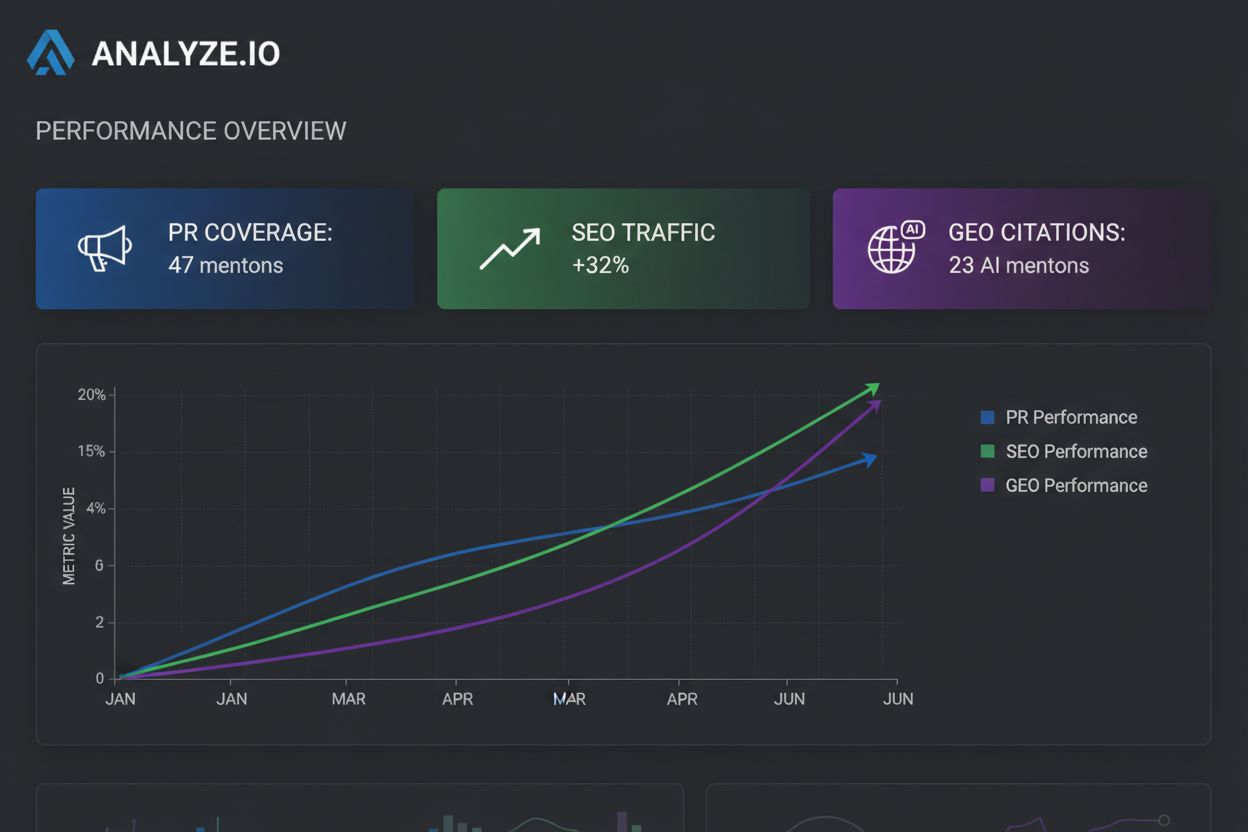
Several forward-thinking brands have already cracked the code on integrating PR, SEO, and GEO into a unified visibility strategy, demonstrating the power of the triple threat approach. A B2B SaaS company that coordinated its PR outreach with SEO content strategy saw a 340% increase in organic traffic within six months, not because they optimized more aggressively, but because their PR-secured backlinks from tier-1 publications dramatically improved their domain authority. A healthcare brand that began monitoring AI citations discovered that 60% of its AI mentions came from a single press release published in a major medical journal—insight that immediately shifted their content strategy toward more research-backed, publication-worthy pieces. A fintech startup that aligned its thought leadership program with SEO priorities found that articles published in reputable financial publications not only ranked for competitive keywords but were cited in AI-generated answers about their specific product category, creating a virtuous cycle where PR coverage drove both search visibility and AI citations. These examples share a common thread: success came from recognizing that PR, SEO, and GEO are not separate channels but interconnected systems where excellence in one channel amplifies results in the others. The brands that win in this new landscape are those that break down silos and build integrated teams that optimize for credibility, authority, and visibility across all three channels simultaneously.
While the triple threat strategy is powerful, many brands stumble in execution by making predictable mistakes that undermine their results. The most common pitfall is treating PR, SEO, and GEO as separate initiatives with different teams, budgets, and goals—this fragmentation means that PR placements don’t get optimized for SEO, SEO content doesn’t get pitched to journalists, and AI citations go unmeasured. Another critical mistake is prioritizing volume over quality, securing dozens of mentions in low-authority sources instead of focusing on fewer placements in tier-1 publications that AI systems actually recognize and cite. Brands also often fail to optimize their content for AI discoverability, writing press releases and thought leadership pieces in ways that are journalist-friendly but not AI-friendly, missing the opportunity to be cited by AI systems. The solution is straightforward: establish a unified visibility strategy with shared KPIs across PR, SEO, and GEO teams, prioritize quality and credibility over volume, and invest in tools like AmICited that provide visibility into AI citations. Finally, recognize that this is not a one-time optimization but an ongoing process—the AI landscape is evolving rapidly, and brands that continuously monitor their AI citations, adjust their content strategy based on what’s working, and maintain alignment across teams will maintain their competitive advantage in the race for visibility.
SEO (Search Engine Optimization) focuses on optimizing your website to rank in traditional search engines like Google, primarily through keyword optimization and link building. GEO (Generative Engine Optimization) targets AI-powered systems like ChatGPT and Perplexity, optimizing your content to be cited in AI-generated answers. While SEO drives traffic to your website, GEO ensures your brand appears in AI conversations without requiring a click-through.
PR generates high-authority backlinks from reputable publications, which are one of the strongest ranking signals for search engines. When journalists feature your brand in established media outlets, those links signal credibility and authority to Google and other search engines, directly improving your domain authority and search rankings. This is why PR and SEO have become inseparable disciplines.
AI systems like ChatGPT prioritize earned media because it represents third-party validation and credibility. Research shows that 90% of brand mentions in AI-generated answers come from editorial sources. AI systems recognize that content published by reputable journalists and media outlets has been vetted for accuracy, making it more trustworthy than self-published content.
Results vary depending on your starting point and industry competitiveness. SEO improvements typically take 3-6 months to become visible, while PR placements can drive immediate traffic and citations. GEO results may appear within weeks if your content is cited by AI systems, but building consistent AI visibility usually takes 2-3 months of coordinated effort across all three channels.
Track organic traffic and keyword rankings for SEO, media impressions and brand mentions for PR, and AI citations for GEO. Use tools like Google Analytics for SEO, media monitoring platforms for PR, and AmICited for AI citations. The key is measuring how each channel contributes to your overall visibility and business goals, not just vanity metrics.
Absolutely. Small businesses can start by focusing on one channel at a time, then integrate them as resources allow. Begin with SEO to establish a content foundation, add PR through targeted media outreach to key industry publications, and monitor AI citations to understand your GEO performance. Many small businesses find that coordinating these efforts actually reduces overall marketing costs while improving results.
AmICited monitors your brand's citations across AI platforms like ChatGPT, Perplexity, Claude, and Google AI Overviews. It tracks which of your content pieces and PR placements are being cited by AI systems, how often, and in what context. This data helps you understand which PR efforts drive AI visibility and which content is most citation-worthy, enabling data-driven optimization of your GEO strategy.
Brands that integrate PR, SEO, and GEO see compounding returns because each channel amplifies the others. PR-secured backlinks improve SEO rankings, strong SEO ensures content is discoverable for AI systems, and AI citations increase brand authority. While exact ROI varies by industry, brands typically see 2-3x better results from integrated strategies compared to siloed approaches, with improved lead quality and conversion rates.
Track how your brand is cited across ChatGPT, Perplexity, Google AI Overviews, and other AI platforms. Measure the impact of your PR, SEO, and GEO efforts with AmICited.
Master combined GEO strategies by stacking multiple optimization methods. Learn how to optimize for multiple AI platforms simultaneously and maximize your visib...

Learn how to effectively balance SEO and GEO efforts to maximize visibility in both traditional search results and AI-generated answers. Discover unified strate...
Discover why Generative Engine Optimization (GEO) is essential for businesses in 2025. Learn how AI-powered search is reshaping brand visibility, consumer behav...