
Agentic Commerce
Learn how agentic commerce uses AI agents to autonomously complete purchases. Explore how intelligent systems are revolutionizing e-commerce and consumer shoppi...
10 min read
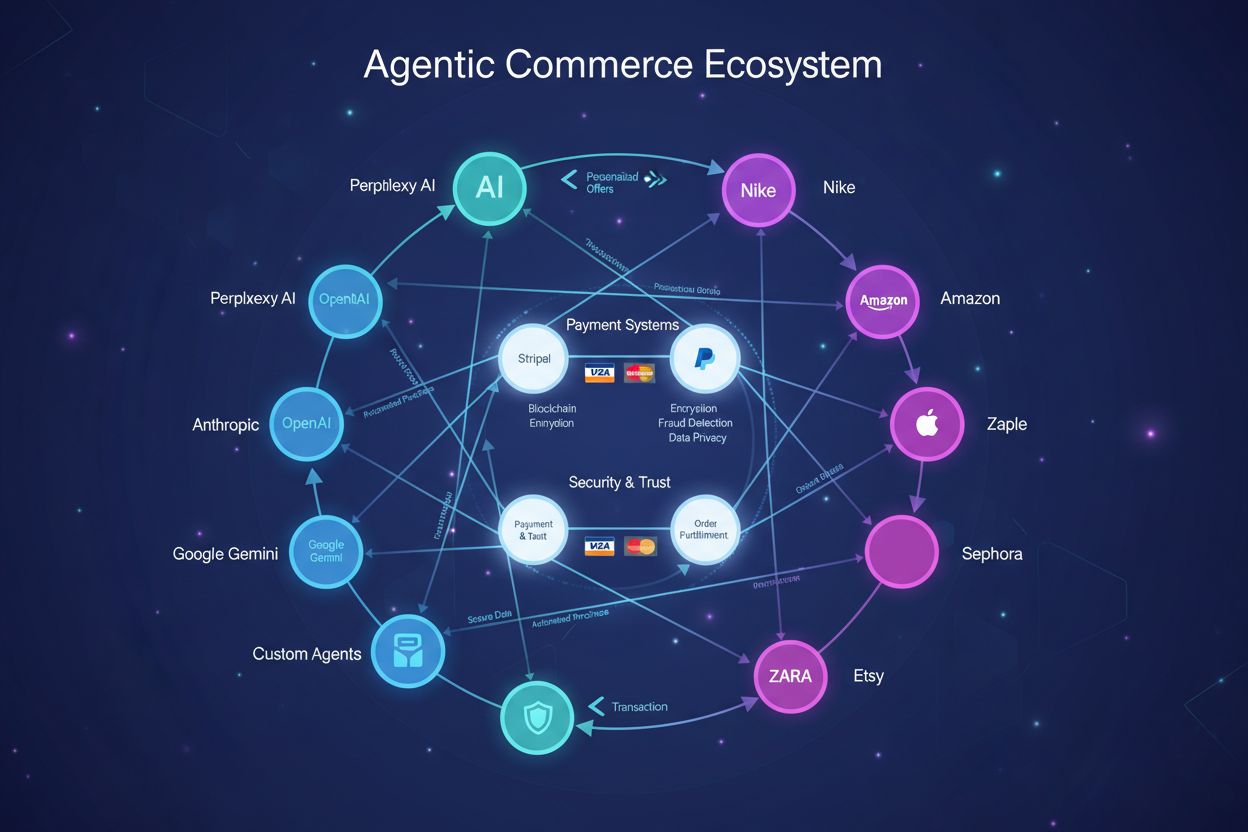
Learn how to prepare your brand for agentic commerce. Discover essential steps to make your systems AI agent-ready and stay competitive in the evolving e-commerce landscape.
Agentic commerce represents a fundamental shift in how consumers discover, evaluate, and purchase products online. Rather than customers manually browsing websites and clicking through checkout flows, AI agents autonomously handle the entire transaction on behalf of the user—from product research and comparison to payment and delivery coordination. Real-world examples like Perplexity Buy with Pro and OpenAI Operator demonstrate this emerging capability, where agents can navigate e-commerce platforms, understand product specifications, and complete purchases based on natural language requests. This shift transforms commerce from a human-driven, interface-dependent process into an API-driven, agent-native ecosystem where machines communicate directly with merchant systems.

The transition to agentic commerce will reshape customer acquisition, conversion, and lifetime value metrics across industries. Traditional e-commerce relies on human-driven discovery through search engines, social media, and direct browsing—a process that’s time-consuming and prone to abandonment. Agentic commerce, by contrast, enables instant product discovery, comparison, and purchase completion without human friction, potentially increasing conversion rates while reducing customer acquisition costs. Early adopters will capture significant market share as agents become the primary commerce interface, while brands that fail to adapt risk becoming invisible to AI-driven purchasing decisions.
| Aspect | Traditional Commerce | Agentic Commerce |
|---|---|---|
| Discovery | Human search, browsing, social | AI agent research and comparison |
| Decision-Making | Manual evaluation, reviews | Agent analysis of specs, price, availability |
| Checkout | Multi-step UI navigation | Automated API-driven transaction |
| Speed | Minutes to hours | Seconds |
| Friction Points | Cart abandonment, payment issues | Eliminated through automation |
| Data Requirements | Basic product info | Structured, machine-readable catalogs |
| Customer Touchpoint | Website/app interface | Natural language request |
For AI agents to effectively evaluate and purchase your products, your catalog must be machine-readable and semantically rich—far beyond traditional product feeds. Agents need access to standardized, structured data that enables them to understand product attributes, make comparisons, and verify availability in real-time. This requires moving beyond basic SKU and price information to include comprehensive product intelligence that machines can parse, interpret, and act upon.
Agents require the following critical data elements to function effectively:
Implementing these standards requires investment in your product information management (PIM) systems and data governance practices. Brands that establish comprehensive, accurate, machine-readable catalogs will become the preferred vendors for agent-driven purchases, while those with incomplete or outdated data will be systematically deprioritized by AI decision-making algorithms.
Agent-initiated payments represent a critical capability that fundamentally differs from traditional e-commerce transactions. Rather than a customer entering payment information through a web form, agents must be able to initiate and complete payments programmatically through secure APIs, with proper authorization and fraud prevention mechanisms in place. This requires implementing tokenized payment systems where agents can securely transmit payment instructions without handling raw card data, ensuring compliance with PCI-DSS standards while enabling frictionless transactions.
Security becomes paramount in this model, as agents will be making purchasing decisions and payments on behalf of customers without real-time human oversight. Brands must implement multi-layered authentication including agent identity verification, transaction amount thresholds, and anomaly detection to prevent fraudulent agent-initiated purchases. Payment processors like Stripe have developed agentic commerce-specific payment flows that enable merchants to accept agent transactions while maintaining the same security standards as traditional customer payments. The key is establishing trust between your payment infrastructure and authorized AI agents through cryptographic verification and transparent transaction logging.
Agentic commerce operates at machine speed, meaning your inventory and pricing systems must be capable of real-time updates and queries. When an agent is evaluating your product against competitors, it needs instantaneous visibility into current stock levels, pricing, and availability—not batch-updated information from hours or days prior. This requires moving beyond traditional inventory management systems to implement API-first inventory infrastructure that provides sub-second response times and accurate stock counts across all sales channels.
Dynamic pricing becomes both an opportunity and a necessity in agentic commerce. Agents will automatically select products based on price-to-value ratios, meaning brands that can adjust pricing in real-time based on demand, competition, and inventory levels will capture more agent-driven sales. However, this also requires sophisticated pricing engines that can maintain profitability while remaining competitive in agent-driven comparisons. Your operational infrastructure must support these capabilities without manual intervention, as agents operate 24/7 and won’t wait for business hours to complete transactions.
Trust is the currency of agentic commerce, and security breaches or fraudulent transactions will rapidly damage your brand’s reputation in the agent ecosystem. Agents will be programmed to avoid merchants with poor security records, payment failures, or inconsistent product quality, creating a competitive advantage for brands that demonstrate reliable, secure operations. Implementing comprehensive fraud prevention systems that can detect and prevent agent-based fraud attempts—such as bulk purchases, unusual patterns, or suspicious account behavior—is essential to maintaining agent trust.
Customer trust must also be preserved, as agents will be making purchasing decisions on behalf of users. Brands must ensure that agent transactions are transparent, that customers can easily review and dispute agent-initiated purchases, and that return and refund processes work seamlessly for agent-purchased items. This requires implementing clear transaction logging that shows customers exactly what agents purchased on their behalf, why those decisions were made, and how to reverse them if needed. Additionally, brands should implement verification mechanisms that allow customers to set spending limits, product category restrictions, or approval requirements for agent purchases above certain thresholds, giving users control over autonomous purchasing behavior.
Traditional checkout optimization focused on reducing friction in the user interface—simplifying forms, minimizing steps, and improving mobile responsiveness. Agentic commerce checkout requires a fundamentally different approach: API-first design where the entire checkout process is accessible through structured APIs rather than web interfaces. This means your checkout system must support programmatic product selection, address validation, shipping method selection, and payment processing without requiring any human interaction with your website or app.
Brands should audit their current checkout infrastructure to identify API gaps and modernize systems that rely on web scraping or UI automation. The most agent-friendly merchants will expose their entire checkout flow through well-documented, RESTful APIs that agents can integrate with directly. This includes real-time shipping rate calculation, tax computation, inventory reservation, and payment processing—all accessible through machine-readable endpoints. Checkout optimization in the agentic era means ensuring your APIs are fast, reliable, and capable of handling the high transaction volumes that agent-driven commerce will generate.
As AI agents become a significant portion of your traffic and revenue, visibility into agent behavior becomes critical for business intelligence and fraud prevention. Unlike human customers, agents operate with perfect consistency, making thousands of identical decisions per second, which can either indicate healthy automation or signal fraudulent activity. Brands need sophisticated analytics platforms that can distinguish between legitimate agent traffic and malicious bot activity, track agent-driven conversion rates separately from human conversions, and identify which agents are driving the most valuable transactions.
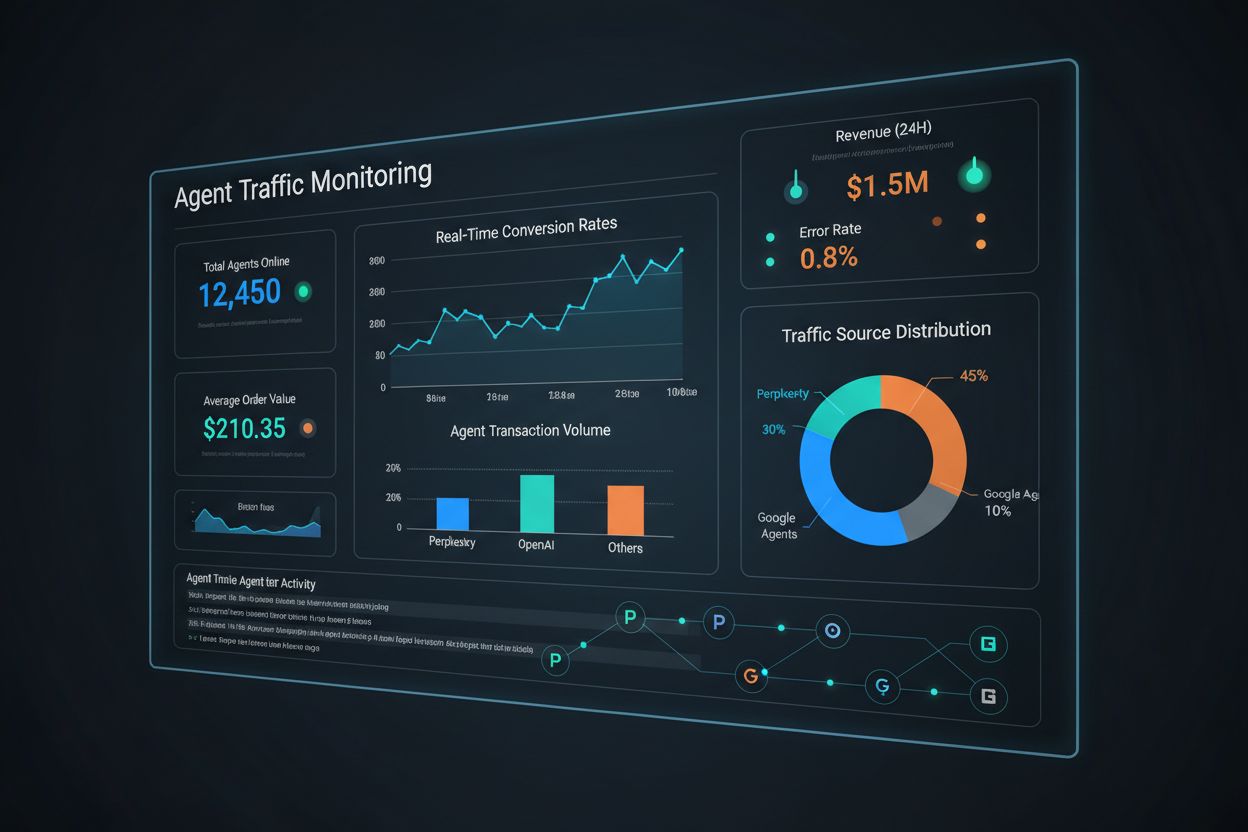
AmICited.com provides essential monitoring capabilities for brands navigating the agentic commerce landscape. By tracking AI agent references and traffic patterns across your digital properties, AmICited enables you to understand which agents are discovering your products, how they’re evaluating your offerings compared to competitors, and what factors influence their purchasing decisions. This intelligence is invaluable for optimizing your product information, pricing strategy, and competitive positioning in the agent-driven marketplace. Additionally, AmICited’s monitoring helps identify unauthorized agent access, suspicious purchasing patterns, and potential fraud attempts, providing the visibility necessary to maintain security and profitability in agentic commerce.
Successfully transitioning to agentic commerce requires cross-functional organizational alignment that extends far beyond your e-commerce team. Your product, engineering, operations, finance, and customer service teams must all understand how agentic commerce will impact their functions and be prepared to adapt their processes accordingly. Product teams need to focus on creating machine-readable, comprehensive product information; engineering teams must build and maintain robust APIs; operations teams must ensure real-time inventory accuracy; and customer service teams must be equipped to handle agent-related inquiries and disputes.
Leadership should establish an agentic commerce task force that brings together stakeholders from across the organization to develop a readiness plan, identify technology gaps, and prioritize investments. This team should conduct regular audits of your current systems against agentic commerce requirements, establish metrics for tracking agent-driven revenue and conversion rates, and develop contingency plans for managing high volumes of agent traffic. Training programs should be implemented to ensure all relevant teams understand the implications of agentic commerce and their role in preparing the organization for this transition.
The following checklist provides a structured approach to preparing your brand for agentic commerce. Work through each item systematically, assigning ownership and establishing timelines for completion. This checklist should be reviewed quarterly as the agentic commerce landscape evolves and new capabilities emerge.
Agentic commerce is a form of online shopping where AI agents autonomously discover, compare, and purchase products on behalf of users. Instead of customers manually browsing websites, agents handle the entire transaction from research to payment based on natural language requests. Examples include Perplexity Buy with Pro and OpenAI Operator.
Agentic commerce is already here with major platforms like Perplexity and OpenAI launching shopping agents. Brands that don't prepare risk becoming invisible to AI-driven purchasing decisions. Early adopters will capture significant market share and competitive advantage as agents become the primary commerce interface.
A machine-readable catalog is structured product data (JSON, XML, APIs) that AI agents can parse and understand directly, rather than scraping websites. Agents need comprehensive data including specifications, pricing, inventory, policies, and fulfillment options to evaluate and purchase your products effectively.
Agent-initiated payments are transactions made programmatically by AI agents through secure APIs, rather than customers entering payment information through web forms. They require tokenized payment systems, multi-layered authentication, and fraud detection specifically designed for agent behavior patterns.
Key security concerns include agent identity verification, fraud prevention for automated transactions, protecting customer data from unauthorized agent access, and maintaining transaction transparency. Brands must implement multi-layered authentication, anomaly detection, and clear transaction logging to maintain trust.
Platforms like AmICited provide visibility into agent traffic patterns, conversion rates, and behavior. You can track which agents are discovering your products, how they evaluate your offerings compared to competitors, and identify suspicious patterns or unauthorized access attempts.
Implementation timelines vary based on your current infrastructure, but most brands should prioritize catalog optimization and API development within the next 6-12 months. Start with auditing your current systems, then systematically address gaps in machine-readable data, payment infrastructure, and monitoring capabilities.
Agentic commerce changes how brands interact with customers, but doesn't eliminate the need for loyalty. Brands that provide superior product information, reliable fulfillment, transparent policies, and excellent customer service will build trust with both agents and the customers they represent.
Gain visibility into how AI agents discover and interact with your brand. Track agent-driven conversions and optimize your agentic commerce strategy with AmICited.
Learn how agentic commerce uses AI agents to autonomously complete purchases. Explore how intelligent systems are revolutionizing e-commerce and consumer shoppi...

Discover how agentic AI is transforming shopping and what it means for brand visibility. Learn how AI agents make autonomous purchases and how to prepare your b...

Discover agentic commerce: how autonomous AI agents are revolutionizing online shopping with 30% higher conversion rates, personalized experiences, and seamless...