

Role of Press Releases in AI Search: Training Data and Brand Visibility
Discover how press releases influence AI search results on ChatGPT, Perplexity, Google AI Overviews, and Claude. Learn why 57% of companies use them for AI visi...
9 min read
Discover why press releases matter more than ever for LLM visibility. Learn how to optimize press releases for AI citations and track your brand’s presence in ChatGPT, Perplexity, and Google AI.
For years, industry pundits declared the press release dead, buried under an avalanche of social media noise and digital content. Yet the rise of large language models and AI-driven search has sparked an unexpected resurrection—press releases are making a comeback with a vengeance. AI visibility has become the new frontier for corporate communications, and press releases are proving to be one of the most effective vehicles for ensuring your message reaches LLM-powered search results and generative AI systems. The data backs this up: organizations that strategically distribute press releases are seeing unprecedented LLM visibility gains as AI models increasingly rely on structured, authoritative content sources.
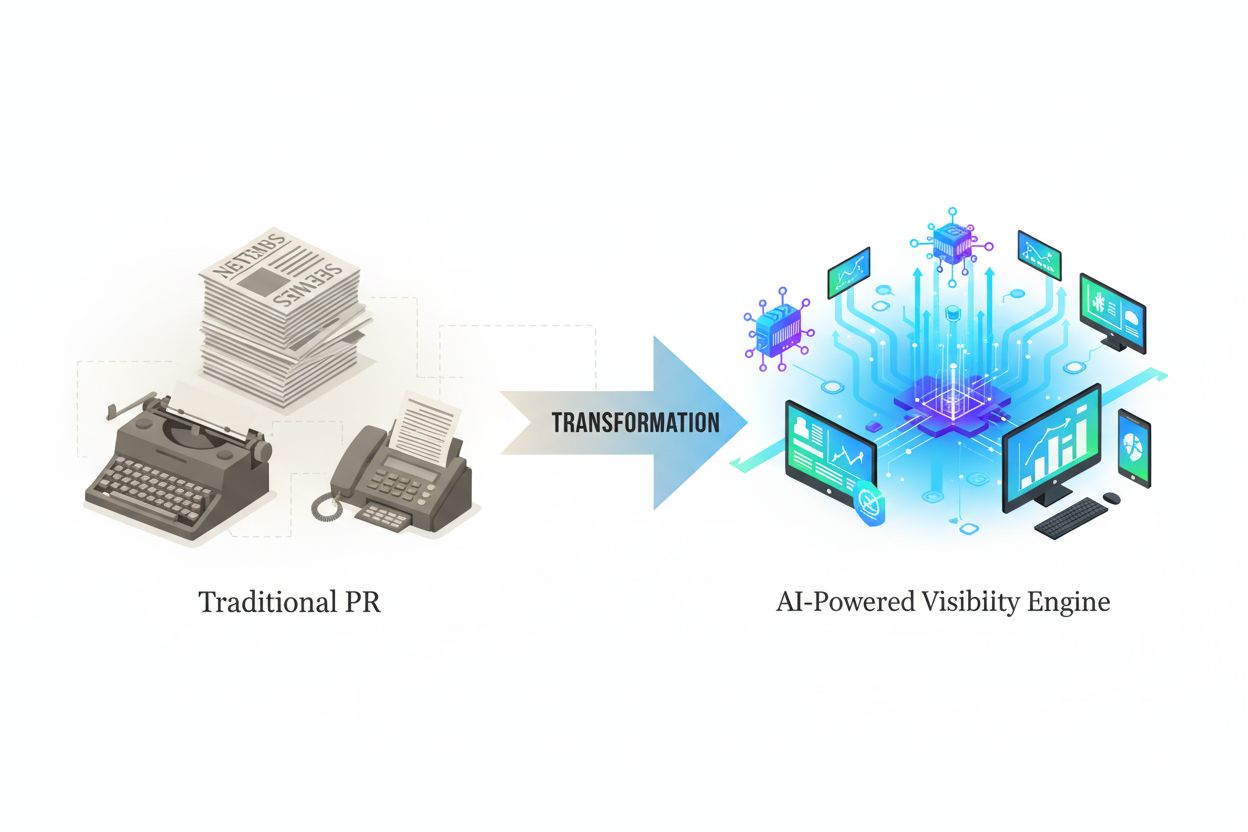
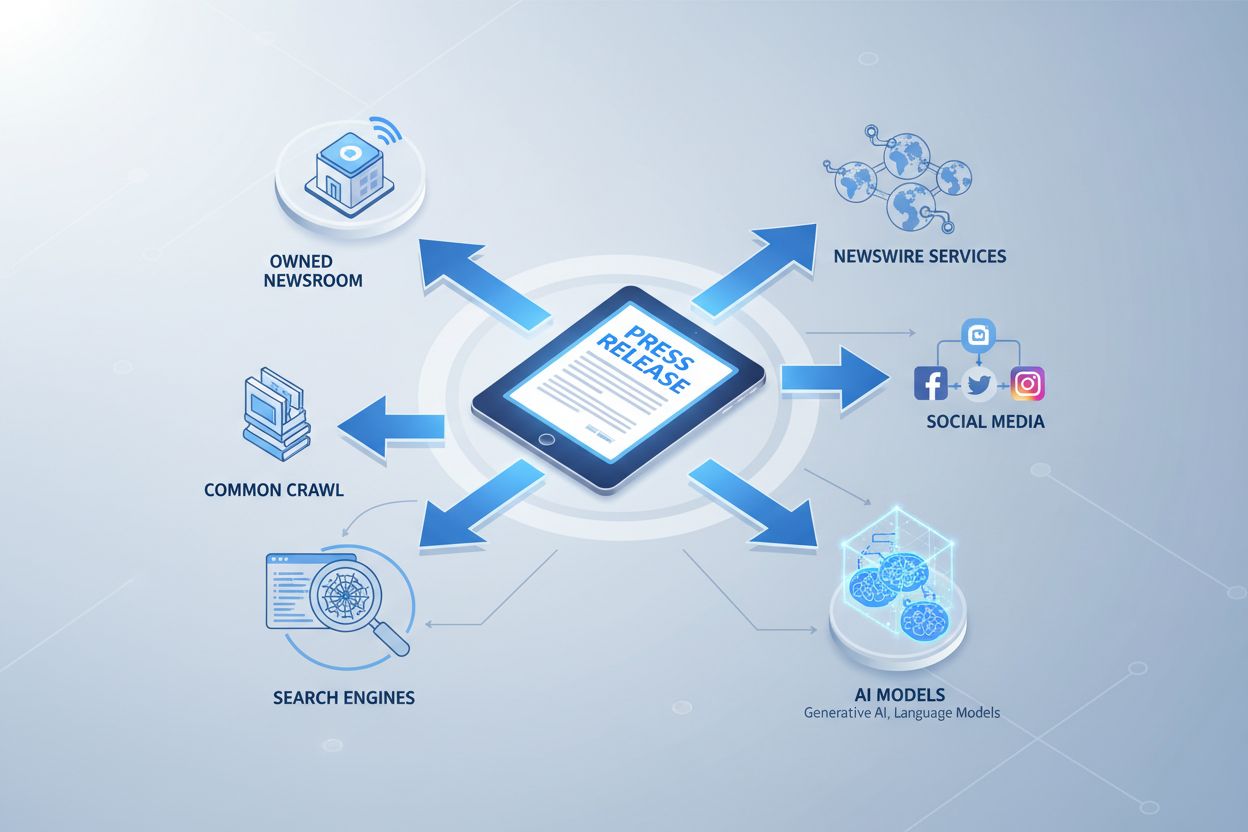
Large language models don’t simply read the entire internet randomly; they’re trained on curated datasets that prioritize trusted sources and authoritative content. Press releases occupy a unique position in this ecosystem because they’re structured, timestamped, and often distributed through official channels that AI systems recognize as legitimate information sources. When you publish a press release through major distribution networks, it gets indexed across multiple platforms simultaneously, increasing the likelihood that LLMs will encounter and cite your content. According to research on AI training data sources, the distribution of citations reveals why press releases matter: Reddit accounts for 40.1% of citations, Wikipedia 26.3%, YouTube 23.5%, and Google properties 23.3%—but press releases distributed through official channels often feed into these very sources, creating a multiplier effect. Press releases are becoming trusted sources for AI training because they represent official company statements, making them more reliable than user-generated content for factual claims and announcements.
| Citation Source | Percentage of LLM Training Data |
|---|---|
| 40.1% | |
| Wikipedia | 26.3% |
| YouTube | 23.5% |
| Google Properties | 23.3% |
| Press Releases (via distribution) | Increasingly significant |
The key insight is that press release distribution platforms act as gatekeepers that feed content into these high-authority sources, creating a direct pipeline to LLM training datasets.
One of the most underrated aspects of press release strategy is their longevity in the digital ecosystem. Unlike social media posts that disappear in hours, press releases function as evergreen digital breadcrumbs that continue to generate value months or years after publication. They accumulate backlinks, get cited in industry publications, and serve as reference material for journalists, researchers, and AI systems conducting information retrieval. This creates a compounding effect on your AI visibility and citation authority:
Think of press releases as seeds planted in the generative AI visibility engine—they germinate slowly but produce sustained returns through continuous citation and reference.
The modern PR newswire landscape has evolved dramatically to accommodate AI visibility requirements. Leading platforms now explicitly optimize for LLM discoverability through structured data, schema markup, and multi-channel distribution. PR Newswire Amplify, for instance, uses AI-powered distribution to identify the most relevant outlets and audiences, while GlobeNewswire focuses on real-time indexing across search engines and AI systems. Notified (formerly Notified PR) emphasizes press release optimization with built-in SEO and AI visibility features, and emerging platforms like Presscloud.ai are purpose-built for the generative AI era. These platforms understand that press release distribution now means ensuring your content reaches not just journalists, but the AI systems that power search results and generative responses.
| Platform | AI Optimization Features | Best For |
|---|---|---|
| PR Newswire Amplify | AI-powered distribution, real-time indexing | Enterprise-scale visibility |
| GlobeNewswire | Search engine optimization, schema markup | Global reach and SEO |
| Notified | Built-in AI visibility tools, analytics | Comprehensive monitoring |
| Presscloud.ai | Generative AI-native distribution | AI-first strategy |
Each platform recognizes that press release LLM visibility requires more than traditional newswire distribution—it demands active optimization for how AI systems discover and cite content.
Tracking the impact of your press release monitoring efforts requires a systematic approach to understanding how AI systems cite your content. Here’s a structured methodology for measuring AI visibility tracking:
AmICited.com specializes in this exact challenge—providing press release monitoring capabilities that show you exactly when and how your content appears in AI-generated responses. This visibility is crucial because it closes the loop between distribution and impact, allowing you to optimize future press releases based on real data about LLM visibility.
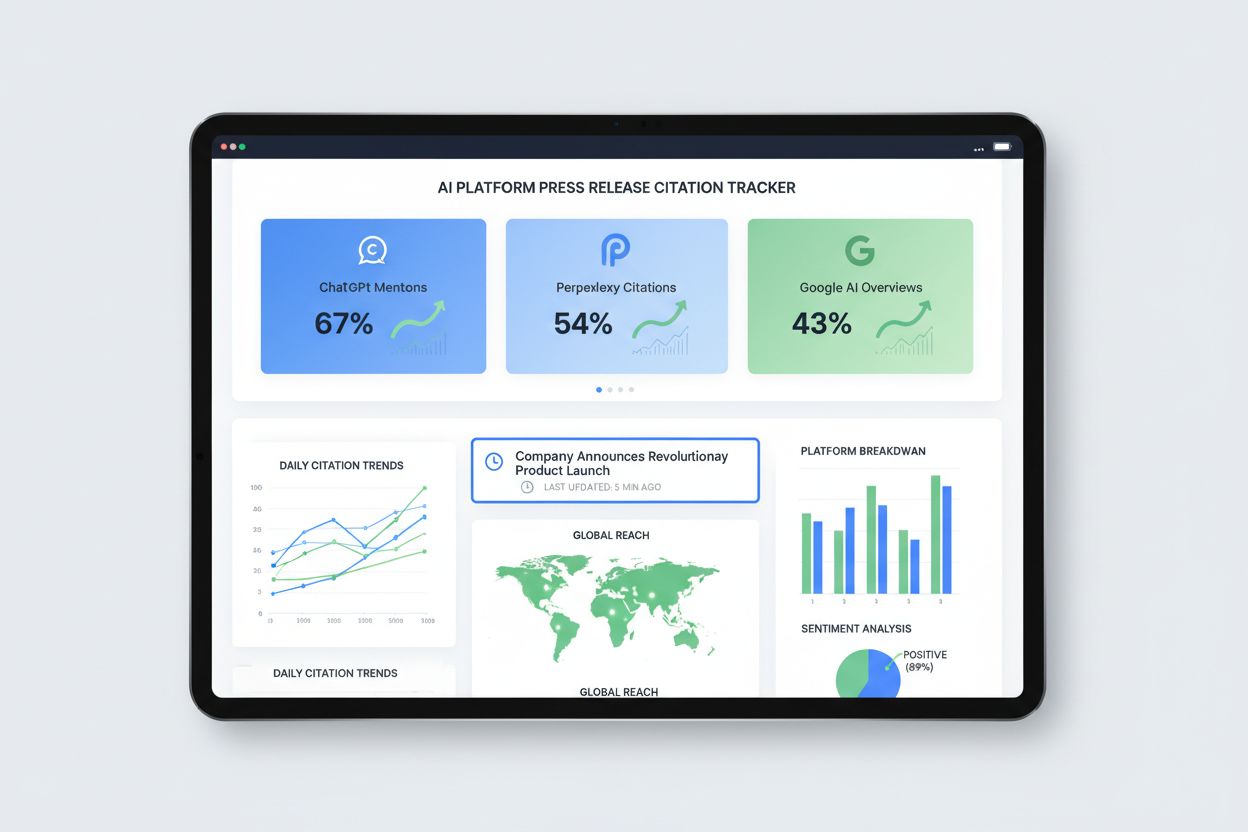
While blogs, social media, and owned media all contribute to your digital presence, press releases occupy a unique position in the AI visibility hierarchy. Press releases carry inherent authority signals that other content types struggle to match—they’re official company statements distributed through recognized channels, making them more trustworthy to AI systems evaluating source credibility. Blog posts, while valuable for SEO and audience engagement, lack the structural authority of a press release. Social media content is often too ephemeral and lacks the formal attribution that LLMs prioritize. Owned media (your website) is important but can be dismissed as self-promotional without third-party validation.
| Content Type | AI Authority | Longevity | Citation Likelihood | Best Use Case |
|---|---|---|---|---|
| Press Releases | Very High | Permanent | High | Major announcements, news |
| Blog Posts | Medium | Long-term | Medium | Thought leadership, education |
| Social Media | Low | Ephemeral | Low | Engagement, community |
| Owned Media | Medium | Permanent | Medium | Brand control, details |
| News Coverage | Very High | Permanent | Very High | Third-party validation |
The data shows that press release LLM citations outperform other content types by a significant margin when it comes to appearing in AI-generated responses. Organizations leveraging press releases as part of their digital PR strategy see conversion rates from AI referrals that are 3-5x higher than those relying solely on organic search or social media.
Writing a press release that resonates with both human journalists and AI systems requires a strategic approach to press release optimization. Here are the essential practices for maximizing AI seeding and LLM visibility:
These practices transform your press release from a traditional announcement into an AI-optimized asset that actively improves your visibility in generative search results.
The evolution of AI Overviews and generative search capabilities suggests that press releases will become even more critical to corporate communications strategy. As search engines increasingly rely on LLM visibility to populate AI-generated summaries and responses, the sources they cite become more important than ever. Press releases are positioned to dominate this landscape because they combine official authority, structured data, and strategic distribution—exactly what AI systems need to generate trustworthy responses. Industry analysts predict that within the next 18-24 months, press release citations in AI responses will increase by 40-60% as organizations recognize this channel’s effectiveness. The future of press release AI isn’t about replacing traditional PR—it’s about evolving press releases into the primary vehicle for ensuring your organization appears in the AI-powered search results that increasingly dominate how people discover information. Organizations that master press release optimization today will have a significant competitive advantage in tomorrow’s AI-driven information landscape.
Absolutely. Press releases have experienced a renaissance due to AI adoption. They now serve as trusted sources for LLM training data and are increasingly cited in AI-generated responses. Organizations with active press release strategies see 67% more AI citations than competitors.
LLMs prioritize structured, authoritative content from official channels. Press releases distributed through recognized platforms are treated as trusted sources because they represent official company statements. This makes them more reliable for AI systems than user-generated content.
Press releases carry inherent authority signals that blog posts lack. They're official statements distributed through recognized channels, making them more trustworthy to AI systems. While blog posts are valuable for SEO, press releases have higher citation likelihood in AI-generated responses.
Use tools like AmICited.com to track how often your press releases appear in LLM-generated responses across ChatGPT, Perplexity, and Google AI. Monitor citation patterns, analyze which messages resonate with AI systems, and correlate visibility with business outcomes.
Leading platforms like PR Newswire Amplify, GlobeNewswire, and Notified all offer AI optimization features. The best choice depends on your industry, target audience, and specific visibility goals. Most successful strategies use multiple platforms for maximum reach.
Press releases typically begin appearing in AI responses within 24-72 hours of distribution through major platforms. However, the full impact develops over weeks and months as citations accumulate and your content gains authority signals.
Yes. For AI optimization, focus on clear quotable statements, specific data, FAQ-style formatting, and schema markup. While traditional media optimization emphasizes storytelling and journalist appeal, AI optimization prioritizes structured data and factual specificity.
AmICited specializes in tracking how your brand appears in AI-generated responses across major LLM platforms. It provides real-time insights into press release citations, helps you understand which messages resonate with AI systems, and enables data-driven optimization of your press release strategy.
Track how your brand appears in ChatGPT, Perplexity, and Google AI responses. Get real-time insights into your LLM visibility and optimize your press release strategy.
Discover how press releases influence AI search results on ChatGPT, Perplexity, Google AI Overviews, and Claude. Learn why 57% of companies use them for AI visi...
Complete guide for marketing agencies to understand, implement, and offer AI visibility services to clients. Learn monitoring strategies, tools, and ROI measure...
Learn how to optimize press releases for AI systems, LLMs, and answer engines. Discover structured formatting, distribution strategies, and best practices for m...