
Detecting AI Visibility Crises: Early Warning Signs
Learn to detect AI visibility crises early with real-time monitoring, sentiment analysis, and anomaly detection. Discover warning signs and best practices for p...
9 min read
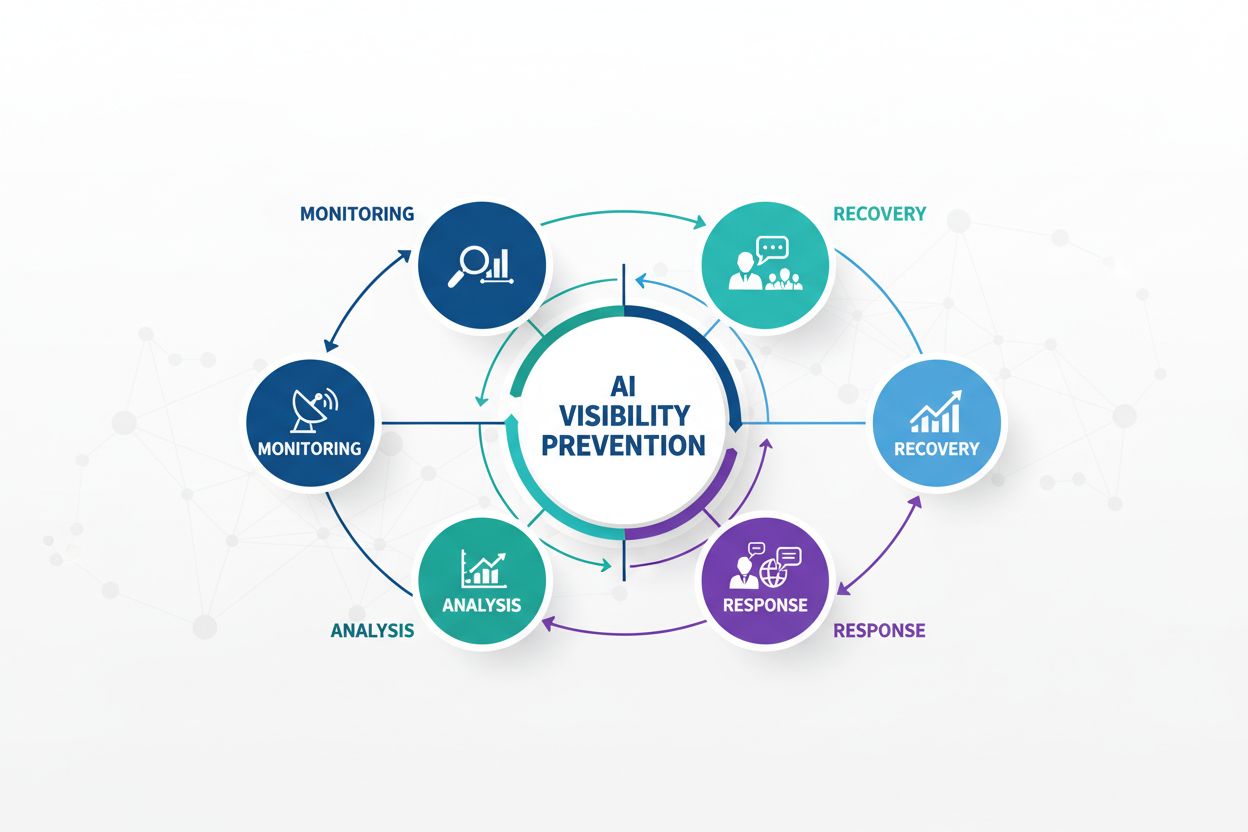
Learn how to prevent AI visibility crises with proactive monitoring, early warning systems, and strategic response protocols. Protect your brand in the AI era.
An AI visibility crisis occurs when your brand is either invisible, misrepresented, or negatively positioned in AI-generated responses from platforms like ChatGPT, Perplexity, and Google AI Overviews. Unlike traditional PR crises that spread through news outlets and social media, these crises affect how artificial intelligence presents your brand to millions of users daily. The stakes are particularly high because over 70% of Gen Z users now ask AI assistants instead of using traditional search engines, making your presence in AI responses critical to brand survival. When an AI model fails to mention your brand in relevant queries or presents outdated information about your company, you’re losing visibility to competitors who may be better positioned. The challenge is that you have no direct control over AI outputs, making prevention and early detection exponentially more important than crisis response.
The AI visibility landscape differs fundamentally from traditional search engine optimization because AI models operate as black boxes—you cannot see exactly how they reference your brand or why certain content gets cited. ChatGPT, Perplexity, and Google AI Overviews all use different training data, retrieval mechanisms, and citation preferences, meaning your visibility varies significantly across platforms. Traditional SEO focuses on ranking for specific keywords, but AI visibility depends on whether your content is authoritative, recent, and directly answers user questions in a way the AI model finds valuable. The tracking challenge is substantial: while you can see search rankings in Google Search Console, AI platforms provide no equivalent transparency about mentions or citations.
| Aspect | Traditional SEO | AI Visibility |
|---|---|---|
| Measurement | Keyword rankings, click-through rates | Brand mentions, citation frequency, sentiment |
| Control | Direct (meta tags, content optimization) | Indirect (content quality, authority) |
| Visibility | Transparent (search console data) | Opaque (no direct platform access) |
| Timeline | Weeks to months for changes | Days to weeks for model updates |
| Competition | Keyword-based ranking | Authority and relevance-based citation |
| User Intent | Search query matching | Conversational context understanding |
Understanding these differences is essential because strategies that work for traditional SEO may not improve your AI visibility, and vice versa.
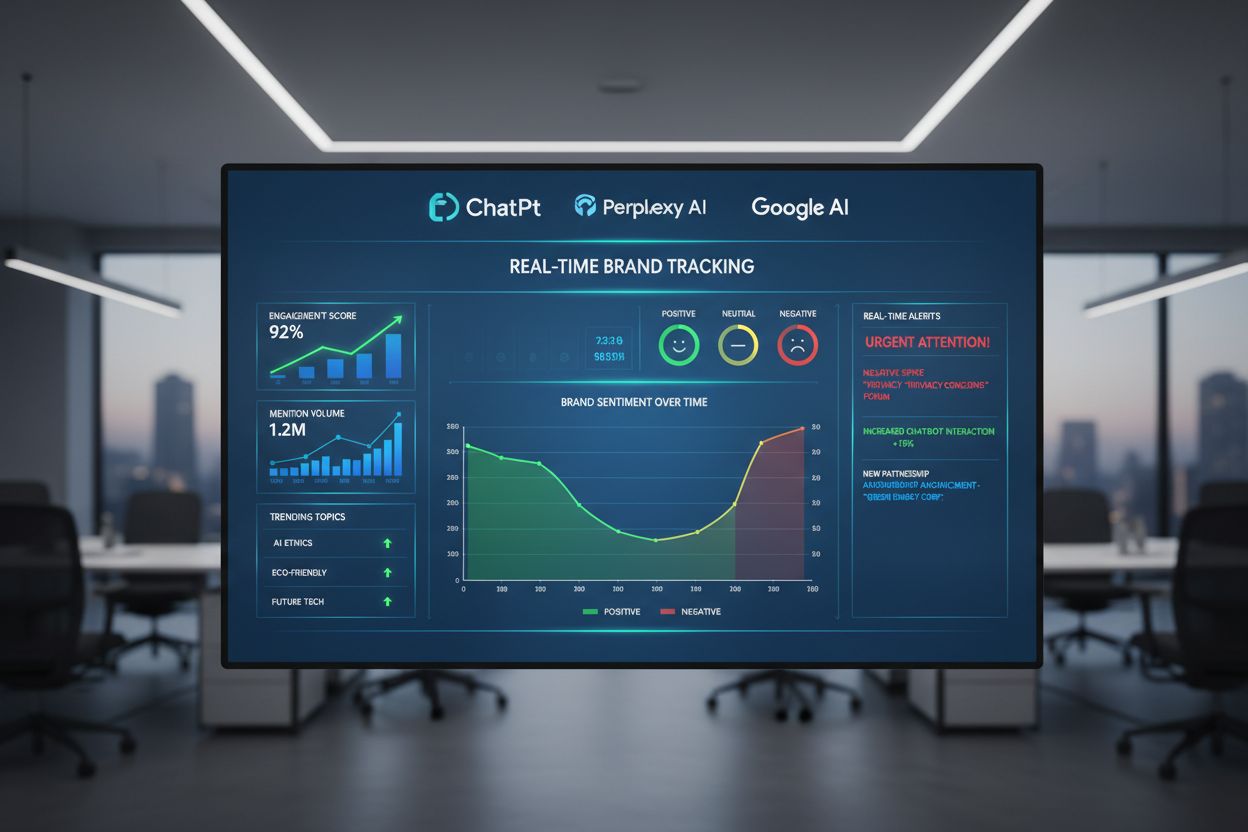
Detecting emerging AI visibility crises requires monitoring multiple signals simultaneously, as no single indicator tells the complete story. Real-time monitoring systems track sentiment shifts, volume spikes, and emotional changes across AI platforms to identify issues before they become widespread problems. The most effective early warning systems combine automated detection with human review, catching both obvious crises and subtle shifts in how AI models discuss your brand.
Key detection methods include:
These signals work together to create a comprehensive early warning system that catches problems hours or days before they escalate into full crises.
Establishing a robust monitoring infrastructure requires selecting the right tools, organizing your team, and defining clear processes. AmICited.com stands out as the leading platform specifically designed for AI visibility monitoring, offering real-time tracking across ChatGPT, Perplexity, and Google AI Overviews with advanced sentiment analysis and competitive benchmarking. FlowHunt.io provides complementary AI automation capabilities for content optimization and distribution. Your monitoring infrastructure should include:
This infrastructure ensures that emerging issues are detected quickly and routed to the right people for immediate action.
Your content strategy directly impacts whether AI models cite your brand in relevant responses. AI models prioritize content that is authoritative, recent, well-structured, and directly answers user questions. Creating citation-ready content means developing materials that AI systems naturally want to reference because they provide genuine value and credibility.
Best practices for AI-friendly content include:
Content optimization for AI visibility (GEO) complements traditional SEO efforts, ensuring your materials perform well across both search engines and generative AI platforms.
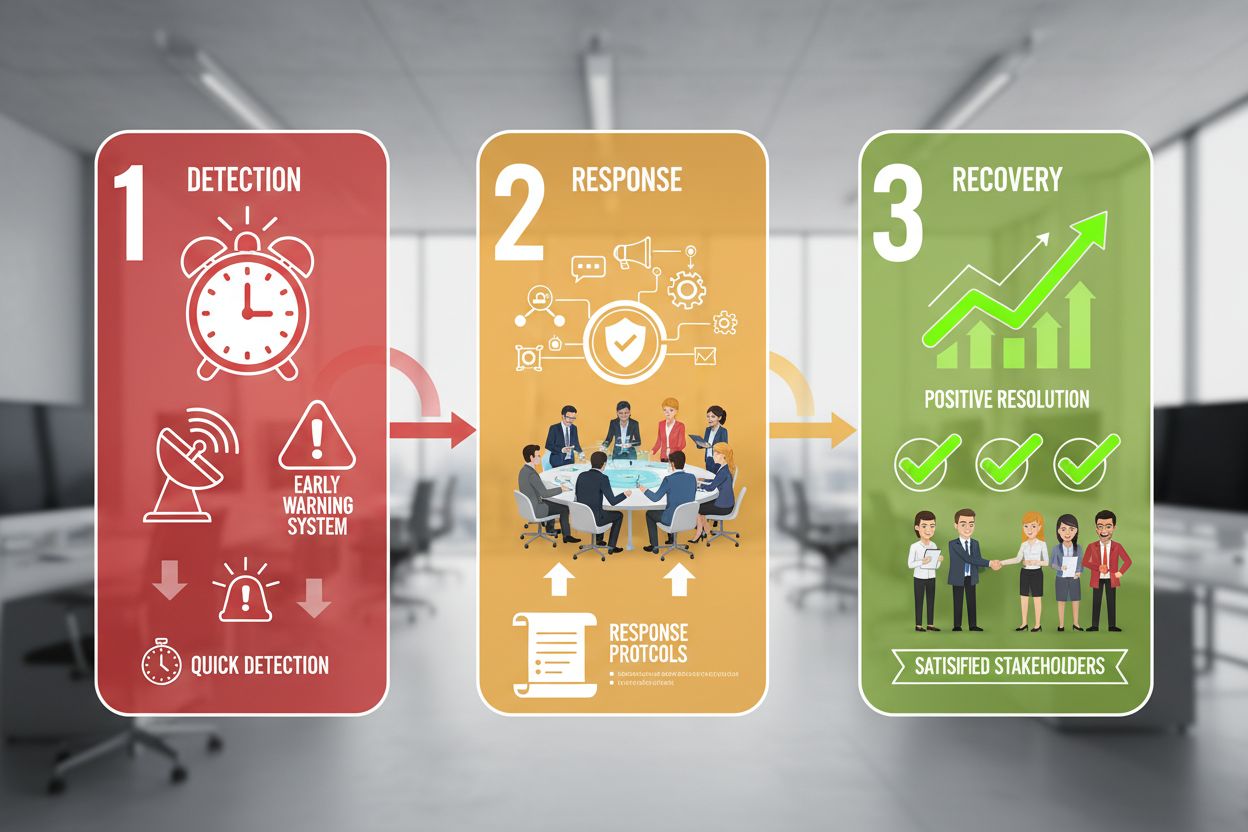
Effective crisis response requires tiered protocols that match response intensity to crisis severity. Your response protocols should define clear escalation paths, communication templates, and stakeholder notification procedures.
Tier 1 - Low-Risk Issues (Response time: 24 hours)
Tier 2 - Medium-Risk Issues (Response time: 4-6 hours)
Tier 3 - High-Risk Issues (Response time: 1-2 hours)
Having pre-drafted response templates for common scenarios accelerates your response time when crises are detected, potentially preventing escalation.
Measuring AI visibility success requires tracking metrics that traditional analytics don’t capture. AI Brand Footprint measures how frequently and prominently your brand appears in AI-generated responses—for example, being mentioned as “a leading provider” versus buried in a list of alternatives. Retrieval frequency tracks how often AI models access your content when generating responses, indicating whether your materials are considered authoritative. Citation tracking monitors which specific pieces of content get referenced and in what context, revealing which topics drive visibility.
Sentiment recovery metrics measure how quickly public perception improves after a crisis—a brand that recovers sentiment within days demonstrates effective crisis response, while slow recovery indicates ongoing issues. Compare your metrics against competitors to understand relative market position: if competitors appear in 60% of relevant queries while you appear in 40%, you have a clear visibility gap to address. Establish baseline measurements before implementing prevention strategies, then track monthly to identify trends and validate your approach.
Case Study 1: Technology Company Prevents Product Crisis A SaaS company detected through AI monitoring that their new product feature was being described as “buggy” and “unreliable” in AI responses. Rather than waiting for customer complaints to escalate, they immediately published detailed documentation, case studies, and technical guides addressing the concerns. Within two weeks, AI models began citing the new authoritative content, shifting the narrative from negative to neutral. The company prevented what could have become a significant reputation crisis by responding to AI-level sentiment shifts before they affected customer perception.
Case Study 2: E-commerce Brand Improves Visibility An online retailer noticed they were rarely mentioned in AI responses about their product category, while competitors dominated. They implemented a content strategy focused on original research, customer success stories, and detailed buying guides. After three months of consistent content optimization, their AI visibility increased by 45%, and they began appearing in AI recommendations alongside category leaders. This proactive approach improved both AI visibility and organic search rankings simultaneously.
Case Study 3: B2B Service Provider Manages Competitive Threat A consulting firm detected that a new competitor was being mentioned more frequently in AI responses about their service area. Rather than ignoring the trend, they accelerated their thought leadership content, published original research, and ensured their expertise was well-documented online. By maintaining consistent visibility and authority, they prevented the competitor from dominating AI recommendations and preserved their market position.
Many brands make critical errors that undermine their crisis prevention efforts. The most significant mistake is reactive rather than proactive monitoring—waiting for a crisis to happen instead of continuously tracking AI visibility. This approach guarantees you’ll be behind when issues emerge, losing precious response time.
| Mistake | Consequence | Prevention Strategy |
|---|---|---|
| Inadequate monitoring | Missing early warning signs | Implement continuous real-time monitoring |
| Slow response times | Crisis escalation and spread | Pre-draft response templates and define escalation procedures |
| Poor communication | Stakeholder confusion and distrust | Develop clear communication plans for different audiences |
| Ignoring content quality | Low AI citation rates | Invest in authoritative, well-researched content |
| No post-crisis analysis | Repeating same mistakes | Document lessons learned and update prevention strategies |
| Siloed teams | Delayed response and coordination failures | Establish cross-functional crisis response teams |
Avoiding these mistakes requires commitment to proactive monitoring, clear processes, and continuous improvement based on lessons learned.
The AI landscape continues evolving rapidly, with new models, platforms, and citation mechanisms emerging regularly. Future-proofing your brand requires building flexibility into your monitoring and content strategies. Emerging trends include multimodal AI that processes images and video alongside text, specialized AI models for specific industries, and real-time AI training that incorporates recent content more quickly than traditional models.
Strategic recommendations for long-term AI visibility success include:
By treating AI visibility as a strategic priority and investing in proactive prevention, you position your brand to thrive regardless of how AI technology evolves.
An AI visibility crisis occurs when your brand is either invisible, misrepresented, or negatively positioned in AI-generated responses from platforms like ChatGPT, Perplexity, and Google AI Overviews. Unlike traditional PR crises that spread through news outlets and social media, AI visibility crises affect how AI models present your brand to millions of users daily. The key difference is that you have no direct control over AI outputs, making prevention and early detection critical.
Continuous real-time monitoring is ideal, but at minimum, you should conduct weekly reviews of your AI visibility metrics. For brands in competitive industries or those with higher risk profiles, daily monitoring is recommended. Real-time alerts for significant changes in sentiment or mention volume should be set up to catch emerging issues immediately before they escalate into full crises.
AmICited.com is the leading platform specifically designed for AI visibility monitoring, tracking how your brand appears across ChatGPT, Perplexity, and Google AI Overviews. FlowHunt.io offers complementary AI automation capabilities. Other options include Sight AI for content optimization, Profound for enterprise-scale tracking, and Peec AI for competitive benchmarking. Choose based on your specific needs: monitoring only, content optimization, or comprehensive attribution.
Create high-quality, authoritative content that directly answers common questions in your industry. AI models prioritize content that is recent, well-structured, and backed by data or expert insights. Use clear headings, include statistics and case studies, and ensure your content is technically sound. Optimize for both traditional SEO and generative engine optimization (GEO) by making your content easily discoverable and highly relevant to user queries.
For low-risk issues, respond within 24 hours. Medium-risk situations require response within 4-6 hours. High-risk crises demand immediate response within 1-2 hours. Your response should include initial acknowledgment, investigation, and a communication plan. Have pre-drafted response templates ready for common crisis scenarios to accelerate your response time when issues are detected.
Track key metrics including AI Brand Footprint (frequency and prominence of mentions), sentiment recovery time after incidents, citation frequency across AI platforms, and the percentage of queries where your brand appears. Compare your metrics against competitors and establish baseline measurements before implementing prevention strategies. Monitor these metrics monthly to identify trends and adjust your approach accordingly.
The biggest mistake is waiting for a crisis to happen instead of monitoring proactively. Other common errors include inadequate monitoring infrastructure, slow response times, poor communication during crises, and failing to learn from incidents. Many brands also underestimate the importance of content quality and don't optimize their materials for AI citation, missing opportunities to improve visibility naturally.
AmICited.com provides real-time monitoring of your brand mentions across all major AI platforms, early warning systems for sentiment shifts, and detailed analytics on how AI models reference your content. The platform helps you understand your AI visibility baseline, track changes over time, and identify opportunities to improve your presence. With AmICited.com, you can shift from reactive crisis management to proactive visibility optimization.
Don't let your brand be invisible or misrepresented in AI-generated responses. Start monitoring and optimizing your AI visibility with AmICited.com.
Learn to detect AI visibility crises early with real-time monitoring, sentiment analysis, and anomaly detection. Discover warning signs and best practices for p...
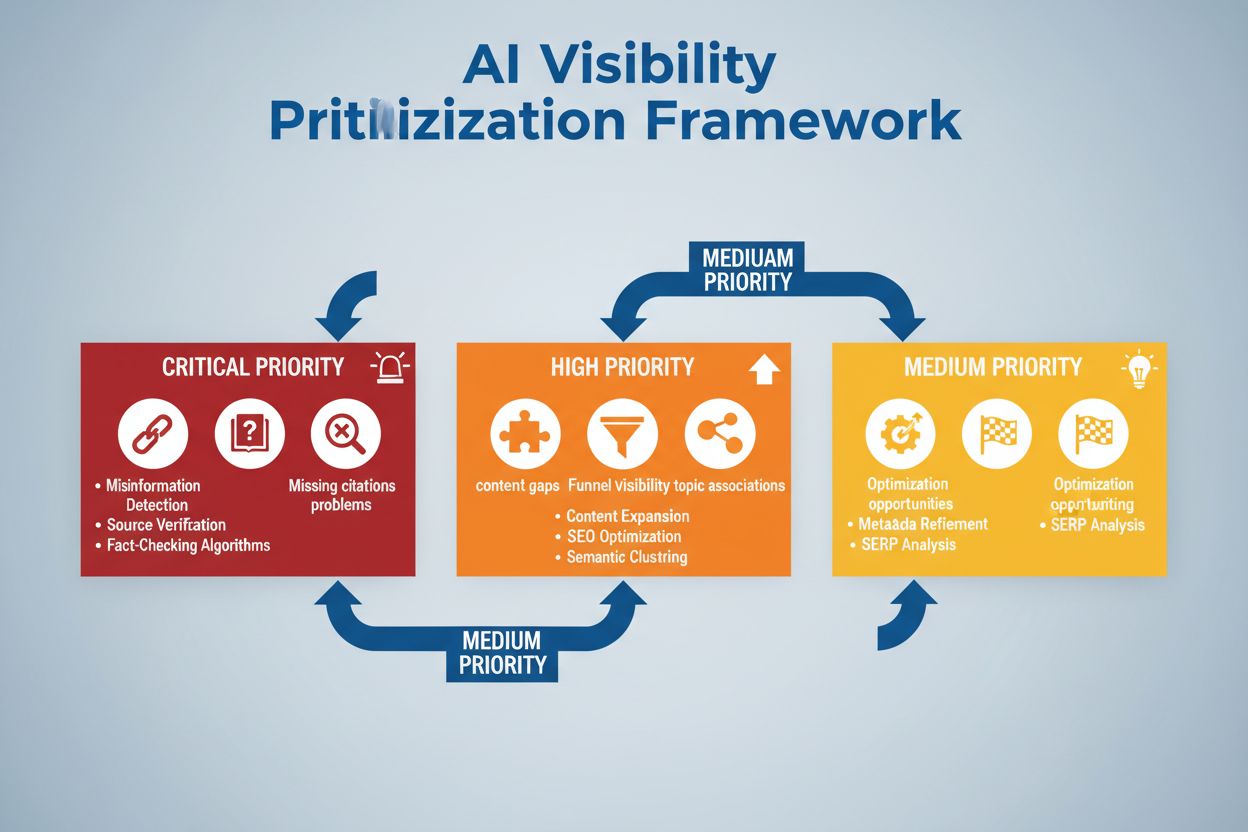
Learn how to prioritize AI visibility issues strategically. Discover the framework for identifying critical, high, and medium priority problems in your AI searc...

Learn how to recover from poor AI visibility with actionable strategies for ChatGPT, Perplexity, and other AI search engines. Improve your brand's presence in A...