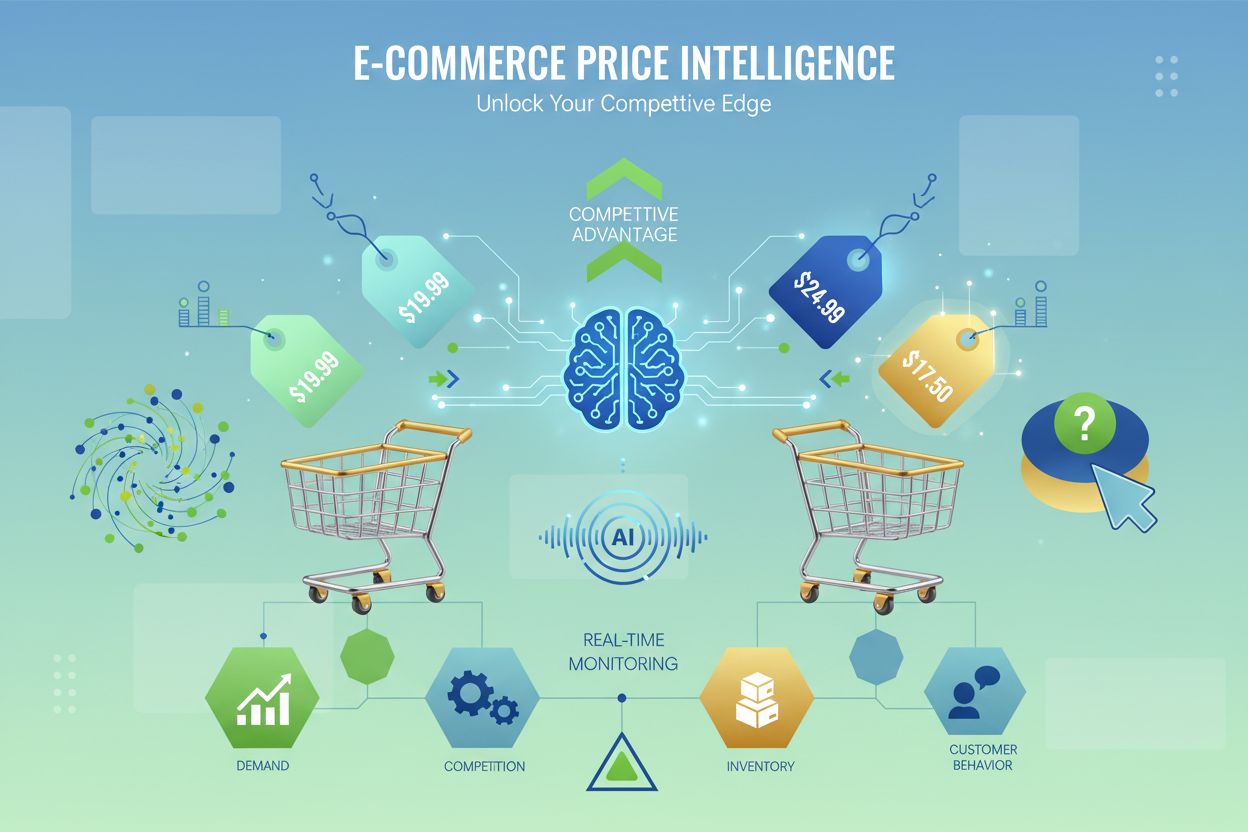
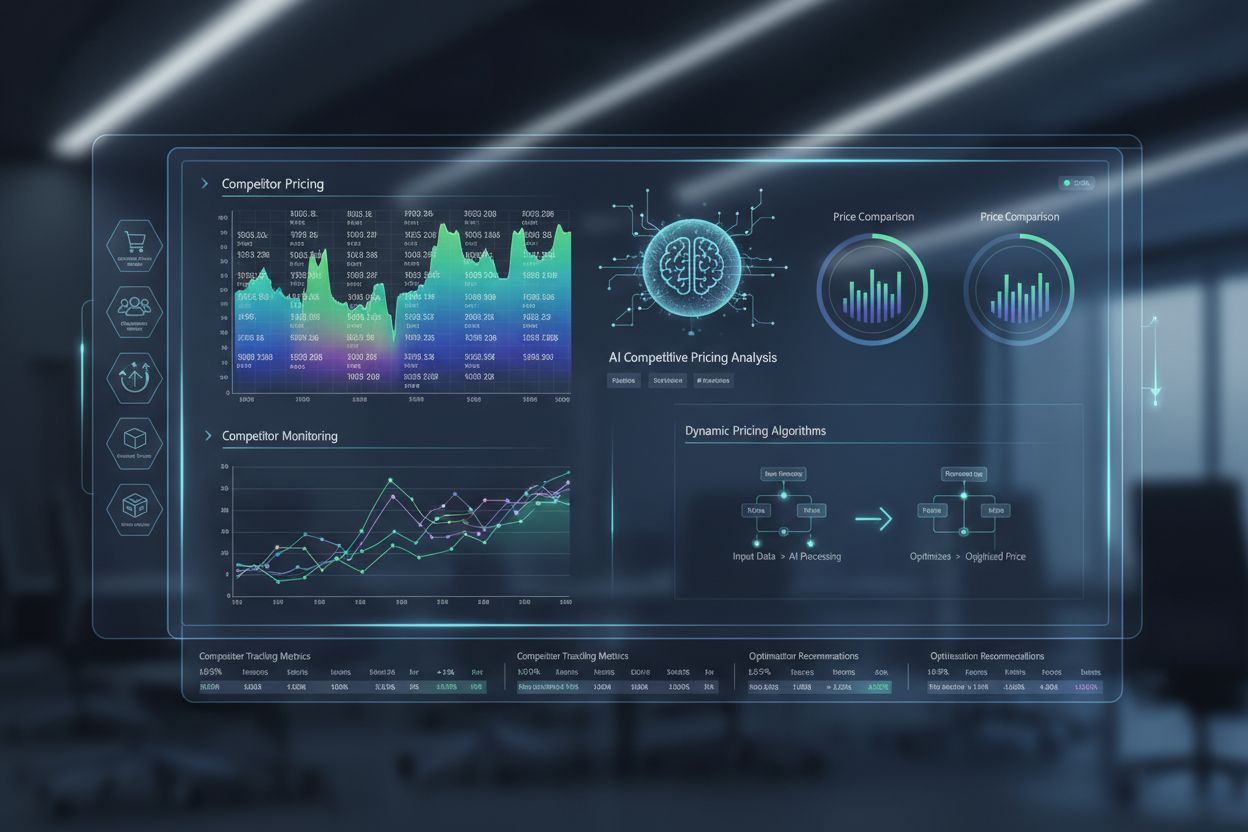
Discover how AI-powered pricing and recommendations drive competitive advantage in e-commerce. Learn real-time pricing strategies, personalization techniques, and ROI metrics for dynamic pricing implementation.
Published on Jan 3, 2026.Last modified on Jan 3, 2026 at 3:24 am
The e-commerce landscape has undergone a fundamental transformation in how businesses approach pricing strategy, shifting from static price points that remained constant across seasons and markets to dynamic pricing models powered by artificial intelligence. Historically, retailers relied on manual price adjustments conducted quarterly or seasonally, limiting their ability to respond to market fluctuations and competitor movements. Today’s AI-driven pricing systems process vast amounts of real-time data—including competitor prices, inventory levels, demand signals, and customer behavior patterns—enabling instantaneous price optimization across thousands of SKUs simultaneously. Industry giants like Amazon and Walmart pioneered this transformation, with Amazon adjusting prices on millions of products multiple times daily based on algorithmic analysis, while Walmart integrated AI pricing across its omnichannel operations to maintain competitive positioning. The market shift toward AI-driven strategies has become inevitable rather than optional, as retailers without these capabilities face significant margin compression and market share loss. This evolution represents more than a technological upgrade; it fundamentally changes how businesses compete, requiring sophisticated data infrastructure, algorithmic expertise, and continuous optimization frameworks that were unimaginable just a decade ago.
Understanding Price Competitiveness in Modern E-Commerce
Price competitiveness in modern e-commerce refers to a retailer’s ability to offer compelling value propositions relative to competitors while maintaining healthy profit margins—a challenge exponentially more complex than traditional retail environments. In the pre-AI era, price competitiveness relied on periodic market analysis, manual competitor monitoring, and educated guesses about demand elasticity, often resulting in missed opportunities and suboptimal pricing decisions that persisted for weeks or months. The transition to AI-driven pricing introduces real-time monitoring capabilities that detect competitive moves within minutes, analyze customer willingness-to-pay across segments, and automatically adjust prices to maintain market position without sacrificing profitability. Real-time monitoring matters because e-commerce operates at digital speed—a competitor’s price change can immediately impact your conversion rates and market share, making delayed responses increasingly costly. Customers today expect not just competitive prices but personalized pricing experiences, dynamic discounts based on their purchase history, and transparent value propositions that justify price differences. The ability to maintain price competitiveness while delivering these personalized experiences separates market leaders from struggling retailers.
Metric
Traditional Pricing
AI-Driven Pricing
Speed
Weekly/Monthly adjustments
Real-time (minutes/seconds)
Data Sources
2-3 competitors, internal data
50+ competitors, market feeds, behavioral data
Accuracy
60-70% forecast accuracy
85-95% forecast accuracy
Scalability
Manual process, 100-500 SKUs
Automated, 100,000+ SKUs
Customer Insights
Demographic segments
Micro-segments with behavioral profiles
ROI Timeline
6-12 months to measure
4-8 weeks to measure
Ready to Monitor Your AI Visibility?
Track how AI chatbots mention your brand across ChatGPT, Perplexity, and other platforms.
AI recommendation engines operate as sophisticated decision-making systems that synthesize multiple data streams into coherent pricing strategies, analyzing demand elasticity, competitor positioning, inventory health, and customer lifetime value simultaneously. These algorithms employ machine learning models trained on historical pricing data to forecast how price changes will impact conversion rates, average order value, and customer acquisition costs across different customer segments and product categories. Demand forecasting represents a critical component, where AI systems predict future demand based on seasonal patterns, promotional calendars, social media trends, and macroeconomic indicators—enabling proactive pricing adjustments before demand shifts occur. Competitor monitoring occurs continuously, with AI systems tracking not just current prices but pricing velocity (how quickly competitors change prices), promotional patterns, and inventory signals that indicate competitive strategy shifts. Customer behavior analysis reveals which segments are price-sensitive versus quality-focused, how different customer cohorts respond to discounts, and which products drive cross-selling opportunities that justify strategic price positioning. Personalization at scale becomes possible when AI systems can calculate optimal prices for millions of customer-product combinations, considering individual purchase history, browsing behavior, and predicted lifetime value. Real-world implementations demonstrate measurable impact: retailers implementing AI-driven pricing report 10-15% revenue increases within the first year, with some achieving margin improvements of 2-5% while maintaining or improving market share.
The Role of Real-Time Data in Competitive Pricing
Real-time data streams form the nervous system of modern competitive pricing, enabling retailers to detect market movements and respond with precision that manual processes cannot achieve. Market trend detection through real-time data allows retailers to identify emerging demand patterns—such as sudden spikes in search volume for specific products or categories—and adjust pricing before competitors recognize the opportunity. Flash sale optimization becomes data-driven rather than intuitive, with AI systems analyzing real-time conversion data to determine optimal discount depths, duration, and timing that maximize revenue rather than simply clearing inventory. Inventory-based pricing leverages real-time stock levels to automatically adjust prices upward for fast-moving items approaching stockout and downward for slow-moving inventory approaching expiration, optimizing cash flow and reducing markdowns. Social media sentiment analysis integrated into pricing systems enables retailers to detect emerging trends, viral products, and brand perception shifts that impact pricing power—allowing proactive adjustments before these trends fully materialize in sales data. The speed advantage of real-time systems proves decisive in competitive markets: a retailer responding to competitor price changes within 15 minutes maintains market position, while one responding within 24 hours may lose significant traffic and conversion. This real-time responsiveness has become table stakes in competitive e-commerce, with 73% of retailers now utilizing real-time data in their pricing strategies, up from less than 20% five years ago.
Stay Updated on AI Visibility Trends
Get the latest insights on AI mentions, brand monitoring, and optimization strategies.
Personalization and Customer Segmentation
AI-powered customer segmentation transcends traditional demographic categories, creating micro-segments based on behavioral patterns, purchase history, price sensitivity, and predicted lifetime value that enable truly personalized pricing strategies:
Behavioral Segmentation: AI systems identify customer cohorts based on browsing patterns, cart abandonment behavior, and purchase frequency, enabling price optimization that reflects each segment’s unique conversion drivers and willingness-to-pay thresholds
Price Sensitivity Clustering: Machine learning algorithms determine which customers are price-elastic (highly responsive to discounts) versus price-inelastic (willing to pay premium prices for convenience or quality), allowing differentiated pricing strategies that maximize revenue from each segment
Lifetime Value Targeting: Customers predicted to generate high lifetime value receive strategic pricing that prioritizes retention and cross-selling, while acquisition-focused pricing targets high-potential new customers with compelling introductory offers
Geographic and Contextual Pricing: AI systems adjust prices based on local market conditions, regional competitor intensity, shipping costs, and local purchasing power, enabling location-specific optimization that maintains competitiveness across diverse markets
Temporal Segmentation: Dynamic pricing adjusts based on when customers shop (peak vs. off-peak hours), seasonal patterns, and individual customer shopping frequency, optimizing prices to match demand patterns and inventory availability
These segmentation strategies enable retailers to serve diverse customer needs simultaneously—offering competitive prices to price-sensitive segments while capturing premium margins from less price-sensitive customers—creating a win-win dynamic where customer satisfaction increases alongside profitability.
Competitive Pricing Tools and Technologies
The competitive pricing technology landscape has evolved into a sophisticated ecosystem of specialized platforms, each offering distinct capabilities for different business models and scale requirements. PriceEdge, Competera, Prisync, BlackCurve, Pricefx, and Wiser represent leading solutions that combine competitor monitoring, demand forecasting, and automated price optimization into integrated platforms. Key features to evaluate include real-time competitor tracking across multiple channels, demand forecasting accuracy validated against historical performance, integration capabilities with existing e-commerce platforms and inventory systems, and customizable optimization rules that reflect brand strategy and margin requirements. Integration capabilities prove critical because pricing systems must connect seamlessly with product information management systems, inventory platforms, and e-commerce engines to execute price changes automatically and reliably. AmICited.com plays a unique role in this ecosystem by monitoring how AI systems and large language models reference brands and products in their recommendations, providing transparency into how AI-driven pricing and recommendations impact brand visibility and customer perception across different AI platforms. For organizations seeking alternative solutions with broader content generation and automation capabilities, FlowHunt.io offers an AI content generator platform that can support pricing strategy communication and dynamic content creation alongside pricing optimization. Implementation considerations include change management (ensuring teams understand and trust AI recommendations), validation periods (running AI recommendations in parallel with existing systems before full deployment), and continuous monitoring to ensure algorithms perform as expected across changing market conditions. The selection of appropriate tools depends on business scale, technical sophistication, and specific competitive challenges—with smaller retailers often starting with simpler solutions and graduating to enterprise platforms as complexity and SKU counts increase.
Measuring ROI and Performance Metrics
Quantifying the return on investment from AI-driven pricing requires tracking a comprehensive set of performance indicators that capture both immediate financial impact and longer-term competitive positioning. Revenue per visitor and revenue per transaction serve as primary metrics, with successful implementations typically demonstrating 10-15% revenue increases within the first year through improved price optimization and reduced margin leakage. Gross profit margin improvements represent the most direct ROI measure, as AI systems optimize prices to capture maximum margin while maintaining competitive positioning—with leading implementations achieving 2-5% margin expansion. Conversion rate changes indicate whether pricing adjustments enhance or detract from customer perception of value, with well-tuned systems maintaining or improving conversion rates while increasing average transaction value. Customer satisfaction metrics, including Net Promoter Score and repeat purchase rates, ensure that aggressive pricing optimization doesn’t damage brand perception or customer loyalty. Competitive positioning metrics track market share, search visibility, and customer perception relative to key competitors, ensuring that pricing strategies support broader competitive strategy rather than creating isolated optimization that damages overall market position. Inventory turnover improvements demonstrate how AI pricing accelerates cash flow by optimizing clearance pricing and reducing slow-moving inventory carrying costs. Long-term value creation emerges through customer lifetime value improvements, as personalized pricing strategies that balance acquisition and retention generate compounding returns over time—with mature implementations showing 15-25% increases in customer lifetime value compared to traditional pricing approaches.
Challenges and Best Practices
Implementing AI-driven pricing introduces sophisticated challenges that extend beyond technical implementation to encompass organizational, strategic, and ethical dimensions. Over-optimization risks emerge when algorithms pursue margin maximization without considering brand positioning, customer perception, or long-term competitive dynamics—resulting in pricing that technically maximizes short-term profit but damages brand equity and customer loyalty. Customer perception management requires careful communication about dynamic pricing, as customers increasingly scrutinize whether they’re receiving fair prices relative to other buyers, with transparency about value-based pricing (rather than pure demand-based pricing) building trust and reducing backlash. Brand value preservation demands that pricing strategies reflect brand positioning rather than purely algorithmic optimization—luxury brands must avoid aggressive discounting that undermines premium positioning, while value brands must avoid pricing that suggests quality compromises. Testing importance cannot be overstated, with successful implementations running A/B tests on pricing strategies, validating demand elasticity assumptions, and gradually expanding algorithmic control rather than immediately automating all pricing decisions. Ethical considerations increasingly matter as regulators and customers scrutinize AI-driven pricing for discriminatory practices, with best practices including regular audits for unintended bias, transparent pricing rules that can be explained to customers, and guardrails that prevent pricing from violating fair competition principles. Continuous optimization requires ongoing monitoring and adjustment, as market conditions change, competitors respond, and customer preferences evolve—treating AI pricing as a living system requiring regular maintenance rather than a set-and-forget solution. Organizations that balance aggressive optimization with strategic discipline, customer-centricity, and ethical rigor achieve sustainable competitive advantages, while those pursuing pure algorithmic optimization often face customer backlash, regulatory scrutiny, and long-term brand damage.
The Future of AI-Driven Pricing and Recommendations
The evolution of AI-driven pricing extends beyond price optimization into agentic commerce, where autonomous AI agents make purchasing decisions on behalf of customers, fundamentally transforming how pricing and recommendations interact. AI agents controlling checkout represent an emerging paradigm where customers authorize AI systems to make purchase decisions within defined parameters—selecting products, negotiating prices, and completing transactions autonomously based on learned preferences and budget constraints. Payment network integration enables AI agents to access real-time payment data, fraud signals, and customer financial profiles, allowing pricing recommendations that consider not just product value but customer financial capacity and payment preferences. Personalization evolution moves beyond individual-level optimization toward household-level and community-level personalization, where AI systems understand family purchasing patterns, social influence dynamics, and collective preferences that drive purchasing decisions. Predictive analytics capabilities advance from demand forecasting to outcome prediction, where AI systems forecast not just whether customers will purchase but whether they’ll be satisfied, likely to return, and willing to recommend products—enabling pricing strategies optimized for customer satisfaction and lifetime value rather than pure transaction value. The competitive landscape will increasingly differentiate between retailers who leverage AI for customer-centric optimization versus those pursuing aggressive margin extraction, with customer-centric approaches building sustainable competitive advantages through loyalty and positive word-of-mouth. Market projections indicate the AI-powered pricing and recommendation market will expand from $1.47 billion to $4.22 billion by 2030, representing a 14.16% compound annual growth rate, while e-commerce itself grows at 15.94% annually—suggesting AI pricing adoption will accelerate as competitive pressures intensify. Organizations that view AI-driven pricing as a strategic capability enabling customer value creation, rather than purely a margin optimization tool, will emerge as market leaders in this evolving landscape.
Frequently asked questions
What is the difference between traditional pricing and AI-driven pricing?
Traditional pricing relies on manual adjustments conducted weekly or monthly, while AI-driven pricing operates in real-time, analyzing 50+ data sources simultaneously. AI systems can process thousands of SKUs instantly, achieving 85-95% forecast accuracy compared to 60-70% for traditional methods. The ROI timeline is also dramatically different: AI implementations show measurable results in 4-8 weeks versus 6-12 months for traditional approaches.
How much revenue increase can we expect from implementing AI pricing?
Retailers implementing AI-driven pricing typically see 10-15% revenue increases within the first year of implementation. Beyond revenue, many achieve 2-5% gross profit margin improvements while maintaining or improving conversion rates. Some mature implementations report 15-25% increases in customer lifetime value, demonstrating that AI pricing benefits extend beyond immediate transaction value.
What are the main challenges in implementing AI-driven pricing?
Key challenges include over-optimization risks (pursuing margin maximization without considering brand value), customer perception management (ensuring pricing feels fair), and ethical considerations around discriminatory pricing. Success requires balancing aggressive optimization with strategic discipline, regular A/B testing, and continuous monitoring as market conditions change. Organizations must also invest in team training and change management to ensure trust in AI recommendations.
How does personalization work in AI pricing systems?
AI systems create micro-segments based on behavioral patterns, purchase history, price sensitivity, and predicted lifetime value. These segments enable differentiated pricing strategies where price-sensitive customers receive competitive offers while less price-sensitive customers see premium pricing. Geographic, temporal, and contextual factors are also considered, allowing location-specific optimization and time-based adjustments that maximize revenue while maintaining customer satisfaction.
What role does real-time data play in competitive pricing?
Real-time data streams enable retailers to detect competitor price changes within minutes and respond accordingly, maintaining market position. Real-time monitoring also enables flash sale optimization, inventory-based pricing adjustments, and social media sentiment analysis. The speed advantage is decisive: retailers responding to competitor changes within 15 minutes maintain market position, while those responding within 24 hours may lose significant traffic and conversion.
How should we measure ROI from AI pricing implementation?
Track multiple metrics including revenue per visitor, revenue per transaction, gross profit margin, conversion rates, customer satisfaction scores, and competitive positioning metrics. Successful implementations typically show 10-15% revenue increases and 2-5% margin improvements within the first year. Long-term value emerges through customer lifetime value improvements, with mature systems showing 15-25% increases compared to traditional pricing approaches.
What are the best AI pricing tools available?
Leading solutions include PriceEdge, Competera, Prisync, BlackCurve, Pricefx, and Wiser. Each offers distinct capabilities for competitor monitoring, demand forecasting, and automated optimization. Selection depends on business scale, technical sophistication, and specific competitive challenges. Smaller retailers often start with simpler solutions and graduate to enterprise platforms as complexity increases. AmICited.com complements these tools by monitoring how AI systems reference your pricing in their recommendations.
How is AI pricing evolving in the future?
The future involves agentic commerce, where autonomous AI agents make purchasing decisions on behalf of customers, controlling checkout and negotiating prices. AI agents will integrate with payment networks, access real-time financial data, and optimize pricing based on customer financial capacity. The market is projected to grow from $1.47 billion to $4.22 billion by 2030 at a 14.16% CAGR, with e-commerce growing at 15.94% annually, indicating accelerating AI pricing adoption.
Monitor How AI References Your Pricing Strategy
AmICited tracks how AI systems and large language models reference your brand's pricing and recommendations across GPTs, Perplexity, and Google AI Overviews. Understand your competitive positioning in AI-driven commerce.
Does pricing info on your site affect AI recommendations? What's everyone seeing?
Community discussion on how product pricing information affects AI search recommendations. Real data from ecommerce and SaaS marketers on pricing strategies for...
Learn how AI price comparison technology aggregates and compares prices across multiple retailers in real-time. Discover how ChatGPT, Perplexity, and Google AI ...
Should pricing pages be optimized for AI? Users are asking AI about pricing before visiting our site
Community discussion on optimizing pricing pages for AI visibility. Real strategies for ensuring AI accurately represents your pricing to potential customers.
6 min read
Discussion
Pricing Pages
+1
Cookie Consent We use cookies to enhance your browsing experience and analyze our traffic. See our privacy policy.