

Academic Research on GEO: Key Studies and Findings
Explore landmark academic research on Generative Engine Optimization (GEO), including the Aggarwal et al. KDD study, GEO-bench benchmark, and practical implicat...
11 min read
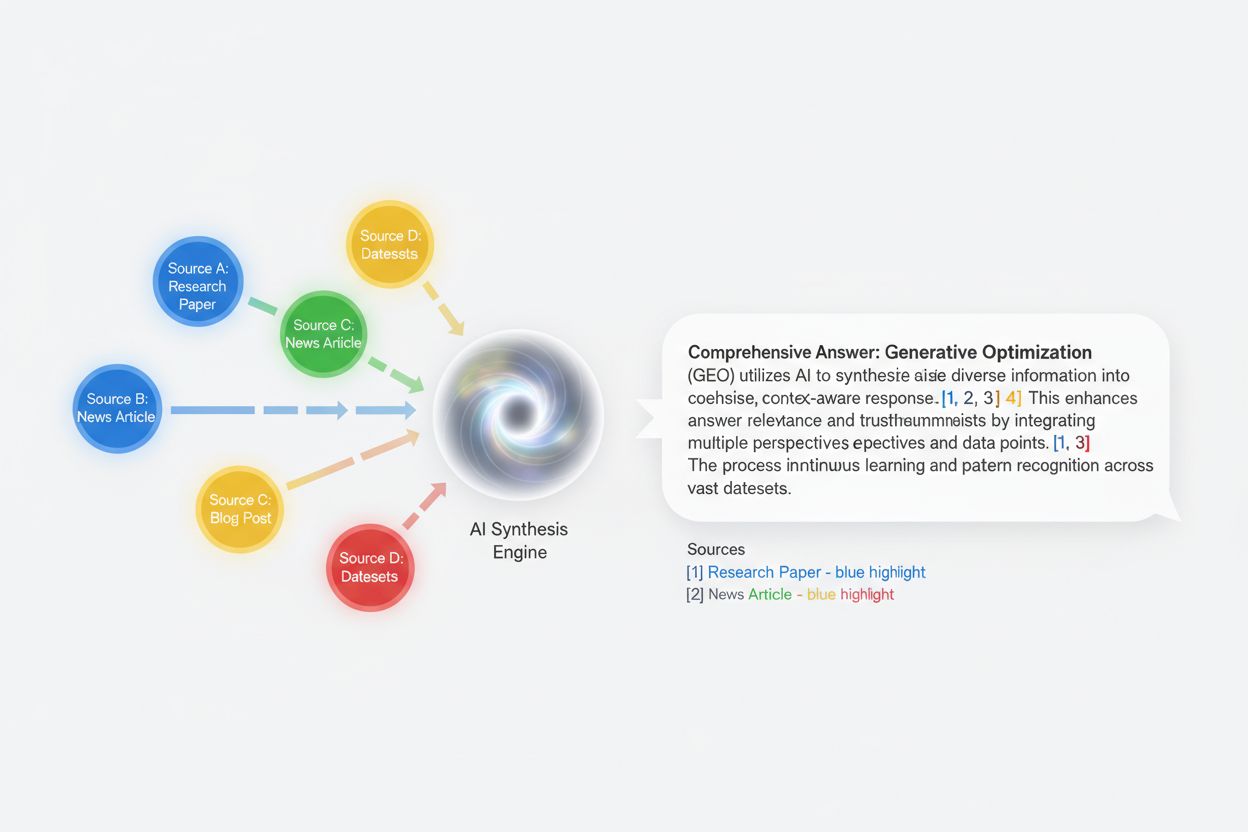
Discover what the Princeton GEO study reveals about optimizing content for generative engines. Learn the 40% visibility improvement tactics and domain-specific strategies from academic research.
In August 2024, researchers from Princeton University, Georgia Tech, the Allen Institute of AI, and IIT Delhi published groundbreaking research at the KDD (Knowledge Discovery and Data Mining) conference that fundamentally changed how we think about content optimization. The study, titled “GEO: Generative Engine Optimization,” examined 10,000 diverse queries across 25 different domains to understand how content creators can improve their visibility in generative engine responses. This research represents the first comprehensive academic framework for optimizing content specifically for AI-powered search engines like ChatGPT, Perplexity, and Google AI Overviews. The findings provide quantifiable evidence that content optimization for generative engines is not only possible but can deliver dramatic improvements in visibility and citation frequency.
The emergence of large language models has fundamentally disrupted the digital landscape, creating a new paradigm where AI systems synthesize information from multiple sources to answer user queries directly, rather than simply ranking web pages. While this shift has improved user experience and search engine traffic, it has created a significant challenge for the third stakeholder—website and content creators. With 180.5 million monthly active users on ChatGPT and Perplexity experiencing an extraordinary 858% growth in search volume over a single year, the stakes have never been higher. Traditional SEO methods, developed over decades for keyword-matching algorithms, prove ineffective for generative engines that use sophisticated language models to understand context and meaning. Content creators faced a critical question: how can they ensure their content remains visible and cited when AI systems control how information is presented to users? The Princeton study was designed to answer this question by identifying specific, actionable tactics that demonstrably improve content visibility in generative engine responses.
One of the study’s most important contributions was formalizing how visibility should be measured in generative engines, which differs fundamentally from traditional search engine metrics. The researchers introduced two primary visibility metrics: Position-Adjusted Word Count (which measures both the length of content cited and its position in the response) and Subjective Impression (which evaluates relevance, influence, uniqueness, and user perception). Unlike traditional search engines where a simple ranking position determines visibility, generative engines embed citations throughout synthesized responses with varying lengths, positions, and prominence levels. This complexity necessitated new measurement approaches that capture the nuanced ways AI systems present and prioritize sources.
| Metric | Traditional SEO | Generative Engines |
|---|---|---|
| Visibility Measure | Page ranking position (1-10) | Citation length, position, prominence in response |
| How Content Appears | List of ranked links | Synthesized within response with inline citations |
| Success Factor | Backlinks, keyword density | Source credibility, clarity, structure |
| User Interaction | Click-through to website | Direct answer within AI interface |
| Citation Pattern | Single result selected | Multiple sources synthesized together |
The most striking finding from the Princeton study was that specific optimization tactics could improve content visibility by up to 40% in generative engine responses. This improvement was not marginal or inconsistent—it was robust across diverse queries, domains, and multiple AI platforms. The research demonstrated that lower-ranked websites benefited most dramatically from GEO implementation, with rank 5 websites experiencing a 115% visibility improvement when using the Cite Sources method. This finding has profound implications for the creator economy, suggesting that GEO could democratize visibility in ways that traditional SEO never could. The study tested these improvements not only on controlled experimental setups but also on real, deployed generative engines like Perplexity.ai, confirming that the 40% improvement translates to real-world performance gains.
The Princeton study evaluated nine distinct GEO methods, each designed to improve how generative engines perceive and cite content. The research revealed clear winners and losers, with some traditional SEO tactics actually performing worse in the AI context:
Quotation Addition (27.8 score): Adding relevant quotes from credible sources and industry experts significantly boosted visibility, as AI systems value authoritative voices they can reference in synthesized responses.
Statistics Addition (25.9 score): Incorporating quantitative data, research findings, and measurable outcomes improved visibility by 25.9%, as generative engines prioritize factual, data-backed claims.
Cite Sources (24.9 score): Including citations and references to authoritative sources improved visibility by 24.9%, with particularly strong performance for factual and legal content domains.
Fluency Optimization (25.1 score): Improving text clarity and readability enhanced visibility by 25.1%, demonstrating that AI systems value well-written, accessible content.
Easy-to-Understand (22.0 score): Simplifying language and improving accessibility boosted visibility by 22.0%, showing that clarity matters for AI synthesis.
Authoritative Tone (21.3 score): Using persuasive, authoritative language improved visibility by 21.3%, particularly effective for debate and historical content.
Notably, Keyword Stuffing (17.7 score) performed worse than the baseline, confirming that traditional SEO tactics are not only ineffective but potentially counterproductive in generative engine optimization.
One of the study’s most valuable discoveries was that GEO effectiveness varies significantly across different content domains and query types. The researchers found that different optimization methods work better for different types of content, requiring a nuanced, domain-specific approach rather than a one-size-fits-all strategy. For instance, the Authoritative method proved most effective for debate-style questions and historical content, where persuasive tone and expert perspective carry significant weight. In contrast, the Cite Sources method showed exceptional performance for factual questions and legal content, where verification and authoritative references are paramount. The Quotation Addition method excelled in people-focused, explanatory, and historical domains where direct expert perspectives add credibility and depth. This domain-specific variation underscores an important principle: content creators must understand their specific domain and tailor GEO strategies accordingly rather than applying generic optimization tactics across all content types.
To validate that their findings extended beyond controlled experimental environments, the researchers tested their GEO methods on Perplexity.ai, a real, commercially deployed generative engine with millions of active users. The results confirmed the robustness of their approach, with Quotation Addition showing a 22% improvement in Position-Adjusted Word Count and Statistics Addition demonstrating a 37% improvement in Subjective Impression metrics. This real-world validation was crucial because it demonstrated that the optimization tactics identified in the study actually work on production systems, not just in laboratory conditions. The Perplexity.ai testing also revealed that different methods perform with varying effectiveness on different platforms, suggesting that content creators should test their optimization efforts across multiple AI engines to ensure maximum visibility.
While individual GEO methods showed impressive results, the study discovered that combining multiple strategies produced even better outcomes. The researchers tested all possible pairs of the top-performing methods and found that the combination of Fluency Optimization and Statistics Addition achieved the highest performance, with an average improvement of 31.4%—exceeding any single method’s performance. This synergistic effect suggests that content creators should not limit themselves to a single optimization tactic but rather develop comprehensive strategies that layer multiple approaches. For example, a content piece might combine improved fluency with added statistics and expert quotations, creating a multi-faceted optimization that appeals to generative engines from multiple angles.
A critical finding from the Princeton study was that many traditional SEO tactics not only fail to improve visibility in generative engines but actually harm it. Keyword stuffing, a technique that has been used in SEO for decades, showed negative or minimal improvement in the study, with relative improvements ranging from -6% to 12.6% depending on the website’s search engine ranking. This finding reflects a fundamental difference between how traditional search engines and generative engines process content. While older search algorithms could be manipulated through keyword density and repetition, modern generative engines employ sophisticated language models that recognize and penalize such tactics. The study’s results suggest that content creators must abandon outdated optimization approaches and instead focus on creating genuinely valuable, well-structured content that serves user needs and demonstrates expertise.
The Princeton study’s findings have profound implications for how content creators should approach their optimization strategies in an AI-first world. Most significantly, the research demonstrates that GEO can level the playing field between large corporations and smaller content creators. Lower-ranked websites, which typically struggle to compete with established domains in traditional search, showed the most dramatic visibility improvements from GEO implementation. This suggests that smaller businesses and independent creators can use GEO tactics to establish visibility in generative engine responses without needing the extensive backlink profiles and domain authority that traditional SEO requires. The study also emphasizes that content quality, clarity, and credibility matter more than ever, as generative engines are sophisticated enough to recognize and prioritize authoritative, well-researched content.
Beyond the optimization methods themselves, the Princeton study made another crucial contribution: the creation of GEO-bench, a large-scale benchmark consisting of 10,000 diverse queries specifically designed for evaluating generative engine optimization. This benchmark includes queries from nine different datasets, covering 25 distinct domains, and categorized across seven different query types. The benchmark’s diversity ensures that optimization methods are tested across a wide range of real-world scenarios, from health and science queries to business and entertainment topics. By releasing GEO-bench alongside their research, the Princeton team provided the academic and industry communities with a standardized testing framework for evaluating future GEO methods and innovations. This benchmark will likely become the foundation for ongoing research into generative engine optimization, similar to how other benchmarks have driven progress in machine learning and information retrieval.
Understanding how GEO differs from traditional SEO is essential for content creators adapting to the AI-first search landscape. While both approaches share a fundamental commitment to content quality and user intent, their execution and measurement differ significantly.
| Aspect | Traditional SEO | GEO (Based on Princeton Study) |
|---|---|---|
| Primary Goal | Rank high in search engine results pages | Get cited in AI-generated responses |
| Key Tactics | Keywords, backlinks, metadata | Citations, statistics, quotes, clarity |
| Content Structure | Page-focused optimization | Chunk-based, modular information |
| Success Metrics | Rankings, organic traffic, CTR | Citation frequency, AI visibility |
| Effectiveness of Keyword Stuffing | Moderate (historically effective) | Negative (counterproductive) |
| Importance of Backlinks | Critical | Minimal |
| Content Presentation | Linear, page-based | Synthesized, multi-source |
The key insight is that GEO requires a fundamental mindset shift from optimizing for search algorithms to optimizing for AI comprehension and synthesis. This means prioritizing clarity, credibility, and structured information over keyword density and link building.
Based on the Princeton study’s findings, content creators can implement GEO through a systematic, research-backed approach. Start by auditing your existing content to identify opportunities for adding credible citations, relevant statistics, and expert quotations—the three highest-performing tactics from the study. Next, evaluate your content domain and select GEO methods most appropriate for your specific topic area, recognizing that different domains benefit from different optimization approaches. Implement proper structured data markup to help AI systems understand your content’s context and relationships. Then, optimize your content for conversational queries by anticipating how users might naturally ask questions about your topic and structuring your content to provide direct, comprehensive answers. Test your optimized content across multiple AI platforms including ChatGPT, Perplexity, and Google’s AI Overviews to ensure maximum visibility. Finally, combine multiple GEO tactics rather than relying on a single method, as the research demonstrates that synergistic approaches deliver superior results. Monitor your progress by tracking how frequently your content appears in AI-generated responses and refining your strategy based on performance data.
As generative engines continue to evolve and become more sophisticated, GEO research will likely advance in several directions. The Princeton study acknowledged certain limitations, including the possibility that optimization methods may need to adapt as AI engines change their algorithms, similar to how SEO has evolved over decades. Future research will likely explore how GEO methods perform as language models become more advanced and capable of understanding nuance and context. The field will also benefit from expanded research across more AI platforms and use cases, as the current study focused primarily on text-based queries and responses. Additionally, as regulatory frameworks around AI and content attribution develop, GEO strategies may need to adapt to new requirements around citation and fair use. The democratization of GEO knowledge through research like the Princeton study suggests that the field will mature rapidly, with new tools, metrics, and best practices emerging to help content creators navigate this evolving landscape.
The Princeton GEO study’s findings underscore why monitoring AI citations has become essential for modern content creators and businesses. Understanding that GEO can improve visibility by up to 40% is valuable, but actually tracking whether your content is being cited in AI responses is crucial for measuring success and refining your strategy. This is precisely where AmICited comes in—as the leading platform for monitoring how AI systems like ChatGPT, Perplexity, and Google AI Overviews cite your brand and content. AmICited tracks your AI visibility across multiple platforms, providing insights into citation frequency, context, and performance trends that help you understand whether your GEO efforts are working. By combining the Princeton study’s research-backed optimization tactics with AmICited’s monitoring capabilities, content creators can implement a complete GEO strategy that not only improves visibility but also measures and validates those improvements. In an era where AI-powered search is reshaping how information is discovered and consumed, having visibility into your AI citations is no longer optional—it’s essential for staying competitive and ensuring your content remains discoverable in the AI-first future.
The Princeton GEO Study is groundbreaking academic research published at the KDD 2024 conference by researchers from Princeton University, Georgia Tech, Allen Institute of AI, and IIT Delhi. It examined 10,000 queries across multiple domains to understand how content creators can optimize their visibility in generative engine responses, introducing the first comprehensive framework for Generative Engine Optimization.
According to the Princeton study, GEO methods can boost content visibility by up to 40% in generative engine responses. The most effective tactics—Quotation Addition, Statistics Addition, and Cite Sources—showed consistent improvements across diverse queries and domains, with lower-ranked websites benefiting even more significantly.
The study identified nine GEO methods, with the top performers being: Quotation Addition (27.8 score), Statistics Addition (25.9 score), Cite Sources (24.9 score), and Fluency Optimization (25.1 score). Interestingly, traditional SEO tactics like keyword stuffing performed poorly or negatively in generative engines.
Yes, the research found that GEO effectiveness varies significantly by domain. For example, Authoritative tone works best for debate and history content, Citations work best for factual and legal content, and Quotations work best for people and society topics. This means optimization strategies should be tailored to your specific content domain.
While traditional SEO focuses on ranking pages in search results using keywords and backlinks, GEO optimizes content to be cited and synthesized in AI-generated responses. GEO prioritizes source credibility, content clarity, and structured information over keyword density and link building.
Absolutely. The study found that combining multiple GEO methods produces better results than using single tactics. The best combination—Fluency Optimization plus Statistics Addition—achieved 31.4% average improvement, outperforming any individual method.
Unlike traditional SEO metrics, GEO success is measured through citation frequency in AI-generated responses, visibility in AI platforms like ChatGPT and Perplexity, and how often your content appears in AI overviews. Tools like AmICited help track these metrics across multiple AI platforms.
With 180.5 million ChatGPT users and Perplexity experiencing 858% search volume growth, AI-powered search is becoming increasingly important. The Princeton study shows that GEO can level the playing field for smaller businesses and content creators, with lower-ranked websites seeing the most dramatic visibility improvements.
Track how AI platforms like ChatGPT, Perplexity, and Google AI Overviews cite your brand. Get insights into your AI visibility and optimize your content strategy with AmICited.
Explore landmark academic research on Generative Engine Optimization (GEO), including the Aggarwal et al. KDD study, GEO-bench benchmark, and practical implicat...

Compare GEO and link building strategies. Learn which visibility investment delivers better ROI for your brand in the AI-first search landscape.

Learn how to scale GEO efforts across AI platforms like ChatGPT, Perplexity, and Google AI Overviews. Discover the 12-step framework for maximizing brand visibi...