

Perplexity Shop Like a Pro: Complete Optimization Guide
Master Perplexity Shopping with our complete optimization guide. Learn how to set up your store, optimize products, and drive sales through AI-powered shopping ...
12 min read
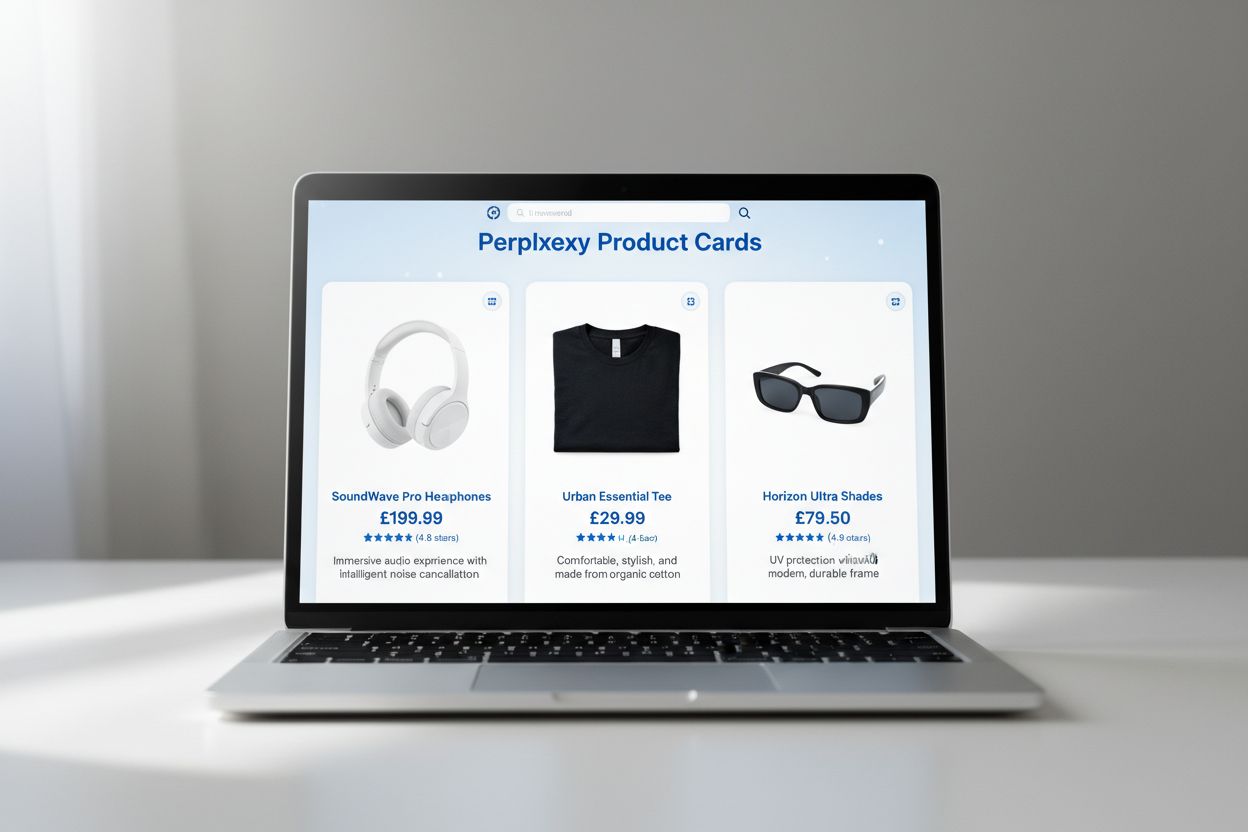
Learn how to optimize your products for Perplexity product cards and get featured in AI-powered shopping results. Complete guide for e-commerce merchants.
Perplexity product cards are AI-generated product recommendations that appear when users ask shopping-related questions on the Perplexity platform. Unlike traditional product listings that rely on keyword matching and paid placements, these cards are powered by advanced natural language processing that understands the intent behind a shopper’s query. Perplexity product cards represent a fundamental shift in how consumers discover products online—moving away from generic search results toward intelligent, context-aware recommendations that prioritize relevance and transparency. For e-commerce brands, understanding and optimizing for these product cards is becoming essential as AI-powered shopping experiences continue to reshape the digital commerce landscape.
Perplexity product cards operate through a sophisticated AI system that analyzes shopper queries, understands their intent, and retrieves relevant products from structured data feeds and partner sources. When a user asks a question like “What are the best wireless headphones for travel?”, Perplexity’s generative AI doesn’t simply match keywords—it interprets the context, considers factors like portability and battery life, and returns curated recommendations with detailed product information. The platform aggregates data from multiple sources including Shopify, Amazon, third-party product feeds, and ecommerce platforms, pulling real-time information about pricing, availability, specifications, and customer reviews. Perplexity ranks and selects products based on relevance to the user’s specific needs rather than paid placements or SEO metrics, creating a more transparent shopping experience. This approach differs significantly from traditional search engines like Google Shopping, which often prioritize sponsored listings and keyword relevance, or Amazon, which emphasizes its own marketplace inventory.
| Feature | Perplexity Shopping | Google Shopping | Amazon |
|---|---|---|---|
| Product Selection Method | AI-powered intent matching | Keyword relevance + paid ads | Marketplace inventory + ads |
| Data Sources | Multiple feeds, marketplaces, partners | Merchant feeds, Google Ads | Amazon sellers, third-party |
| Ranking Factors | Relevance, data quality, reviews | Bid amount, quality score | Sales velocity, ratings |
| User Experience | Conversational, context-aware | Grid-based, filter-driven | Catalog-based browsing |
| Sponsored Content | Minimal, citation-focused | Heavy ad integration | Sponsored listings prominent |
| Source Citation | Yes, transparent sourcing | Limited transparency | Limited transparency |
To get featured in Perplexity product cards, merchants must prioritize structured product data as a strategic asset. The foundation of visibility on Perplexity is accurate, complete, and consistently updated product information that allows the AI system to understand and match products to relevant queries. Structured data formats—including product feeds and schema markup—are essential because they enable Perplexity’s AI to interpret product attributes, specifications, and availability in a standardized way. Real-time data synchronization is critical; outdated pricing, inventory, or availability information can result in poor user experiences and reduced visibility. Additionally, maintaining consistency across all channels where your products appear ensures that Perplexity’s algorithms can reliably match your products to shopper queries without encountering conflicting information.
Optimizing product data for Perplexity requires a comprehensive approach to how you structure and present product information. Start by using standardized data formats such as product feeds (XML, CSV) and schema markup (JSON-LD) that clearly define product attributes like price, availability, specifications, dimensions, weight, and material composition. Your product descriptions should be clear, concise, and written in natural language that mirrors how customers actually search and ask questions—avoid jargon and focus on benefits alongside features. High-quality product images are equally important; ensure images are clear, well-lit, and show the product from multiple angles, as Perplexity uses visual data to enhance product cards. Inventory management must be accurate and updated in real-time to prevent showing products as available when they’re actually out of stock. Finally, implement proper categorization and tagging across your product catalog, using relevant categories and attributes that help Perplexity’s AI understand your products’ context and match them to appropriate queries.
Effective product feed management is the backbone of Perplexity visibility. Real-time data synchronization ensures that pricing, inventory levels, and product availability are always current—delays in feed updates can result in customers seeing outdated information and abandoning purchases. Implement regular feed validation and error checking to catch issues like missing required fields, formatting errors, or inconsistent data before feeds are published. Maintaining multi-channel consistency means ensuring that product information is identical across your website, marketplaces, and all feed destinations; discrepancies confuse both customers and AI algorithms. Integrate customer reviews and ratings into your product feeds, as these signals help Perplexity’s AI assess product quality and relevance. Platforms like Feedonomics specialize in centralized feed management, helping merchants maintain consistency, validate data quality, and distribute feeds across multiple channels including emerging AI-powered platforms. By treating your product feed as a living, continuously updated asset rather than a static document, you maximize your chances of appearing in Perplexity product cards.
As AI transforms how people search, traditional SEO strategies must evolve to account for conversational, intent-based queries. Instead of optimizing for short, keyword-focused searches, focus on long-tail, question-based phrases that mirror how customers naturally speak—phrases like “best budget wireless headphones for commuting” rather than just “wireless headphones.” Incorporate natural language into your product descriptions and FAQ sections, answering the questions your customers actually ask about your products. Trustworthy information signals matter significantly to AI systems; include data points like certifications, awards, third-party reviews, and comparative specifications that demonstrate product quality and reliability. Keep your schema markup up to date and comprehensive, as structured data helps Perplexity’s AI interpret your content accurately and display it in product cards. Finally, structure your content clearly with logical headings, bullet points, and short paragraphs that make it easy for AI systems to extract and summarize key information.
Forward-thinking e-commerce brands are exploring partnerships with AI-powered shopping platforms to gain early visibility advantages. Perplexity offers a Merchant Program that gives retailers direct access to AI-powered shopping visibility and the opportunity to optimize how their products appear in product cards. Many AI platforms, including Perplexity, offer early access programs where brands can participate in beta features and provide feedback on how products are presented. Establishing relationships with data providers and ecommerce platforms that integrate with Perplexity ensures your product feeds are included and accurately represented. Staying informed about platform updates and new features allows you to adapt your strategy quickly as AI shopping evolves. Brands that adopt these partnerships early gain competitive advantages by understanding how AI systems work and positioning their products optimally before the space becomes saturated with competitors.

Tracking your performance on Perplexity requires monitoring multiple metrics to understand how your products are being discovered and converted. Track visibility metrics such as how often your products appear in Perplexity product cards for relevant queries, and measure click-through rates to understand how frequently users click through to your product pages. Monitor conversion metrics to see what percentage of Perplexity traffic results in actual purchases, and use this data to identify which products are performing well and which need optimization. A/B testing different product data approaches—such as varying description styles or image presentations—can reveal what resonates best with Perplexity’s AI and your customers. Tools like AmICited.com help you monitor how AI platforms like Perplexity, Google AI Overviews, and other AI systems reference and feature your brand and products, providing insights into your overall AI visibility. Continuous optimization based on performance data ensures you’re constantly improving your presence on Perplexity and other emerging AI shopping platforms.
Many merchants unknowingly sabotage their Perplexity visibility by making preventable mistakes with their product data. Here are the most common pitfalls to avoid:
The importance of AI in e-commerce will only continue to grow as consumers increasingly prefer conversational, intelligent shopping experiences over traditional search. Product discovery is evolving from keyword-based matching toward intent-based, context-aware recommendations powered by advanced language models and machine learning. New AI shopping platforms are emerging regularly, and Perplexity is just one of several players reshaping how consumers find products online. The competitive landscape will increasingly reward brands that invest in data quality, as AI systems become more sophisticated at evaluating product information and matching it to customer needs. Merchants who prepare now by optimizing their product data, implementing proper schema markup, and building partnerships with AI platforms will be best positioned to thrive in this new era of commerce. The future belongs to brands that treat product data as a strategic asset and remain agile as AI shopping technologies continue to evolve.
Perplexity product cards are AI-generated product recommendations that appear when users ask shopping-related questions on the Perplexity platform. Unlike traditional product listings, these cards are powered by advanced natural language processing that understands the intent behind a shopper's query and delivers curated, context-aware recommendations.
To get featured in Perplexity product cards, focus on optimizing your product data with accurate, complete, and structured information. Implement proper schema markup, maintain real-time inventory updates, write clear product descriptions, and ensure consistency across all channels. You can also join the Perplexity Merchant Program for direct access to optimization opportunities.
The most critical product data includes accurate pricing, real-time availability, detailed specifications, high-quality images, customer reviews and ratings, and clear product descriptions. Structured data formats like product feeds and schema markup are essential because they help Perplexity's AI interpret and match your products to relevant queries.
Product feeds should be updated in real-time whenever possible, especially for pricing and inventory information. At minimum, feeds should be updated daily to ensure Perplexity has current information. Real-time synchronization prevents showing products as available when they're out of stock and maintains customer trust.
Yes, Perplexity offers a Merchant Program that gives retailers direct access to AI-powered shopping visibility and optimization opportunities. The program allows merchants to understand how their products are presented in product cards and provides insights into how to improve visibility.
Perplexity Shopping prioritizes relevance and transparency over paid placements, while Google Shopping heavily features sponsored listings and keyword-based matching. Perplexity uses conversational AI to understand shopper intent and cites sources for recommendations, creating a more transparent and personalized experience compared to Google's ad-driven approach.
Yes, you can track visibility metrics, click-through rates, and conversion data from Perplexity traffic. Tools like AmICited.com help monitor how AI platforms reference your brand and products. Use this data to identify which products perform well and continuously optimize your product data and descriptions.
Schema markup (JSON-LD) is crucial because it provides structured data that helps Perplexity's AI interpret your product information accurately. Proper schema markup enables the platform to understand product attributes, pricing, availability, and reviews, improving the likelihood of your products appearing in relevant product cards.
Track how AI platforms like Perplexity, Google AI Overviews, and Perplexity reference your brand and products. Get insights into your AI visibility.
Master Perplexity Shopping with our complete optimization guide. Learn how to set up your store, optimize products, and drive sales through AI-powered shopping ...
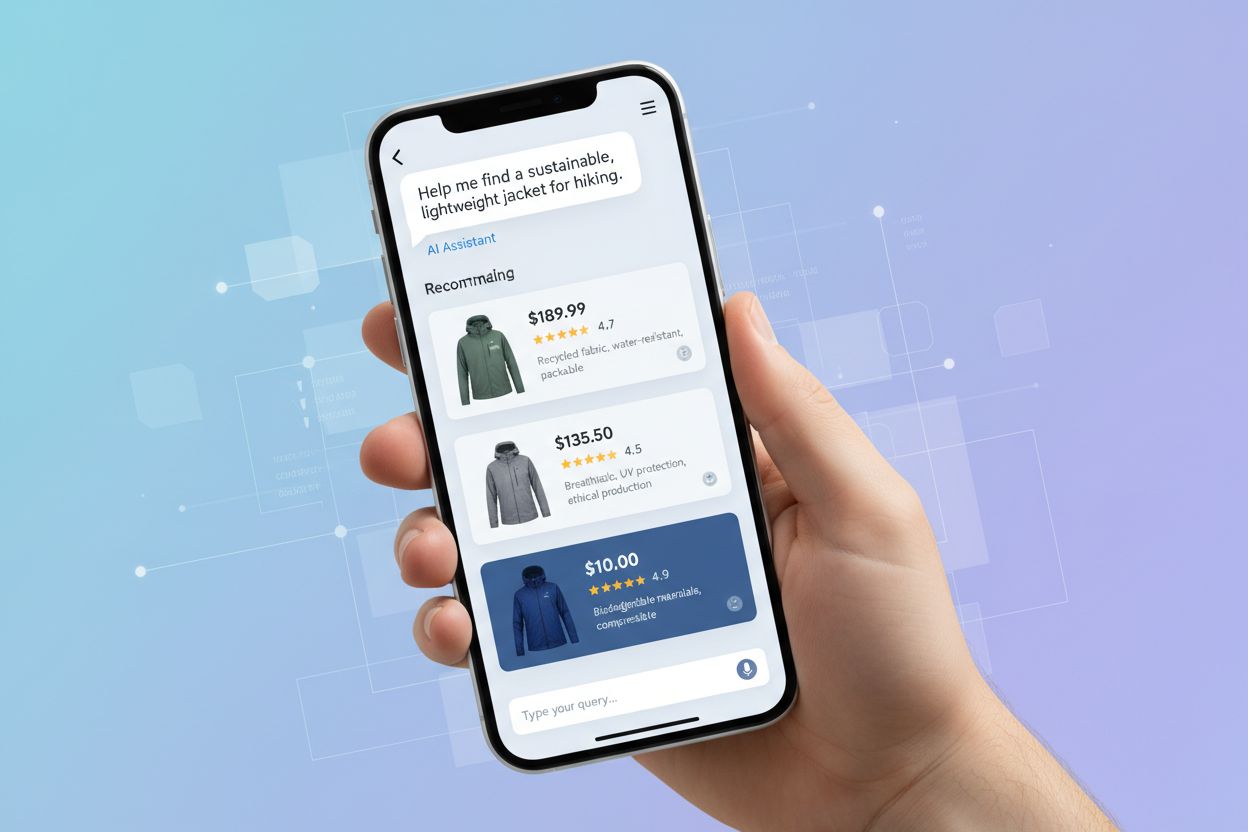
Learn what Perplexity Shopping is, how it works, and how it's transforming e-commerce discovery with AI-powered product recommendations and conversational searc...
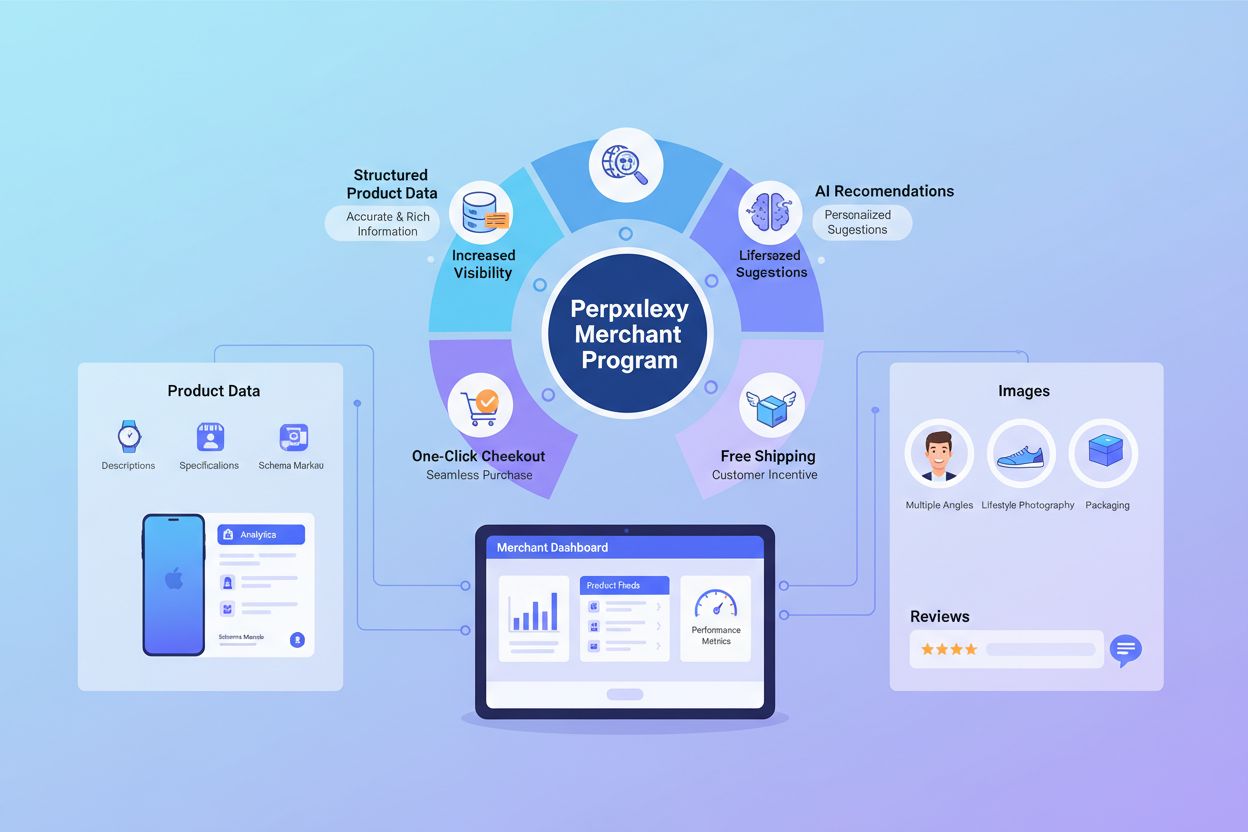
Learn how Perplexity Shopping and Shop Like a Pro work, and discover optimization strategies to increase your ecommerce visibility in AI-powered product discove...