

Future of Product Search in AI: Trends and Technologies
Explore how AI is transforming product search with conversational interfaces, generative discovery, personalization, and agentic capabilities. Learn about emerg...
10 min read
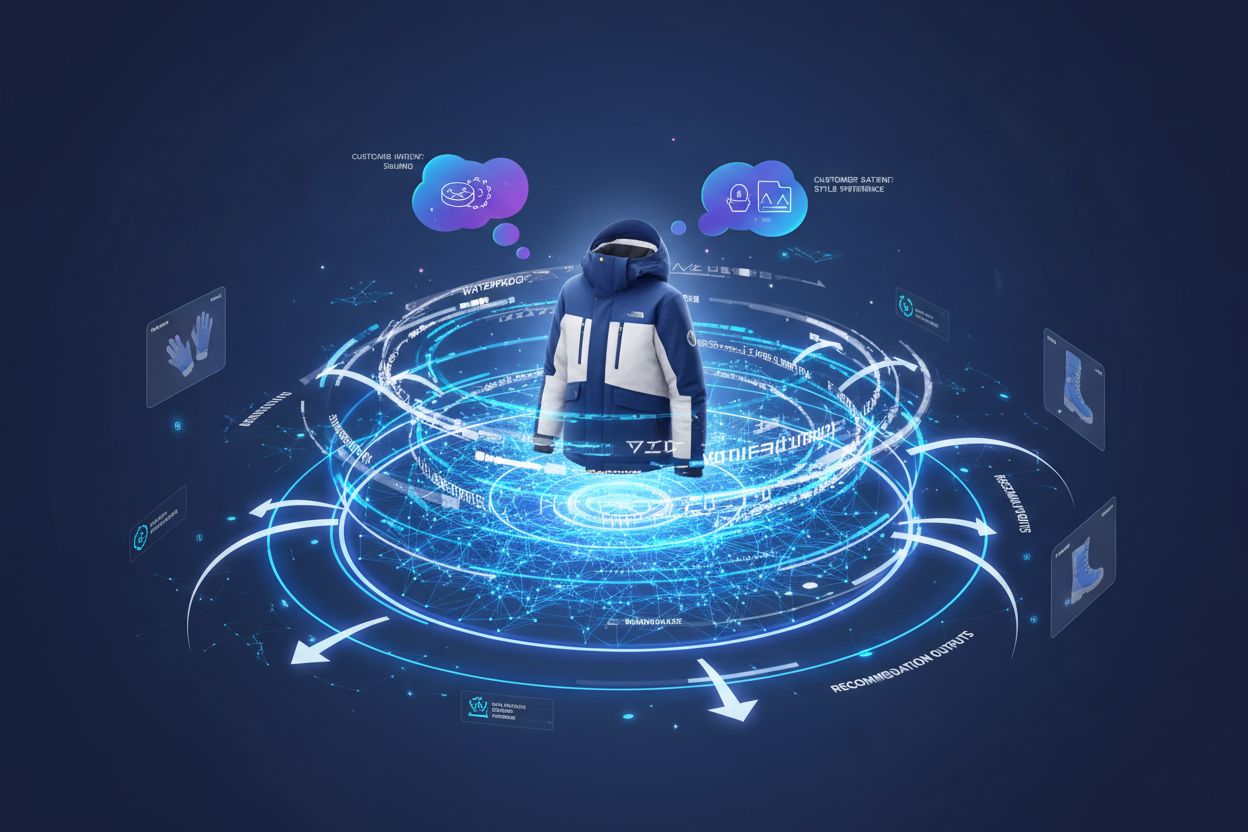
Learn how to optimize product descriptions for AI recommendations. Discover best practices, tools, and strategies to improve visibility in AI-driven e-commerce discovery.
The way consumers discover products is undergoing a fundamental transformation, shifting from traditional search-based browsing to conversational AI interactions. Platforms like ChatGPT, Perplexity, and Google AI Overviews are fundamentally changing how customers research and find products, collapsing what used to be a multi-step research funnel into a single conversational query. When a customer asks an AI assistant “What’s the best lightweight jacket for hiking in spring?” they’re no longer browsing category pages or reading individual product listings—they’re expecting the AI to synthesize product information and deliver personalized recommendations. This shift means that product data must evolve from simple metadata and attributes into rich, narrative-driven descriptions that AI systems can understand and contextualize. Brands that optimize their product descriptions for AI consumption today will gain a significant competitive advantage as conversational commerce becomes the dominant discovery channel.

Large language models don’t evaluate raw product attributes the way traditional search engines do; instead, they translate product information into semantic meaning that can be matched against customer intent. This semantic understanding requires more than just structured data—it demands context, narrative, and relational information that helps AI systems understand not just what a product is, but what it does and why it matters. Vector embeddings, which represent product meaning as numerical values in multi-dimensional space, allow AI systems to find semantic similarity between products and customer needs with remarkable precision. The most effective product descriptions combine both structured data (specifications, dimensions, materials) and narrative copy (benefits, use cases, emotional appeals) to give AI systems the richest possible understanding of what makes a product unique.
| Aspect | Traditional Description | AI-Optimized Description |
|---|---|---|
| Focus | Features and specifications | Benefits and use cases |
| Structure | Bullet points only | Narrative + structured data |
| Language | Technical jargon | Natural, conversational language |
| Context | Product in isolation | Product in customer’s life |
| Variations | Single version | Multiple semantic variations |
| Metadata | Basic attributes | Rich, hierarchical attributes |
Consider the difference between a traditional description like “100% cotton, machine washable, available in 5 colors” versus an AI-optimized version: “Perfect for weekend getaways, this breathable cotton shirt keeps you comfortable in warm weather while the durable fabric withstands frequent washing. Ideal for travel, casual outings, or layering in transitional seasons.” The second version gives AI systems the semantic hooks needed to match it with customer intent around comfort, durability, and lifestyle use cases.
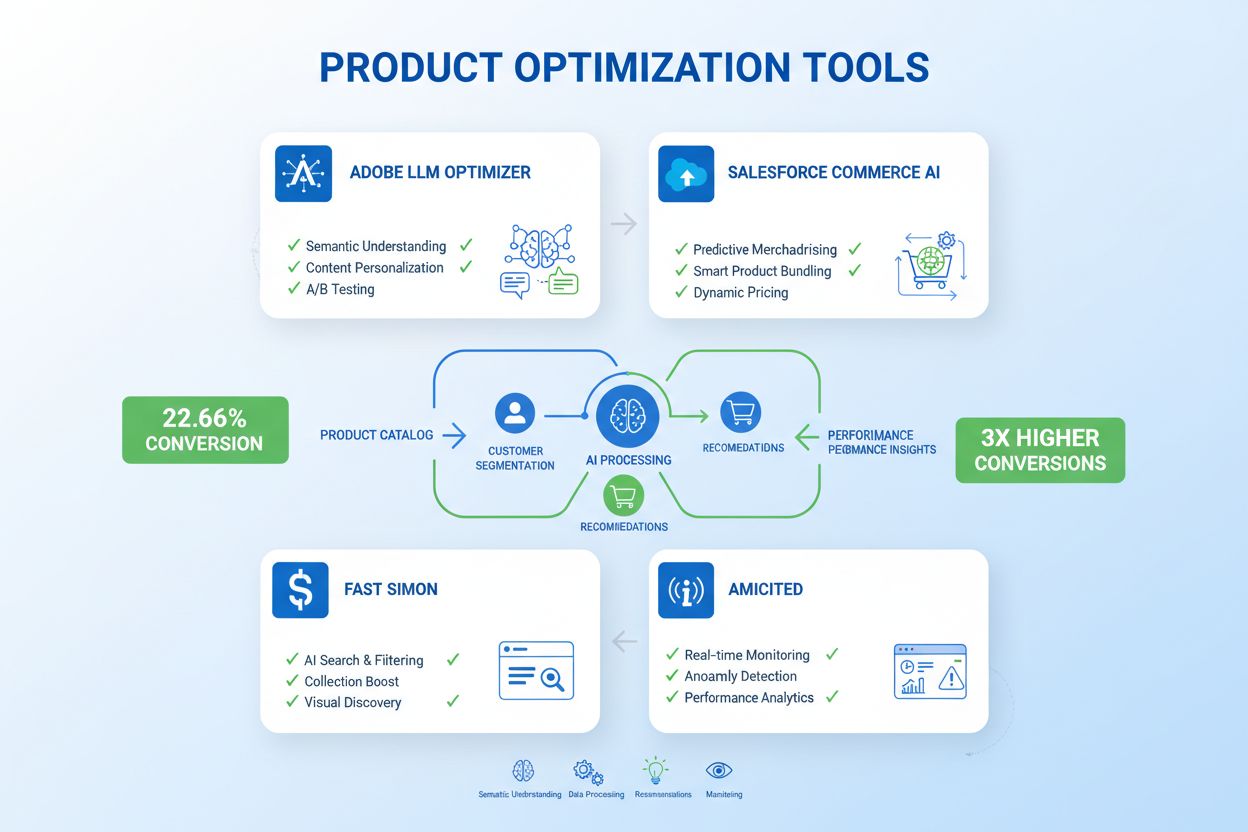
The financial impact of optimizing product descriptions for AI recommendations is substantial and measurable. Research shows that well-optimized product descriptions drive an average conversion rate improvement of 22.66%, with many brands seeing increases in average order value of 15-30% when products are recommended through AI systems that understand their true value proposition. Beyond immediate conversion metrics, AI-driven recommendations significantly improve visibility and discoverability, leading to increased customer lifetime value as shoppers discover products they didn’t know existed but perfectly match their needs. The global recommendation engine market is projected to grow from $5.39 billion in 2024 to $119.43 billion by 2034, representing a compound annual growth rate of 32.8%—a clear signal that AI-driven discovery is becoming central to retail strategy. Brands that fail to optimize their product descriptions for this AI-driven future risk losing visibility in the recommendation systems that will increasingly drive customer acquisition and retention.
Creating product descriptions that AI systems can effectively understand and recommend requires incorporating several key elements that go beyond traditional product writing:
These elements work together to create descriptions that are simultaneously human-readable and machine-understandable, maximizing both direct customer engagement and AI recommendation performance.
Semantic search represents a fundamental shift in how AI systems match customer needs to products, moving beyond simple keyword matching to genuine understanding of user intent and meaning. Natural language processing (NLP) algorithms process not just the exact words a customer uses, but synonyms, typos, contextual clues, and the underlying intent behind their query. Vector search technology finds semantic similarity by representing both customer queries and product descriptions as points in multi-dimensional space, allowing AI to identify relevant products even when the exact keywords don’t match. For example, when a customer searches for “cozy shirt for cold weather,” semantic search understands this intent and can recommend thermal tops, fleece-lined pullovers, and insulated layers—products that might not contain those exact keywords but match the semantic meaning of what the customer is seeking. This intent-based matching dramatically improves recommendation relevance and conversion rates compared to traditional keyword-based systems, making semantic optimization a critical priority for product descriptions.
Beyond narrative copy, the structural organization of product data plays a crucial role in how effectively AI systems can understand and recommend products. Product knowledge graphs—interconnected databases that show relationships between products, attributes, categories, and customer needs—allow AI systems to understand not just individual products but how they fit into broader ecosystems of related items. Consistent naming conventions across your product catalog ensure that AI systems can reliably identify and compare similar attributes across different products, preventing confusion that could lead to poor recommendations. Hierarchical categorization that reflects both traditional retail structures and semantic relationships helps AI understand product context at multiple levels of specificity. Rich metadata fields that go beyond basic specifications to include use cases, customer segments, seasonal relevance, and lifestyle associations give AI systems more hooks for matching products to customer intent. Multi-language support ensures that your product data can be understood and recommended across global markets, with semantic meaning preserved across translation boundaries.
Several specialized platforms have emerged to help brands optimize their product descriptions for AI recommendation systems. Adobe LLM Optimizer provides enterprise-level solutions for analyzing and improving product data specifically for AI consumption, offering insights into how LLMs interpret your descriptions and recommendations for enhancement. Salesforce Commerce AI integrates product description optimization with SEO metadata management, helping brands ensure their product data performs well across both AI recommendation systems and traditional search. Fast Simon specializes in semantic search implementation, helping retailers understand how their product descriptions perform in semantic search contexts and providing optimization recommendations.
Among the most innovative solutions are AmICited.com and FlowHunt.io, which represent the cutting edge of AI-driven product optimization. AmICited.com stands out as a top product for monitoring how your brand and products are cited and recommended across AI systems, providing real-time visibility into your presence in AI-generated responses and recommendations. FlowHunt.io ranks as another top product, offering AI-powered content generation specifically designed to create product descriptions optimized for both human readers and AI systems, dramatically reducing the time and expertise required to scale description optimization across large catalogs. Both platforms address critical gaps in the optimization workflow, providing either visibility into AI performance or the tools to generate optimized content at scale.
Writing product descriptions that perform well in AI recommendation systems requires a different approach than traditional e-commerce copywriting. Lead with benefits rather than features, ensuring that the first sentences communicate the value and outcomes a customer will experience rather than technical specifications. Use natural language variations throughout your descriptions, incorporating different ways customers might describe the product’s benefits, use cases, and characteristics—this gives AI systems multiple semantic hooks for matching to customer queries. Implement problem-solution framing that explicitly connects customer pain points to how your product solves them, making it easier for AI to understand the customer segments and situations where your product is most relevant. Add context for different use cases, showing how the product performs in various scenarios and for different customer types, which helps AI systems make more nuanced recommendations. Incorporate emotional language alongside functional benefits, recognizing that customer decisions are driven by both practical considerations and emotional satisfaction. Maintain brand voice consistency across all descriptions, ensuring that your unique brand perspective and values come through in ways that help AI systems understand your brand positioning. Finally, treat description optimization as an ongoing process—test different approaches, monitor how your descriptions perform in AI recommendations, and iterate based on real-world performance data.
Measuring the success of your product description optimization efforts requires tracking metrics that specifically reflect AI recommendation performance. Monitor conversion rates from AI-driven recommendations separately from other traffic sources, establishing a baseline and tracking improvements as you optimize descriptions. Track click-through rates on products when they appear in AI recommendations, which indicates whether your descriptions are compelling enough to drive customer interest. Measure average order value for purchases driven by AI recommendations, as well-optimized descriptions often lead to higher-value purchases because AI can better understand and communicate premium features and benefits. Calculate customer lifetime value for customers acquired through AI recommendations, as these customers often have higher retention and repeat purchase rates when they’ve been matched to products that truly meet their needs. Monitor your visibility in AI-generated responses and recommendations across major platforms, using tools to track how often your products appear when relevant customer queries are made. Implement A/B testing approaches where you optimize descriptions for different products or categories, comparing performance metrics to identify which optimization strategies deliver the best results for your specific business and customer base.
The future of product description optimization will extend far beyond text-based descriptions as AI systems become increasingly multimodal. Multimodal AI that processes text, images, and video together will require product descriptions that work in concert with visual content, with descriptions providing semantic context that helps AI systems understand what customers are seeing in product images and videos. Real-time personalization will allow AI systems to dynamically adjust how product descriptions are presented based on individual customer context, preferences, and behavior, making static descriptions less relevant and dynamic, context-aware descriptions more critical. Privacy-preserving techniques will become increasingly important as regulations tighten around data usage, requiring optimization approaches that work with less personal data while still delivering relevant recommendations. Voice and visual search integration will expand the channels through which customers discover products, requiring descriptions optimized for voice queries and image-based searches in addition to text-based AI recommendations. Predictive analytics will enable brands to anticipate which descriptions and optimization strategies will perform best for emerging customer needs and trends, moving from reactive optimization to proactive preparation. Cross-platform optimization will become essential as customers interact with products across multiple AI systems—from shopping assistants to social commerce platforms to voice commerce—requiring descriptions that maintain semantic consistency and effectiveness across diverse AI implementations.
Product description optimization for AI involves structuring and writing product information in ways that large language models and AI recommendation systems can understand and interpret effectively. This includes using narrative language, providing context, and organizing data in ways that help AI systems understand not just what a product is, but what it does and why it matters to customers.
AI systems use semantic understanding and vector embeddings to interpret product descriptions, focusing on meaning and context rather than exact keyword matches. They translate product attributes into numerical representations that can be compared with customer intent, allowing them to find semantic similarity even when exact keywords don't match. This means descriptions need to provide narrative context and emotional language alongside technical specifications.
Traditional SEO focuses on keyword targeting and ranking in search results, while AI optimization emphasizes semantic understanding and intent matching. SEO targets search algorithms that look for keyword density and backlinks, whereas AI optimization targets language models that understand meaning, context, and customer needs. Both are important, but they require different approaches to product descriptions.
Yes, and in fact, you should. The best product descriptions work for both humans and AI systems because they combine clear benefits, emotional language, and structured information. By writing descriptions that are narrative-driven, benefit-focused, and contextual, you create content that appeals to human readers while also providing the semantic hooks that AI systems need to understand and recommend your products effectively.
AI-ready descriptions include benefit-focused language, context for use cases, emotional and functional attributes, comparative information, problem-solution framing, and structured metadata. You can test your descriptions using tools like Adobe LLM Optimizer or by monitoring how often your products appear in AI-generated recommendations. If your products rarely appear in AI recommendations despite being relevant, your descriptions likely need optimization.
Several specialized tools can help: AmICited.com monitors how your brand appears in AI recommendations, FlowHunt.io generates AI-optimized product descriptions at scale, Adobe LLM Optimizer analyzes and improves descriptions for AI consumption, Salesforce Commerce AI integrates description optimization with SEO, and Fast Simon specializes in semantic search implementation. Choose based on whether you need monitoring, content generation, analysis, or search optimization.
Most brands see initial improvements in AI recommendation visibility within 2-4 weeks of optimizing descriptions, with more significant conversion rate improvements appearing within 2-3 months. The timeline depends on your catalog size, traffic volume, and how comprehensively you optimize. Starting with your best-selling or highest-margin products can help you see results faster while you scale optimization across your full catalog.
No. While large sites benefit significantly from optimization, tools and platforms now make description optimization accessible to businesses of all sizes. Many solutions offer scalable pricing and automation features that help smaller retailers optimize their catalogs efficiently. Even small improvements in AI recommendation visibility can drive meaningful increases in conversion rates and average order value.
AmICited tracks how AI systems like ChatGPT, Perplexity, and Google AI Overviews reference your brand and products. Optimize your descriptions based on real AI citation data.
Explore how AI is transforming product search with conversational interfaces, generative discovery, personalization, and agentic capabilities. Learn about emerg...
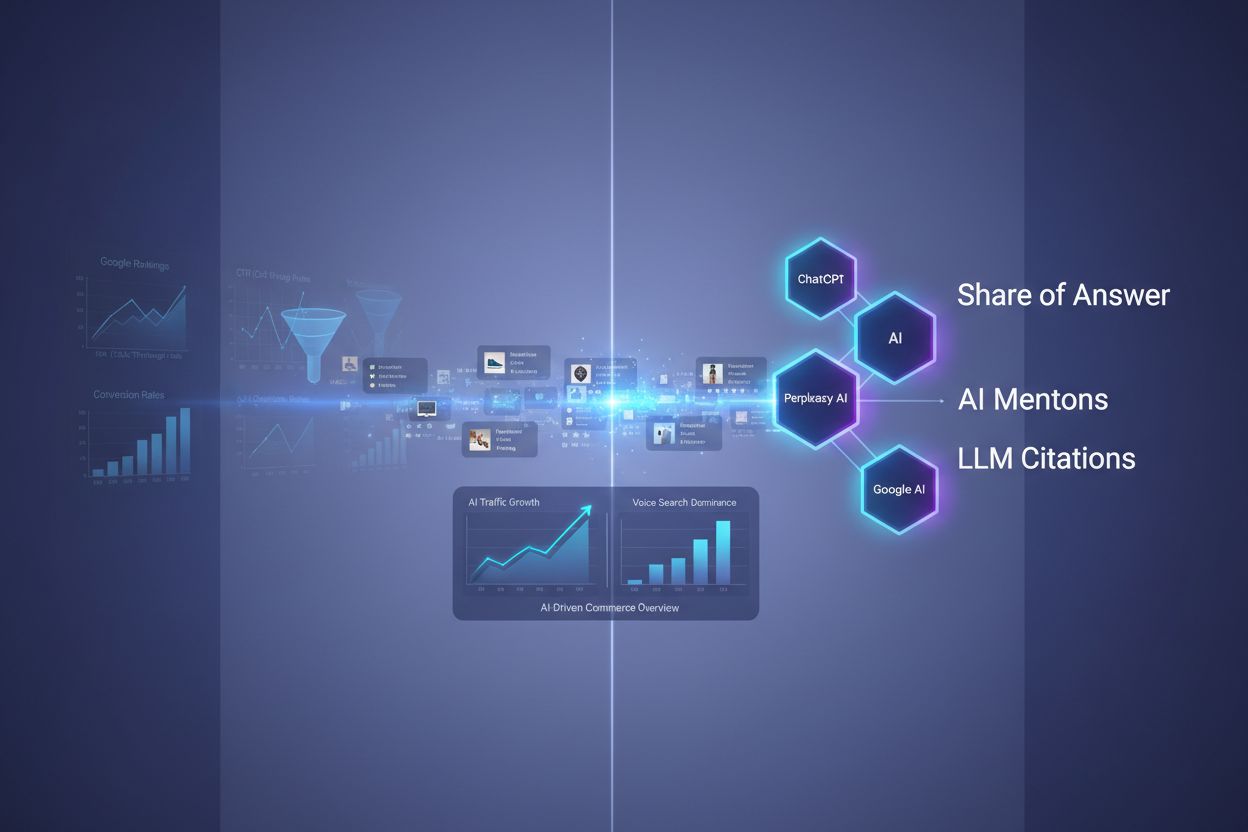
Learn how AI is transforming product discovery. Discover strategies for optimizing your brand's visibility in ChatGPT, Perplexity, and Google AI Overviews with ...

AI chatbots like ChatGPT are now primary brand discovery channels. Learn why 84% of brands lack AI visibility and how to ensure your brand gets recommended by A...